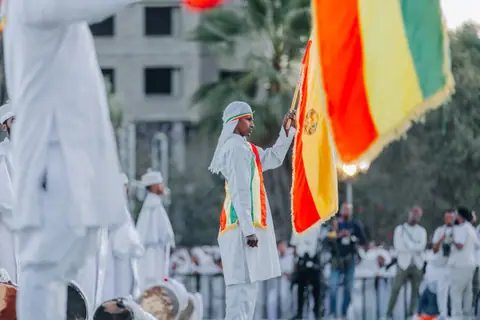
The Habesha Coffee Ceremony, Injera Feasts and Live Ethio-Jazz
Three ceremonial rounds of highland Arabica coffee, sourdough teff injera platters and live Ethio-jazz.
Ethiopia is the genetic homeland of Arabica coffee and the birthplace of one of the world's great culinary and musical traditions. In Addis Ababa, coffee, food and music are unhurried social rituals meant to be shared around a table.
The Habesha Coffee Ceremony (Buna Tetu) and Tomoca Coffee
- The three-round coffee ceremony: whether inside a home, a restaurant courtyard or a street-corner stand carpeted with fresh green grass (ketema) and scented with burning frankincense (etan), the ceremony begins by washing and roasting green highland beans (from Yirgacheffe, Sidamo, Guji or Harar) in a long-handled iron pan over charcoal. Once the beans turn glossy and aromatic, the host wafts the fragrant smoke toward guests, pounds the beans in a wooden mortar (mukecha) and brews them in a round-bellied black clay pot (jebena), pouring from a foot above into handleless porcelain cups (finjal) alongside bowls of popped sorghum or popcorn. Tradition calls for staying for all three rounds: Abol (the strongest first cup), Tona (the second) and Baraka ("to be blessed", the third).
- Historic Italian-era espresso bars in Piazza and Bole: when Ethiopians want a quick stand-up cup, they head to Tomoca Coffee (founded on Wawel Street in Piazza in 1953), where dark-roasted Harar blends are pulled as rich macchiatos or sprice (layered black coffee and tea).
Injera, Doro Wat, Beyaynetu and Live Ethio-Jazz
Wash your hands before your meal arrives on a large circular platter lined with injera, a spongy, pleasantly sour flatbread fermented from iron-rich, gluten-free highland teff grain. Tear off a piece of injera with your right hand to wrap up mouthfuls of the stews arranged on top:
- Doro Wat and Shiro Tegamino: Ethiopia's national festive stew of chicken drumsticks and hard-boiled eggs braised in caramelised onions, spiced clarified butter (niter kibbeh) and fiery red berbere chilli blend, or bubbling clay-pot roasted chickpea flour stew (shiro).
- Yetsom Beyaynetu (Fasting Platter): every Wednesday and Friday (and throughout Lent), Orthodox Christians eat a vegan rainbow of red lentil misir wat, yellow split peas (kik alicha), collard greens (gomen), beetroot and cabbage over injera.
- Shekla Tibs, Kitfo and Tej: cubes of beef or lamb sizzling over rosemary twigs on a clay brazier (shekla tibs), or minced beef warmed in spiced butter with mitmita and cottage cheese (kitfo), paired with smoky golden honey wine (tej).
After dinner in Kazanchis or Bole, seek out a live Ethio-jazz set, the genre pioneered in late-1960s Addis Ababa by vibraphonist Mulatu Astatke blending five-note Ethiopian pentatonic modes with jazz horns, or watch acrobatic eskista shoulder-dancing after a day at the museums.
Traveller tips
Real advice from people who have been to The Habesha Coffee Ceremony, Injera Feasts and Live Ethio-Jazz. Every tip is read by our team before it goes live.
No tips yet. Been here? Yours could be the first.
Thank you! Your tip will appear here after a quick review.
More in Addis Ababa
Continue exploring Addis Ababa with related neighbourhood, food, and planning guides