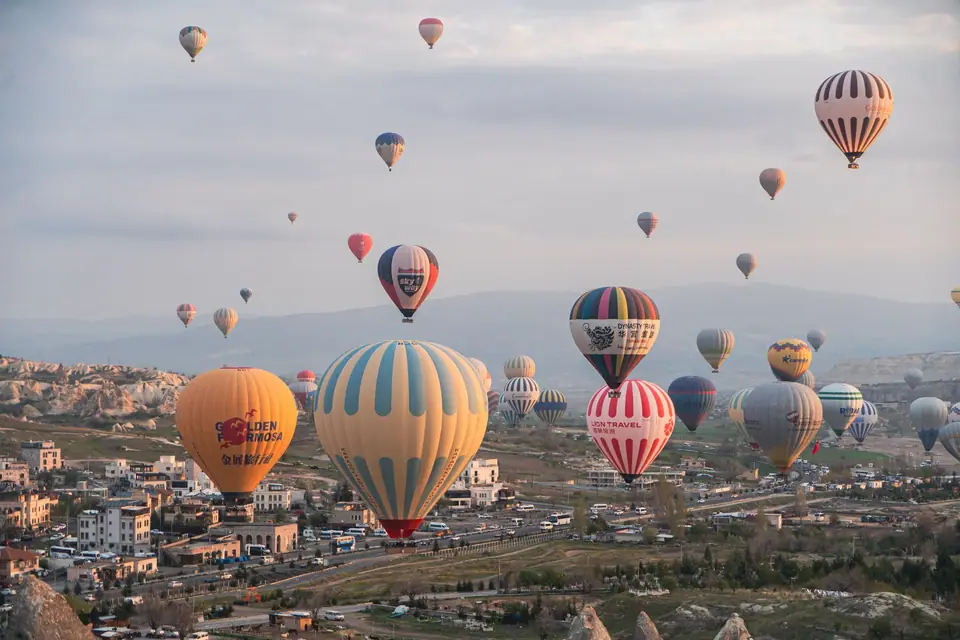
10 Days in Turkey Itinerary: 3 Field-Tested Routes, Flights and Gate Strategies
Three realistic, field-tested 10-day routes across Turkey, complete with domestic flight pairings, entrance gate strategies, restaurant picks, and neighbourhood bases.
Planning a 10 days in Turkey itinerary is one of those rare travel puzzles where the hardest part is not finding enough to do, it is accepting what you have to leave out.
On a map, Turkey looks compact enough. In reality, it is larger than France and the UK combined. One of the biggest mistakes first-time visitors make is trying to connect Istanbul, Cappadocia, the Turquoise Coast (Antalya), Pamukkale, and Ephesus entirely by road in a week and a half, only to realise they have booked themselves into 45 hours of highway transit.
To save you from spending your holiday staring out a bus window, we have designed three realistic, field-tested 10-day Turkey itineraries. If you want to hit every single world-famous icon using quick domestic flights, trade central plateaus for a summer Mediterranean road trip, or slow things down with fewer hotel changes, here is how to spend 10 days in Turkey, right down to which entrance gates to use and which flights to catch.
Comparing the 3 Turkey Routes
Before diving into the day-by-day logistics, choose the route that matches the season you are visiting and how fast you like to travel:
| Itinerary Option | Route & Night Split | Best Season | Pacing & Vibe | Transit Style |
|---|---|---|---|---|
| Option 1: The Classic Bucket-List (Main Route Below) | Istanbul (3.5N) → Cappadocia (2.5N) → Pamukkale (1N) → Ephesus / Selçuk (2N) | April to June & Sept to Nov (Works year-round) | Active & Iconic. Hits every major historical and natural wonder. | 3 short domestic flights + 1 scenic regional train |
| Option 2: The Turquoise Coast & Ruins | Istanbul (3.5N) → Ephesus (1.5N) → Fethiye & Ölüdeniz (2N) → Kaş & Antalya (2N) | May to October | Summer Road Trip. Mixes Roman ruins with lagoons, boat days & cliffside drives. | 2 domestic flights + coastal rental car (D400 highway) |
| Option 3: The "Unpack Only 3 Times" Route | Istanbul (4N) → Cappadocia (3N) → Bodrum or Izmir / Alaçatı (3N) | May to October | Relaxed & Boutique. Cuts out single-night stays and adds Aegean beach towns. | 2 domestic flights, zero long overland drives |
Option 1: The Classic Highlights
If this is your first time in Turkey and your non-negotiables are floating over fairy chimneys at sunrise, walking through Hagia Sophia, soaking in white thermal travertines, and standing in front of the Library of Celsus, this is the gold-standard route. Here is how to pull it off smoothly without feeling like you are constantly sprinting for a gate.
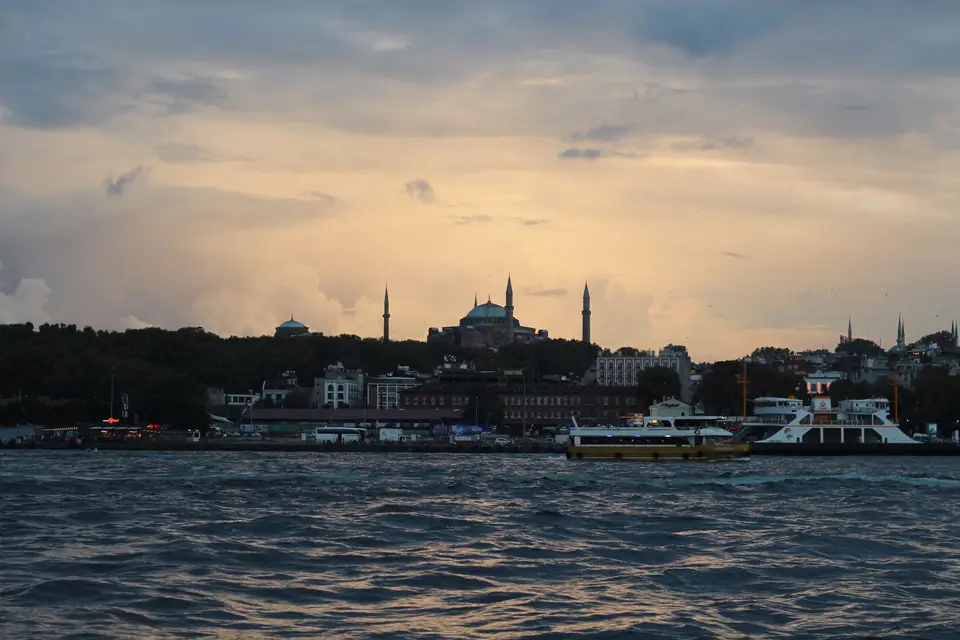
Day 1: Sultanahmet & Imperial Core
Your first day is all about the Historic Peninsula (Sultanahmet), where the Byzantine and Ottoman empires ruled for over 1,500 years. Because every major monument sits within a 10-minute walk of the others, timing your entry order is the difference between a seamless morning and standing in the sun for three hours.
Morning: The Blue Mosque & Hagia Sophia
Start at 08:30 AM at the Blue Mosque (Sultanahmet Camii). Since its multi-year interior restoration wrapped up, the hand-painted İznik tiles and soaring domes are completely unobstructed, and unlike almost every other monument in the neighbourhood, entry is still free. Starting here at 08:30 AM lets you beat the cruise ship groups that flood the courtyard at 09:30 AM, and gets you inside before the midday prayer closure.
From the Blue Mosque, walk five minutes across the tree-lined square to Hagia Sophia (Ayasofya).
The Ticket Reality You Need to Know: Foreign visitors no longer enter through the main ground-floor prayer hall. Instead, you use a separate entrance on the side near Topkapı Palace that leads to the Upper Gallery (check the official site for the current foreign visitor tariff). While the ticket is a significant expense, the Upper Gallery is where the famous 11th- and 13th-century golden Byzantine mosaics (including the Deesis mosaic of Christ Pantocrator) are located, offering a bird's-eye view over the chandelier-lit nave below.
Lunch: Skip the Tourist Traps on Divan Yolu
Avoid the restaurants around Sultanahmet Square where staff stand outside waving laminated menus in six languages. Instead, walk seven minutes downhill towards Sirkeci to Hocapaşa Sokak, a pedestrianised culinary alleyway. Grab a table at Şehzade Cağ Kebap; they only serve one thing: horizontal wood-fired marinated lamb skewers carved fresh off the spit, served with lavash, sweet onions, and smoky ezme salad.
Afternoon: Basilica Cistern & The Hippodrome
After lunch, head to the Basilica Cistern (Yerebatan Sarnıcı), located right across the tram tracks. Built by Emperor Justinian in 532 AD using 336 marble columns scavenged from older pagan temples, the underground water chamber has been fitted with atmospheric low lighting and suspended walkways that lead straight to the two famous upside-down Medusa head column bases.
Queue Tip: The ticket booth line at the Basilica Cistern regularly snakes down the block between 11:00 AM and 03:00 PM. Buy a mobile QR ticket in advance so you can walk straight up to the turnstiles.
Spend the late afternoon strolling down the Hippodrome, the former Byzantine chariot-racing stadium, where the 3,500-year-old Egyptian Obelisk of Theodosius and the bronze Serpent Column still stand on their original central spine. For dinner, book a rooftop table in Sultanahmet (like Seven Hills for the postcard seagulls-and-minarets view, or Giritli Restoran down by the sea walls for an authentic Aegean meze feast).
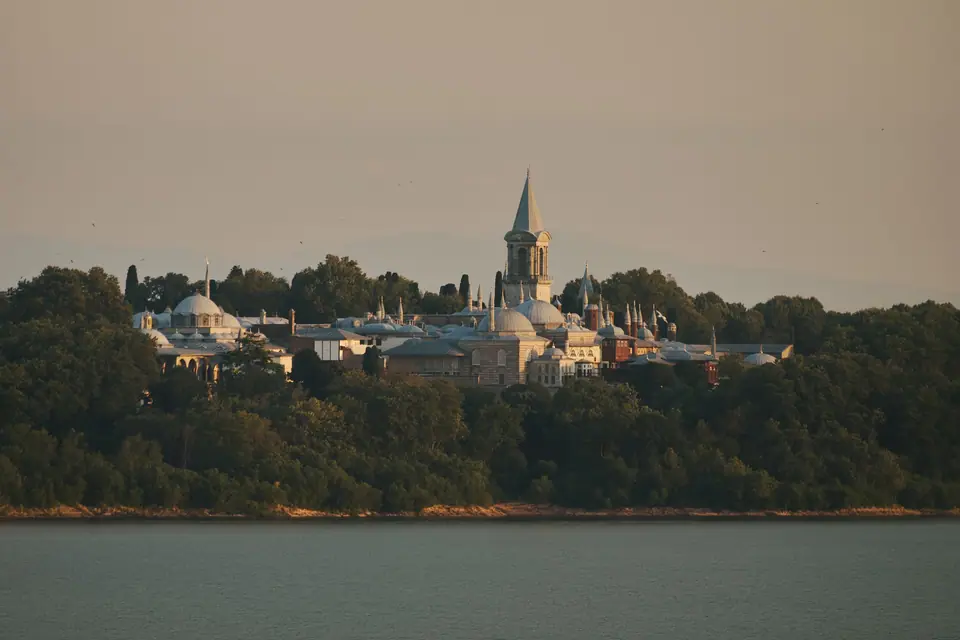
Day 2: Topkapı Palace & The Bazaars
Why did we not visit Topkapı Palace on Day 1? Because bundling Hagia Sophia, the Blue Mosque, the Basilica Cistern, and Topkapı Palace into a single day is the fastest way to get museum fatigue on your very first afternoon. Topkapı is a sprawling complex of four courtyards that easily takes three to four hours on its own.
Morning: Topkapı Palace & The Harem
Be at the Imperial Gate of Topkapı Palace (note: closed on Tuesdays) when doors open in the morning. While the tour groups stop to take photos in the first courtyard, walk straight to the Harem entrance first.
The Harem, where the Sultan's mother (Valide Sultan), consorts, and concubines lived in gilded seclusion, is a labyrinth of narrow tiled corridors, domed baths, and courtyards that gets crowded by late morning. Visiting it in the first hour means you will have the Hall of the Imperial Sofa and the Queen Mother's Apartments nearly to yourself before looping back out to see the Imperial Treasury (home to the 86-carat Spoonmaker's Diamond and the emerald-encrusted Topkapı Dagger) and the breezy Fourth Courtyard pavilions overlooking the Golden Horn.
Afternoon: Süleymaniye Mosque, The Grand Bazaar & Eminönü
Instead of walking straight into the main tourist gates of the Grand Bazaar, take a 15-minute walk (or quick tram and uphill stroll) to the Süleymaniye Mosque. Designed by the legendary Ottoman architect Mimar Sinan atop Istanbul's Third Hill, it is just as monumental as the Blue Mosque, commands one of the best free panoramic views over the Bosphorus from its outer courtyard garden, and has a fraction of the crowds.
From Süleymaniye, walk downhill through the historic Mercan wholesale streets into the Grand Bazaar (Kapalıçarşı) (closed Sundays). Rather than trying to map your way through all 61 covered streets and 4,000 shops, focus on the oldest central vaults (Cevahir Bedesteni and Sandal Bedesteni) for antique copper, textiles, and ceramics, then exit through the Mahmutpaşa bazaar street, where local Istanbulites actually shop, leading straight down to the water at Eminönü.
Wrap up your afternoon inside the Spice Bazaar (Mısır Çarşısı) and its lively outdoor market streets behind Rüstem Pasha Mosque (a tiny architectural treasure upstairs above the hardware shops, covered floor-to-ceiling in vivid red-and-cobalt İznik tiles). Before heading back, grab a fresh balık dürüm (grilled mackerel wrap loaded with spices, greens, and pomegranate molasses; skip the tourist boats by the bridge and look for the tiny stall queues in Karaköy across the water, or join an Istanbul street food walk). In the evening, unwind with a traditional scrub at a historic bathhouse (see our Turkish hammam in Istanbul page) or attend a Whirling Dervish ceremony.
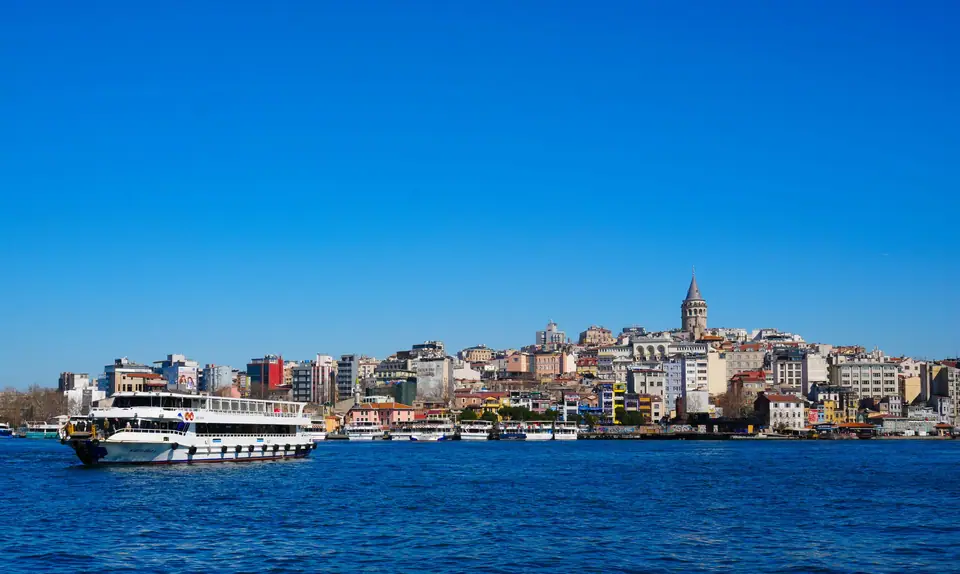
Day 3: Galata, Karaköy & Bosphorus
Today you cross the Golden Horn from old Constantinople into Beyoğlu, the historic European quarter where Genoese merchants, 19th-century diplomats, and modern artists built a completely different side of the city.
Morning: Galata Tower, Serdar-ı Ekrem & İstiklal Avenue
Cross the Galata Bridge on foot (watching the hundreds of fishermen casting lines into the Golden Horn) or ride the Tünel, the second-oldest subterranean funicular railway in the world (operating since 1875), up the steep hill to the top of Galata.
Start at Galata Tower, built by the Genoese colony in 1348. Even if you decide not to queue for the narrow upper observation balcony, the cobbled square around its base and the boutique-lined Serdar-ı Ekrem Street are essential morning stops. Grab a pistachio baklava or katmer with Turkish coffee in Karaköy, then walk up İstiklal Caddesi, ducking off the main shopping boulevard to see:
- Church of St. Anthony of Padua: A striking red-brick Neo-Gothic basilica hidden behind courtyard gates.
- Çiçek Pasajı (Flower Passage) & Nevizade: Historic 19th-century arcades and tavern alleys.
- Çukurcuma: The bohemian hillside neighbourhood below Galatasaray where writer Orhan Pamuk's Museum of Innocence is surrounded by vintage furniture workshops, stray cats sleeping on velvet armchairs, and quiet leafy cafes.
Late Afternoon: Galataport & A Sunset Bosphorus Cruise
Walk downhill to the water through Tophane to Galataport, Istanbul's sleek waterfront promenade, home to the Renzo Piano-designed Istanbul Modern Art Museum.
In the late afternoon, step aboard a sunset Bosphorus cruise. Seeing Istanbul from the water is how the city was meant to be seen. As the sun drops behind the minarets of the Historic Peninsula, you glide past the baroque marble facade of Dolmabahçe Palace, the waterfront wooden mansions (yalıs) of Bebek and Arnavutköy, Ortaköy Mosque framed right beneath the Bosphorus Bridge, and the medieval Rumeli Fortress.
Which Cruise Should You Choose? You have two great choices, detailed in our Bosphorus strait and ferries guide: if you are on a tight budget, take the public Şehir Hatları Bosphorus ferry from Eminönü. If you want cushioned open-air decks, Turkish tea and snacks, and commentary without fighting 500 commuters for a railing spot, opt for a small-group sunset yacht cruise on the Bosphorus.
Day 4: Kadıköy & Flight to Cappadocia
Most short itineraries skip the Asian continent entirely, which is a massive mistake. Crossing the Bosphorus takes just 20 minutes by ferry with your İstanbulkart and drops you into Kadıköy, the culinary and cultural heart of modern local life.
Morning & Afternoon: Ferry to Kadıköy Market & Moda Promenade
Leave your packed bags with your hotel reception and hop on a public commuter ferry from Eminönü or Karaköy to Kadıköy. Grab a classic tulip glass of hot tea (çay) and a sesame simit from the onboard snack bar and sit on the outside deck.
Once you step off in Asia, walk straight into the Kadıköy Produce & Fish Market (Kadıköy Çarşısı). Unlike the Grand Bazaar, nobody is trying to sell you carpets here: it is row after row of glistening Aegean olives, aged Kars cheeses, honeycomb, spices, and legacy restaurants.
Where to Eat Lunch: Have lunch at Çiya Sofrası, featured on Netflix's Chef's Table. Chef Musa Dağdeviren rescues forgotten regional Anatolian recipes, from sour cherry kebabs to stuffed quince and regional mezzes, that you will not find anywhere else in Istanbul.
Spend the early afternoon walking through the street-art alleys of Yeldeğirmeni or strolling along the seaside parks of Moda, stopping at Walter's Coffee or Montag for specialty third-wave coffee while locals lounge on the coastal rocks watching ferries cross the Sea of Marmara.
Evening: Fly to Cappadocia (Why Evening 4 Is the Secret Trick)
Instead of wasting the prime daylight hours of Day 5 sitting in airports, catch an evening domestic flight on Day 4 from either Istanbul Airport (IST) or Sabiha Gökçen Airport (SAW) (since you are already on the Asian side in Kadıköy, taking the M4 Metro straight from Kadıköy station to SAW airport takes just 50 minutes).
You land at Kayseri (ASR) or Nevşehir (NAV) in the evening, hop into your pre-booked shared shuttle directly to your cave hotel in Göreme, and wake up on Day 5 already inside a fairy chimney, ready for the sunrise balloons.
Dive Deeper into Istanbul: Planning out your metro cards, museum passes, and neighbourhood walks? Read our Istanbul travel overview, Istanbul 3-day itinerary, and what to wear in Istanbul.
Where to Stay in Istanbul (By Travel Style)
Because Istanbul's traffic is legendary, staying within a 5-minute walk of the T1 Tram line or a ferry pier is crucial. Compare full areas in our where to stay in Istanbul breakdown, or use these tested bases:
- Best Boutique in Sultanahmet (Steps from the Icons): Hotel Sultania or White House Hotel Istanbul offer warm Ottoman-inspired rooms, generous breakfasts, and less than a 6-minute walk to Hagia Sophia and the Gülhane/Sultanahmet tram stops.
- Best Trendy Base in Karaköy / Galata (Nightlife, Cafes & Easy Transit): The Bank Hotel Istanbul or 10 Karaköy sit in restored 19th-century neoclassical bank buildings right by the Karaköy ferry docks, Galataport, and the T1 tram, meaning you can reach Sultanahmet in 10 minutes by day and dine at Beyoğlu's best restaurants at night.
- Best Luxury Splurge on the Bosphorus: Çırağan Palace Kempinski or The Peninsula Istanbul feature waterfront pools and 19th-century imperial architecture right on the strait.
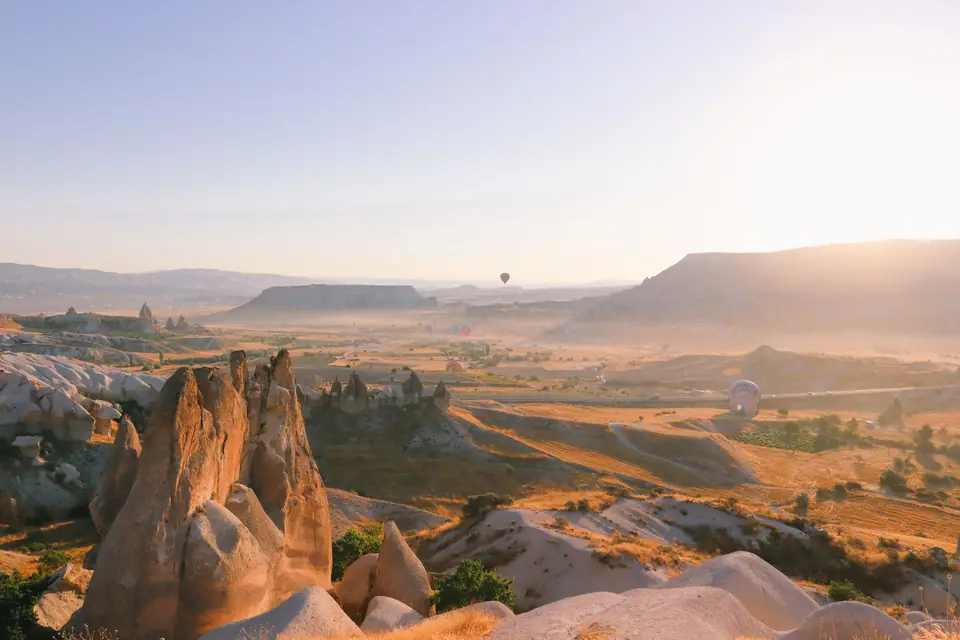
Day 5: Cappadocia Balloons & Valleys
Waking up in Cappadocia feels like stepping onto another planet. Millions of years ago, eruptions from Mount Erciyes and Mount Hasan blanketed this plateau in soft volcanic ash (tuff), which wind and rain carved into cones, pinnacles, and honeycombed cliffs hollowed out by early Byzantine monks.
Dawn: Sunrise Hot Air Balloon Flight (05:00 AM Pick-Up)
Schedule your Cappadocia sunrise hot air balloon flight for Day 5, your very first morning in the region. Balloons only fly when wind speeds are calm, as controlled by the Turkish Civil Aviation Authority. Booking for your first morning gives you Day 6 and Day 7 as built-in weather backup mornings if winds ground the fleet.
You are picked up before dawn, watch the giant envelopes inflate under roaring propane burners, and drift for an hour from cresting valley rims down between the fairy chimneys of Love Valley and Rose Valley as up to 150 balloons fill the sky. Read our Cappadocia hot air balloon planning page for basket sizes and flight tiers.
Late Morning: Göreme Open-Air Museum & The Dark Church
After returning to your cave hotel for a long Turkish breakfast on the terrace and a brief rest, start your ground exploration at the Göreme Open-Air Museum, a 15-minute walk uphill from town. This UNESCO-listed monastic valley contains rock-cut Byzantine churches dating from the 10th to 12th centuries.
Crucial Inside Tip: Pay the small extra ticket inside the complex for the Dark Church (Karanlık Kilise). Because light only entered through a tiny narthex window for centuries, its lapis-lazuli blue and ochre frescoes of the Nativity, Last Supper, and Crucifixion are the best-preserved Byzantine paintings in Anatolia. Just down the road on your way back, stop at Tokalı Kilise (Buckle Church), which is covered by your main museum ticket and skipped by 90 percent of tour buses.
Afternoon: Paşabağ (Monks Valley), Zelve & Avanos Pottery
Spend the afternoon exploring the northern "Red Tour" loop via rental car, private driver, or small-group minivan:
- Paşabağ (Monks Valley): Home to the tallest twin- and triple-capped mushroom fairy chimneys in Cappadocia, including the hermitage pillar of St. Simeon.
- Zelve Open-Air Museum: Three dramatic canyon valleys honeycombed with troglodyte houses, a rock-cut mosque, and ancient dovecotes where you can clamber up stone staircases with far fewer crowds than Göreme.
- Avanos on the Kızılırmak River: Watch master potters spin iron-rich red clay from the Red River on foot-powered kick wheels, a craft practised here since Hittite times.
Sunset: Horseback Riding or Hiking Through Rose & Red Valleys
An hour before dusk, head to the trailheads between Göreme and Çavuşin for a sunset walk or a Cappadocia horseback ride through Rose and Red Valleys (Cappadocia means "Land of Beautiful Horses" in ancient Persian). As the sun sinks toward Uçhisar Castle, the rippled volcanic cliffs glow neon pink and crimson. For dinner, reserve a table at Topdeck Cave Restaurant in Göreme or Seten for slow-cooked Testi Kebabı (pottery kebab sealed in a clay jug and cracked open at your table).
Day 6: Underground Cities & Uçhisar
If your balloon flight went ahead on Day 5, sleep in or head up to the Lovers Hill (Aydın Kırağı) viewpoint at sunrise to watch the balloons drift right over the rooftops of Göreme. Today focuses on the southern "Green Tour" wonders.
Morning: Kaymaklı or Derinkuyu Underground City (08:30 AM)
Drive 35 minutes south of Göreme to explore one of Cappadocia's multi-level underground cities, carved up to eight storeys deep into the volcanic earth to shelter thousands of early Christians during Arab-Byzantine raids, complete with rolling millstone blast doors, ventilation shafts, wineries, stables, and subterranean chapels.
Kaymaklı vs. Derinkuyu: Derinkuyu is the deepest (descending 85 metres), while Kaymaklı is wider, better lit, and follows a one-way circular flow that feels less claustrophobic. Whichever you pick, arrive before 09:30 AM before coach convoys clog the narrow stone tunnels.
Midday & Afternoon: Hike Ihlara Valley or Love Valley to Uçhisar
From the underground cities, you have two ways to shape the rest of Day 6 (compare both in our Cappadocia 2-day itinerary):
- The Full Southern Canyon Loop: Continue south to Ihlara Valley, a lush 14-kilometre river gorge carved by the Melendiz Stream. Walk the shaded 3.5-kilometre riverside trail from the village of Ihlara to Belisırma for grilled trout on wooden rafts floating directly over the river, then visit the cliff-carved cathedral of Selime Monastery on the return drive.
- The Close-In Valley & Fortress Loop (Less Driving): Return north to hike the 4-kilometre trail through Pigeon Valley (Güvercinlik Vadisi) up to Uçhisar Castle, the highest volcanic rock citadel in Cappadocia. Climb to the summit for a 360-degree panorama stretching all the way to snow-capped Mount Erciyes, then enjoy a glass of local Emir white wine in neighboring Ürgüp or quiet Ortahisar.
Where to Stay in Cappadocia
Sleep in an authentic Cappadocia cave hotel carved into the volcanic rock rather than a concrete block hotel. Göreme (such as Sultan Cave Suites, Kelebek Special Cave Hotel, or Koza Cave Hotel) puts you right beneath the morning balloon flight path and within walking distance of restaurants, while Uçhisar (Museum Hotel or Argos in Cappadocia) offers quiet cliffside luxury overlooking Pigeon Valley.
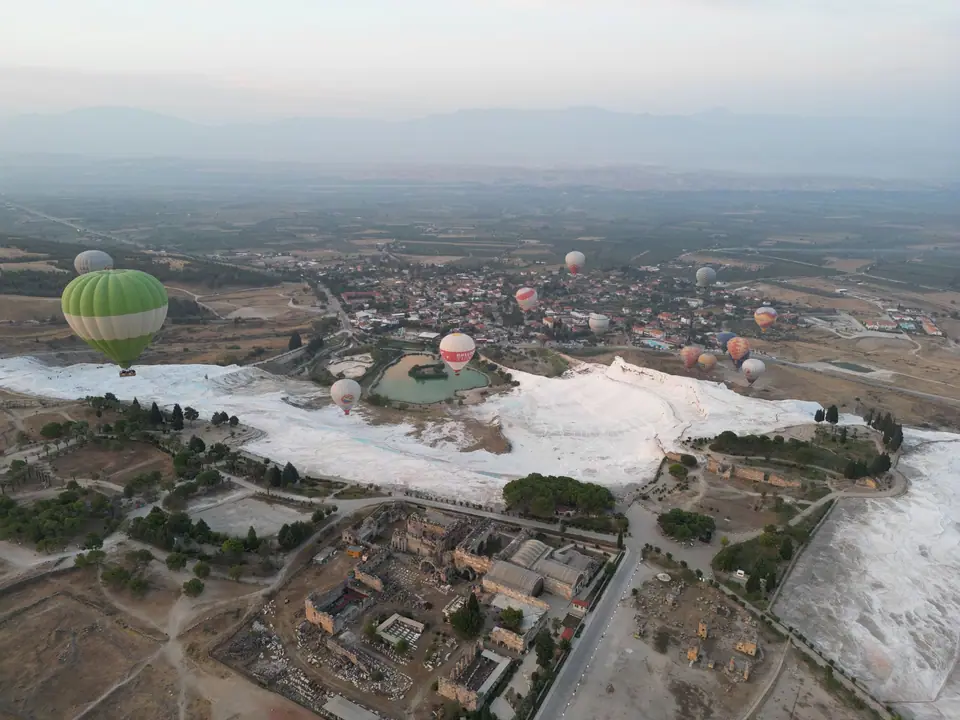
Day 7: Pamukkale & Hierapolis
Connecting Cappadocia to Pamukkale is the single trickiest logistical leg in Turkey because there are no direct commercial flights between Kayseri/Nevşehir and Denizli (DNZ). Many travellers default to a 10-hour overnight intercity bus, arriving exhausted at 06:00 AM. Here is the far smarter, field-tested way to cross Anatolia:
Morning & Midday: Two Comfortable Ways to Reach Pamukkale
- The Quick Connection Flight via Istanbul (Fastest): Book a morning Turkish Airlines connection from Kayseri (ASR) or Nevşehir (NAV) via Istanbul (IST) into Denizli Çardak Airport (DNZ), landing right after lunch. From DNZ airport, shared Baytur shuttles or pre-booked transfers take 60 minutes straight to Pamukkale village.
- Morning Flight to Izmir (ADB) + Car or Train (Zero Backtracking): Fly the direct morning SunExpress flight (runs several days a week) from Kayseri (ASR) to Izmir Adnan Menderes Airport (ADB), rent a car at the terminal (or catch the scenic TCDD regional train from the airport station), and drive 2.5 hours east along the Meander River valley to Pamukkale. If you have a car, stop 25 minutes before Pamukkale at the uncrowded colonnaded streets of Tripolis on the Meander or the marble stadiums of Afrodisias or Laodikeia.
Late Afternoon: Enter via the South Gate for Golden Hour on the Travertines
Most day-trip buses dump passengers at noon under blazing sun and depart by 03:30 PM. By arriving around 04:00 PM, you get Hierapolis and the travertines in the soft golden light after the tour groups leave.
The Gate Strategy: Take a taxi up to the South Gate (Güney Kapı) or North Gate at the top of the plateau rather than climbing up from the town gate first. Walk straight to the 2nd-century Roman Theatre of Hierapolis, one of the best-preserved stage buildings in the Mediterranean, whose upper marble tiers look directly out over the valley.
Next, walk five minutes to Cleopatra's Antique Pool, where toppled fluted Roman marble columns lie submerged inside a clear, naturally carbonated 36°C thermal spring (entry to the grounds is free; swimming among the columns requires an extra ticket at the pool counter). Finally, kick off your shoes (mandatory to protect the calcite) and walk barefoot along the warm, mineral-rich turquoise water channels of the Pamukkale Travertines as the white cliffs turn gold and violet at sunset. Check our Pamukkale entrance and gates guide before you go.
Day 8: Scenic Train to Selçuk
If winds cancelled your balloon in Cappadocia, or if you want a second flight at a fraction of the price, book a Pamukkale sunrise hot air balloon flight directly over the white travertine cliffs and the Roman theatre of Hierapolis (see our Pamukkale 1-day itinerary).
Late Morning: The 3-Hour Regional Train Down the Meander Valley to Selçuk
After breakfast, take a 20-minute minibus (dolmuş) or taxi from Pamukkale into Denizli Train Station and board the comfortable, air-conditioned TCDD regional train heading west toward Izmir. In just over three hours, the train glides past fig orchards, cotton fields, and stork nests perched on Roman aqueduct pillars before dropping you directly in the centre of Selçuk, the leafy agricultural town just three kilometres from the gates of Ephesus.
Afternoon in Selçuk: Basilica of St. John, Temple of Artemis & Şirince Village
Check into your boutique courtyard hotel in Selçuk (such as Cella Boutique Hotel, Akanthus House, or Nilya Hotel; compare areas in where to stay near Ephesus) and spend a relaxed afternoon exploring the sights right in town:
- Basilica of St. John & Ayasuluk Fortress: Built by Emperor Justinian over the believed burial site of John the Apostle on the hill above Selçuk, looking directly down on the solitary standing column of the Temple of Artemis (one of the Seven Wonders of the Ancient World) and the 14th-century İsa Bey Mosque.
- Ephesus Archaeological Museum: Don't skip this compact museum in town; it houses the original marble statues of Artemis, frescoes, and ivory friezes excavated from the Terrace Houses that you will walk through tomorrow morning.
- Sunset in Şirince: Ride a 15-minute minibus up into the olive-draped hills to Şirince village, a former Ottoman-Greek hillside settlement of whitewashed stone houses known for fruit wines, olive oil soaps, and wood-fired gözleme pancakes overlooking the vineyards.
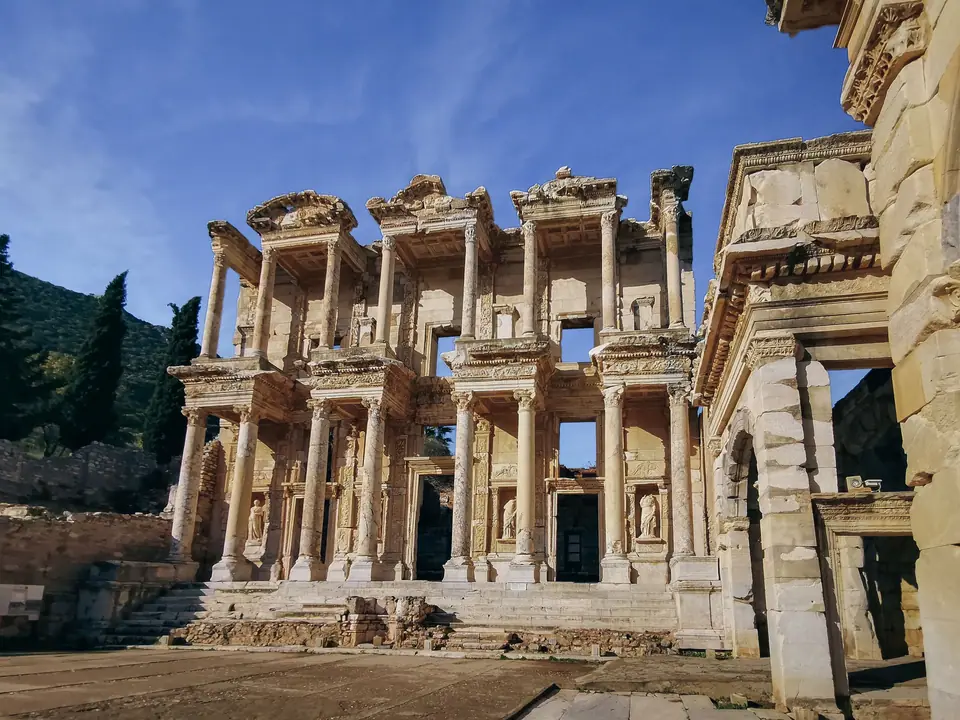
Day 9: Ancient Ephesus & Terrace Houses
Why did we sleep in Selçuk on Night 8 instead of visiting Ephesus immediately? Because cruise ships docking at nearby Kuşadası Port unload thousands of passengers between 09:30 AM and 02:30 PM. Sleeping three minutes from the ruins lets you enter the moment the gates open at 08:00 AM.
08:00 AM Sharp: The Upper Gate (Magnesia Gate) Downhill Strategy
Ephesus is built along a gentle marble-paved valley slope between two hills, with two entrances: the Upper Gate (Magnesia Gate) and the Lower Gate (Harbour Gate). Never start at the Lower Gate and walk uphill in the heat.
Instead, take a taxi from Selçuk to the Upper Gate (or book a guided tour of Ephesus that starts at the top). If you drove up from the House of the Virgin Mary on Bülbül Mountain first thing in the morning, the Upper Gate is right on your way down. Walking exclusively downhill on the ancient marble stones, you pass in chronological order:
- The Odeon & Prytaneion: The intimate roofed council chamber and the sacred hearth of the city.
- Curetes Street & Temple of Hadrian: Walk down the main marble processional avenue past the relief of Nike (goddess of victory), Trajan's Fountain, and the carved keystone arches of Hadrian's Temple.
- The Terrace Houses (Yamaç Evler): Located directly opposite Hadrian's Temple under a protective modern roof, the Ephesus Terrace Houses require a separate entrance ticket (or MuseumPass inclusion) and are the highlight of the entire site. Elevated glass catwalks let you look directly down into six luxurious Roman villas belonging to Ephesus's elite, complete with intact geometric floor mosaics, frescoed dining rooms, indoor heated clay pipes, and marble courtyards.
- The Library of Celsus: Exiting the Terrace Houses around 09:15 AM drops you straight into the courtyard of the two-storey marble facade of the Library of Celsus, built in 117 AD to hold 12,000 scrolls, before the midday crowds fill the plaza.
- The Great Theatre & Harbour Street (Arcadian Way): Finish at the colossal 25,000-seat hillside theatre (where St. Paul preached to the Ephesians) and walk out through the pine-shaded Lower Gate.
Afternoon: Aegean Coastline or Return Flight to Istanbul
After a slow lunch of grilled Aegean sea bream or stuffed courgette blossoms in Selçuk (see our Ephesus 1-day itinerary for local stops), take the 45-minute train or transfer north to Izmir Adnan Menderes Airport (ADB). Catch a 1-hour late-afternoon flight back to Istanbul so you are already in position for your international departure tomorrow, spending your final evening dining in Karaköy or Nişantaşı.
Day 10: Final Istanbul Morning
With your domestic flight already completed on the evening of Day 9, you have zero connection anxiety on your final day. Start with a traditional serpme kahvaltı (spread breakfast) in Beşiktaş (famous for its Kahvaltıcılar Sokağı, or Breakfast Street) or overlooking the water in Moda or Bebek, featuring clotted buffalo cream (kaymak) drizzled with pine honey, menemen (slow-cooked eggs with tomatoes and peppers), warm pişi dough, and endless pots of black tea. Pick up vacuum-sealed pistachios, Turkish delight (lokum from Hacı Bekir or Karaköy Güllüoğlu), and olive oil soaps before heading to IST or SAW airport for your flight home.
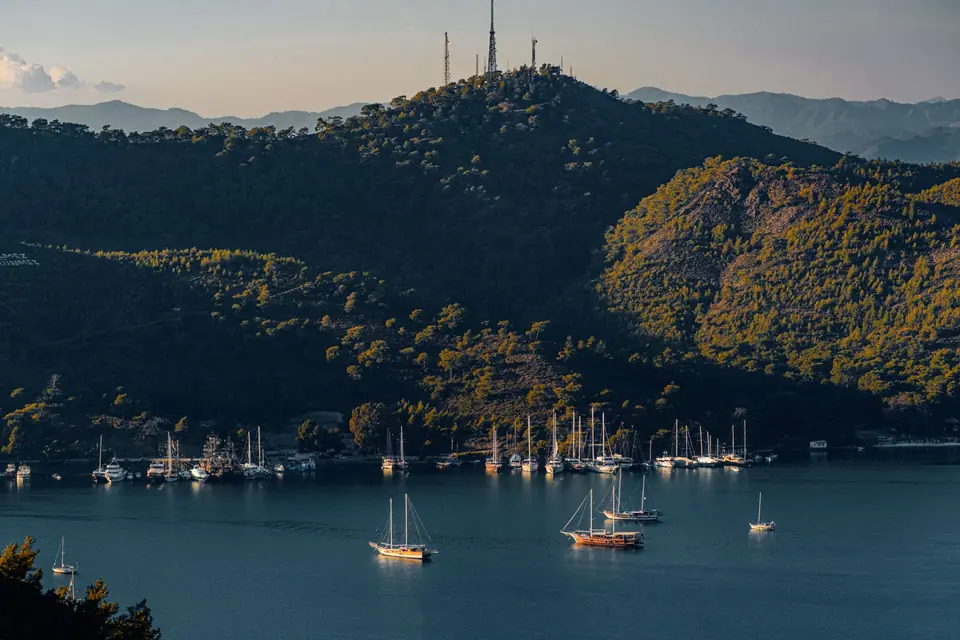
Alternative Routes: Options 2 & 3
Visiting between late May and October and prefer swimming in turquoise coves over inland desert plateaus? Here is how to adapt Days 5 to 10 using our other two field-tested routes:
Option 2: The Turquoise Coast & Ruins Road Trip (Istanbul → Ephesus → Fethiye → Kaş → Antalya)
- Days 1 to 4 (Istanbul): Follow Days 1 to 4 above, but on the evening of Day 4 fly 1 hour from Istanbul to Izmir (ADB) instead of Cappadocia and pick up a one-way rental car.
- Day 5 (Ephesus & Selçuk): Tour Ephesus and the Terrace Houses at 08:00 AM, then drive 3.5 hours south to Fethiye / Ölüdeniz (stopping at Pamukkale en route if you want a full day).
- Days 6 & 7 (Fethiye, Ölüdeniz Lagoon & Kayaköy): Spend two days swimming in the calm turquoise waters of Ölüdeniz Blue Lagoon, tandem paragliding off 1,960-metre Babadağ Mountain, walking through the abandoned stone ghost village of Kayaköy, and sailing across Butterfly Valley on a wooden gulet.
- Days 8 & 9 (D400 Coastal Drive via Kaputaş Beach, Kaş & Kekova to Antalya): Drive the dramatic cliffside D400 highway east, stopping for a swim at canyon-framed Kaputaş Beach and the Lycian sand dunes of Patara. Base yourself in bougainvillea-draped Kaş for a boat trip over the sunken Lycian ruins of Kekova, then finish in Antalya to walk the Ottoman lanes of Kaleiçi, swim off the cliff platforms (see Antalya beaches), visit Perge and Aspendos (day trips from Antalya), or join an Antalya waterfalls boat trip.
- Day 10 (Fly Antalya to Istanbul): Drop your rental car at Antalya Airport (AYT) and catch a 1-hour flight back to Istanbul to connect with your flight home.
Option 3: The "Unpack Only 3 Times" Boutique Route (Istanbul 4N → Cappadocia 3N → Bodrum or Alaçatı 3N)
- Days 1 to 4 (Istanbul, 4 Nights): Enjoy all four days in Istanbul without rushing, flying to Cappadocia on the morning of Day 5.
- Days 5 to 7 (Cappadocia, 3 Nights): Three full nights in a Göreme or Uçhisar cave hotel guarantee two backup mornings for your sunrise hot air balloon flight and give you time for long valley hikes and vineyard dinners.
- Days 8 to 10 (Izmir / Alaçatı or Bodrum Peninsula, 3 Nights): Fly direct from Kayseri (ASR) to Izmir (ADB). Spend your final three days in the stone-house surfer village of Alaçatı and the vineyards of Urla (taking an easy 50-minute morning drive to Ephesus on Day 9), or head to the whitewashed bays and beach clubs of the Bodrum Peninsula before flying back to Istanbul on Day 10.
Turkey Travel Logistics
- How to Book Domestic Flights Without Losing Luggage Allowance: Turkish Airlines (flying from IST) and Pegasus Airlines or AJet (flying mainly from SAW) operate frequent 60- to 80-minute domestic hops across the country. Note that basic domestic economy tickets often include only 15 kg of checked baggage; always select the mid-tier fare bundle at checkout so your 20 to 23 kg international suitcase is covered without airport overweight fees.
- Is the MuseumPass Türkiye Worth It on a 10-Day Trip? If you are following Option 1 (visiting Topkapı Palace + Harem, Galata Tower, Göreme Open-Air Museum + Dark Church, Kaymaklı or Derinkuyu Underground City, Ihlara Valley, Hierapolis/Pamukkale, and Ephesus + Terrace Houses + Basilica of St. John), the 15-day MuseumPass Türkiye pays for itself and lets you walk straight past the main ticket booth queues at state-run archaeological sites. Note that the Hagia Sophia Upper Gallery and the Basilica Cistern are operated separately and are not included in the MuseumPass.
- Seasonal Packing Across Three Climate Zones: Even in summer, Cappadocia sits at 1,000 metres elevation where pre-dawn balloon mornings are crisp, while marble ruins at Ephesus and Pamukkale radiate intense midday sun. Pack a light windbreaker for morning balloon launches and Bosphorus ferries, non-slip walking shoes with good tread for polished Roman marble streets (worn smooth over 2,000 years), a lightweight scarf for mosque visits, and swimwear for Pamukkale's thermal pools. Compare month-by-month weather in our Istanbul, Cappadocia, Pamukkale, and Ephesus seasonal pages.