






















Mostar, Blagaj and Sarajevo from Montenegro
Cross from the Montenegrin coast into Bosnia and Herzegovina for Mostar's Old Bridge, the dervish house at Blagaj and the layered streets of Sarajevo.
Overview
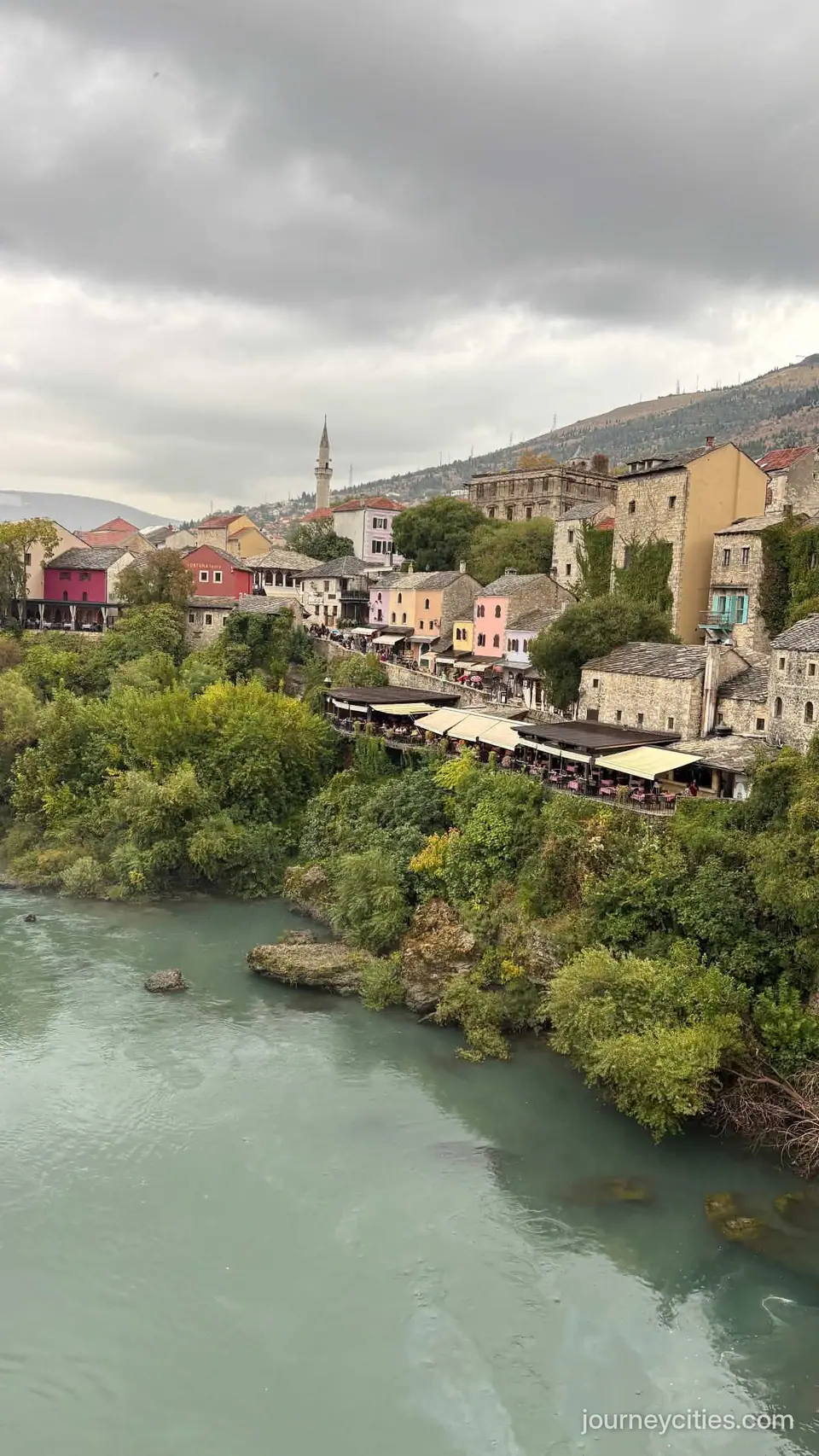
Mostar is close enough to the Montenegrin coast that many visitors to Montenegro add a few days in Bosnia and Herzegovina, and the pairing works well. In one short loop you get the Ottoman bridge at Mostar, the dervish house at Blagaj on the spring of the Buna river, and Sarajevo, a city where mosques, Catholic and Orthodox churches and Austro-Hungarian avenues stand within a short walk of each other.
The photos and videos in this guide (all but the cover image) and the notes come from Instagram user @aynurzaladin, who made this trip in October 2026 and shared them with us.
Mostar and the Old Bridge
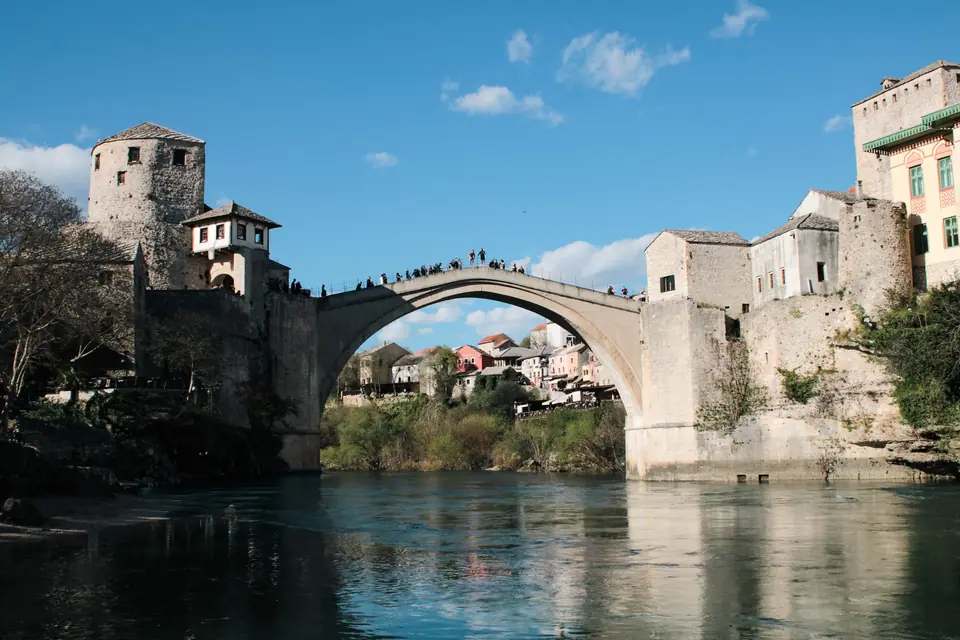
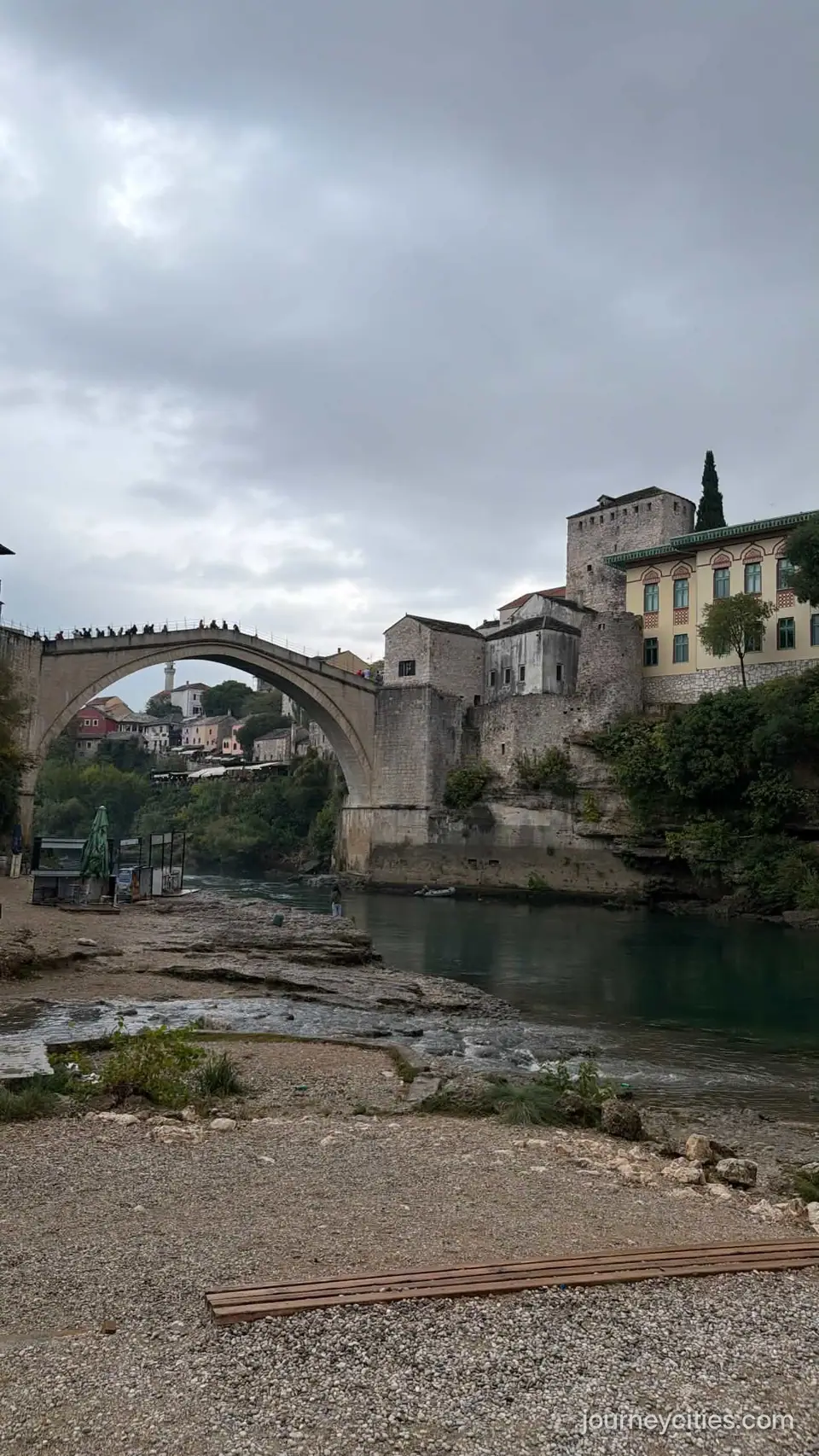
Stari Most, the Old Bridge, was finished in 1566 and spans the green Neretva in a single stone arch. It was destroyed in 1993 during the war and rebuilt from the same local stone, reopening in 2004; the old town around it is on UNESCO's World Heritage list. Walk across it, then go down to the riverbank on the west side for the classic view of the arch from below.
Men from the local divers' club jump from the top of the arch into the river, more than 20 metres below, once the crowd has collected enough money. A local story says that in the past, young men made the jump to win over the girl they wanted to marry.
Blagaj Tekke
About 12 km south-east of Mostar, a white Ottoman dervish house sits at the foot of a cliff where the Buna river comes out of a cave. Tradition links the tekke with Sarı Saltuk, a 13th century dervish from Anatolia, and for many Turkish visitors that connection is the reason to come. Aynur's note explains why. The alperens were dervish warriors who came to the Balkans from Anatolia, carrying both the frontier tradition and Sufism, and a tekke was where dervishes prayed, studied and took in guests. For her, the place stands for the spread of Islam and of the dervish tradition in the Balkans, and it is a spiritual site as much as a historic building.
Sarajevo
Sarajevo is about two hours from Mostar by train. Aynur's stops in Sarajevo are all a short walk apart:
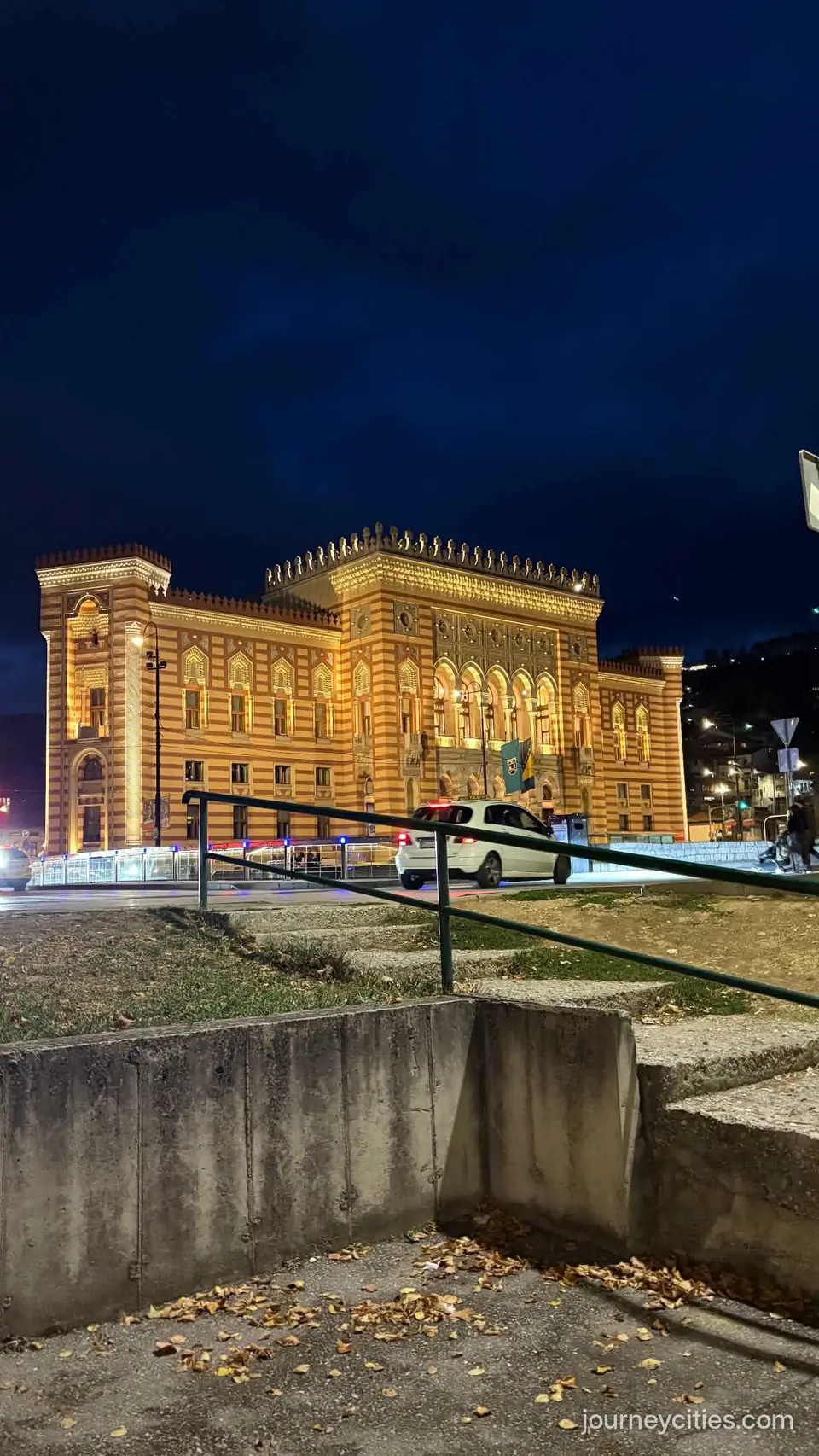
- Vijećnica, the striped neo-Moorish city hall by the river. It later became the National Library, was burned in 1992 with most of its books, and reopened in 2014 after restoration. It is at its most striking when lit up at night.
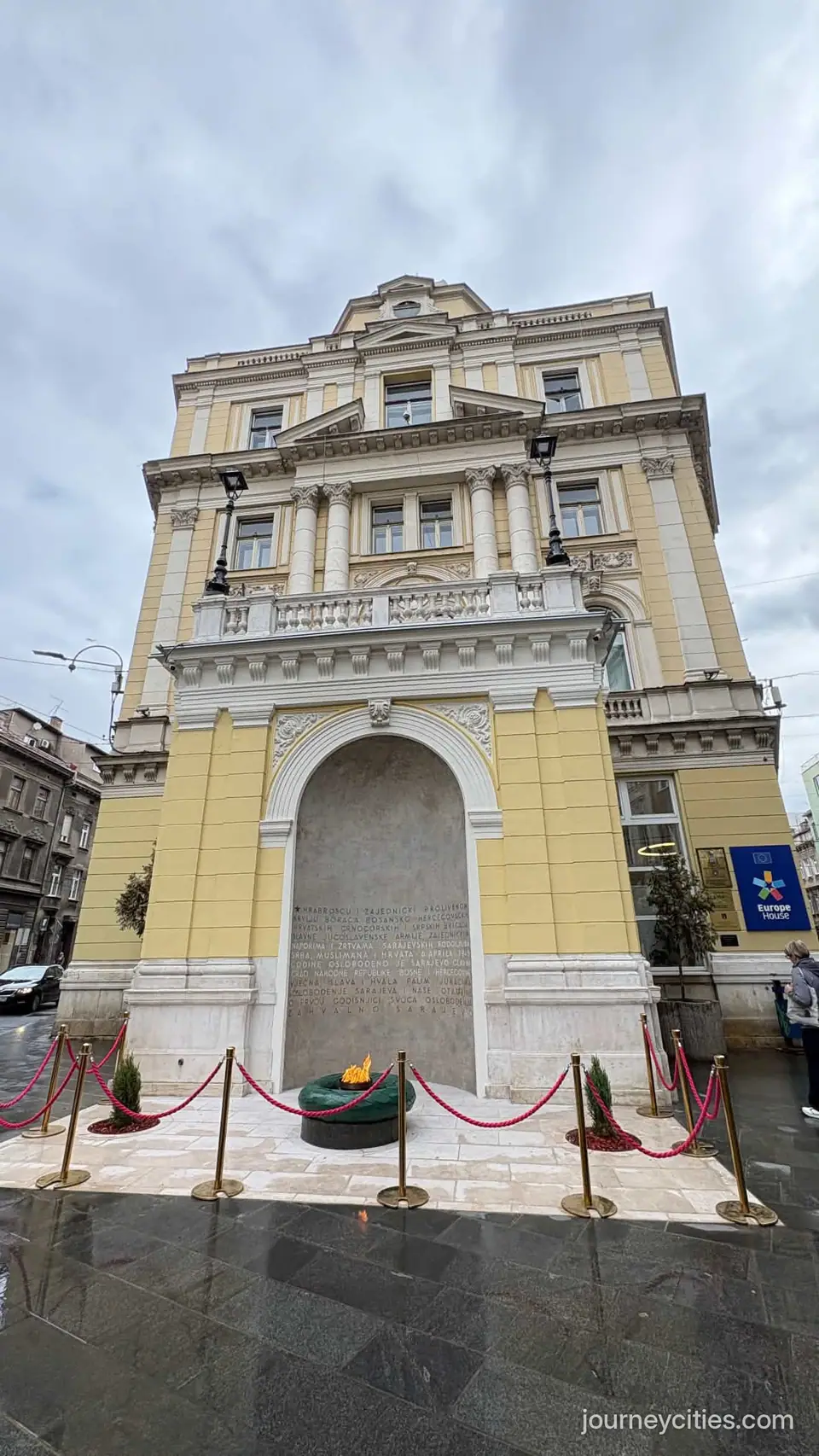
- The Eternal Flame on Ferhadija, lit in 1946 in memory of those who died in the Second World War.
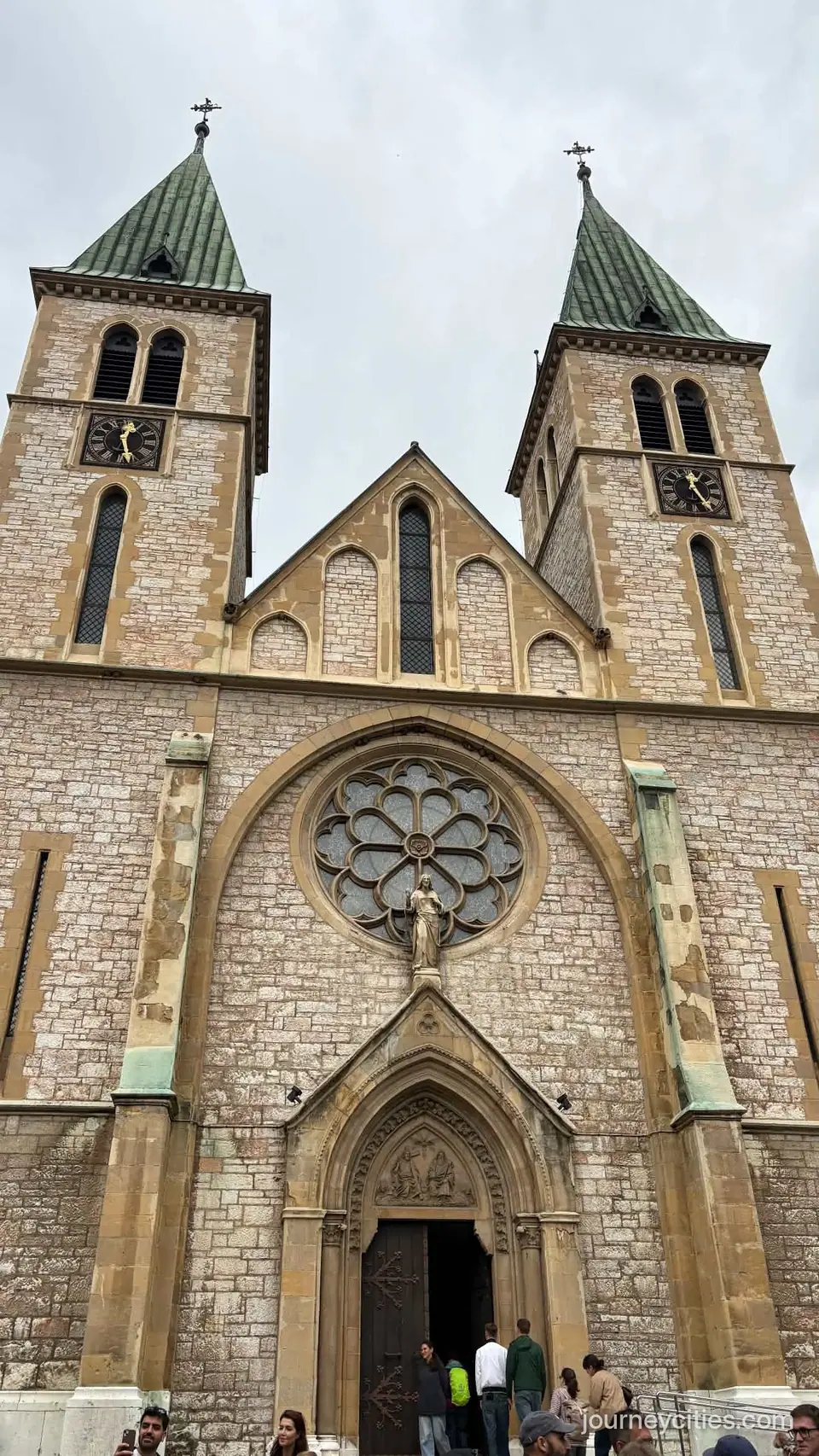
- The Sacred Heart Cathedral, the city's Catholic cathedral, with its two towers at the edge of the old town.
- Kovači cemetery, a hillside of white gravestones above Baščaršija, where Alija Izetbegović, who led the country's presidency after independence, is buried.
Back on the Montenegrin side
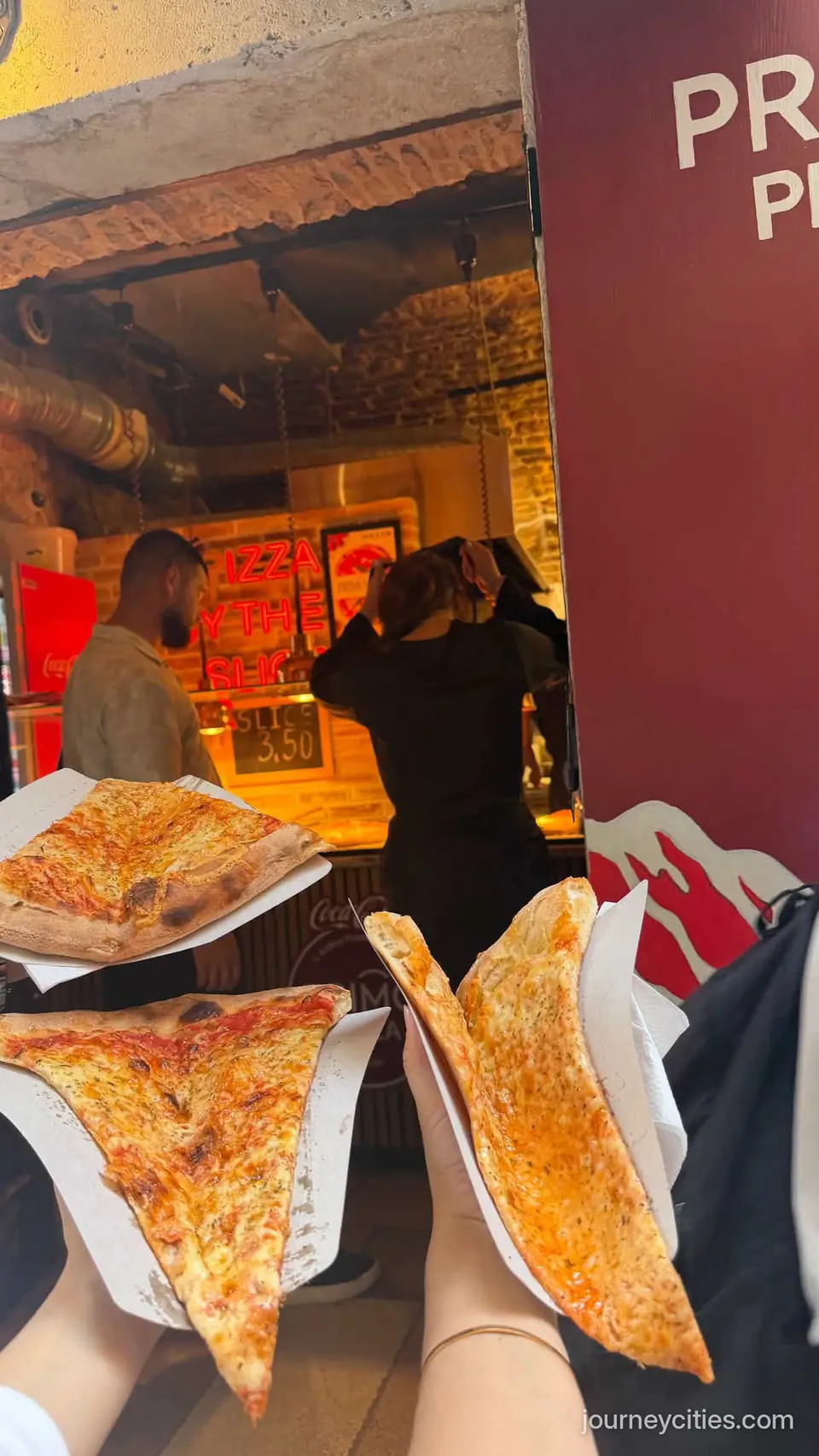
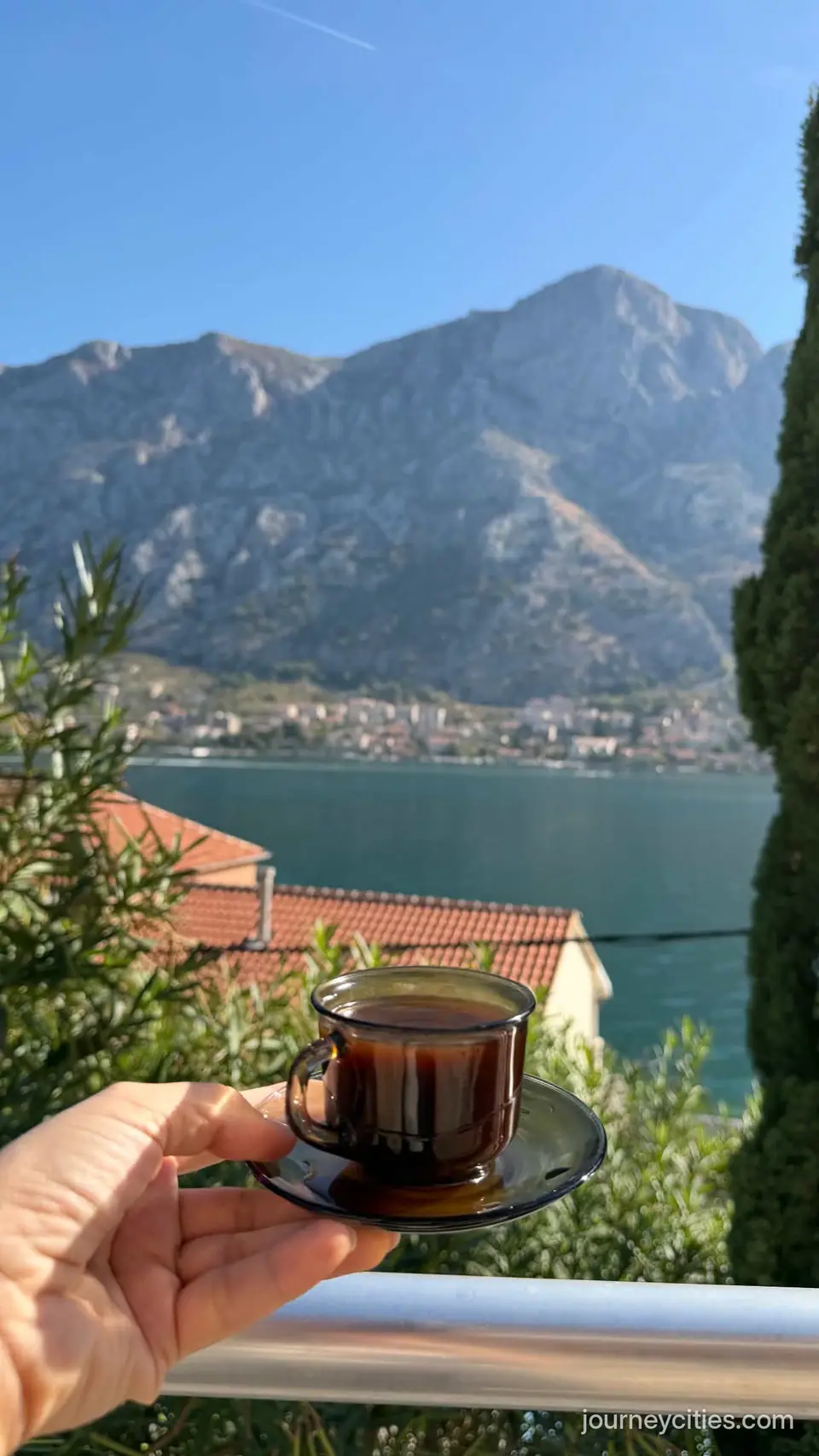
Aynur's tip from Montenegro: at a well-known pizza counter she paid about 3.5 euros for a slice (October 2026), and one slice is a meal in itself, so do not let the size scare you. And a coffee on a terrace above the Bay of Kotor, near Kotor old town, is a calm way to end a long day on the road.
How to Book
You can do this trip on your own or with a tour. Most visitors choose one of three ways:
- A day trip to Mostar from the coast. Agencies in Kotor, Budva and Herzegovina run long day trips that usually include Mostar and often Blagaj or Počitelj. The drive from Kotor takes three to four hours each way, depending on border queues, so the day is long; it suits people who only have one spare day.
- Two or three days on your own. Take a bus from Kotor or Budva to Mostar, spend a night there, visit Blagaj by local bus or taxi, then take the train to Sarajevo. It lets you see Mostar early in the morning and in the evening, when the day trip crowds have gone.
- A rented car. Ask the rental company in advance for written permission and insurance to take the car into Bosnia and Herzegovina, and allow time for the border.
On any of these routes, carry your passport: you leave Montenegro and enter Bosnia and Herzegovina, and some coastal routes pass through Croatia too. Check visa rules for your own passport before you go. Our Montenegro transport guide covers buses and roads on the Montenegrin side.
Tips
- Dress for the tekke. At Blagaj, men and women need long trousers or skirts and women cover their hair. Scarves and wraps are provided at the entrance.
- See Mostar outside the peak hours. Day trip groups arrive in late morning; stay the night and you have the bridge almost to yourself at dawn.
- Wear shoes with grip. The bridge and the old town lanes are paved with smooth, polished stone that gets slippery, especially in rain.
- Carry some local currency. Bosnia and Herzegovina uses the convertible mark. Euros are often accepted in Mostar, but change is given in marks.
- Be respectful at the memorials. Kovači cemetery and the Eternal Flame are places of remembrance, so keep voices low and ask before filming people.
- Take the train between Mostar and Sarajevo. The line follows the Neretva valley through the mountains and is the most scenic part of the trip; check the timetable a day ahead, as there are usually only two trains a day in each direction.
The route on the map
- 1Kotor · start on the Montenegrin coast
- 2Mostar and the Old Bridge
- 3Blagaj Tekke · about 12 km south-east of Mostar
- 4Sarajevo · about two hours from Mostar by train
Reviews
Log in to write a review.
No reviews yet.
You might also like

Cappadocia Balloon Watching and Horse Riding
About an hour at a viewpoint around sunrise, and one to two hours on horseback, usually in the late afternoon · Cappadocia

Wieliczka Salt Mine Tour
About 2 to 3 hours underground, plus the train or transfer from Kraków · Kraków

Whale Watching from Vancouver
About 3 to 5 hours on the water, depending on how far the boat has to go to find whales · Vancouver

US Capitol Tour
About 1 to 2 hours: a short film and a guided walk of under an hour, plus security and time in the Visitor Center exhibits · Washington DC
