Cairo
Straddling the River Nile where the valley opens into the Delta, Cairo unites the Fourth-Dynasty Pyramids of Giza and the Grand Egyptian Museum on the West Bank with the 1902 Egyptian Museum in Tahrir Square, the royal mummies of NMEC in Fustat, the Roman towers of Coptic Cairo, and the Fatimid and Mamluk domes of UNESCO-listed Historic Cairo.
Quick decisions
- How many days? Allow 3 to 4 full days so you can dedicate one day to the Giza Plateau, Grand Egyptian Museum, and Saqqara on the West Bank, a second day to Coptic Cairo, the NMEC Royal Mummies Hall, and Tahrir Square, and a third day to Historic Islamic Cairo and the Citadel.
- Where should I stay? Base yourself on leafy Gezira Island (Zamalek) or the Garden City Corniche for central Nile walks and dining, or split your stay with a night facing the Giza Pyramids near the Grand Egyptian Museum.
- Do I need a car? Do not rent a car to drive yourself in Cairo traffic; use Cairo Metro Lines 1, 2, and 3 for Tahrir Square, Coptic Cairo, and Zamalek, Uber or Careem for point-to-point city rides, and a private driver for a full-day loop to Saqqara and Dahshur.
- Best for: Old Kingdom pyramids and temples, royal pharaonic mummies, medieval Fatimid and Mamluk architecture, Coptic Christian heritage, and Nile sailing.
- Before you go: Bring a Visa or Mastercard credit or debit card to every monument and museum (all Ministry of Tourism and Antiquities ticket windows are strictly cashless), and carry crisp US dollars, euros, or pounds sterling in cash if buying a Visa on Arrival at Cairo Airport bank kiosks.
- Getting around: Combine the air-conditioned Cairo Metro with GPS ride-hailing apps and learn the ten Eastern Arabic numerals (٠١٢٣٤٥٦٧٨٩) so you can read Egyptian car number plates at pickup points.
- Continue your trip: Board an Egyptian National Railways train from Ramses Station or a short domestic flight south to Luxor and Aswan, or connect across the Mediterranean to Athens and Istanbul.
Overview
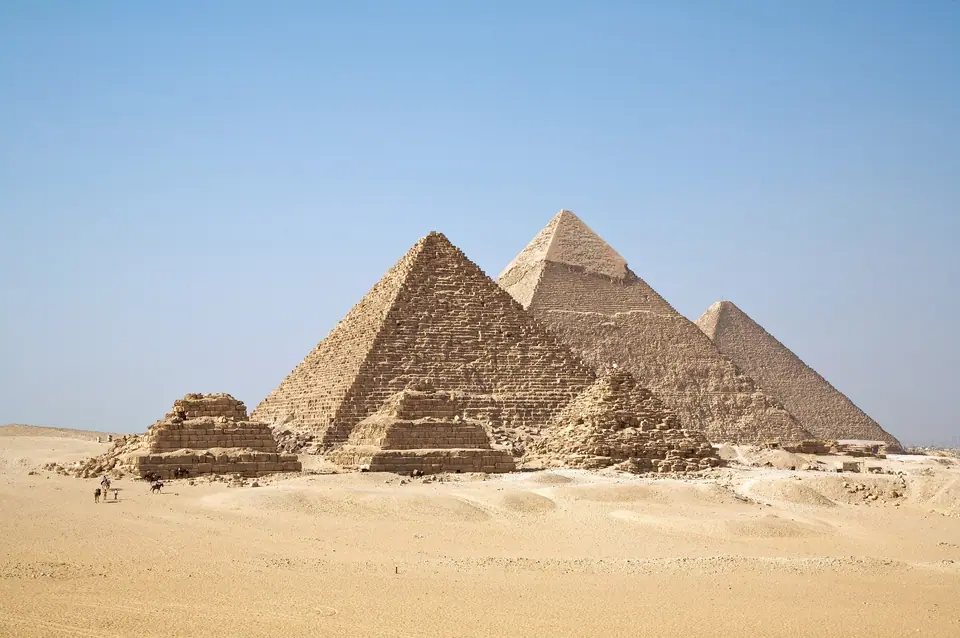
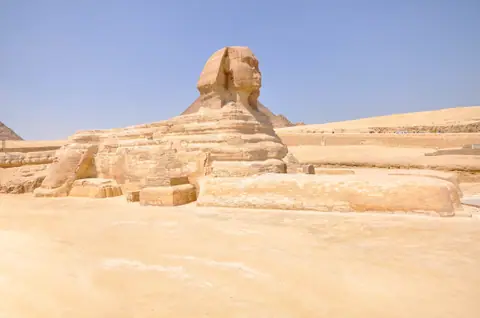
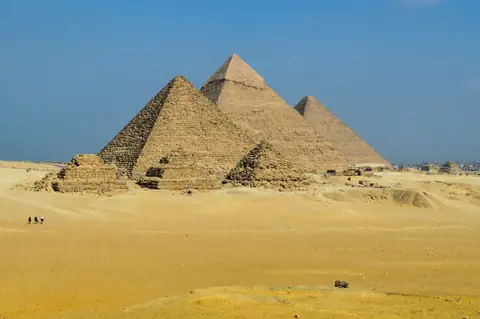
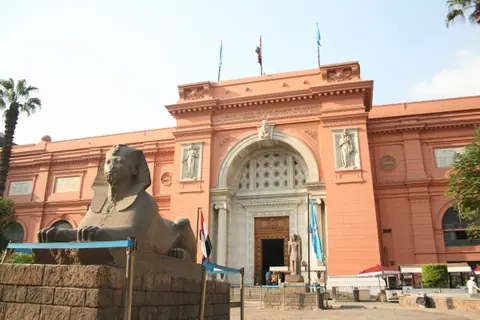
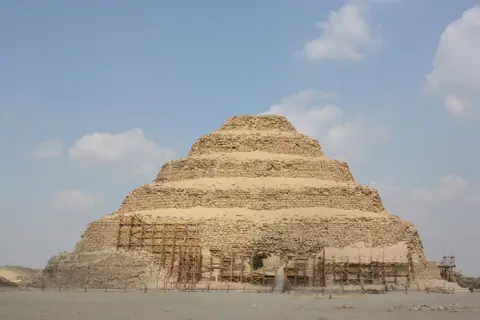
Set at the geographic apex where the narrow ribbon of Upper Egypt fans out into the fertile Nile Delta, Greater Cairo (Al-Qāhirah) has anchored Egyptian civilisation for more than five thousand years. Across the river to the west rise the limestone plateaus of Giza, Saqqara, and Dahshur (inscribed by UNESCO in 1979), where Third- and Fourth-Dynasty pharaohs raised the Step Pyramid of Djoser (c. 2670 BCE), the Great Pyramid of Khufu (c. 2560 BCE), and the Great Sphinx. On the East Bank, successive capitals marched northward over the centuries: from the Roman Fortress of Babylon in Coptic Cairo and the 641 CE Arab garrison of Fustat to the royal enclosure of Al-Qāhirah, founded in 969 CE by the Fatimids around Al-Mu'izz Street and Al-Azhar Mosque and crowned by Saladin's 1176 Citadel. Today, with the Grand Egyptian Museum (GEM) beside the Giza Plateau, the Royal Mummies Hall at NMEC in Fustat, and the classic 1902 Egyptian Museum in Tahrir Square, Cairo offers an unmatched journey through human history.
Getting there
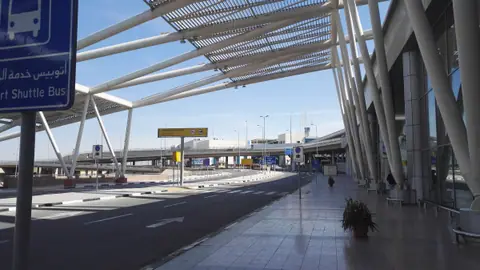
Fly direct into Cairo International Airport (CAI) in Heliopolis (20 km north-east of Downtown) or Sphinx International Airport (SPX) near the Giza Plateau, and ride Egyptian National Railways trains from Ramses Station to Alexandria and Upper Egypt.
Where to stay
Choose between the tree-lined avenues of Zamalek on Gezira Island and the Garden City Nile Corniche, historic 19th-century Khedivial Downtown around Tahrir Square, or resort hotels facing the Giza Pyramids.
Things to do
Explore the Pyramids of Giza and the Great Sphinx, compare Cairo's three flagship museums (GEM, NMEC, and Tahrir), walk medieval Al-Mu'izz Street and Khan el-Khalili, tour the Saladin Citadel and Sultan Hassan Mosque, and visit Coptic Cairo and Saqqara.
Food and drink
Order a steaming bowl of koshary topped with crispy fried onions, garlic vinegar daqqa, and chilli shatta, taste emerald-green fava-bean ta'ameya and ful medames in warm aish baladi flatbread, and finish with hot baked umm ali.
Culture
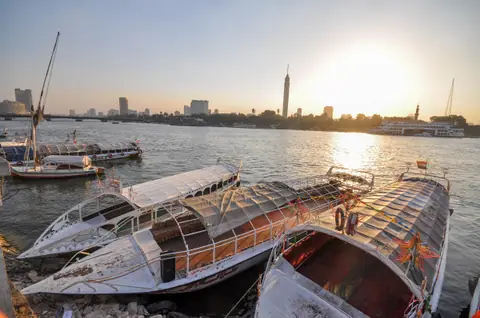
Experience five millennia of Pharaonic, Graeco-Roman, Coptic Christian, and Islamic artistry, from Old Kingdom limestone reliefs and 14th-century Mamluk stone domes to sunset felucca sails around Gezira Island.
Weather by month
Cairo is warmest in June, with average highs around 35°C, and coldest in January, when nights drop to about 10°C. January is the wettest month, with rain on about 2 days.
| Month | Low | Range | High | Rain | Rainy days |
|---|---|---|---|---|---|
| Jan | 10°C | 19°C | 14 mm | 2 d | |
| Feb | 11°C | 21°C | 14 mm | 2 d | |
| Mar | 13°C | 24°C | 7 mm | 1 d | |
| Apr | 16°C | 28°C | 7 mm | 1 d | |
| May | 20°C | 32°C | 0 mm | 0 d | |
| Jun | 22°C | 35°C | 0 mm | 0 d | |
| Jul | 24°C | 35°C | 0 mm | 0 d | |
| Aug | 24°C | 35°C | 0 mm | 0 d | |
| Sep | 22°C | 33°C | 0 mm | 0 d | |
| Oct | 19°C | 30°C | 0 mm | 0 d | |
| Nov | 15°C | 25°C | 7 mm | 1 d | |
| Dec | 11°C | 21°C | 14 mm | 2 d |
Averages of daily values from 2015 to 2024. Rainy days are days with at least 1 mm of rain. Source: Open-Meteo · Compare destinations by month.
Cairo on the map
Every place we cover in Cairo. Tap a category or pin to explore.
In-depth Cairo guides
Browse the guides grouped by topic: sights, neighbourhoods, food, transport, day trips and trip planning.
Sights, Landmarks & Parks
Key monuments, viewpoints, museums and nature trails.
- 12 Essential Landmarks & Experiences Across Cairo and GizaExplore the 12 defining landmarks of Cairo, Egypt: stand before the Giza Pyramids and Great Sphinx, compare the Grand Egyptian, NMEC, and Tahrir museums, walk Al-Mu'izz Street, and visit Saqqara.
- Best Time to Visit Cairo: Winter Desert Sunshine, Khamsin Winds & Ramadan NightsMonth-by-month Cairo weather guide using official 1991-2020 EMA/WMO climate normals: plan around 19°C-25°C winter sunshine from November to March, spring Khamsin winds, summer museum hours, and Ramadan.
- 3 Days in Cairo: Giza & GEM, Royal Mummies & Coptic Cairo, Plus Historic Islamic CairoA geographic 3-day Cairo itinerary that avoids cross-town traffic: dedicate Day 1 to the West Bank (Giza Pyramids, Sphinx, and Grand Egyptian Museum), Day 2 to Coptic Cairo, NMEC, and Tahrir, and Day 3 to Islamic Cairo.
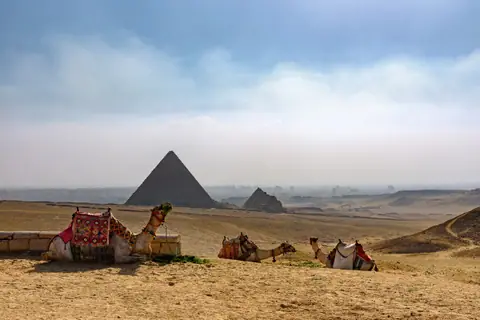
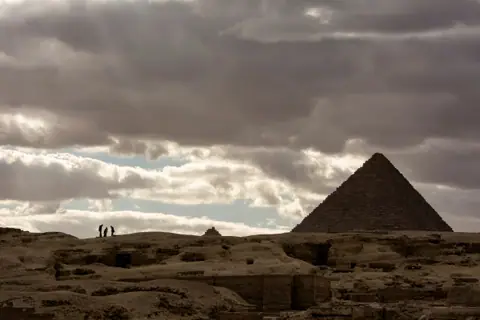
- Giza Pyramids & Great Sphinx: Khufu, Khafre, Menkaure, Gates & Panorama RouteHow to visit the Giza Pyramid Plateau independently or with an Egyptologist: compare the Mena House and Sphinx gates, explore Khufu, Khafre, Menkaure, and the Valley Temple, and reach Panorama Point.
- Cairo's Three Great Museums Compared: GEM, 1902 Tahrir Museum & NMEC Royal MummiesUnderstand which treasures are housed in each of Cairo's three flagship museums: the Grand Egyptian Museum (GEM) at Giza, the Royal Mummies Hall at NMEC in Fustat, and the 1902 Egyptian Museum in Tahrir Square.
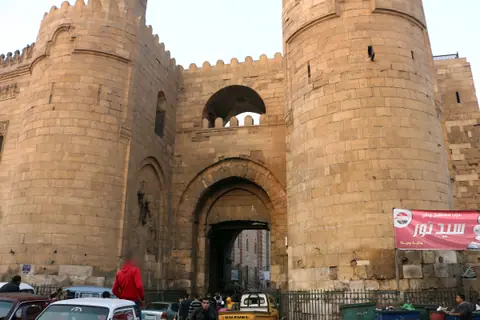
- Islamic Cairo Walking Route: Al-Mu'izz Street, Qalawun, Bab Zuweila & Khan el-KhaliliA step-by-step walking route through UNESCO-listed Historic Cairo: start at the 1087 northern gate of Bab al-Futuh, follow pedestrianised Al-Mu'izz Street past the Qalawun Complex to Khan el-Khalili and Al-Azhar, and climb Bab Zuweila.
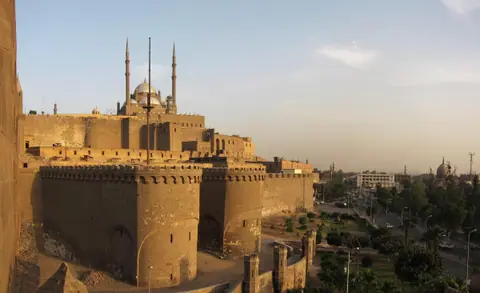
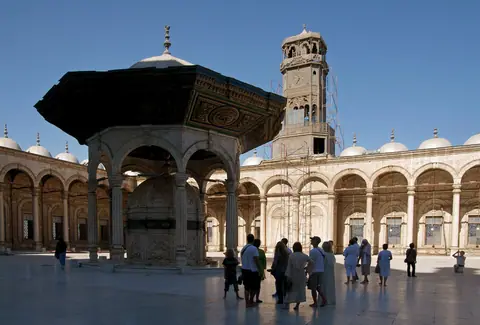
- Saladin Citadel, Mosque of Muhammad Ali, Sultan Hassan & Ibn Tulun GuideExplore the monumental southern half of Islamic Cairo: tour the 1176 Citadel of Saladin and the 1848 Alabaster Mosque of Muhammad Ali, stand inside the 1356 Mosque-Madrasa of Sultan Hassan and Al-Rifa'i, and climb the 879 CE spiral minaret of Ibn Tulun.
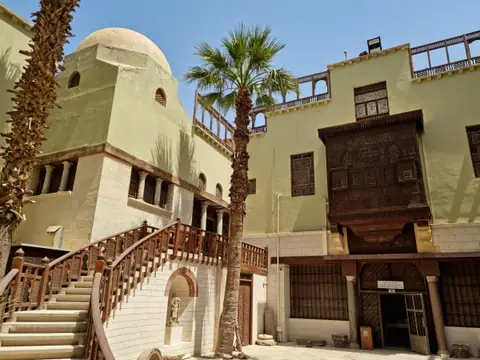
- Coptic Cairo: Babylon Fortress, Hanging Church, Abu Serga, Coptic Museum & Ben EzraExplore the walled Christian and Jewish quarter of Old Cairo at Mar Girgis Metro Station: visit the Roman Fortress of Babylon, the Hanging Church, the Holy Family Crypt at Abu Serga, the Coptic Museum, Ben Ezra Synagogue, and the 641 CE Mosque of 'Amr ibn al-'As.
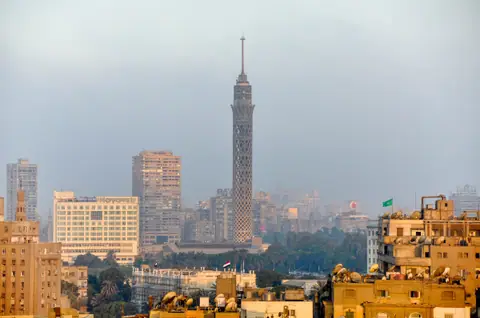
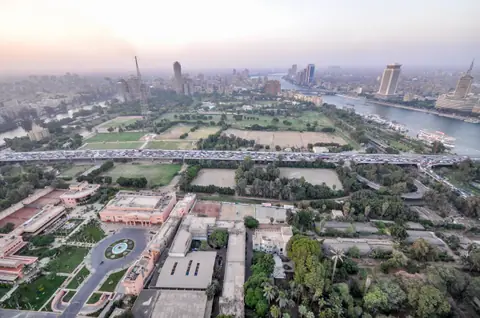
- Zamalek (Gezira Island), 187m Cairo Tower, Qasr el-Nil Bridge & Nile Felucca GuideExperience Cairo's river heart on Gezira Island: climb the 187-metre lotus-shaped Cairo Tower, explore the Cairo Opera House and 1869 Gezira Palace in Zamalek, cross Qasr el-Nil Bridge, and sail a felucca at sunset.
Neighbourhoods & Where to Stay
Districts, historic quarters and the best bases for your stay.
- Cairo Orientation: East Bank, Nile Islands & the Giza West BankUnderstand how Greater Cairo is laid out across the River Nile: connect Khedivial Downtown, UNESCO Historic Islamic Cairo, and Coptic Cairo on the East Bank with Zamalek and the Giza Pyramid Plateau.
- What to Wear in Cairo: Mosque Dress Code, Pyramid Footwear & Winter LayersPractical dress and packing guide for Cairo, Egypt: how to dress respectfully for historic mosques and Coptic churches, what shoes to wear on the Giza Plateau and Al-Mu'izz Street, and why winter nights need warm layers.
- Where to Stay in Cairo: Zamalek, Garden City Nile Corniche, Downtown & GizaCompare the four best areas to stay in Greater Cairo: leafy Zamalek on Gezira Island, five-star Nile Corniche hotels in Garden City, Belle Époque Downtown near Tahrir Square, or pyramid-view resorts in Giza.
Food & Drink
Local dishes, markets, cafés and dining districts.

Getting Around & Arrival
Airport transfers, public transit, passes and driving rules.
Day Trips & Excursions
Easy half-day and full-day trips from the city.
Reviews
Log in to write a review.
No reviews yet.