Dubrovnik Old Town Guide: City Walls, Stradun and the Adriatic Pearl
How to explore Dubrovnik's walled Old Town in the right order: the city walls, the main street, the palaces, the harbour, the cliff bars and where to eat.
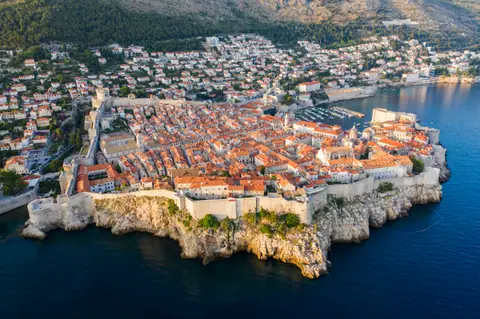
Dubrovnik is one of those places that looks exactly like its photographs and then turns out to be better. A ring of pale limestone walls, more than a kilometre and a half long, encloses a small town of polished streets and terracotta roofs, and beyond the walls the Adriatic spreads out in a deep, almost unreal blue. For centuries the town was the independent Republic of Ragusa, a wealthy trading state that rivalled Venice, and it kept its freedom until Napoleon's armies arrived in 1808. That long independence left a city of palaces, churches, fountains and fortresses that has barely changed since.
The Old Town is small, popular and often crowded, so a little planning makes a big difference. This guide explains how to walk the walls, what to see along the main street and in the quieter lanes, where to find the best views and the cliff bars, how to deal with the cruise ship crowds and where to eat well without paying tourist prices.
The walled city at a glance
- How long? One full day covers the walls and the main sights. Two days let you add the island of Lokrum or the cable car, and slow down.
- Where to start? On the city walls, as early in the morning as you can manage, before the heat and the cruise passengers arrive.
- The signature experience: the walk around the walls, with the roofs on one side and the sea on the other.
- The best free sights: the main street, the squares, the old harbour and the lanes cost nothing to enjoy.
- The classic evening: a drink at a cliff bar at sunset, then dinner in a quiet side street.
- The biggest mistake: visiting the walls in the middle of a summer day, when they are hot, crowded and shadeless.
- When to go: late spring and early autumn, covered in our best time to visit Dubrovnik guide.
- Where to sleep: inside the walls for atmosphere, or in Lapad and Ploče for easier access and beaches. More in our Dubrovnik where to stay guide.
The route that works: walk the walls first thing, descend to the main street for a late breakfast, visit one or two museums or palaces, rest in the afternoon, and return for the cliff bars and dinner. Our Dubrovnik 3-day itinerary shows how to build it into a longer stay, and the Old Town guide and city walls guide cover the essentials.
How the little city is arranged
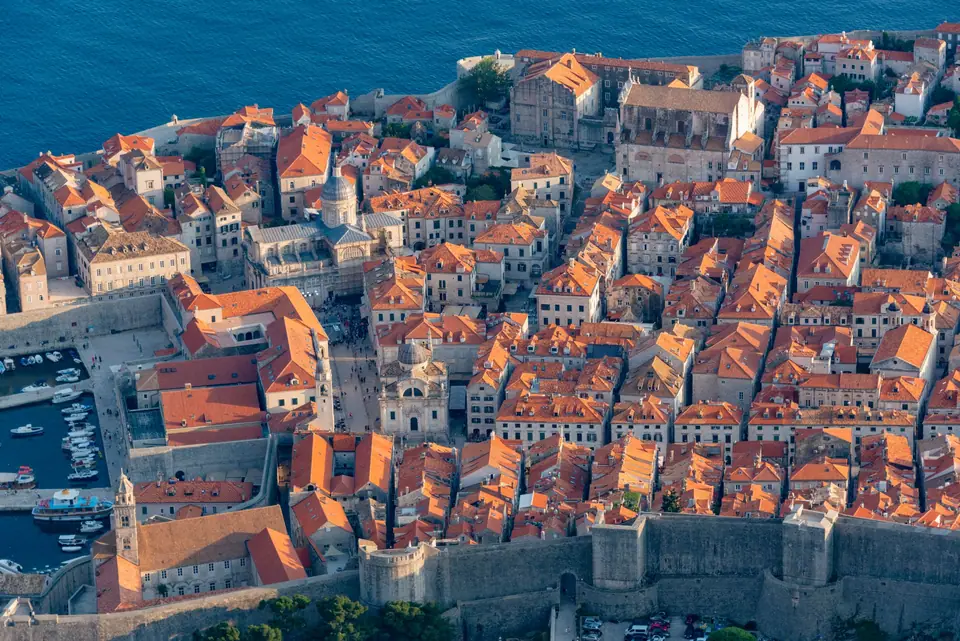
The Old Town is a compact rectangle squeezed between the sea and a steep hill. Its main street, the Stradun, runs straight from the Pile Gate at the western end to the Old Port at the east, and almost every lane leads off it at a right angle. To the north, the lanes climb in steep stairways towards the walls, and to the south, they run down to the sea gates and the cliffs. The smaller streets are narrow, quiet and full of washing lines and potted plants.
It takes about a quarter of an hour to walk from end to end, so it is impossible to get truly lost. If you do, head downhill and you will find the Stradun. Cars are not allowed inside the walls, so you will walk everywhere, and your luggage must be carried or wheeled over stone steps. Pack lightly, or choose accommodation near one of the gates.
Walking the city walls
The walls are the main reason to visit, and the finest way to understand the city. Built mainly between the twelfth and seventeenth centuries, they run for nearly two kilometres around the Old Town, reaching up to twenty-five metres high and as much as six metres thick. Towers, bastions and forts break the line, and the path rises and falls along the top, with views of the roofs on one side and the sea on the other. The whole circuit takes between one and two hours, depending on how often you stop to take photographs.
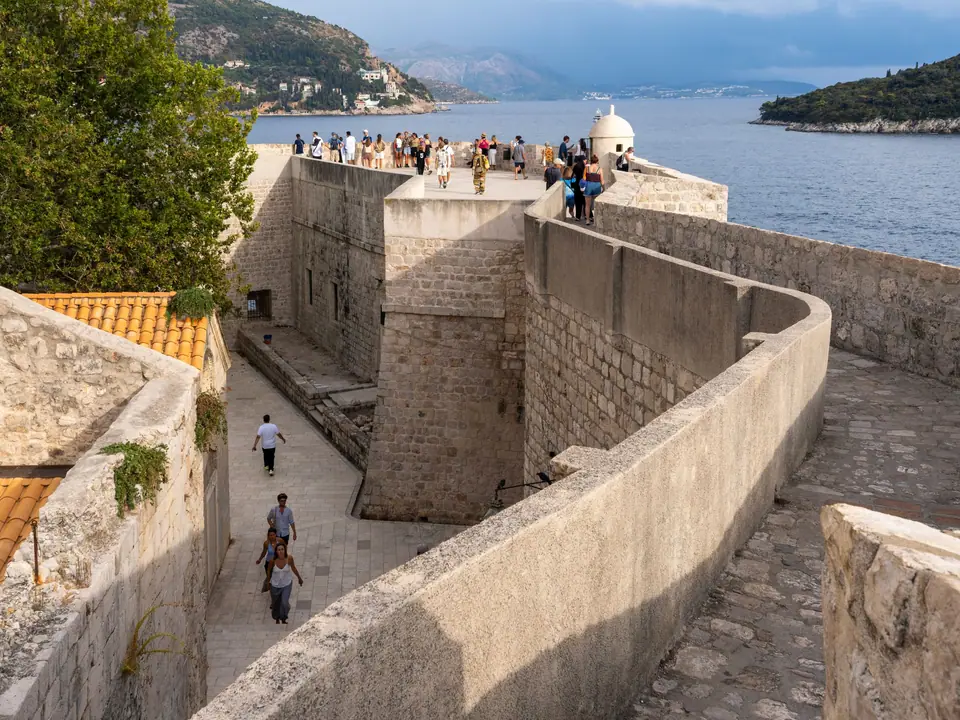
There are three entrances, at the Pile Gate, the Ploče Gate and near the Old Port, and you walk in one direction only. Go as early as possible, or in the late afternoon, since in summer the stone gets very hot and the walkway is crowded. Take water, a hat and sunscreen, because there is almost no shade, and wear shoes with a firm grip. There are a few cafes along the route, including one with an incredible view over the sea. The walls are steep in places, with many steps, and not suitable for anyone who cannot manage stairs.
Pile Gate and the Stradun
Most visitors enter through the Pile Gate, a grand sixteenth-century gateway reached by a stone bridge across the former moat. Just inside stands Onofrio's Large Fountain, a domed fountain built in the fifteenth century to bring fresh water from a spring twelve kilometres away. Sixteen carved stone faces pour water into a round basin, and visitors fill their bottles at the spout. Opposite, the Franciscan Monastery holds a cloister of rare beauty and one of the oldest working pharmacies in Europe, open since the fourteenth century.
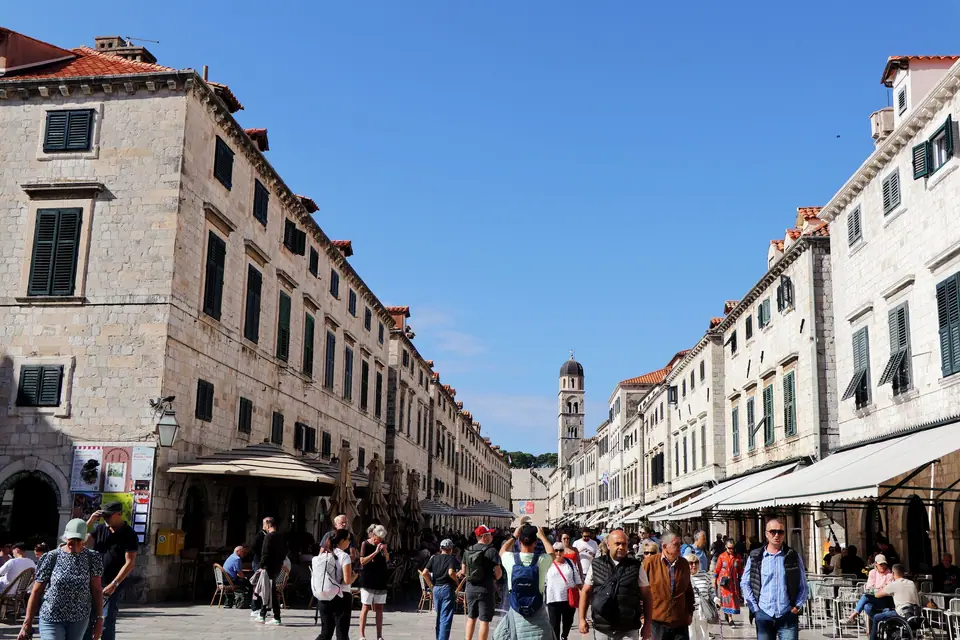
The Stradun itself is a broad, straight street paved with limestone that has been polished to a gleaming shine by centuries of feet. Lined with identical stone houses with shops and cafes on the ground floors, it was rebuilt in the same style after the earthquake of 1667. It is magnificent early in the morning, when the sun is low and the street almost empty, and again in the evening, when the lamps come on and the locals take their evening stroll. At midday in high season, it is a river of people.
Luža Square and the old civic heart
At the eastern end of the Stradun, Luža Square is the old centre of the republic, ringed by its most important buildings. The Bell Tower rises above the square, and beside it stands the Sponza Palace, a Gothic and Renaissance building that once served as the customs house and now holds the state archives. In front is the Orlando column, a medieval statue of a knight that served as a flagpole for the city and a place to announce proclamations.
Just beyond, the Rector's Palace was the seat of the republic's elected ruler, who was confined to the building during his month in office. Its arcaded courtyard and grand staircase are part of a museum that shows the furniture, portraits and costumes of the Ragusan nobles. The nearby cathedral, rebuilt in the baroque style after the earthquake, has a treasury of relics, including what is said to be the skull of Saint Blaise, the city's patron saint, whose statue appears on gates and walls throughout the town.
The old port and the quieter lanes
The Old Port, at the end of the Stradun, is a small, picturesque harbour guarded by a fortress and a stone breakwater. Fishing boats, ferries to the islands and sightseeing boats moor here, and the quay is lined with cafes and restaurants. Sit on the harbour wall in the late afternoon and watch the boats come and go. The Maritime Museum, housed in the Fort of St John, explains the sea power of the republic.
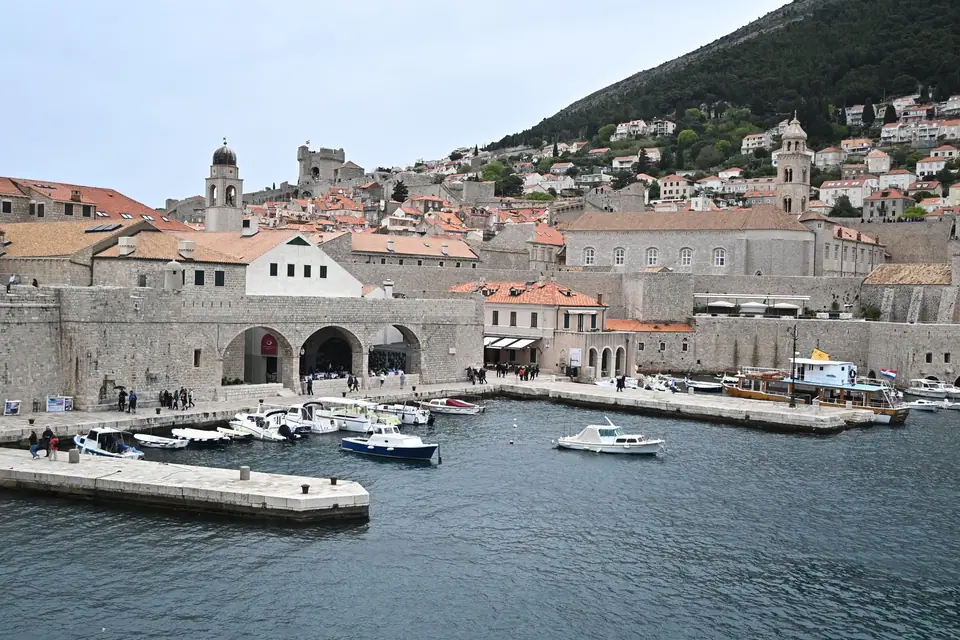
North of the Stradun, the lanes climb in steep, narrow flights of steps lined with laundry, flowerpots and tiny family restaurants. They are quieter than the main street, and their tranquillity gives a flavour of daily life in the old town. The Jesuit Stairs, a baroque staircase leading to a church, are one of the most photographed spots. Near the east end, the old synagogue, one of the oldest Sephardic synagogues in Europe, tells the story of the Jewish community that settled here in the fifteenth century.
Fort Lovrijenac and the western views
Outside the Pile Gate, on a rocky cliff above the sea, stands Fort Lovrijenac, nicknamed the Gibraltar of Dubrovnik. Built to defend the western approach, it has walls up to twelve metres thick on the landward side but only one metre facing the town, a clever device so that the garrison could not turn against the republic. Above its gate runs an inscription that reads that freedom is not sold for all the gold in the world. The fort is a short climb up stone steps, and from its terrace you can look back along the full length of the city walls, one of the finest views of Dubrovnik.
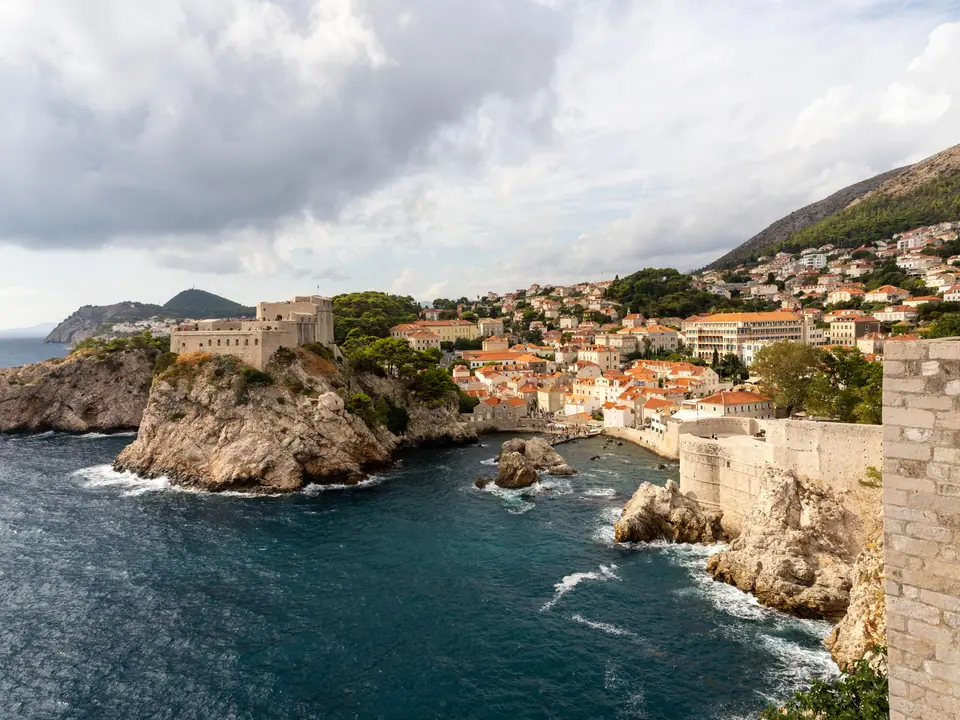
The fort has also been used as a film location and a stage for the summer festival, with open-air performances in the courtyard. Nearby, a path along the coast leads to small rocky beaches where locals swim in the clear water.
Cliff bars, sunsets and a swim
Dubrovnik's most delightful secret is the Buža bars. These are informal drinking spots perched on the rocks outside the southern walls, reached through small holes in the stone. Buža means hole in Croatian. Perch on the terrace with a cold drink, jump into the sea from the rocks if you feel brave, and watch the sun set over the Adriatic. They fill up fast around sunset, so arrive early to find a seat.
For a proper swim, the nearest pebble beach is Banje, just outside the eastern gate of the Old Town, with a view of the walls and Lokrum island. It is busy in summer and has beach clubs with loungers. Quieter coves lie along the coast to the south and west, and boats leave the Old Port for the island of Lokrum, a green nature reserve with a ruined monastery, botanical gardens and rocky swimming spots. For a more active day on the water, our Dubrovnik sea kayaking experience paddles beneath the walls.
A day from rampart to harbour
- Early morning: enter the walls at the Pile Gate as soon as they open and walk the full circuit.
- Mid-morning: descend to the Stradun and have a late breakfast at a cafe in a side street.
- Late morning: visit Onofrio's Fountain, the Franciscan Monastery and Luža Square.
- Midday: see the Rector's Palace or the cathedral, then escape the heat in a museum or a shady courtyard.
- Afternoon: rest, swim at Banje beach or take a boat to Lokrum.
- Late afternoon: climb to Fort Lovrijenac for the view of the walls.
- Sunset: a drink at one of the cliff bars.
- Evening: dinner in a quiet lane, then a stroll along the empty Stradun.
In summer, the middle of the day is for resting, swimming and shade, and the best sightseeing is in the early morning and the evening.
Where to point the camera
Dubrovnik is a photographer's dream, and a few spots deliver the classic shots. The view from the Fort Lovrijenac terrace shows the walls and the sea together. The Stradun, photographed from the clock tower end in the early morning, shines like a polished mirror. From the top of the walls, the rooftops make a patchwork of old and new tiles, and the boats leaving the harbour make a lively foreground. The Buža bars give you sunset over the open sea, and the cable car on Srđ offers the long panorama over the whole peninsula. Carry a lens cloth, since sea spray reaches the lower terraces.
Rainy days and slow afternoons
When the weather turns, the Old Town still has plenty of indoor options. The Rector's Palace, the Maritime Museum and the Franciscan Monastery can fill a damp morning, and the cathedral and the Dominican Monastery hold altarpieces and relics. The Ethnographic Museum, in an old granary, shows rural life in the Dubrovnik hinterland, and the synagogue museum is small and affecting. Cafes with covered terraces and tiny wine bars make good places to wait out a shower, and a long, slow lunch is rarely a bad idea.
A second day above and beyond the walls
With extra time, take the cable car up Mount Srđ for a panorama over the city, the sea and the islands. At the summit is a fort that houses a museum about the Croatian War of Independence, when Dubrovnik was shelled in 1991 and 1992. Look closely at the roofs from the walls and you will see that the bright orange tiles are the newer ones, laid after the damage. The walls themselves were repaired with remarkable care. A day trip is another option, and our Dubrovnik day trips guide covers the Elafiti Islands, Cavtat, the oyster town of Ston and Montenegro. Our things to do in Dubrovnik page lists more.
Buses, boats and the airport run
Dubrovnik airport is about twenty kilometres south of the city, and an airport bus links it to the Pile Gate in roughly half an hour. Taxis cost more but are quicker, and ride-hailing apps are available. Our how to get to Dubrovnik guide covers flights, ferries and buses along the coast, including the long but scenic route from Split.
The Old Town is a pedestrian zone, so you will walk from the bus stop at the Pile Gate or the Ploče Gate. Local buses connect the Old Town with Lapad, Babin Kuk and the ferry port. Boats run from the Old Port to Lokrum, and from the port at Gruž to the Elafiti Islands.
Sleeping behind the walls or beside the beach
Staying inside the Old Town is magical, especially after the day visitors have left, but it comes with compromises: stairs, noise from restaurants and no parking. Many rooms are in apartments in historic houses, and some have no lift. Outside the walls, Ploče has sea-view hotels within walking distance of the eastern gate, while Lapad, a few kilometres away, has beaches, restaurants and a more relaxed feel. Our Dubrovnik where to stay guide compares them.
Black risotto, oysters and Dalmatian wine
The food of Dubrovnik is Dalmatian: simple, fresh and based on fish. Look for black risotto coloured with cuttlefish ink, grilled sea bream or sea bass, and mussels cooked in a tomato and wine sauce called buzara. The oysters from nearby Ston are famous, and a plate of them with a glass of local white wine is a classic lunch. A traditional dish called peka, meat and vegetables slow-cooked under an iron bell in embers, usually needs to be ordered in advance.
For dessert, try rožata, a local caramel custard flavoured with rose liqueur, or a fig cake. Local wines include the red Dingač from the Pelješac peninsula and the white Pošip, and travarica is a herbal brandy served after a meal. The restaurants along the Stradun and the Old Port are expensive and not always the finest. Walk up into the side streets or just outside the walls to find simpler, better-value places, and book ahead for dinner in summer.
Lace, lavender and local keepsakes
Souvenir shops in Dubrovnik sell lavender, olive oil, fig liqueur, salt from Ston, and lace from the nearby village of Konavle. Look for items produced by local craftspeople, such as ceramics, jewellery in coral and silver, and embroidered linen. Dubrovnik is also famous for its ties, since the necktie is said to have originated in Croatia, and several shops sell silk ones. The open-air market on Gundulić Square, held in the morning, sells fruit, vegetables, herbs and homemade liqueurs.
Cruise ships, queues and sensible timing
The great challenge in Dubrovnik is the crowd. In summer, up to several cruise ships can dock on a single day, and thousands of passengers pour into the Old Town between mid-morning and late afternoon. The authorities have introduced limits on visitor numbers, but the streets can still be packed. Beat the crowds by starting early, avoiding the middle of the day, and visiting in the shoulder seasons. Look up the cruise ship schedule on the port website and choose the quieter days for the walls.
Dubrovnik is very safe, but it is expensive by Croatian standards. Watch for overpriced menus without prices listed, carry water, and respect the residents, many of whom live in the Old Town. Our what to wear in Dubrovnik guide has advice on clothes for the heat and for churches, and swimwear is not appropriate on the streets.
Seasons in the walled city
July and August are hot, crowded and costly, though the sea is warm and the nights are lively. May, June, September and early October are the sweet spot, with warm water, soft light and fewer people. In winter, the city is quiet and atmospheric, many restaurants close, and the weather can be wet and windy. The Dubrovnik Summer Festival, held from July to August, fills the squares and forts with music and theatre.
Beyond the walls
The coast around Dubrovnik is beautiful. The Pelješac peninsula is known for wine and oysters, and the Elafiti Islands offer car-free villages and secluded beaches. Cavtat is a peaceful seaside town to the south, and the border with Montenegro leads to the Bay of Kotor. Our day trips guide explains the options.
Planning the rest of your Croatian coast trip
Dubrovnik is often the southern end of a trip along the Dalmatian coast. Our Dubrovnik travel guide covers money, transport and etiquette, and the route north leads to Split, Hvar and Zadar.
Questions we hear from first-time visitors
Is one day enough for the Old Town?
One day covers the walls, the Stradun and the main sights. Add a second for the island, the cable car and a slower pace.
Do I need to book the city walls?
Tickets are sold at the gates and online. Buy a timed ticket in advance in summer, and enter first thing in the morning.
Is Dubrovnik rewarding in winter?
Yes, if you want empty streets and low prices. Some restaurants and attractions close, and the weather is changeable.
Can I swim in the sea near the Old Town?
Yes. Banje beach is a short walk from the Ploče Gate, and there are rocky platforms near the walls. The water is clean and clear.
Is Dubrovnik suitable for people with limited mobility?
Only partly. The Stradun is flat, but the side streets and the walls have many steps.
Which currency is used?
Croatia uses the euro. Cards are widely accepted, though small cafes may prefer cash.
For everything else, the pages linked above cover the practical details of your stay.