Photo by Josh Stewart on Unsplash
Acropolis Guide: Tickets, Timing and the Museum
Timed tickets, entrances, heat and the museum, in the order you'll need them.
The Acropolis is the one place in Athens that needs a plan. These are the questions we hear most.
How do tickets work?
Every ticket is tied to a one-hour entry slot. Buy it on Hellenic Heritage, the culture ministry's official ticketing site, or from its approved resellers. Plenty of other sites use the word "official" and add a markup, so check the address. Once you're in, you can stay as long as you like. The old combined ticket for the Athens archaeological sites was withdrawn in 2025, so the Ancient Agora, the Roman Agora and the rest are booked separately. Prices and opening times change by season: check the official site.
Is there a daily limit?
Yes. The site takes a maximum of about 20,000 visitors a day, spread across hourly quotas. That's still a lot of people on a small hilltop, which is why the slot you pick matters.
When should we go?
The first slot of the day, or the last two hours before closing. Cruise groups arrive from mid-morning and the heat builds with them. In July and August, when heatwaves push temperatures towards 40°C, the ministry closes the site from around midday until late afternoon. Those closures are announced at short notice, so a morning slot is the safe choice.
Which entrance?
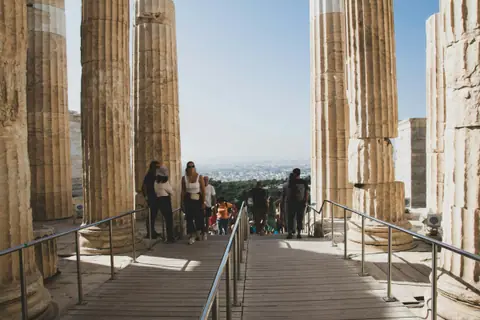
The main entrance is on the west side, where the path climbs through the Propylaea, the monumental gateway. It's the classic approach and the busiest. The south slope entrance, off Dionysiou Areopagitou near the Acropolis Museum, is usually calmer, and the path passes the Theatre of Dionysus on the way up. There's a lift on the north face for visitors with limited mobility.
What will we see at the top?
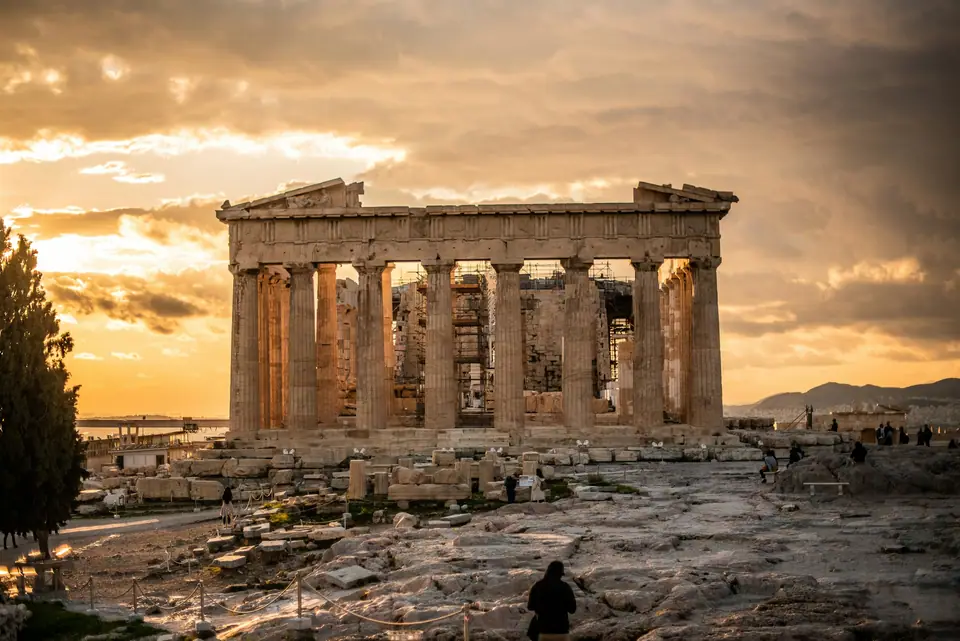
The Parthenon, built in the 440s and 430s BC and still covered in places by restorers' cranes and scaffolding, as it has been for decades. The Erechtheion, with its porch of six Caryatids (the originals are in the museum). The small Temple of Athena Nike on its bastion above the entrance. And the view: the whole city running out to the mountains and down to the sea at Piraeus. Below the southern slope, the Odeon of Herodes Atticus, the Roman theatre used for the Athens Festival, closed for restoration after the 2025 season, so you'll see it only from above.
Should we see the museum first or after?
After. The Acropolis Museum, a short walk from the south entrance, has its own ticket and air conditioning. Its top floor sits at the same angle as the Parthenon and lays out the frieze around you, with the originals in marble and the pieces held in the British Museum shown as white casts. It makes more sense once you've stood on the hill.
What should we bring?
Water, a hat and shoes that grip, as our what to wear guide explains. Large bags aren't allowed. Allow two hours on the hill and two in the museum, as in day one of our three-day itinerary.
Traveller tips
Real advice from people who have been to Acropolis Guide: Tickets, Timing and the Museum. Every tip is read by our team before it goes live.
No tips yet. Been here? Yours could be the first.
Thank you! Your tip will appear here after a quick review.
More in Athens
Continue exploring Athens with related neighbourhood, food, and planning guides