


























Photo: Carole Raddato from FRANKFURT, Germany · CC BY-SA 2.0
Roman Baths and Georgian Crescent Stonework in Bath
Bath brings together sacred Roman hot springs and honey-toned Georgian crescents across a walkable Somerset landscape inscribed by UNESCO in 1987.
Thermal Archaeology at the Sacred Spring and Great Bath
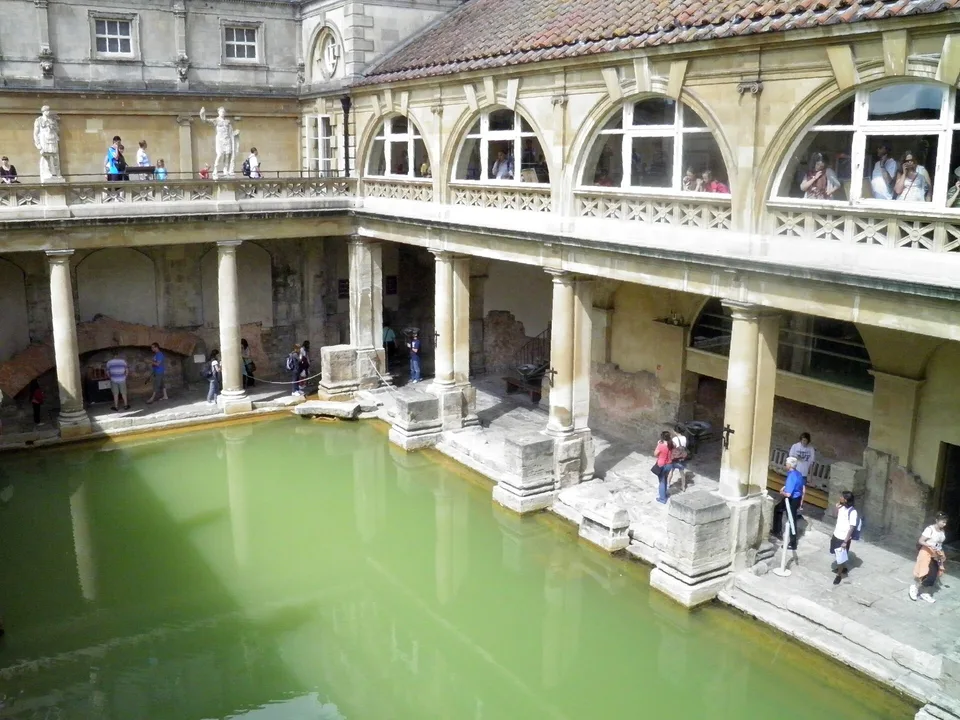
Between 60 and 70 AD, Roman builders constructed the Aquae Sulis sanctuary around natural thermal springs. Worshippers dedicated the sacred site to the goddess Sulis Minerva. Today, 1,170,000 litres of mineral water rise up the Pennyquick fault daily into the Sacred Spring at 46°C. This natural thermal flow supplies both the medieval King's Bath and the open-air Great Bath. The ancient lead-lined pool floor rests deep below modern street grade. Original stone pier bases and Roman masonry remain visible along the lower levels. Above the Roman masonry, classical statues and museum galleries reflect Victorian construction completed around 1897.
Standing beside the Great Bath offers an unobstructed view of rising steam against the limestone walls of Bath Abbey. Travellers planning an extended stay can follow a comprehensive weekend route through the historic centre to coordinate morning tickets with surrounding sights. Untreated natural thermal water contains algae, so bathing or swimming inside the Roman pool remains strictly prohibited. Anyone seeking an actual thermal soak can walk to nearby Thermae Bath Spa. That modern facility pumps treated spring water into warm pools held at roughly 35.5°C for visitors aged 16 and older.
Navigating the Roman Bathhouse and Temple Displays
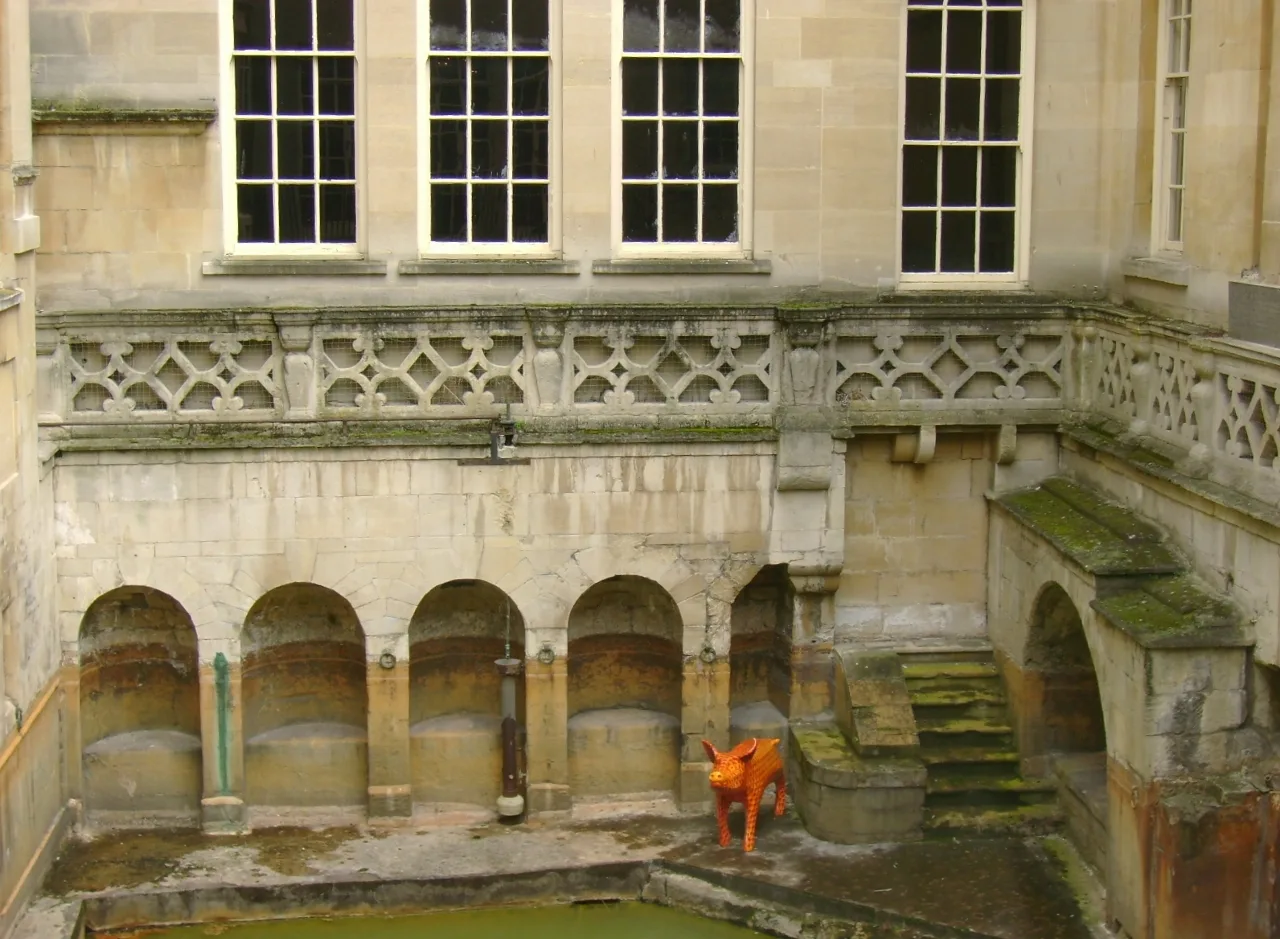
An indoor walking route leads from the steaming spring through subterranean museum galleries directly under modern city pavements. Preserved walkways carry visitors past original foundations, cold plunge chambers, and heated rooms. The museum collection preserves the carved stone face of the temple Gorgon pediment alongside ancient lead curse tablets. These thin inscribed tablets document the personal prayers and grievances left behind by worshippers centuries ago. The site displays ancient lead plumbing pipes that directed hot spring water into separate treatment chambers.
Securing an advance ticket online guarantees a timed entry slot and avoids higher prices charged for walk-up admission. Booking the earliest morning admission slot allows visitors to experience the quiet Sacred Spring paths before larger tour groups arrive. Bath Spa railway station sits within a comfortable 10-minute walk of the ancient Roman baths entrance. Study essential guide details on Somerset transport and city manners before setting out across the valley.
| Historic Landmark | Architectural Origin | Visiting Note |
|---|---|---|
| Roman Baths | Sanctuary built 60 to 70 AD; Victorian upper terrace finished 1897 | Online pre-booking secures timed entry; bathing strictly prohibited |
| The Circus | Begun 1754 by John Wood the Elder; completed 1768 to 1769 | Public circular lawn surrounded by Grade I listed townhouses |
| Royal Crescent | Constructed 1767 to 1775 by John Wood the Younger | 150-metre curve of 30 houses; No. 1 opens as townhouse museum |
Climbing Towards The Circus and Georgian Townhouses
Leaving the ancient bathhouse behind, visitors walk north through the UNESCO World Heritage area inscribed in 1987 across roughly 2,900 hectares. This designated district links buried Roman sanctuaries with eighteenth-century Palladian residential terraces. The uphill stroll covers 0.8 to 1 mile and takes between 15 and 20 minutes at a gentle pace. The route ascends past Queen Square and along Gay Street, displaying limestone facades built from regional stone. These honey-toned facades mark the transition from Roman archaeological levels to Georgian urban architecture. Reaching the top of the rise reveals John Wood the Elder's circular complex known as The Circus.
Construction on The Circus began in 1754 under John Wood the Elder and concluded around 1768 to 1769 under his son. Three curved segments of Grade I listed townhouses ring a central lawn shaded by large plane trees. The stone facades display three classical architectural tiers along each curved terrace block. Travellers exploring northern streets should note that the nearby Bath Assembly Rooms on Bennett Street closed in early 2025 for renovation until 2027. This temporary closure leaves the surrounding Georgian outdoor streetscapes as the primary focus for walking visitors.
Exploring the Royal Crescent Curve and House Museum
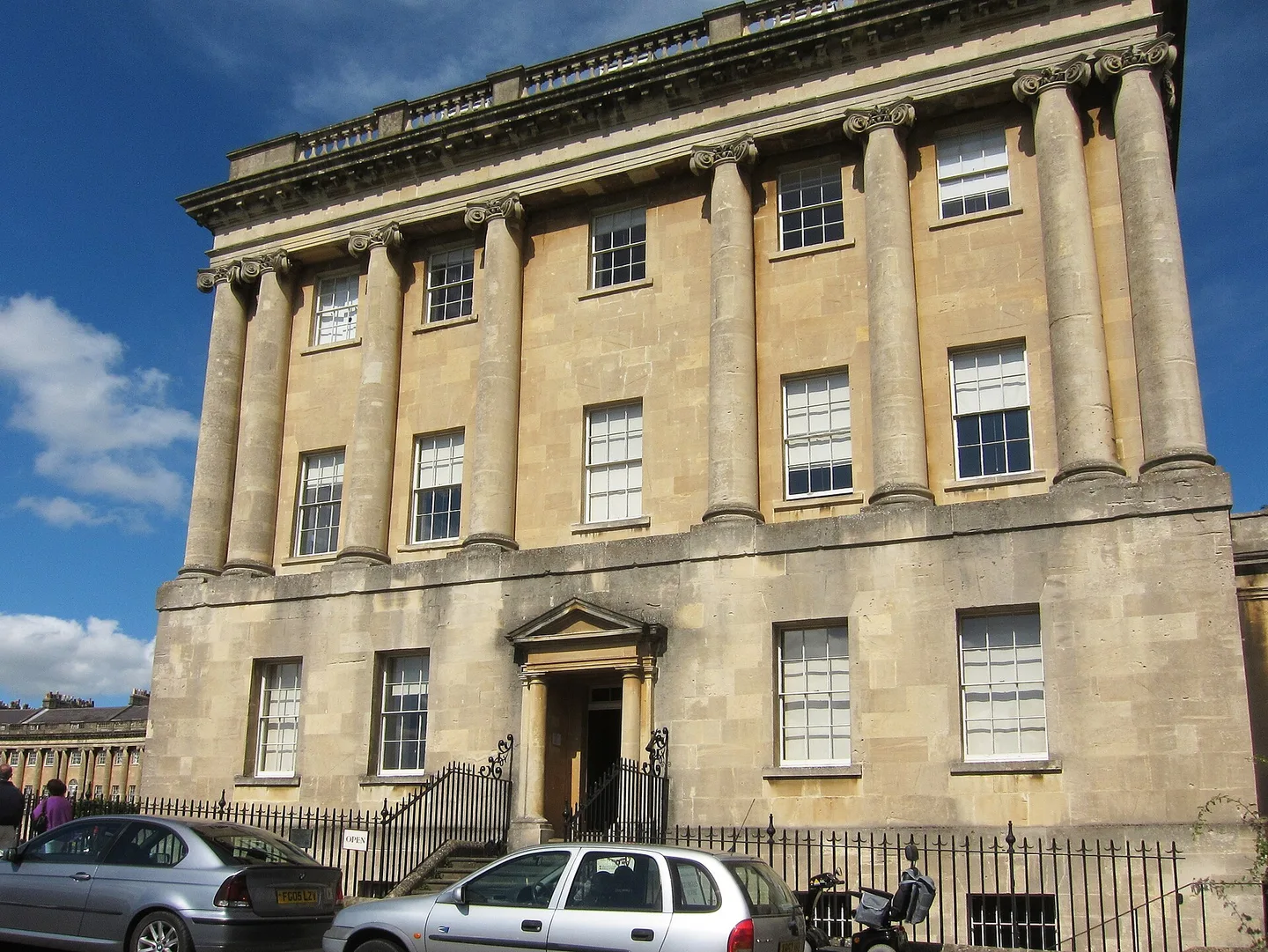
From The Circus, level Brock Street leads directly west to John Wood the Younger's Royal Crescent, built between 1767 and 1775. This architectural composition forms a continuous 150-metre curve made of 30 terraced townhouses. Exactly 114 Ionic columns rise along the uniform front facade, creating a classical design that overlooks Royal Victoria Park. The unified frontage rose first while individual buyers completed custom layouts and rooflines behind the stone walls. The sweeping limestone terrace remains an outstanding example of British Palladian residential design.
At the eastern end, No. 1 Royal Crescent operates as an authentic Georgian townhouse museum furnished with period items. Standard admission tickets include repeat entry for 12 months, and travellers can consult the VisitorFactsBox below for exact opening schedules, closed days, and seasonal variations. Morning light illuminates the limestone facade, offering clear views before midday crowds gather along the public lawn. Exploring both the Roman bathing complex and the Georgian crescent reveals how thermal springs and Palladian stone shaped the City of Bath.
Walking Connections Between Thermal Springs and Crescent Lawns
The physical route between the lower river valley and upper hill terraces highlights the growth of Bath across several centuries. Roman engineers concentrated their stone temples and heated chambers around the natural mineral springs in the valley basin. Decades later, Georgian developers expanded residential quarters uphill toward the northern ridges using native limestone. This distinct yellow stone links the medieval abbey, Roman museum walls, and classical residential crescents into one unified urban setting.
Walking along Queen Square connects pedestrians with the original urban master plan devised by John Wood the Elder. The gradual climb past Gay Street allows an easy transition between busy commercial streets and residential terraces. Because the historic core remains compact, visitors can explore Roman foundations and Georgian terraces within a single morning itinerary. Finishing the walk on the lawns of Royal Victoria Park provides a quiet vantage point facing the entire 150-metre facade.
Official prices and opening hours
- The Roman BathsOfficial site ↗
- No. 1 Royal CrescentOfficial site ↗
- Thermae Bath SpaOfficial site ↗
Where it is
- 1Roman Baths and Georgian Crescent Stonework in Bath
- Bristol Airport (BRS) · about 25 km from here in a straight line
- Directions in Google Maps
Stations and taxi ranks: OpenStreetMap. Airports: OurAirports. Distances are in a straight line.
Traveller tips
Real advice from people who have been to Bath. Every tip is read by our team before it goes live.
No tips yet. Been here? Yours could be the first.
Thank you! Your tip will appear here after a quick review.
More in Bath
Continue exploring Bath with related neighbourhood, food, and planning guides
Abbey Vaults, Thermal Pools, and Riverside Walks in Bath
Bath, United Kingdom
Valley Floors, Georgian Terraces and Canal Bases in Bath
Bath, United Kingdom
Two-Day Bath Itinerary: Roman Valley Springs to Georgian Terraces
Bath, United Kingdom
Arriving by Rail, Driving Rules and Seasonal Planning in Bath
Bath, United Kingdom
