Kanazawa
Kanazawa pairs Maeda clan castle gardens, preserved wooden geisha quarters, and Sea of Japan seafood within a compact walking radius.
Quick decisions
How many days?
We recommend two full days and two to three nights to see the castle, Kenroku-en, and historic quarters at an unhurried pace.
Where should I stay?
Choose Kanazawa Station for early bullet trains or Korinbo and Katamachi to walk directly between samurai alleys and evening dining.
Do I need a car?
No vehicle is needed because central sights sit within a two-kilometre walking radius served by frequent Castle Town Loop Buses.
Best for
Independent travellers seeking intact Edo-period streetscapes, masterwork landscape gardens, contemporary art, and fresh Sea of Japan seafood.
Before you go
Reserve Myōryū-ji by phone up to one month ahead with cash ready, and remember main museums close on Mondays.
Getting around
Castle Town Loop Buses run every 15 to 20 minutes and accept national IC cards, contactless bank cards, or daily city passes.
Continue your trip
Ride the Hokuriku Shinkansen toward Tokyo, or change trains at Tsuruga for swift Limited Express Thunderbird connections to Kyoto and Osaka.
Overview
Kanazawa sits along the Sea of Japan coast in Ishikawa Prefecture. The historic centre preserves feudal castle gardens, wooden geisha districts, and earthen-walled samurai alleys within a compact two-kilometre walking radius. Because the city escaped Second World War air raids, the street grids laid out by the Maeda clan remain intact across Nagamachi, Higashi Chaya, Kazuemachi, and Nishi Chaya. The lords of Kaga poured their immense wealth into arts, architecture, and gardens rather than military rivalry.
Weather shapes daily life in Ishikawa. Based on Open-Meteo historical averages between 2015 and 2024, rain and snow fall throughout the year. Winter brings cold coastal winds with January daytime highs of 6.2°C, overnight lows of -0.1°C, and 24.9 wet days. December records 24.2 wet days and 229 mm of precipitation. July rainfall peaks at 271 mm, while August reaches afternoon highs of 30.4°C. May brings clearer skies with peak temperatures of 21.6°C across 12.3 wet days. October averages 20.4°C over 14.4 wet days. Free city umbrella loan racks at around 20 downtown hubs help walkers navigate sudden rain.
Getting there
Arrival by rail is straightforward following recent high-speed track expansions. Direct Hokuriku Shinkansen Kagayaki trains connect Tokyo to Kanazawa in roughly two hours 28 minutes with all-reserved seating. Slower Hakutaka services take around three hours. Following the 125-kilometre bullet train extension to Tsuruga on 16 March 2024, travellers from Kyoto take about two hours. Travellers from Osaka reach Kanazawa in about two hours 15 minutes. Both journeys use the Limited Express Thunderbird to Tsuruga before transferring onto a Tsurugi bullet train.
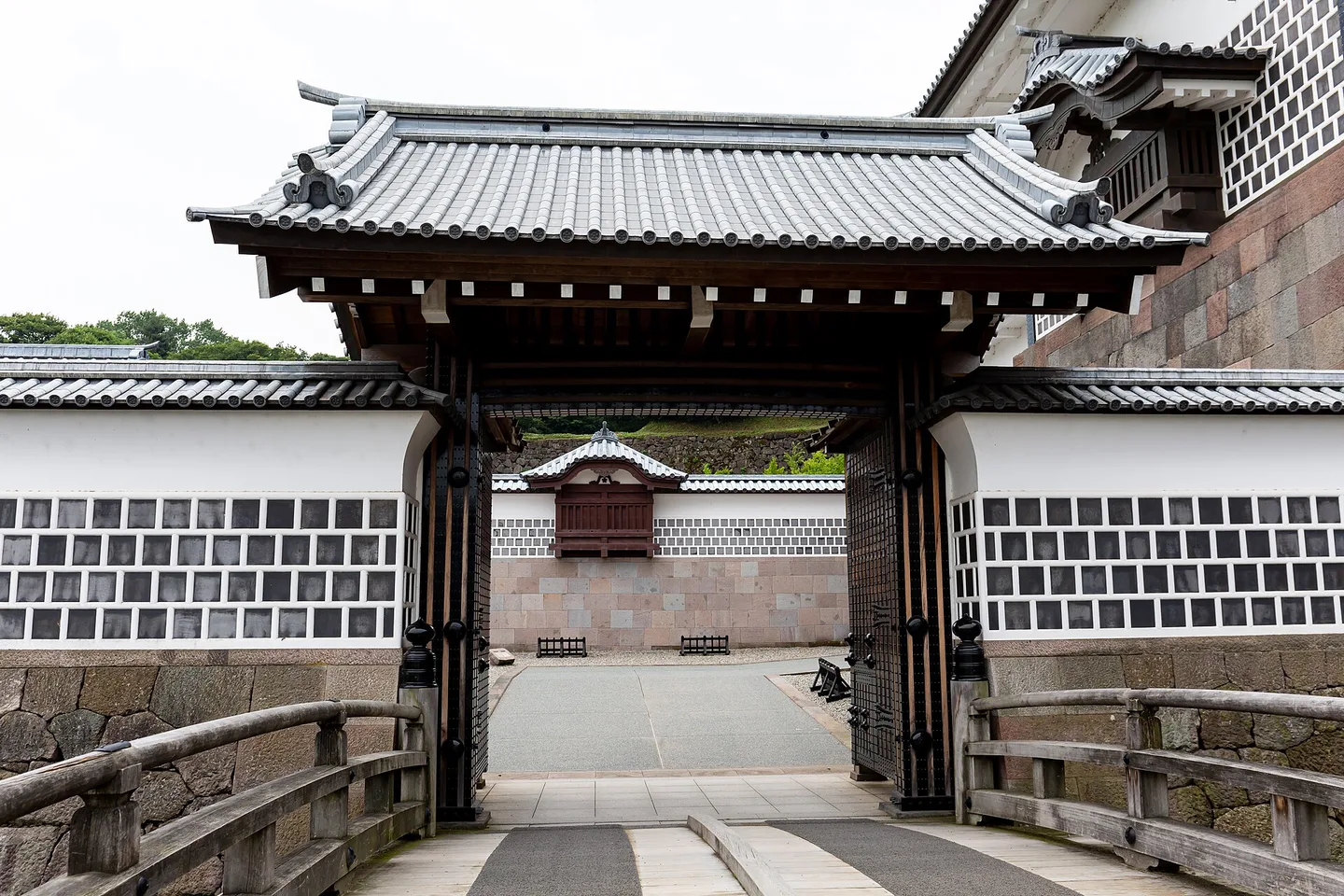
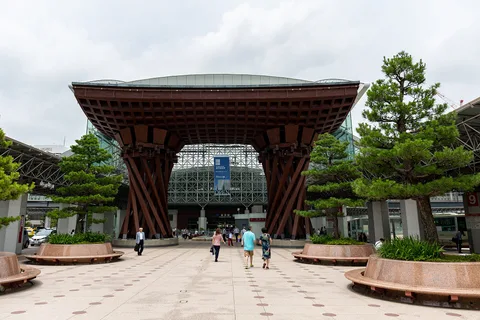
Air passengers touch down at Komatsu Airport, situated 32 kilometres southwest of the city centre. Non-reserved Hokutetsu limousine buses link the landing terminal to Kanazawa Station West Exit in around 40 minutes, with departures matched to flight arrivals. In town, travellers arrive beneath the glass Motenashi Dome and wooden Tsuzumi-mon Gate completed in 2005. Castle Town Loop Buses run clockwise every quarter of an hour and counter-clockwise every 20 minutes. They accept Suica, ICOCA, contactless payment cards, and a one-day city bus pass covering 27 museum discounts. Review practical travel tips in our essential Kanazawa arrival guidance.
Where to stay
Choosing where to sleep depends on transit priorities and evening preferences. Staying near Kanazawa Station offers rapid access to early Shinkansen departures and highway buses heading toward Shirakawa-go in 80 minutes. The station concourse houses convenience stores, train connections, and loop bus terminals right outside your hotel lobby. We find this district practical for travellers carrying heavy luggage or arriving late in the evening.
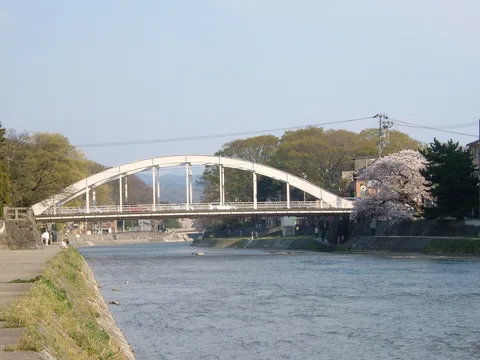
If you prefer heritage scenery, base yourself around Korinbo and Katamachi. This area places you halfway between the Nagamachi samurai district and Kenroku-en, with restaurants steps away. Across the Asano River, Higashi Chaya and Kazuemachi offer restored wooden machiya townhouses along peaceful riverside lanes. Kanazawa levies a municipal accommodation tax per person per night according to room rates. You can compare neighbourhoods in our Kanazawa neighbourhood and hotel overview.
Things to do
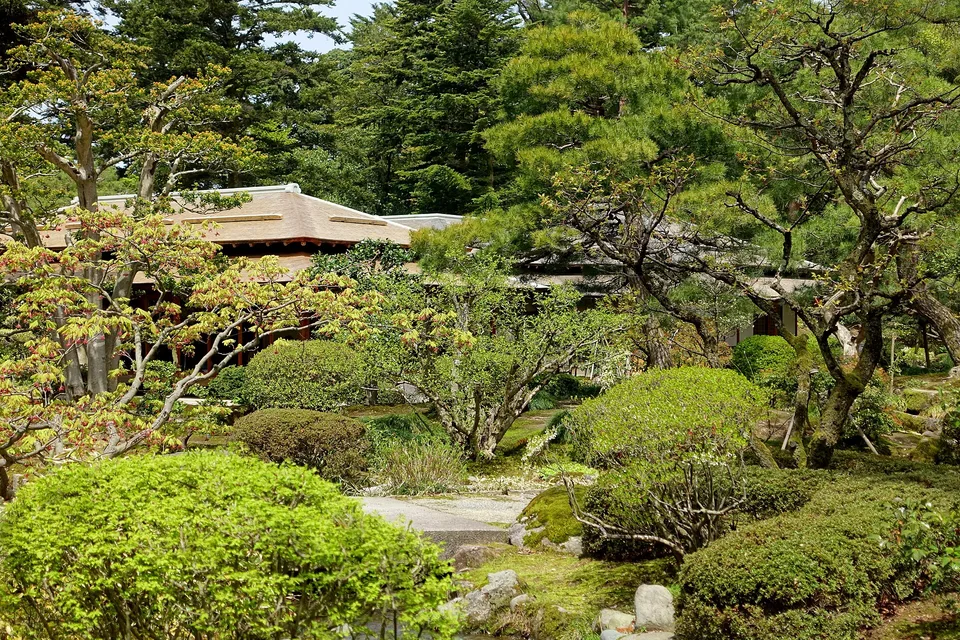
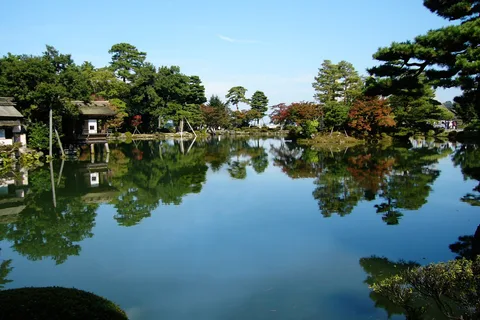
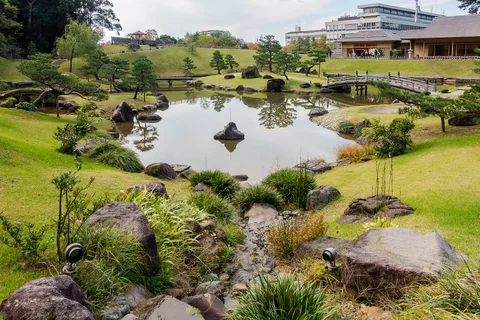
Kenroku-en Garden ranks among Japan's finest landscaped grounds, created over generations by the Maeda lords from 1676 using water from the 1632 Tatsumi Canal. Opened to the public in 1874 across 11.4 to 11.7 hectares, the park features Kasumigaike Pond and the two-legged Kotoji-toro stone lantern. Gardeners erect conical yukitsuri rope supports starting 1 November to protect pine branches from heavy winter snow. Both Kenroku-en and neighbouring Kanazawa Castle Park operate year-round schedules as detailed in the VisitorFactsBox below. Early birds take advantage of free dawn entry before daytime ticket gates operate. Inside the castle grounds stand the 1788 Ishikawa-mon Gate, the 2001 Hishi Yagura turret, the 2015 Gyokusen'inmaru Garden, and the 2020 Nezumitamon Gate.
Across the road, SANAA's 112.5-metre circular 21st Century Museum of Contemporary Art opened in 2004. Stepping beneath the water line of Leandro Erlich's Swimming Pool requires an exhibition ticket and a same-day timed reservation. Paid galleries close on Mondays, as does the nearby D.T. Suzuki Museum. South of the Sai River, Myōryū-ji features concealed staircases and trapdoors. Entry requires advance telephone reservations on +81-76-241-0888 up to one month ahead, cash payment, and admits visitors aged six and older. Stroll past Nagamachi's Nomura-ke samurai house and Oyama Shrine's 1875 stained-glass Shinmon Gate. Explore key highlights through our guide to top Kanazawa attractions and our detailed Kenroku-en and Higashi Chaya walking route.
Food and drink
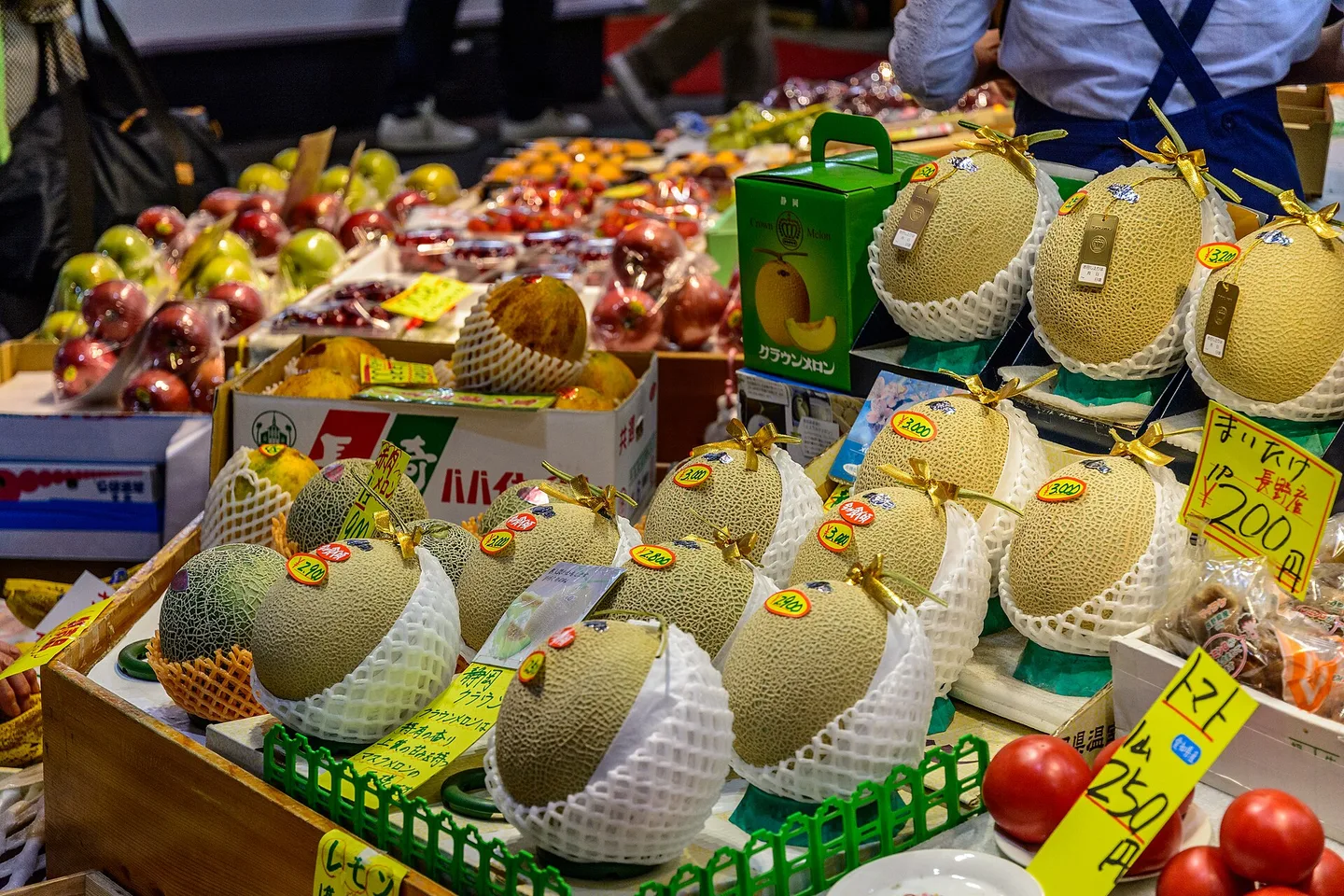
Food culture here reflects immediate access to the fertile waters of the Sea of Japan. Operating since around 1721, covered Omicho Market houses roughly 170 fishmongers, vegetable stalls, and counter restaurants. Diners queue for kaisendon bowls piled with fatty nodoguro blackthroat seaperch, winter snow crab known locally as Kano-gani, and seasonal yellowtail. Many family-run market stalls take scheduled closures on Wednesdays and Sundays.
Traditional dining centres on regional Kaga cuisine, perfected to complement tea ceremonies under Maeda rule. The signature dish is jibuni, a comforting stew of flour-dusted duck or chicken simmered in rich dashi broth with root vegetables and finished with sharp wasabi. In teahouse districts, delicate wagashi sweets accompany bowls of whisked green tea. Soft-serve ice cream and desserts wrapped in edible gold leaf provide a popular treat throughout town.
Culture
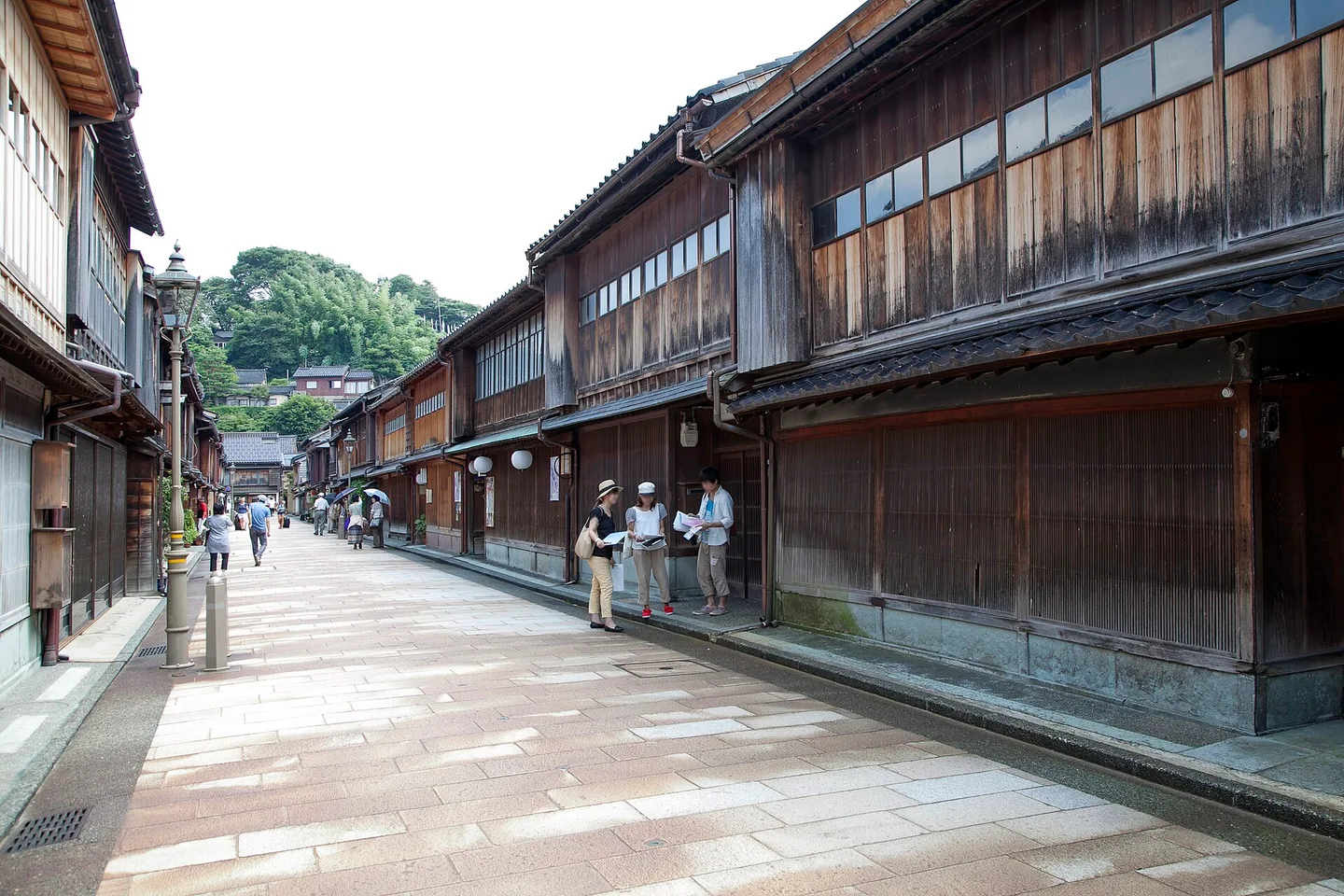
The arts of Kanazawa stem directly from the Maeda family, who welcomed master craftsmen after Maeda Toshiie established his base in 1583. Today the city produces 99 percent of Japan's domestic gold leaf. Historic workshops in Higashi Chaya, Kazuemachi, and Nishi Chaya maintain gold-beating techniques alongside active geisha traditions dating from their formal founding in 1820. When strolling through these preservation districts, admire the fine wooden lattices without blocking teahouse doorways.
Civic pride culminates every first weekend of June during the Hyakumangoku Matsuri. This festival celebrates Maeda Toshiie's 1583 arrival with costumed samurai parades, Kaga-tobi firefighter ladder acrobatics, and open-air tea gatherings. Respect historic sites by carrying personal trash with you and observing quiet hours in wooden residential alleys. Our suggested two-day Kanazawa plan helps structure your time across historic quarters and art galleries.
Official prices and opening hours
- Kenroku-en GardenOfficial site ↗
- Kanazawa Castle Park (Hishi Yagura & Gojikken Nagaya)Official site ↗
- Myōryū-ji (Ninja-dera)Official site ↗
- 21st Century Museum of Contemporary Art, KanazawaOfficial site ↗
Weather by month
Kanazawa is warmest in August, with average highs around 30°C, and coldest in January, when nights drop to about 0°C. July is the wettest month by rainfall (271 mm), with rain on about 17 days. For mild weather with fewer rainy days, aim for May, June and October.
| Month | Low | Range | High | Rain | Rainy days |
|---|---|---|---|---|---|
| Jan | 0°C | 6°C | 196 mm | 25 d | |
| Feb | 0°C | 7°C | 142 mm | 19 d | |
| Mar | 3°C | 12°C | 150 mm | 16 d | |
| Apr | 7°C | 16°C | 159 mm | 13 d | |
| May | 12°C | 22°C | 135 mm | 12 d | |
| Jun | 17°C | 25°C | 153 mm | 13 d | |
| Jul | 22°C | 29°C | 271 mm | 17 d | |
| Aug | 23°C | 30°C | 210 mm | 16 d | |
| Sep | 20°C | 27°C | 239 mm | 16 d | |
| Oct | 13°C | 20°C | 172 mm | 14 d | |
| Nov | 8°C | 15°C | 174 mm | 16 d | |
| Dec | 3°C | 9°C | 229 mm | 24 d |
Averages of daily values from 2015 to 2024. Rainy days are days with at least 1 mm of rain. Source: Open-Meteo · Compare destinations by month.
Kanazawa on the map
Every place we cover in Kanazawa. Tap a category or pin to explore.
In-depth Kanazawa guides
Browse the guides grouped by topic: sights, neighbourhoods, food, transport, day trips and trip planning.
Sights, Landmarks & Parks
Key monuments, viewpoints, museums and nature trails.
- Museums, Samurai Lanes and Temple Craft in KanazawaKanazawa's finest cultural landmarks beyond the famous gardens sit within a compact two-kilometre core connecting fortified castles, samurai estates, and craft galleries.
- Kenroku-en Garden and the Higashi Chaya Teahouse QuarterKenroku-en Garden and Higashi Chaya link feudal Maeda landscape engineering with preserved wooden teahouse streets across an easy downhill walk.
Neighbourhoods & Where to Stay
Districts, historic quarters and the best bases for your stay.
Trip Planning & Itineraries
When to visit, what to pack and day-by-day routes.
- Forty-Eight Hours Across Kanazawa's Gardens, Castle and River QuartersWe trace a balanced forty-eight-hour loop through historic castle grounds, Edo-period quarters, and modern art spaces set between two gentle riverbanks.
- Arriving by Shinkansen, Navigating Loop Buses, and Sea of Japan Weather in KanazawaDirect Hokuriku Shinkansen trains, cross-platform transfers, and coastal rain patterns shape how we plan every journey into Kanazawa.
Need your embassy or consulate in Japan? See embassies and consulates in Japan.
Reviews
Log in to write a review.
No reviews yet.