A refined architectural route traversing Oaxaca's earthquake-resistant colonial sanctuaries, cobblestone artisan quarters, and ancient highland valleys.
From Zapotec Cloud Terraces to Green Cantera Sanctuaries
Long before Spanish conquistadors founded Antequera in 1529, the Central Valleys formed the ceremonial core of Mesoamerican civilisations. From their mountaintop citadel at Monte Albán, the Zapotecs governed trade routes, followed later by the Mixtecs, whose master jewelers and painters left an indelible artistic tradition. Colonial planners laid out a rigid grid around the central Zócalo, yet frequent seismic convulsions compelled architects to invent a distinct defensive aesthetic. Masons turned to indigenous quarrymen to carve heavy, squat arcades out of local green cantera stone, lending the city its distinctive pale-olive tint.
Ecclesiastical orders, led by the Dominicans, transformed this regional geology into monumental displays of sacred splendour, culminating in the opulent gilded interior of the Templo de Santo Domingo de Guzmán. Through centuries of independence, revolution, and indigenous cultural renaissance, Oaxaca preserved its authentic workshop traditions, evolving into Mexico's premier culinary and textile capital.
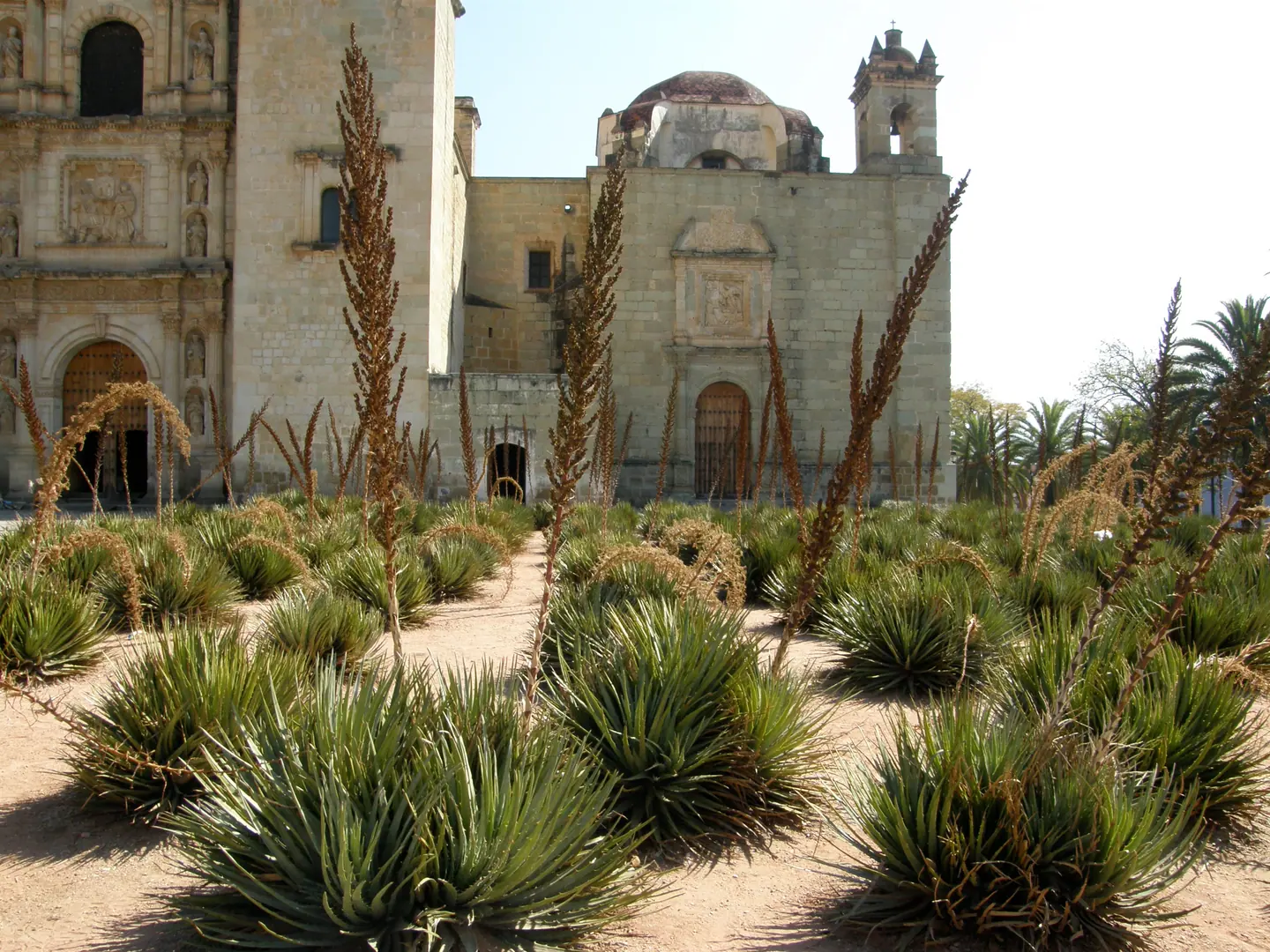
Santo Domingo Precinct and Botanical Terraces
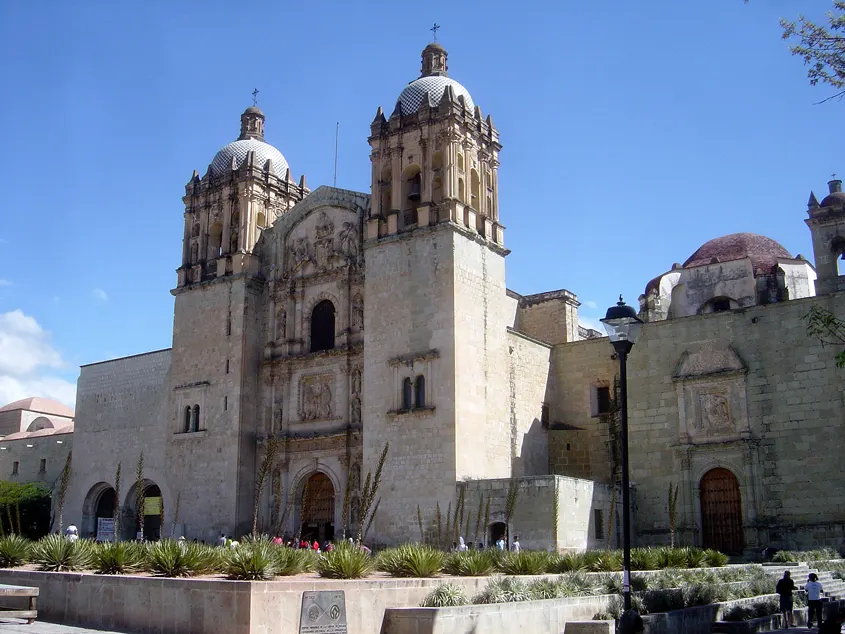
Paved in smooth river stones, this cultural precinct unfolds around the gilded baroque convent of Santo Domingo and its ethno-botanical garden.
Church of Santo Domingo de Guzmán
Begun in 1570, this former Dominican convent church exemplifies New Spain high baroque design with thick earthquake-resistant stonework. Inside, visitors encounter an intricate stucco family tree of Saint Dominic ascending the barrel-vaulted ceiling beneath lavish gold leaf. The adjacent cloisters now host municipal museum galleries overlooking paved atriums.
Oaxaca Ethnobotanical Garden
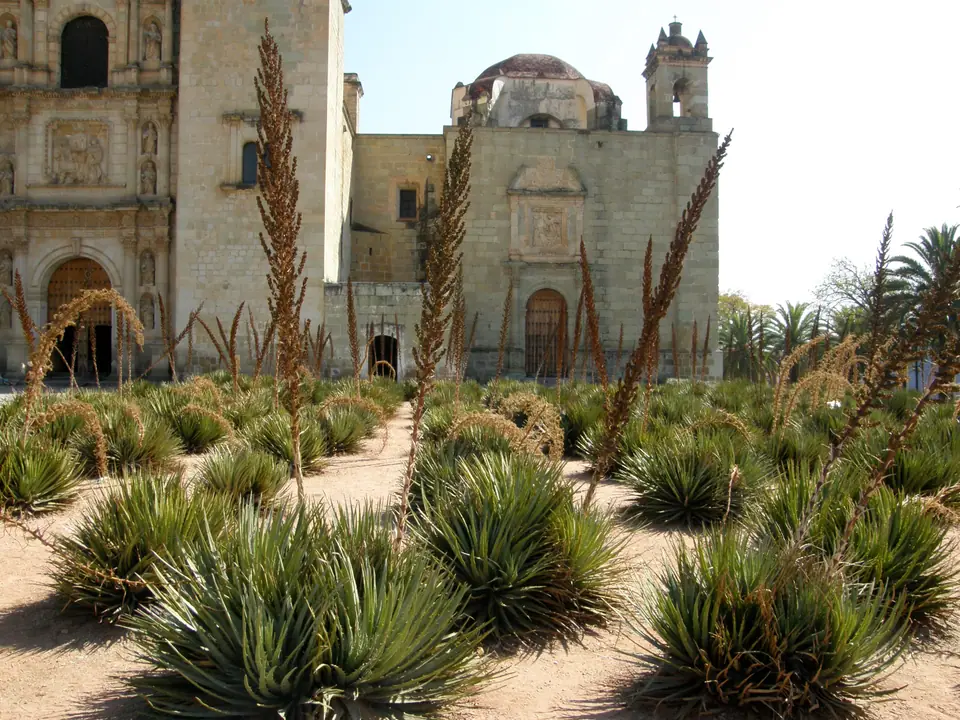
Laid out inside the former monastic orchards of Santo Domingo, this curated garden preserves thousands of plant species native to Oaxaca. Designed by artist Francisco Toledo and architect Luis Zárate, the terraced pathways weave past towering columnar cacti, agaves, and an old stone irrigation canal built by sixteenth-century friars.
Museum of Cultures of Oaxaca
Occupying the expansive monastery cloisters beside Santo Domingo, this museum presents the archaeological and ethnographic history of Oaxaca. The central attraction remains the priceless Mixtec gold and turquoise jewellery discovered in Tomb 7 at Monte Albán. Vaulted stone corridors provide panoramic viewpoints over the botanical gardens below.
Plaza de Santo Domingo
Paved in smooth river stones and green quarry flagstones, this square forms the civic heart of the northern district. Wrought-iron benches provide resting places under indigenous trees, while mobile craftspeople and musicians frequent the perimeter. It serves as the primary gathering point for traditional wedding calendas and feast-day parades.
Andador Turístico Macedonio Alcalá
Named after the composer of Oaxaca's state anthem, this stone-paved pedestrian avenue runs south from Santo Domingo toward the main square. Restored eighteenth-century townhouses line both sides, constructed from the distinctive pale-green cantera stone quarried locally. Today these domestic palaces house cultural institutes, independent galleries, and shady interior courtyards.
Museo Textil de Oaxaca
Situated within the restored eighteenth-century mansion Casa Antelo, this specialised institution preserves rare textile traditions from across Oaxaca and the world. Rotating exhibitions highlight intricate backstrap-loom weaving, cochineal reds, and wild-silk embroidery. Visitors can inspect traditional spinning tools and learn about ancient natural dyeing techniques in the sunlit central patio.
Teatro Macedonio Alcalá
Inaugurated in 1909 as a casino and theatre, this opulent venue represents the French neoclassical influence popular during Porfirio Díaz's presidency. The grand entrance hall features white marble staircases, Corinthian columns, and allegorical ceiling murals depicting classical muses. The horseshoe auditorium still stages classical music recitals and municipal cultural performances.
Graphic Arts Institute of Oaxaca
Founded by painter Francisco Toledo in 1988, this cultural centre occupies an eighteenth-century residence directly opposite the Santo Domingo plaza. Its whitewashed rooms house an extensive library of art books alongside thousands of original etchings, woodcuts, and lithographs. The peaceful courtyard garden provides a quiet refuge shaded by bougainvillea and native trees.
Oaxaca Cathedral
Fronting the city's main square, the Cathedral of Our Lady of the Assumption took nearly two centuries to finish following repeated seismic destruction. Its heavy, low-profile facade features baroque reliefs carved from green volcanic cantera, including a depiction of the Assumption. The interior holds neoclassical side chapels, bronze chandeliers imported from Europe, and historic pipe organs.
Oaxaca Zócalo
Formally titled the Plaza de la Constitución, this public space has anchored civic life since the Spanish foundation of Antequera in 1529. A central wrought-iron bandstand frequently hosts municipal brass concerts beneath the shade of massive Indian laurel trees. Porticoed walkways on three sides contain historic cafes where travellers observe street vendors and local life.
Church of San Agustín
Constructed between 1580 and 1600, this church was built by Augustinian missionaries and displays a classic plateresque and baroque exterior. The main facade features a carved stone relief of Saint Augustine shielding the faithful beneath his monastic mantle. Inside, visitors find gilded baroque retablos alongside carved wooden furnishings crafted by local indigenous artisans.
Basilica of Nuestra Señora de la Soledad
Erected between 1682 and 1690, this massive sanctuary houses the revered statue of Our Lady of Solitude, the patroness of the state. Its distinctive sloping baroque facade is carved like an open-air altarpiece with stone figures of saints set into deep niches. The adjoining convent cloister houses a small museum of votive offerings.
Centro Fotográfico Álvarez Bravo
Named after Mexico's pre-eminent modernist photographer, this institution operates inside a rambling colonial mansion just steps from Santo Domingo. It hosts temporary exhibitions of historical and contemporary photography alongside darkrooms and an extensive public archive. Visitors can wander through peaceful stone corridors where traditional beamed ceilings frame light-filled display halls.
Museum of Contemporary Art of Oaxaca
Commonly known as the Casa de Cortés, this late seventeenth-century manor stands among the most complete residential buildings in central Oaxaca. Its three internal courtyards are encircled by heavy stone arches, wooden balustrades, and period masonry. The interior spaces host contemporary painting, sculpture, and mixed-media installations by prominent national artists.
Church of the Compañía de Jesús
Dedicated to the Immaculate Conception, this church was erected by the Society of Jesus in 1579 and rebuilt following seventeenth-century tremors. The exterior exemplifies the austere Jesuit architectural approach, executed in sombre green cantera stone. Inside, historic gilded altarpieces survive alongside historic oil paintings depicting scenes from the life of Saint Ignatius.
Benito Juárez Market
Operating on this site south of the Zócalo since 1893, this roofed trading hall occupies a full city block. Merchants display regional specialities such as quesillo cheese, mounds of roasted grasshoppers, dried chillies, and mezcal bottled across Oaxaca's central valleys. The aisles also feature leather sandals, hand-woven baskets, and polished wooden utensils.
Mercado 20 de Noviembre
Located adjacent to Mercado Benito Juárez, this market hall remains celebrated for its traditional culinary stalls and communal dining counters. Its southern wing houses the famous smoke alley, where vendors grill seasoned tasajo beef and cecina pork over charcoal embers. Visitors can sample regional mole varieties, handmade corn tortillas, and hot chocolate perfumed with cinnamon.
Cerro del Fortín
Rising immediately northwest of the historic centre, this hill offers an expansive vantage point over the city's red-tile roofs and surrounding mountain ranges. It is the site of the open-air Guelaguetza auditorium, where the annual indigenous dance festival takes place each July. Stone stairways climb from the lower colonial streets up to the summit monument.
Church of San Felipe Neri
Begun in the mid-seventeenth century, this church was completed in 1773 and features an intricate baroque facade carved with floral motifs. The interior is famous for its massive gilded retablos, which survived the secularisation movements of the nineteenth century intact. Historically, Mexican president Benito Juárez and Margarita Maza were married in this sanctuary in 1843.
Church of Carmen Alto
Founded by the Discalced Carmelites in 1699 on grounds previously dedicated to the Zapotec deity Centéotl, this church overlooks the Santo Domingo district. The simple stone facade and serene forecourt reflect the austere discipline of the Carmelite order. Inside, the quiet nave retains historical religious oil paintings and decorative wooden screens.
The Zócalo and Civic Portales
Shaded by ancient Indian laurels, the civic heart buzzes with marimba music, government palaces, and historic coffee-house arcades.
Plaza de la Constitución
Laid out in 1529 by Alonso García Bravo, this central square anchors civic life in Oaxaca. Green quarry stone pavers and century-old fig trees surround a central wrought-iron bandstand where the state band often plays. Arcaded walkways and street vendors line the perimeter, creating a steady focal point for public gatherings.
Palacio de Gobierno de Oaxaca
Constructed from local cantera verde stone, this stately seat of executive power was completed in 1884 following earlier earthquake damage. The grand central stairwell features murals painted by Arturo García Bustos, depicting Mesoamerican roots and pivotal moments of Mexican independence. Its symmetrical exterior arcade dominates the southern flank of the main square.
Catedral Metropolitana de Oaxaca
Begun in the mid-sixteenth century and heavily reconstructed following earthquakes in the eighteenth century, the cathedral displays a low, sturdy profile designed to resist tremors. The carved bas-relief façade honours the Assumption of the Virgin Mary in pale green volcanic tuff. Inside, travellers can examine neoclassical side chapels and imported European bronze chandeliers.
Alameda de León
Created in 1840 under Governor Antonio de León, this pedestrian esplanade mirrors the design of traditional Spanish alamedas. A bronze monument honouring General León stands in the centre, encircled by stone benches and leafy trees. Bookstalls, street portrait artists, and traditional ice cream sellers consistently assemble across its stone expanse.
Portal de Mercaderes
This classic stone arcade borders the western boundary of the central plaza, housing open-air dining terraces beneath rhythmic rounded arches. Established during the colonial era for merchant trade, it provides deep shade against midday heat. It serves as a comfortable vantage point for watching marimba musicians perform on the square.
Portal del Señor
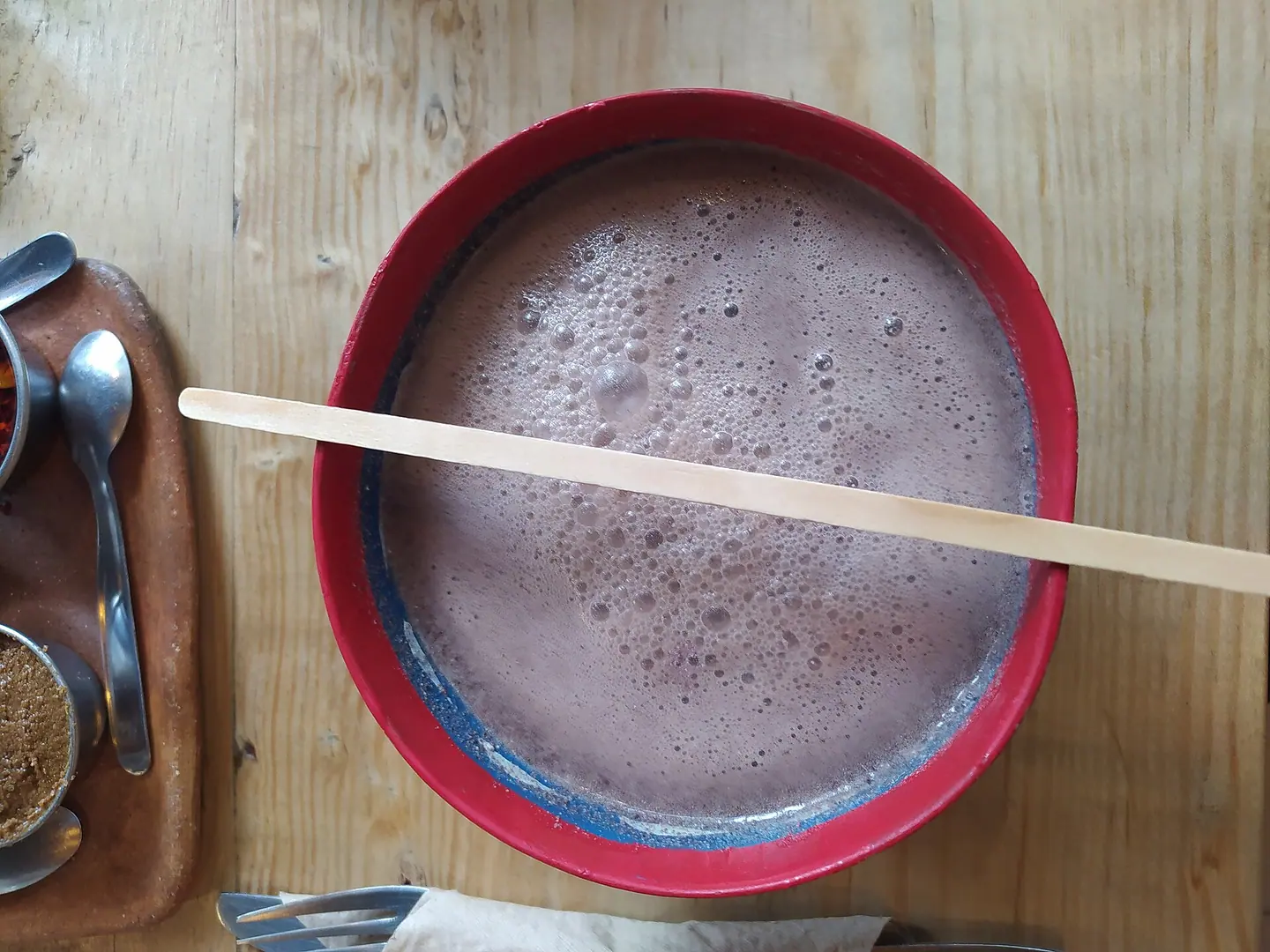
Running along the northern perimeter, this colonnaded portico links the civic plaza to the commercial streets beyond. Heavy masonry piers support timber-beam ceilings, sheltering decades-old coffee houses and bookshops. Travellers frequently sit here to sample local Oaxacan drinking chocolate while listening to street serenaders.
Portal de Clavería
Dating from the colonial period, this eastern portico once housed ecclesiastical administrative offices connected to the nearby bishopric. Today, the sheltered passageway features retail shops, newsagents, and dining establishments set behind sturdy green quarry pillars. It offers unobstructed sightlines across the laurel canopies of the primary square.
Kiosco del Zócalo
Erected during the late nineteenth century under the administration of President Porfirio Díaz, this elevated octagonal pavilion reflects French ironwork influences. It replaced an earlier marble fountain to serve as an acoustic stage for brass ensembles and marimba players. Intricate scrollwork, decorative lanterns, and raised steps characterise its Victorian architecture.
Templo de la Compañía de Jesús
Dedicated to the Immaculate Conception, this historic sanctuary was built by the Society of Jesus in 1579 and rebuilt after severe seismic tremors in 1696. The façade displays simple lines carved from green stone, contrasted by detailed statues of Jesuit saints. Inside, visitors encounter gilded wooden retablos and historical oil paintings.
Museo de los Pintores Oaxaqueños
Housed in an eighteenth-century aristocratic residence that formerly served as a college for maiden daughters, this museum promotes Oaxacan plastic arts. The central courtyard preserves arched arcades and stone stairwells typical of vice-regal domestic architecture. Rotating galleries showcase pieces by master artists such as Rodolfo Morales and Francisco Toledo.
Mercado 20 de Noviembre
Located two blocks south of the civic square, this market hall opened in 1965 to mark the anniversary of the Mexican Revolution. The interior features the famous Pasillo de Humo, an aisle dedicated to smoke-grilled tasajo, cecina, and chorizo. Stalls also sell regional pan de yema sweet bread and rich drinking chocolate.
Mercado Benito Juárez
Operating on this site since the nineteenth century, this sprawling covered market occupies an entire city block south of the Zócalo. Vendors supply woven baskets, traditional leather huarache sandals, dried chillies, and balls of quesillo string cheese. The metal truss roof and orderly grid system reflect early twentieth-century civic planning.
Templo de San Juan de Dios
Constructed on the grounds where the first Catholic mass was celebrated in the valley in 1521, this church was managed by the Hospitaller Brothers. The interior ceiling features painted canvases detailing the religious conversion of local indigenous populations and historic hospital care. Its modest stone exterior stands just steps from the busy markets.
Teatro Macedonio Alcalá
Inaugurated in 1909 and named after the composer of the state anthem, this performance house reflects the European aesthetic favoured during the Porfiriato. The exterior displays ornate stone caryatids, Corinthian columns, and rounded street corners. Within, the auditorium features plush red velvet seating, gilded balconies, and an allegorical ceiling fresco.
Templo de San Felipe Neri
Begun in the mid-seventeenth century, this church possesses one of the most elaborate collections of churrigueresque gilded wooden altarpieces in the city. Benito Juárez married Margarita Maza here in 1843, cementing its place in national history. The exterior façade features carved niches containing stone statues of Saint Philip Neri and auxiliary saints.
Museo Textil de Oaxaca
Occupying a restored wing of the former San Pablo monastery, this cultural institution preserves regional textile heritage. The gallery spaces exhibit delicate hand-spun cotton, naturally dyed silks, and backstrap-loomed garments from indigenous communities across Mexico. Modern architectural insertions of glass and iron blend with original seventeenth-century lime-plastered walls.
Centro Cultural San Pablo
Founded in 1529, this complex represents the earliest monastic foundation established by the Dominican Order in the valley. Modern restoration efforts peeled away centuries of domestic alterations to reveal early barrel vaults, cloister arches, and stone footings. Today, it houses indigenous language archives, academic research facilities, and a tranquil courtyard garden.
Casa de Juárez
This modest single-storey adobe home belonged to Antonio Salanueva, a Franciscan lay brother who sheltered the young Zapotec youth Benito Juárez upon his arrival from Guelatao. The rooms contain period furnishings, original bookbinding tools, and nineteenth-century documents outlining Juárez's early education. It provides an authentic glimpse into provincial domestic life of the era.
Edificio Central de la UABJO
Standing a short walk north-east of the Zócalo, this nineteenth-century academic building served as the Institute of Sciences and Arts, where both Benito Juárez and Porfirio Díaz studied. Its neoclassical stone portal opens to an inner cloister flanked by arcades and administrative halls. The site remains a traditional symbol of regional liberal scholarship.
Ex Convento de San Agustín
Constructed toward the end of the sixteenth century, this ecclesiastical complex includes a robust church and a stone cloister. The north portal exhibits relief carvings of Saint Augustine sheltering members of his religious order under his cape. The adjacent conventual buildings have served variously as military barracks, educational institutes, and community arts venues.
Cobblestones and Tanners of Jalatlaco
Once a quiet leather-working village, this pastel quarter charms travellers with quiet flagstone lanes, historic street murals, and courtyard roasteries.
Templo de San Matías Jalatlaco
Completed in the early eighteenth century, this red-cantera parish church anchors the former village square. Baroque altarpieces, carved timber doors, and an austere facade reflect centuries of community worship. Visitors can observe original colonial stonework alongside religious paintings dedicated to Saint Matthias.
Plazoleta de Jalatlaco
This cobbled open space historically served as a resting ground for mule drivers and local tanners transporting hides across the valley. Traditional benches surround stone fountains under generous tree canopy. The square provides a peaceful introduction to the neighbourhood preserved street grid and residential colonial architecture.
Calle Aldama
Calle Aldama forms one of the principal walking corridors of Jalatlaco, paved with rough river stones and bordered by pastel adobe houses. Large-scale contemporary murals depicting indigenous customs and Day of the Dead traditions decorate the perimeter walls. The lane illustrates the transition from utilitarian workshop street to artistic precinct.
Calle Miguel Hidalgo Jalatlaco
Lined with single-storey colonial residences, this east-west street linked the riverside tanning workshops directly to the main market district. Intact wooden lintels, iron window grilles, and weathered green cantera kerbs survive along the route. Several former artisanal workshops now function as small design studios and neighbourhood coffee houses.
Antiguo Barrio de Curtidores
Established along the Jalatlaco riverbed in the sixteenth century, this quarter accommodated the city leather tanners due to its reliable water supply. Although modern infrastructure redirected the water flow, the architectural footprint of deep courtyards and curing vats remains visible in several private plots. Plaque markers record the trade that sustained the suburb.
Puente de Curtidores
Constructed to facilitate trade between Jalatlaco and neighbouring settlements, this masonry bridge spans the canalised Rio Jalatlaco. Solid buttresses and rounded arches demonstrate late colonial civil engineering designed to withstand seasonal torrents. Travellers often pause here to view urban street art along the adjacent embankment walls.
Calle Cinco de Mayo Jalatlaco
This lane preserves traditional domestic proportions, featuring whitewashed walls painted with ochre bases and tall carriage doors. Courtyards tucked behind sturdy gates contain independent coffee roasteries roasting local Pluma Hidalgo beans. Architectural enthusiasts can spot early nineteenth-century drainage spouts carved from solid volcanic rock.
Calle Curtidurias
Named after the tanneries that dominated the area, Calle Curtidurias retains traditional stone flagstones and irregular property boundaries. Low adobe facades open into central patios that once held drying racks for cattle hides. Graphic art collectives have embellished several exterior walls with portraits of historical craftsmen.
Calle Alianza
Flanked by historic residences with lime-plastered facades, Calle Alianza provides an intimate look at nineteenth-century residential design outside Oaxaca colonial core. Overhanging terracotta tiled eaves protect painted plasterwork from intense summer rains. The street offers an atmospheric route toward the eastern edge of the borough.
Parroquia de Santo Tomás Apóstol
Serving the northern boundary of the district, this chapel features a simple bell-gable and rustic masonry constructed by early tradesmen. Inside, small altars hold regional devotional figures adorned with embroidered vestments. The courtyard retains peaceful benches away from traffic, offering quiet contemplation for pedestrians.
Paseo El Chalate
Running parallel to the riverbed, this pedestrian path follows old tracks once trodden by donkey trains carrying river silt and building materials. Indigenous shade trees, including fig trees known as chalates, line the route. Today it functions as an open-air gallery displaying changing community murals and environmental exhibits.
Calle Refugio
This gentle ascent marks the southern boundary of Jalatlaco, linking the historic tanners quarter to modern transit arteries. Bright exterior walls showcase expansive street paintings created during annual street festivals. Look for classical timber doorways framed by rough-hewn green cantera doorposts.
Calle Calzada de la República
Designed as a grand boulevard during the Porfirian era, this wide avenue forms the historic border separating Jalatlaco from Oaxaca central core. Bronze busts of civic heroes stand along the central median under towering shade trees. The promenade connects pedestrian routes into the central colonial monument zone.
Teatro Macedonio Alcalá
Erected between 1903 and 1909, this theatre exemplifies French academic style with an imposing corner entrance crowned by a domed roof. Inside, an ornate marble staircase leads to an opulent auditorium decorated in red velvet and gold leaf. The venue remains an active performance centre for municipal orchestral concerts.
Church of Santo Domingo de Guzmán
Begun in 1570, this Dominican church displays one of the finest collections of Baroque plasterwork in the Americas. Inside, gilded family trees and relief sculptures cover the vaults and walls in astonishing detail. Outside, the stone plaza is paved in native cantera and planted with native agaves.
Museo Textil de Oaxaca
Housed within the restored eighteenth-century Casa Antelo, this cultural institution preserves regional textile craftsmanship. Curated galleries exhibit handwoven tapestries, feathered cloaks, and natural-dyed fabrics from indigenous communities across the state. Architectural elements include original cantera archways and a serene courtyard paved with terracotta tiles.
Centro Cultural San Pablo
Occupying Oaxaca earliest Dominican monastery, this centre combines preserved sixteenth-century stone walls with modern glass-and-steel architecture. The complex houses research libraries, indigenous language archives, and tranquil cloister courtyards. Travellers can examine fragments of original frescoes alongside temporary indigenous art exhibitions.
Museo de Filatelia de Oaxaca
Devoted to postal history and philately, this museum occupies a handsome townhouse near Santo Domingo. Exhibits display rare international postage stamps, historical correspondence, and design collections created by leading Mexican artists. A paved internal courtyard shaded by ancient trees offers stone water installations and rotating sculpture.
Jardín Etnobotánico de Oaxaca
Planted in the former monastic orchard of Santo Domingo, this botanical reserve showcases hundreds of plant species from across Oaxaca microclimates. Towering columnar cacti, wild orchids, and native medicinal shrubs surround historic irrigation canals. Visitors discover the deep relationship between regional flora and indigenous culinary and craft traditions.
Mercado de la Merced
Situated just south of the neighbourhood, this traditional public market remains popular for regional gastronomy and fresh produce. Stalls display bundles of fresh herbs, wheels of stringy quesillo, and piles of roasted grasshoppers alongside steaming pots of chocolate. It offers travellers an authentic taste of local market customs.
Aqueducts and Artisan Workshops of Xochimilco
The city's oldest barrio retains its 18th-century stone aqueduct arches, ancestral loom-weaving studios, and serene neighbourhood chapels.
Acueducto de San Felipe
Built between 1727 and 1751, this colonial aqueduct carried spring water from the slopes of San Felipe del Agua into public fountains across the valley floor. Its massive green cantera arches frame modern residential doorways along Calle Rufino Tamayo. Travellers walking beneath the arcade can observe preserved brick channels, stone buttresses, and remnants of antique sluice gates.
Templo de Santo Tomás Xochimilco
Erected by the Dominican Order in the late seventeenth century, this modest stone church forms the spiritual heart of the weaver community. The facade features restrained barroco proportions crafted from local volcanic ash, while the interior houses polychrome wooden saints and gilt altarpieces. The tranquil walled courtyard contains mature jacaranda trees and carved stone baptismal fonts dating to New Spain.
Plaza de la Cruz de Piedra
This cobbled plaza takes its name from a carved colonial stone cross positioned at the intersection of Calle de García Vigil and the aqueduct route. Traditionally serving as a gathering point for travelling merchants and wool suppliers, the area retains whitewashed walls and wrought-iron lampposts. Visitors frequently examine the stone base, which displays weathered mason marks from early Franciscan and Dominican construction guilds.
Calle José López Alavez
Named after the local composer of the regional anthem Canción Mixteca, this narrow street preserves the architectural continuity of northern Oaxaca. The colonial aqueduct runs directly overhead, integrating its piers into domestic facades and craft workshops. Walking here reveals traditional wooden lintels, open courtyards where textile frames lean against clay walls, and small family workshops producing cotton tablecloths.
Templo del Carmen Alto
Founded in 1699 atop an indigenous shrine to the maize goddess Centeotl, this monastery marked the terminal reservoir of the aqueduct distribution network. The exterior exhibits severe Carmelite lines with thick buttresses designed to resist earthquakes. Inside, researchers can examine preserved colonial pipework along the rear cloisters, alongside notable oil paintings depicting the life of Saint Teresa of Ávila.
Templo de la Preciosa Sangre de Cristo
Constructed in 1689 adjacent to one of the valley's earliest formal burial grounds, this church served the artisan classes of northern Oaxaca. The facade is defined by twin bell towers and an understated portal carved from green cantera limestone. Today, the surrounding paved forecourt offers a peaceful spot to inspect colonial mortuary tablets and stone boundary walls.
Plaza Antonia Labastida
Positioned just south of the historic district boundary, this peaceful square honours a local nineteenth-century educator. Shaded by Indian laurel trees, the plaza has served for generations as an informal outdoor atelier where neighbourhood painters display oils and watercolours. The surrounding colonial residences retain high timber beamed ceilings, central wells, and decorative iron grilles.
Casa de Juárez
This single-storey adobe residence belonged to the bookbinder Antonio Salanueva, who sheltered the young indigenous boy who would later become president of Mexico. The site features restored period rooms with original nineteenth-century binding tools, family furnishings, and educational manuscripts. The quiet interior patio retains its original stone water troughs and brick drainage system.
Jardín Etnobotánico de Oaxaca
Occupying the former orchard and cavalry grounds of the Santo Domingo monastery, this institution houses hundreds of plant species from across Oaxaca. The layout integrates historic lime-kilns and stone water channels that once tapped into the San Felipe aqueduct. Visitors discover native species used in textile production, including natural cochineal cactus hosts, wild indigo shrubs, and traditional dye plants.
Templo de Santo Domingo de Guzmán
Begun in 1575 and completed over two centuries, this masterwork served as the administrative core for Dominican activities across southern Mexico. The interior presents elaborate gilt-stucco reliefs, an immense genealogical tree of Saint Dominic, and precious wood carvings. The exterior stonework anchored the municipal water lines feeding southward from Xochimilco into the heart of the city.
Museo Textil de Oaxaca
Located in a meticulously restored eighteenth-century mansion, this museum celebrates the living textile arts practiced in Xochimilco and rural indigenous communities. Temporary exhibitions showcase backstrap loom techniques, cochineal dying, and fine cotton embroidery. Architectural highlights include an exposed restored colonial arcade, contemporary timber canopies, and a public library holding historic textile patterns.
Centro de las Artes de San Agustín
Established in a disused 1883 textile factory northwest of Oaxaca, this cultural institution bridges historical industrial weaving with contemporary craft disciplines. Founded under the guidance of artist Francisco Toledo, the complex features gravity-fed water channels, dye laboratories, and open exhibition halls. The industrial masonry and ironwork offer insight into the evolution of the regional textile economy.
Templo de San Felipe Neri
Constructed in the early eighteenth century, this church is celebrated for its elaborate Churrigueresque altars clad in gold leaf. It holds historic significance as the sanctuary where Benito Juárez married Margarita Maza in 1843. The stone entrance presents fine reliefs of Saint Philip Neri, framed by pilasters carved directly into native green cantera.
Parroquia de San Matías Jalatlaco
Built during the early colonial era for the local leather-working trade, this church shares architectural kinship with the artisan temples of Xochimilco. The red-and-yellow painted bell towers dominate a tranquil tree-filled atrium surrounded by cobbled alleys. Within the sanctuary, visitors can view seventeenth-century oil paintings depicting the martyrdom of Saint Matthias alongside folk baroque carvings.
Templo de San Juan de Dios
Erected on the spot where the earliest Catholic mass was celebrated in Oaxaca in 1521, this church served as the chapel for the Hospitaller Order. The interior contains large historical canvases depicting indigenous conversions and early regional conflicts. Outside, traditional market traders and weavers have sold woollen products and cotton cloth along its portals for centuries.
Catedral Metropolitana de Oaxaca
Commenced in 1535 and reconstructed repeatedly following tectonic damage, the cathedral represents classical southern Mexican church engineering. Its low, heavy towers and broad facade of carved green stone depict Our Lady of the Assumption surrounded by musical angels. The interior incorporates bronze chandeliers imported from Europe alongside stone side chapels dedicated to regional bishops.
Basílica de la Soledad
Constructed between 1682 and 1690 to shelter the venerated image of the Virgin of Solitude, this monumental basilica features an elaborate folding-screen facade. The stone relief panels display complex biblical narratives carved by master stonemasons from across the valley. Below the broad atrium, artisan stalls sell traditional sweets, nieve ice creams, and regional religious medals.
Templo de San Agustín
Established in 1556, this complex presents some of the most intricate architectural carving in the historic centre. The main portal features an impressive bas-relief of Saint Augustine sheltering members of his monastic order beneath his protective mantle. The adjoining cloister, once sustained by municipal water rights, now hosts academic lectures and cultural exhibitions.
Cerro del Fortín
Rising immediately west of Xochimilco, this strategic hill once supported Aztec garrisons and later nineteenth-century military redoubts. Walking trails trace the slopes above the colonial aqueduct, providing commanding views across the rooftops, spires, and grid layout of the valley floor. The summit serves as the permanent open-air venue for traditional regional folk dance assemblies.
Plaza de la Danza
Constructed in 1959 using traditional colonial quarrying techniques, this grand outdoor stepped plaza sits directly below the Basílica de la Soledad. Crafted entirely from greenish limestone slabs, it hosts public music performances, regional band gatherings, and traditional celebrations. The massive stone terraces showcase the enduring stonecraft that defined the building of Oaxaca's historic northern aqueducts.
Market Quarters of 20 de Noviembre and Benito Juárez
A sensory maze immediately south of the cathedral, renowned for sizzling tasajo smoke corridors, mountain cheeses, and regional mole varieties.
Mercado 20 de Noviembre
Constructed in the mid twentieth century, this expansive market hall serves as the culinary anchor of the city centre. Travellers explore narrow passages lined with charcoal grills, artisan bread vendors, and chocolate grinding mills. The architecture features high corrugated roofing designed to channel plumes of smoke rising from sizzling strips of spiced tasajo and cecina.
Pasillo de Humo
Located along the eastern corridor of Mercado 20 de Noviembre, this dedicated meat passage constitutes one of Oaxaca's most visceral dining settings. Patrons select cuts of raw beef, pork, and chorizo directly from butchers before watching them cook over open braziers. Wooden benches and tables sit enveloped in charcoal smoke, accompanied by grilled onions, avocado, and handmade tortillas.
Mercado Benito Juárez
Inaugurated in 1893 on the site of the former Plaza del Marqués, this historic bazaar occupies an entire city block immediately south of the zócalo. The interior comprises a lattice of iron support pillars and wooden stalls loaded with mountain cheeses, dried chillies, and leather huaraches. We observe regional merchants selling clay pottery, woven baskets, and traditional mezcal.
Plaza de la Danza
Engineered in 1959 by architect Eduardo Vasconcelos, this terraced public square occupies the hillside below the Basilica de la Soledad. Sloping limestone steps accommodate audiences during traditional folk performances and public civic gatherings. Its open flagstone layout offers sweeping sightlines towards the tiled roofs and market towers of the historic district.
Templo de San Juan de Dios
Established around 1525, this temple marks the location of the very first Christian chapel built in Oaxaca following the Spanish arrival. The current structure, reconstructed after a seventeenth-century fire, displays a modest baroque facade and an internal courtyard. Inside, visitors encounter historic oil paintings that depict early missionary work and biblical events.
Templo de la Compañía de Jesús
Founded by the Jesuit order in 1579, this imposing stone church showcases austere exterior proportions offset by baroque portal carvings. The interior features a cavernous Latin cross nave lined with ornate gilded altarpieces and regional religious imagery. Its stout stone walls were reinforced repeatedly over centuries to resist frequent regional earthquakes.
Palacio de Gobierno de Oaxaca
Erected in the nineteenth century over earlier viceregal foundations, this formal civic palace borders the southern edge of the zócalo. Its classical facade includes arched porticoes and carved green quarry stone. Inside the grand stairwell, travellers can inspect sweeping panoramic murals painted by Arturo García Bustos, chronicling Oaxacan social history.
Oaxaca Zócalo
Dating back to the original colonial urban grid laid out by Alonso García Bravo in 1529, this landscaped square functions as Oaxaca's civic heart. Mature Indian laurel trees cast deep shade over park benches, street musicians, and iron kiosks. Arcaded pedestrian lanes surround the perimeter, hosting historic cafes and open-air municipal gatherings.
Alameda de León
Created in 1840 by General Antonio de León as an annex to the main plaza, this paved promenade mimics European urban gardens. A central bronze statue commemorates the general, surrounded by cantera walkways and cast-iron lanterns. The open square provides unobstructed views of the cathedral's baroque facade and serves as a gathering space for artisans.
Oaxaca Cathedral
Dedicated to Our Lady of the Assumption, construction of this cathedral commenced in 1535 and spanned two centuries due to seismic destruction. The exterior features heavy cantera stone reliefs that depict the Virgin alongside assorted saints. The interior houses neoclassical bronze altars imported from Europe and historic twin organ lofts.
Museo de los Pintores Oaxaqueños
Occupying a noble colonial townhouse north of the cathedral, this museum presents changing exhibitions of prominent Oaxacan visual artists. The venue features an internal arcaded courtyard, exposed beam ceilings, and polished timber floors. Galleries exhibit paintings, sculptures, and graphic prints by masters such as Rodolfo Morales and Francisco Toledo.
Templo de San Felipe Neri
Constructed in the mid eighteenth century, this church possesses historical resonance as the venue where future president Benito Juárez wed Margarita Maza in 1843. The interior represents one of the finest surviving examples of churrigueresque decorative style in Oaxaca, with floor-to-ceiling gilded altarpieces. Intricate wooden statuary and painted ceilings fill the quiet nave.
Museo Textil de Oaxaca
Housed within the restored eighteenth-century Casa Antelo, this specialised institution preserves traditional weaving and dyeing techniques from across Oaxaca. The minimalist galleries display intricate handwoven huipiles, naturally dyed cochineal tapestries, and delicate silk embroidery. Research spaces and courtyard workshops allow craftspeople to demonstrate ancient backstrap loom methods.
Centro Cultural San Pablo
Once the earliest Dominican convent in Oaxaca, this complex underwent an extensive contemporary restoration that integrated lightweight glass and timber frames into the colonial stone fabric. The property contains academic libraries, performance auditoriums, and quiet garden cloisters. Visitors can admire ancient wall pigments, carved masonry, and temporary cultural exhibitions.
Teatro Macedonio Alcalá
Inaugurated in 1909 during the Porfirian era, this lavish theatre reflects French academic design influence across its neoclassical facade. The auditorium features horseshoe balconies, plush crimson seating, and an ornate ceiling fresco depicting the temple of Apollo. White marble staircases and crystal chandeliers dominate the opulent foyer.
Mercado de Artesanías de Oaxaca
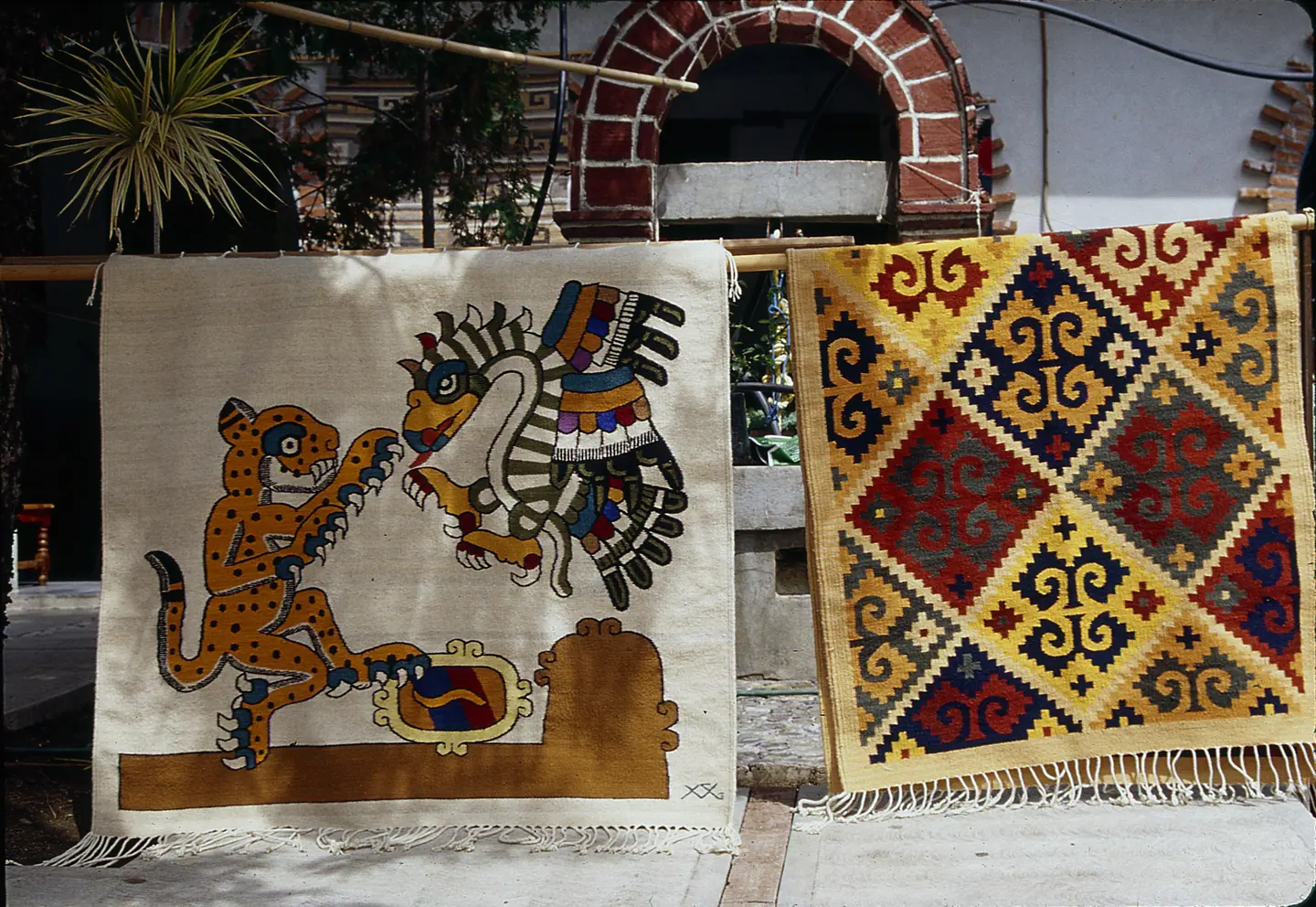
Located a short distance south of the primary food markets, this covered marketplace gathers artisans representing diverse indigenous communities across the state. Narrow stalls present black clay pottery from San Bartolo Coyotepec alongside painted wooden alebrijes. Hand-embroidered blouses, rebozo shawls, and woven palm goods line the walkways.
Templo de Nuestra Señora de la Soledad
Constructed between 1682 and 1690, this monumental basilica honours Oaxaca's patroness with a distinctive, deeply recessed baroque portal carved from yellow quarry stone. The interior showcases a gilded baldachin housing the historic statue of the Virgin, adorned with black velvet and gems. A peaceful stone atrium frames the church entrance.
Templo de San Francisco
Originally established in the sixteenth century by the Franciscan friars, this stone complex incorporates classical monastic elements and a sprawling flagged forecourt. The facade presents austere renaissance lines topped by a single bell tower. The interior houses antique wood-carved statuary and offers an atmospheric retreat from the surrounding market streets.
Mercado IV Centenario
Named to commemorate the fourth centenary of Oaxaca receiving city status, this neighbourhood market provides a quieter alternative to the central halls. The interior houses family-run stalls dishing up traditional empanadas de amarillo, slow-cooked barbacoa, and regional breakfast dishes. Open-air stalls on the perimeter sell fresh fruit, flowers, and household wares.
Plaza de la Constitución
This paved promenade spans the transition zone between the official Zócalo and the market district to the south. Flanked by historic government porticoes and casual street vendors, the area buzzes with civic life and regional gatherings. Visitors observe local balloon sellers, shoe shiners, and traditional street food stalls operating beneath green stone arcades.
Navigating High-Altitude Valley Days and Market Evenings
Our main Oaxaca guide covers airport arrivals, neighbourhood bases and multi-day pacing to complement this walk; see also our full collection of city route guides.