An evocative walking route across North America's sole surviving fortified walls, descending from dramatic promontory heights to riverside stone trading wharves.
From Stadacona Outpost to Fortified Bastion of New France
Long before Samuel de Champlain established a fortified trading habitation on the banks of the St Lawrence in 1608, the promontory of Cap Diamant was known to the St Lawrence Iroquoians as Stadacona. Quebec’s strategic elevation above the river narrows quickly turned it into the capital of New France. French military engineers, and later their British conquerors following the pivotal 1759 clash on the Plains of Abraham, girdled Upper Town in thick stone ramparts, ravelins, and bastions, creating North America's only surviving walled urban centre north of Mexico.
The city developed as a layered capital: administrative, ecclesiastical, and military power crowned Haute-Ville, while merchants and port workers settled the steep alleys of Basse-Ville below. Throughout the nineteenth and twentieth centuries, visionary conservation preserved seventeenth-century mansard roofs, copper-topped convent spires, and historic fieldstone warehouses, endowing the provincial capital with its unmistakable European silhouette and architectural permanence.
Haute-Ville Ramparts and Dufferin Terrace
The aristocratic crown of the fortress city combines dizzying river panoramas, landmark hotel towers, and monumental civic bastions.
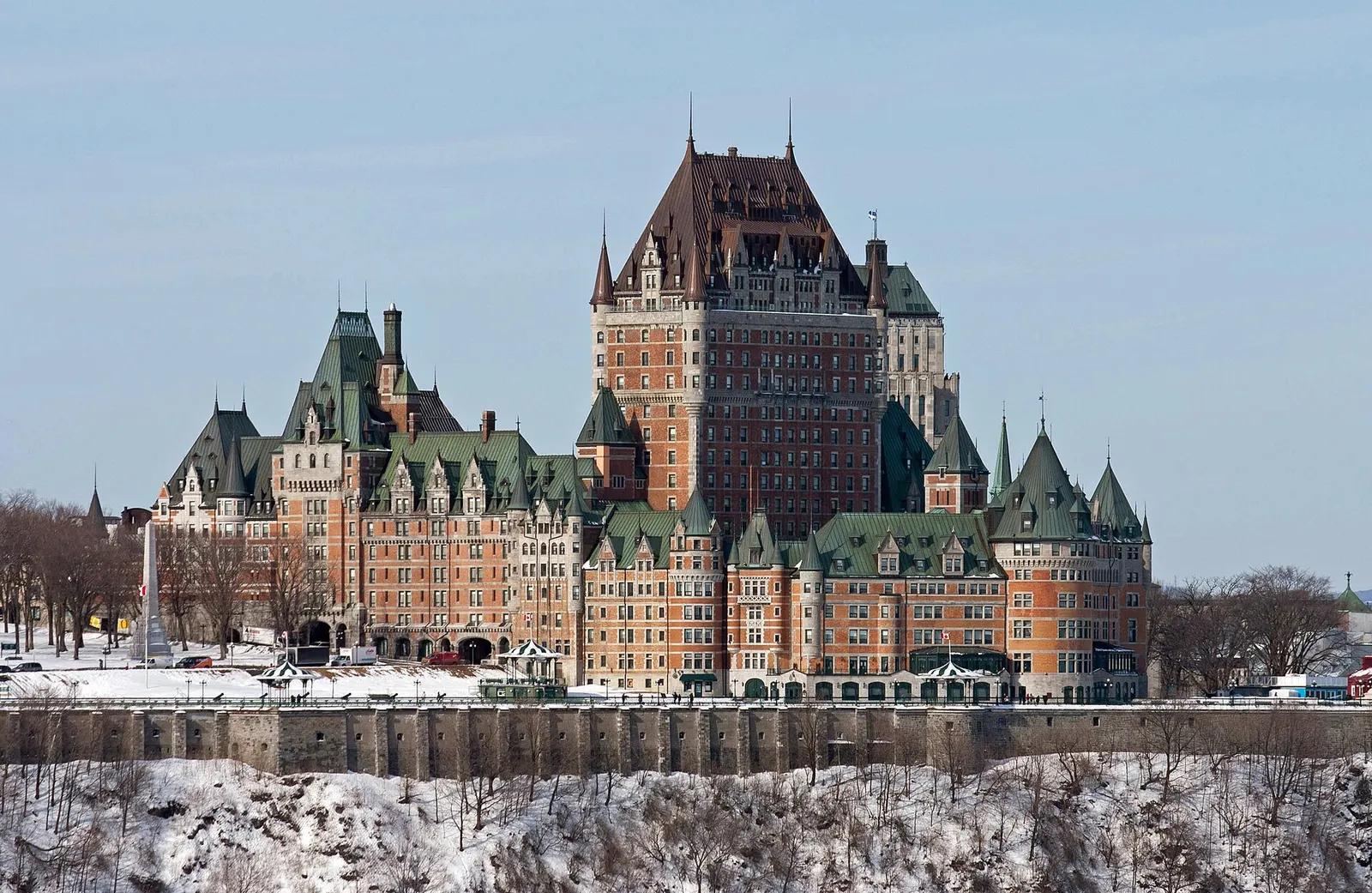
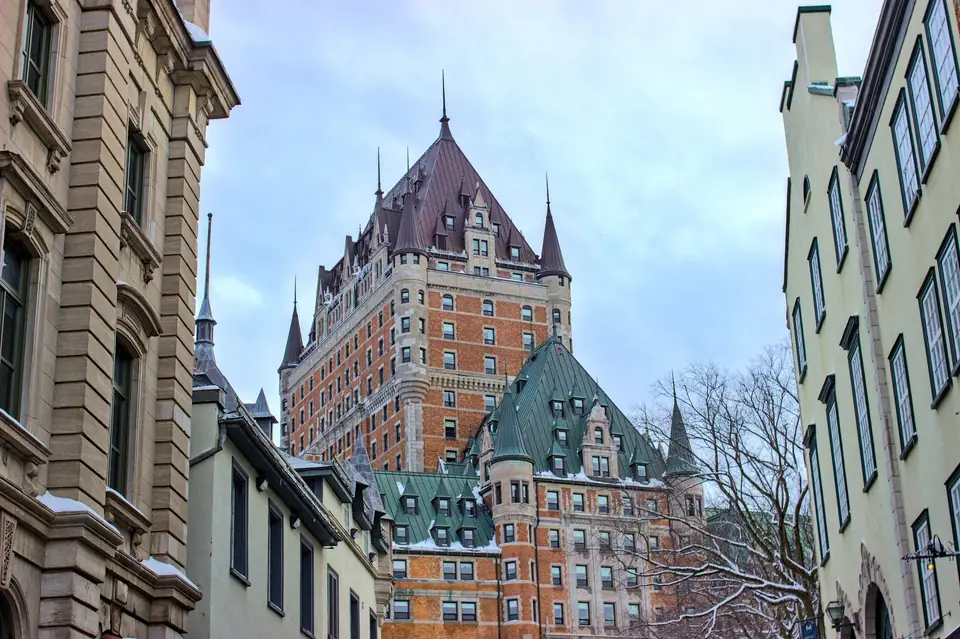
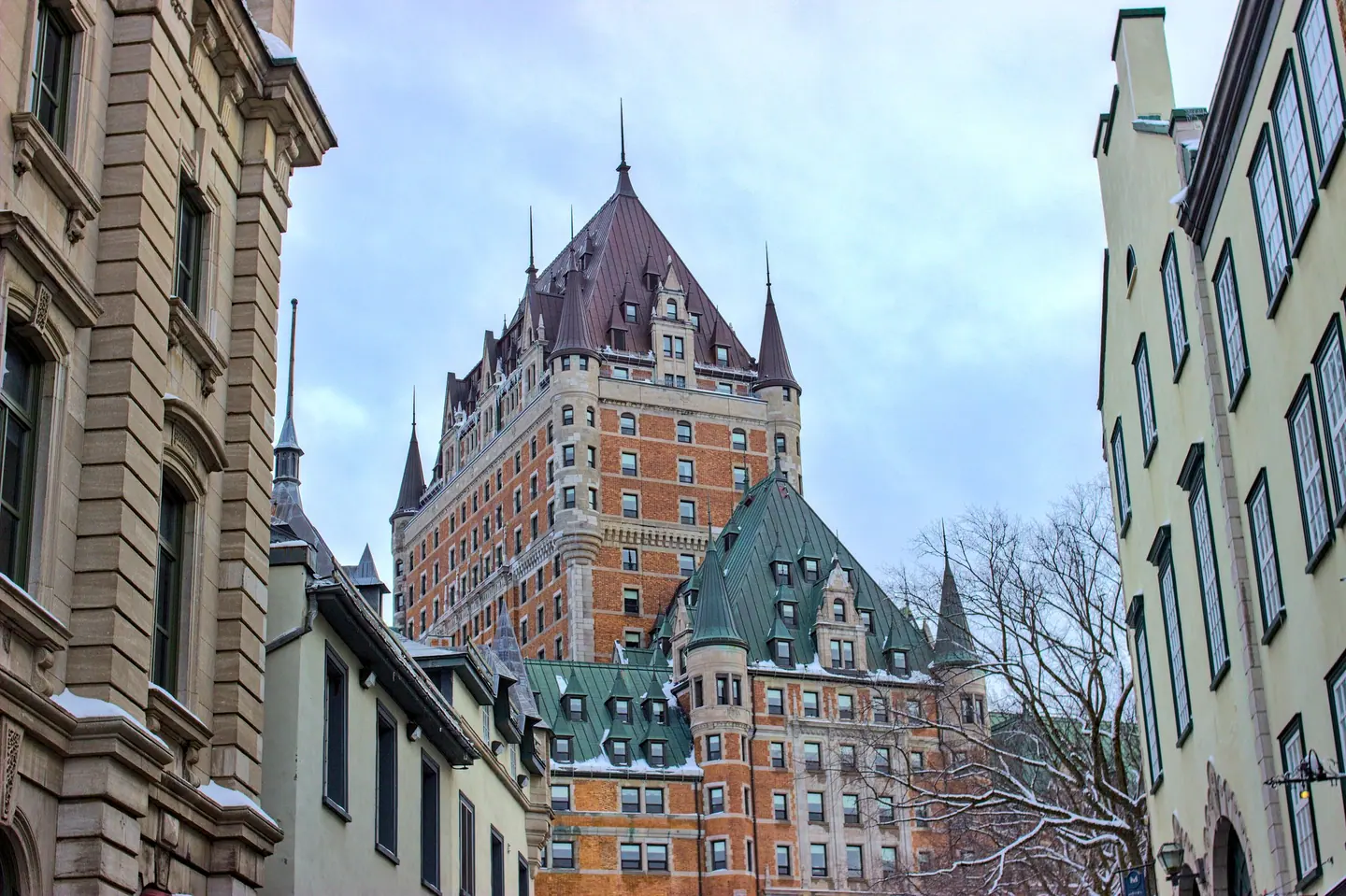
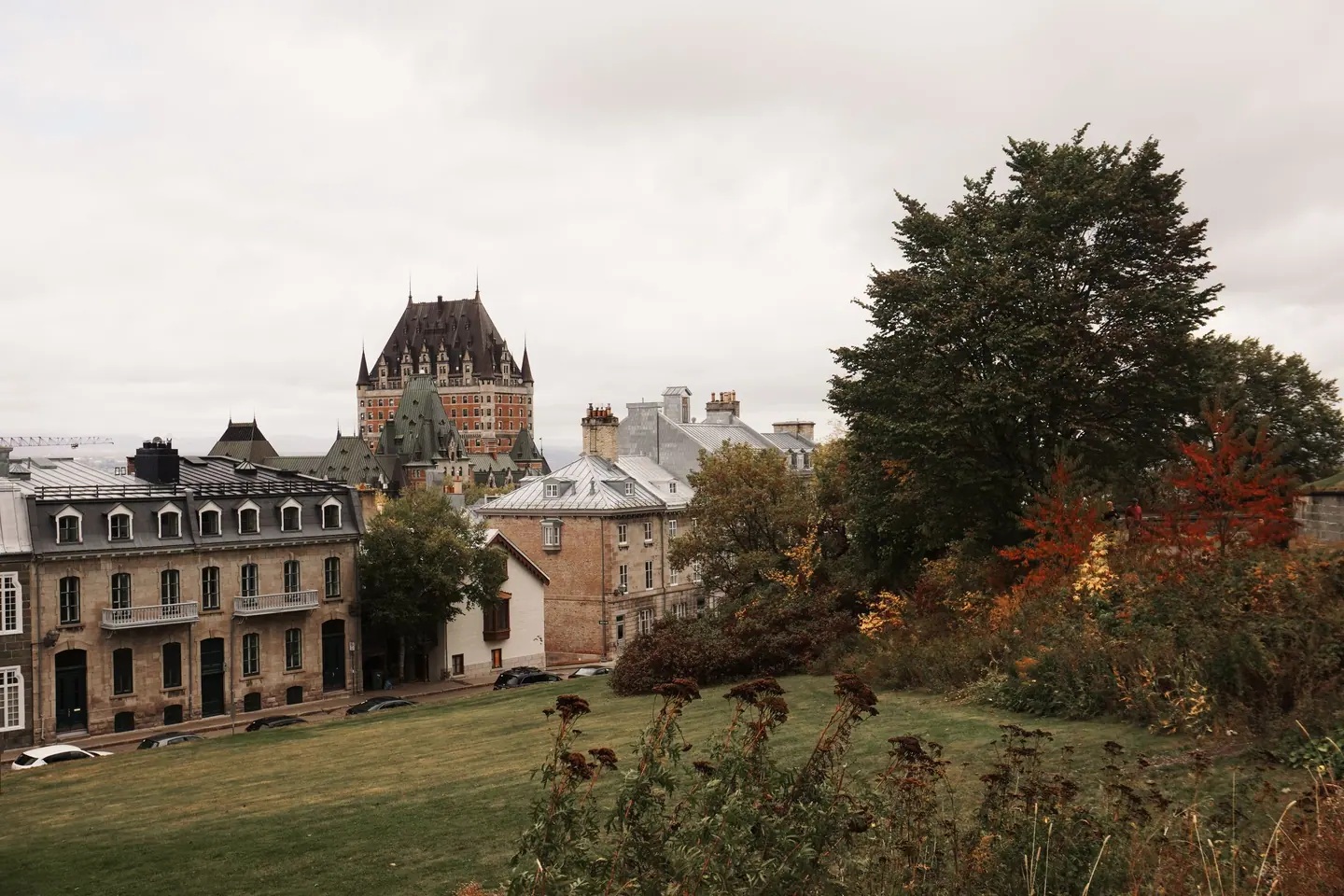
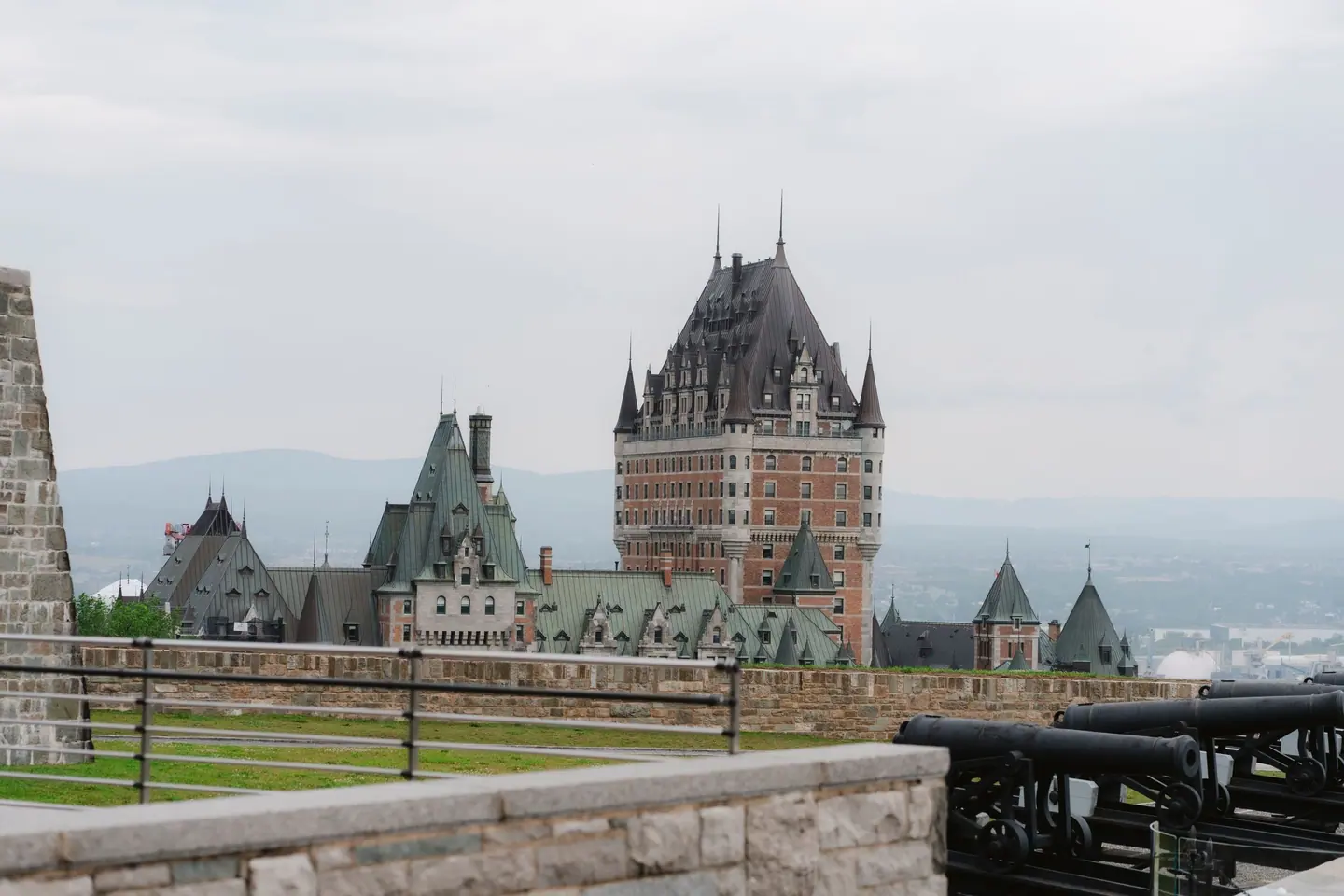
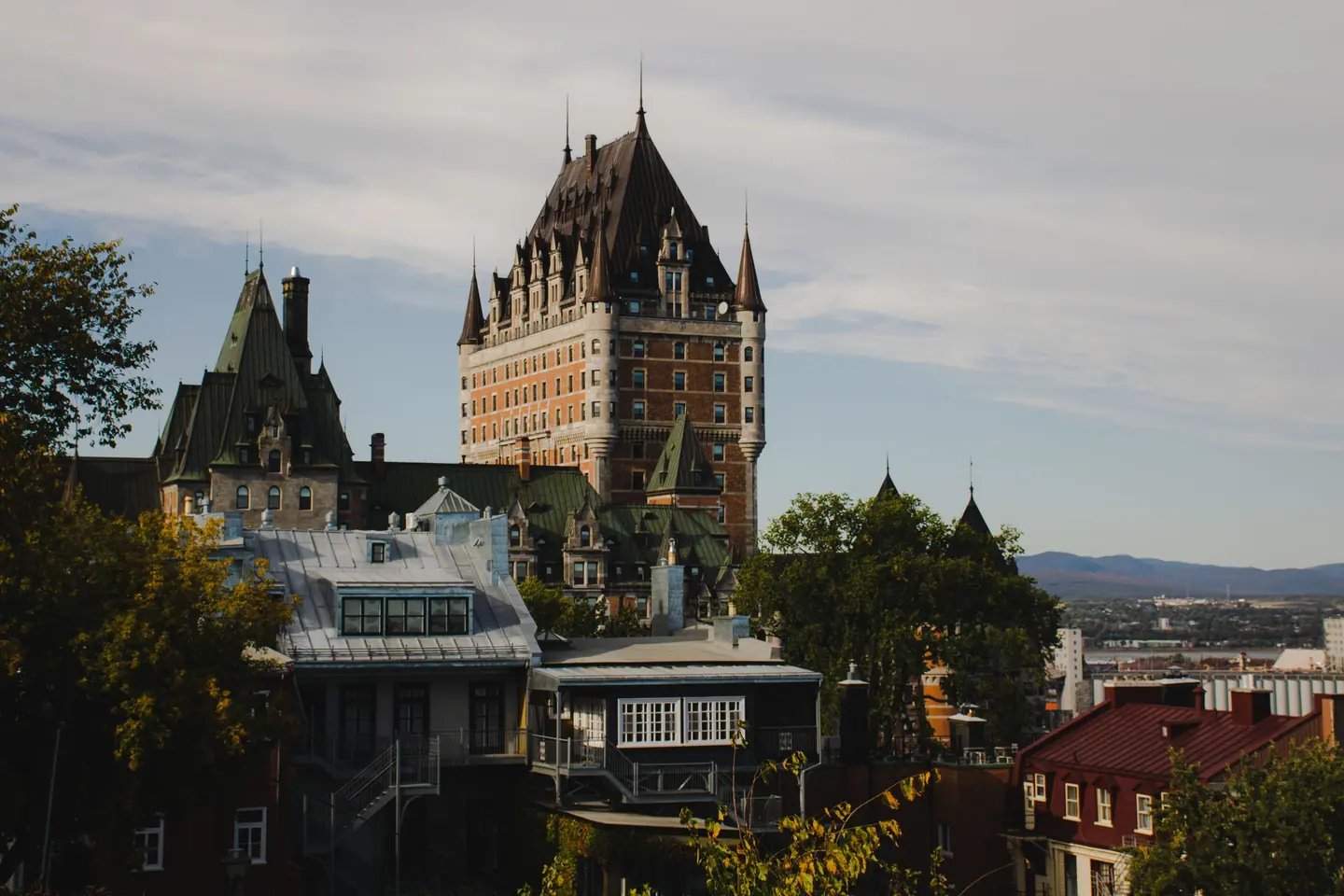
Château Frontenac
Designed by architect Bruce Price and opened in 1893, this colossal railway hotel exemplifies the Châteauesque style with steep copper roofing, dormers, and stone masonry. Visitors can examine the central courtyard, heraldic emblems, and preserved heritage salons that have hosted global dignitaries since the late nineteenth century.
Dufferin Terrace
Conceived under Governor General Lord Dufferin in the 1870s, this expansive wooden promenade hugs the edge of Cap Diamant high above the river. It features ornate green-and-white gazebos, heavy cast-iron lampposts, and expansive vistas towards Lévis and the Laurentian mountains.
Saint-Louis Forts and Châteaux National Historic Site
Buried beneath the planks of Dufferin Terrace lie the masonry foundations of the residences used by French and British governors between 1620 and 1834. Skylights in the promenade allow onlookers to peer into the excavated cellars, defensive works, and heritage kitchens of early colonial administration.
Governor's Promenade
Constructed in the 1950s, this elevated walkway connects Dufferin Terrace directly to the Plains of Abraham along the sheer rock faces of Cap Diamant. Walking along the wooden boardwalk offers direct views of the Citadelle ramparts above and the maritime traffic negotiating the narrow river channel below.
Citadelle of Quebec
Constructed between 1820 and 1850 under British military engineers, this active fortress incorporates earlier French fortifications into an expansive Vauban-style star bastion. The compound contains the East Gate, historic stone barracks, a military museum, and the official residence of the Governor General of Canada.
Ramparts of Quebec City
Quebec City maintains the only preserved defensive city walls in North America north of Mexico, spanning nearly five kilometres around Haute-Ville. Travellers walking the stone ramparts can inspect period cannons, earthen parapets, and arrow loops that defended the settlement across successive colonial sieges.
Porte Saint-Louis
Though earlier military gates stood here from 1693, the current stone archway was built in 1878 to plans by Irish architect William Lynn. Featuring picturesque battlements, turrets, and pedestrian passages, the gate accommodates road traffic passing between the historic core and the parliamentary precinct.
Porte Saint-Jean
Erected in 1939 to replace several earlier defensive gates dating back to the French regime, this stone portal frames the western entrance to Rue Saint-Jean. The gate features upper battlements open to walkers, providing clear vantages over Place D'Youville and the outdoor skating rink below.
Porte Kent
Constructed in 1879 and funded partly by Queen Victoria, this gate was named in honour of Prince Edward, Duke of Kent. It incorporates medieval-style stonework and heavy flanking towers, forming an essential link in the restored defensive curtain wall running between Saint-Louis and Saint-Jean gates.
Parc Montmorency
Occupying a strategic vantage point overlooking the river, this public park served as the site of the Bishop's Palace and early legislative assemblies before fire destroyed them. Today, stone pathways wind past preserved military cannons, commemorative statues, and historic plaques honouring figures of Canadian confederation.
Fortifications of Quebec National Historic Site
Located near the city walls, this heritage site preserves the extensive network of curtain walls, bastions, and gates built between 1608 and 1871. Inside the interpretive spaces and along guided routes, visitors learn about defensive engineering, garrison routines, and artillery tactics that protected Haute-Ville.
Cathedral of the Holy Trinity
Completed in 1804 by British military engineers William Robe and William Hall, this neoclassical edifice reflects the design of St Martin-in-the-Fields in London. The interior showcases fine English oak pews, historic royal communion silverware given by King George III, and traditional stained glass.
Notre-Dame de Québec Cathedral-Basilica
Originating on this spot in 1647, this historic basilica has been repeatedly rebuilt following fires and military bombardments, retaining its monumental neoclassical facade. Within, travellers find an ornate golden baldaquin, tombs of New France bishops, and one of the rare holy doors in the Americas.
Place d'Armes
Originally laid out in the seventeenth century for military parades and public assemblies, this cobbled square forms the civic heart of Haute-Ville. It features the Monument to the Faith at its centre and is surrounded by Château Frontenac, the courthouse, and historic government offices.
Place de l'Hôtel-de-Ville
Situated on the site of the former Jesuit college, this open square is bounded by the limestone facade of Quebec City Hall. The plaza features modern public fountain installations, seasonal cultural markets, and immediate access to the historic heritage shopping streets of Haute-Ville.
Quebec City Hall
Erected in 1896 to designs by architect Georges-Émile Tanguay, the building blends Classical, Romanesque, and Châteauesque elements across a heavy stone facade. It occupies the former footprint of the Jesuit barracks and stands as a primary monument of late-Victorian civic administration in the province.
Séminaire de Québec
Established in 1663 to train Catholic clergy in New France, this vast complex preserves seventeenth and eighteenth-century stone wings arranged around inner courtyards. The whitewashed masonry, sundials, and tranquil quadrangles provide a clear illustration of classical French institutional architecture transplanted to North America.
Ursuline Monastery of Quebec
Founded by Saint Marie of the Incarnation, this convent remains one of the oldest educational institutions for women on the continent. The adjacent chapel holds significant early French woodcarvings, religious relics, and the burial site of General Louis-Joseph de Montcalm.
Morrin Centre
Constructed in 1812 as Quebec City's first common gaol, this imposing stone structure later operated as Morrin College, an English-language Presbyterian school. Today, visitors can tour the preserved iron-barred cells in the basement before exploring the Victorian library with its wooden galleries and rare book collections.
Old Quebec Funicular
Operating since 1879, this 64-metre cliffside railway ascends a 45-degree angle along the Cap Diamant escarpment. It connects Dufferin Terrace directly to the historic Louis Jolliet House in the lower town, carrying passengers in glass cabins with continuous views over the lower roofs.
Basse-Ville Wharf and Quartier Petit-Champlain
Narrow cobbled passages flanked by gabled merchant houses lead travellers through the original seventeenth-century cradle of French settlement.
Place Royale
Founded by Samuel de Champlain in 1608 as a trading post, this restored square preserves seventeenth-century stone architecture. Steep-pitched tin roofs, masonry firewalls, and small-paned casement windows define the perimeter. Travellers can examine the central bronze bust of King Louis XIV, erected in tribute to the French monarchy.
Notre-Dame-des-Victoires Church
Constructed on the foundations of Champlain's original habitation between 1687 and 1723, this is one of the oldest stone sanctuaries in North America. The rugged limestone facade withstands harsh river winds, while the interior features a wooden ceiling shaped like a ship hull. A suspended scale-model frigate commemorates maritime rescue operations.
Rue du Petit-Champlain
Running along the foot of Cap Diamant, this passage formed the artisan core of the lower town during the French regime. Hand-forged iron signs hang above stone doorways that now house independent boutiques and craft workshops. Cobblestone paving underfoot reflects seventeenth-century street plans designed to transport cargo from the docks.
Breakneck Stairs
Constructed originally in 1635, this flight of steps represents the oldest outdoor staircase in the city. The present metal and timber framework connects Côte de la Montagne with Rue du Petit-Champlain across multiple landings. Climbing the flights reveals views of heritage rooftops and vertical cliff faces.
Old Quebec Funicular
Operating since 1879, this funicular ascends the sheer granite face of Cap Diamant at a forty-five-degree angle. The glass cabins offer sweeping perspectives over the lower town rooftops and the Saint Lawrence River channel. The lower boarding station occupies the historic Louis Jolliet house, constructed in 1683.
Maison Louis-Jolliet
Built in 1683 by architect Claude Baillif, this thick-walled stone residence belonged to explorer Louis Jolliet. The structure showcases classic French regime domestic architecture, featuring elevated masonry gables designed to prevent urban fire spread. It now functions as the base station for the funicular railway while retaining exposed structural beams.
Mural of Quebecers
Covering the gable wall of Maison Soumande on Rue Notre-Dame, this four-hundred-square-metre trompe-l'oeil painting was completed in 1999. The artwork recreates historical architecture while depicting key cultural figures, including Jacques Cartier, Samuel de Champlain, and Lord Dufferin. Architectural details match the neighbouring stone buildings to create a deceptive optical illusion.
Maison Chevalier
Commissioned in 1752 for merchant Jean-Baptiste Chevalier, this complex incorporates three stone structures built on vaulted cellars. The exterior displays characteristic high chimneys, thick rubblestone walls, and fire-break parapets required by colonial building regulations. The restored interior rooms exhibit historic wood panelling, open hearths, and period furniture reflecting merchant domestic life.
Petit-Champlain Mural
Located at the southern terminus of Rue du Petit-Champlain, this detailed trompe-l'oeil mural depicts the history of the surrounding working-class neighbourhood. Painted directly on a stone wall, it illustrates historic river fishermen, longshoremen, and the tragic 1889 rockslide from Cap Diamant. The composition integrates real windows and architectural contours into its visual narrative.
Parc de la Cetière
Positioned between Rue Saint-Pierre and Place Royale, this open public space preserves the ground footprints of colonial warehouses. Stone outlines set into the pavement indicate original seventeenth-century foundations discovered during twentieth-century archaeological digs. Shaded benches provide views of surrounding French regime facades and steep slate rooflines.
Côte de la Montagne
Traced out by Champlain in 1620, this steep road remains the oldest vehicular route between the river port and the upper plateau. The passage curves beneath stone retaining walls and passes beneath the monumental Prescott Gate reconstructed in 1983. Walking up the slope allows travellers to appreciate the formidable natural topography that protected early New France.
Battery Royale
Constructed in 1691 following the English siege led by Sir William Phips, this thick stone fortification defended the primary river quays. The reconstructed platform mounted heavy iron cannons capable of sweeping maritime channels with crossfire. Travellers can examine the preserved embrasures and look across the modern commercial harbour toward Lévis.
Old Port of Quebec
This deep-water harbour basin handled transatlantic timber exports, naval supplies, and immigrant transport ships throughout the eighteenth and nineteenth centuries. Historic stone customs houses and brick shipping warehouses line the inland docks, now repurposed for leisure and commerce. The quayside promenade offers uninterrupted vantages of the river and passing commercial vessels.
Musée de la Civilisation
Designed by architect Moshe Safdie and inaugurated in 1988, this museum complex blends modern limestone pavilions with preserved eighteenth-century domestic buildings. The institution houses permanent exhibitions on First Nations heritage and the social evolution of Quebec society. Its central glass atrium incorporates natural light and views of historic dockland alignments.
Maison Hazeur
Constructed between 1684 and 1688 for wealthy timber merchant François Hazeur, this imposing residence demonstrates classic urban French masonry. The building features tall stone chimney stacks, thick multi-layered walls, and deep cellars originally used for storing pelts and imported European wine. It stands as a prominent example of post-fire stone rebuilding programmes.
Auberge Le Saint-Gabriel Site
Situated along the base of the cliffs, this sector reveals the multi-layered evolution of domestic architecture under French and British administrations. Thick fieldstone masonry, reinforced buttresses, and narrow carriageways demonstrate how colonists maximized land along the high-water line. Interpretive markers detail how land reclamation projects gradually expanded the wharf area outward into the river.
Parc Montmorency
Occupying a high terrace directly above the wharf district, this public park was originally the site of colonial defensive batteries and early legislative assemblies. Rows of iron cannons line the perimeter wall, pointing directly down over the roofs of Basse-Ville. Monuments commemorate Sir George-Étienne Cartier and the historic Catholic bishopric established by François de Laval.
Rue Sous-le-Fort
Positioned immediately below the historical governor's residence, this street functioned as an important link between the riverside wharves and upper town fortifications. The stone facades exhibit traditional dormer windows, wrought-iron hardware, and deep basement portals. Today, independent art galleries and local craft vendors occupy these atmospheric seventeenth-century ground floors.
Pointe-à-Carcy
This natural land point jutting into the Saint Lawrence was reinforced during the nineteenth century to handle expanding oceanic shipping traffic. Today, modern landscaped boardwalks sit alongside operational naval reserve stations and passenger ship berths. The location provides exceptional panoramas of Cap Diamant, the Île d'Orléans channel, and historic river trade paths.
Maison Smith
Built on seventeenth-century foundations and extensively restored, Maison Smith showcases the transition between French colonial design and early British commercial alterations. The facade features symmetry, heavy timber sash windows, and durable limestone masonry. The structure houses heritage interpretation spaces where visitors can learn about the early trading community of Place Royale.
Place Royale and the Old Port Maritime Quarter
Historic customs houses and maritime docks now house historic market halls, antique dealers, and the continent's oldest stone church.
Place Royale
Champlain founded his first permanent habitation on this riverside clearing in 1608, establishing the nucleus of French civil life in North America. Rebuilt with steep-pitched tin roofs following wartime bombardments, the perimeter exhibits classic French-regime merchant architecture. We find a bronze bust of Louis XIV watching over the central square.
Notre-Dame-des-Victoires Church
Erected in 1688 upon the foundations of Champlain's original trading post, this stone sanctuary commemorates French colonial victories against British naval sieges. Its interior displays a suspended scale replica of the vessel Le Brézor alongside rescued liturgical artefacts. The simple fieldstone facade remains an anchor of the lower town skyline.
Maison Chevalier
Constructed in 1752 for merchant Jean-Baptiste Chevalier, this complex unites three individual stone buildings under heavy timber frameworks. Massive firebreak gables, vaulted cellars, and multi-paned casement windows reflect standard building bylaws designed to curtail urban blazes. The site presents domestic life during the final decades of New France.
Old Port of Quebec
Serving as Canada's primary transatlantic gateway during the nineteenth century, the Old Port welcomed timber barques, naval frigates, and waves of European emigrants. Converted warehouses and modernised piers now accommodate coastal cruise liners and pedestrian promenades along the Louise Basin. Visitors can survey the tidal harbour against the dramatic backdrop of Cap Diamant.
Old Custom House
Designed by architect Pierre Gauvreau and completed in 1860, this port landmark managed the burgeoning maritime revenues of the St Lawrence River. The edifice features a prominent dome, classical portico, and rusticated stone walls engineered to withstand harbour moisture. It reminds travellers of Quebec City's historical role as a transatlantic trading entrepot.
Fresque des Quebecois
Unveiled in 1999 on the blank gable wall of Maison Soumande, this 420-square-metre trompe-l'oeil painting celebrates four centuries of regional history. Historical figures including Jacques Cartier, Samuel de Champlain, and Lord Dufferin appear alongside seasonal street scenes. Architectural elements of the surrounding lower town are integrated directly into the composition.
Museum of Civilization
Architect Moshe Safdie designed this museum to bridge maritime wharf history with modern civic architecture, incorporating historic bank buildings into its sweeping glass atrium. Opened in 1988, its halls explore First Nations heritage, Quebecois identity, and international societies. Outdoor water steps and copper roof pitches echo traditional regional masonry.
Rue du Petit-Champlain
Running along the base of the cliff, this narrow lane began as a pathway to Champlain's spring before evolving into a working-class dockers' quarter. Restored stone houses from the seventeenth and eighteenth centuries now accommodate local craftspeople and boutique bistros. Wrought-iron signs, stone stairways, and timber balconies preserve its historic scale.
Breakneck Steps
Constructed in 1635 to link the upper town promontory directly to the harbour market, these steep stairs have borne centuries of commuter traffic. Modern steel and timber structures follow the historic alignment, providing vantage points over the rooftops of Rue du Petit-Champlain. The name references the dramatic drop and winter ice accumulation on the flights.
Old Port Market
Established dockside to receive agricultural produce shipped directly from Île d'Orleans and the St Lawrence valley, this market area has sustained maritime commerce for centuries. Modern food halls and seasonal stalls sell local maple syrup, regional cheeses, and preserved fruit. Walking between the docks reveals Quebec's agricultural connection to its maritime riverways.
Louise Basin
Inaugurated in the late nineteenth century to overcome the massive tidal variance of the St Lawrence, the Louise Basin accommodated ocean-going cargo steamers. Massive lock mechanisms, granite quays, and mooring bollards remain visible across the perimeter. Today the basin serves recreational yachts and allows travellers to observe the historic inner harbour.
Battery Royale
Constructed in 1691 following Governor Frontenac's successful defence against English naval invaders, this low-lying fortification guarded the river narrows. Cannon embrasures, reconstructed earthworks, and stone revetments indicate how French engineers defended the port. Today it functions as an open terrace offering panoramic views over the shipping lanes.
Naval Museum of Quebec
Maintained by the Royal Canadian Navy inside the HMCS Montcalm naval reserve division, this museum chronicles military operations along the St Lawrence and the Atlantic. Exhibitions feature archival uniforms, vessel models, navigation instruments, and wartime communication devices. The institution highlights naval convoys that departed from Quebec during the Second World War.
Maison Lambert-Dumont
Erected during the late seventeenth century, this substantial residence served prominent regional merchants and officials throughout the French regime. Thick stone rubble walls, raised firebreaks, and multi-pane casement windows illustrate standard structural methods of early Quebec architecture. The ground floor now forms an integral part of the Place Royale interpretive district.
Quebec Customs House (Rue Saint-Andre)
Set along the historic merchant street of Saint-Andre, this stone and brick complex housed maritime cargo inspections and harbour logistics through the industrial boom. Its solid facade and arched fenestration reflect nineteenth-century civic utilitarianism. Today the site connects the active antique district to historic port infrastructure.
Agora Port de Quebec
Constructed along the outer harbour piers, this concrete amphitheatre hosts public performances, festivals, and cultural gatherings against the backdrop of the St Lawrence. The tiered seating provides vistas of cruise ships, grain elevators, and coastal tugs operating in the current. It represents an innovative late-twentieth-century industrial conversion of maritime wharfage.
Funiculaire du Vieux-Quebec
Operating since 1879, this cliffside funicular climbs a 45-degree gradient between Maison Louis Jolliet in the lower town and Dufferin Terrace above. Originally powered by water ballast counterweights, it converted to electric operation following twentieth-century renovations. Passengers observe the Old Port roofs and the St Lawrence River receding below.
Bungee Grain Silo Mural
The immense grain silos of the Bunge terminal have stood as a dominant element of the harbour skyline since the mid-twentieth century. For the city's 400th anniversary, the concrete towers were illuminated with monumental art projections depicting the industrial history of the port. The facility remains an active commercial grain transshipment site today.
Maison Fornel
Louis Fornel, an enterprising explorer and merchant involved in the northern seal fishery, occupied this site in the eighteenth century. Excavations during the 1960s revealed original foundations dating back to the seventeenth century, prompting a faithful historical reconstruction. The house demonstrates domestic life, fur-trading logistics, and civic preservation efforts.
Pointe-a-Carcy
Extending into the confluence of the St Lawrence and Saint-Charles rivers, this spit of land once accommodated commercial shipyards and defensive installations. Today it offers public green space, walking paths, and viewing platforms aimed directly at Levis on the south shore. Interpretive plaques describe the evolution of Quebec's merchant sailing fleet.
Plains of Abraham and the Citadelle
A sweeping urban parkland preserves the decisive eighteenth-century battlefield alongside the star-shaped stone redoubts of the royal citadel.
Citadelle of Quebec
Constructed between 1820 and 1850 under British command, this stone redoubt forms the key defensive anchor of the city walls. We find the Royal 22e Regiment stationed here alongside the official residence of Canada's Governor General. The complex retains massive earthen ramparts, dry moats, and a heritage military museum.
Plains of Abraham
This expansive plateau witnessed the 1759 clash between British forces under General James Wolfe and French troops led by the Marquis de Montcalm. Today, rolling green lawns host outdoor gatherings, walking trails, and preserved field artillery. It forms the core of the federally administered National Battlefields Park.
Martello Tower 1
Built by the British military between 1808 and 1812, this stone redoubt defended the western approaches to the city from potential American invasion. Its thick limestone masonry was designed to withstand prolonged artillery bombardment. Visitors can observe historical military exhibits and preserved cannon emplacements on its upper platform.
Martello Tower 2
Standing near the junction of Avenue Laurier and Avenue Tache, this round defensive bastion formed part of a four-tower screen across the promontory. Its robust, curved walls were engineered to deflect incoming shot. The structure remains a striking example of British imperial military engineering from the Napoleonic era.
Martello Tower 4
Positioned on Rue Lavigueur along the northern ridge of the promontory, Tower 4 guarded the lower valley approaches. Though separated from the main parkland by urban expansion, it maintains its solid masonry shell and defensive parapets. It represents the northern anchor of the nineteenth-century western fortifications.
Plains of Abraham Museum
Serving as the welcoming portal to the park, this facility presents multimedia exhibitions detailing the battles of 1759 and 1760. Artefacts recovered from military encampments and archaeological excavations illustrate daily eighteenth-century soldier life. It also coordinates access to the surrounding historical trails and preserved redoubts.
Cap Diamant
Rising steeply above the Saint Lawrence River, this sheer cliff was named by Samuel de Champlain after sparkling quartz crystals mistaken for diamonds. It dictated the strategic placement of the Citadelle on its summit. The cliff edge offers wide views across the river basin toward the southern shore.
Governors' Walk
Constructed along the sheer rock face of Cap Diamant, this dramatic footway clings to the stone below the fortress walls. It offers sweeping panoramas across the river toward Point Levis. We recommend using it to transit between the elevated battlefield grounds and the historic upper town.
Wolfe-Montcalm Monument
Erected in 1828 in Governors' Garden just outside the fortress walls, this tall masonry obelisk commemorates Generals James Wolfe and Louis-Joseph de Montcalm. It is notable for honouring both victor and vanquished on a shared monument. The Latin inscription celebrates their united valor and shared historical legacy.
Wolfe Monument
This classic stone column stands on the battlefield grounds near the spot where General Wolfe died from combat wounds in September 1759. Rebuilt several times since its original eighteenth-century placement, the current shaft dates from 1913. A bronze sword and military helmet adorn the memorial plinth.
Joan of Arc Garden
Designed in 1938 by landscape architect Louis Perron, this sunken garden combines French formal style with English mixed borders. At its heart stands an equestrian bronze of Joan of Arc, gifted by American benefactors. The surrounding parterres bloom with thousands of perennials and annuals throughout the warm season.
Cross of Sacrifice
Located near the entrance gates of the park along Grande Allee, this stone monument was erected in the 1920s. It features a bronze longsword embedded in a monolithic limestone cross, following the standard Commonwealth War Graves design. It serves as Quebec City's central site for annual Remembrance Day ceremonies.
Musée national des beaux-arts du Québec
Comprising four distinct pavilions, including a converted nineteenth-century prison and the modern Pierre Lassonde Pavilion, this complex holds the premier collection of Quebec art. The galleries display works ranging from early colonial religious sculpture to contemporary installations. Large glazed walls offer direct views onto the parkland.
Gilmour Hill
This steep ravine route traces the natural cleft through which British forces scaled the cliffs during the night preceding the 1759 battle. Now fully paved for pedestrians and cyclists, it links the upper plains with the Saint Lawrence shoreline. Interpretive plaques mark the tactical route used by the landing army.
Anse au Foulon
Formerly known as Wolfe's Cove, this shoreline inlet beneath the cliffs served as the staging ground for the pivotal assault on Quebec. Later developed as a timber cove and trans-Atlantic ocean terminal, it now hosts port facilities and park paths. The surrounding bluffs demonstrate the severe topography the soldiers scaled.
Officers' Mess and Memorial Hall of the Citadelle
Constructed as part of the massive nineteenth-century British building programme, this limestone facility preserves ceremonial spaces of the Royal 22e Regiment. Exhibits display historical uniforms, battle honours, medals, and silver plate. The adjoining grounds feature historical artillery and commemorative markers documenting Canada's infantry history.
Cap-Blanc Stairway
Comprising nearly four hundred wooden steps, this steep stairway descends directly from the edge of the Plains of Abraham down to the Cap-Blanc neighbourhood. Originally constructed to provide working-class residents access to city factories, it now serves walkers and fitness enthusiasts. The descent reveals dramatic views of river shipping.
Kiosk Edwin-Bélanger
Named after a renowned Quebec military bandsman and conductor, this wooden bandshell hosts an annual summer programme of outdoor musical performances. Set in a natural amphitheatre formed by the rolling terrain, it gathers local crowds on warm evenings. The pavilion exemplifies the dual nature of the site as both battlefield and civic recreation space.
Battle of Sainte-Foy Monument
Situated towards the western edge of the park area, this monument marks the site of the bloody second engagement of the Quebec campaign, where Chevalier de Levis defeated British forces under James Murray. A bronze statue of Bellona crowns the tall pillar. The parkland around it contains commemorative markers and remnants of eighteenth-century fieldworks.
Porte Saint-Louis
Rebuilt in its current Gothic revival form in the 1870s under Lord Dufferin, this stone archway permits passage through the western defensive curtain. It connects Grande Allee directly with Rue Saint-Louis inside the ramparts. Walkways over its arches allow pedestrians to circuit between the battlefield parks and the fortifications.
Faubourg Saint-Jean-Baptiste and Parliament Hill
Beyond the historic gates, Victorian commercial avenues and Second Empire legislative halls reveal the modern French-Canadian cultural core.
Parliament Building
Completed in 1886 under architect Eugène-Étienne Taché, this imposing legislative seat features an elaborate facade honouring historical figures from New France and British North America. We admire the central clock tower and the motto carved above the portal, Je me souviens, which originated here. The surrounding grounds display bronze statues of political reformers and statesmen.
Fontaine de Tourny
Cast in iron by Mathurin Moreau in 1855, this ornate fountain earned a gold medal at the Paris Universal Exhibition before gracing Bordeaux for decades. Gifted to Quebec City for its four-hundredth anniversary in 2008, it operates directly opposite the parliament gates. Visitors should observe the intricate allegorical figures, marine motifs, and forty-three water jets illuminating the legislative roundabout.
Église Saint-Jean-Baptiste
Rebuilt after the catastrophic fire of 1881, this Second Empire and neo-classical temple served as the spiritual anchor of the working-class French-Canadian suburb. The exterior features limestone towers that dominate the local streetscape, whilst the cavernous interior houses a renowned Déry organ and Italian marble altars. Its sheer scale reflects the late Victorian demographic boom of the neighbourhood.
Rue Saint-Jean
Extending beyond the fortified walls, this long corridor evolved from a military transit route into a centre for neighbourhood commerce during the nineteenth century. The avenue displays an engaging sequence of Victorian shopfronts, historic mansard roofs, and brick facades. It remains a prime axis for observing everyday francophone community life and traditional urban architecture.
Observatoire de la Capitale
Positioned on the thirty-first floor of the Marie-Guyart Building, this indoor viewpoint provides a full panoramic perspective over Parliament Hill and the surrounding river valleys. Informative displays interpret the layout of both the Upper Town fortifications and the lower suburbs. Visitors can inspect the original urban design that structured Quebec's political and civil development.
Edifice Marie-Guyart
Erected in 1972 as part of the Modernist expansion of the parliamentary precinct, this 132-metre concrete tower remains the tallest skyscraper in Quebec City. Its austere architectural lines contrast sharply with the neighbouring nineteenth-century row houses of Faubourg Saint-Jean-Baptiste. The structure symbolises the massive growth of Quebec's civil service during the Quiet Revolution.
Monument to Louis-Hippolyte La Fontaine
Standing on the south side of Parliament Hill, this statue commemorates the nineteenth-century jurist who served as the first Premier of the United Province of Canada. Sculpted with formal dignity, the monument honours his collaborative work establishing democratic accountability and French language rights in the legislature. It forms an essential component of the surrounding political parkland.
Place de l'Assemblée-Nationale
This civic space marks the ceremonial transition from the fortified Old City to the governmental quarter along Boulevard René-Lévesque. Flanked by formal gardens and public monuments, it frequently serves as a gathering ground for state ceremonies and civic demonstrations. The plaza offers an unobstructed prospect of the historic parliament's detailed stone façade.
Monument to René Lévesque
Positioned near the legislative steps, this bronze statue by Fabien Pagé honours the journalist turned premier who founded the Parti Québécois. Unveiled in 2001, the statue captures Lévesque in a characteristically relaxed stance, reflecting his populist connection with the public. It marks an important pilgrimage point for students of twentieth-century Canadian political history.
Promenade des Premiers-Ministres
Running along the southern periphery of Parliament Hill, this pedestrian walkway presents interpretative markers profiling each of Quebec's past premiers. The route winds through mature trees and urban gardens that separate administrative towers from historic avenues. It offers a calm educational stroll charting the political evolution of the province since Confederation.
Le Capitole de Québec
Designed by American architect Walter S. Painter and inaugurated in 1903, this classical theatre features a distinctive curved facade that hugs the former city fortifications. Renovated extensively in the 1990s, the auditorium showcases ornate plasterwork, gilded balconies, and historic performance halls. It serves as an enduring entertainment landmark bridging the walled city and the modern faubourg.
Place d'Youville
Positioned just outside the fortified Saint-Jean Gate, this public hub marks the eastern threshold of the Faubourg Saint-Jean-Baptiste. Surrounding architecture includes historic theatres, remnants of old fortifications, and modern cultural venues. In winter, the square features an outdoor skating facility, whilst in summer it acts as an animated crossroads for local commuters and travellers.
Cimetière Saint-Matthew
Established in 1771, this historic cemetery and its deconsecrated nineteenth-century church now function as a public garden and municipal library. The mossy headstones commemorate British soldiers, Scottish merchants, and early settlers who shaped the city after the conquest. It offers a rare, leafy sanctuary of Anglo-Quebec heritage right in the heart of the French faubourg.
Bibliothèque Claire-Martin
Housed inside the former Saint-Matthew Anglican Church built in 1870, this municipal branch preserves magnificent stained glass windows, wood panelling, and a soaring timber roof. The converted interior allows visitors to read alongside historic memorials and an ancient church organ. It represents an exceptional example of adaptive heritage reuse in modern Quebec.
Manoir Mont-Carmel Grounds
Perched on the cliffside of the faubourg, these steep streets and terraced properties display traditional timber and brick craftsmanship from the late nineteenth century. The slopes offer striking vistas extending northward toward the Laurentian Mountains. Walking these quiet lanes reveals the domestic scale and resilience of an urban district rebuilt repeatedly after devastating fires.
Parc de l'Esplanade
Originally used as a British garrison drill ground in the eighteenth and nineteenth centuries, this sloping park sits directly between the city walls and Parliament Hill. The parkland provides wide fields, mature shade trees, and clear sightlines of the fortifications and surrounding Second Empire government edifices. It remains a popular retreat for quiet strolls outside the gate.
Edifice Hector-Fabre
Named after Hector Fabre, Quebec's first general representative in Paris, this contemporary government building anchors the western edge of the parliamentary campus. The structure integrates post-modern stonework designed to complement the monumental scale of older legislative buildings. It houses departments dedicated to provincial administration and international relations.
Monument to Robert Bourassa
Unveiled in 2006 on the parliamentary lawns, this bronze statue depicts the leader who guided Quebec through major constitutional crises and northern hydroelectric developments. Positioned close to the National Assembly entrance, the monument reflects twentieth-century political leadership. We can observe details capturing his characteristic intellectual posture and formal executive attire.
Escalier Lavigueur
This dramatic set of public steps drops steeply down the promontory, linking the Faubourg Saint-Jean-Baptiste on the cliff with the Saint-Roch quarter below. The descent offers expanding perspectives of industrial rooftops, church spires, and northern mountain ranges. It serves as an essential pedestrian artery highlighting the dramatic, fractured topography of Quebec City.
Grand Théâtre de Québec
Inaugurated in 1971 on Boulevard René-Lévesque, this brutalist complex designed by Victor Prus forms the cultural anchor of the wider parliamentary district. The interior foyer is famous for its monumental integrated mural carved directly into concrete walls by sculptor Jordi Bonet. The venue serves as the primary home for the Orchestre Symphonique de Québec and provincial opera.
Field Notes for Navigating the Fortified Promontory
For neighbourhood accommodation notes, seasonal weather tables and airport transfer details, consult our Quebec City destination guide, or browse other city and regional walking routes across the atlas.