Follow a rich path through America's oldest state capital, tracing centuries of Pueblo masonry, Spanish colonial adobe, and historic contemporary arts.
Pueblo Crossroads, Royal Presidios and Adobe Revivalism
Established in 1610 atop ancient Tewa Pueblo ancestral lands, Santa Fe served as the remote northern administrative seat of the Spanish Viceroyalty of New Spain. Following the Pueblo Revolt of 1680 and subsequent reconquest led by Don Diego de Vargas, the settlement centred firmly upon its defensive central plaza, fortified by the Palace of the Governors and supported by Franciscan mission chapels constructed with thick, sun-dried mud bricks.
With Mexican independence and the opening of the Santa Fe Trail in 1821, the city transformed into an energetic trade emporium, later annexed by the United States. In the early twentieth century, regional architects and preservationists formalised the Pueblo Revival and Territorial architectural styles, codifying earthen parapets and exposed vigas into municipal law to safeguard the city's distinctive southwestern aesthetic.
Historic Plaza Core and Palace Grounds
The colonial civic heart retains four centuries of continuous public governance beneath earthen portales and grand cathedral spires.
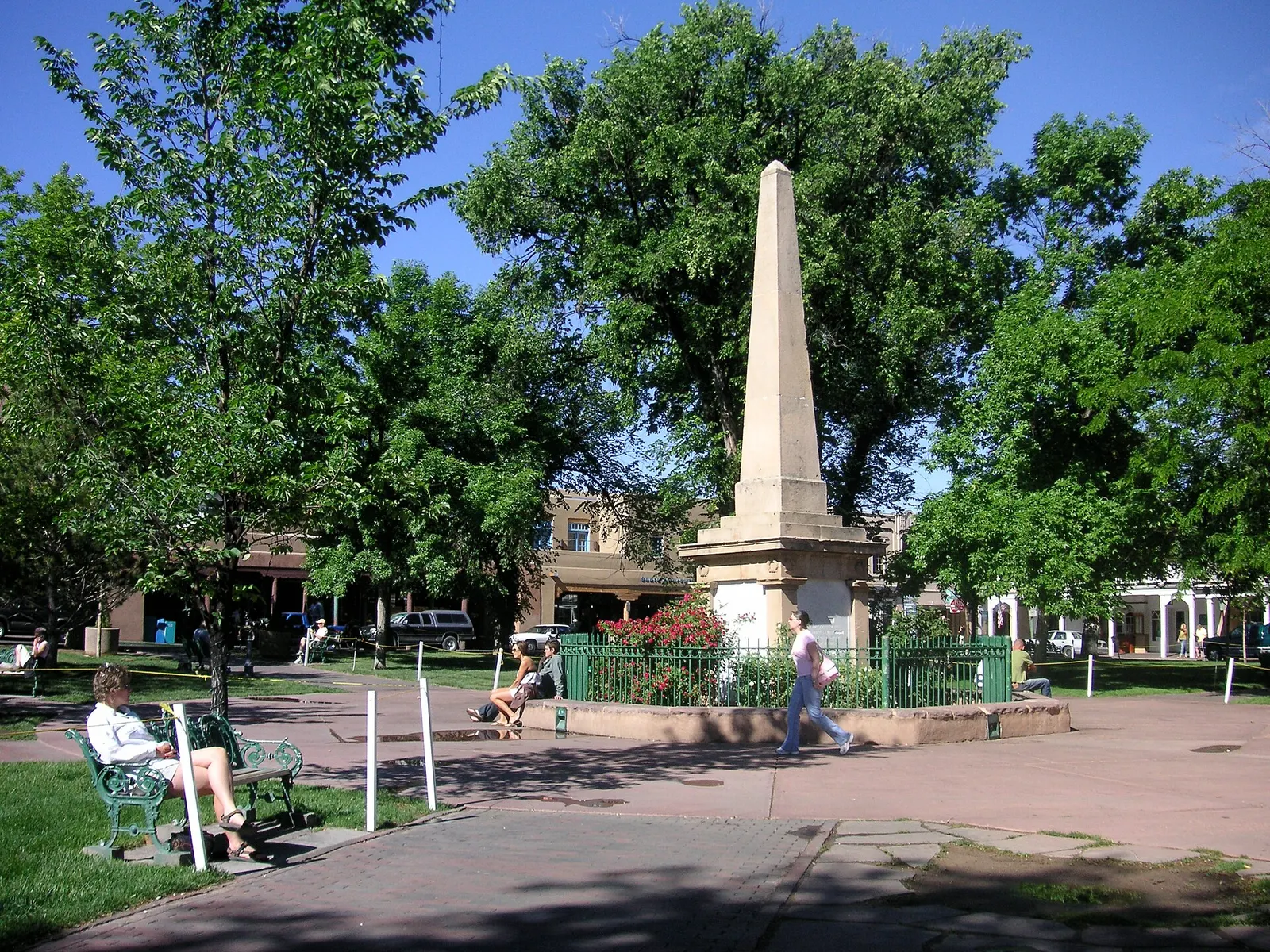
Santa Fe Plaza
Established in 1610 by Governor Don Pedro de Peralta, this central square served as the terminus for the Camino Real and the Santa Fe Trail. Surrounded by historic adobe portales, it remains the focal point for regional civic gatherings, traditional markets, and public ceremonies. We observe centuries of administrative history reflected in its preserved open green space and enclosing perimeter.
Palace of the Governors
Constructed in 1610, this adobe fortress housed Spanish, Pueblo, Mexican, and American governmental authorities over four centuries. Its long shaded portal accommodates registered Native American artisans who sell handmade turquoise and silver jewellery directly to travellers. The thick mud-brick walls and low-slung vigas showcase the foundational Pueblo Revival and Spanish colonial architecture of the Southwest.
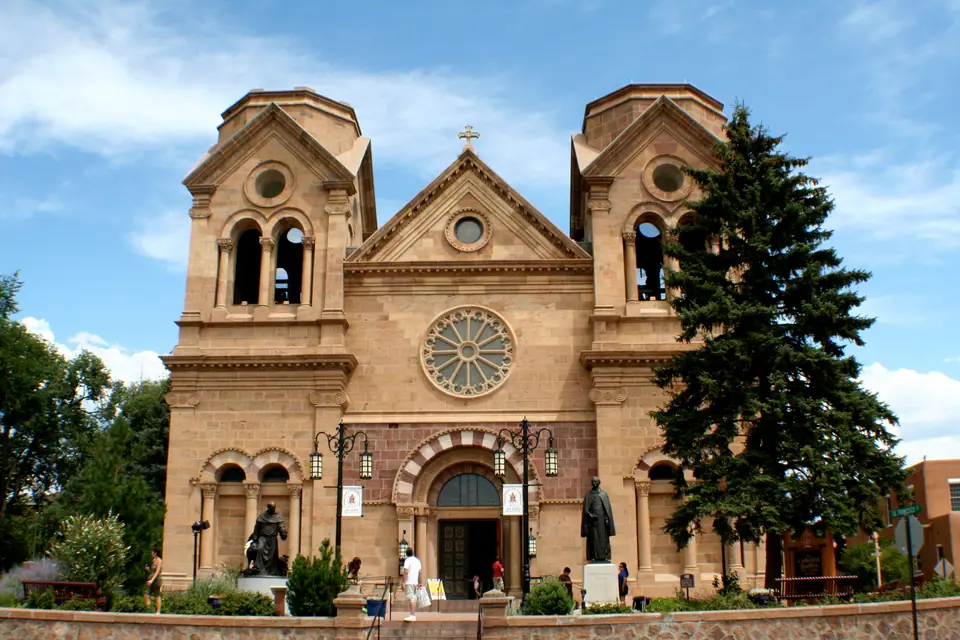
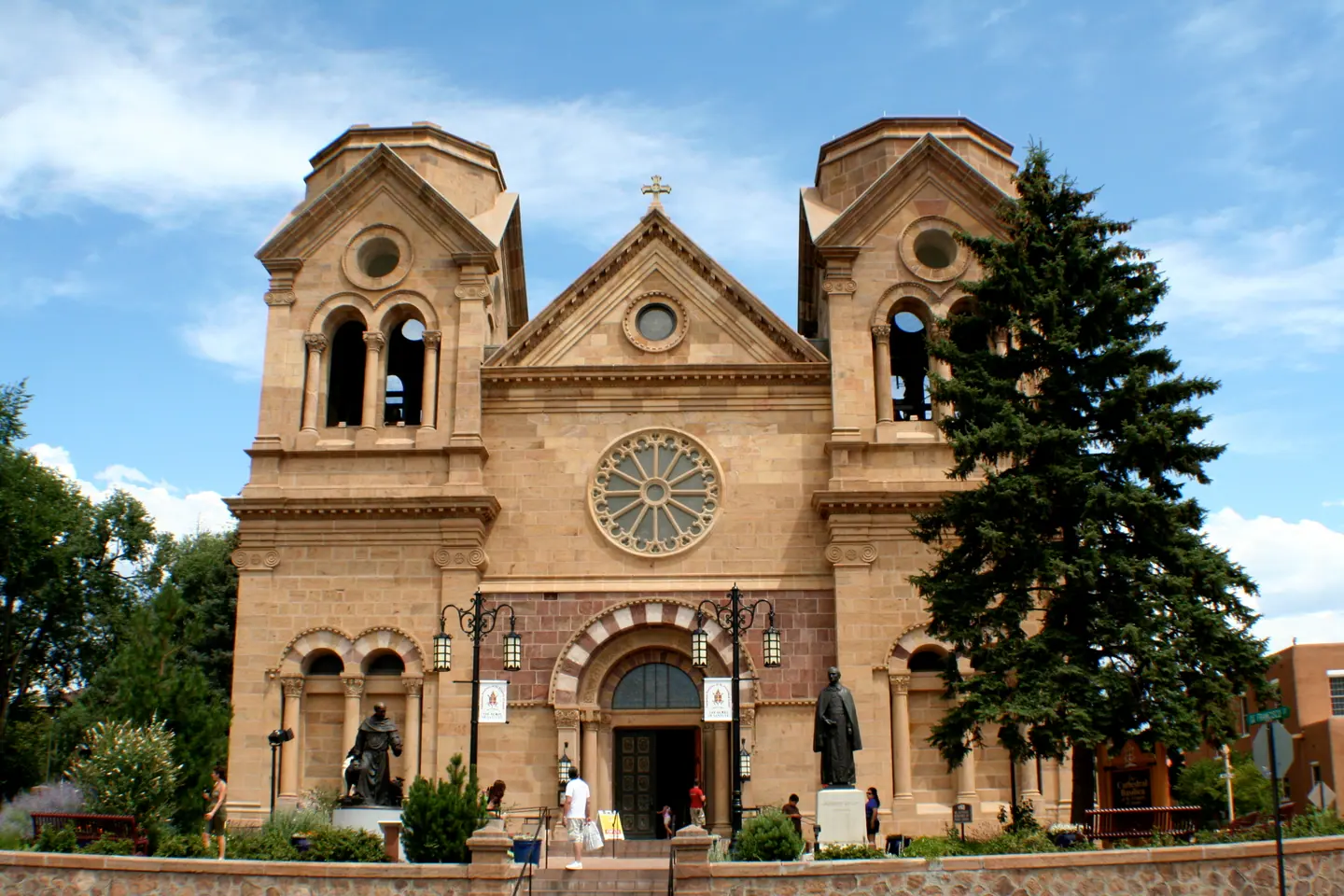
Cathedral Basilica of Saint Francis of Assisi
Archbishop Jean-Baptiste Lamy commissioned this sandstone cathedral between 1869 and 1886 to introduce European ecclesiastical styles to the territory. Built by French and Italian stonemasons over an earlier adobe church, the structure features rounded arches, corbelled towers, and imported stained glass. The Conquistadora Chapel within protects a seventeenth-century wooden carving regarded as the oldest preserved Madonna in North America.
New Mexico Museum of Art
Completed in 1917 by architects Isaac Rapp and William Hendrickson, this building synthesised details from six Franciscan mission churches across the territory. Its undulating parapets, stepped masses, and hand-carved vigas codified the regional aesthetic known as Santa Fe Style. Visitors can explore quiet interior courtyards and viewing rooms displaying works by members of the historic Taos Society of Artists.
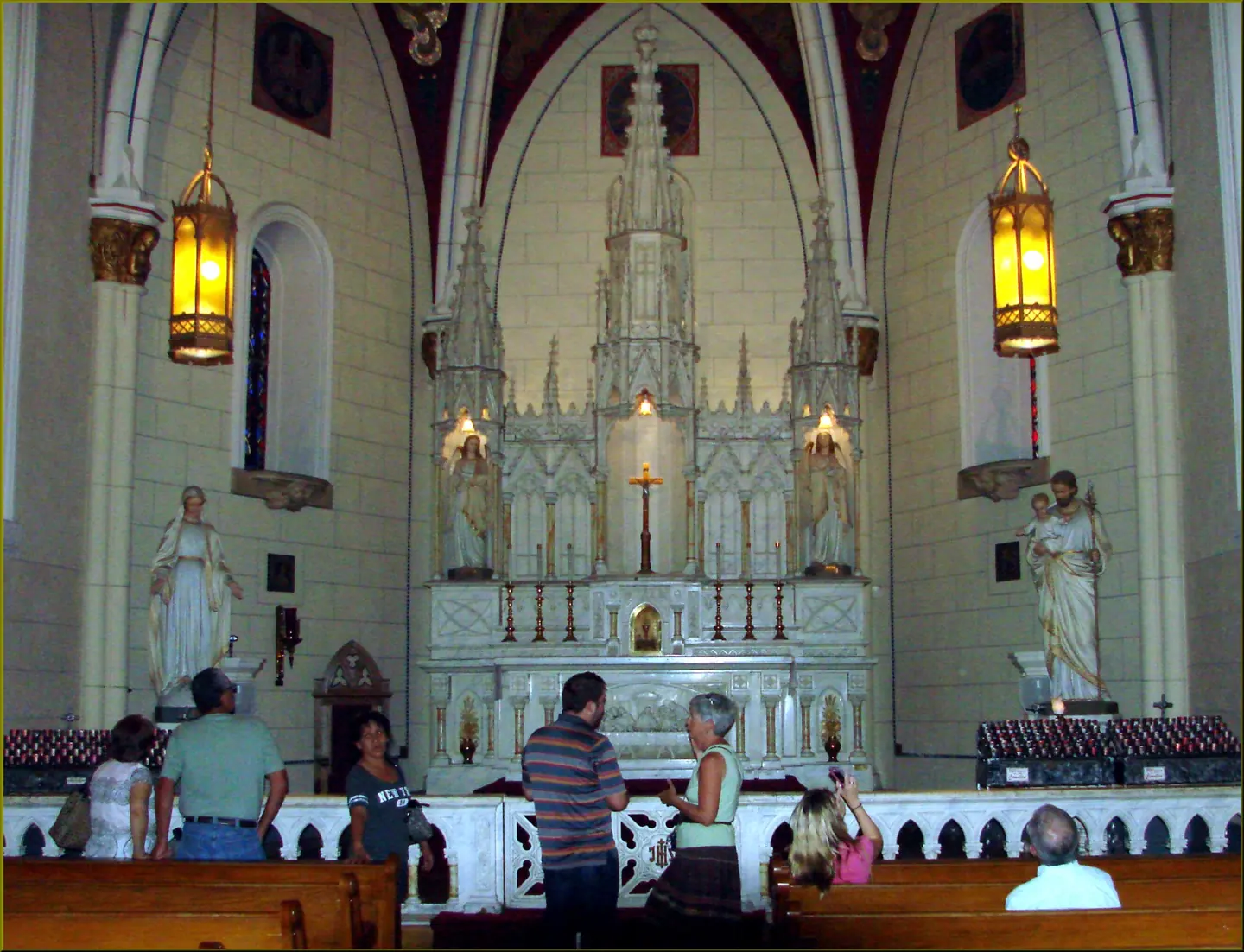
Loretto Chapel
Erected for the Sisters of Loretto in 1878, this stone chapel exhibits French Gothic elements including delicate spires and imported stained-glass panels. The primary interior curiosity is a spiral staircase constructed without central support columns or metal nails, attributed to an itinerant woodworker. We examine its double 360-degree turns and intricate wooden joinery preserved inside the choir loft.
New Mexico History Museum
Opened in 2009 behind the Palace of the Governors, this ninety-six thousand square foot facility chronicles indigenous cultures, Spanish contact, and modern statehood. Detailed galleries display historic regional cartography, weapons, and religious artefacts alongside interactive multimedia installations. The complex connects directly to seventeenth-century administrative courtyards, highlighting shifts in governance through successive colonial regimes.
Sena Plaza
Originally granted to the Sena family in the eighteenth century, this sprawling thirty-three room adobe residence exemplifies private domestic life under Spanish and Mexican rule. The central courtyard retains a restored historic fountain, mature shade trees, and wooden upper-level portales. Today, the complex accommodates independent local shops and quiet cafes along its well-preserved, flagstone-paved perimeter.
San Miguel Mission
Dating to roughly 1610, this church ranks among the oldest surviving religious structures in the United States. Its massive adobe walls were reconstructed following the Pueblo Revolt of 1680 and reinforced with large exterior buttresses. Inside, visitors encounter a historic carved wooden reredos, antique religious canvases, and the San Jose Bell cast in Spain during 1356.
Oldest House in the USA
Standing opposite the San Miguel Mission, this low-ceilinged structure rests on ancient foundations associated with the Analco Pueblo settlement. The lower walls feature indigenous puddled adobe methods that predate Spanish sun-dried brick techniques. Travellers can step inside the preserved interior to inspect rough-hewn cedar beams, earthen floors, and historical exhibits illustrating seventeenth-century domestic life.
La Fonda on the Plaza
Innkeeping has occupied this southeast corner of the plaza since 1607, serving military officers, merchants, and travellers. The present structure, designed in 1922 by architect John Gaw Meem, showcases Pueblo Revival styling complemented by Mary Colter interior details. Hand-painted glass, handcrafted furniture, and hammered tin chandeliers define the historic central gathering spaces.
First Ward School
Constructed in 1906, this building provides a rare local example of standard American municipal brick architecture from the pre-statehood period. Built before the city mandated Pueblo Revival codes to attract travellers, the facade features pitched gables and ornamental brick courses. The structure serves as an informative architectural contrast against the predominant earthen forms in the historic core.
Institute of American Indian Arts Museum
Occupying a 1930s Pueblo Revival building designed by Louis A. Simon, this museum displays contemporary paintings, sculptures, and mixed media by Native American artists. The exterior retains ceremonial sculptural reliefs and classic territorial brick coping along its earthen roofline. The rotating exhibition programme challenges traditional stereotypes while highlighting contemporary Native perspectives on land, history, and community.
Santa Fe Plaza Soldier's Monument
Erected in 1868, this four-sided stone monument honours Union soldiers who fought in the American Civil War and regional frontier conflicts. Its chiselled inscriptions reflect the complex territorial history between United States forces, Confederate troops, and Native American tribes. The monument remains a central point for historic interpretation, public discourse, and civic demonstrations.
Lensic Performing Arts Center
Designed by Henry C. Trost, this historic venue introduced elaborate Spanish Renaissance, Moorish, and Art Deco details to downtown Santa Fe. The restored auditorium retains hand-painted ceilings, wrought-iron chandeliers, and a simulated night sky ceiling. It operates as the civic performance hub, hosting orchestral concerts, lectures, film festivals, and theatrical productions throughout the calendar year.
Spiegelberg House
Constructed in 1880 for Solomon Spiegelberg, this stately residence reflects the commercial wealth that arrived via the Santa Fe Trail. Its balanced Territorial styling incorporates pedimented window lintels, wood-trimmed verandas, and a low pitched roof set upon thick adobe foundations. The house stands as a significant record of nineteenth-century European Jewish commercial pioneers in northern New Mexico.
Federal Courthouse
Begun in 1848 and finished in 1889, this stone building represents an early federal attempt to impose classical Eastern architecture on the regional capital. Its dressed limestone exterior and symmetrical layout diverge noticeably from the neighbouring adobe streetscape. Inside, historic court chambers showcase traditional woodwork alongside murals depicting northern New Mexico legal and pioneer history.
Cross of the Martyrs
Positioned atop Fort Marcy Hill, this towering white cross commemorates the twenty-one Franciscan friars killed during the Pueblo Revolt of 1680. A winding brick pathway ascends from Paseo de Peralta, lined with twenty bronze plaques detailing Santa Fe historic events. At the summit, travellers enjoy panoramic sightlines across the downtown rooftops, cathedral towers, and western Jemez Mountains.
Prince Plaza
Constructed during the late Spanish colonial era, this territorial compound served as the private home of Governor L. Bradford Prince during the late nineteenth century. Its shaded placitas, flagstone walkways, and white-painted wooden railings reflect typical domestic layout adaptations from the Mexican period. The restored rooms now house local commercial galleries while maintaining the traditional intimacy of an earthen urban residence.
Santa Fe River Park
Flowing south of the central plaza, the Santa Fe River was the primary water source that determined the city location in 1610. The parkway lines the seasonal channel with pedestrian pathways, stone footbridges, and stands of heritage cottonwood trees. We observe historic acequia distribution structures nearby that irrigated municipal garden plots for generations of Spanish and Pueblo farmers.
St. Francis Auditorium
Integrated within the New Mexico Museum of Art complex, this assembly hall directly replicates the nave of the mission church at Pecos Pueblo. Its massive hand-hewn vigas, carved corbels, and detailed clerestory window illumination evoke colonial Franciscan sanctuary spaces. Wall murals executed in 1917 illustrate Saint Francis of Assisi aiding indigenous communities, underscoring the regional synthesis of cultures.
Barrio de Analco and Santa Fe River Basin
Tucked south of the river, this residential sanctuary preserves America's oldest public church and original seventeenth-century Tlaxcalan settlements.
San Miguel Mission
Constructed around 1610 under the direction of Franciscan friars, this adobe chapel served the Tlaxcalan servants who accompanied early Spanish settlers. Visitors can inspect the original thick adobe walls, a hand-carved wooden reredos dating from 1798, and an ancient church bell cast in Spain. It remains among the oldest church structures in the United States.
Oldest House
Resting across the lane from San Miguel Mission, this dual-level adobe building incorporates prehistoric pueblo stone foundations from the Analco settlement. Spanish colonists later adapted the walls using traditional mud bricks and heavy wooden vigas. The humble interior displays period furnishings, historical plaques, and exposed wall sections that show early building techniques.
Lamy Building
Erected in 1878 to accommodate students of St. Michael's College, this stone and brick edifice reflects the architectural transition initiated by Archbishop Jean-Baptiste Lamy. Its French-influenced design contrasts sharply with the surrounding Spanish Pueblo adobe residences. Today the site houses state government offices, maintaining an open courtyard and memorial markers commemorating Christian Brothers education.
Barrio de Analco Historic District
Established in the early seventeenth century by Tlaxcalan allies and indigenous labourers, this district takes its name from a Nahuatl term meaning across the water. Narrow, winding lanes preserve a quiet residential character lined with traditional adobe boundary walls. A walking tour reveals modest territorial residences, mature cottonwood trees, and private courtyards that survived centuries of urban expansion.
Boyle House
Constructed in the mid-nineteenth century, this private residence showcases the evolution from classic Spanish Pueblo architecture to the Territorial style. Sawn wooden trim, brick coping along the roof parapets, and exterior glass window sashes distinguish its facade. The building illustrates the domestic lifestyle of affluent merchants who settled in Analco following the opening of trade routes.
Gregorio Crespin House
Documentary records verify that this home existed before 1747, when Gregorio Crespin sold the property to a local resident. The dwelling displays classic single-file room organisation, thick earthen walls, and painted wooden lintels over deep-set doorways. It stands as an exceptional survival of eighteenth-century domestic architecture along the Santa Fe River basin.
Santa Fe River Park
Paralleling Alameda Street, this linear urban reserve follows the river that sustained indigenous Pueblo farmers long before Spanish arrival. Footpaths wind beneath century-old cottonwoods, stone retaining walls, and pedestrian bridges that link the downtown plaza with the southern quarter. Interpretive panels along the route document acequia irrigation systems and local flood-management projects.
Acequia Madre
Engineered during the early seventeenth century, the mother ditch diverted water from the Santa Fe River to supply residential gardens throughout the southern district. Hand-dug earthen banks and ancient stone headgates still channel spring runoff through residential neighbourhoods. Walking the adjacent lanes offers an authentic glimpse into the agrarian foundations that shaped community life here.
New Mexico State Capitol
Completed in 1966, the Roundhouse represents the only circular state capitol building in the United States. Architect W.C. Kruger incorporated regional Territorial design elements, surrounding the central four-storey rotunda with expansive public galleries. The building functions as an extensive public art museum, displaying paintings, ceramics, and sculptures by prominent New Mexican artists.
Governor Bent Museum
Located near the historic river crossing, this property documents the political turbulence of New Mexico following its annexation in 1846. The surrounding sector preserves structural remnants of the administrative buildings used by early territorial officials. Displays and markers contextualise the assassination of Charles Bent during the Taos Revolt and subsequent military trials.
Santa Fe Plaza
Situated immediately north of the river, this historic town square has served as the social and commercial anchor of the region for four centuries. A central obelisk, landscaped lawns, and surrounding historic portales frame the space, which once marked the terminus of the Santa Fe Trail. Artisans gather daily under the Palace of the Governors to vend handcrafted silver jewellery.
Palace of the Governors
Commissioned in 1610 by Governor Pedro de Peralta, this adobe complex originally served as the administrative capital for a vast Spanish frontier territory. Its massive adobe walls, timber columns, and front portal reflect indigenous Pueblo labour combined with Iberian building codes. Inside, extensive historical exhibits detail Spanish conquest, the Pueblo Revolt of 1680, and territorial military rule.
Cathedral Basilica of St. Francis of Assisi
Constructed between 1869 and 1886 using yellow limestone quarried from nearby hills, this imposing cathedral replaced an older adobe church. The facade features twin unfinished bell towers, round arches, and a carved stone rose window imported from France. Inside, the Conquistadora chapel houses a carved wooden Madonna brought from Spain in 1625.
Loretto Chapel
Erected in the 1870s for the Sisters of Loretto, this Gothic structure boasts imported stained glass from Nantes and fine French stonework. Its central marvel is a wooden spiral staircase built without central support or metal nails, attributed to an unknown itinerant carpenter. The chapel now operates as a private museum, offering insights into early territorial education and religious architecture.
Santa Fe Depot
Constructed in 1909 by the Atchison, Topeka and Santa Fe Railway, this terminal incorporates red-tiled hip roofs, arched portals, and stucco walls. The station revitalised local commerce by establishing direct rail connections for travellers and freight entering the river basin. Today it serves as the northern terminus for the New Mexico Rail Runner commuter service.
SITE Santa Fe
Housed within an architecturally bold warehouse wrapped in perforated aluminium screens, this venue presents international contemporary art exhibitions and experimental installations. Founded in 1995, it transformed the former rail yards into a cultural meeting ground for global artists and local patrons. Galleries host rotating programmes, lectures, and musical performances throughout the calendar year.
New Mexico Museum of Art
Completed in 1917, this building established the defining aesthetic guidelines of the Pueblo Revival movement, copying rooflines and vigas from indigenous mission churches. Its galleries house significant collections of paintings by the Taos Society of Artists and Los Cinco Pintores. The St. Francis Auditorium within the museum features magnificent timber woodwork and historic murals depicting regional ecclesiastical history.
Museum of Contemporary Native Arts
Operated by the Institute of American Indian Arts, this museum occupies a converted 1930s federal building designed in the Pueblo Revival style. The institution presents progressive visual art, sculpture, photography, and mixed-media installations created exclusively by living Indigenous artists. Rotating exhibitions provoke debate regarding indigenous sovereignty, cultural identity, and environmental activism.
Bataan Memorial Building
Constructed in 1900 as the Territorial Capitol, this imposing neo-classical building served as the primary legislative centre before being repurposed. Following extensive remodelling, it was dedicated as a permanent memorial to New Mexican soldiers who endured the Bataan Death March in 1942. The interior features memorial plaques, military artefacts, and public administrative offices.
Canyon Road
Originally a modest pack trail following the river valley eastward into the mountains, this street evolved into an internationally recognised colony of visual artists. Authentic adobe homes, private sculpture gardens, and former farming compounds now accommodate fine art galleries and working studios. Visitors walking the path experience traditional Southwestern landscape design and preserved residential earthen architecture.
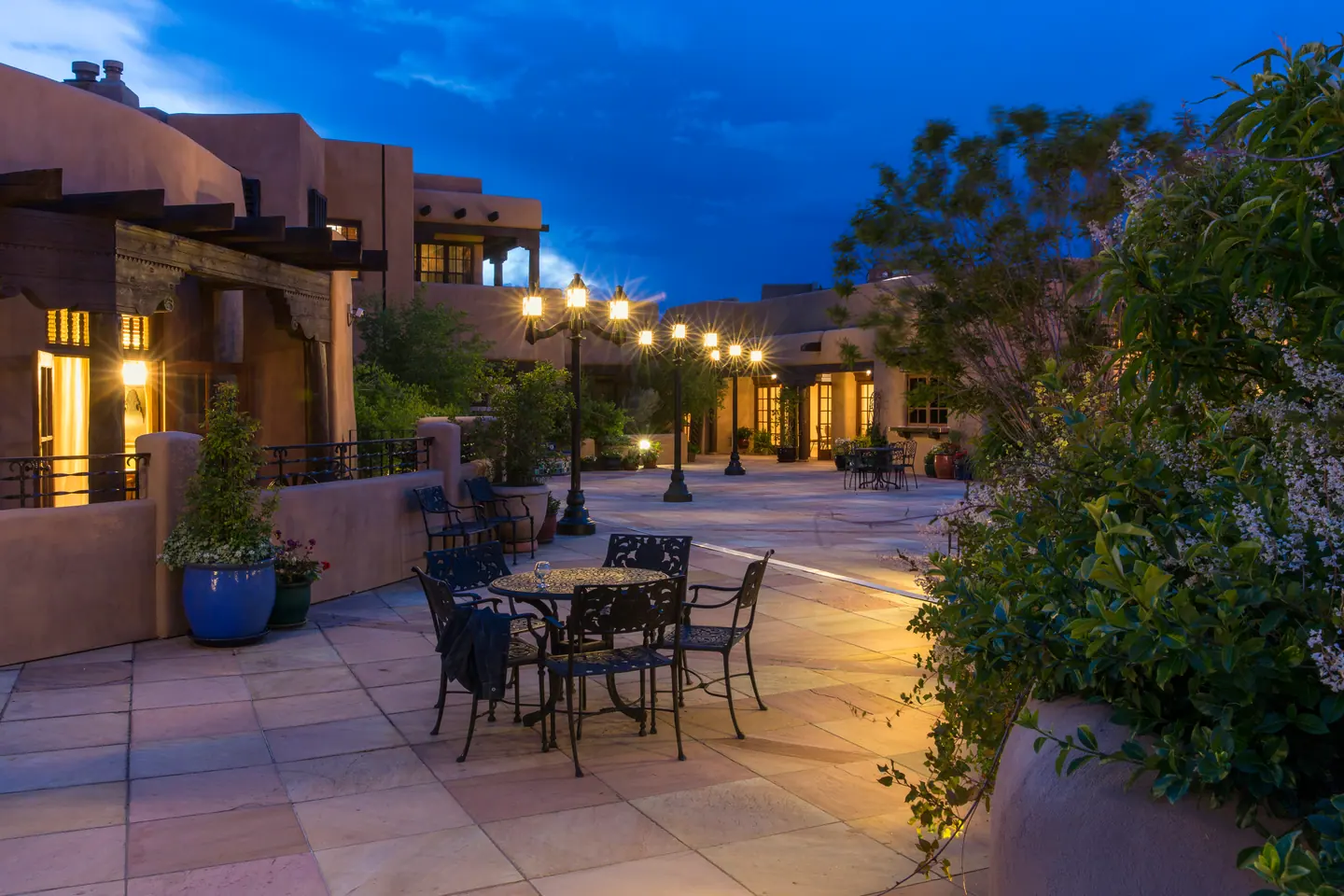
Canyon Road Artisan Corridor
Once a narrow agricultural cart path, this tranquil lane is now lined with over a hundred working art ateliers behind earthen courtyard gates.
Gerald Peters Gallery
Founded by native art dealer Gerald Peters, this gallery complex showcases significant historic masterworks alongside contemporary American artists. The traditional adobe architecture mirrors classic territorial aesthetics, framing light-filled sculpture courtyards and dedicated research libraries. Visitors can observe rare paintings from the Santa Fe and Taos art colonies in museum-grade exhibition rooms.
Canyon Road Contemporary Art
Operating from an authentic nineteenth-century domestic adobe, this venue represents the evolution of Canyon Road from rural farming compound to gallery strip. Thick mud walls and low wooden ceilings now display textured abstract paintings, innovative glasswork and metal sculpture. The terraced courtyard gardens showcase modern outdoor installations among ancient fruit trees.
Morning Star Gallery
Established in 1982, this gallery occupies a restored residential adobe that reflects classic Spanish colonial building traditions. The interior rooms house museum-grade antique indigenous artefacts, including plains ledger drawings, nineteenth-century Navajo textiles and prehistoric pueblo pottery. Outside, gravel pathways guide travellers through shaded sculpture gardens framed by hand-hewn wooden gates.
Ventana Fine Art
Housed within an authentic adobe structure that once served as a neighbourhood schoolhouse, this gallery champions regional painting styles. Vigas and smooth plaster finishes provide an evocative backdrop for expressive oil landscapes, modern watercolours and cast bronze figures. We admire the stepped garden terrace, which displays monumental bronze sculptures beneath mature cottonwoods.
Wiford Gallery
Set within a broad outdoor compound along the artisan corridor, this establishment highlights kinetic wind sculptures crafted by Lyman Whitaker. Visitors can wander through dense arrangements of swirling copper mechanisms that catch the mountain air alongside traditional bronze pieces. The property also includes indoor exhibition galleries situated inside a preserved mud-brick bungalow.
Manitou Galleries
Comprising interconnected historic rooms, this gallery preserves architectural elements common to the early twentieth-century artist colony era. The spaces feature heavy timber lintels, polished wooden flooring and traditional whitewashed hearths. Art lovers find expansive collections of regional landscape paintings, representational oil works and fine western bronze sculpture.
Acquavella Modern Art
Situated along the western end of the thoroughfare, this gallery preserves the domestic domesticity of a century-old village cottage. The low-slung earthen structure exhibits contemporary mixed-media works and mid-century modern paintings within sunlit rooms. Its exterior patio demonstrates classical Santa Fe vernacular masonry with flagstone borders and coyote-style timber fencing.
Bill Hester Fine Art
This gallery is located in an early twentieth-century adobe cottage that retains its original wooden millwork and small-pane casement windows. The proprietors exhibit regional landscape painters and ceramic artists across domestic rooms that feel like a private salon. The exterior features stepped stone terraces, mature perennial flowers and delicate outdoor water installations.
Nedra Matteucci Galleries
Occupying a residential estate just off the main arterial, this gallery is celebrated for its historic Taos Society and early Santa Fe artists. The vast private grounds incorporate a pond, meandering brick paths and monumental bronze wildlife sculptures. Inside, classic Southwestern architectural details like carved corbels and kiva fireplaces frame period museum-quality canvases.
The Compound Restaurant
Originally functioning as an agricultural farm compound and later a bohemian residence, this historic complex was redesigned in the 1960s by modern designer Alexander Girard. Architectural elements include hand-carved doors, whitewashed adobe interiors and whimsical folk-art installations integrated into the walls. The property represents a rare intersection of mid-century modern interior design and Pueblo Revival architecture.
El Zaguán
This expansive nineteenth-century hacienda, named for its covered carriage passage, was once the home of merchant James L. Johnson. Now headquarters for the Historic Santa Fe Foundation, the property features a preserved colonial garden with heirloom roses planted in the 1850s. The earthen structure showcases territorial brick coping, carved ceiling vigas and thick mud-brick buttresses.
Borrego House
Built around 1753 by the Borrego family, this adobe residence stands as one of the oldest extant domestic structures along Canyon Road. The architecture features thick defensive walls, traditional beam ceilings and deep window embrasures typical of Spanish colonial farmhouses. Today, the restored rooms accommodate hospitality and dining, maintaining historic wooden corbels and authentic clay hearths.
Jane Sauer Gallery
Constructed from traditional adobe masonry and updated with minimalist architectural lines, this building champions experimental studio crafts. Curated exhibitions focus on complex sculptural fibre, blown glass and three-dimensional contemporary craft objects. Visitors can examine how historic mud-brick walls pair with sophisticated modern display systems and glass storefronts.
Mark Sublette Medicine Man Gallery
This substantial gallery highlights nineteenth-century Native American basketry, Navajo blankets and paintings by the legendary Maynard Dixon. The building reflects classic New Mexican territorial styling, complete with square wood porch columns and whitewashed stucco finishes. Travellers can inspect rare historic Native American turquoise jewellery and historic pottery vessels inside dedicated climate-controlled rooms.
Giacobbe-Fritz Fine Art
Housed within an 1880s territorial-period home, this gallery retains historic architectural details such as milled wooden woodwork and high pressed-tin ceilings. The interior features figurative sculpture, mixed-media paintings and printmaking by established artists. The shaded gravel courtyard provides a peaceful viewpoint for watching bronze kinetic pieces turn above desert stone paving.
Hunter Kirkland Contemporary
Occupying a quaint territorial home along the lower corridor, this gallery showcases bold non-representational painting and outdoor metal constructions. The white plastered interior walls contrast with rough-sawn ceiling beams, accentuating luminous acrylic and oil canvases. Outside, manicured flower beds and stone footpaths display clean-lined steel sculptures against traditional adobe textures.
McAdoo Galleries
Specialising in classic early-twentieth-century New Mexico art, this gallery is integral to the corridor's historic legacy. The building exhibits hallmark territorial design with its broad front portico, brick accents and original hardwood floors. Collectors can view vintage works by members of the Taos Society of Artists and Santa Fe art colony luminaries.
Pippin Contemporary
Positioned at the historic western gateway of the corridor, this light-filled building exhibits sensory-driven abstract paintings, historic glass and bronze works. The gallery maintains a clean architectural interior with expansive glass windows that connect the artwork to the street. Outside, kinetic wind sculptures stand against the historic adobe streetscape, attracting passing art enthusiasts.
Meyer Gallery
Established in an historic adobe building that once served the local community as a primary schoolhouse, this gallery has operated for decades. The structure exhibits quintessential New Mexican craftsmanship, including an ornate bell tower, adobe parapets and heavy entry gates. Inside, visitors encounter representational paintings, Southwestern realism and traditional figurative bronzes displayed across warm wooden rooms.
Waxlander Gallery
Operated for many decades as a central creative hub on the road, this compound encapsulates the historic garden studio culture of the district. The low adobe structure surrounds a courtyard filled with fruit trees, flowering vines and modern bronze casting. Interior exhibition rooms preserve vintage vigas and corner kiva fireplaces that showcase colourful contemporary still lifes.
The Railyard Arts District and Guadalupe Sanctuary
Former industrial rail sidings now thrive as a walkable contemporary hub anchored by avant-garde exhibition warehouses and public farmers' markets.
Santuario de Nuestra Señora de Guadalupe
Constructed between 1776 and 1795, this adobe sanctuary serves as the oldest surviving shrine to Our Lady of Guadalupe in the United States. Visitors can observe its thick earthen walls, carved wooden vigas, and a notable 1783 altar screen painted by Mexico City artist José de Alzíbar.
SITE Santa Fe
Established in 1995 within a repurposed beer distribution depot, this non-collecting institution presents rotating international art exhibitions. The building features an exterior wrapped in perforated aluminium panels designed by SHoP Architects, framing expansive open interior galleries dedicated to large-scale multimedia installations.
Santa Fe Depot
Built in 1909 by the Atchison, Topeka and Santa Fe Railway, this brick and stucco terminal exemplifies California Mission Revival styling. It features distinctive curvilinear parapets and low-pitched clay-tile roofs, currently functioning as the northern terminus for the New Mexico Rail Runner Express commuter system.
Santa Fe Farmers Market
Located in a purpose-built industrial pavilion completed in 2008, the venue hosts one of northern New Mexico's oldest growers' networks. The building incorporates photovoltaic arrays and water harvesting systems, providing space for regional farmers offering heirloom crops, native chiles, and pastoral livestock products.
El Museo Cultural de Santa Fe
Housed within an expansive converted railway storehouse, this cultural non-profit preserves traditional Hispano customs and visual art. Inside, travellers can explore changing community exhibitions, an antique market on weekends, and a performance theatre staging folk plays and classical guitar recitals.
Santa Fe Railyard Park
Spanning over ten acres, this civic parkland incorporates remnant steel tracks and industrial railway structures into drought-tolerant gardens. Visitors can walk along native xeriscape paths, inspect restored railway switches, and relax beneath shade ramadas built beside children's play spaces and circular performance lawns.
Jean Cocteau Cinema
Operating since 1976 and later revitalised by author George R. R. Martin, this cinema projects independent films and 35mm prints. The intimate auditorium retains a classic single-screen layout alongside a small bookshop section featuring signed first editions and displays of regional literary history.
Gross, Kelly and Company Warehouse
Erected in 1913, this stone and timber warehouse reflects the commercial boom facilitated by Santa Fe's rail infrastructure. Designed by prominent regional architects Rapp and Rapp, its substantial masonry walls and broad loading bays now accommodate educational art facilities and creative studios.
New Mexico Rail Runner Express
This regional transit corridor commenced operations in the district in 2008, reintroducing scheduled passenger transport to historic tracks. The fleet of bilevel passenger coaches and locomotives features a stylised roadrunner livery, linking the terminal platform directly with central Albuquerque and the Rio Grande valley.
Santa Fe Southern Railway
Formed along the 1880 trackage that linked the capital to the transcontinental mainline, this short-line railway preserves vintage rolling stock. The rail siding displays historic cabooses and mid-century passenger cars, serving as an operational base for scenic excursions through the Galisteo Basin.
Santa Fe Indian School
Established by the federal government in 1890, this institution shifted during the 1930s to foster indigenous arts under painter Dorothy Dunn's Studio Programme. Today sovereignly owned by the nineteen New Mexico Pueblos, the campus includes traditional Pueblo Revival academic buildings and cultural commemorative centres.
State Capitol
Dedicated in 1966, this distinctive structure is known as the Roundhouse, representing the only circular state capitol in the country. Designed by Willard C. Kruger, its interior showcases extensive collections of regional contemporary painting and bronze sculpture set beneath a central skylight bearing the Great Seal.
Scottish Rite Temple
Completed in 1912, this terracotta-pink structure takes direct inspiration from Granada's historic Alhambra fortress. The complex features horseshoe archways, intricate plaster reliefs, and an unaltered historic auditorium containing an elaborate system of scenic backdrops painted for Scottish Rite theatrical degree ceremonies.
Santa Fe National Cemetery
Established in 1868 following the 1862 Battle of Glorieta Pass, these landscaped grounds inter thousands of American veterans across rolling hillsides. White marble headstones stand aligned against views of the Sangre de Cristo Mountains, commemorating soldiers from territorial frontier conflicts to contemporary service.
Loretto Chapel
Constructed in 1878 by French architect Antoine Mouly, this stone chapel displays Parisian Gothic spires and French stained glass. Inside, visitors examine the famous wooden spiral staircase built without central support pillars or metal nails, attributed by local lore to an unknown itinerant craftsman.
De Vargas Street House
Dating back to the mid-seventeenth century, this low-slung earthen structure rests upon puddled adobe foundations associated with an ancient pre-Columbian Pueblo settlement. The interior exhibits traditional hand-hewn wood vigas, interior hearths, and historical interpretive displays illustrating Spanish territorial domestic life.
San Miguel Mission
Erected circa 1610 by Tlaxcalan Mexican Indians who accompanied early Spanish settlers, this mission is regarded as the oldest church building in the continental United States. Travellers can observe thick buttressed adobe walls, a 780-pound Spanish bell cast in 1356, and carved colonial reredos.
Santa Fe Plaza
Laid out in 1610 as the civic and military heart of the province, this public square marked the historic conclusion of the Santa Fe Trail. Shaded by mature trees and anchored by an 1868 stone obelisk, it is bordered by traditional portal arcades where Native American artisans sell handcrafted jewellery.
Palace of the Governors
Dating to 1610, this block-long adobe structure served as the administrative centre for Spanish, Pueblo, Mexican, and American administrations. Now functioning as New Mexico's state history museum, the portal facade hosts a regulated daily market for registered Native Pueblo potters and silversmiths.
Cathedral Basilica of Saint Francis of Assisi
Constructed between 1869 and 1886 of local yellow limestone, this monumental basilica introduces European Romanesque architecture to a city dominated by adobe. The interior contains the Conquistadora chapel, housing a wooden statue of the Virgin Mary brought to New Mexico by Spanish colonists in 1625.
Museum Hill and Sangre de Cristo Foothills
High above the basin, expansive stone terraces house premier institutions celebrating Native American, Spanish colonial, and folk art heritages.
Museum of International Folk Art
Founded in 1953 by Florence Dibell Bartlett, this institution holds the largest collection of international folk art across the globe. Visitors can inspect the Girard Wing, where thousands of miniature figurines, textiles, and toys from over one hundred countries are arranged in elaborate dioramas. The clean modern design contrasts with the lively handcrafted exhibits inside.
Museum of Indian Arts and Culture
Serving as the exhibition facility for the Laboratory of Anthropology, this museum tracks Ancestral Puebloan history through contemporary Southwestern indigenous creative movements. The permanent exhibition features ancient pottery, basketry, and stone tools alongside modern silverwork. The grounds include an outdoor sculpture court framing bronze figures against the foothills of the Sangre de Cristo range.
Laboratory of Anthropology
Established in 1931 through the philanthropy of John D. Rockefeller Jr., this complex pioneered southwestern archaeological study. Architect John Gaw Meem crafted the building in Spanish Pueblo Revival style, using thick adobe walls and projecting vigas. Today, it houses extensive research libraries and archaeological storage spaces accessible for scholars and scheduled tours.
Wheelwright Museum of the American Indian
Founded in 1937 by Mary Cabot Wheelwright and Navajo singer Hosteen Klah, this institution preserves ceremonial art, historic silverwork, and lapidary traditions. The main building reflects the form of an eight-sided Navajo hogan, complete with a log-roof pattern overhead. Below the main gallery, the Case Trading Post replicates an authentic early reservation trading store.
Santa Fe Botanical Garden
Spread across Museum Hill, this botanical retreat integrates native piñon and juniper scrub with landscaped stone terraces. Visitors walk along the Orchard Gardens, a stone bridge designed by W. Bowers, and dry-climate perennial displays that celebrate traditional agricultural methods. Interpretive signs highlight low-water gardening methods developed by indigenous peoples and Spanish settlers.
Milner Plaza
Milner Plaza acts as the pedestrian core uniting the institutions across Museum Hill. Paved in flagstone, the elevated open space features large outdoor sculptures, shaded seating ramadas, and expansive views toward the Jemez Mountains to the west. Public installations regularly change, offering fresh displays of contemporary Southwestern and Native bronze sculpture.
Atalaya Mountain
Rising to an elevation of over 9,100 feet, this peak has long served as a natural lookout above the Santa Fe basin. The trail winds through ponderosa pine and scrub oak, leading hikers to granite outcroppings with broad views across the city and surrounding plains. Its name, derived from the Spanish word for watchtower, references its historic defensive utility.
Sun Mountain
Standing directly adjacent to Old Santa Fe Trail, Sun Mountain presents a steep ascent through pinyon-juniper woodland to a rocky crest. The peak affords uninterrupted sightlines of the Sangre de Cristo spine and the Rio Grande rift basin. Historical accounts indicate the mountain served as an orientation marker for travellers arriving along southern trade arteries.
St. John's College, Santa Fe
Established in 1964 as the western branch of the famed Annapolis institution, this campus features territorial architecture set into rocky scrubland. The college centres on the Great Books curriculum, housing students in low-slung, earth-toned buildings arranged around open courtyards. Walking paths lead from the library toward the adjoining Dale Ball Trail system.
Dale Ball Trails
This interconnected forty-four-mile trail system covers the lower Sangre de Cristo slopes immediately east of the historic centre. Conceived by local advocate Dale Ball, the pathways provide access to rugged canyons, arroyos, and scenic ridges populated by mule deer and piñon jays. Stone trail markers and junctions offer clear navigation through varied terrain.
Santa Fe Children's Museum
Housed in a converted industrial armory, this facility opened in 1989 to engage young visitors with regional science, culture, and outdoor discovery. The property includes an acre of outdoor community garden featuring adobe play structures, a water catchment system, and native plants. Indoors, hands-on exhibits introduce regional geology and architectural construction techniques.
Old Santa Fe Trail Marker on Museum Hill
Positioned where modern roadways parallel the historic 19th-century wagon route, this stone obelisk marks the final approach of traders into Santa Fe. Wagon ruts can still be traced in the caliche soil of nearby open tracts. The Daughters of the American Revolution erected these granite monuments along the route to honour cross-continental commerce.
Cristo Rey Church
Constructed in 1940 to commemorate the Coronado Cuarto Centennial, this edifice is reputed to be the largest adobe structure in the United States. Architect John Gaw Meem designed the building, which was constructed using over 180,000 hand-pressed mud bricks. Inside sits a carved stone reredos crafted in 1761 for the military chapel on the plaza.
Two Trails Trailhead
Located near the base of Sun Mountain, this trailhead links urban paths to the Santa Fe National Forest trail network. The approach passes through dry arroyos lined with cholla cacti and chamisa before climbing toward higher coniferous elevations. Hikers use this portal to reach quieter ridgelines offering panoramic looks across Museum Hill.
Santa Fe National Cemetery
Established in 1870, this cemetery occupies rolling slopes just northwest of the foothills and holds graves from the Civil War through modern conflicts. White marble headstones align in precise rows across terraced hillsides dotted with native juniper trees. The site commemorates the soldiers of the 1862 Battle of Glorieta Pass, among other notable historical figures.
Randall Davey Audubon Center
Located at the end of Upper Canyon Road, this property originally operated as an 1847 sawmill before becoming the residence and studio of painter Randall Davey in 1920. Today, the 135-acre sanctuary encompasses riparian canyon habitats, historic orchards, and original adobe buildings. Visitors explore preserved artist quarters and observe over 130 documented bird species along canyon trails.
Dorothea de Kay House
Built during the mid-20th century foothill settlement period, this private residence showcases the refined Pueblo Revival architectural principles popularised in the Santa Fe art community. The house incorporates low parapets, stepped terraces, and organic mud plaster that blends seamlessly into the piñon-covered slopes. It reflects the post-war trend of artists moving outward toward Museum Hill.
Canyon Road Far East Trailhead
At the eastern end of the famed arts district, this portal marks the transition from dense gallery corridors into the quiet Sangre de Cristo watershed. The route runs along the Santa Fe River corridor through thick stands of cottonwood and willow trees. It preserves the ancient route historically used by Native hunters and early Hispanic firewood gatherers.
Old Pecos Trail Historic Corridor
Originally used by indigenous peoples travelling between the Rio Grande and Pecos Pueblo, this route served as an essential approach during Spanish colonial and territorial rule. Lined today with private residences built behind adobe compounds, the road retains its winding rural character. Informational plaques describe how supply caravans navigated these rough ascents toward the mountain plateau.
Cross of the Martyrs Viewpoint
Erected atop a scenic hillock overlooking the historic downtown, this reinforced concrete cross commemorates the twenty-one Franciscan friars who died during the 1680 Pueblo Revolt. A paved brick walkway ascends the slope, flanked by bronze plaques outlining the chronological history of the city. The summit offers unmatched vistas of the Sangre de Cristo foothills and urban rooftops.
Navigating High-Desert Elevations and Earthen Quarters
Before setting out, check local transit connections, museum booking notes and monthly weather data in our Santa Fe city guide, and compare other walking itineraries.