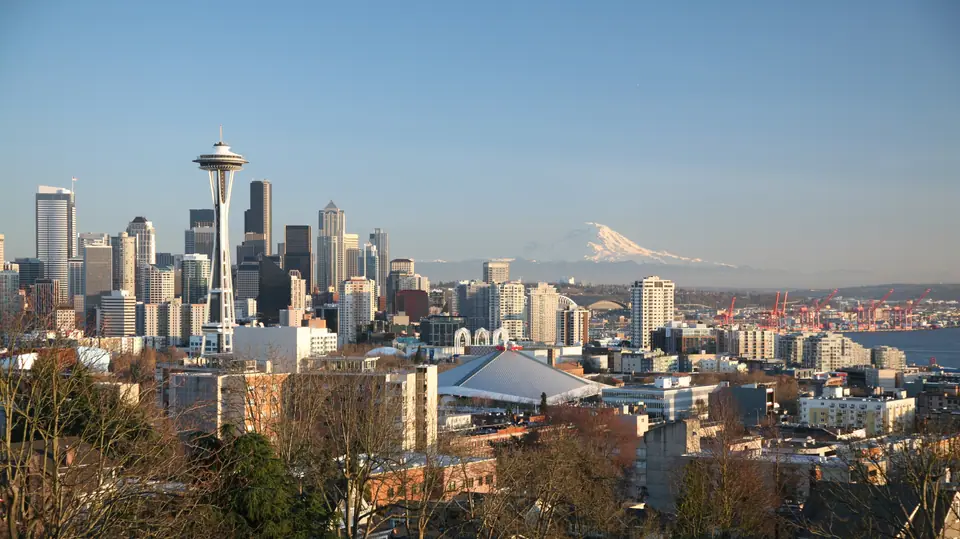
A curated walking journey tracing Seattle's trajectory from coastal Salish shores and frontier timber port to a dense metropolis of Victorian brickwork and modernist landmarks.
From Coast Salish Longhouses to Klondike Gold and Mid-Century Modernism
Long before Euro-American settlers established a beachhead at Alki Point in 1851, the waterways of Elliott Bay and Lake Washington were home to the Coast Salish and Duwamish peoples, whose cedar longhouses fringed the tidal estuaries. Relocating to the sheltered harbour of Pioneer Square, the fledgling settlement grew rapidly around Henry Yesler's steam-powered sawmill, transporting felled timber down steep skid roads directly into waiting schooners.
After the devastating Great Fire of 1889 consumed the original wooden townscape, municipal planners mandated stone and brick construction, elevating street levels and creating the subterranean vaults that remain beneath modern pavements. The 1897 Klondike Gold Rush transformed the city into the primary maritime gateway to the north, funding ornate Richardsonian Romanesque commercial blocks before the 1962 Century 21 Exposition permanently redefined the skyline with modernist monuments, including the Space Needle.

Pioneer Square and the Historic Industrial Footprint
Wander among Romanesque Revival brick warehouses, leafy cobblestone plazas and the sunken storefronts left in the wake of the Great Seattle Fire.
Pioneer Building
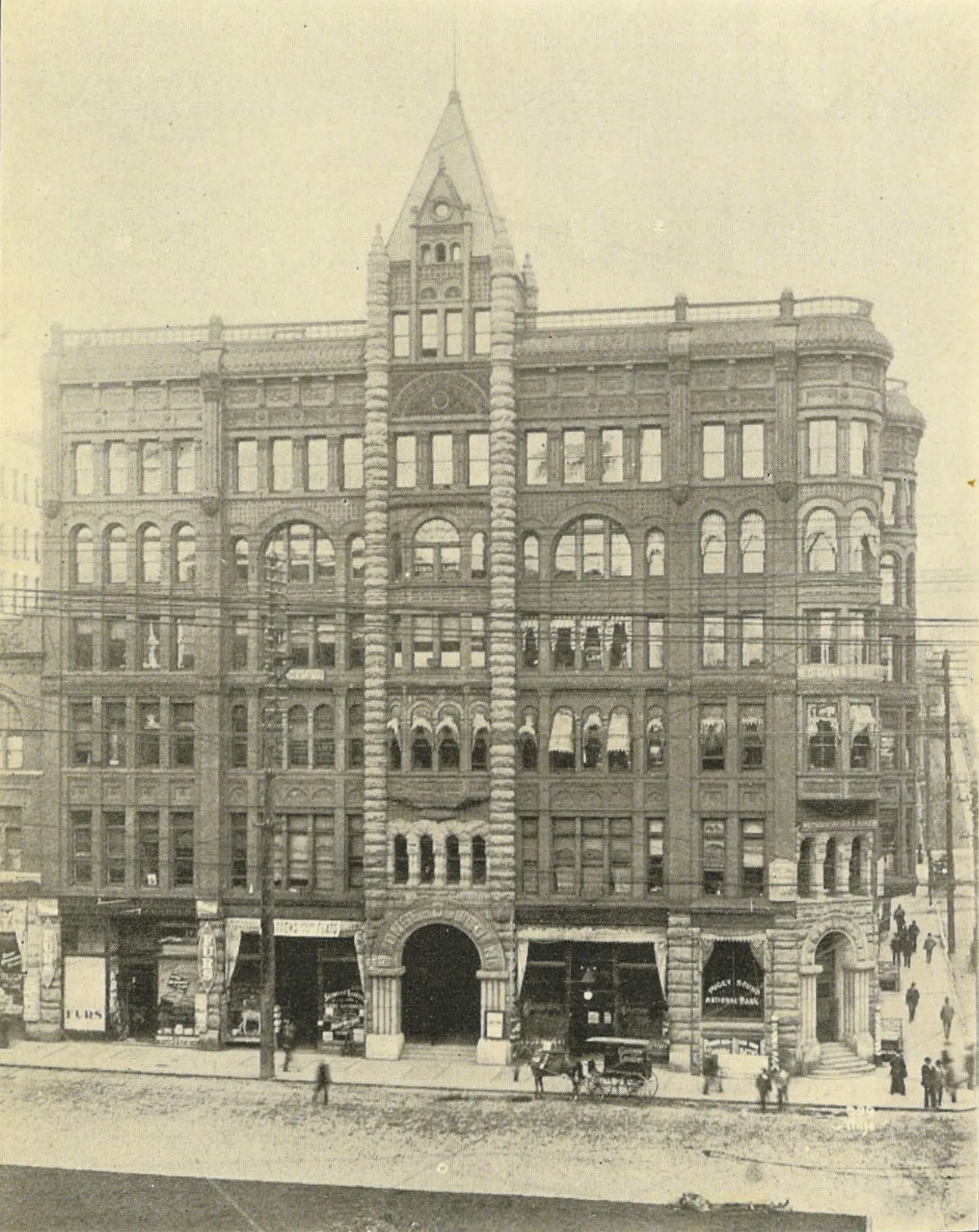
Architect Elmer Fisher designed this imposing Richardsonian Romanesque structure immediately following the 1889 blaze. Completed in 1892 using local Chuckanut sandstone and red brick, it served as headquarters for mining prospectors during the Klondike Gold Rush. Visitors can see the carved stonework flanking the main entrance and explore the subterranean levels below.
Smith Tower
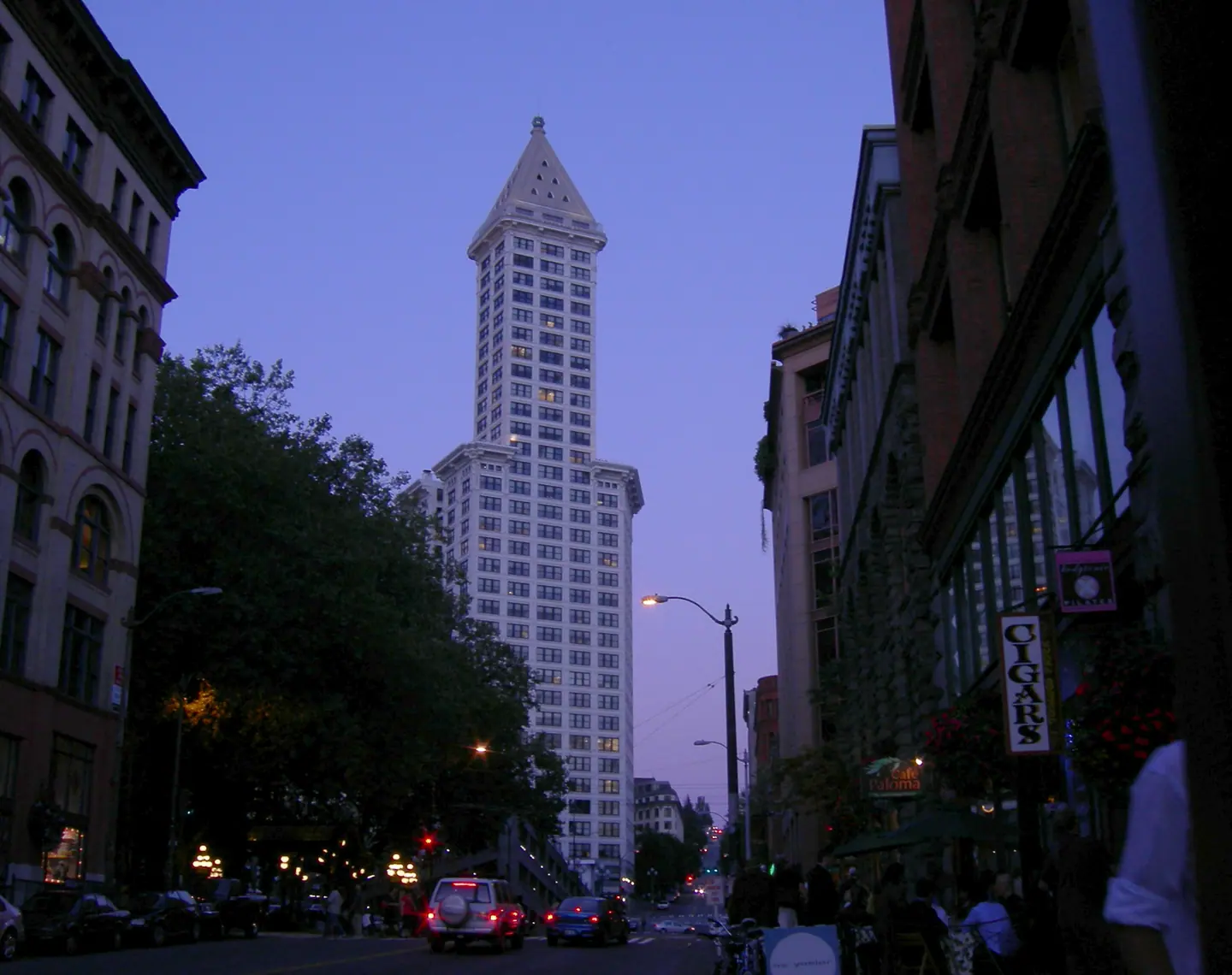
Financed by industrialist L.C. Smith, this thirty-eight-storey tower opened in 1914 as the tallest building west of the Mississippi River. The exterior showcases classical ornamentation, while the interior features polished bronze fittings and hand-operated brass passenger lifts. The open-air observation platform on the thirty-fifth floor provides wide perspectives across Elliott Bay and the historic industrial docklands.
Klondike Gold Rush National Historical Park
Located inside the restored 1889 Cadillac Hotel, this national park visitor centre details Seattle's transformation into an outfitting trade metropolis during the 1897 stampede to the Yukon. Exhibits display archival mining equipment, dry goods inventories, and newsreels documenting the maritime arrivals. The preserved interior brickwork and original cast-iron columns illustrate late Victorian commercial warehouse engineering.
Pioneer Square Pergola
Erected in 1909 to serve patrons of the city's cable car lines, this iron pavilion features elaborate scrollwork and a ribbed glass canopy. It stood over Seattle's celebrated underground public comfort stations, which set sanitation standards for their era. Restored following vehicle damage in 2001, the shelter remains the central focal anchor of the district's public triangle.
King Street Station
Built between 1904 and 1906 for the Great Northern Railway, the terminus features a prominent 242-foot clock tower modelled on the Campanile of St Mark's in Venice. A thorough municipal restoration uncovered the grand waiting hall's ornate plaster ceilings and fluted marble pillars. The upper floor now operates as a cultural arts space celebrating regional heritage.
Union Station
Designed by the firm of Jarvis Hunt, this 1911 depot handled passenger trains for the Union Pacific and Milwaukee Road for six decades. The Grand Hall features a barrel-vaulted ceiling rising sixty-five feet above the floor, illuminated by historic incandescent light globes. Today the preserved concourse functions as administrative offices alongside an open public hall displaying historic railway photography.
Occidental Square
Established during the urban renewal efforts of the 1970s, this leafy public square occupies the former alignment of Mill Street. Paved with cobblestones and shaded by mature plane trees, the space is bordered by restored four-storey brick warehouses. Four carved cedar totem poles by master artist Duane Pasco stand prominently near the park's northern border.
Merchant's Cafe
Recognised as Seattle's oldest continuously operating restaurant site, this establishment opened its doors shortly after the post-fire reconstruction. The ground floor preserves its antique wooden back bar, leaded glass mirrors, and exposed load-bearing brick walls. Downstairs access reveals portions of the original subterranean street level, which was bypassed when engineers elevated the thoroughfares above tidal waters.
Grand Central Hotel
Constructed in 1889 to shelter maritime labourers and travelling salesmen, this four-storey masonry structure was rehabilitated in 1971 into a boutique retail arcade. The central interior light well allows natural light into the lower levels, illuminating exposed structural timber beams. A public indoor arcade links First Avenue South directly to Occidental Park, lined with artisan bakeries and studios.
Metropolis Building
Also known as the Schwabacher Hardware Building, this 1903 masonry warehouse supplied frontier provisions throughout the Pacific Northwest and coastal Alaska. Heavy Douglas fir posts carry the load inside, paired with deep external brick pilasters designed to withstand industrial freight transport. Architectural details include recessed arched windows and an understated classical cornice along the roofline.
Lowman Building
Completed in 1906 for the Lowman and Hanford printing firm, this ten-storey building reflects the early adoption of the Chicago School style in Washington state. The exterior uses rich red brick contrasted by light stone string courses and a copper cornice. Its compact footprint demonstrates the intensifying land values that prompted vertical expansion around the old civic centre.
Interurban Building
Constructed in 1890 as the Seattle National Bank Building, this massive Richardsonian Romanesque edifice features rough-cut rusticated Tenino sandstone on its lower two storeys. The property later functioned as the central terminus for the Puget Sound Electric Railway connecting Seattle and Tacoma. Stone lions are carved into the arched portal above the corner entrance, showcasing exceptional stonemasonry craft.
Mutual Life Building
This five-storey masonry landmark was raised in phases between 1889 and 1903, demonstrating the evolution of regional building codes following the fire. Designed by architectural partnership Parkinson and Evers, it displays decorative terra-cotta medallions and segmental window arches. The street-level facade incorporates massive cast-iron pilasters supplied by regional foundries to support the expansive plate-glass display windows.
State Hotel
Built in 1890 during the frantic rebuilding period, the State Hotel catered to seasonal maritime crews and gold seekers awaiting steamship departures. Its red brick facade features symmetrical window bays topped with decorative brick arches and iron tie-rod plates. The structure demonstrates the district's characteristic dual-level engineering, where the current first floor sits directly above the pre-fire pavement level.
Terry-Denny Building
Financed jointly by pioneer figures Charles Terry and Arthur Denny in 1889, this three-storey brick and stone structure anchors the corner of First Avenue and Washington Street. The building showcases heavy sandstone lintels and carved keystones set above arched windows. It survived the mid-twentieth-century decline to serve as an early prototype for private structural conservation across the neighbourhood.
Seattle Quilt Building
Erected in the early 1900s, this utilitarian brick warehouse housed manufacturing facilities producing cold-weather bedding and canvas equipment for miners, fishermen, and loggers. The building relies on large industrial sash windows and an internal heavy-timber post-and-beam system. Today, the structure hosts creative agencies and galleries, illustrating the conversion of the historic industrial footprint into contemporary cultural workspaces.
Colman Dock
Constructed originally by Scottish engineer James Colman in the 1880s, this site was the primary embarkation point for Puget Sound's early mosquito fleet of private steam vessels. Today, it operates as Washington State's primary passenger and auto ferry terminal, with modern glazed viewing galleries beside a mid-twentieth-century clock tower recalling the earlier timber landmark that stood until 1936.
Alaska Building
Rising fourteen storeys, this 1904 building was the first local structure engineered with a modern structural steel frame. Designed by St Louis architects Eames and Young, its exterior features buff brick and ornate terra-cotta panels depicting motifs from the northern territories. The building was purpose-built to house northern mining syndicates, banking houses, and maritime insurance agencies.
Mayflower Building
Raised in the early 1900s to handle the expanding wholesale railway trade, this four-storey block sits along the southern extension of Occidental Avenue. The facade displays functional bond-pattern brickwork, minimal stone string courses, and freight loading docks positioned along the rear alleys. It represents the second phase of industrial development, where small shops gave way to consolidated wholesale shipping networks.
Olympic Block
Erected in 1890, the Olympic Block features an exterior of warm sandstone, granite, and moulded brick that reflects the tastes of architect Elmer Fisher. The facade contains deeply recessed four-storey window arcades that maximise interior illumination. Modern seismic retrofits have stabilized the historic exterior, providing structural safety while preserving the intricate decorative stonework facing Pioneer Place.
Pike Place Market and the Elliott Bay Piers
Navigate multi-tiered timber halls teeming with fishmongers and craft stalls before descending steep urban stairs toward the working waterfront.
Pike Place Public Market Historic District
Founded in 1907 to connect regional farmers directly with city consumers, this multilevel complex preserves wooden arcades, neon signs and tiled arcades. We observe the central clock and the heavy timber columns that support multi-tiered merchant stalls downhill toward Western Avenue.
Corner Market Building
Constructed in 1912 following an earlier street regrade, this wedge-shaped brick structure defines the primary intersection of Pike Street and First Avenue. The building houses independent food merchants and maintains a prominent clock tower visible across the central arcade.
Sanitary Public Market
Erected in 1910 and rebuilt after a serious fire in 1941, this wing was originally designated as a horse-free zone to keep street surfaces cleaner. Concrete floors and open mercantile bays facilitate ventilation for greengrocers, bakeries and specialty provisioners.
Economy Market Building
Dating from 1900 as a horse stable and converted for market stalls in 1916, this South Arcade edifice retains exposed post-and-beam woodwork. An atrium links its upper retail level directly to subterranean shops along Post Alley.
Post Alley
Running parallel to First Avenue, this narrow alley retains its original brick paving and utilitarian rear service docks. It serves as an atmospheric pedestrian corridor bordered by heritage taverns, theatrical basements and overhead loading walkways.
Market Gum Wall
Occupying a recessed brick underpass beneath the Economy Building, this communal installation began informally in the early 1990s outside a local theatre. The preserved brick walls display thousands of colourful, discarded pieces of chewing gum along the inclined alley.
Pike Place Hillclimb
Constructed during municipal preservation works in the 1970s, this multi-flight concrete staircase navigates the steep bluff dividing Western Avenue from Alaskan Way. Terraced landings provide elevated viewpoints over ferry lanes and waterfront cargo structures.
Victor Steinbrueck Park
Designed by landscape architect Richard Haag in 1982, this grassy terrace honours the activist who fought to prevent the market's demolition. The park features two prominent cedar totem poles carved by local indigenous artisans overlooking the maritime approaches of Elliott Bay.
Pier 59
Constructed on creosoted pilings in 1905 for commercial steamships, this restored pier forms the historical centre of the municipal aquarium. Structural timber trusses support vast indoor saltwater habitats dedicated to the indigenous marine life of Puget Sound.
Pier 57
Built in 1902 for the John B. Agen Company to handle Alaska trade cargo, this timber finger pier now hosts seaside attractions. Heavy original beams and planking support broad timber boardwalks extending into deep water alongside maritime vessels.
Pier 56
Dating to 1900, this wooden warehouse served early Pacific trade routes and the Northern Pacific Railway. Its elongated shed retains industrial board-and-batten siding and historic wharf fittings that reflect the maritime logistics of the Gold Rush era.
Pier 54
Constructed around 1900, this pier originally accommodated coastal passenger steamers before becoming a focal point for seafood processing. Today the wharf displays vintage photographs, maritime memorabilia and brass fittings honoring twentieth-century Puget Sound fishermen.
Pier 55
Reconstructed after a 1900 collapse, this expansive timber pier was central to Gold Rush transport to Nome and coastal Alaska. Walkers can see original timber pilings and restored warehouse frameworks that now accommodate passenger excursion vessels.
Pier 62 and Pier 63
Built in 1901 by the Seattle Dock Company for Alaskan cargo lines, these adjacent piers were recently re-engineered as flexible civic parkland. Concrete pilings and massive wood-decked platforms project far into the bay, providing unobstructed views of Bainbridge Island.
Pier 66
Originally developed in 1914 by the Port of Seattle as a cold-storage warehouse and passenger dock, the facility was completely modernised in the 1990s. The site features an elevated rooftop walkway offering panoramic views of commercial container ship movements across the bay.
Bell Street Pier Marina
Positioned directly beneath the Belltown bluff, this marina retains its heritage as a community-facing harbour installation. Transient moorage slips accommodate passing yachts and working research vessels adjacent to maritime conference facilities.
Seattle Great Wheel
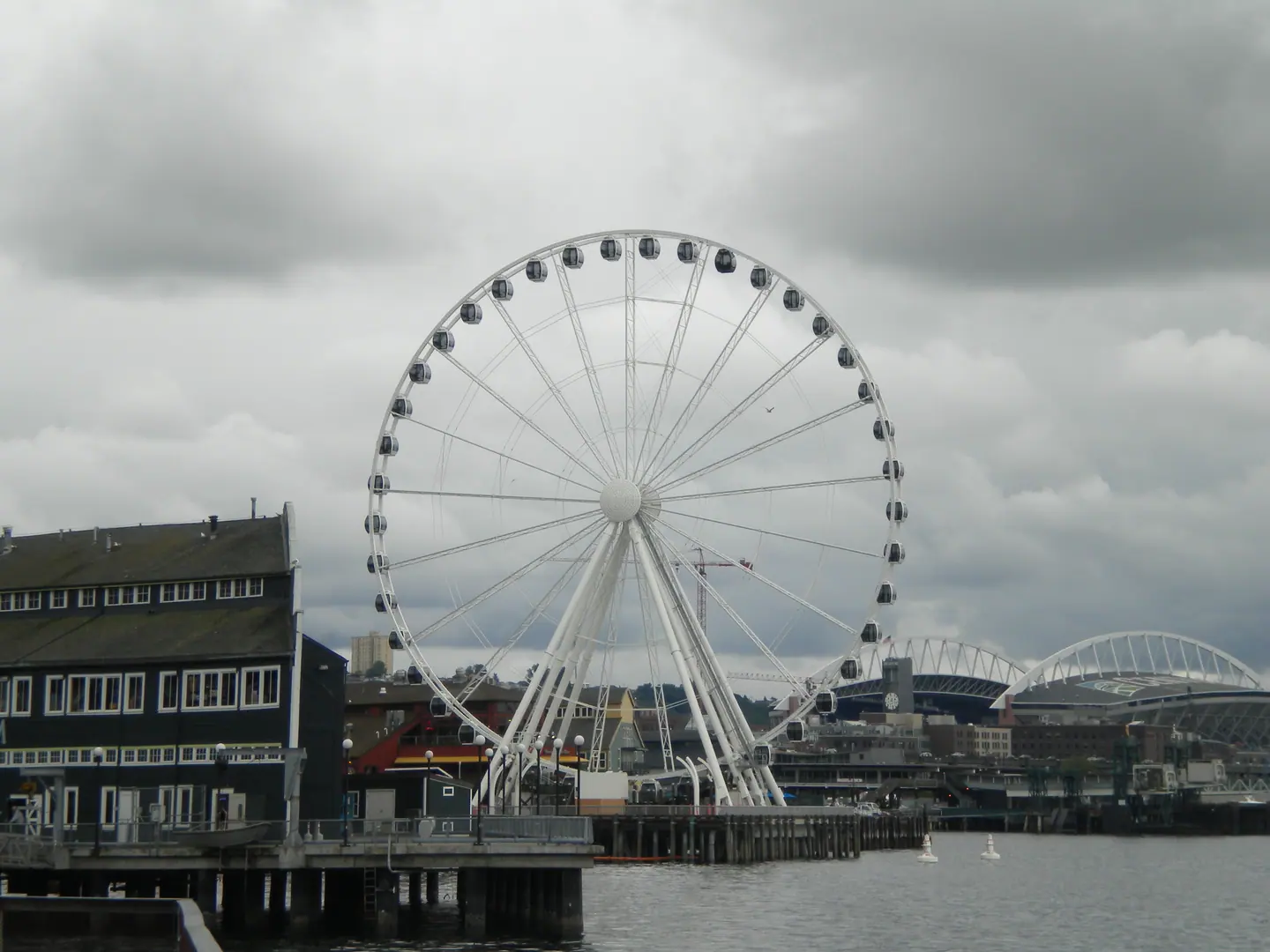
Opened in 2012 at the end of Pier 57, this 53-metre-tall observation wheel required specialized pile driving deep into the Elliott Bay seabed. Its structural steel frame provides an engineered counterpoint to the timber pilings of the adjacent historic wharves.
Washington Street Public Boat Landing
Constructed in 1920, this ornamental iron and wood pergola represents the sole surviving historic public landing facility on the Seattle waterfront. The cast-iron arches and vintage light globes mark where visiting naval vessels and municipal dignitaries historically disembarked.
Overlook Walk
Engineered as part of the Alaskan Way Viaduct removal programme, this landscaped bridge spans the grade difference between Pike Place and the bay. The structure features gradual ramps, integrated native flora gardens and public amphitheatre seating pointing toward the Olympic Mountains.
Seattle Center and Lower Queen Anne
Survey the futuristic fairgrounds of the 1962 World's Fair, anchored by soaring space-age spires and dynamic cultural pavilions.
Space Needle
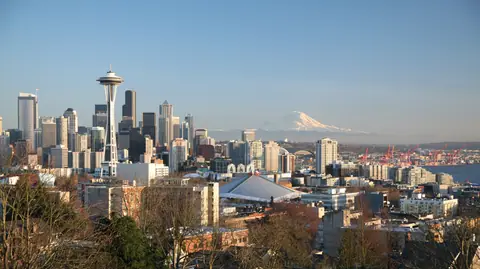
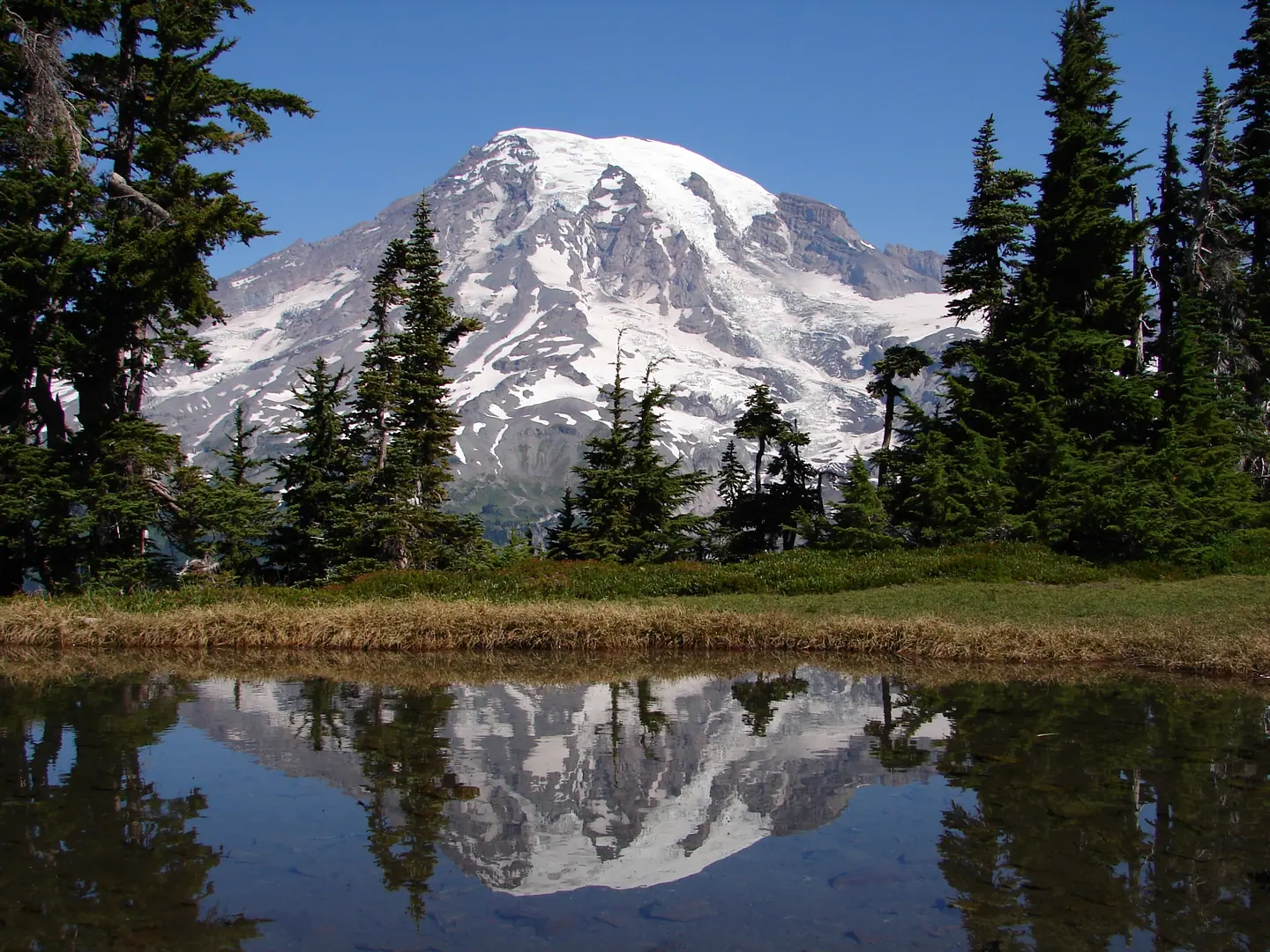
Engineered by John Graham and Edward Carlson, this 184-metre spire defined the skyline during the Century 21 Exposition. Visitors ascend via high-speed external lifts to reach multi-level observation decks featuring rotating glass floors. We observe sweeping views across Puget Sound, downtown skyscrapers, and Mount Rainier through open-air viewing benches.
Pacific Science Center
Architect Minoru Yamasaki designed this sprawling complex as the United States Science Pavilion for the 1962 fair. Five delicate concrete arches soar above reflecting pools and open courtyards lined with geometric facades. Inside, interactive exhibition halls, a tropical butterfly house, and planetarium domes welcome learners of all ages.
Museum of Pop Culture
Founded by Paul Allen in 2000, this sculptural building features shimmering metal panels composed of stainless steel and painted aluminium. Gehry intended the fragmented forms to evoke a smashed electric guitar. Inside, comprehensive galleries explore regional rock music, science fiction literature, video game design, and landmark film artefacts.
International Fountain
Designed by Tokyo architects Kazuyuki Matsushita and Hideki Shimizu, this central fountain remains a beloved relic of the Century 21 Exposition. The dome of stainless-steel nozzles shoots water up to thirty metres high, choreographing plumes to recorded symphonic scores. Visitors gather around the smooth granite basin to enjoy the rhythmic aquatic displays.
Climate Pledge Arena
Originally conceived as the Washington State Pavilion by architect Paul Thiry, the arena opened in 1962 with a suspended cable roof. A major reconstruction preserved the historic roofline while excavating deeper below ground to expand modern interior capacity. The venue now hosts professional ice hockey, basketball tournaments, and major music concerts.
Chihuly Garden and Glass
Opened in 2012 beside the Space Needle, this venue displays the expansive career of glass artist Dale Chihuly. A monumental 30-metre-long suspended glass sculpture commands the glasshouse pavilion, illuminated by shifting natural daylight. Outside, manicured pathways weave around colourful glass tendrils, bulbs, and wild reeds planted alongside native Pacific Northwest flora.
Seattle Center Monorail
Constructed to whisk fairgoers from downtown to the 1962 fairgrounds, this straddle-beam monorail covers 1.4 kilometres on concrete pylons. The original blue and red trainsets continue running along Fifth Avenue, threading directly through the undulating structure of MoPOP. It offers a quick, practical journey and an evocative mid-century transit experience.
Seattle Center Armory
Erected in 1939 for the Washington National Guard, this fortress-like concrete structure was integrated into the 1962 fair as the Food Circus. Massive steel roof trusses span the vast central atrium, which now accommodates food stalls, community stages, and local vendor counters. The lower levels house art rehearsal rooms and public performance spaces.
KEXP Studio
Housed in a converted 1927 municipal building, this independent radio station welcomes music fans into its light-filled reception area. Glazed interior windows allow passers-by to watch live disc jockeys broadcast music across the globe. A companion performance stage regularly hosts live sessions, while an adjoining record shop offers vinyl releases.
Kobe Bell
Cast in Japan and presented to Seattle in 1962, this historic bell weighs several tonnes and symbolises trans-Pacific friendship following the Second World War. Traditional motifs embellish the cylindrical bronze casting, which rests sheltered within a contemporary wooden belfry. The monument commemorates Seattle's first sister-city connection, established with Kobe in 1957.
McCaw Hall
Standing on the site of the 1928 Civic Auditorium, this performing arts complex underwent a sweeping renovation completed in 2003. An exterior promenade features soaring glass scrims lit by dynamic colour-changing lanterns designed by LMN Architects. Inside, the Susan Brotman Auditorium provides clear acoustics and sightlines for grand opera and classical ballet.
Seattle Repertory Theatre
Established in 1963 following the World's Fair, this resident company moved into its purpose-built Bagley Wright Theatre in 1983. The red-brick facility contains two separate auditoriums designed for theatrical intimacy and acoustic clarity. We can explore contemporary American plays, classic revivals, and innovative commissions developed by local Pacific Northwest playwrights.
Kerry Park
Donated to the city in 1927 by lumber executive Albert Kerry, this narrow viewpoint occupies the south slope of Queen Anne Hill. The foreground holds Doris Totten Chase's abstract steel sculpture, Changing Form, which children often clamber through. The vista frames the Space Needle against downtown towers, coastal shipping lanes, and the snowy peak of Mount Rainier.
Parsons Gardens
Once the private family grounds of Reginald H. Parsons, this municipal enclave was deeded to the city in 1956. Mature cedar trees, flowering dogwoods, and camellia borders envelope tidy grass clearings and stone benches. The quiet retreat contrasts with the open fairgrounds down the hill and serves as a favoured setting for quiet reflection.
Marshall Park
Perched steps away from Parsons Gardens along Highland Drive, this petite park overlooks the waters of Puget Sound and the Olympic Mountains. A low stone wall and decorative railings separate the paved walkway from the steep hillside garden below. Informative bronze markers highlight geographic landmarks, shipping fairways, and islands visible across the salt water.
Mural Amphitheatre
This terraced green lawn descends toward an acoustic bandshell framed by an expansive glass mosaic mural designed by artist Paul Horiuchi in 1962. Fabricated in Italy using thousands of individual Venetian glass tesserae, the artwork measures over nine metres tall. During summer, the open-air lawn hosts public concerts, film screenings, and civic gatherings.
Artists at Play
Situated between the Museum of Pop Culture and Climate Pledge Arena, this public square opened in 2015 with installations created by local artists. Its centrepiece is a nine-metre-high climbing tower connected by mesh cat-walks, custom slides, and sound-making instruments. The space showcases how historic fairground boundaries can successfully evolve into accessible civic play spaces.
DuPen Fountain
Designed by sculptor Everett DuPen, this modernist water court explores the evolution of life through bronze figurative sculptures representing sea, flight, and human progress. Gentle water streams spill over geometric stone ledges into a shallow wading pool flanked by native birch trees. The tranquil courtyard provides a quiet respite between major cultural pavilions.
SIFF Cinema Uptown
Operating since 1926, this historic cinema venue has anchored film culture in Lower Queen Anne across multiple decades. Now managed by the Seattle International Film Festival, its three auditoriums project foreign films, restored classics, and annual festival programmes. The traditional brick marquee and retro signage maintain the vintage street-level charm of Queen Anne Avenue.
Old Fire Station 20
Constructed in 1926, this two-storey brick municipal building served the Lower Queen Anne community during Seattle's early twentieth-century growth. Featuring decorative brick corbelling and arched engine-bay openings, the former firehouse retains its utilitarian municipal architecture. Today, the adapted interior accommodates neighbourhood restaurants and retail spaces just blocks from the fairgrounds.
Capitol Hill and Volunteer Park
Ascend the ridgeline to discover turn-of-the-century timber mansions, an historic Olmsted-designed park and grand glass conservatory glasshouses.
Volunteer Park
Originally acquired as a city cemetery, the grounds were transformed into a municipal pleasure garden by the Olmsted firm in 1909. Sweeping lawns, mature conifers, and historic monuments define the ridge. Travellers can wander wide carriage paths, walk past century-old brick infrastructure, and enjoy open vistas towards the Olympic Mountains across Puget Sound.
Volunteer Park Conservatory
Constructed in 1912 from prefabricated glass and steel manufactured by the Hitchings Company, this public greenhouse reflects classic Victorian conservatory design. Its five interconnected glass houses showcase distinct microclimates, ranging from desert cacti to tropical ferns. Notable highlights include a centenary jade tree and an exquisite collection of bromeliads and delicate orchids.
Seattle Asian Art Museum
Designed by architect Carl F. Gould, this 1933 Art Deco landmark originally served as the primary home of the Seattle Art Museum. The structure combines restrained classicism with Moderne detailing, faced in sandstone and flanked by twin stone camel sculptures. Inside, galleries display historic ceramics, textiles, and decorative arts from across Asia.
Volunteer Park Water Tower
Erected in 1906, this brown clinker-brick cylinder encases a massive municipal water reservoir that still serves the surrounding neighbourhoods. A winding interior spiral staircase leads to an open-air observation room at the top. From here, visitors look through arched apertures to view downtown skyscrapers, Elliott Bay, and the Cascade range.
Lake View Cemetery
Founded in 1872 by Seattle pioneers, this hillside cemetery offers a quiet survey of local territorial history. Prominent early civic leaders, including Arthur Denny and Chief Sealth's daughter Princess Angeline, rest along its shaded lanes. The site also attracts pilgrims from across the globe visiting the graves of martial artist Bruce Lee and his son Brandon Lee.
St. Nicholas Russian Orthodox Cathedral
Built between 1935 and 1937, this church serves as a regional spiritual centre for the Russian Orthodox community. The design reflects classic medieval Novgorod architecture, marked by whitewashed brick, arched gables, and bright gilded cupolas. The interior boasts a hand-carved wooden iconostasis, traditional frescoes, and hanging brass chandeliers.
Saint Mark's Episcopal Cathedral
Perched on the western bluff of Capitol Hill, this cathedral was begun in the late 1920s in the Romanesque Revival style. The Great Depression halted construction, leaving the grand limestone cladding unbuilt and creating a striking raw concrete exterior. The cavernous nave features exceptional acoustics, a massive Flentrop pipe organ, and expansive sunset views.
Louisa C. Frye House
Built along 14th Avenue East, this imposing private residence represents the wealth of timber magnates who populated Millionaire's Row. Constructed around the turn of the century, it features generous covered verandas, wide eaves, and hand-cut cedar detailing. The estate showcases how early Seattle elites translated Pacific Northwest timber into refined domestic architecture.
Millionaire's Row
Occupying 14th Avenue East directly south of Volunteer Park, this leafy thoroughfare features one of Seattle's finest collections of historic domestic architecture. Wealthy merchants and industrialists built lavish Tudor Revival, Colonial, and Neoclassical homes here between 1900 and 1915. A canopy of mature sweetgum trees shades the wide pavements and stone retaining walls.
Horace C. Henry House
Constructed in 1901 for railroad contractor and art collector Horace C. Henry, this expansive home sits at the northern end of Millionaire's Row. The structure demonstrates restrained Georgian Revival design with symmetrical sash windows, grand porticos, and stately brick chimneys. Henry originally housed his private art collection here before donating it to the University of Washington.
Patrick J. Sullivan House
Erected in 1898 for meat packer Patrick J. Sullivan, this timber mansion is among the oldest surviving landmarks on 14th Avenue East. It features an asymmetrical facade, a prominent corner tower, and decorative pediments influenced by classical revival details. The home reflects the transition from late Victorian excess to twentieth-century domestic order.
Temple De Hirsch Sinai
Established in 1899, this congregation played a major role in early Seattle civic and religious life. While its original classical sanctuary was largely demolished, the surviving temple campus includes distinctive modernist architecture erected in 1960. Travellers can observe preserved historic cornerstones, stained glass, and nearby outdoor memorials celebrating local Jewish heritage.
Harvard-Belmont Landmark District
Designated in 1980, this hillside residential enclave preserves the lavish estates of Seattle's early twentieth-century commercial leadership. Walking along Harvard Avenue East reveals a remarkable mix of Tudor Revival, Jacobethan, and Craftsman estates. Heavy stone gates, terraced gardens, and mature English oaks give the entire district a distinct sense of secluded grandeur.
Stimson-Green Mansion
Designed by noted architect Kirtland Cutter for lumberman C.D. Stimson, this estate is an architectural triumph of Capitol Hill. The exterior combines rough sandstone, half-timbering, and red brick gables under steep rooflines. Preserved interiors contain intricately carved oak panelling, Moorish-style lighting, and original leaded art glass crafted specifically for the family.
Original Rainier Club House
Before occupying its downtown clubhouse, the elite Rainier Club maintained social ties and retreats in the residential hills above the harbour. Nearby residential adaptations reflect the late Victorian timber craft common across the neighbourhood before the regrade era. The surviving domestic buildings nearby offer insight into the social gatherings of early Washington territorial leaders.
Cal Anderson Park
Named after Washington's first openly gay state legislator, this civic park integrates historic Olmsted Brothers planning with modern landscape architecture. It covers the buried Lincoln Reservoir, which has supplied freshwater since 1901. Visitors will find a sunken reflecting pool, geometric stone promenades, and the historic brick gatehouse preserved from the early water system.
First Church of Christ, Scientist
Designed by architects Bebb and Mendel and completed in 1906, this Neoclassical landmark features massive fluted Ionic columns and a majestic central dome. The exterior is faced with yellow pressed brick and light sandstone. After decades of church services, the interior was sensitively converted into private residences while keeping its grand portico intact.
Broadway High School
Opened in 1902 as Seattle's first purpose-built high school, this structure is among the oldest institutional landmarks on the ridge. Designed by W.E. Boone in the Jacobethan style, it incorporates red brickwork and stone quoins. The surviving wing forms part of the contemporary community college campus and houses a performance auditorium.
Seattle Asian Art Museum Camel Sculptures
Positioned prominently on the gravel terrace in front of the museum, these carved stone camels date from the seventeenth-century Ming Dynasty. Brought to Seattle in the 1930s by museum founder Dr. Richard Fuller, they represent guardian statuary from spirit paths leading to elite tombs. They remain a favourite touchstone for local park visitors.
Boyer Avenue Overlook
Situated on the steep northern slope below Lake View Cemetery, this viewpoint offers clear views across the Montlake Cut and Lake Washington. Visitors look down over the Portage Bay houseboats towards the Cascade foothills in the distance. The area highlights the drastic topographical drop of the Capitol Hill ridge towards the ship canal below.
Ballard and the Salmon Bay Waterway
Observe Nordic maritime heritage along historic brick avenues and follow the massive ship canal locks linking freshwater lakes with tidal saltwater.
Hiram M. Chittenden Locks
Engineered by the US Army Corps of Engineers in 1917, these concrete navigation locks handle intense marine traffic between Salmon Bay and the sea. Visitors can watch commercial trawlers alongside pleasure yachts transit the dual chambers while observing water levels equalize across tidal shifts.
Carl S. English Jr. Botanical Garden
Laid out by US Army Corps horticulturist Carl S. English Jr. over four decades, this tranquil public park features more than five hundred species of exotic flora. Grassy slopes surround mature heritage trees, rhododendron groves, and fragrant specimen plantings originally collected from across the globe.
National Nordic Museum
Occupying a purpose-built zinc-clad structure designed to evoke a Nordic fjord, this museum displays artefacts detailing Scandinavian migration to the Pacific Northwest. Galleries trace traditions of boatbuilding, forestry, and community life imported by Danish, Finnish, Icelandic, Norwegian, and Swedish immigrants.
Ballard Avenue Historic District
Constructed between the 1890s and 1910s, this protected commercial corridor retains original red brick paving, cast-iron shopfronts, and ornate stone cornices. It originally served Nordic loggers and fishermen who frequented the saloons, boarding houses, and dry goods stores lining the boulevard.
Ballard Locks Fish Ladder
Constructed alongside the ship locks, this stepped concrete fish ladder allows wild salmon to ascend from salt to fresh water. Subterranean viewing chambers fitted with heavy glass windows offer close looks at chinook, coho, and sockeye fighting against artificial currents during upstream spawning runs.
Fishermen's Terminal
Established in 1914 on Salmon Bay, this commercial mooring facility accommodates hundreds of purse seiners, gillnetters, and crab vessels. Walking the docks provides views of industrial gear maintenance and nets being mended, anchoring Seattle's maritime trade with the Gulf of Alaska and Bering Sea.
Seattle Fishermen's Memorial
Erected at Fishermen's Terminal, this poignant monument features an eight-metre bronze statue depicting a lone mariner hauling a net aloft. Granite slabs circling the sculpture are engraved with the names of local fishermen who perished working cold, turbulent waters across the North Pacific and Alaska.
Salmon Bay Bridge
Constructed by the Great Northern Railway in 1914, this colossal counterweighted steel bascule spans Salmon Bay near Shilshole Bay. Operated to allow tall commercial ships passage through the locks, the structure carries heavy freight and regional commuter rail traffic across its single massive leaf.
Ballard Bridge
Completed in 1917 to span the newly excavated Lake Washington Ship Canal, this arterial bridge features heavy steel truss machinery. The elevated roadway frequently opens to let tugs and tall fishing vessels navigate between Salmon Bay and Lake Union, providing expansive views across the marine industrial shoreline.
Ballard Town Hall Site
Before Seattle annexed Ballard in 1907, an ornate red-brick town hall stood on this location, serving the independent shingle-milling community. Today, a commemorative plaza maintains the original city hall bronze bell, honouring municipal pride and political struggles surrounding local water and annexation debates.
Olympic Athletic Club Historic Building
Built during the town's initial expansion boom, this sturdy brick structure originally operated as an immigrant hotel and community meeting hub. Its street exterior showcases decorative parapets, arched window crowns, and restored heritage timber finishes that maintain the visual rhythm of the Victorian district.
Old Ballard Firehouse
Erected around the turn of the century to defend wooden mill housing and marine sheds, this brick building retains wide arched doorways once used by horse-drawn pumpers. Restored masonry and utilitarian iron details reflect early civic investments made prior to Ballard's integration into municipal Seattle.
Lake Washington Ship Canal
Finished in 1917 after decades of planning, this navigation canal lowered Lake Washington's water levels by nearly three metres. It transformed Salmon Bay into a calm freshwater basin, safeguarding timber mills and industrial shipwrights from marine wood-boring worms that populate tidal marine waters.
Shilshole Bay Marina
Situated at the mouth of Salmon Bay, this vast marina accommodates sailing yachts along the saltwater edge of Puget Sound. Paved waterfront promenades provide unobstructed vistas of the Olympic Mountain range across the open sound, alongside stone markers tracing Native Coast Salish coastal navigation.
Golden Gardens Park
Developed in 1907 by railway promoter Harry W. Treat as a destination resort, this shoreline reserve offers sandy strands and wooded bluff trails. Visitors can look out across passing marine vessel routes toward the snowcapped Olympic Mountains while watching tidal marsh habitats along the northern breakwater.
Sunset Hill Park
Perched high above Shilshole Bay, this modest neighbourhood vantage point offers sweeping panoramas across Salmon Bay's exit channels. It provides a clear vantage point to watch container ships, fishing vessels, and tugboats enter Puget Sound against dramatic backdrops of saltwater and coastal peaks.
St. Luke's Episcopal Church
Established in the late nineteenth century as Ballard grew into a prominent industrial port, this parish has long provided social support to seafaring residents. The campus features traditional ecclesiastical brick architecture, historic stained-glass panes, and peaceful open community gardens within a dense residential grid.
Leif Erikson Statue at Shilshole
Commissioned by local Scandinavian societies in 1962, this commanding bronze statue stands on the edge of Shilshole Bay looking out toward the sea. The monument honours Norse exploration and the deep historical kinship shared by generations of Scandinavian emigrants who built Seattle's maritime fleets.
Old Ballard Water Tower Site
This elevated junction marked a key piece of Ballard's early independent infrastructure, where wooden elevated water tanks supplied pioneer homes and lumber mills. Today, surrounding quiet streets display well-preserved turn-of-the-century timber worker cottages, vernacular craftsman bungalows, and mature street trees planted during early municipal programmes.
Commodore Park
Occupying the southern bank of the Lake Washington Ship Canal opposite the botanical gardens, this quiet park overlooks the locks and spillway dam. Open lawns offer clear angles to watch the massive steel radial gates and fish passage channels controlling water flow from Lake Union.
Navigating the Emerald City: Ferries, Cable Inclines and Maritime Breezes
Our main Seattle guide covers airport arrivals, neighbourhood bases and multi-day pacing to complement this walk; see also our full collection of city route guides.