A leisurely architectural promenade navigating James Oglethorpe's grid of leafy squares, cobblestone river wharves, and atmospheric Victorian districts.
Oglethorpe's Enlightened Wards and Antebellum Maritime Commerce
Founded in 1733 by General James Edward Oglethorpe alongside Yamacraw chief Tomochichi, Savannah emerged as the capital of the nascent Georgia colony, structured around an innovative civil grid of wards and communal squares. Designed to foster both military defence and civic egalitarianism, each ward centred on a verdant communal common framed by institutional pavilions and residential lots. By the early nineteenth century, the city's strategic bluff overlooking the Savannah River transformed it into an indispensable maritime nexus, moving immense yields of sea island cotton and naval stores across multi-tiered brick warehouses along Factors Walk.
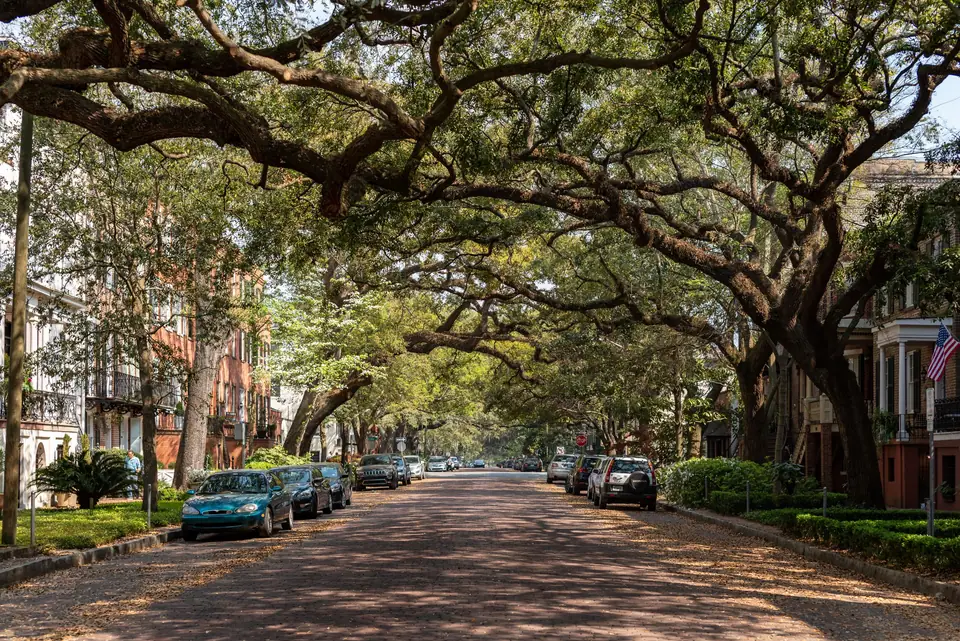
Remarkably spared physical destruction during the American Civil War when General William Tecumseh Sherman presented the city as a winter gift to President Lincoln, Savannah retains one of North America's largest contiguous National Historic Landmark Districts. Decades of civic conservation spearheaded by the Historic Savannah Foundation rescued Regency mansions, Greek Revival sanctuaries, and moss-hung Victorian Gothic avenues from urban renewal, preserving an exquisite subtropical palimpsest where antebellum ironwork gracefully complements towering live oaks.
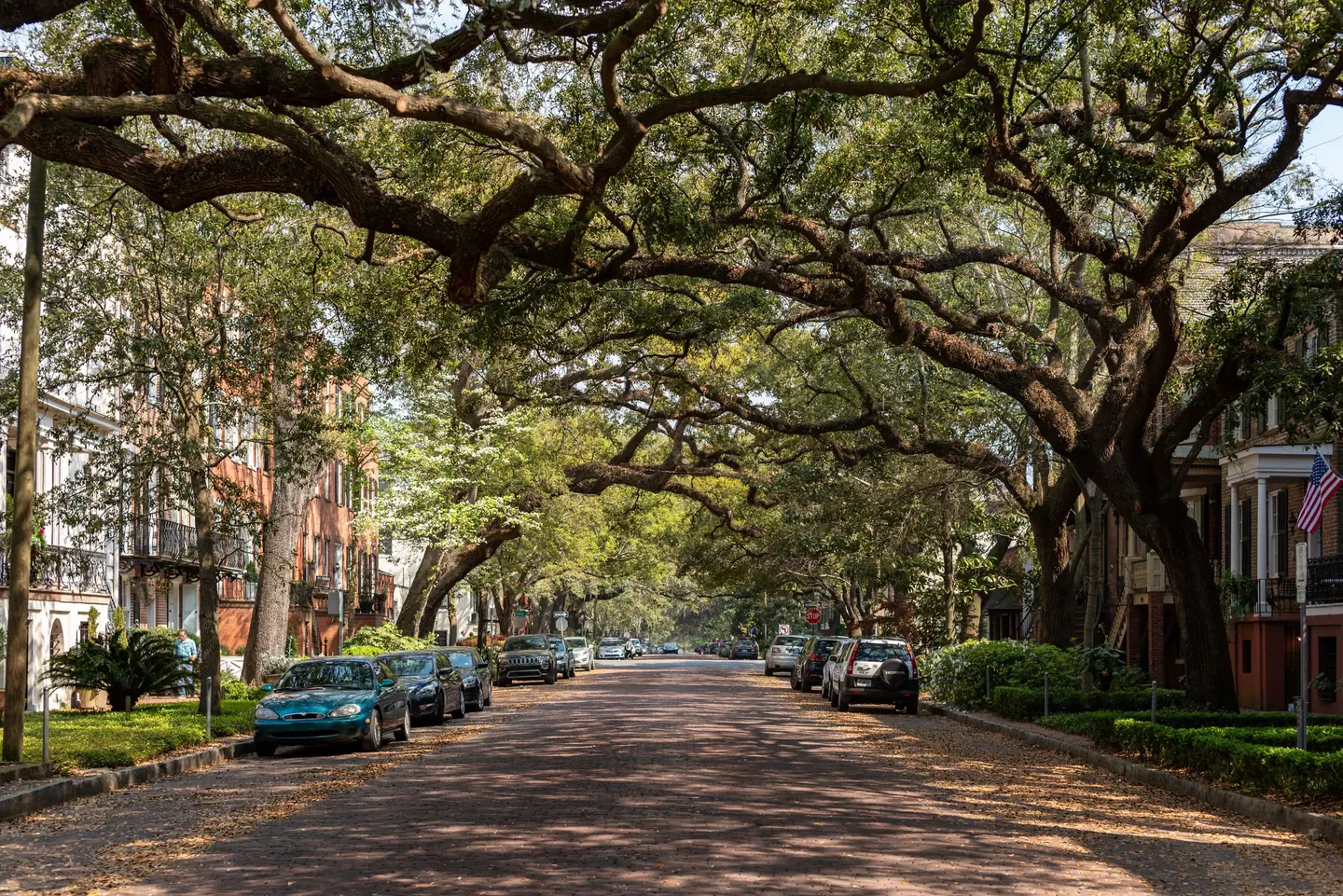
River Street and the Maritime Bluffs
Descend through subterranean ballast-stone slipways to historic cotton warehouses and working harbour wharves along the Savannah River.
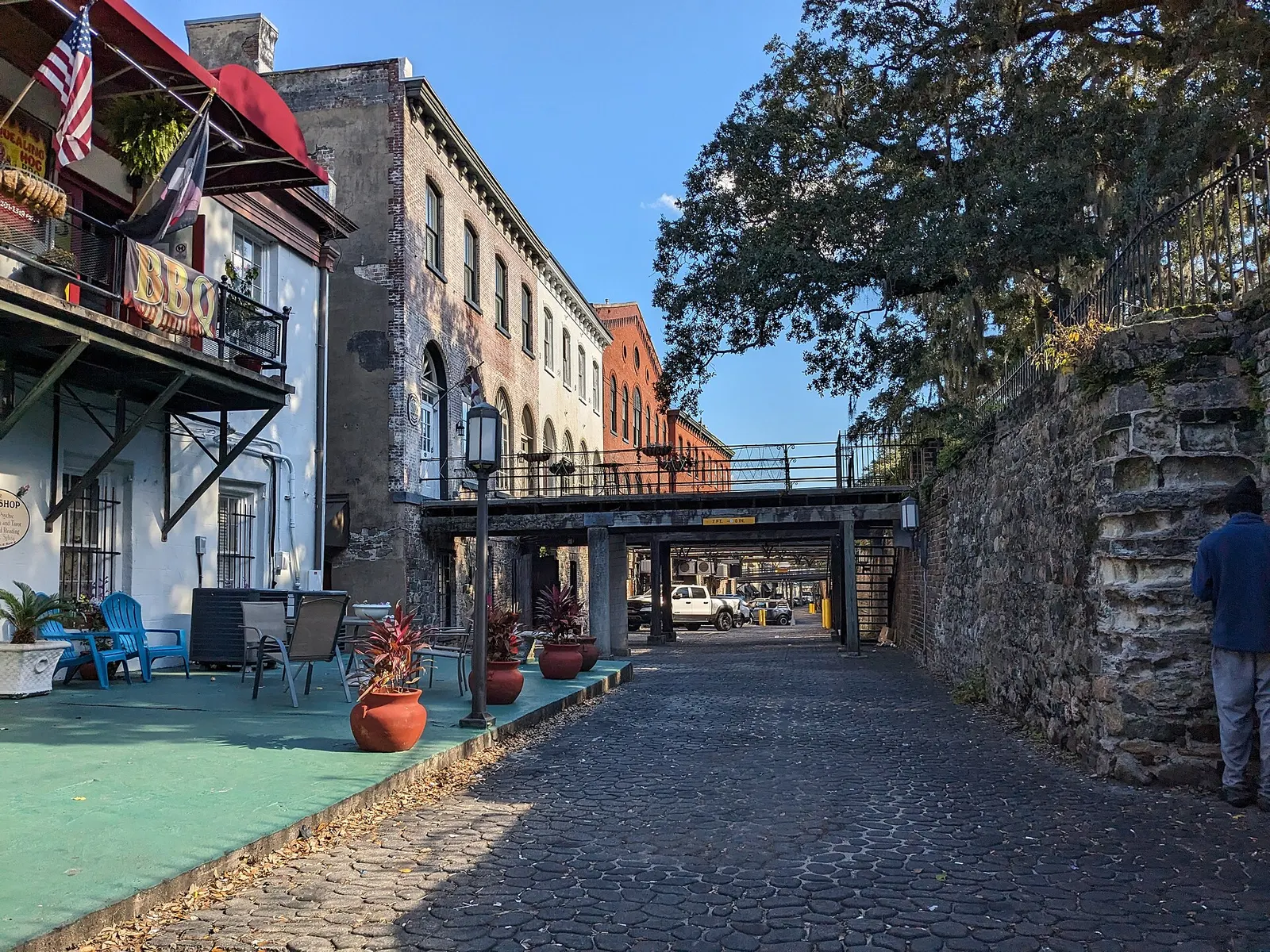
Factor's Walk
Perched between the bluff top and the river wharves, this commercial corridor served nineteenth-century cotton factors who graded and priced shipments. Pedestrians cross delicate iron bridges bridging the ravine above cobblestone ramps. We can observe original hoisting beams and deep subterranean entrances that facilitated cargo transit.
Old Savannah Cotton Exchange
Erected in 1886 over Factor's Walk, this red-brick and terra-cotta structure reflects Savannah's era as a major cotton export port. Architect William Gibbons Preston designed the building to straddle the bluff, balancing on massive brick piers. A dramatic bronze griffin fountain guards the entrance courtyard on East Bay Street.
Stone Stairs of Death
Carved into the bluff face near City Hall, this notoriously steep flight connects upper Bay Street with the river docks. The steps were constructed from discarded stones brought over as maritime ballast in sailing ships. Modern handrails provide safety, yet the uneven treads remain an authentic relic of industrial port logistics.
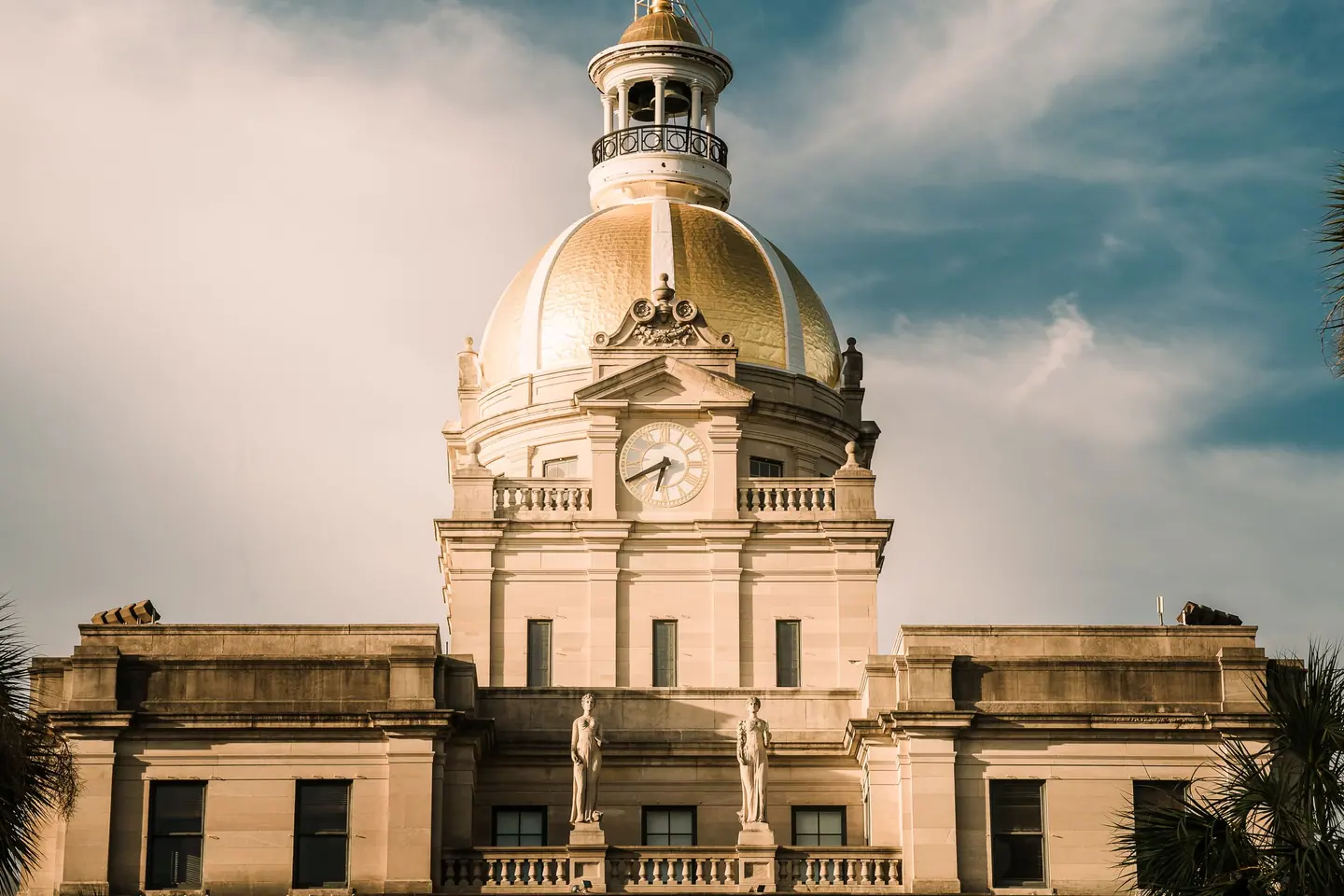
Savannah City Hall
Completed in 1906 on the site of the eighteenth-century City Exchange, this imposing building features an exterior of limestone and granite. Its dome, gilded with genuine gold leaf, acts as an enduring beacon for mariners sailing up the Savannah River. Inside, classical plasterwork and municipal museum displays tell the story of port administration.
Waving Girl Monument
Standing in Morrell Park at the eastern end of the riverfront, this statue honours Florence Martus, who greeted ships entering Savannah harbour for over forty years. Sculpted by Felix de Weldon, the work portrays Martus waving her lantern alongside her loyal collie. Ocean-going container vessels still sound their horns when passing this point.
Olympic Yachting Cauldron
Also situated in Morrell Park, this public monument marks Savannah's role as host for the 1996 Centennial Olympic yachting competitions. Crafted by local sculptor Ivan Bailey, the cauldron integrates classical fluting with stylised maritime forms. The structure overlooks the main shipping channel where athletes once set out toward Wassaw Sound.
Rousakis Riverfront Plaza
Constructed in the 1970s, this brick esplanade transformed the neglected docks into a continuous public walk along the water. It extends across several blocks, offering uninterrupted views of cargo traffic and paddle steamers. We can inspect bollards, mooring rings, and original rail spurs embedded directly into the paving.
Ships of the Sea Maritime Museum
Located in the historic William Scarbrough House, this museum documents Atlantic commerce between the eighteenth and twentieth centuries. The property features expansive classical gardens and an impressive assembly of scale ship models, including vessels from the Atlantic slave trade. Scarbrough was a principal owner of the SS Savannah, the first steamship to cross the ocean.
Old Harbour Light
Erected in 1858 by the federal government, this ornate cast-iron tower stands twenty-five feet tall above Emmet Park. It helped vessels avoid submerged wrecks placed in the channel during the American Revolutionary War. Restored in modern times, it remains one of the earliest preserved navigational beacons along the southern coastline.
Emmet Park
Shaded by live oaks draped with Spanish moss, this elevated park stretches along East Bay Street overlooking the wharf rooftops. Named after the Irish nationalist Robert Emmet, it contains numerous monuments commemorating Savannah's substantial Irish immigrant workforce. The site offers tranquil vantage points over shipping traffic without descending to the lower quayside.
Fort Wayne
Originally developed during the American Revolutionary War and reinforced in 1812, this fort guarded the river approach to Savannah. While much of the earthworks were altered by the later Savannah Gas Works, brick masonry and high bluff promontories remain visible. The location demonstrates the strategic defensive military importance of the river bend.
Plant Riverside District
Anchoring the western end of River Street, this former coal-fired electricity plant built in 1912 has undergone careful industrial conservation. Its twin brick smokestacks dominate the skyline above original steel roof trusses and brick piers. Public walkways through the turbine hall feature natural history displays and restored industrial machinery.
Propeller Club Memorial
Situated on the lower quayside walk, this outdoor monument commemorates seafarers who lost their lives in maritime service. The centrepiece is an enormous multi-ton bronze ship propeller mounted upon a brick pedestal. It serves as an informative gathering point detailing the modern cargo operations of the port.
SS Savannah Monument
This waterfront plaque celebrates the SS Savannah, which departed this port in May 1819 to complete the first transatlantic crossing by a steam-powered vessel. The memorial explains the hybrid auxiliary propulsion system used alongside conventional sails. It stands along the wharf path where the vessel was provisioned before embarking for Liverpool.
World War II A Monument to A Freedom
Installed on the River Street promenade, this memorial by sculptor Eric Meyerhoff honours county residents who served in the Second World War. The composition features a fractured granite globe framed by bronze panels containing names of service personnel. The river backdrop emphasizes Savannah's historical shipbuilding yards that built Liberty ships for the war effort.
African-American Monument
Overlooking the water, this moving memorial by Dorothy Spradley depicts a modern African-American family with broken chains at their feet. The base includes an inscription authored by Maya Angelou describing the horrors of the Middle Passage. The monument marks the historic point of arrival for thousands of enslaved labourers who built Savannah's infrastructure.
Exchange Bell
Resting in a small garden adjacent to City Hall on the upper bluff, this bell was cast in 1802 for the original City Exchange. It sounded alarms for fires, indicated harbour curfews, and regulated the business hours of river merchants. Preserved on an iron mount, it remains the oldest municipal bell in Georgia.
John P. Rousakis Plaza Overlook
This elevated overlook situated behind the municipal buildings offers an unobstructed perspective on the river bend and maritime operations. From the balustrade, we look directly down into the narrow subterranean slipways and across to Hutchinsons Island. Large commercial freighters navigate the water mere metres from the promenade below.
Cluskey Embankment Stores
Designed in the 1840s by renowned Irish architect Charles B. Cluskey, these vaulted brick chambers support the upper roadway while stabilising the sandy bluff. Historically utilised for dry goods storage and cart turnarounds, their shadows conceal intricate early engineering. Today they offer a clear view into the masonry techniques that prevented coastal erosion.
Morrell Park
Morrell Park provides an open waterside setting where visitors can watch large container vessels transit between the Atlantic Ocean and the interior docks. The grounds link River Street with the historic bluff residential area via sloping paths. In addition to historic markers, its wide lawns host educational markers outlining the river ecology.
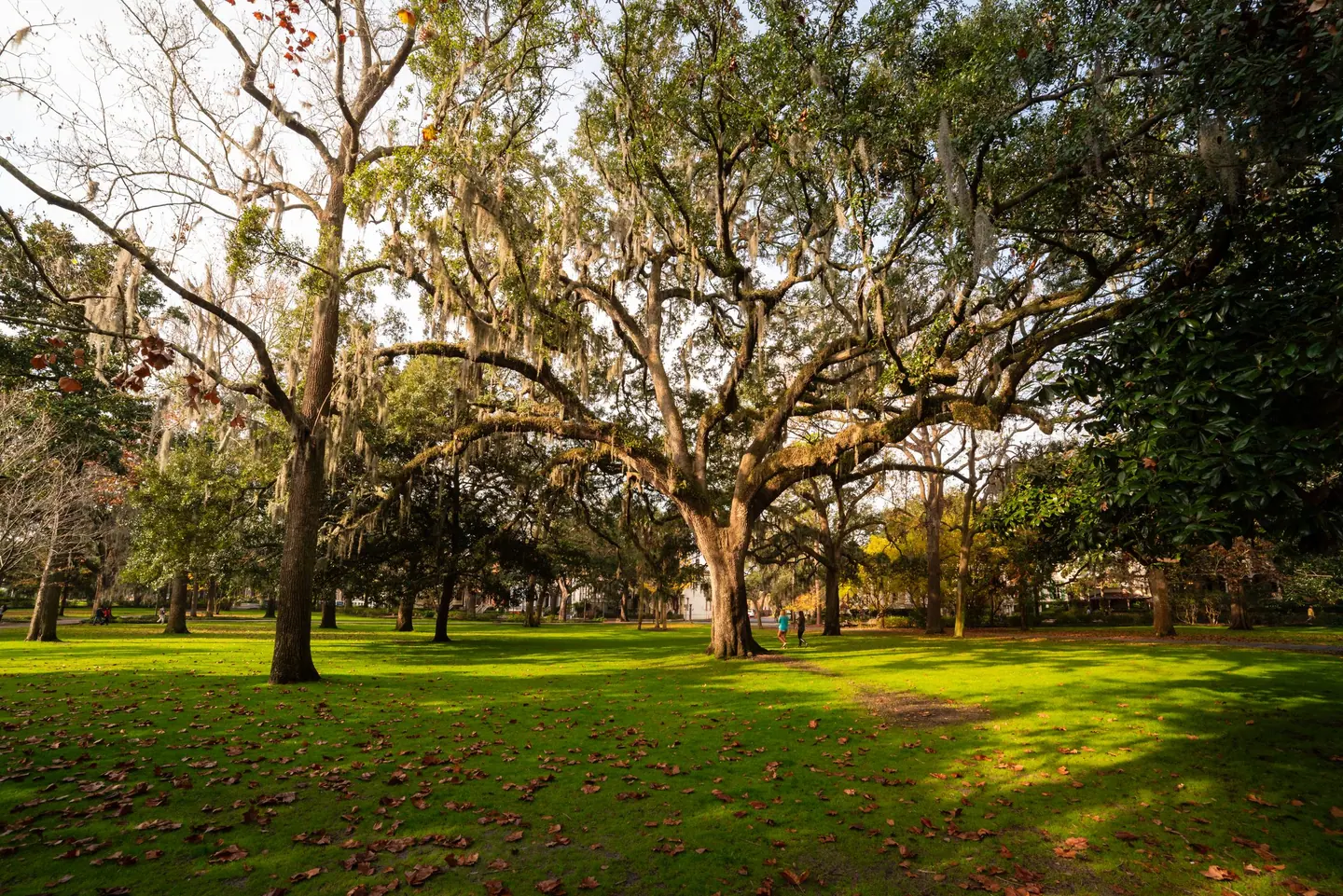
The Upper Wards and Johnson Square
Traverse the administrative heart of the 1733 town plan, framed by early financial institutions and Christ Church Parish.
Johnson Square
Planned in 1733 as the focal point of the colony, this square anchors the Derby Ward. It features sundials, public fountains, and dense live oaks draped in Spanish moss. Travellers should observe the prominent granite obelisk raised in honour of Revolutionary War hero Major General Nathanael Greene.
Christ Church Episcopal
Established alongside the founding of the city in 1733, the parish counted early rector John Wesley among its leaders. The current Greek Revival sanctuary dates from 1838, built following a disastrous fire. The portico boasts fluted Ionic columns, while the interior preserves classical mouldings and historic memorial tablets.
Nathanael Greene Monument
Standing in the centre of Johnson Square, this fifty-foot white granite obelisk honours the commander of the Southern Army during the American Revolution. The cornerstone was laid by the Marquis de Lafayette in 1825. General Greene's remains, along with those of his son, were reinterred beneath the base in 1902.
Savannah City Hall
Completed in 1905 to replace the antebellum City Exchange, this imposing Renaissance Revival building marks the northern terminus of Bull Street. The exterior is faced in red granite and limestone, crowned by a gold leaf cupola. We can view maritime exhibits and architectural models within the rotunda.
Old Harbor Light
Erected in 1858 by the federal government, this ornate cast-iron light directed vessels past sunken Confederate obstacles in the Savannah River. Standing twenty-five feet tall, it remains an essential maritime relic on the edge of Emmet Park. The surrounding grounds offer clear views down to the riverfront docks.
Savannah Cotton Exchange
Designed by Boston architect William Gibbons Preston, this 1887 red-brick exchange reflects the vast wealth generated by sea-island cotton. The structure bridges Factors Walk with decorative terra cotta panels and a central clock tower. A fierce cast-iron griffin fountain guards the cobbled courtyard outside the main entrance.
Factors Walk
Running along the northern bluff between Bay Street and the river wharves, this pedestrian system allowed cotton factors to inspect commercial cargo. The multi-level passages rely on ballast-stone walls and wrought-iron gangways constructed in the mid-nineteenth century. It provides insight into the practical engineering required for historic port trade.
Reynolds Square
Laid out in 1734 within the Lower New Ward, this open space was named after Georgia's first royal governor, John Reynolds. At its centre stands a bronze statue of John Wesley, depicted preaching in the open air. The square is framed by early residential and theatrical architecture.
The Olde Pink House
Constructed in 1771 from native red clay bricks, this grand Georgian residence was originally known as Habersham House. The distinctive pink hue emerged over the centuries as the plaster reacted with the underlying masonry. The interior retains historic fireplaces, Palladian windows, and restored timber-beamed basement rooms.
The Lucas Theatre
Arthur Lucas opened this grand venue in 1921 to screen silent films and present touring vaudeville acts. The interior combines Greek Revival and Spanish Baroque flourishes with a vast gilded ceiling dome. Following a comprehensive restoration led by preservationists and the local arts college, it operates as a performing arts stage.
Wright Square
Second only to Johnson Square in age, Wright Square was established in 1733 within Percival Ward. It holds the massive granite boulder dedicated to Yamacraw chieftain Tomochichi, who aided James Oglethorpe. Nearby rises the soaring marble monument honouring William Washington Gordon, founder of the Central of Georgia Railroad.
Telfair Academy
Completed in 1819 to designs by English architect William Jay, this neoclassical mansion served as the Telfair family seat. Bequeathed to the city in 1883, it opened as the first public art museum in the American South. The collection highlights American and European nineteenth-century paintings within period drawing rooms.
Telfair Square
Originally named St. James Square in 1733, this space was renamed in 1883 to honour the philanthropic Telfair family. It forms a cultural enclave bordered by early nineteenth-century residences, modern exhibition halls, and historic houses of worship. Shaded footpaths offer a quiet vantage point for studying late Georgian domestic proportions.
Trinity United Methodist Church
Erected in 1848, this monumental brick and stucco church is the oldest Methodist congregation in Savannah. Its facade features six towering Corinthian columns supporting a triangular pediment, modeled after classic Roman temples. The interior sanctuary retains antique heart-pine pews and original stained-glass window panels.
Owens-Thomas House
Completed in 1819, this William Jay masterpiece displays English Regency architecture through curved interior walls, amber glass transoms, and an indoor bridge. The complex includes an intact two-storey slave quarters showcasing original tabby construction and historic haint-blue ceilings. It stands on Oglethorpe Square as an essential historical study.
Oglethorpe Square
Established in 1742 within Anson Ward, this square pays tribute to the founder of the colony, General James Oglethorpe. The square provides access to prominent town residences constructed in the federal and Regency styles. Mature oak trees surround gravel footpaths where visitors can observe quiet residential facades.
First African Baptist Church
With roots dating to 1773, this congregation completed its current brick sanctuary on Franklin Square in 1859. The building served as a station on the Underground Railroad, featuring air holes drilled into pine floors in the shape of African prayer symbols. Historic gas-lit chandeliers and hand-carved pews remain well preserved.
Franklin Square
Laid out in 1790, Franklin Square honours the American polymath and diplomat Benjamin Franklin. It was demolished for traffic in 1935 but rebuilt to its original layout in the 1980s. A monumental bronze sculpture in the square commemorates the Haitian volunteers who fought during the 1779 Siege of Savannah.
Ellis Square
First planned in 1733, this commercial space hosted the public food market until a car park replaced it in 1954. Preserved and restored to civic use in 2010, the square features dynamic water fountains and wide pedestrian terraces. It now bridges the gap between administrative Bull Street and the City Market precinct.
Savannah City Market
Occupying several blocks westward from Ellis Square, this trading hub originated in the eighteenth century as a gathering place for farmers and artisans. The surviving brick and timber warehouses have been adapted into artist studios, retail shops, and open-air cafes. It preserves the early commercial layout of Savannah's waterfront hinterland.
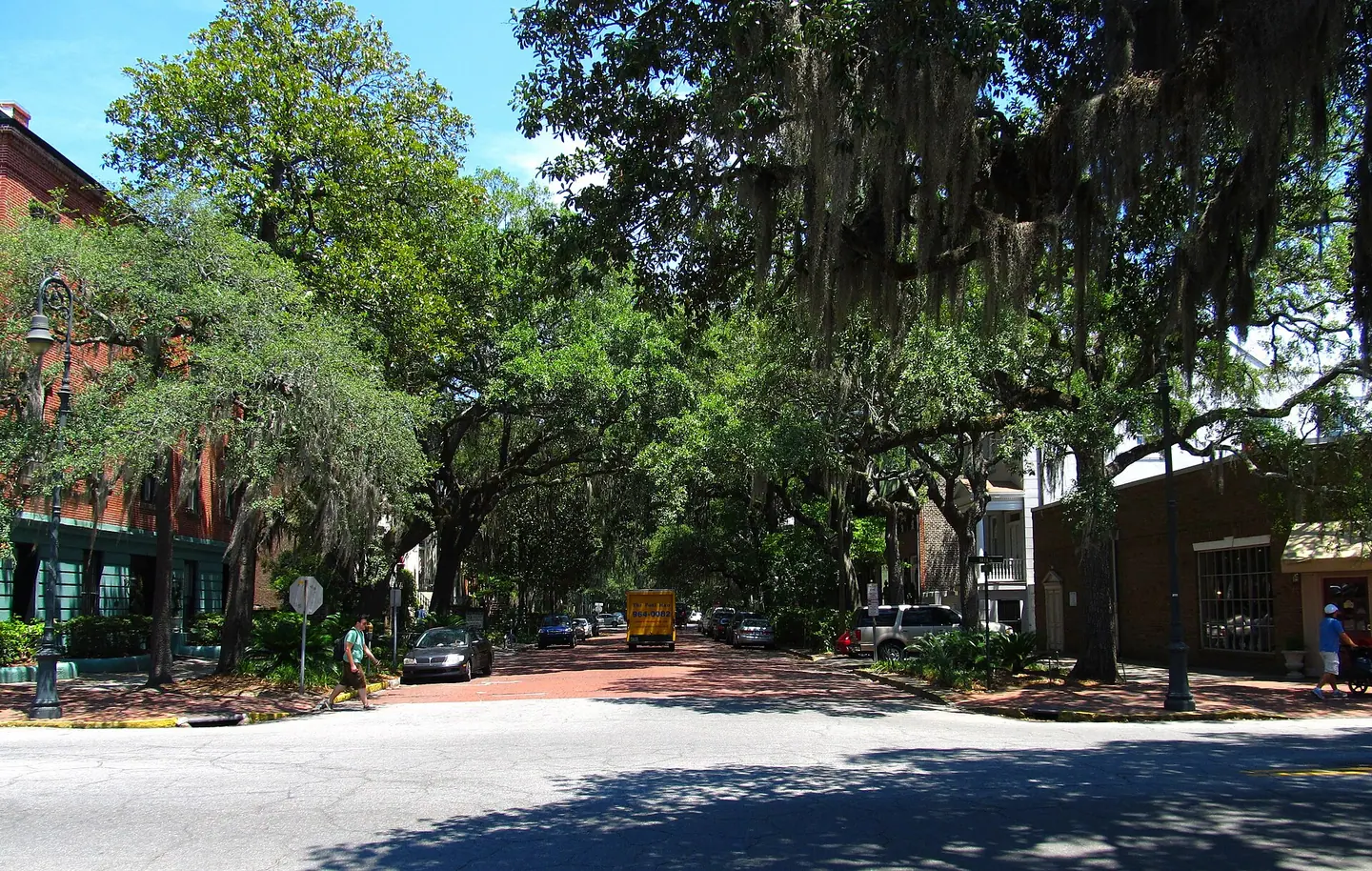
Chippewa to Lafayette: The Grand Cultural Spine
Wander central Bull Street past the Cathedral Basilica of St John the Baptist and neoclassical townhouses draped in Spanish moss.
Chippewa Square
Laid out in 1815, this central square honours American troops who fought in the Battle of Chippawa. A towering bronze monument of Georgia founder General James Oglethorpe dominates the centre, created by sculptor Daniel Chester French. Shaded footpaths lead visitors beneath live oaks draped in Spanish moss toward neighbouring theatres and historic churches.
Savannah Theatre
Opening its doors in 1818, this storied auditorium ranks among the oldest continually operating theatrical spaces in the United States. Architect William Jay designed the original structure, though subsequent fires prompted significant redesigns in Greek Revival and Art Deco styles. Visitors can admire the polished facade before inspecting displays detailing notable past performers.
First Baptist Church
Completed in 1833, this austere Greek Revival sanctuary holds the distinction of housing Savannah's oldest continuous Baptist congregation. Its monumental portico features four heavy Doric columns and a solid pediment, modelled after ancient Athenian temples. The understated interior remains intact, featuring preserved nineteenth-century heart-pine floors and period gallery pews.
Philbrick-Eastman House
Constructed in 1844 for Boston merchant William Philbrick, this grand mansion exemplifies high-style Italianate residential architecture. Notable details include bracketed eaves, rusticated granite trim, and an ornate cast-iron fence decorated with medallion portraits of notable historical figures. The building showcases Savannah's mid-nineteenth-century timber-and-cotton wealth along central Bull Street.
Independent Presbyterian Church
Established in 1755, the congregation commissioned architect John Holden Greene to construct this monumental granite building, which was finished in 1819 and rebuilt following a fire. The design draws inspiration from London's St Martin-in-the-Fields, marked by tall Corinthian pillars and an octagonal bell tower. The light-flooded sanctuary incorporates a distinctive central pulpit and mahogany galleries.
Sorrel Weed House
Erected in 1840 for merchant Francis Sorrel, this sizable estate represents a fusion of Greek Revival and Regency domestic architecture. Designed by Charles B. Cluskey, the residence features a stuccoed brick exterior, refined Ionic entrance porch, and elevated garden courtyard. Interior rooms display early Victorian furnishings, historic portraits, and original heart-pine woodwork.
Madison Square
Planned in 1839, Madison Square honours United States President James Madison with stately walkways and mature southern live oaks. At its heart stands a towering bronze monument to Sergeant William Jasper, a Revolutionary War soldier mortally wounded during the 1779 Siege of Savannah. Cannon from the Old Savannah Armoury mark historical engagement lines across the turf.
Green-Meldrim House
Commissioned in 1853 by cotton exporter Charles Green, this Gothic Revival mansion famously served as General William Tecumseh Sherman's headquarters in late 1864. The structure boasts cast-iron crenellations, oriel windows, and exquisite interior plaster mouldings. Travellers can examine period furnishings, brass chandeliers, and grand pocket doors opening into expansive reception rooms.
St. John's Episcopal Church
Erected in 1853 under the direction of architect Calvin Otis, this parish church reflects the English Gothic Revival movement. The nave is lit by rich stained-glass windows depicting biblical scenes and crowned by an open-timber hammerbeam roof. A set of chimes housed in the crenellated bell tower continues to ring out across neighbouring Madison Square.
Monterey Square
Laid out in 1847, Monterey Square commemorates the American victory at the Battle of Monterrey in northern Mexico. In the centre, an imposing marble shaft memorialises Polish nobleman General Casimir Pulaski, who perished fighting for American independence. Spanish moss drapes the surrounding live oaks, providing shaded approaches to celebrated nineteenth-century mansions.
Mercer Williams House Museum
Commenced in 1860 by General Hugh W. Mercer and finished in 1868, this red-brick Italianate residence occupies the western side of Monterey Square. The house gained global fame through twentieth-century preservation efforts by antique dealer Jim Williams. Guided tours lead through rooms adorned with eighteenth-century furnishings, porcelain collections, and elaborate decorative mantels.
Mickve Israel Synagogue
Home to one of the oldest Jewish congregations in the United States, this sanctuary was consecrated in 1878 following designs by Henry G. Harrison. It remains one of the few synagogues worldwide constructed entirely in the Gothic Revival style, featuring pointed-arch windows and carved timber tracery. Its museum preserves historic Torah scrolls brought to Georgia in 1733.
Armstrong House
Designed by architect Henrik Wallin and completed in 1919, this colossal Italian Renaissance Revival mansion was built for shipping magnate George Armstrong. Glazed terracotta flourishes, sweeping balustrades, and broad stone stairs set it apart from Savannah's older brick dwellings. It later served as the founding campus for Armstrong Junior College before returning to private ownership.
Lafayette Square
Established in 1837, Lafayette Square commemorates the French general who aided American troops during the Revolutionary War. At its core stands a tiered green cast-iron fountain, erected in 1883 by the city water committee. Stately magnolias and townhouses surround the space, which sits adjacent to Savannah's central Roman Catholic cathedral.
Cathedral Basilica of St. John the Baptist
Dedicated in 1876 and meticulously rebuilt following a severe fire in 1898, this French Gothic cathedral is a primary religious landmark in coastal Georgia. Twin spires rise over seventy metres into the Savannah sky, while the interior features Austrian stained glass and ornate wall murals. Visitors can explore the cavernous nave, which is supported by heavy marble columns.
Andrew Low House
Architect John Norris designed this handsome residence in 1848 for Scottish cotton merchant Andrew Low. The structure features classical Italianate details, Greek Revival entryways, and an intact nineteenth-century parterre garden designed around geometric brick paths. The property also served as the adult home of Juliette Gordon Low, who founded the Girl Scouts on these grounds.
Flannery O'Connor Childhood Home
Situated on the west side of Lafayette Square, this modest Greek Revival townhouse was the childhood residence of novelist Flannery O'Connor from 1925 until 1938. The rooms are restored to reflect the Great Depression era, displaying family photographs, books, and antique period furniture. Exhibits explore how Savannah's Catholic enclaves shaped O'Connor's later Southern Gothic short stories.
Hamilton-Turner Inn
Constructed in 1873 for Savannah mayor Samuel Pugh Hamilton, this Second Empire estate showcases a mansard roof, bracketed dormers, and decorative iron roof cresting. The mansion was famously the first private residence in Savannah wired with electric lighting. Today operating as an inn, its formal parlours preserve grand plaster ceiling medallions and marble fireplaces.
Calhoun Square
Laid out in 1851, Calhoun Square is notable as one of the few historic Savannah squares that retains all of its original nineteenth-century surrounding buildings. Named for statesman John C. Calhoun, the shaded park features brick pathways shaded by towering live oaks. Surrounding structures illustrate Victorian residential styles ranging from Italianate row houses to Greek Revival detached villas.
Massie Heritage Center
Erected in 1855 through a bequest by Peter Massie, this Greek Revival structure operated as Savannah's first chartered free public school. Designed by John Norris, the building features cupola vents and symmetrical flanking pavilions. Today, educational galleries explain Savannah's distinctive Oglethorpe town plan alongside exhibitions on historic preservation, regional nineteenth-century education, and architectural craftsmanship.
Forsyth Park and the Victorian District
Stroll beneath century-old live oak canopies surrounding the historic 1858 cast-iron fountain and ornate Queen Anne residences.
Forsyth Park Fountain
Modelled after the fountains at the Place de la Concorde in Paris, this cast-iron centrepiece was ordered directly from the J. L. Mott Iron Works catalogue. Flanked by Spanish moss-draped live oaks, the fountain features tritons and swans spraying water into a broad basin, forming the visual anchor of the park.
Confederate Memorial in Forsyth Park
Standing near the southern entrance of the park, this tall sandstone monument honours local soldiers. Designed originally by Canadian sculptor Robert Reid, it includes a bronze soldier added later atop the column. We observe classical pediments and bronze figures representing judgment and grief around its substantial base.
Old Candler Hospital
Founded in 1804, this historic institution relocated here in 1819 to combat yellow fever outbreaks. The central brick hospital building features Italianate symmetry and grand porticoes. Visitors notice the majestic Candler Oak on the grounds, an ancient live oak tree protected by historic preservation covenants.
Candler Oak
Estimated to date from around 1700, this enormous Quercus virginiana specimen stands over fifteen metres tall with an immense canopy. Secured by historic easements, it survived city developments through active civic campaigns. The landmark reveals the natural landscape that preceded Savannah's nineteenth-century urban expansion.
Armstrong House
Completed in 1919 for shipping magnate George Armstrong, this grand limestone villa was designed by architect Henrik Wallin. It served for decades as the initial campus of Armstrong College. Look for the balustraded roofline, curved portico, and heavy bronze entrance gates overlooking the north end of Forsyth Park.
Forsyth Park Bandshell
Erected in the twentieth century and substantially renovated for community concerts, this open-air shell hosts civic gatherings and seasonal orchestra recitals. The tiered lawn offers open vistas across the sports fields and walking paths. It remains a key focal point for neighbourhood gatherings throughout the year.
Savannah Law School Historic Campus
Housed within former Candler Hospital medical wards, these brick buildings illustrate nineteenth-century institutional architecture. After serving patients for generations, the site underwent preservation to accommodate lecture halls and legal libraries. Architectural features include arched brick windows, sweeping verandas, and heavy heart-pine structural timbers.
Chatham County Fort
During the mid-nineteenth century, the southern half of Forsyth Park served as a military training parade ground for local volunteer regiments. The surrounding perimeter retains subtle topographical rises from historic earthworks. Plaques along the trail network document the transition from military camp to public recreational ground.
Gingerbread House
Constructed by Cord Asendorf, this residence represents one of the finest examples of Steamboat Gothic architecture in Georgia. Elaborate exterior millwork, spindle porches, and carved vergeboards decorate the façade. A century-old conservancy protects its striking wooden details and historic brick chimney stacks.
Savannah Victorian Historic District
Developed largely between 1870 and 1910, this district displays concentrated collections of Queen Anne, Folk Victorian, and Eastlake residences. We observe diverse materials, asymmetrical towers, and intricate turned-wood brackets. The district preserves the architectural transition when middle-class residents moved south of the historic squares.
Masonic Temple of Savannah
Positioned within the Victorian District, this imposing hall features neoclassical symmetry and decorative masonry motifs. Masonry symbols and formal limestone accents punctuate the external facade. The structure has provided meeting rooms and ceremonial halls for local lodges since its initial construction.
Asendorf House
Built by the prominent Asendorf family, this Victorian-era residence highlights the intricate wood-turning crafts available in late nineteenth-century Savannah. Its complex rooflines, corner tower, and wraparound porch reflect flourishing local prosperity. The building demonstrates how pattern-book details were customised by master regional carpenters.
St. Paul's Greek Orthodox Church
Constructed in the early twentieth century, this brick church serves the oldest Greek Orthodox parish in Georgia. The exterior combines Byzantine revival domes with traditional masonry construction suited to the surrounding street grid. Inside, the sanctuary features elaborate icon screens and hand-painted religious frescoes.
Bull Street Corridor
Laid out as the central axis of Savannah, Bull Street transitions gracefully from the Georgian squares into the residential Victorian quarter. Flanked by moss-draped palmettos and mature oaks, it displays nineteenth-century townhouses and brick-paved walkways. The street serves as the primary promenade connecting Forsyth Park with downtown.
Park Avenue Historic Row
Overlooking the southern edge of Forsyth Park, Park Avenue retains an exceptional concentration of high-style residential villas. Ornate iron fences, raised brick basements, and double verandas define these parcels. They reflect the post-war building boom, incorporating stained glass transoms and slate mansard roofs.
Sacred Heart Catholic Church
Designed by Brother Leonard Schwab of the Benedictine Order, this church features distinctive pressed red brick and twin bell towers. Large rose windows and heavy rounded arches dominate the façade. The cavernous interior holds authentic European stained glass and hand-carved wooden altars.
King-Tisdell Cottage
Originally built on Ott Street and later relocated to save it from demolition, this frame cottage is an educational museum dedicated to coastal Black history. It showcases gingerbread fretwork, period furnishings, and Gullah-Geechee cultural arts. It preserves the domestic lifestyle of working-class Savannahians during the Jim Crow era.
Whitaker Street Corridor
Running parallel to Bull Street along the western edge of Forsyth Park, Whitaker Street contains charming examples of Italianate bracketed cornices. It originally carried electric streetcar lines that enabled urban expansion outward into the Victorian suburbs. Today, its wide sidewalks and canopy of trees preserve nineteenth-century civic planning.
Drayton Street Corridor
Forming the eastern perimeter of Forsyth Park, Drayton Street holds notable Queen Anne mansions and historic carriage houses. The route highlights intricate bay windows, cut-stone lintels, and shaded perimeter verandas. It offers travellers uninterrupted perspectives across the central lawns of Forsyth Park.
Huntingdon Street Commercial Row
Located near the northern threshold of Forsyth Park, these historic two-storey brick structures retain cast-iron pilasters and display windows. They served as vital dry-goods merchants and apothecary shops for Victorian residents. The buildings mark the boundary where Savannah's Landmark Historic District meets the Victorian expansion.
The Starland District and Thomas Square
Discover Savannah's historic creative quarter, where mid-century industrial spaces and gingerbread cottages shelter contemporary studios and cafes.
Thomas Square Streetcar Historic District
Developed between the 1890s and 1930s, this expansive neighbourhood preserves ornate Queen Anne mansions and vernacular cottages. The grid expanded rapidly once electric trolleys linked downtown workers to southern residential tracts. Visitors can observe decorative gingerbread fretwork, turned posts, and classical porch pediments along the shaded residential streets.
Starland Dairy
Operating as a commercial milk processing facility through the mid-twentieth century, this brick industrial complex provided the namesake for the modern arts quarter. Local designers revived the derelict masonry structures in the early 2000s. The site now anchors independent galleries, design studios, and open-air community gathering courtyards.
Sacred Heart Catholic Church
Designed by the Benedictine monks and completed in 1902, this monumental red-brick church features heavy arches and twin towers. The interior houses elaborate stained glass imported from Munich and an ornate vaulted ceiling. It remains an architectural anchor at the northern threshold of the Thomas Square neighbourhood.
Bull Street Corridor
Bull Street runs as Savannah's principal north-south axis, transitioning from formal squares into early twentieth-century streetcar commerce. In Thomas Square, the street is framed by low-rise masonry shopfronts, iron balconies, and mature live oaks. Travellers walk this strip to explore independent bookshops, artist ateliers, and local cafes.
Carnegie Library
Opened in 1914 on East Henry Street, this classical revival brick building served the city's Black community during segregation. Philanthropist Andrew Carnegie provided funds following a protracted local campaign for equal intellectual resources. Restored in the 2000s, it continues to operate as an active branch of the regional library system.
Asbury United Methodist Church
Constructed in 1927 to replace an earlier wooden chapel, this brick church served a prominent local congregation throughout the twentieth century. The exterior displays Gothic Revival buttresses and decorative brick lintels. Today, the building serves as a performance space and community hub within the expanding creative district.
Savannah College of Art and Design Alexander Hall
Originally built in the 1920s as a neighbourhood grammar school, this red-brick structure now houses fine art and printmaking departments. Tall sash windows permit generous northern light into former classrooms converted into studios. The perimeter retains original iron fencing and shaded grounds typical of midtown educational architecture.
Telfair Academy
While the primary museum occupies an antebellum mansion further north, Telfair educational outreach and collection facilities maintain close ties to Thomas Square studios. Modern art events frequently bridge these municipal holdings with experimental local work. The regional visual heritage documented here informs the ongoing preservation of nearby Victorian streetscapes.
Daffin Park
Laid out in 1907 just east of the streetcar suburbs, this 80-acre park was conceived by urban planner John Nolen. A grand allée of mature live oaks creates a pedestrian promenade connecting sports grounds and a circular lake. It reflects early twentieth-century City Beautiful planning ideals on Savannah's midtown periphery.
Grayson Stadium
Erected in 1926 and rebuilt by the Works Progress Administration following a 1940 hurricane, this historic baseball stadium features classical brick entrance gates. Legends such as Babe Ruth and Jackie Robinson played on this turf. The ground remains celebrated for traditional Southern baseball culture and vintage wooden bleacher seating.
Ardsley Park Historic District
Platted in 1910 directly south of Thomas Square, this affluent development combined Savannah's traditional square layout with the Beaux-Arts radial axes of neighbouring Chatham Crescent. Houses exhibit Mediterranean Revival, Tudor, and Colonial Revival styles. Palm-lined lanes and landscaped circles form an intact early automobile and streetcar residential landscape.
Mount Tabor Baptist Church
Constructed in the early twentieth century, this church anchored a cornerstone African American congregation during the era of racial segregation. The structure exhibits unpretentious vernacular brick masonry with pointed-arch windows. It represents the vital religious institutions that supported midtown community life and social progress.
St. Paul's Greek Orthodox Church
Erected by Savannah's established Greek immigrant community, this handsome church showcases a central dome, decorative stone banding, and round-arched entryways. The interior displays rich iconography and gilded metalwork typical of Eastern Orthodox tradition. It marks the cultural and spiritual diversity that populated Thomas Square during the early 1900s.
Savannah Arts Academy
Occupying a monumental brick high-school campus constructed in the 1930s, this facility now operates as a dedicated visual and performing arts school. The building displays Georgian Revival brickwork, classical porticoes, and symmetrical classroom wings. It serves as an ongoing educational anchor linking youth creativity with midtown arts culture.
St. Benedict the Moor Catholic Church
Established in the late nineteenth century to serve Black Catholics, this parish complex includes a brick sanctuary and convent school. The simple Gothic Revival exterior features lancet windows and a compact bell tower. The site played an instrumental role in offering education and social services during the Jim Crow era.
Forsyth Park
Laid out in the 1850s, this thirty-acre park serves as the transitional threshold between Savannah's historic downtown squares and the Victorian suburbs. A Parisian-style cast-iron fountain anchors the northern walkway, shaded by canopies of Spanish moss. The expansive lawns accommodate regular farmers' markets, public gatherings, and community events.
Armstrong State University Historic Campus
Before relocating south, Armstrong Junior College occupied elegant townhouses and adjacent properties on Bull Street just north of Thomas Square. Founded during the Great Depression, the institution provided affordable higher education to local youth. These dignified historic homes have since been absorbed into preservation-minded private and collegiate uses.
Candler Hospital Historic Site
Tracing its institutional roots to 1804, this historic hospital moved to its midtown brick complex at Huntington and Drayton streets in late Victorian times. The grounds feature deep arcaded verandas designed to circulate river breezes to recuperating patients. Today, educational and healthcare entities preserve the remaining red-brick pavilions.
First Baptist Church
Constructed to serve the expanding residential population south of the historic district, this church features a prominent pedimented portico supported by classical columns. The robust brick walls reflect the architectural confidence of Savannah's early twentieth-century religious communities. It provides a dignified focal point along midtown transport routes.
Laurel Grove Cemetery South
Dedicated in 1853, Laurel Grove South was designated specifically for free and enslaved Black citizens of Savannah. The oak-canopied grounds contain the final resting places of civil rights pioneers, church founders, and educators. Delicate wrought-iron fences and hand-carved markers provide profound testimony to the community that constructed the surrounding neighbourhoods.
Navigating Savannah's Riverfront Bluffs and Verdant Commons
You can combine these stops with the district-by-district where-to-stay notes and seasonal planning tables on our Savannah destination page, or explore further regional and neighbourhood guides.