


























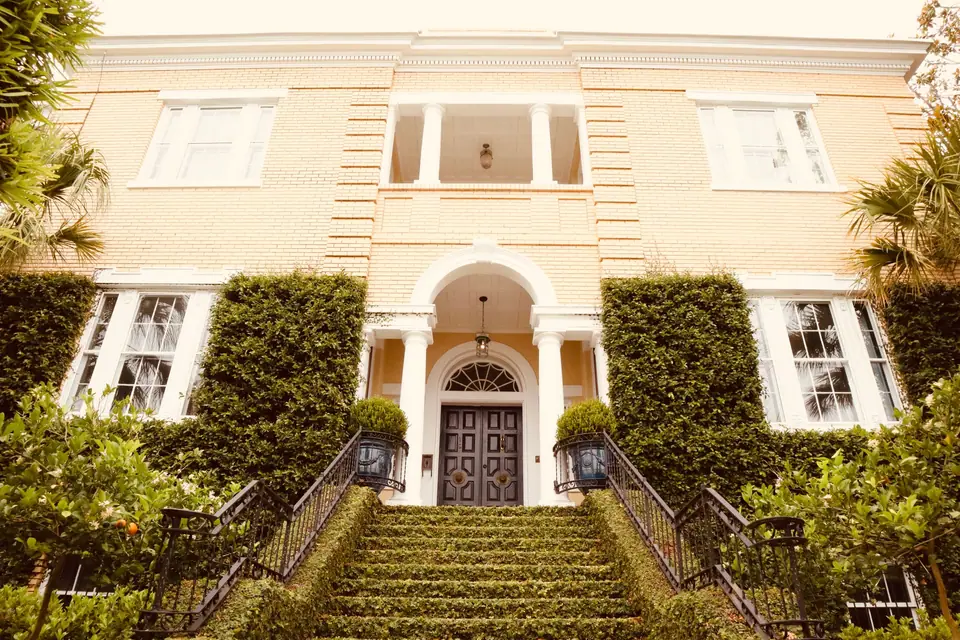
The 1804 Historic Charleston City Market (Sweetgrass Baskets) & the French Quarter
Meeting fifth-generation Gullah sweetgrass basket weavers inside the 1804 City Market and strolling the cobblestone French Quarter.
Stretching for four contiguous blocks from Meeting Street east to East Bay Street, the Historic Charleston City Market (established in 1804 on land ceded by General Charles Cotesworth Pinckney on the condition that it remain a public market) is one of the oldest operating public markets in the United States. Combined with the adjacent French Quarter immediately south, it makes a rewarding two-hour morning walk.
1. Walking the 4 Sheds of the Historic Charleston City Market
At the western head on Meeting Street rises the 1841 Greek Revival Market Hall, followed by four long, red-roofed, open-air brick sheds (Sheds A, B, C and the enclosed Great Hall), open daily with an extra Friday and Saturday evening market:
- The City Market Was Never a Slave Market: visitors sometimes confuse the City Market with the Old Slave Mart Museum on Chalmers Street four blocks away. From 1804 onwards, the City Market was strictly a municipal food market where beef, fish and vegetables were sold, with high open eaves designed so vultures (locally called 'Charleston Eagles') could fly in to clean up meat scraps.
- Gullah Geechee Sweetgrass Basket Weavers: stationed throughout the sheds are 50 to 60 fifth- and sixth-generation Gullah Geechee artisans from Mount Pleasant coiling marsh sweetgrass, bulrush and longleaf pine needles using sharpened spoon handles ('bone awls'), a West African art form brought to Carolina in the late 1600s. Also pick up sesame Benne Wafers and hot biscuits at Callie's Hot Little Biscuits inside the Great Hall.
2. The French Quarter Walk (Between Market & Broad Streets)
Settled from the 1680s by French Protestant Huguenot merchants inside the original walled city, the French Quarter holds Charleston's oldest blocks:
- Chalmers Street: Charleston's longest intact cobblestone street, paved with European ship ballast stones, connects the 1712 Pink House (17 Chalmers St) with the Old Slave Mart Museum (6 Chalmers St, an 1856 indoor auction gallery) and Washington Square Park.
- Church Street: pause at Church and Queen Streets where the wrought-iron balcony of the Dock Street Theatre faces the pink Gothic Revival 1844 French Huguenot Church and the steeple of St. Philip's Church.
- Philadelphia Alley ('Dueler's Alley'): a narrow brick footpath behind St. Philip's where 18th-century gentlemen fought pistol duels.
Traveller tips
Real advice from people who have been to The 1804 Historic Charleston City Market (Sweetgrass Baskets) & the French Quarter. Every tip is read by our team before it goes live.
No tips yet. Been here? Yours could be the first.
Thank you! Your tip will appear here after a quick review.
More in Charleston
Continue exploring Charleston with related neighbourhood, food, and planning guides

Walking the Arthur Ravenel Jr. Bridge ('Wonders' Way') & Paddling Blackwater Cypress Gardens
Charleston, United States
What to Eat in Charleston: She-Crab Soup, Creek Shrimp & Grits, Oyster Roasts & Carolina BBQ
Charleston, United States

Getting to Charleston: CHS Airport, Amtrak & Driving from Savannah
Charleston, United States

Getting Around Charleston: The All-Day Water Taxi, Municipal Parking Garages & Pedicabs
Charleston, United States
