Photo: JourneyCities
Montenegro
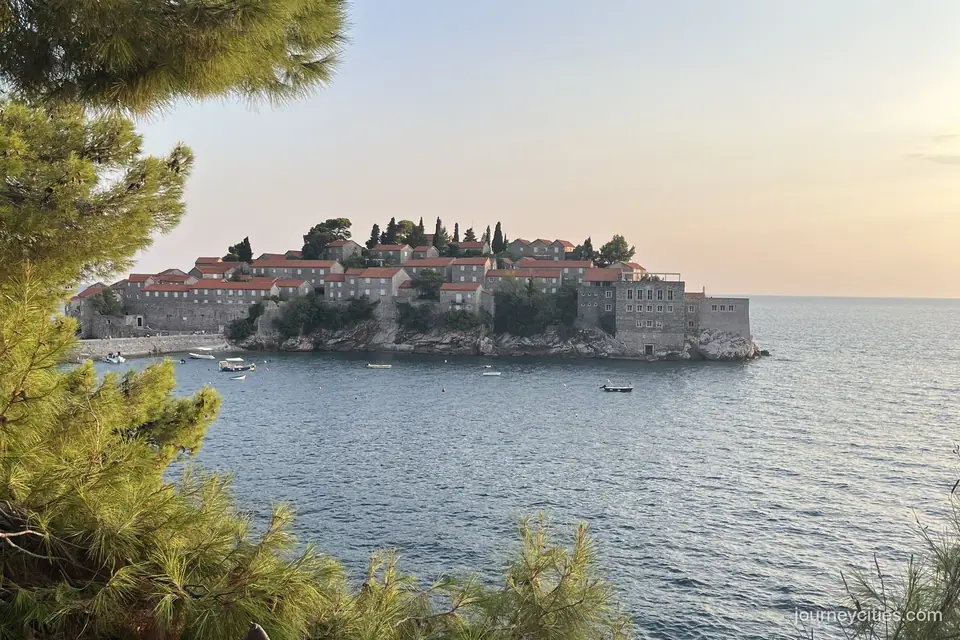
A short, steep coastline: the fjord-like Bay of Kotor, walled old towns, the Budva Riviera and Sveti Stefan.
Quick decisions
How many days?
3 days: Kotor, Perast and one beach day. 4 to 5 days: add Sveti Stefan properly and a day inland at Lake Skadar. A week: slow down, add Lovćen above Kotor and a quieter beach town like Petrovac.
Where should I stay?
Around the Bay of Kotor: old stone towns and calm water. Budva: beaches, nightlife and the most buses. Pržno to Sveti Stefan: quieter, with the best beaches on this stretch. More in our where to stay guide.
Do I need a car?
Helpful, not essential. Buses link Kotor, Budva and Sveti Stefan. A car makes Lake Skadar and the mountain roads far easier, but summer parking in Kotor, Perast and Budva is hard work.
Best for
Couples: yes, especially around Perast and Sveti Stefan. Families: yes, on the Riviera beaches. Hikers: the climb above Kotor is a start, the mountains go much further. Party crowd: Budva in July and August.
Before you go
Money: Montenegro uses the euro, though it isn't in the EU. Registration: visitors must be registered locally, which hotels do for you. Cruise days: check the Kotor ship schedule before you plan your old town morning.
Getting around
Airports: Tivat is closest to Kotor and Budva, Podgorica is inland, Dubrovnik in Croatia is across the border. On the coast: intercity buses and taxis. Details in our getting there guide.
Continue your trip
Dubrovnik is a short drive north over the Croatian border, and Mostar in Bosnia and Herzegovina is a longer day. South of Bar, the coast runs on to Ulcinj and the Albanian border.
Overview
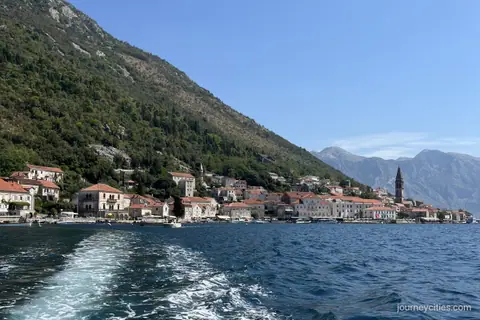
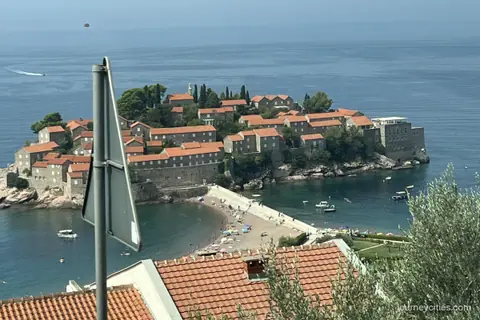
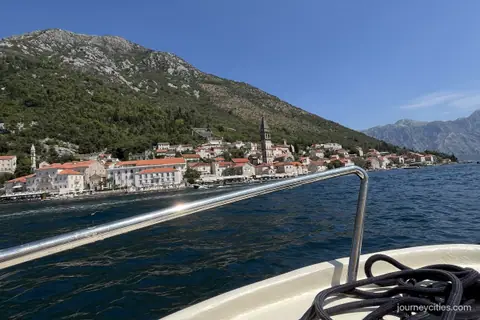
Montenegro's coast is short, and that's its advantage. In a single day you can stand in the marble square of a Venetian walled town, take a boat across a bay that looks like a Norwegian fjord, and swim off a beach facing one of the most photographed islands in the Adriatic. The mountains drop almost straight into the sea, so everything sits on a thin strip of land between the water and the rock.
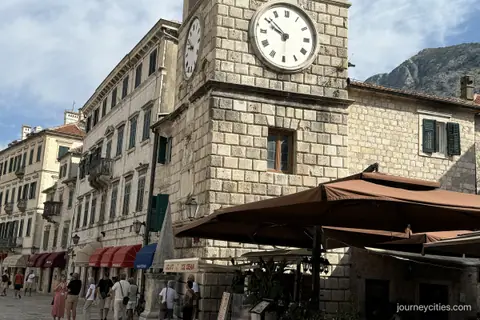
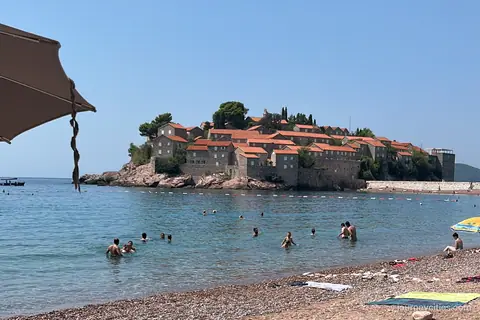
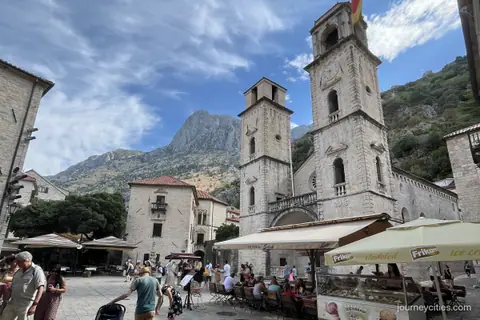
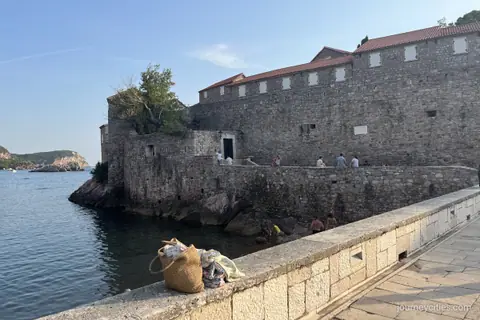
We spent four days here in late August 2024, based near Sveti Stefan, and this guide follows that pattern: Kotor and Perast on the bay, Sveti Stefan and Budva on the Riviera, and a day inland at Lake Skadar. Every photo on these Montenegro pages is our own, taken on that trip. Start with our Montenegro travel guide for how the coast fits together.
Getting there
Tivat airport sits on the Bay of Kotor and is the closest to both Kotor and Budva. Podgorica, the capital, has the other main airport, and many visitors fly into Dubrovnik and cross the border by road. Our getting there guide compares the three.
Where to stay
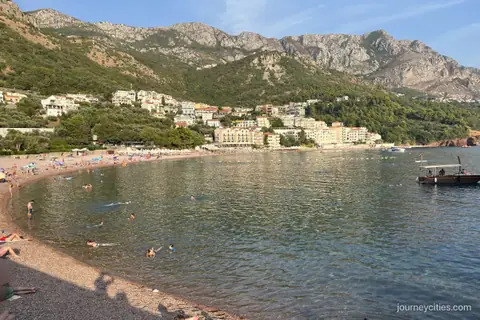
The big choice is bay or beach. Kotor, Dobrota and Perast give you old stone and calm water but few real beaches. Budva and the Riviera give you sand and pebbles, with more noise. We stayed near Sveti Stefan, which sits between the two. Our where to stay guide weighs it up.
Things to do
Three places define a first trip, and each has its own guide: Kotor Old Town and its fortress climb, Perast and Our Lady of the Rocks, and Sveti Stefan. For Budva, Lake Skadar, Lovćen and the rest, see our things to do list.
Food and drink
On the coast, eat fish and shellfish: black risotto coloured with squid ink, and buzara, mussels or prawns cooked in wine, garlic and breadcrumbs. Inland, try Njeguši pršut, a smoked ham from the village above Kotor. Vranac is the local red grape. After the boat to Perast we had fried calamari with chips and a beer, which is about as typical a bay lunch as there is.
Culture
The Bay of Kotor spent nearly four centuries under Venice, and it shows in the winged lions over the gates, the Baroque palaces of Perast and the Catholic churches beside Orthodox ones. Montenegro itself became independent again only in 2006. That mix of Venetian coast and proud mountain state explains a lot of what you see.
Weather by month
Montenegro is warmest in August, with average highs around 31°C, and coldest in January, when nights drop to about 5°C. November is the wettest month, with rain on about 14 days. For mild weather with fewer rainy days, aim for June, September and October.
| Month | Low | Range | High | Rain | Rainy days |
|---|---|---|---|---|---|
| Jan | 5°C | 11°C | 244 mm | 13 d | |
| Feb | 7°C | 13°C | 222 mm | 12 d | |
| Mar | 8°C | 15°C | 235 mm | 14 d | |
| Apr | 11°C | 18°C | 148 mm | 12 d | |
| May | 16°C | 22°C | 172 mm | 14 d | |
| Jun | 21°C | 27°C | 82 mm | 9 d | |
| Jul | 24°C | 30°C | 45 mm | 5 d | |
| Aug | 24°C | 31°C | 68 mm | 7 d | |
| Sep | 20°C | 26°C | 175 mm | 11 d | |
| Oct | 15°C | 21°C | 225 mm | 11 d | |
| Nov | 12°C | 17°C | 373 mm | 14 d | |
| Dec | 7°C | 13°C | 277 mm | 12 d |
Averages of daily values from 2015 to 2024. Rainy days are days with at least 1 mm of rain. Source: Open-Meteo · Compare destinations by month.
Montenegro on the map
Every place we cover in Montenegro. Tap a category or pin to explore.
In-depth Montenegro guides
Browse the guides grouped by topic: sights, neighbourhoods, food, transport, day trips and trip planning.
Sights, Landmarks & Parks
Key monuments, viewpoints, museums and nature trails.
Neighbourhoods & Where to Stay
Districts, historic quarters and the best bases for your stay.
Getting Around & Arrival
Airport transfers, public transit, passes and driving rules.
Trip Planning & Itineraries
When to visit, what to pack and day-by-day routes.
- Montenegro: What to Know Before You GoHow the coast is laid out, how long to stay and the practical rules.
- Best Time to Visit MontenegroWhen the sea is warm and the old towns are bearable.
- What to Wear in MontenegroGrip for the steps, water shoes for the beach, cover-ups for town.
- Montenegro 4-Day ItineraryFour days on the coast and one inland, modelled on our own trip.
Need your embassy or consulate in Montenegro? See embassies and consulates in Montenegro.
Reviews
Log in to write a review.
No reviews yet.