Kallithea Springs (1929 Italian Rotunda), Oasis Cove, Stegna and Haraki
Swimming beneath the restored 1929 Italian rotunda and pebble mosaics of Kallithea Springs nine kilometres south of Rhodes Town, plus quiet Stegna and Haraki.
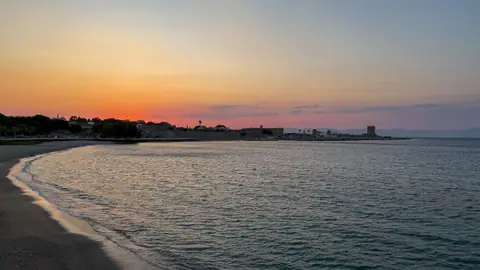
Just nine kilometres south of Rhodes Medieval Old Town along the sheltered eastern coast road, the pine-and-palm-shaded rocky promontory of Kallithea Springs (Piges Kallitheas) combines interwar Italian Mediterranean architecture with one of the clearest swimming and snorkelling inlets on the island. Reached in twenty minutes on the frequent public KTEL or DES Roda east-coast bus from Rimini Square, in fifteen minutes by rental car or taxi, or aboard daily wooden excursion boats departing from Mandraki Harbour, Kallithea makes an effortless half-day pairing with morning sightseeing inside the medieval ramparts, or the starting point for a deeper drive down the eastern shoreline to the quiet fishing bays of Stegna and Haraki.
The 1929 Italian Thermal Pavilion of Architect Pietro Lombardi
Since classical antiquity and the era of Hippocrates of Kos, travellers across the south-eastern Aegean visited the coastal pine woods of Kallithea in late summer to drink its reddish, slightly brackish mineral waters, which bubbled out of subterranean thermal fissures in the porous coastal limestone rock. During the Italian administration of the Dodecanese Islands (1912 to 1943), Italian governor Mario Lago commissioned Roman architect Pietro Lombardi in 1928 to transform the rustic spring complex into a fashionable royal hydrotherapy pavilion that would rival the spa towns of Italy and the French Riviera.
Inaugurated with grand ceremonies in July 1929 (and later expanded along the upper colonnades by architect Armando Bernabiti), Lombardi's design blended Art Deco geometry with neo-Moorish domes, Byzantine arches, classical pergolas and traditional Rhodian craftsmanship. Although the thermal spring ducts themselves dried up or shifted underground decades ago following mid-twentieth-century seismic shifts and wartime damage, the municipality of Kallithea and Rhodes painstakingly restored the entire seaside monument. Today, a modest municipal admission ticket at the upper gate (check the official portal for current seasonal entry rates) grants full-day access to the architectural complex, terraced botanical gardens and swimming cove below:
- The Great White Rotunda and Fountain Court: stepping down from the entrance square through terraced avenues of purple bougainvillea, hibiscus, date palms and Aleppo pines brings you to a circular colonnaded courtyard. At its centre rises the Great Rotunda, crowned by a perforated white dome supported on slender twin pillars that casts lacy geometric patterns of sunlight onto the sunken marble floor, where six carved travertine spouts once dispensed the mineral waters to spa guests.
- Hundreds of Metres of Traditional Chochlakia Pebble Mosaics: every path, stairway, terrace and rotunda floor across Kallithea Springs is paved in sweeping carpets of traditional Dodecanese black-and-white sea-pebble mosaics (chochlakia). Master mosaicists from Rhodes and neighbouring Symi set thousands of smooth, naturally rounded dark grey and chalk-white beach pebbles edgewise into mortar to form compass stars, interlocking waves, marine motifs and geometric borders.
- The Exhibition Halls and Cinema History: inside the cool vaulted halls of the upper rotunda, a permanent photographic exhibition documents the 1929 construction of the spa alongside memorabilia from the major international films shot inside these exact courtyards, including The Guns of Navarone (1961), Escape to Athena (1979) and Pascali's Island (1988).
Swimming, Snorkelling and Dining in Kallithea Cove and Oasis Beach
Below the colonnades and mosaic terraces, stone staircases step directly down to the sheltered horseshoe inlet of Kallithea Bay. Because a narrow rocky mouth blocks open-sea chop while underwater freshwater seeps keep the water refreshing even in August, the cove functions like a natural marine swimming pool:
- Sunbed Decks and Underwater Rock Shelves: along the contoured concrete and wooden decks built into the rocks around the cove (plus a small coarse-sand entry in the middle), cushioned sunbeds and parasols look directly over the turquoise water, served by the seaside café-restaurant tucked beneath the palms. Bring a mask and snorkel (and rubber swim shoes as advised in our Rhodes packing guide): schools of silver bream, damselfish, parrotfish and wrasse gather along the submerged limestone walls and boulders on both arms of the inlet.
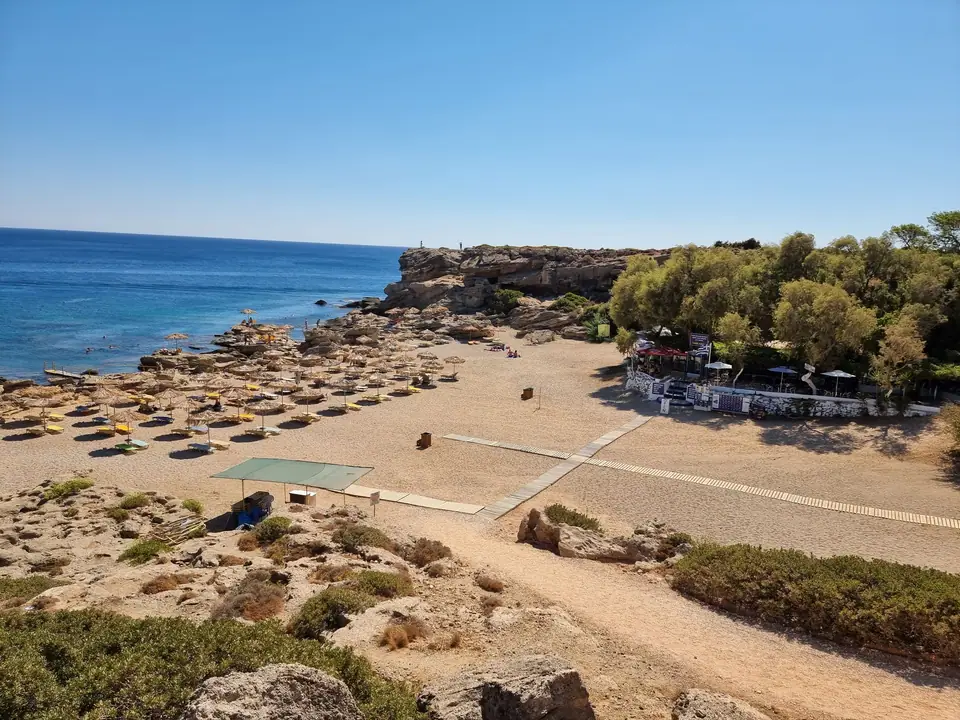
- Oasis Beach, Tasos and Nikos Coves Next Door: if you walk or drive three hundred metres south of the main Kallithea Springs monument gate along the coastal lane, three smaller, unpretentious rocky inlets, known locally after their long-running family beach cantinas (Tasos, Nikos/Kokkini and Oasis Beach), sit tucked into the limestone cliffs. At Oasis Beach, a rustic bar is built straight inside a natural sea cave, and wooden diving platforms and rock ledges let you swim in deep emerald water without an entrance ticket.
Escaping the Resort Strip: Stegna Bay Below Archangelos (30 km South)
South of Kallithea, the eastern highway passes the busy resort hotel strips of Faliraki and Kolymbia as well as the famous coves of Anthony Quinn Bay, Ladiko and golden Tsambika Beach. If you have a rental car and want to experience how the east coast of Rhodes felt forty years ago, trading multi-storey resort complexes for quiet fishing boats and waterfront family lunches, turn off the main highway at the traditional inland market town of Archangelos (famed for its boots, ceramic workshops and orange groves) and wind three kilometres down the steep citrus gorge to Stegna Bay.
Sheltered behind high limestone cliffs, Stegna is a peaceful 800-metre crescent of mixed sand and smooth pebbles where local Rhodian families keep summer cottages. There are no loud beach clubs here: instead, boats bob at a tiny stone jetty at the southern end of the bay, the water drops off gradually over flat rock plates and sand, and long-established family seafood tavernas (such as Kozas and Stegna Kozas / Stegnautta) set their blue wooden tables directly on the waterfront where you can order grilled octopus, Symi shrimp and crispy chickpea pitaroudia within two paces of the Aegean waves.
Haraki Bay, Feraklos Castle and Golden Agathi Beach (36 km South)
Six kilometres south of Stegna (and only twelve kilometres north of the Acropolis of Lindos), a short side road leads to the semicircular pebble bay of Haraki (Charaki), one of the calmest and most photogenic fishing villages on Rhodes:
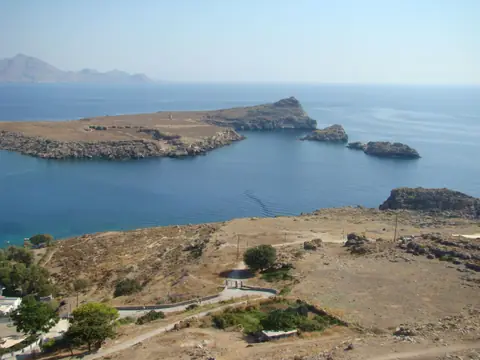
- The Pedestrian Promenade and Feraklos Castle: Haraki curves around a horseshoed pebble beach lined by a car-free waterfront path of low-rise pension houses, quiet cafés and fish tavernas. Rising on an 85-metre hill immediately at the northern tip of the bay are the ruined stone ramparts of Feraklos Castle, the very first fortress on Rhodes captured by the Knights of St John in 1408 and used throughout the fifteenth century as a coastal stronghold and prison overlooking Lindos Bay.
- Agathi Beach Next Door (1.5 km North of Haraki): before climbing back to the main highway from Haraki, follow the short dirt road around the northern foot of Feraklos Castle to Agathi Beach (Chrysi Ammos). Unlike the pebble shore of Haraki, Agathi is a wide, shallow cove of fine golden sand with warm, waist-deep turquoise water ideal for families and non-swimmers, plus a tiny medieval cave chapel carved into the southern rock wall.
Traveller tips
Real advice from people who have been to Kallithea Springs (1929 Italian Rotunda), Oasis Cove, Stegna and Haraki. Every tip is read by our team before it goes live.
No tips yet. Been here? Yours could be the first.
Thank you! Your tip will appear here after a quick review.
More in Rhodes
Continue exploring Rhodes with related neighbourhood, food, and planning guides