Siem Reap
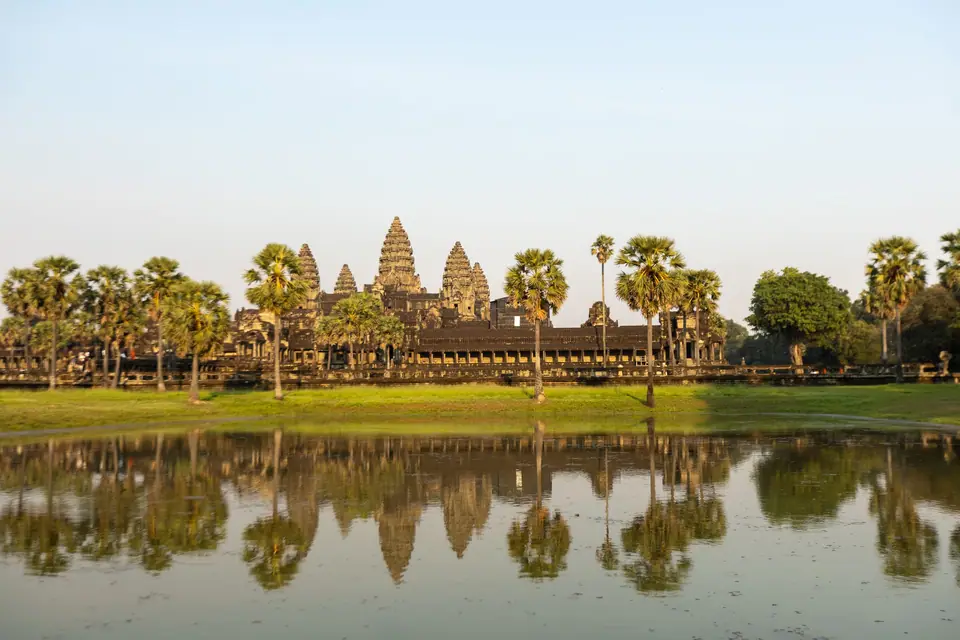
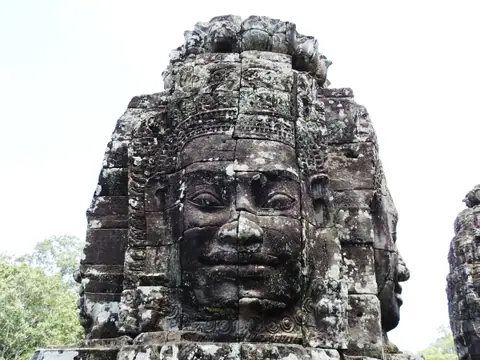
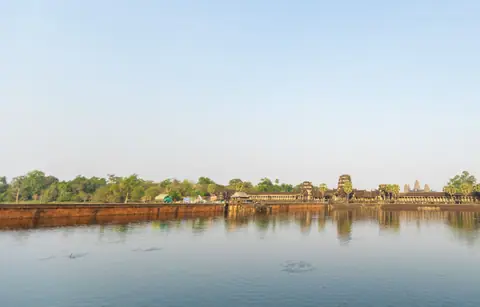
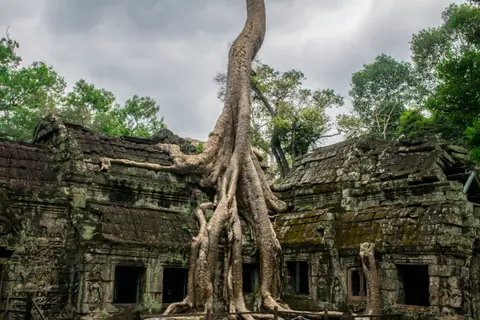
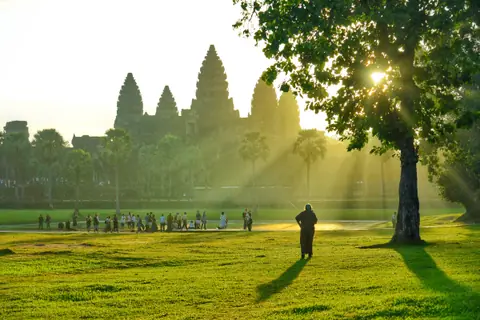
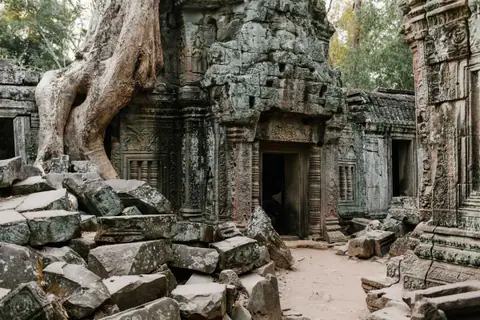
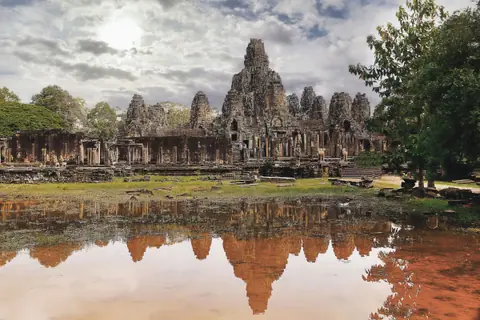
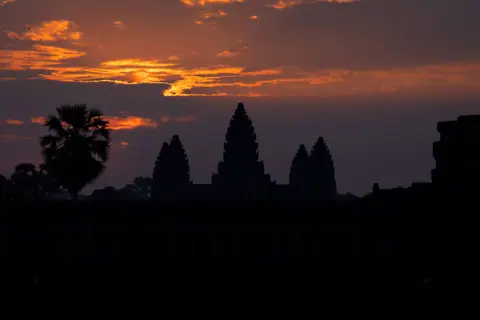
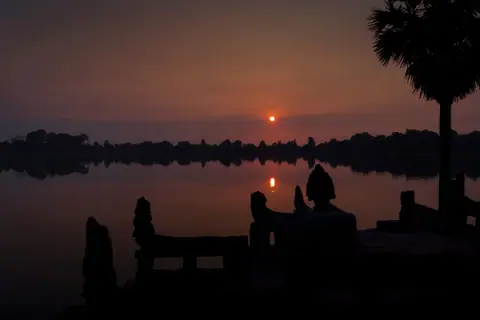
Lotus-bud towers of Angkor Wat reflected in lotus moats at dawn, serene stone faces at the Bayon, silk-cotton roots embracing Ta Prohm, and leafy river lanes lined with Khmer craft studios and fish amok kitchens.
Quick decisions
How many days?
3 to 4 days: the Angkor Small Circuit (Angkor Wat, Angkor Thom, Bayon and Ta Prohm) on day one, the Grand Circuit (Preah Khan, Neak Pean and East Mebon) plus pink-sandstone Banteay Srei on day two, and Tonle Sap Lake's stilted villages plus Phare Circus on day three. Follow our three-day route.
Where should I stay?
Wat Bo & East Riverbank: leafy streets with boutique pool hotels and Khmer bistros. Old French Quarter & Old Market (Psar Chas): walkable central base along the Siem Reap River. Charles de Gaulle Avenue: grand garden resorts on the road to Angkor. Compare areas in our neighbourhood overview.
Do I need a car?
No. Hire an open-air Cambodian remork tuk-tuk with driver by the day for the shaded temple circuits (and an air-conditioned car for distant Banteay Srei or Beng Mealea).
Best for
Ancient architecture & bas-reliefs: ninth- to thirteenth-century Khmer Empire sandstone temples. Photographers: dawn reflections and silk-cotton trees gripping gallery roofs. Living Khmer arts: contemporary acrobatics at Phare, silk weaving and lacquered ceramics.
Before you go
Buy your official Angkor Pass exclusively through Angkor Enterprise (online or at the main ticket centre on Road 60), and pack crisp un-torn banknotes alongside local Bakong Tourists QR or riel. Read our practical briefing.
Getting around
From Siem Reap Angkor Airport (SAI): the new airport sits 45 kilometres east of town; take the official airport shuttle bus or pre-book a private car transfer into the centre. Details in arrival and transport.
Continue your trip
Direct regional flights link Siem Reap with Singapore, Bangkok, Chiang Mai (via Bangkok) and southern beach hubs, while highway coaches and domestic flights connect south to Phnom Penh.
Overview
Between the ninth and fifteenth centuries, the kings of the Khmer Empire engineered a vast hydraulic metropolis across the plains north of Tonle Sap Lake, channelling monsoon rivers into rectangular reservoirs (barays) and raising sandstone state temples sculpted as earthly models of Mount Meru. Today, the UNESCO-listed Angkor Archaeological Park begins just six kilometres north of central Siem Reap, encompassing the lotus-bud towers of Angkor Wat, the enigmatic stone faces of the Bayon inside walled Angkor Thom, and the root-draped cloisters of Ta Prohm.
Yet modern Siem Reap is far more than a dormitory town for the ruins. Along the tree-shaded banks of the Siem Reap River around Wat Bo, Kandal Village and Wat Damnak, a creative generation of Cambodian chefs, social-enterprise artisans and Phare acrobatics performers has turned the town into one of Southeast Asia's warmest, most rewarding bases. Start with our practical briefing and top experiences.
Getting there
All commercial flights arrive at the modern Siem Reap Angkor International Airport (SAI), located 45 kilometres east of the city centre and connected by an express highway shuttle bus and fixed-rate airport taxis. Once in town, open-air remork tuk-tuks, Grab and PassApp handle temple circuits and evening restaurant hops. See how to get to Siem Reap and hire a temple driver.
Where to stay
Staying on the leafy east bank of the Siem Reap River around Wat Bo and Wat Damnak gives you quiet tropical-garden boutique hotels within a ten-minute walk of the Old Market bridge, whereas Kandal Village offers independent galleries and cafés, and Charles de Gaulle Avenue places resort pools closest to the Angkor ticket checkpoints. We compare every area in where to stay in Siem Reap.
Things to do
Watch first light rise behind the five towers of Angkor Wat, enter the South Gate of Angkor Thom to stand face-to-face with the smiling towers of the Bayon, trace the strangler-fig roots of Ta Prohm, and ride out along the Grand Circuit to Preah Khan and the pink sandstone carvings of Banteay Srei. Add a boat trip to Kampong Phluk on Tonle Sap Lake and an evening at Phare, the Cambodian Circus. See the full list in things to do in Siem Reap.
Food and drink
Khmer cooking relies on aromatic fresh herb pastes (kroeung pounded from lemongrass, galangal, turmeric, kaffir lime zest and garlic) rather than fiery chilli heat: steamed fish amok souffle in banana-leaf cups, breakfast bowls of nom banh chok fermented rice noodles in green fish gravy, Kampot green peppercorn stir-fries and smoky beef lok lak.
Culture
Classical Khmer culture is carved directly into the sandstone walls of Angkor, where thousands of celestial dancers (apsaras and devatas) display hand gestures still taught in royal Cambodian ballet today. Supporting vetted social enterprises, from Apopo's heroic landmine-detection rats to artisan workshops and Phare Ponleu Selpak, connects your visit directly to Cambodia's contemporary revival.
Weather by month
Siem Reap is warmest in April, with average highs around 36°C, and coldest in January, when nights drop to about 20°C. September is the wettest month, with rain on about 20 days.
| Month | Low | Range | High | Rain | Rainy days |
|---|---|---|---|---|---|
| Jan | 20°C | 31°C | 8 mm | 1 d | |
| Feb | 22°C | 33°C | 14 mm | 2 d | |
| Mar | 24°C | 35°C | 34 mm | 4 d | |
| Apr | 25°C | 36°C | 72 mm | 7 d | |
| May | 25°C | 35°C | 168 mm | 15 d | |
| Jun | 25°C | 33°C | 186 mm | 16 d | |
| Jul | 24°C | 32°C | 210 mm | 18 d | |
| Aug | 24°C | 32°C | 228 mm | 19 d | |
| Sep | 24°C | 31°C | 276 mm | 20 d | |
| Oct | 24°C | 31°C | 218 mm | 16 d | |
| Nov | 22°C | 31°C | 62 mm | 6 d | |
| Dec | 20°C | 30°C | 16 mm | 2 d |
Averages of daily values from 2015 to 2024. Rainy days are days with at least 1 mm of rain. Source: Open-Meteo · Compare destinations by month.
Siem Reap on the map
Every place we cover in Siem Reap. Tap a category or pin to explore.
In-depth Siem Reap guides
Browse the guides grouped by topic: sights, neighbourhoods, food, transport, day trips and trip planning.
Sights, Landmarks & Parks
Key monuments, viewpoints, museums and nature trails.
- Best Things to Do in Siem ReapAngkor Wat at dawn, smiling stone towers at the Bayon, jungle-wrapped Ta Prohm, stilted lake villages and Phare Circus.
- Angkor Wat, Angkor Thom, the Bayon and Ta ProhmHow to experience Angkor Wat's bas-reliefs and Bakan tower, the Bayon in Angkor Thom, and jungle-wrapped Ta Prohm.
- Small Circuit vs Grand Circuit and Pink-Sandstone Banteay SreiUnderstanding the Small Circuit and Grand Circuit routes, plus Preah Khan, Neak Pean and pink-sandstone Banteay Srei.
Neighbourhoods & Where to Stay
Districts, historic quarters and the best bases for your stay.
Getting Around & Arrival
Airport transfers, public transit, passes and driving rules.
Day Trips & Excursions
Easy half-day and full-day trips from the city.
Trip Planning & Itineraries
When to visit, what to pack and day-by-day routes.
- Siem Reap: What to Know Before You GoOfficial Angkor Pass rules, dual currency and Bakong QR tips, temple pacing and dress codes.
- Best Time to Visit Siem Reap and AngkorCool dry mornings from November to February, the March and September equinox sunrises, and emerald green monsoon moats.
- What to Wear in Siem Reap and the Angkor Visitor CodeComplying with the strict Angkor Visitor Code of Conduct for shoulders and knees, plus grippy footwear for sandstone steps.
- Siem Reap 3-Day Itinerary: Angkor Circuits, Banteay Srei and Tonle SapA three-day route splitting the Small Circuit, Grand Circuit with Banteay Srei, and Tonle Sap Lake around midday breaks.

Need your embassy or consulate in Cambodia? See embassies and consulates in Cambodia.
Reviews
Log in to write a review.
No reviews yet.