























Swamp Tour from New Orleans
Half a day in the cypress swamps outside the city, and how to choose between the fast, loud boat and the slow, quiet one.
Overview
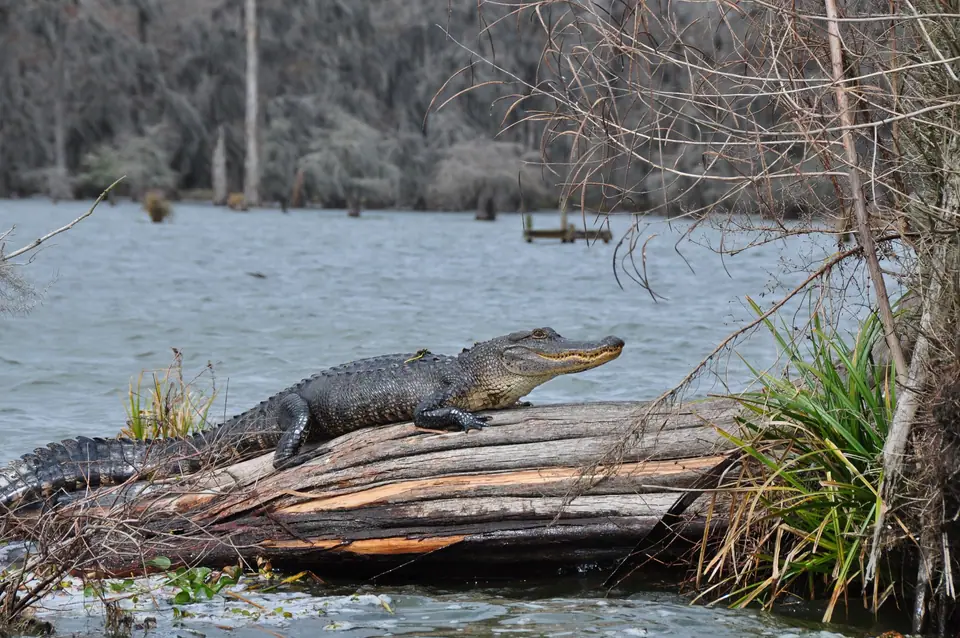
The swamps start closer to New Orleans than most visitors realise. Within an hour's drive there are bayous lined with bald cypress and tupelo, Spanish moss hanging to the water, herons standing in the shallows and, in the warm months, alligators lying on the banks. A swamp tour is how most people see them, and it is a good half-day away from the Quarter. The decision that shapes it is the boat.
Airboat
A flat hull pushed by a big aircraft-style propeller at the back. Airboats skim across shallow marsh and open water that other boats cannot reach, and the ride itself is the attraction: fast, spray in your face, sharp turns. They are also very loud, so you wear ear protection and conversation stops while the engine runs. Groups are small, often under twenty. Guides cut the engine to talk and to look for wildlife, but the noise does move animals along.
Suits: thrill seekers, teenagers, anyone who wants speed and open marsh. Doesn't suit: people sensitive to noise, very young children (operators set their own minimum ages), anyone with back problems, and birdwatchers.
Pontoon or covered boat
A slow, flat-bottomed boat with a roof and bench seats, carrying a larger group. It moves quietly along the narrower bayous, where the cypress closes in overhead, and the guide talks throughout: Cajun history, trapping, how the marsh is washing away into the Gulf. You see more birds and hear the swamp itself.
Suits: families, older travellers, anyone who wants the guide's stories and some shade. Doesn't suit: people hoping for a thrill.
The feeding question
On many tours the guide throws marshmallows, hot dogs or chicken to bring alligators alongside the boat. It works, and it makes photographs. It is also bad for the animals, teaching them to link boats and people with food. Louisiana has no statewide ban, though some parishes prohibit it. We prefer operators who do not feed, and we would ask before booking. On a non-feeding tour you may see fewer gators up close, but the ones you see are behaving as alligators do.
When alligators appear
Alligators are cold-blooded and mostly out of sight in the cool months, roughly from November to March, lying low in the mud. Tours still run and the birds are excellent, but sightings are not guaranteed. From late spring to early autumn they are easy to spot, and so are the heat and mosquitoes. Our things to do list has other half-days if the season is wrong.
How to Book
Tours leave from docks in several areas: the Barataria and Lafitte area to the south, Westwego and the West Bank, the Manchac swamp to the west, and the Honey Island swamp and Pearl River to the north-east. Each has a different character, but a good guide matters more than the location.
Most tours include a hotel or central pickup; driving yourself and meeting at the dock is usually an option too. Before paying, check:
- the boat type, and group size
- whether the guide feeds the alligators
- how long you are actually on the water, since a long transfer can make a four-hour tour mostly bus
- the minimum age, especially for airboats
- the cancellation policy for storms and hurricanes; operators cancel for lightning, and hurricane season runs from June to November
Avoid combo tours that add a plantation stop at speed. If you want to visit a plantation, give the Whitney its own half-day, as our 3-day itinerary suggests.
Tips
- Go in the morning in summer. It is cooler, the light is softer and afternoon storms are common.
- Bring insect repellent and a hat. Pack light long sleeves too, as our what to wear guide suggests for the swamps.
- Keep hands inside the boat, including when a guide brings an alligator close. Guides repeat this for a reason.
- Bring binoculars on a pontoon tour. Herons, egrets and turtles on logs are often too far for a phone camera.
- Don't hold a baby alligator for a photo if offered. Some docks keep young gators for this; it is a souvenir business, not wildlife watching.
- Want to walk instead? The boardwalks at the Barataria Preserve, part of the national park, are being rebuilt in phases from 2026, with most trails closed; check the park's conditions page before going.
- Carry cash for a tip. Guides expect one, and not every dock takes cards for it.
Reviews
Log in to write a review.
No reviews yet.
You might also like

Mostar, Blagaj and Sarajevo from Montenegro
A long day trip from the coast, or two to three days to include a night in Mostar and Sarajevo · Montenegro

Cappadocia Balloon Watching and Horse Riding
About an hour at a viewpoint around sunrise, and one to two hours on horseback, usually in the late afternoon · Cappadocia

Wieliczka Salt Mine Tour
About 2 to 3 hours underground, plus the train or transfer from Kraków · Kraków

Whale Watching from Vancouver
About 3 to 5 hours on the water, depending on how far the boat has to go to find whales · Vancouver
