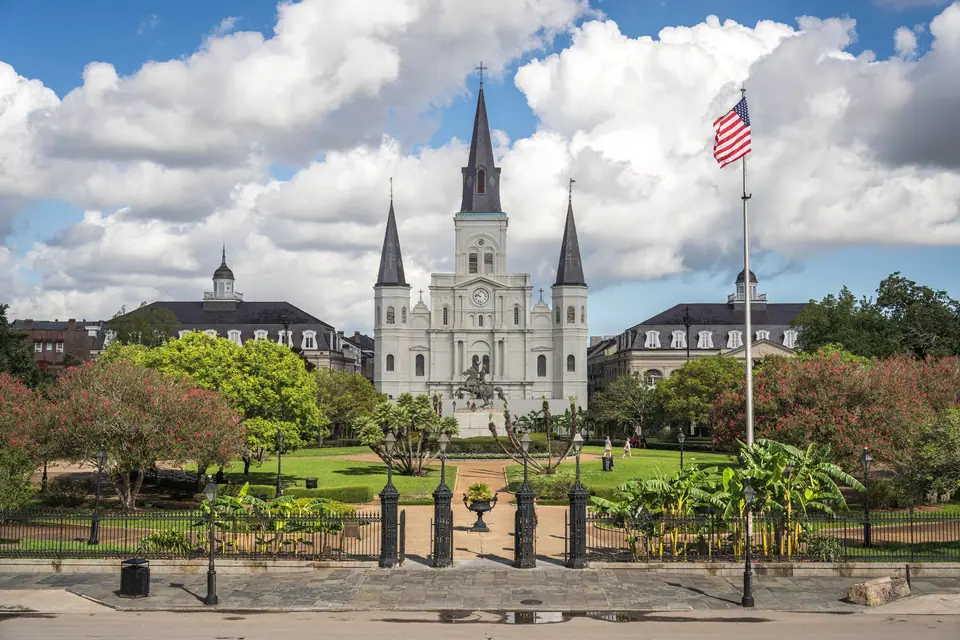
New Orleans
The birthplace of jazz, with iron balconies, Creole cooking, brass bands in the streets and a way of life that has more in common with the Caribbean than the rest of America.
Quick decisions
How many days?
3 days: the French Quarter, the Garden District and two nights of music. 4 to 5 days: add the WWII Museum, a swamp tour and a plantation that tells the truth about slavery. 6 days or more: add a road trip into Cajun country.
Where should I stay?
French Quarter: the atmosphere, and the noise. Marigny: next to the music on Frenchmen Street. Garden District: calm and leafy. CBD and Warehouse District: big hotels. More in our where to stay guide.
Do I need a car?
No. The historic neighbourhoods are walkable, the streetcars cover the rest, and French Quarter parking is expensive. Swamp tours and plantations include pick-ups, or hire a car for a single day.
Best for
Music lovers: live bands every night of the year. Food lovers: Creole and Cajun cooking you won't find elsewhere. Party seekers: Bourbon Street and Mardi Gras. Beach lovers: no, the Gulf beaches are hours away.
Before you go
ESTA: most visa-waiver travellers need one. Book ahead: hotels for Mardi Gras and Jazz Fest, often months in advance. Tipping: expected everywhere, including for street musicians you stop to watch.
Getting around
From the airport: the Airport Express bus, a taxi or rideshare. In the city: walking and the streetcars. Details in our getting there guide.
Continue your trip
Lafayette and Cajun country are about two and a half hours west by car. The Mississippi Gulf Coast is about an hour and a half east by car, or reachable without one on Amtrak's twice-daily Mardi Gras Service to Mobile. Long-distance trains run north to Chicago and east to New York, slowly and scenically.
Overview
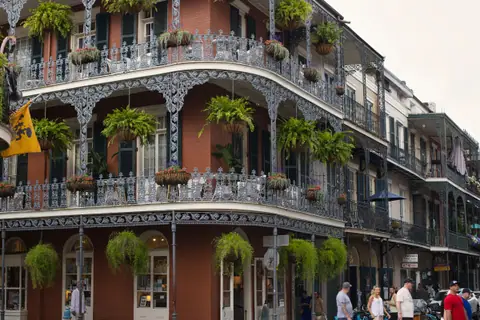
New Orleans doesn't feel like the rest of the United States, and it doesn't try to. It was French, then Spanish, then American, and it absorbed African, Caribbean, Irish, Italian and German influences along the way. The result shows in the wrought-iron balconies of the French Quarter, in a cuisine built on roux and seafood, and above all in the music, which spills out of bars and onto the street every night of the week.
It's also a city that lives with water. Built on a bend of the Mississippi and largely below sea level, it has survived floods and hurricanes, most famously Katrina in 2005, and still carries the marks. Three or four days is a comfortable first visit, though most people stay longer on the second trip. Start with our New Orleans travel guide.
Getting there
Louis Armstrong New Orleans International Airport is about 15 miles west of the French Quarter, and a taxi, rideshare or the Airport Express bus gets you into town. Amtrak trains arrive at Union Passenger Terminal near the CBD. Our getting there guide has the details.
Where to stay
Stay in or near the French Quarter for the atmosphere, in the Marigny for the music, or in the Garden District for peace and streetcar rides. The CBD has the big chain hotels. Our where to stay guide compares them.
Things to do
Most first visits centre on the French Quarter, and our French Quarter guide has a walking route. Where to hear jazz is in our music guide, and the Garden District, the swamps and the rest are in our things to do list.
Food and drink
New Orleans eats better than almost any American city. Try gumbo, a dark stew thickened with roux, a roast beef or fried shrimp po'boy, and beignets, square doughnuts buried in powdered sugar. Creole cooking comes from the city itself, and Cajun from the countryside to the west. Our food guide explains what to order.
Culture
The French founded New Orleans in 1718. After a Spanish period, it became American with the Louisiana Purchase of 1803. Enslaved and free Africans gathered to drum and dance in Congo Square, and a century later the city's brass bands, blues and ragtime came together as jazz. Mardi Gras, second-line parades and the Mardi Gras Indians keep those traditions alive.
Weather by month
New Orleans is warmest in August, with average highs around 31°C, and coldest in January, when nights drop to about 9°C. August is the wettest month, with rain on about 20 days. For mild weather with fewer rainy days, aim for February, October, November and December.
| Month | Low | Range | High | Rain | Rainy days |
|---|---|---|---|---|---|
| Jan | 9°C | 16°C | 114 mm | 12 d | |
| Feb | 11°C | 19°C | 107 mm | 11 d | |
| Mar | 15°C | 22°C | 131 mm | 12 d | |
| Apr | 17°C | 25°C | 121 mm | 12 d | |
| May | 21°C | 28°C | 138 mm | 14 d | |
| Jun | 24°C | 30°C | 199 mm | 18 d | |
| Jul | 25°C | 31°C | 204 mm | 21 d | |
| Aug | 26°C | 31°C | 225 mm | 20 d | |
| Sep | 24°C | 29°C | 167 mm | 15 d | |
| Oct | 19°C | 26°C | 104 mm | 8 d | |
| Nov | 14°C | 21°C | 94 mm | 10 d | |
| Dec | 12°C | 18°C | 142 mm | 12 d |
Averages of daily values from 2015 to 2024. Rainy days are days with at least 1 mm of rain. Source: Open-Meteo · Compare destinations by month.
New Orleans on the map
Every place we cover in New Orleans. Tap a category or pin to explore.
In-depth New Orleans guides
Browse the guides grouped by topic: sights, neighbourhoods, food, transport, day trips and trip planning.
Sights, Landmarks & Parks
Key monuments, viewpoints, museums and nature trails.

Neighbourhoods & Where to Stay
Districts, historic quarters and the best bases for your stay.

Food & Drink
Local dishes, markets, cafés and dining districts.

Getting Around & Arrival
Airport transfers, public transit, passes and driving rules.

Trip Planning & Itineraries
When to visit, what to pack and day-by-day routes.
- New Orleans: What to Know Before You GoHow the neighbourhoods fit together, and the local rules visitors should know.
- Best Time to Visit New OrleansSpring for festivals, autumn for calm, and what the summer and hurricane season mean.
- What to Wear in New OrleansLight clothes, a rain layer and shoes for the city's famously uneven pavements.
- New Orleans Music Guide: Where to Hear Live JazzWhere to hear jazz, brass and funk, from tiny halls to Sunday street parades.
- New Orleans 3-Day ItineraryThree days of walking, eating and music, with the nights doing as much work as the days.




Need your embassy or consulate in United States? See embassies and consulates in United States.
Reviews
Log in to write a review.
No reviews yet.