























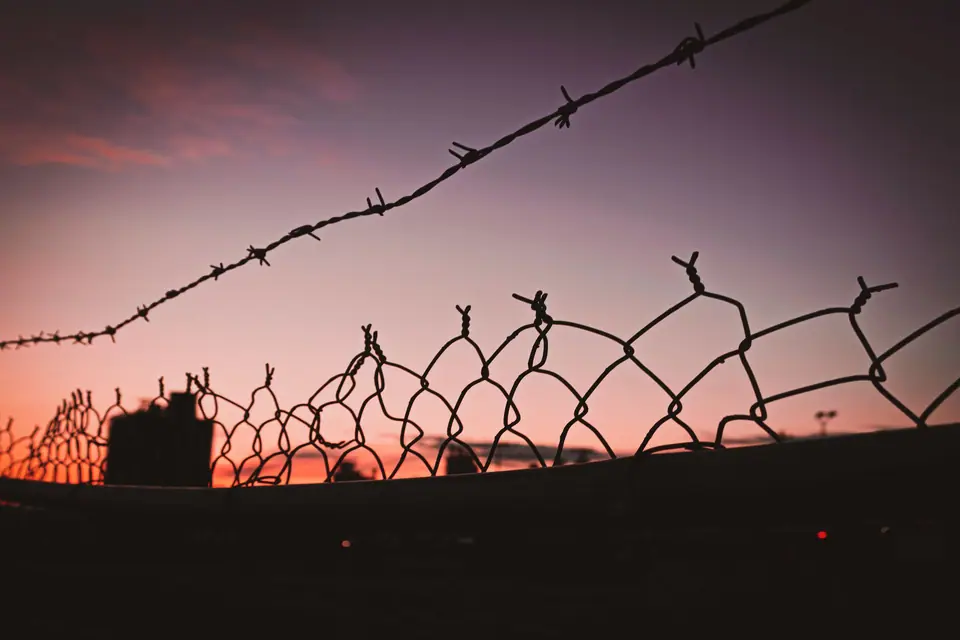
DMZ Tour from Seoul
A day trip to the edge of the Korean border zone, and how to book the version that is actually running.
Overview
Most people book a DMZ tour expecting to stand at the border line, facing North Korean soldiers. That is not what the usual tour is. What you get is a morning in the civilian control zone north of Paju: a tunnel, an observatory, a railway station waiting for trains that never come, and a guide filling in the history of a war that never formally ended. Done well, it is one of the most sobering days you can spend in Korea. Done badly, it is a long coach ride with a shopping stop tacked on at the end.
Our day trips guide describes the sites themselves. This page is about choosing the tour.
Two very different products
The standard DMZ tour is the one that runs almost every day. It covers Imjingak, the Third Tunnel, Dora Observatory and usually Dorasan Station, the last stop on the line north. You do not need special clearance beyond your passport, and it can be booked a few days ahead.
The JSA tour, to the truce village of Panmunjom, is the famous one, and it has been the least reliable thing in Korean tourism for three years. Public tours stopped after an American soldier ran across the line in July 2023, reopened only in narrow forms for selected groups, and were halted again in October 2025 ahead of a US presidential visit. Since then, civilian dates have been rare, announced at short notice and only with UN Command approval. The UN Command has also changed the format, so visitors no longer enter the blue conference huts or step onto the northern side of the room. Some companies still list JSA tours, and a few sell "JSA museum" or "JSA area" packages that stop well short of Panmunjom. Read the itinerary line by line.
Mondays change the tour
The Third Tunnel, Dora Observatory and the surrounding sites close on Mondays and on national holidays. Tours running on those days go to other places instead, such as the gondola over the Imjin River, a different observatory or a suspension bridge. They are pleasant enough, but they are not the tunnel. Plan your DMZ day for Tuesday to Sunday.
Who it suits, and who it doesn't
It suits anyone with an interest in the Korean War or the division of the peninsula, and anyone staying five days or more. On a short trip it is harder to justify, since it swallows most of a day for sites you see mainly through a guide's explanation. The Third Tunnel involves a long, steep walk down and back up in a low, narrow passage, so it is hard going for anyone with bad knees or a fear of tight spaces, and tall visitors will stoop for much of it. You can sit that part out and wait at the top. Children are allowed on the standard tour, though younger ones may find it a lot of listening.
What we would skip: combined tours that squeeze in a ginseng or amethyst shop on the way back. They make the day longer and add nothing.
How to Book
You cannot drive yourself into the civilian control zone, so a tour is the only practical option. Book through a licensed operator, directly or through your hotel, a few days ahead in normal weeks and earlier around Korean holidays. Before paying, check:
- the exact list of sites, and what replaces the tunnel if the military closes it on the day
- the pickup point (many tours collect from a few central hotels or stations rather than your door)
- that there is no shopping stop, or that you are happy with one
- the cancellation terms, since sites can shut at short notice for security reasons
Every foreign visitor must carry a physical passport. A photocopy or a phone photo will not do, and there is a checkpoint where soldiers board the coach and check. Operators usually ask for your passport details at booking; give them exactly as printed.
For the JSA, treat any booking as provisional until the operator confirms that civilian tours are running for your date, and expect stricter rules on nationality, dress and paperwork, with details sent well in advance. The Ministry of Unification and the UN Command decide, not the tour company.
Tips
- Take the morning slot. Visibility from Dora Observatory is often best early, before haze builds over the northern hills.
- Leave the camera in the bag when told. Photos are banned inside the Third Tunnel, and the observatory has its own rules, which have changed over the years. Follow the guide, because soldiers do enforce them.
- Wear flat shoes with grip. The tunnel slope is wet and steep. A hard hat is provided, and you will bump it.
- Dress soberly. The standard tour has no formal code, but military-style clothing is best left at the hotel, and the JSA has a strict dress code of its own.
- Fit it around the rest of the week. You are back in Seoul by early afternoon on a half-day tour, which leaves time for an easy evening. Our 3-day itinerary shows where a fourth day fits.
- Watch the news. A sudden rise in tension closes sites faster than any weather.
Reviews
Log in to write a review.
No reviews yet.
You might also like
Mostar, Blagaj and Sarajevo from Montenegro
A long day trip from the coast, or two to three days to include a night in Mostar and Sarajevo · Montenegro

Cappadocia Balloon Watching and Horse Riding
About an hour at a viewpoint around sunrise, and one to two hours on horseback, usually in the late afternoon · Cappadocia

Wieliczka Salt Mine Tour
About 2 to 3 hours underground, plus the train or transfer from Kraków · Kraków

Whale Watching from Vancouver
About 3 to 5 hours on the water, depending on how far the boat has to go to find whales · Vancouver
