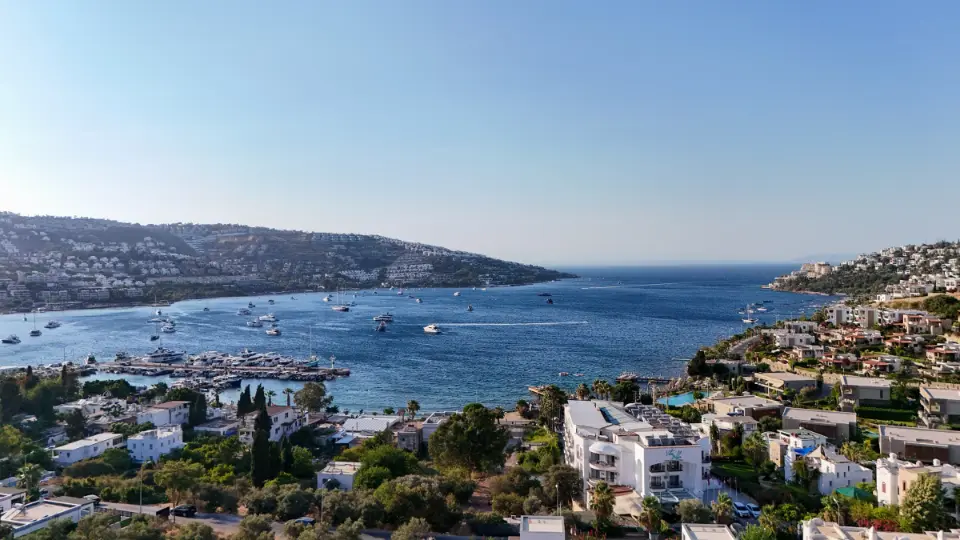
A detailed coastal and archaeological route across ancient Halicarnassus and the Bodrum Peninsula: the Knights Hospitaller Castle of St Peter, the Mausoleum site, and Aegean coves.
Carian Capital of Mausolus and the Knights Hospitaller Fortress of Petronium
Known in antiquity as Halicarnassus, the dual-bay harbour was the fifth-century BC birthplace of Herodotus, the Father of History, and became in the fourth century BC the fortified capital of the Carian satrap Mausolus and Queen Artemisia II. Upon Mausolus's death in 353 BC, Greek sculptors Scopas, Bryaxis, Leochares, and Timotheus built his 45-metre marble tomb, one of the Seven Wonders of the Ancient World, whose very name gave all languages the word mausoleum.
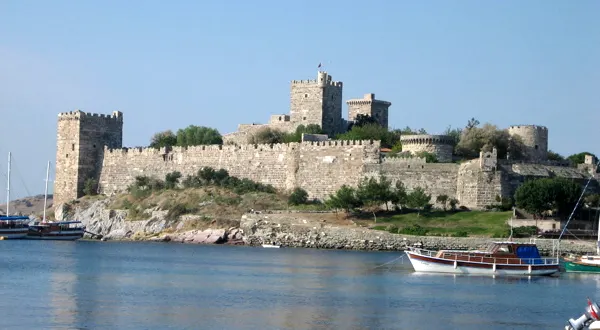
After the 1304 earthquake toppled the Mausoleum, the Knights Hospitaller of Rhodes used its green volcanic stone and marble blocks from 1402 onward to build the Castle of St Peter (Petronium, origin of the name Bodrum), which today houses the world's premier Museum of Underwater Archaeology.
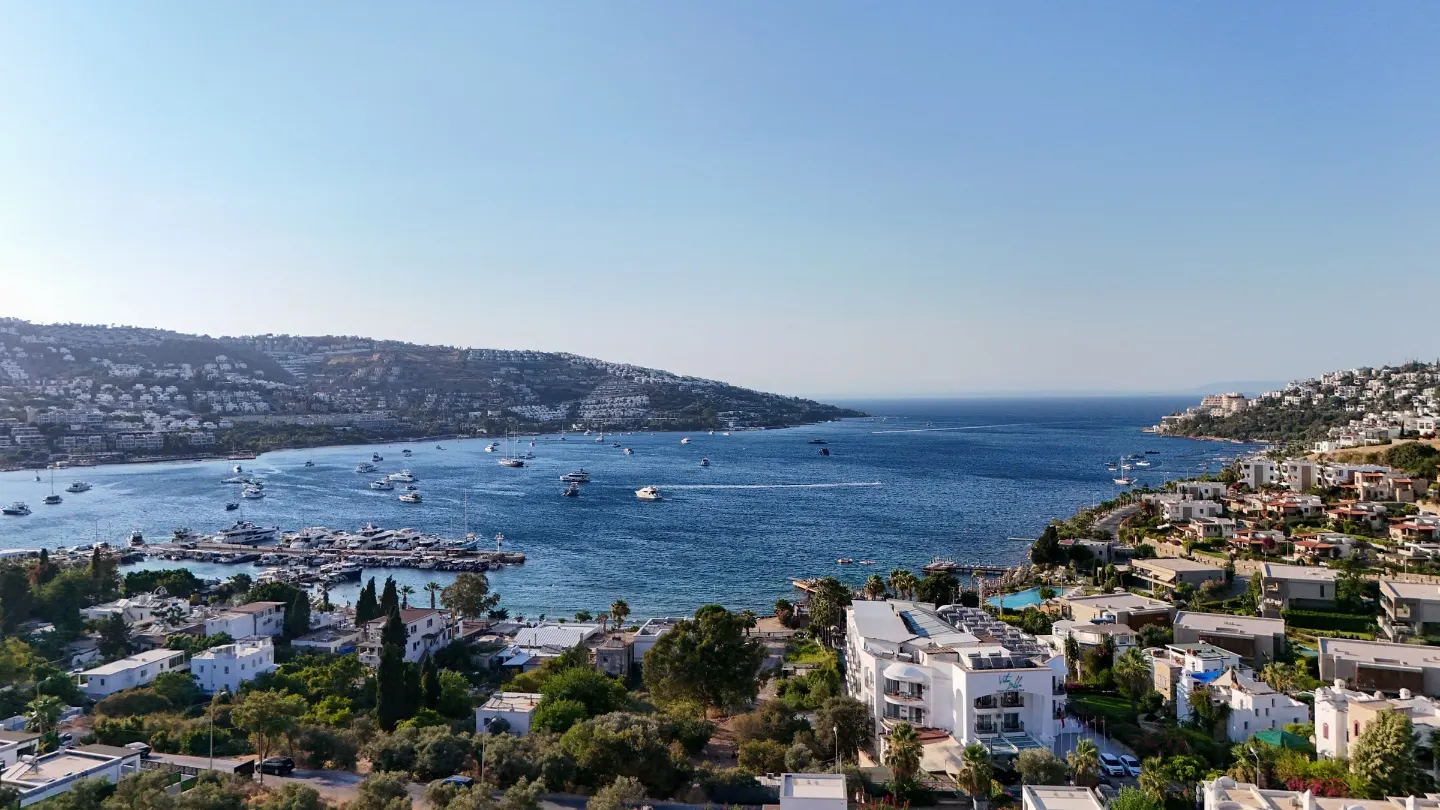
Bodrum Castle & Museum of Underwater Archaeology
Castle of St Peter Bodrum, Italian, French, English, German and Snake Towers, Uluburun 14th-Century BC Bronze Age Shipwreck Hall, Serçe Limanı Glass Wreck Hall, Carian Princess Ada Hall, Chapel Mycenaean Vase Gallery, and Castle Moat Viewpoint
Bodrum Castle
Erected from 1402 onwards by the Order of Saint John, this coastal stronghold incorporated green stone ashlar scavenged from the neighbouring Mausoleum at Halicarnassus. The fortress dominates the twin bays of the town, featuring massive square keeps and deep stone moats designed to repel Ottoman sieges before surrendering in 1523.
Bodrum Museum of Underwater Archaeology
Established in 1962 within the restored halls of Saint Peter Castle, this institution preserves finds from underwater excavation campaigns across the Turkish coast. Curators maintain delicate amphorae piles, anchors, bronze implements and medieval cargoes, turning former barracks into thematic chambers that reveal ancient nautical trade routes and conservation methods.
French Tower
Standing as the highest point of the upper citadel, this commanding tower was built around 1435 under the supervision of the French Langue. Visitors can inspect classical marble friezes embedded into the thick masonry and enjoy views across the harbour from the crenellated upper battery platform.
English Tower
Constructed around 1413 during the reign of King Henry IV, this solid defensive redoubt overlooks the open waters of the Aegean. The south-facing stone facade proudly displays carved heraldic shields, while the vaulted interior retains a medieval banquet hall arrangement complete with reproduction standards and heavy wooden furnishings.
Italian Tower
Erected by knights from the Italian Langue, this polygonal bastion controlled approach routes from the town and inner harbour. Today the chamber inside hosts specialized collections of ancient Italian bronze helmets and coinage retrieved from regional Aegean seabed digs.
German Tower
Constructed by the German Langue, this compact bastion reinforced the castle gatehouses and flanking curtains against mainland artillery bombardment. Visitors observe heavy stonework and preserved gun ports adapted during later centuries when Ottoman garrison forces modified the castle for cannon defence.
Snake Tower
Positioned on the western curtain, this structure functioned as an infirmary under the care of the Knights of Saint John. The outer wall features a classical marble relief of a coiled serpent, an ancient Greek symbol associated with the healing god Asclepius and hospitalier medicine.
Gattilusio Tower
Named after the Genoese noble family of Lesbos who aided the Hospitallers, this tower integrates several classical inscriptions into its perimeter. It provides crucial support to the inner ward and forms part of the elevated ramparts overlooking the main castle courtyard.
Uluburun Shipwreck Hall
This climate-controlled hall holds the cargo recovered from a royal merchant vessel that sank off the coast of Kas around 1305 BC. The display features a life-sized hull reconstruction, copper oxhide ingots, Canaanite jars, raw glass rounds and a rare gold scarab bearing Queen Nefertiti's name.
Serçe Limanı Glass Wreck Hall
The gallery houses the reconstructed wooden hull of an eleventh-century merchant vessel that foundered near Serçe Limanı with tonnes of broken cullet and intact vessels. More than three million shards of Fatimid glass were reassembled by conservators, alongside intact beakers, bowls and Byzantine weight balances.
Gelidonya Shipwreck Exhibition
This section chronicles the 1960 excavation directed by George Bass at Cape Gelidonya, which established modern underwater archaeological standards. On display are copper ingots, tin bars and bronze metalworking tools dating to 1200 BC, proving the maritime mobility of early Levantine and Mycenaean itinerant smiths.
Carian Princess Hall
Discovered during municipal construction work in 1989, this burial vault preserves the skeletal remains and elaborate tomb goods of Princess Ada of Caria. The exhibit features her delicate gold leaf crown, ornate necklaces, finger rings and an anatomical facial reconstruction created by forensic specialists in Manchester.
Castle Chapel
Built by the Knights Hospitaller with vaulted pointed arches, this chapel served the spiritual needs of the garrison until the Ottoman capture in 1523. Ottoman rulers subsequently added a minaret and carved prayer mihrab, while today the nave displays a collection of Mycenaean pottery and classical amphorae.
Submerged Yassıada Byzantine Wreck Display
This installation reproduces the remains of a Byzantine merchant ship excavated off Yassıada that sank during the reign of Emperor Heraclius. Visitors inspect iron-tipped wooden anchors, personal ceramics used by the ship's crew and a bronze balance inscribed with the name of a maritime tax collector.
Castle Moat
Hewn into bedrock by the Hospitallers, this wide trench originally isolated the fortified headland from land attacks launched from the Anatolian interior. Today the shaded passage serves as an open-air exhibition space for ancient stone sarcophagi, artillery balls and performance events.
Castle Moat Viewpoint
Located near the entrance drawbridge, this elevated parapet gives travellers a perspective of the seaward towers and the town's white houses. Visitors observe the defensive ingenuity of the triple gate sequence, where attackers were funnelled beneath defensive murder holes and flanking archer slits.
Amphora Exhibition Park
Arranged across the sloping inner gardens of the castle, this open-air gallery details the typological evolution of Mediterranean storage vessels. Spanning Roman, Greek and Byzantine eras, the vast collection shows distinct manufacturing profiles identifying specific wine and olive oil centres from Rhodes, Chios and Knidos.
Eastern Outer Gatehouse
This multi-layered portal provided access to the inner bailey via stepped paths, iron grilles and heavy wooden doors. The stone pediment preserves nearly two dozen coats of arms of Grand Masters and French knights who financed structural additions during the late fifteenth century.
Northern Ramparts Promenade
These crenellated stone walkways follow the curved perimeter facing Bodrum Harbour, where defenders manned swivel guns and cannon emplacements. The walkway affords unobstructed views of fishing gulets moored along the quay and incorporates ancient marble architraves repurposed from classical Halicarnassus.
Dungeon Tower
Set into the lower foundational bedrock, this somber facility served as the high-security prison for captives taken during sea battles with Ottoman fleets. Visitors can read the famous Latin phrase 'Inde Deus Abest' carved into the masonry lintel above the descent steps, meaning 'Here God is absent'.
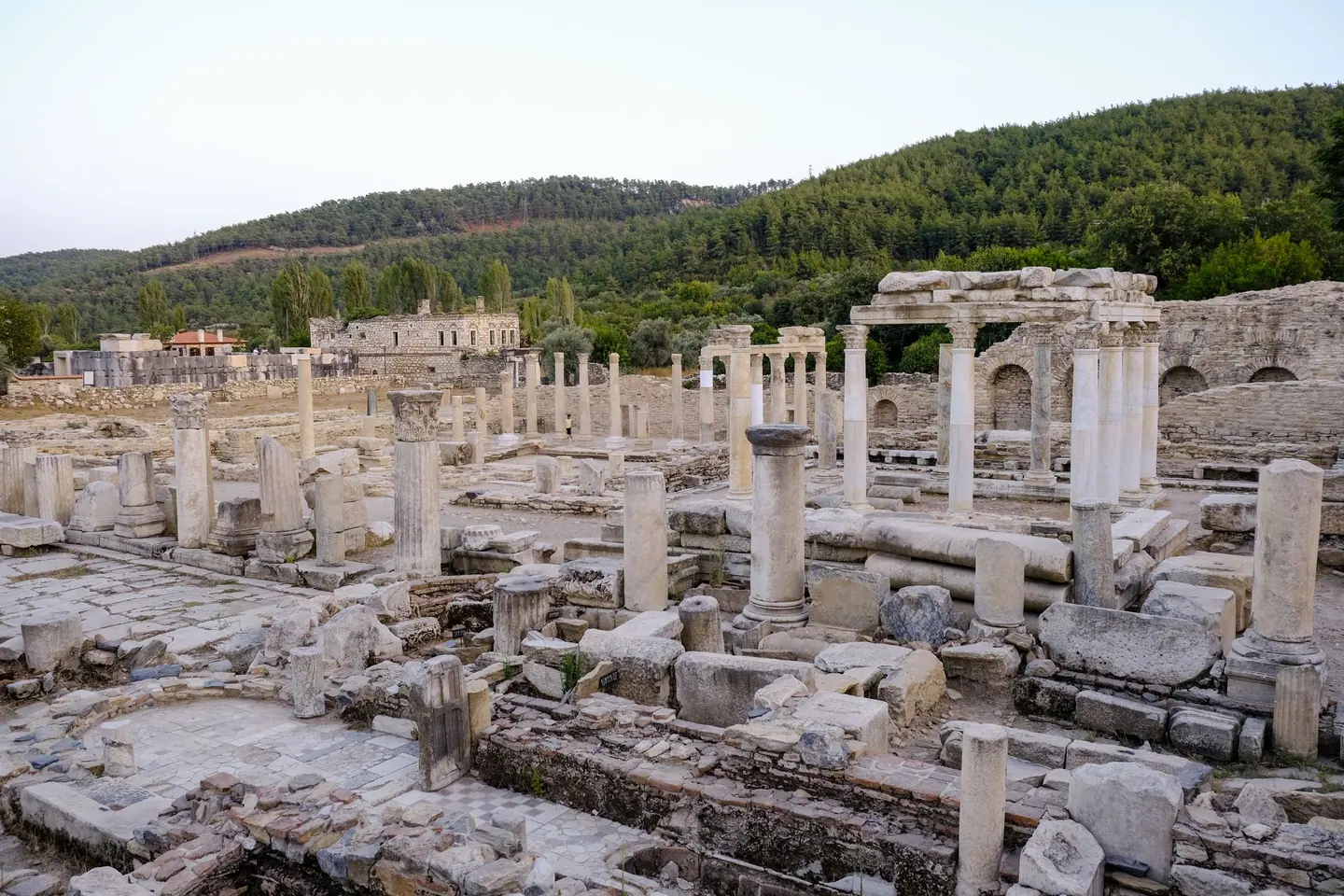
Mausoleum at Halicarnassus, Ancient Theatre & Myndos Gate
Mausoleum at Halicarnassus Open-Air Site & Amazon Frieze Casts, Tepecik Mosque, Bodrum Maritime Museum Gulet Models & Seashells, Zeki Müren Arts Museum, Ancient Theatre of Halicarnassus overlooking the Bay, Myndos Gate & Siege Trenches of Alexander the Great (334 BC), and Pedasa Lelegian Citadel
Mausoleum at Halicarnassus Open-Air Site
Commissioned for the Carian ruler Mausolus and completed around 350 BC, this grand tomb gave rise to the term mausoleum. Today, visitors explore the sunken foundation pits, rock-cut burial chambers, and fallen architectural drums. The surrounding exhibition hall displays casts of original sculptural reliefs, providing context for the monument dismantled by crusader knights for fortress building material.
Ancient Theatre of Halicarnassus
Constructed during the fourth century BC under Mausolus and enlarged by the Romans, this stone theatre accommodated around thirteen thousand spectators. The cavea retains rows of marble seats offering panoramic views across the town harbour. We can inspect the surviving stone stage foundations and inscribed stones that mark original seating zones reserved for local notables.
Myndos Gate
This fortified stone gateway formed the principal western gatehouse in the seven-kilometre defensive wall erected by Mausolus. In 334 BC, the stronghold resisted a fierce assault by the army of Alexander the Great before eventually falling. Modern archaeological excavations revealed deep siege trenches alongside the two rectangular stone towers that once guarded the roadway to ancient Myndos.
Pedasa Antique City
Dating back to the first millennium BC, Pedasa served as the chief citadel of the indigenous Lelegian civilization before Mausolus relocated the population. The site features dry-stone perimeter walls, tumulus tombs, and an inner acropolis perched on a rocky summit. Travellers walking along the waymarked trails can observe primitive circular stone dwellings and Hellenistic religious foundations.
Bodrum Maritime Museum
Located in the town centre, this specialized museum presents detailed scale models of traditional Aegean wooden vessels, including traditional gulets and tirhandils. The upper level houses the extensive Hasan Güleşçi seashell collection, containing thousands of marine specimens from around the globe. Displays outline the arduous twentieth-century trade of deep-sea sponge divers who shaped the maritime identity of the port.
Zeki Müren Arts Museum
This two-storey seaside villa served as the final home of classical singer and entertainer Zeki Müren before his death in 1996. Converted into a memorial museum, the rooms preserve his personal furnishings, stage costumes, and private letters. Visitors can view his customized car in the garden alongside original paintings created by the artist during his retirement.
Tepecik Mosque
Erected in the eighteenth century by Mustafa Pasha, an Ottoman naval commander, this small mosque stands directly beside the western port quayside. Its whitewashed stone walls, pitched tiled roof, and single slender minaret reflect classic Aegean coastal religious architecture. The quiet courtyard shaded by plane trees provides a tranquil pause along the busy promenade.
Kızılhisarlı Mustafa Pasha Mosque
Commissioned in 1723 by the regional Ottoman governor, this compact place of worship features a simple square prayer hall topped with a tiled hip roof. The structure was constructed using local limestone, with a single minaret rising from its southwest corner. Its location near the medieval castle entrance makes it an established landmark within the historic harbour square.
Bodrum Old Town Bazaar
Stretching inland from the marina, this pedestrianized market district preserves the traditional domestic architecture of the former fishing settlement. Narrow alleys feature stone houses dressed in purple bougainvillaea, housing traders offering handcrafted leather sandals, woven textiles, and Aegean olive oil soaps. Walking through these shaded lanes reveals how the historic street pattern developed alongside the harbour trade.
Türkkuyusu Mosque
Constructed in 1738, this neighbourhood mosque anchors one of the earliest Ottoman residential areas established away from the shoreline. The building exhibits unadorned stone masonry, timber lintels, and an open exterior porch typical of southwestern Anatolian provincial architecture. A modest courtyard fountain and low boundary walls separate the prayer hall from the residential streets.
Windmills of Bodrum
Constructed of rough limestone masonry in the eighteenth century, these circular towers operated until the 1970s to grind grain using coastal breezes. The hilltop ridge offers unobstructed views of Bodrum Bay to the east and Gümbet Bay to the west. While several mills now stand roofless, their surviving stone shells serve as reminders of regional agricultural industry.
Ottoman Shipyard Tower
Established in 1775 to replace Ottoman naval vessels destroyed during the Battle of Chesma, this fortified yard produced war galleons for imperial service. The surviving stone tower guarded the shipyard entrance and now functions as an art gallery venue surrounded by grave markers of former commanders. Today the adjacent grounds have been transformed into a public garden adjoining the marina.
Tomb of Salmakis
Located near the base of Kaplan Castle hill, this Hellenistic rock-cut burial chamber is associated with the ancient district of Salmakis. In antiquity, the nearby spring was celebrated by classical poets such as Ovid for its mythological transformative properties. Archaeological surveys here revealed fine chamber architecture cut directly into the native bedrock above the harbour mouth.
French Tower of Bodrum Castle
Erected in the early fifteenth century by French knights, this prominent rectangular redoubt crowns the upper courtyard of the harbour citadel. The exterior masonry displays carved heraldic shields representing noble French families who funded the fortification work. The interior chambers now display bronze and ceramic artefacts recovered from Bronze Age underwater shipwrecks excavated along the Turkish coast.
English Tower of Bodrum Castle
Built during the reign of King Henry IV around 1413, this stone tower anchored the southeastern defenses facing open water. Over the main portal, visitors can see the carved royal arms of England alongside the shields of contemporary English noblemen. Inside, the grand vaulted refectory is styled with heavy oak tables and decorative standards to recreate a medieval hall.
Chapel of the Knights Hospitaller
Constructed by the Knights of Saint John between 1406 and 1437, this vaulted hall exhibits pointed Gothic arches and stone vaulting. After the Ottoman conquest in 1523, a minaret was added to convert the structure into a garrison mosque. Today, the carefully conserved building displays reconstructions of prehistoric and classical ship hulls salvaged by marine archaeologists.
Ulukapı Wall Remains
These stone wall fragments formed part of the monumental circuit constructed in the fourth century BC to surround Halicarnassus. The masonry demonstrates classical Greek isodomic construction methods, utilizing finely cut ashlar blocks laid without mortar. Walking along these northern slopes allows visitors to trace the massive scale of civic engineering planned by the Hecatomnid dynasty.
Görünmez Mosque
Bearing a name that translates as the Invisible Mosque due to its location hemmed in by residential walls, this historic building dates from the Ottoman period. Its modest floor plan features thick stone walls, a low wooden ceiling, and simple arched windows. The surrounding flagstone courtyard provides a quiet refuge within the commercial heart of town.
Bodrum Ancient Rock Tombs
Carved into the natural limestone bluffs above the ancient theatre, these rock-cut tombs served the ruling elite of ancient Halicarnassus. The facades feature recessed rectangular doorways that open into modest square funeral chambers with stone-cut benches. Their elevated position offered the departed elite eternal oversight across the urban centre and Mediterranean shipping lanes.
Kumbahçe Beach Promenade
Running along the eastern shoreline, this pebble promenade offers clear lines of sight toward the sea-facing ramparts of the fortress. Historically populated by Greek and Turkish fishermen, the area retains rows of flat-roofed stone houses painted white with blue trim. The walkway provides an unobstructed vantage for studying how the town grew between its twin anchorages.
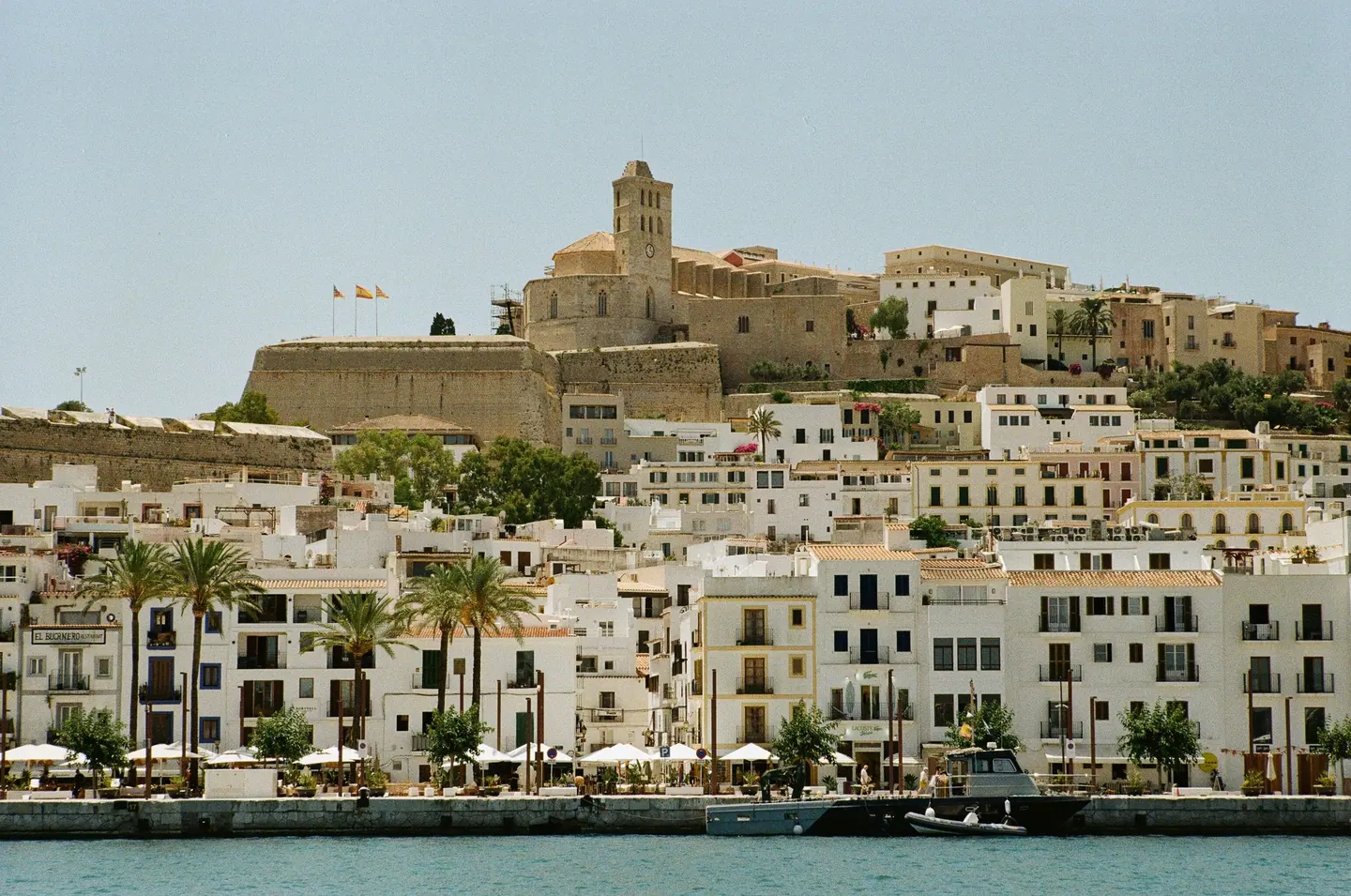
Bodrum Marina, Windmills ridge, Bardakçı & Bitez
Milta Bodrum Marina & Ottoman Shipyard Tower, Neyzen Tevfik Promenade, Haremtan Ridge 18th-Century Stone Windmills between Bodrum and Gümbet, Bardakçı Cove, Bitez Mandarin Orchards & Bay, and Ortakent Yahşi
Milta Bodrum Marina
Operating since the mid twentieth century along the western shoreline, this harbour transformed the local maritime economy from sponge diving to international sailing. Visitors walking the quayside can observe traditional wooden gulets alongside modern yachts, backed by maritime agencies, ship chandlers, and open air terraces that trace the arc of the historic western port.
Ottoman Shipyard Tower
Commissioned in 1775 to replenish the Ottoman fleet following the Battle of Chesma, this fortified stone watchtower defended the naval shipbuilders from seaward raids. The ground floor now hosts art exhibitions, while the defensive parapet offers sweeping perspectives over the dry docks and the sheltered waters of the western harbour basin.
Ottoman Shipyard Cemetery
Adjacent to the old naval works, this tranquil plot preserves the carved marble gravestones of naval officers, shipwrights, and regional dignitaries spanning the late eighteenth and nineteenth centuries. The turban-topped stelae feature ornate Ottoman Turkish calligraphy recording maritime appointments and prayers for sailors lost in Aegean campaigns.
Tomb of Cafer Pasha
Located within the historic shipyard enclosure, this modest cubic mausoleum enshrines the Ottoman naval commander Cafer Pasha, who oversaw the fortification of the harbour. The structure exhibits classic provincial Ottoman stonework, featuring a whitewashed masonry base topped by an arched cornice and an octagonal drum that supports a tiled dome.
Neyzen Tevfik Promenade
Named after the Bodrum-born poet and ney virtuoso Neyzen Tevfik Kolaylı, this waterfront boulevard links the marina to the town centre. Lined with palms, restored stone fishermen cottages, and traditional seafood restaurants, the promenade provides a pleasant pedestrian corridor with continuous views of the medieval castle across the bay.
Neyzen Tevfik Statue
Erected near the entrance to the marina, this life-sized bronze sculpture depicts the bohemian satirist seated with his beloved end-blown reed flute. Created by Turkish sculptors to honour his rebellious philosophy and musical legacy, the monument serves as a central meeting point along the western quayside.
Tepecik Mosque
Constructed in 1738 by Mustafa Pasha, this whitewashed waterfront mosque features a square prayer hall covered by a tiled hip roof and a slender minaret. Sailors historically offered prayers here before embarking on maritime voyages, and its compact interior retains traditional timber ceilings and hand-painted calligraphic medallions.
Bodrum Windmills
Perched along the exposed spine of Haremtan Hill separating Bodrum from Gümbet, these round rubble-stone structures ground grain for regional bakers from the eighteenth to the mid twentieth century. Today, seven weathered masonry towers stand against the skyline, providing visitors with commanding vistas over both bays and the open Aegean.
Haremtan Hill Viewpoint
This wind-swept limestone ridge affords dual panoramas across the Bodrum harbour basin to the east and the sweeping crescent of Gümbet Bay to the west. On clear days travellers can trace the outline of Kos across the sea, making it an essential geographical vantage point along the peninsula.
Bardakçı Cove
Enclosed by steep hillsides just west of the marina, this sandy cove was historically known as the location of the mythical Salmacis spring recorded by Ovid. Small wooden water taxis ferry passengers directly from the town harbour into this calm inlet, which is bounded by rocky promontories and sea-facing hotels.
Salmacis Spring Site
Excavations along the cliffs of Bardakçı uncovered traces of the ancient fountain house that ancient writers claimed possessed properties to soften the temperament of men. In 1995, archaeologists discovered a substantial Greek inscription on a stone wall here, cataloguing the legendary foundation myths and poetic history of Halicarnassus.
Gümbet Bay
Named after the white domed Ottoman rainwater reservoirs that dot the surrounding landscape, this shallow crescent bay developed from farmland into a lively seaside resort. The curving shoreline features long public beaches, wooden jetties, and water sports operations, framed on its eastern shoulder by the historic windmill ridge.
Gümbet Ottoman Cistern
These vernacular structures, known locally as kümbet, were built across the peninsula by Ottoman pastoralists to collect and preserve winter rainwater for herds. Characterised by thick mortared rubble walls and hemispherical domes, this preserved example demonstrates the ingenious water management methods developed for the arid Mediterranean terrain.
Bitez Bay
Positioned west of Gümbet, this tranquil bay offers a sheltered anchorage that attracts windsurfers and traditional wooden boat builders alike. The tree-lined promenade follows the curve of the shoreline, backed by citrus groves and seaside cafes that preserve a slower pace than the adjacent urban centres.
Bitez Mandarin Orchards
Spread across the fertile inland valley behind the coast, these traditional orchards preserve the legacy of the aromatic Mediterranean mandarin introduced here in the 1930s. The groves are criss-crossed by stone irrigation channels and dry-stone walls, offering a rare glimpse into the peninsula before the onset of modern tourism.
Bitez Old Village
Originally established away from the coast to avoid pirate raids, the old village core contains historic stone dwellings shaded by eucalyptus, bougainvillea, and fig trees. Travellers can observe classic Aegean cubic masonry, traditional tea houses around the village square, and small family workshops processing local citrus preserves and olive oil.
Ortakent Tower House
Known locally as the Mustafa Pasha Kulesi, this three-storey defensive residential tower was erected in 1601 to guard against Aegean pirate incursions. Featuring exceptionally thick stone walls, machicolations, narrow arrow slits, and a heavy defensive door, the structure represents the oldest intact secular domestic fortress on the peninsula.
Ortakent Village Square
Serving as the administrative and cultural heart of the central peninsula, this open square is shaded by centuries-old plane trees. Around the perimeter stand whitewashed stone municipal buildings and open market stalls where local farmers gather weekly to trade fresh produce, wild herbs, and regional cheeses.
Yahşi Beach
Forming the maritime front of the combined Ortakent-Yahşi municipality, this elongated beach is renowned for its crystalline waters and gentle maritime currents. The shore faces south toward the open Aegean, lined with traditional wooden jetties, family-run fish tavernas, and gardens of oleander and tamarisk.
Camel Beach
Located near the Kargı promontory, this natural sand bay retains broad sand dunes bordered by coastal scrub and fig trees. The beach historically served as a rest stop for inland camel caravans transporting agricultural cargo across the rugged peninsula towards the southern anchorages.
Gümüşlük (Ancient Myndos), Yalıkavak & Northern Peninsula
Turgutreis Sunset Islands View, Kadıkalesi, Gümüşlük Rabbit Island (Tavşan Adası) Submerged Causeway of Ancient Myndos, Karakaya 16th-Century Stone Village, Yalıkavak Windmills & Marina, Küdür Peninsula Seals Cove, Gündoğan Peynir Çiçeği Cave, and Göltürkbükü
Turgutreis Sunset Point
Positioned on the westernmost tip of the peninsula, this waterfront promenade faces the Greek island of Kos and surrounding islets. The location commemorates Ottoman admiral Turgut Reis, who was born nearby in the sixteenth century. Visitors gather along the paved seawall to observe shifting evening light across maritime channels.
Kadıkalesi Hellenistic Watchtower
Perched on a low coastal hill, Kadıkalesi preserves the remnants of a Lelegian and Hellenistic watchtower later fortified by Byzantine garrisons. Massive ashlar masonry blocks and fragmented rubble walls reflect centuries of defensive adaptations against naval raids. The elevated platform provides direct visual command over the strait dividing Anatolia from Kalymnos.
Ancient Myndos City Walls
Constructed under the direction of the Carian satrap Mausolus, these defensive lines guarded the relocated harbour settlement of Myndos. Excavated sectors reveal dry stone masonry, square bastions, and foundation courses cut directly into bedrock ridges. Walking along the hillside ridges, travellers can trace the strategic perimeter that once repulsed Alexander the Great.
Rabbit Island Submerged Causeway
Submerged beneath shallow coastal waters, this ancient stone mole served as both a harbour breakwater and pedestrian causeway during antiquity. Masonry foundations survive beneath the waterline, allowing visitors to wade across the seabed towards the rocky islet. Ongoing underwater archaeological surveys continue to map harbour installations and early Christian remnants on the island.
Tavşan Adası Byzantine Basilica
Excavations on the summit of Tavşan Adası have brought to light the ground plan of an early Byzantine ecclesiastical complex. Low marble columns, floor mosaics, and lime-mortared apse walls reveal the religious importance of the site following the Roman era. The windswept islet commands panoramic views over both the outer bay and inner sheltered anchorages.
Gümüşlük Historic Harbour
This horseshoe-shaped bay occupies the inner port basin of ancient Myndos, sheltered from northerly Aegean gales by surrounding headlands. Sections of antiquity quays remain visible just under the water line along the eastern shore. Small traditional wooden boats still moor against waterfront piers where archaeological relics rest integrated into local garden walls.
Karakaya Historic Village
Erected hundreds of metres above sea level to evade pirate incursions, Karakaya features stone vernacular houses dating from the sixteenth century. The buildings incorporate thick defensive walls, flat earth roofs, and small embrasure windows blended into the surrounding rocky terrain. Cobbled pedestrian paths connect derelict cottages with sensitively restored dwellings overlooking the Aegean coast.
Karakaya Ridge Viewpoint
Situated on a rugged limestone crest above Karakaya village, this high vantage point surveys the western rim of the Bodrum Peninsula. Dense macchia, ancient terrace walls, and scattered fig trees cover the steep slopes leading down to the shore. From this position, observers can follow old Lelegian walking tracks running across rocky mountain spines.
Yalıkavak Old Stone Windmills
These round masonry towers were built in the nineteenth century to harness constant northerly winds for grinding regional wheat and barley crops. Constructed of local limestone rubble and timber machinery, one of the primary mills near the shoreline has undergone full conservation. The site demonstrates historical agrarian technology and maritime wind patterns that defined peninsula life.
Yalıkavak Marina Public Promenade
Redeveloped across the former sponge-fishing harbour, this marina precinct hosts international maritime vessels along engineered quays. Paved open walkways offer vantage points over luxury schooners, visiting superyachts, and surrounding granite hills. The promenade incorporates contemporary architectural pavilions, civic sculpture, and unobstructed vistas across the wider gulf towards Didim.
Küdür Peninsula Mediterranean Monk Seal Cove
The Küdür headland comprises an undisturbed nature reserve bordered by volcanic rock formations and pocket gravel beaches. Submerged sea caves along its jagged perimeter serve as documented resting areas for endangered Mediterranean monk seals. Footpaths across the low scrub lead past ancient shepherd shelters towards clear waters prized for marine observation.
Panormus Ancient Rock Tombs
Facing north across Küdür Cove, these rock-cut funerary monuments date from classical antiquity and reflect Lelegian burial traditions. Rectangular burial niches and chamber facades were hewn directly into coastal limestone outcrops. The tombs demonstrate how ancient inhabitants integrated ritual architecture into prominent shoreline landscapes within maritime view.
Geriş Hilltop Village
Positioned like an eagle nest upon a rocky spine south of Yalıkavak, Geriş preserves whitewashed stone houses and historic windbreaks. Cobbled lanes climb between terraced domestic compounds containing bread ovens and cisterns. The village terrace offers an extraordinary vantage point overlooking both sides of the peninsula during clear weather.
Peynir Çiçeği Cave
Formed within a karst limestone ridge above Gündoğan, Peynir Çiçeği Cave is one of the oldest recorded habitation sites on the peninsula. Archaeological excavations have uncovered Bronze Age ceramic shards and lithic tools amidst dramatic stalactite and stalagmite formations. Natural chambers plunge deep into the hillside, illustrating ancient geological formations and early settlement history.
Gündoğan Rock-Cut Monasteries
Perched on rugged cliffs overlooking Gündoğan Bay, these rock-cut hermitages include early Christian chapel cavities, cisterns, and fresco fragments. Hermits and monks utilised the natural seclusion of the coastal ravines during late antiquity and Byzantine times. Visitors can inspect small rock niches, arched recesses, and carved water-collection channels.
Apostle Island (Küçük Tavşan Adası) Basilica
Reachable by boat from Gündoğan, this small offshore island preserves an extensive sixth-century Byzantine church complex. Restored stone walls, arched doorways, and vaulted side chapels stand among olive trees and scrub vegetation. Architectural surveys reveal a transept basilica plan that served regional pilgrims navigating Aegean maritime routes.
Gölköy Historic Date Palm Reserve
This natural wetland basin behind the shoreline supports a protected population of the Cretan Date Palm, an endemic Mediterranean species. Fed by cold freshwater springs that once sustained ancient settlements, the grove represents a unique ecological microclimate on the peninsula. Boarded pathways permit access through the damp valley without disturbing sensitive root systems.
Ancient Madnasa Ruins
Madnasa was an autonomous Lelegian hill city whose populations were forcibly transferred to Halicarnassus during the reign of Mausolus. The ruined site stands upon a steep acropolis peak, retaining rough cyclopean walls, ruined towers, and cisterns. Hikers tracing the overgrown footpaths encounter monumental gateways and stone burial mounds strewn across the ridge.
Ancient Caryanda Remains
Situated on the headland enclosing the northern bays, Caryanda is celebrated as the ancestral home of the naval explorer and geographer Scylax. Fragmentary rubble walls, foundational footings, and scattered pottery sherds remain visible among coastal scrub. The location commands extensive views across the Gulf of Güllük toward ancient Iasos on the opposite coast.
Türkbükü Bay Pier Promenades
Located in a naturally sheltered inlet along the northern peninsula shore, Türkbükü has evolved from an isolated sponge-diving hamlet into a leisure harbour. Timber piers and boardwalks project across clear shallow waters alongside stone fishermen cottages. The bay provides insight into how traditional coastal communities adapted maritime architecture to coastal leisure.
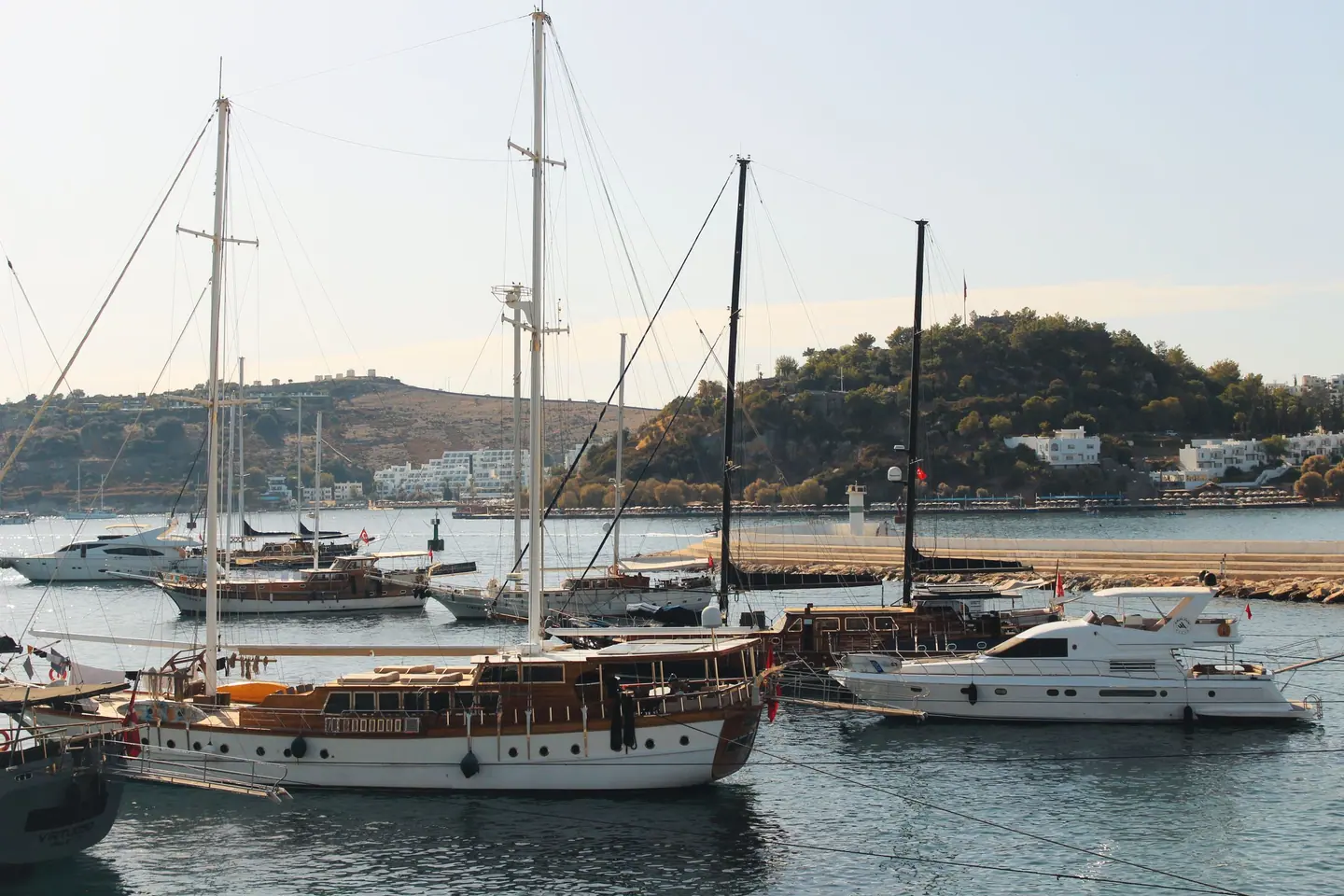
Torba, Mazı, Stratonikeia, Lagina & Euromos
Torba Byzantine Monastery Rotunda, Kissebükü (Anastasiopolis) untouched coastal ruins, Çökertme & Mazı Coves, Etrim Carpet Weaving Village, Euromos Temple of Zeus Lepsynos, Milas Beçin Castle, Labraunda Sanctuary, and Stratonikeia Marble City of Gladiators
Torba Byzantine Monastery
Situated on a quiet knoll along the eastern edge of Torba Bay, this fifth-century Byzantine monastic complex centres on an unusual circular rotunda. Surviving fragments reveal portions of fine floor mosaics, a baptistery basin and perimeter walls constructed from local limestone. Visitors can observe how religious architecture evolved on the northern coast during late antiquity.
Kissebükü Bay Ruins (Anastasiopolis)
Set along a secluded inlet east of Bodrum, Kissebükü preserves the crumbling remains of the Byzantine seaside settlement of Anastasiopolis. The site features a prominent fifth-century three-aisled basilica, coastal bathhouses and weathered stone quays facing the Gulf of Gökova. Dense olive groves shelter decorative lintels and architraves resting directly above the shoreline.
Mazı Coastline
Mazı comprises a series of coastal indentations on the southern fringe of the Bodrum Peninsula, notable for steep maritime topography and rural charm. The coastal hamlets retain traditional stone houses, fishing jetties and dry-stone terraces adapted to the sloping terrain. We recommend exploring the headlands where pine forests terminate abruptly at rocky shores.
Çökertme Bay
Çökertme is an ancient anchorage along the Gökova coastline celebrated in regional Aegean folklore. Small wooden jetties and seaside stone houses frame a tranquil beach sheltered from northern meltemi winds. Hikers often follow coastal tracks around the headland to view natural rock formations and remnants of ancient agricultural terraces.
Etrim Village
Situated inland among olive-covered hills, Etrim preserves centurylong traditions of hand-knotted Milas and nomadic rug weaving. Local artisans spin wool, collect botanical dyes from surrounding hills and work wooden floor looms in family courtyards. The settlement showcases dry-stone domestic architecture and communal ovens typical of historic Karian rural communities.
Stratonikeia City of Gladiators
Stratonikeia ranks among the most extensive marble-built classical cities in Asia Minor, famous for its association with trained Roman gladiators. Visitors walk down a monumental colonnaded street that integrates an ancient gymnasium, theatre and council house beneath an abandoned Ottoman village. Excavated gladiatorial tombstones and relief inscriptions line the monumental northern gate.
Stratonikeia Roman Gymnasium
Constructed in the second century AD, this athletic facility is considered one of the largest classical gymnasiums in Anatolia. Impressive rows of monolithic columns, stone palaestra benches and vaulted training rooms demonstrate Roman civic investment in youth education. Architectural inscriptions cut into the limestone blocks document the names of ancient competitors.
Stratonikeia Bouleuterion
The council house of Stratonikeia occupies a central position within the ancient agora and retains semicircular tiers of stone seating. Its exterior south wall bears a rare, extensive Latin inscription reproducing the Price Edict issued by Emperor Diocletian in 301 AD. The monument illustrates the enduring administrative importance of the city under Imperial Rome.
Stratonikeia Hellenistic Theatre
Carved into the natural slope of Kadıkulesi Hill, this Hellenistic theatre could accommodate approximately ten thousand spectators. The lower cavea tiers remain largely intact, showcasing fine stonework, drainage channels and radial staircases that lead down to the orchestra. The upper rim provides panoramic vistas over the archaeological zone and the abandoned stone village.
Şaban Ağa Mosque at Stratonikeia
Constructed in the nineteenth century atop earlier Seljuk and Ottoman foundations, this mosque embodies the stratified heritage of Stratonikeia. It features a timber-supported portico, an elegant stone minaret and interior woodwork decorated with floral motifs. Roman column drums and carved marble lintels were repurposed throughout its perimeter courtyard walls.
Sanctuary of Hekate at Lagina
Lagina served as the central cult site for Hekate, drawing pilgrims along a sacred paved road from nearby Stratonikeia. The sanctuary centres on a fourth-century BC pseudodipteral temple surrounded by a monumental propylaea and extensive altar terraces. Modern visitors can inspect standing column bases and carved frieze fragments displayed across the clearing.
Sacred Way between Stratonikeia and Lagina
This eleven-kilometre stone thoroughfare once accommodated elaborate religious processions and key-bearing ceremonies held in honour of Hekate. Extant sections wind through rural landscapes, revealing classical paving stones, ancient kerbs and remnants of accompanying necropolises. Walking these historical tracks offers tangible insight into Karian religious practices.
Temple of Zeus Lepsynos at Euromos
Euromos preserves one of the finest classical temples in Anatolia, dedicated to the local god Zeus Lepsynos during the reign of Emperor Hadrian. Sixteen elegant Corinthian columns still stand erect, many displaying dedicatory tablets inscribed with the names of prominent citizens who financed them. The site includes adjacent remains of an agora and defensive wall.
Euromos Ancient Theatre
Positioned on the hill slope just northeast of the Temple of Zeus, this ancient theatre remains partially exposed through archaeological clearance. Tiers of limestone seating follow the natural terrain, looking out over the plain of Milas and neighbouring ancient olive groves. Architectural fragments from the stage building lie strewn across the lower orchestra area.
Beçin Castle
Perched on a precipitous limestone cliff overlooking the Milas plain, Beçin Castle served as the capital of the Menteşe principality. The fortified plateau encompasses substantial perimeter curtain walls, a monumental gatehouse, a hamam complex and the Kizil Han caravanserai. Archaeological work continues to reveal domestic quarters from late medieval times.
Ahmed Gazi Madrasa at Beçin
Erected in 1375 by the Menteşe ruler Ahmed Gazi, this stone madrasa represents a major achievement of fourteenth-century Turkish architecture in Western Anatolia. The building features an open central courtyard surrounded by vaulted student cells, flanked by a monumental Gothic-arched portal displaying two carved heraldic lions. The founder's tomb lies within the domed south chamber.
Gümüşkesen Roman Tomb Monument
Located in neighbouring Milas, Gümüşkesen is a remarkably preserved second-century AD funerary monument crafted entirely from local grey-veined marble. The structure consists of a square burial vault supporting an open peristyle gallery crowned by a pyramid roof with elaborate coffered stone ceilings. Historians consider it a miniature replica of the lost Mausoleum of Halicarnassus.
Baltalıkapı Roman Gateway
Baltalıkapı represents the primary surviving gateway of the ancient Mylasa fortifications, constructed during the Roman Imperial period. The marble arch features a distinctive double-bladed labrys axe carved in relief on the outer keystone, signifying the cult of Zeus Labraundos. It provides a direct link between classical urban fortifications and the religious sanctuary located uphill.
Labraunda Sanctuary of Zeus Stratios
Labraunda occupies dramatic terraces high in the mountains above Milas, accessible in antiquity by an eight-metre-wide paved sacred way. The sanctuary contains an Ionic temple of Zeus Stratios, monumental banquet halls known as andrones, an ancient stadium and royal tomb chambers. The site illustrates the distinctive architectural patronage of the Hekatomnid rulers.
Andron of Maussollos at Labraunda
Built during the fourth century BC by Maussollos of Caria, this monumental banqueting hall survives to nearly its original roofline. Constructed with fine ashlar masonry, the structure retains marble window frames designed to admit mountain breezes during religious feasts. Inscribed dedications in ancient Greek remain visible along the architrave above the entrance.
Peninsula Bays and Inland Carian Sanctuaries from Bodrum
Our main Bodrum guide covers airport arrivals, neighbourhood bases and multi-day pacing to complement this walk; see also our full collection of city route guides.