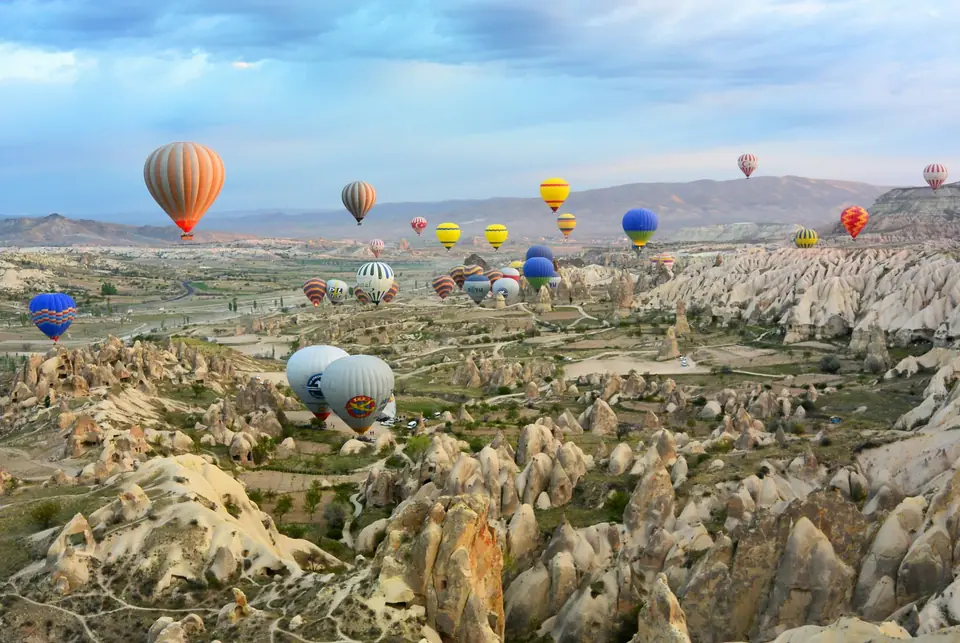
A 100-stop regional route across Cappadocia, linking Byzantine frescoed cave churches, volcanic fairy chimney valleys, rock-cut citadels, and multi-level underground cities.
Volcanic Tuff Eruptions, Hittite Refuges and Byzantine Monastic Valleys
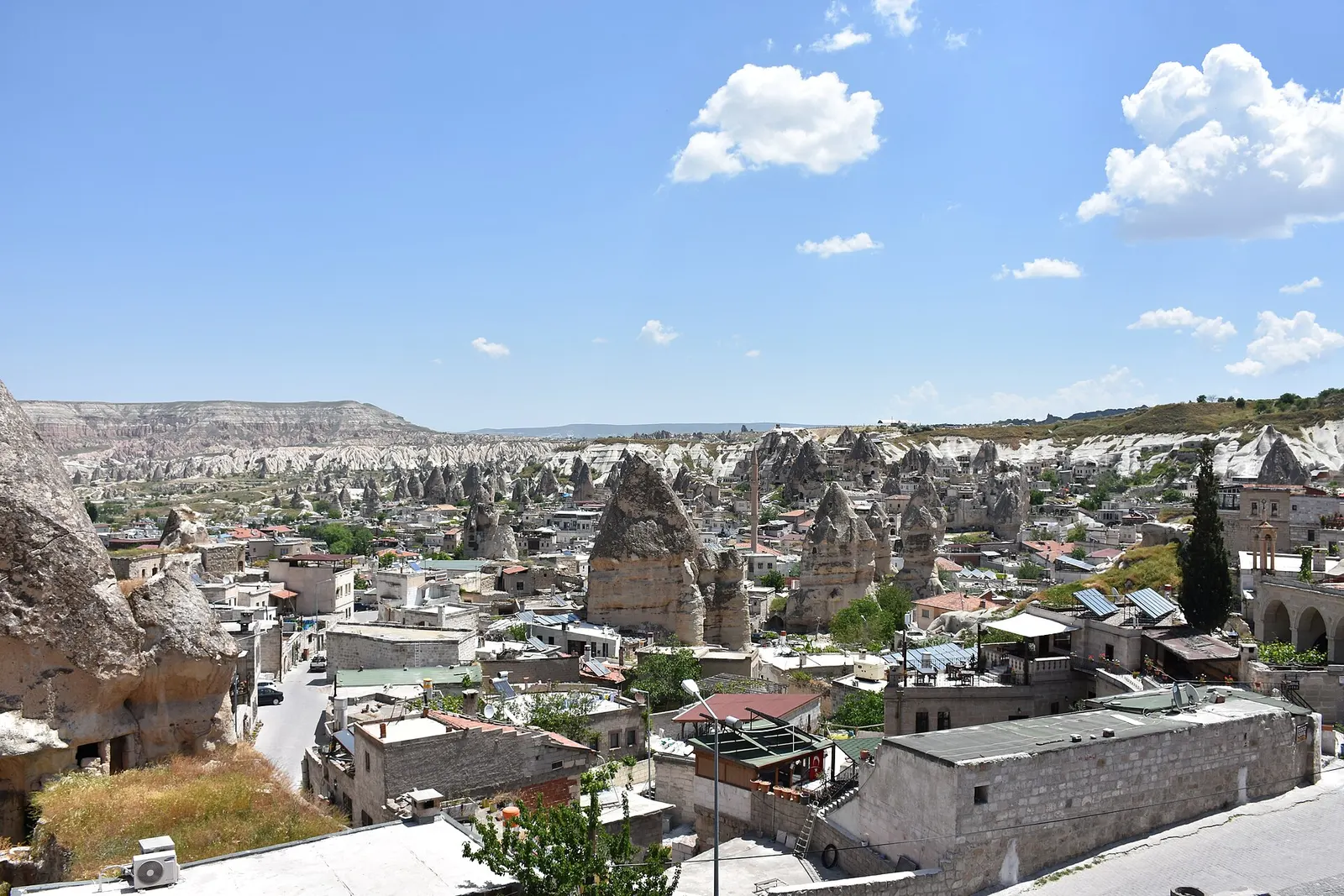
Millions of years ago, eruptions from Mount Erciyes, Mount Hasan, and Mount Güllüdağ blanketed central Anatolia in thick layers of soft volcanic tuff capped by harder basalt. Wind and rainwater carved this plateau into cones, pillars, and labyrinthine canyons. From the Bronze Age Hittite Empire onward, inhabitants hollowed the soft stone into homes, granaries, and subterranean refuges capable of sheltering thousands of people during raids.
Between the fourth and thirteenth centuries, Cappadocia became a centre of Byzantine monasticism spearheaded by St Basil the Great of Caesarea. Monks excavated hundreds of columned rock churches and monasteries into the cliffs of Göreme, Zelve, and Soğanlı, painting their vaults with luminous frescoes that survived alongside Seljuk caravanserais along the Anatolian Silk Road.
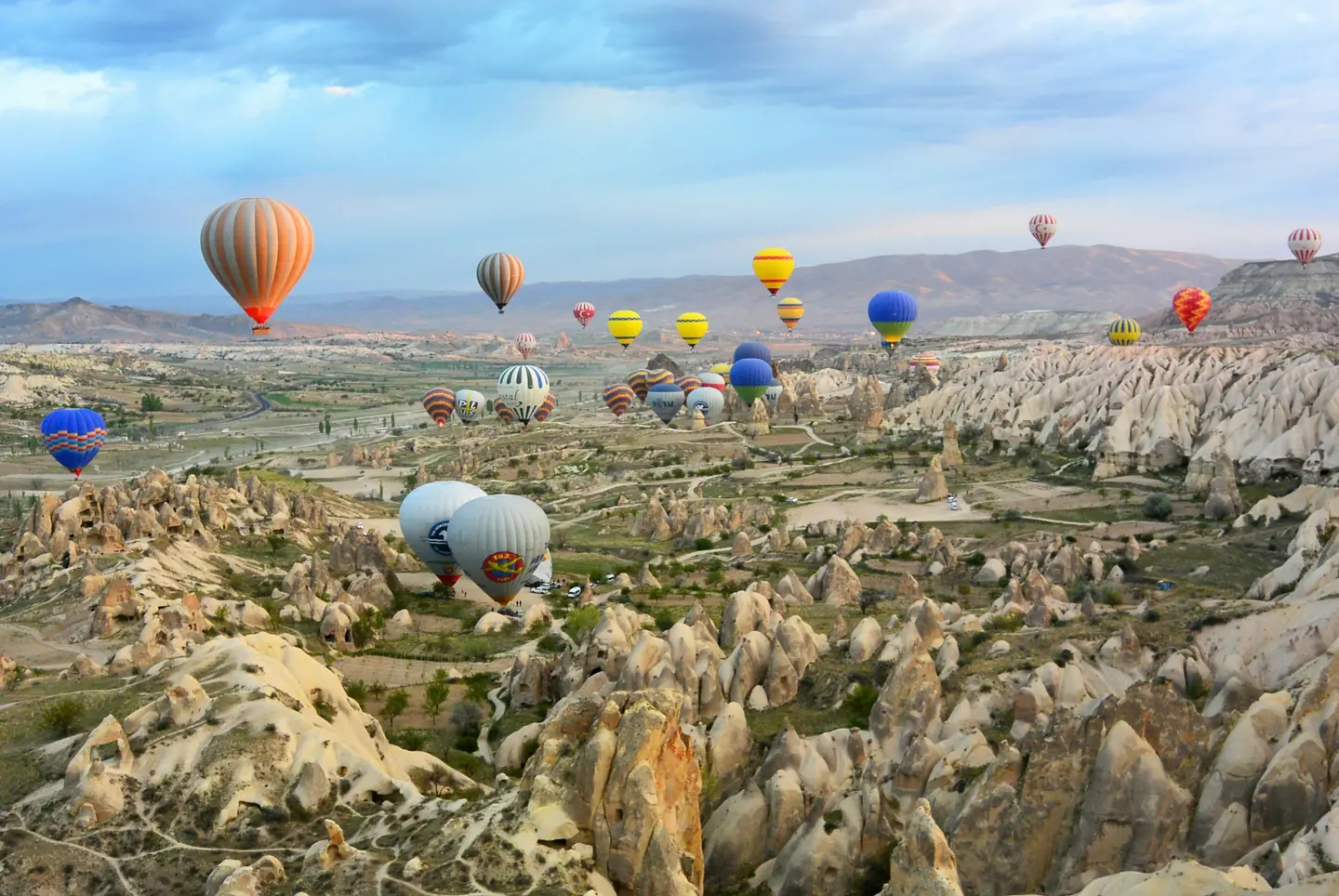
Göreme Open-Air Museum, Red Valley & Rose Valley
Göreme Open-Air Museum, Dark Church Karanlık Kilise, Tokalı Church, Apple Church, Chapel of St Basil, Sunset Point Göreme, Love Valley, Rose Valley, and Red Valley
Göreme Open-Air Museum
This complex served as an important monastic centre from the fourth century onward. We observe numerous rock-hewn refectories, living quarters, and chapels carved into soft volcanic tuff. The surviving frescoes demonstrate the shift from Iconoclastic geometric motifs to detailed narrative cycles depicting the life of Christ.
Dark Church (Karanlık Kilise)
Dating from the mid-eleventh century, this domed cave church received very little natural light through a small aperture in the narthex. As a result, the pigments retained their vivid blue and gold tones over centuries. The dome frescoes depict the Christ Pantocrator, surrounded by archangels and key Gospel scenes.
Tokalı Church (Buckle Church)
Standing outside the main museum enclosure, this is the largest rock-cut church in Göreme. It features four distinct chambers: the Old Church, the New Church, the Parakklesion, and the Lower Church. The vault of the tenth-century New Church showcases narrative cycles executed with costly lapis lazuli pigments.
Apple Church (Elmalı Kilise)
Constructed around the eleventh or twelfth century, this compact sanctuary features four columns supporting central and corner domes. The interior displays red geometric patterns overlaid with figurative frescoes of the Archangel Gabriel holding an orb, which locals often interpreted as an apple. The central dome presents Christ Pantocrator.
Chapel of St Basil
Carved into the cliff near the museum entrance, this rectangular barrel-vaulted chapel honours Saint Basil of Caesarea, who established monastic rules across the region. Several burial niches line the nave floor and walls. The painted decorations include geometric crosses, Saint George slaying the dragon, and an image of the Virgin.
Church of St Barbara
Dating to the late eleventh century, this cruciform chapel honours the martyr Saint Barbara. The walls are covered in red-ochre paint applied directly to the stone, rather than onto wet plaster. Visitors see unusual geometric shapes, mythological beasts, and an oversized rooster thought to carry apotropaic significance.
Snake Church (Yılanlı Kilise)
This low-ceilinged chapel takes its popular name from a fresco portraying Saint George and Saint Theodore striking a serpentine dragon. Further along the north wall, travellers can examine portraits of Emperor Constantine and Empress Helena holding the True Cross, alongside an unusual depiction of the hermit Saint Onuphrius.
Sandals Church (Çarıklı Kilise)
Carved high into the rock face, this eleventh-century church is named after two hollows in the floor beneath the Ascension fresco, believed by early pilgrims to mirror Christ's footprints. The four cross vaults contain well-preserved scenes of the Passion, the Crucifixion, and the Nativity painted in classic Comnenian style.
Monastery of the Nuns (Kızlar Manastırı)
Rising six storeys above the museum grounds, this rock mass served as a convent for female monastics. Millstone doors secured the lower levels against raiders, while tunnels connected a dining hall, kitchen, and upper chapels. Although upper floors are closed for safety, the exterior illustrates regional defensive rock engineering.
St Catherine Chapel
Constructed in the eleventh century by a donor named Anna, this church has a cruciform nave with a barrel vault and a central dome. It served largely as a burial chapel, evident from nine graves cut into the narthex floor. The surviving frescoes portray Saint Catherine of Alexandria alongside Gospel scenes.
Kılıçlar Church (Church of the Swords)
Situated just north of the museum road, this cruciform church retains a four-column design with a distinct central dome. Its walls contain one of the most comprehensive narrative fresco cycles in the district, covering thirty-three scenes from the life of the Virgin and Christ, painted prior to the Seljuk era.
Swords Valley (Kılıçlar Vadisi)
Running between Göreme village and Çavuşin, this narrow gorge contains steep, dagger-like fairy chimneys created by wind and water erosion through volcanic tuff. Ancient farmers carved dovecotes and aqueducts into the cliffs, while hermit monks built hidden dwellings that remain accessible via rugged walking tracks along the valley floor.
Aynalı Church (Mirrored Church)
Located in the Zemi drainage north of the museum, this tenth-century complex features red-painted vaults and polished plaster walls that gave the site its name. The interior includes a sizable church, secret escape tunnels, and large storerooms that demonstrate how monastic communities combined communal worship with defensive grain storage.
Sunset Point Göreme (Aydın Kırağı)
Positioned immediately above Göreme village, this high ridge offers panoramic vantage points across the eroded tuff plateaus. We observe the transitions between modern settlements, fairy chimneys, and distant volcanic peaks like Mount Erciyes. Early morning and late afternoon light accentuates the layered mineral strata across the valleys.
Love Valley (Bağlıdere)
Officially known as Bağlıdere, this canyon features some of the tallest freestanding rock columns in Central Anatolia. The pillars formed through differential erosion, where hard basalt or ignimbrite caps shielded softer volcanic ash below. Walking trails weave through orchards of apricots and walnuts planted within the fertile valley silt.
Rose Valley (Güllüdere Vadisi)
This branching canyon takes its name from pinkish-red iron oxide sediments that change hue depending on daylight angles. Monks established small agricultural settlements and sanctuaries here, including the Church of the Three Crusaders. The footpath connects traditional terraced vineyards with remote rock facades carved centuries ago.
Church of the Three Crusaders
Tucked away in the upper gullies of Rose Valley, this rock church features an expansive flat ceiling carved with large decorative relief crosses. Dating between the tenth and twelfth centuries, the surviving frescoes depict three military saints, including Saint George. Monastic cells and an adjoining olive or grape press remain intact nearby.
Church of Saint John the Baptist, Çavuşin
Regarded as one of the oldest rock-cut shrines in the region, this cavernous basilica stands atop the old village ridge of Çavuşin. Its expanded nave features monolithic pillars and weathered early Byzantine reliefs. Despite cliff collapses over recent centuries, traces of imperial iconography honouring Saint John the Baptist remain visible.
Red Valley (Kızılçukur Vadisi)
This expansive ravine cuts through layers of reddish volcanic sediment, displaying millions of years of geological deposition. Walking paths follow old aqueducts alongside cultivated vegetable plots. Hand-carved dovecotes high up the canyon walls highlight the historic practice of collecting guano to enrich local agricultural soil.
Columned Church (Kolonlu Kilise)
Located on the lower trails linking Red and Rose Valleys, this eleventh-century chapel features rock-hewn columns imitating traditional stone masonry. The interior contains carved capitals, vaulted ceilings, and niches for sacred vessels. Faded frescoes depict biblical scenes, demonstrating how provincial artisans replicated urban church designs directly within subterranean chambers.
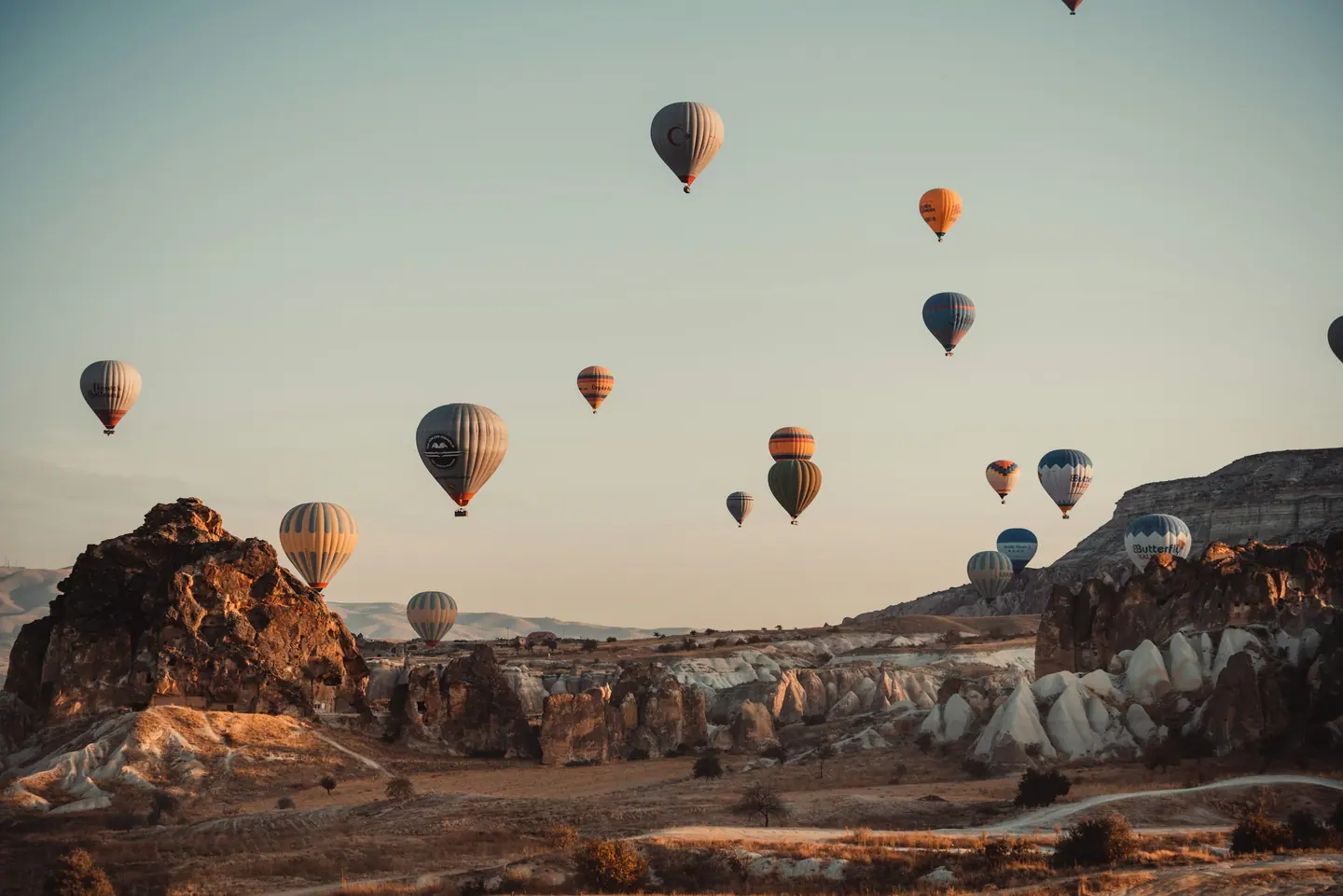
Uçhisar Castle, Pigeon Valley & Çavuşin Village
Uçhisar Castle, Pigeon Valley Güvercinlik Vadisi, Çavuşin Old Village, Church of St John the Baptist Çavuşin, Nicephorus Phocas Church, and Esentepe Panorama
Uçhisar Castle
Carved directly into a volcanic spur, this citadel served as a strategic watchtower and defensive stronghold for centuries. Byzantine soldiers and local villagers excavated subterranean passages, rooms and cisterns throughout the rock face. Visitors climbing the exterior stairs encounter panoramic viewpoints stretching towards Mount Erciyes and Pigeon Valley.
Tığraz Castle
Situated on the lower slopes below the main fortress, this rock-cut bastion represents the second-largest defensive refuge in Uçhisar. The structure descends across seven underground storeys that once sheltered civilian populations during territorial raids. Carved stone doorways, ancient grain storage niches and narrow vertical shafts remain visible along its weathered volcanic facade.
Uçhisar Central Square
This civic open space links the lower residential district with the access pathway leading to the main castle rock. Local stone buildings display the ornate masonry and arched porticos characteristic of nineteenth-century Ottoman vernacular architecture. It serves as an informative starting point for exploring the steep labyrinth of pedestrian alleys weaving through town.
Uçhisar Carpet and Kilim Workshops
Located along the southern approaches of Uçhisar, these artisan ateliers demonstrate centuries-old Anatolian flat-weave textile methods. Craftspeople work on vertical wooden looms using hand-spun wool coloured with madder root, walnut husks and wild chamomile. We can inspect geometric tribal motifs and historic natural dyeing tools displayed inside renovated rock-cut storerooms.
Pigeon Valley Upper Viewpoint
Overlooking the gorge connecting Uçhisar with Göreme, this vantage point exposes dramatic tuff cliffs riddled with ancient avian chambers. Regional farmers carved hundreds of small square niches to harvest pigeon guano, which enriched the arid, nutrient-deficient volcanic soil. Painted red and white geometric designs still decorate several cliff entrances to attract returning flocks.
Pigeon Valley Walking Trail
Running for roughly four kilometres between Uçhisar and Göreme, this pathway traces an ancient agricultural transit route through the canyon floor. The trail passes beneath sheer volcanic ridges lined with wild fruit trees and abandoned cave dwellings. Travellers can observe rock-cut water channels and carved pigeon houses positioned high on inaccessible cliff ledges.
Old Çavuşin Village
This ruined settlement occupies a crumbling ridge that was permanently evacuated during the 1960s due to rockfalls and erosion. Abandoned multi-level dwellings, stables and bakeries reveal their inner layouts where cliff faces have sheared away. Exploring the steep pathways offers direct insight into the domestic rock-cut architecture of nineteenth-century Greek and Turkish communities.
Church of Saint John the Baptist, Çavuşin
Carved into the uppermost cliff of the old village, this cavernous basilica dates from around the fifth century. Its grand interior contains a broad nave flanked by columns and a substantial horseshoe-shaped apse. Faded Byzantine frescoes depict biblical figures, while external access footbridges offer sweeping perspectives across the northern tuff plains.
Nicephorus Phocas Church
Also known as the Great Pigeon House Church, this barrel-vaulted monument stands beside the main approach road to Çavuşin. Consecrated around 965 AD to honour the Byzantine Emperor Nicephorus Phocas, it contains exceptionally preserved polychrome frescoes. The artistic programme includes detailed compositions of the Annunciation, Nativity and military portraits of imperial generals.
Çavuşin Lower Village Square
Rebuilt after the abandonment of the upper cliff dwellings, this village square serves as the social centre of modern Çavuşin. Stone tea houses sit beneath plane trees near artisan shops specialising in regional pottery and stone carving. It provides convenient direct pedestrian access to both the ancient ruins and the surrounding valley tracks.
Çavuşin Pottery Workshops
Housed within cave chambers at the village outskirts, these workshops sustain ancient ceramic production techniques dating back to the Hittite era. Artisans mould local terra-cotta clay on foot-powered kick-wheels to produce water flagons, platters and cooking vessels. Visitors can observe craftsmen throwing raw clay and firing finished pieces inside large subterranean kilns.
Güllüdere Valley Mouth
Branching south-east directly from Çavuşin village, this valley entrance reveals distinctive layered cliffs tinted with pink iron oxide deposits. The trailhead passes historical orchards and small rock-cut chapels hollowed out during medieval monastic periods. Wandering along the canyon floor reveals ancient agricultural terraces supported by dry-stone retaining walls.
Church of Saint Barbara, Çavuşin
Positioned within an isolated rock spur north of the main village cliff, this understated chapel honours the third-century martyr Saint Barbara. The interior features simple cruciform architecture decorated with reddish-brown earth pigment designs instead of figurative frescoes. Stylised crosses, geometric borders and early Christian inscriptions cover the rough volcanic ceiling.
Kızılçukur Valley Trailhead
This trail junction situated between Çavuşin and Ortahisar provides passage into the deepest section of the Red Valley. The canyon walls display vivid strata of sedimentary tuff formed by successive volcanic eruptions from Mount Erciyes. Crumbling rock hermitages, ancient pigeon lofts and isolated vine plots line the historic bridle paths.
Church with the Column, Çavuşin
Tucked into the western side of the old village ridge, this lesser-visited medieval church retains prominent carved stone columns that separate its aisles. Byzantine artisans sculpted barrel vaults directly out of the native stone, finishing the walls with lime plaster. Surviving mural fragments depict scenes from the life of Christ and portraits of local saints.
Esentepe Panorama
Perched on the ridge between Uçhisar and Göreme, this roadside outlook commands a comprehensive panorama across the central Cappadocian plateau. The view encompasses sprawling fields of conical fairy chimneys, rock-cut towers and distant volcanic massifs. Travellers stop here to examine geological erosional layers and map the various valley routes below.
Uçhisar Lower Rock Dwellings
Clustered at the northern base of the citadel rock, these multi-room dwellings illustrate everyday rural life in centuries past. Many properties incorporate stone-built facades erected in front of deeply cut living chambers, grain mills and animal mangers. The layout demonstrates how villagers adapted volcanic formations to achieve stable indoor temperatures throughout severe winters.
Zemi Valley Western Ridge
Marking the transition between Uçhisar's agricultural outskirts and the deep Zemi canyon, this cliff path offers views of dense vegetation below. The microclimate inside the valley nurtures plum, apple and walnut groves supported by natural water springs. Ancient cave cells and weathered rock-cut water channels run parallel to the high walking tracks.
Çavuşin Fairy Chimney Formations
North of the old village ruins, these freestanding rock pinnacles display the classic capping effect produced by differential geological weathering. Harder basalt and andesite boulders protect the softer underlying volcanic tuff from rain and wind erosion. Several of these geological towers contain carved interior spaces used historically as hermits' cells and pigeon lofts.
Pigeon Valley Southern Oasis
Located midway along the canyon floor, this shaded natural oasis forms around an intermittent seasonal stream bordered by tall poplar trees. Historic irrigation canals carved into the bedrock divert water to small terraced vegetable plots and orchards. The surrounding white tuff cliffs contain exceptionally dense clusters of multi-tiered pigeon roosts carved high above the pathway.
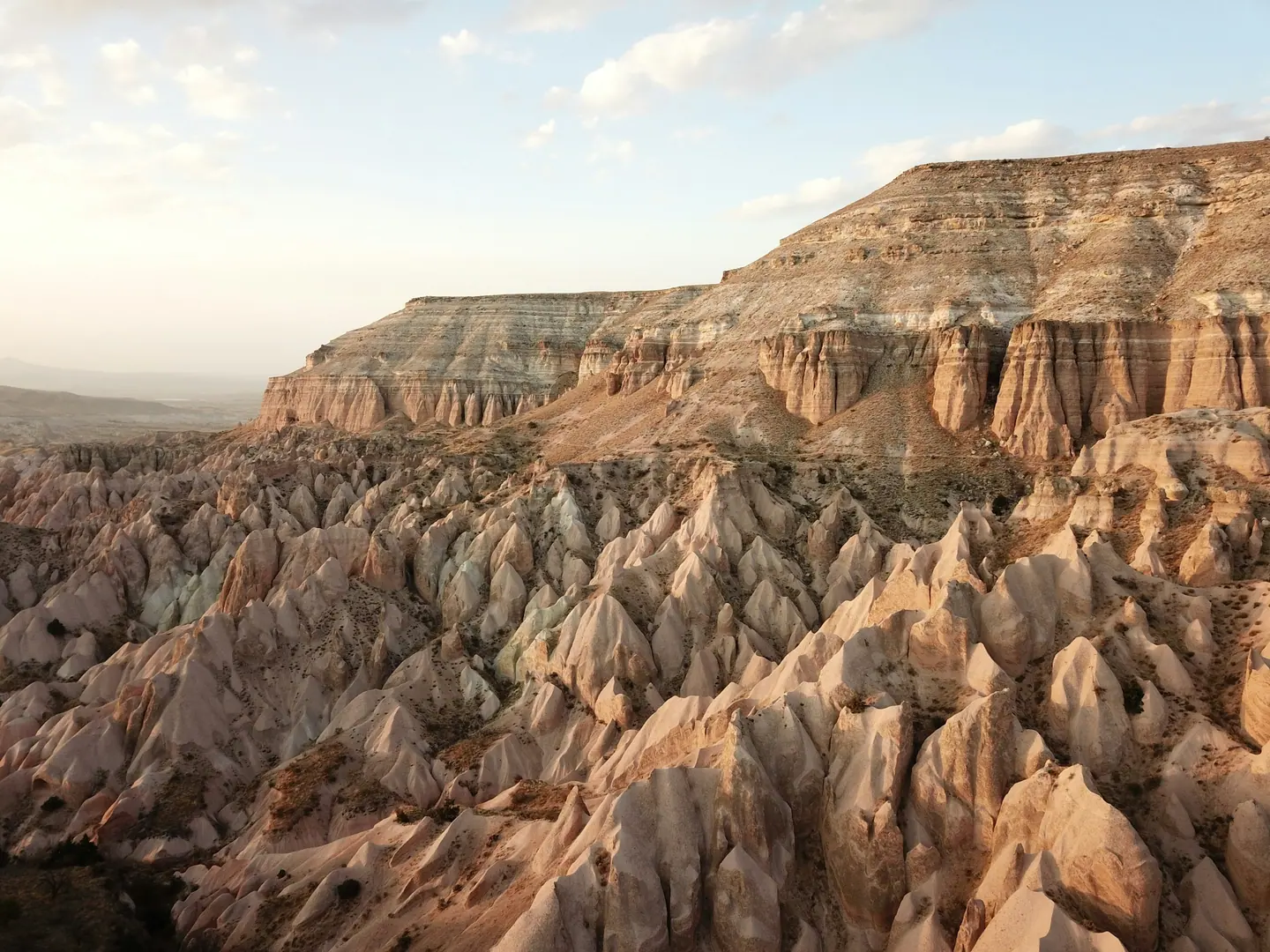
Paşabağ, Zelve Open-Air Museum & Avanos
Paşabağ Monks Valley, Zelve Open-Air Museum, Devrent Imagination Valley, Avanos Kızılırmak River, Sarıhan Caravanserai, and Özkonak Underground City
Paşabağ Hermit Cells
Also known as Monks Valley, this expanse features dramatic pillar formations capped with dark basalt caps. Christian hermits hollowed out these tall tuff spires to create isolated living quarters, chapels and food stores. Visitors can walk into several base chambers to inspect rock-cut sleeping niches and simple religious carvings.
Saint Simeon Hermitage Chapel
Carved directly into a three-headed fairy chimney, this monastic cell honours Saint Simeon Stylites the Younger. Ascetics withdrew to its upper levels via narrow internal chimneys to escape worldly distractions. The lower church contains faded fresco fragments, an altar alcove and an elevated sleeping platform cut into the tuff.
Zelve Open-Air Museum
Spread across three adjoining valleys, Zelve formed one of the region's earliest settled monastic centres. The cliff faces contain hundreds of interconnected rock dwellings, communal presses and churches that remained inhabited until 1952. Walking along the preserved paths reveals how residents managed domestic and religious life in vertical stone dwellings.
Uzümlü Kilise (Grape Church)
Located in the third valley of Zelve, this historic chapel dates back to the eighth or ninth century. Its barrel-vaulted ceiling displays carved stone reliefs of grape clusters symbolising the Eucharist, rather than figural portraits. We can still see traces of red mineral pigments decorating the lintels and nave niches.
Balıklı Kilise (Fish Church)
Adjacent to Uzümlü Kilise, the Fish Church takes its name from ancient ichthys symbols painted upon the plastered walls. These motifs predate the formal Byzantine decorative programmes found elsewhere in Cappadocia. The modest single-nave interior illustrates how early communities favoured symbolic allegories over monumental saintly portraits.
Geyikli Kilise (Deer Church)
This small sanctuary in Zelve's upper reaches preserves archaic wall imagery, including representations of deer alongside traditional crosses. Scholars link the deer imagery to Psalm 42, reflecting the soul longing for divine guidance. The weathered chamber highlights the transition between early local nature motifs and standard liturgical art.
Zelve Rock Mosque
Demonstrating the peaceful coexistence of Christian and Muslim populations, this mosque was cut directly into the soft stone cliff during the Ottoman period. A small built-stone minaret crowns the natural rock outcrop above the entrance. Inside, a simple carved mihrab points towards Mecca, bordered by understated masonry mouldings.
Zelve Communal Mill
This large subterranean room housed the community mill used by valley villagers for grinding wheat and pressing olives. A heavy basalt millstone sits preserved in the central chamber, alongside animal tethering points and grain storage bins. It provides clear material evidence of collective agricultural labour in the troglodyte settlement.
Devrent Valley (Imagination Valley)
Unlike neighbouring valleys, Devrent was never inhabited by cave-dwelling monks and lacks rock-cut churches. Instead, centuries of wind and water erosion have shaped the pink-tinted volcanic tuff into distinct zoomorphic shapes. The most famous outcrop resembles a seated camel, accompanied by stone formations that mimic seals, birds and human figures.
Kızılırmak River Avanos Promenade
The Kızılırmak, or Red River, flows through the heart of Avanos, providing the iron-rich red silt that underpins the town's famous terracotta craft. Tree-lined paths run along both banks, offering tranquil views of traditional stone riverfront houses and historic watermills. Local waterfowl frequent the shallows near the pedestrian crossings.
Avanos Stone Bridge
Erected in the early twentieth century by local master stonemasons, this eleven-arch masonry bridge replaced earlier wooden crossings. It links the older hillside residential quarters with the modern market district south of the river. The bridge retains its original dressed basalt balustrades, offering wide vistas of riverside pottery workshops.
Avanos Historic Pottery Quarter
Centred on narrow lanes climbing away from the river, this historic neighbourhood has sustained ceramic production since the Hittite era. Master potters still operate manual kick-wheels within subterranean workshops carved into the cliffs. Visitors can observe the turning of red clay pots, amphorae and glazed tiles made with time-honoured techniques.
Chez Galip Hair Museum
Housed beneath an established pottery workshop, this unusual cave repository holds thousands of hair samples donated by female visitors from across the globe since 1979. The subterranean walls and ceilings are covered entirely in named locks of hair and personal notes. It offers an unconventional cultural curiosity alongside traditional craft exhibits.
Güray Underground Ceramic Museum
Excavated twenty metres beneath the surface, this extensive private museum displays Anatolian ceramic art spanning prehistoric, Roman, Byzantine, Seljuk and Ottoman eras. Its grand galleries are carved entirely out of living rock, complete with soaring domes and supporting pillars. Rare antiquities sit beside contemporary fine art pottery produced by leading Turkish ceramists.
Alaaddin Mosque Avanos
Founded during the reign of Seljuk Sultan Alaeddin Keykubad I, this understated stone place of worship serves as Avanos's oldest Islamic monument. The structure features thick ashlar walls, a traditional flat timber ceiling supported by columns, and an intricately carved stone entrance portal. It stands as an enduring example of central Anatolian medieval design.
Sarıhan Caravanserai
Constructed in 1249 by Sultan Izz al-Din Kaykaus II, the Yellow Caravanserai protected merchants and camel caravans travelling along the medieval Silk Road. The complex includes an elaborate two-toned stone portal, a fortified courtyard, a small elevated prayer room (köşk mescit) and covered winter stables. It ranks among the finest surviving Seljuk road stations in Turkey.
Özkonak Underground City
Discovered on the northern slopes of Mount Idis, Özkonak represents a remarkable subterranean complex built across several descending levels. Unlike Derinkuyu, this city features narrow communication pipes connecting different floors, allowing occupants to speak and pour hot oil upon invaders. Visitors can explore deep ventilation shafts, communal wine presses and massive rollable stone blast doors.
Çeç Tumulus
Rising sharply above the surrounding agricultural plateau, this artificial earthen and stone tumulus likely dates from the Hellenistic or Roman periods. Archaeologists believe it contains an intact royal tomb, though systematic excavations have yet to penetrate its core. The high summit offers panoramic vantage points across the river basin towards Avanos.
Belha Monastery
Situated near Özkonak, Belha is an extensive rock-cut monastic sanctuary featuring a basilica, residential cells and communal halls. Local tradition revered its natural rock cistern as an ayazma, or sacred spring with curative properties. The complex exhibits early Christian architectural details, including carved horseshoe arches and deeply inset wall benches.
Avanos Old Town Quarter
Climbing the northern slope away from the river, this quiet district contains fine examples of nineteenth-century Ottoman vernacular masonry. The houses feature carved window frames, cantilevered timber balconies and internal courtyards paved with volcanic pebbles. Exploring these steep cobbled alleys reveals a quieter aspect of Cappadocia away from the major tour bus routes.
Ortahisar, Ürgüp, Mustafapaşa & Sobesos
Ortahisar Castle, Hallacdere Monastery, Ürgüp Three Beauties, Temenni Hill, Mustafapaşa Sinasos, Keslik Monastery, Sobesos Roman Bath, and Soğanlı Valley
Ortahisar Castle
Soaring eighty-six metres over the surrounding tufa landscape, this rock-cut stronghold served as a fortified retreat during Byzantine and Ottoman periods. Wooden stairways and metal bridges lead up through cavernous grain stores to an open observation terrace. From the summit, visitors enjoy expansive sweeps toward Mount Erciyes and neighbouring stone hamlets.
Hallacdere Monastery
Dating from the tenth and eleventh centuries, this hospital monastery is carved entirely into a secluded tufa outcrop northeast of Ortahisar. The central courtyard features decorative blind arcades, columned porticoes, and traces of red geometric tempera across the vaulting. Archaeologists believe the complex functioned as a medical treatment centre for regional monastic communities.
Ortahisar Ethnography Museum
Housed within a restored public building beside the town square, this museum depicts historical domestic routines across thematic dioramas. Mannequins portray traditional carpet weaving, bread making, wedding customs, and local agricultural trades. The exhibits offer helpful historical context regarding how local populations adapted to cave living throughout the twentieth century.
Three Beauties Fairy Chimneys
These three basalt-capped pinnacles stand as Cappadocia's most familiar geological formation, sculpted by millennia of wind and water erosion. Local folklore associates the pillars with a tragic tale of a princess, a shepherd, and their child turned to stone. The roadside terrace provides unobstructed vantage points across the surrounding eroded valleys.
Temenni Hill
Rising eighty metres above the old quarter of Ürgüp, Wish Hill features the venerable thirteenth-century mausoleum of Sultan Alaeddin Keykubad. A rock-cut tunnel leads walkers to the summit terrace, where a municipal tea garden operates beside an archive of vintage photographs. Visitors can examine the memorial chapels while surveying stone houses terraced along the slopes.
Ürgüp Museum
Inaugurated in the early 1970s on Temenni Hill, this civic institution presents cultural artefacts gathered across the regional plateau. Galleries display fossilised mammalian remains discovered in local volcanic ash, along with Bronze Age ceramics and Roman glass vessels. An ethnographic wing features Ottoman textiles, metalwork, and regional costumes.
Karakandil Cave Church
Tucked into the northern rock face of Ürgüp, this single-nave rock sanctuary contains faded Byzantine frescoes painted directly on prepared plaster. Architectural details include a horseshoe apse, a carved stone templon screen, and relief crosses chiselled into the ceiling. The surrounding hillside remains dotted with former troglodyte residences and ancient pigeon lofts.
Church of Constantine and Helena
Dominating the town square of Mustafapaşa, this grand ashlar monument was constructed by the local Greek community in 1729 and renovated in 1850. The interior features a gilded wooden iconostasis, vaulted aisles supported by substantial stone piers, and classical capitals. Its ornate western portal showcases carved vine scrolls and a historical Greek inscription.
Cappadocia Art and History Museum
Occupying a 150-year-old stone residence with decorative ceilings, this private cultural venue tells Turkish history through hundreds of handmade character dolls. Displays illustrate folklore, Ottoman courtly life, and the 1923 population exchange that altered the demographics of Sinasos. The building itself is an instructive specimen of neoclassical masonry and timber craftsmanship.
Saint Nicholas Monastery
Located in the southern valley outskirts of Mustafapaşa, this historic monastic centre integrates subterranean shrines with a monumental stone courtyard. The compound served as a major pilgrimage site for orthodox Christians across Asia Minor until the twentieth-century exchange. Interior chambers preserve ornate rock arches, deep burial niches, and surviving frescoes illustrating saintly deeds.
Maraşoğlu Bridge
Constructed in 1865 under the patronage of a wealthy Greek merchant, this single-span arched bridge connects the central market with eastern residential quarters. The well-preserved masonry displays fine ashlar blocks and decorative parapets characteristic of late Ottoman Sinasos. Walking across provides clear sightlines to traditional stone mansions featuring carved window pediments.
Gomeda Valley
Often compared to a miniature Ihlara Valley, Gomeda extends westward from Mustafapaşa along the course of a natural stream. Hikers encounter ancient irrigation channels, dark subterranean tunnels, and hollowed cliff facades used for centuries by pigeon breeders. Notable stops along the path include Saint Basil Church, which retains geometric frescoes painted during Iconoclastic periods.
Keşlik Monastery
Set within a tranquil valley south of Mustafapaşa, this complex functioned from the ninth through the thirteenth centuries. The site comprises two cave churches, Saint Michael and the Church of Saint Stephen, along with a rock-hewn refectory containing a lengthy stone dining table. Remarkably thick layers of candle soot have protected several rare biblical murals from weathering.
Sobesos Roman Excavations
Accidentally uncovered in 2002 near Şahinefendi village, Sobesos represents the only known classical Roman urban centre in Cappadocia. Archaeologists have excavated a public bath with an intact hypocaust heating floor, an expansive market agora, and a sixth-century Christian basilica. The floor of the central meeting hall features vivid mosaics woven in complex meander motifs.
Sobesos Roman Bath
This thermal complex formed the civic core of fifth-century Sobesos, featuring sophisticated brickwork and stone plumbing channels. Visitors can clearly observe the rows of clay colonnettes that supported the suspended floors of the hot bath chamber. Adjacent service rooms include well-preserved cisterns and drainage conduits engineered to divert spring water.
Taşkınpaşa Palace
Situated in the rural settlement of Taşkınpaşa, this ruined complex dates to the Beylik era when the Karamanid principality governed the region. The monumental stone portal displays intricate floral and geometric mouldings influenced by Seljuk royal architecture. The surrounding courtyard contains foundation walls of formal reception halls and residential chambers.
Taşkınpaşa Medrese
Erected by the local Karamanid emir, this medieval educational institution features an open courtyard bordered by barrel-vaulted student cells. The entrance is marked by a deep, ornate portal adorned with muqarnas vaulting and stylized inscriptions. Today the restored complex serves as a peaceful cultural space alongside the nearby tomb of Taşkın Paşa.
Taşkınpaşa Mosque
Constructed alongside the medrese in the mid-1300s, this thick-walled prayer hall highlights the transition from Seljuk to Ottoman architectural styles. Its historic carved walnut minbar and mihrab were considered so valuable that they were moved to the Museum of Anatolian Civilizations in Ankara for preservation. The stone interior remains active for daily village prayer.
Karabaş Church
Located in the northern gorge of Soğanlı Valley, Karabaş Kilise served as the principal shrine of an active monastic retreat. The interior preserves some of the finest late-Byzantine painting cycles in Cappadocia, executed across multiple layers of plaster. Visitors can study detailed depictions of the Nativity, the Crucifixion, and portraits of church benefactors along the barrel vault.
Yılanlı Church of Soğanlı
This isolated cave chapel in Soğanlı Valley takes its name from an interior mural portraying Saint George and Saint Theodore spearing a scaly dragon. Deep rock graves line the floor, indicating its historic role as an aristocratic burial vault. The exterior facade blends seamlessly into the cracked volcanic cliff face above traditional apple orchards.
Derinkuyu, Kaymaklı & Ihlara Canyon
Kaymaklı Underground City, Derinkuyu Underground City, Mazı Underground City, Ihlara Valley, Selime Cathedral, Ağzıkarahan Caravanserai, and Narlıgöl Crater Lake
Kaymaklı Underground City
Extending across eight subterranean levels, this subterranean complex sheltered thousands of inhabitants during regional conflicts. Four excavated floors reveal stables, communal kitchens with stone hearths, and deep ventilation shafts. Heavy rolling stone doors protected narrow descending corridors, while interconnected tunnels linked private domestic quarters to wine cellars.
Derinkuyu Underground City
Plunging roughly sixty metres into the earth, Derinkuyu ranks among the deepest underground networks in Anatolia. It contains unique features including a vaulted cruciform schoolroom, baptismal fonts, and vertical wells that supplied water to lower levels independently of surface systems. Massive disc shaped stone barriers allowed defenders to seal passages from the inside.
Mazı Underground City
Built into a steep valley wall, Mazı served as an ancient agricultural refuge featuring four distinct entrances. The site contains extensive subterranean stables with carved rock troughs, a barrel vaulted church, and elaborate stone barn facilities. Concealed shafts and defensive trapdoors demonstrate how residents repelled hostile forces while safeguarding livestock.
Özkonak Underground City
Discovered on the northern slopes of Mount Idis, Özkonak exhibits a distinct defensive system not found in neighbouring cities. Narrow pipe conduits allowed defenders to pour hot oil on intruders while facilitating communication between storeys. The carved layout incorporates multiple wine presses, residential chambers, and heavy millstone blast doors.
Ihlara Valley
Formed through prehistoric volcanic activity from Mount Hasan, this sheer canyon winds for fourteen kilometres through south western Cappadocia. Byzantine monastic communities carved dozens of cliff sanctuaries directly into the basaltic gorge walls. Poplar groves and waterside tracks connect ancient rock cut hermitages along the riverbed.
Ağaçaltı Church
Located near the base of the Ihlara stairway, this cruciform chapel features a dome carved entirely from solid rock. Seventh and eleventh century frescoes adorn the interior, displaying scenes of the Annunciation, Nativity, and Daniel in the Lions' Den. The colourful painting programme shows strong pre Iconoclastic, regional Syrian stylistic influences.
Sümbüllü Church
Carved into the sheer cliffs of the gorge, this two storey monastic sanctuary retains an elegant facade with blind arcades. The upper level contains a barrel vaulted chapel adorned with portraits of the Archangel Michael and Emperor Constantine with Saint Helena. Dormitories and storage cells surround the central liturgical space.
Yılanlı Church
This cross in square rock church preserves striking pictorial depictions of four female sinners attacked by serpents in the underworld. Other interior surfaces display the Last Judgment, the Dormition of the Virgin, and Forty Martyrs of Sebaste. Monastic burials and carved arcosolia line the subterranean perimeter walls.
Kokar Church
Positioned towards the southern stretch of the gorge, Kokar contains a long single nave with extensive geometric and figural frescoes. The ceiling features a massive ornamental cross alongside New Testament cycles illustrating the Last Supper and the Betrayal of Judas. Burial chambers excavated into the floor once held clerical remains.
Pürenli Seki Church
Perched on a rocky shelf above the path, Pürenli Seki consists of four rock cut rooms and a pair of barrel vaulted chapels. The early tenth century wall paintings show a rare archaic narrative style with expressive, earthy tones. Scenes depicting the childhood and Passion of Christ cover the soft volcanic plaster.
Kırkdamaltı Church
Also called the Church of Saint George, this high elevation cave church sits above the village of Belisırma. A painted inscription commemorates the Seljuk Sultan Mesud II and the Byzantine Emperor Andronikos II, documenting rare interfaith coexistence. The murals depict Saint George slaying the dragon alongside royal donors in aristocratic robes.
Direkli Church
Supported by six stout rock cut columns, Direkli was built during the reign of Emperor Basil II around the start of the eleventh century. The interior preserves geometric motifs, icons of local saints, and an elevated apse. Adjoining quarters include communal dining refectories and private cells for resident monks.
Ala Church
This expansive basilica structure displays a tripartite nave terminating in three semicircular apses carved into the canyon wall. Surviving fresco fragments show biblical scenes alongside classical ornamental borders. Surrounding cliff rooms accommodated an oil press, fermentation vats, and storage magazines for the monastic community.
Selime Cathedral
Carved directly out of a towering volcanic pinnacle, this eighth to tenth century monastery served as a regional religious centre. The cavernous cathedral nave retains two rows of rock pillars, a high vaulted ceiling, and faded biblical frescoes. The extensive complex also houses an enormous monastic kitchen with a conical chimney and stables.
Selime Sultan Tomb
Positioned across from the cathedral complex, this octagonal mausoleum showcases classical Seljuk architectural geometry. Constructed from cut ashlar masonry, the structure features a conical stone roof, arched exterior recesses, and an elevated crypt chamber. Local lore associates the monument with Seljuk commanders who secured the valley.
Güzelyurt Monastery Valley
This peaceful gorge in historic Gelveri holds early Christian cave settlements, underground shelters, and nineteenth century stone houses. A stone lined river passes subterranean presses and hermit retreats carved into the cliffs. The valley demonstrates the long transition from Byzantine monastic life to Cappadocian Greek domestic settlement.
Church of Saint Gregory of Nazianzus
Originally constructed in 385 AD and extensively remodelled through centuries of Byzantine and Ottoman administration, this historic basilica preserves monumental masonry walls. Following the 1923 population exchange, the cross in square building was converted into the Kilise Mosque. A wooden iconostasis was removed, but the original stone dome and bell tower survive.
Narlıgöl Crater Lake
Formed by volcanic explosions in the Quaternary period, this deep maar lake sits enclosed by dramatic crater ridges. Its mineral rich waters change colour with shifting seasonal temperatures and algal growth. Active geothermal hot springs line the northern perimeter, hinting at ongoing subterranean volcanic activity beneath the valley.
Ağzıkarahan Caravanserai
Constructed along the Silk Road between Konya and Kayseri, this stone caravanserai protected travelling merchants and livestock. The complex comprises an open courtyard, a vaulted winter hall, and a raised central kiosk mosque. Intricate geometric relief carvings surround the monumental marble portals, demonstrating the heights of Seljuk architectural stonecraft.
Gaziemir Underground City
Discovered near the village of Gaziemir, this underground complex uniquely functioned as both a civilian refuge and a subterranean staging post. Camel stables, stone feeding cribs, and two barrel vaulted churches extend off an open air entrance courtyard. Deep clay ovens and storage pits illustrate the dual logistical and defensive design.
Linking Valley Trails Across Cappadocia
Pair this route with the practical neighbourhood breakdowns, climate charts and transport advice in our Cappadocia Valleys, Rock Churches & Underground Cities travel overview, alongside additional mapped city walks.