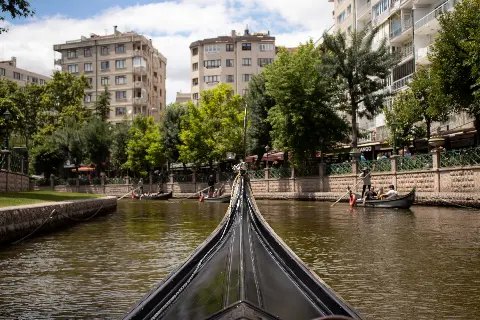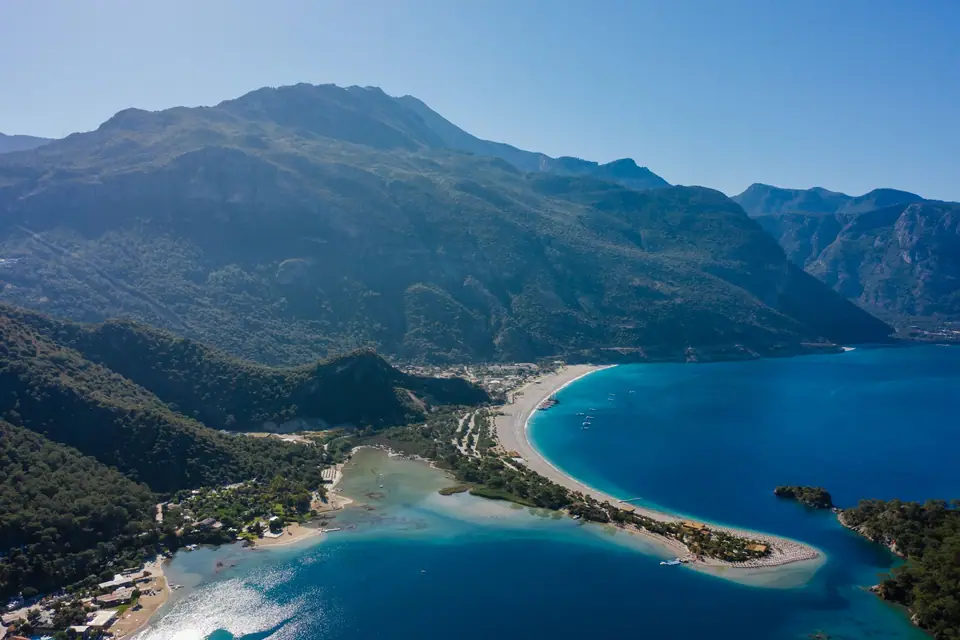
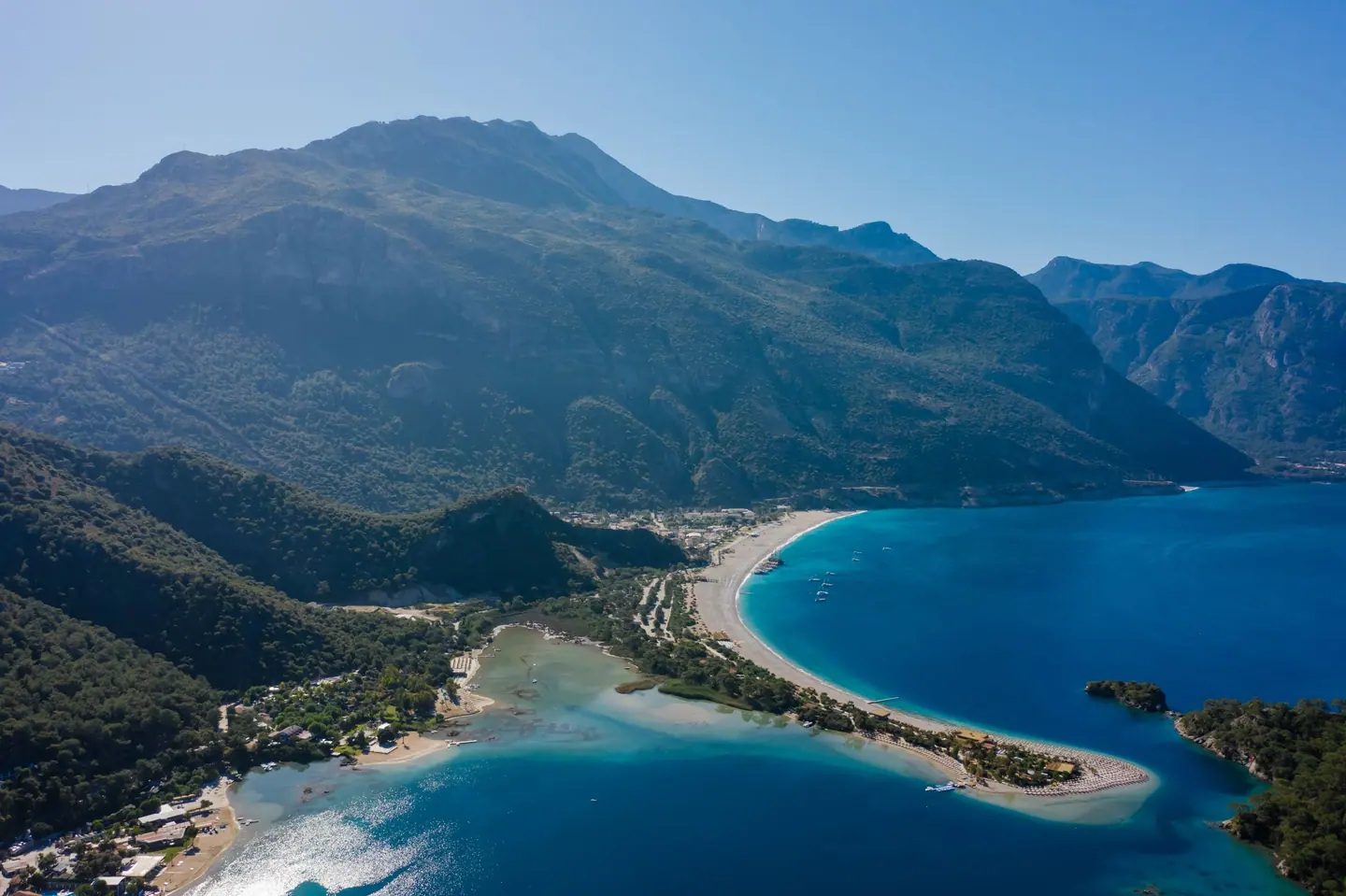
A detailed coastal and mountain route along the Western Lycian Way: Telmessos rock tombs in Fethiye, Kayaköy stone hillside, Ölüdeniz Blue Lagoon, Babadağ, and Xanthos-Patara.
Seers of Ancient Telmessos and the Democratic League of Lycian Cities
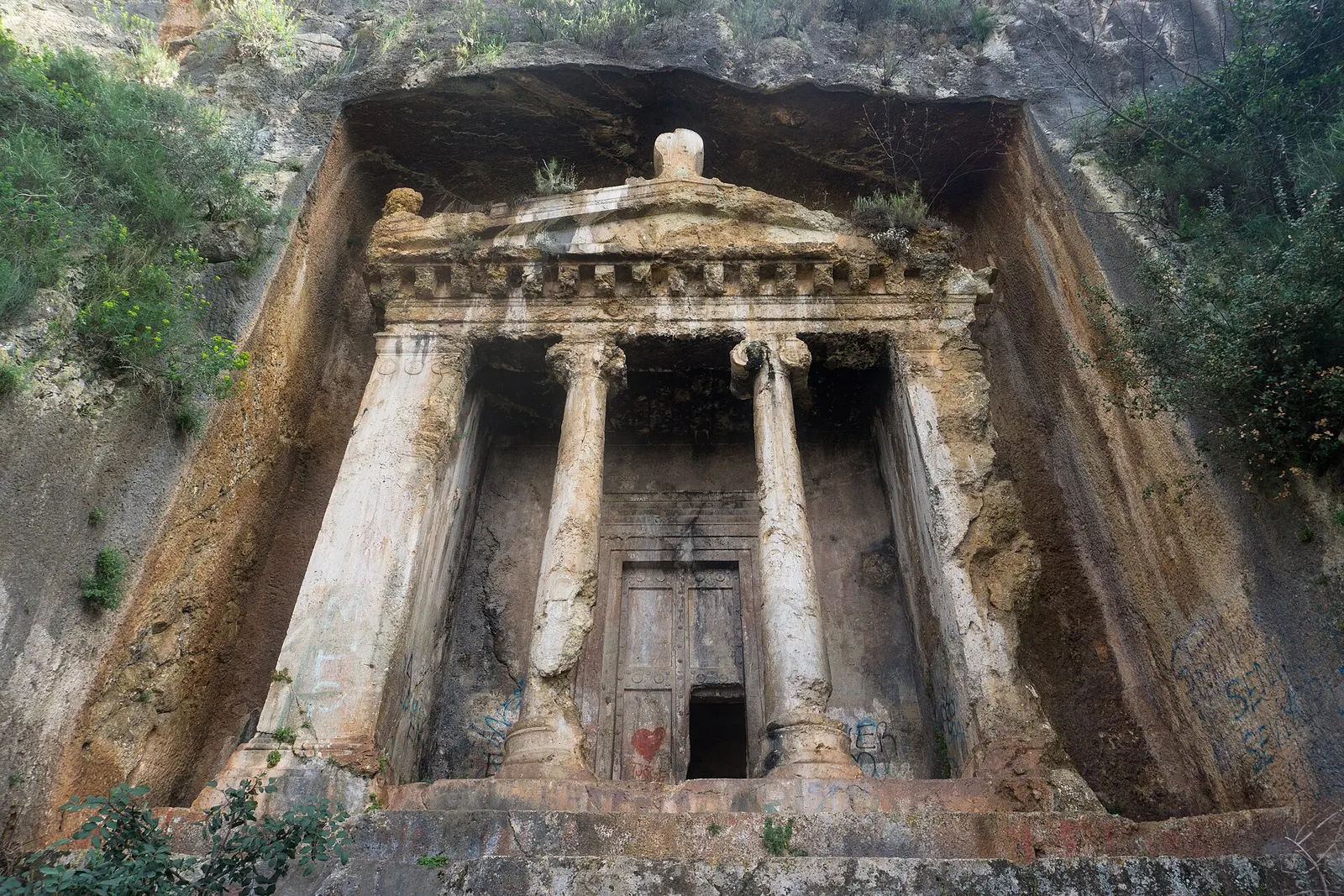
Known in antiquity as Telmessos (Land of Lights), the westernmost harbour city of the Lycian League was renowned across the Greek and Persian worlds for its seers and interpreters of omens, consulted by King Croesus of Lydia and Alexander the Great alike. In the fourth century BC, Lycian stonemasons chiselled Ionic temple-fronted tombs, most famously the Tomb of Amyntas (350 BC), and ogival Gothic-style stone sarcophagi directly into the limestone cliffs above the harbour.
In the surrounding Eşen (Xanthos) Valley and along the 540-kilometre Lycian Way stand the UNESCO sites of Xanthos and Letoon alongside Patara, home to the world's first democratic federal parliament building celebrated by Montesquieu and the framers of the U.S. Constitution.
Fethiye Harbour (Telmessos), Amyntas Tombs & Paspatur
Tomb of Amyntas (350 BC Ionic Rock-Cut Facade), Lycian Sarcophagus in the Street, Fethiye Castle of the Knights of Rhodes, Telmessos Roman Theatre by the Harbour, Fethiye Museum Bilingual Trilingual Stele Casts, Paspatur Old Bazaar, Fish Market Balık Pazarı, Kordon Promenade, and Şövalye Island
Tomb of Amyntas
Carved into the sheer limestone cliff face overlooking the town, this monument replicates an Ionic temple facade complete with two full columns and a pediment. A Greek inscription on the left wall identifies the occupant as Amyntas, son of Hermagios. We can observe ancient chiselled details alongside stone-carved nails mimicking classical timber construction.
Telmessos Ancient Theatre
Situated directly across from the modern ferry quay, this stone theatre dates from the Hellenistic period and saw substantial Roman remodelling in the second century AD. Excavations during the 1990s uncovered seating tiers that once accommodated up to six thousand spectators. The lower cavea and remnants of the stone stage wall remain clearly visible.
Fethiye Castle
Perched on the ridge above the Lycian necropolis, this fortress incorporates ancient foundations that were extensively rebuilt by the Knights Hospitaller during the fifteenth century. Today, surviving stone ramparts and cisterns offer commanding vistas across the Gulf of Fethiye. Several rock-cut tombs and carved inscriptions lie integrated into the bedrock beneath the battlements.
Fethiye Museum
Established to preserve finds from local excavations, this museum houses pottery, jewellery, coins, and votive reliefs from nearby antique settlements. Its standout treasure is the trilingual inscription of the Letoon, which proved crucial for deciphering the extinct Lycian language. The open-air garden displays stone sarcophagi, architectural fragments, and Roman statuary.
Lycian Sarcophagus on Kaya Caddesi
Rising incongruously beside modern asphalt, this fourth-century BC Lycian sarcophagus stands on an elevated stone plinth. The upper roof section features arched gothic contours typical of regional Lycian funerary architecture, ornamented with carved wooden-beam motifs. Relief panels on the side depict dynamic battle scenes featuring soldiers armed with shields.
Paspatur Old Town
Serving as the historic commercial core, Paspatur retains timber-fronted Ottoman-era dwellings alongside vine-shaded lanes cooled by mountain water conduits. The neighbourhood houses traditional carpet merchants, spice shops, and craft ateliers. Visitors can trace surviving sections of older stone masonry incorporated into the modern shop fronts.
Fethiye Fish Market
Positioned around a circular stone counter, this central food market presents the daily catch delivered straight from the harbour fleet. Surrounding tavernas prepare purchases directly on charcoal grills according to local culinary traditions. The marketplace provides an enduring portrait of working-class maritime commerce in the town.
Old Mosque of Fethiye
Constructed in 1791 during the Ottoman era, this historic house of prayer features a square prayer hall topped by a lead-sheathed dome and a slender minaret. The interior displays floral wall paintings and an intricately carved wooden minbar. The courtyard fountain has provided ablution facilities to district merchants for centuries.
Fethiye Harbour Promenade
Tracing the shoreline of ancient Telmessos, this paved waterfront promenade connects municipal parks with the traditional gulet moorings. The walkway follows the natural contours of the sheltered harbour basin where commercial and pleasure vessels drop anchor. Information plaques along the route mark key archaeological discoveries raised from the seabed.
Şövalye Island
Guarding the entrance to Fethiye Bay, this car-free island takes its name from the Rhodesian Knights who established a stronghold here during the Middle Ages. Submerged ruins of quays, ramparts, and ancient cisterns fringe the coastline, visible through clear waters. Footpaths across the pine-covered crest reveal defensive masonry built over older Roman structures.
Lycian Sarcophagus at the Town Hall
Positioned on the landscaped municipal grounds, this freestanding stone tomb ranks among the finest surviving sarcophagi of Telmessos. The two-tier construction includes a hyposorion base beneath the main burial chest, crowned by an ogival gabled lid. Reliefs along the ridge depict riders and hunting scenes characteristic of fourth-century BC Lycian craftsmanship.
Upper Rock Tombs of Telmessos
Scattered across the crags east of Amyntas, this necropolis features numerous smaller rock-cut tombs carved to resemble domestic timber houses. The facades mimic wooden doorways, posts, and beam ends characteristic of native Lycian civilian architecture. Elevated footpaths lead through the scrub to these ancient family burial chambers.
Yeni Hamam
Constructed during the late Ottoman period, this traditional stone bathhouse served both local tradesmen and visiting sailors docking at the port. The structure incorporates classical bathing chambers beneath multiple small domes pierced with glass daylight apertures. Its marble heating stone and hot rooms preserve centuries of Turkish civic wellness heritage.
Fethiye Old Lighthouse Point
Situated on the western arm of the natural bay, this coastal promontory has guided ships into the harbour since antiquity. The modest masonry light structure stands on foundations that historically supported coastal watch posts. The surrounding rocks provide open views across the bay towards the ancient ruins of the acropolis.
Fethiye Clock Tower
Erected as a civic landmark near the northern edge of the historic quarter, this stone clock tower mirrors the civic architecture of twentieth-century Aegean port settlements. Built using local cut limestone, the structure marks the meeting point of the bazaar and the modern municipal waterfront. It functions as a traditional rendezvous point for local townspeople.
Telmessos Harbour Ancient Jetty
Submerged just beneath the waterline near the ancient theatre, massive dressed ashlar blocks delineate the original classical harbour installation of Telmessos. These maritime works protected trade ships exporting timber, wine, and agricultural produce across the eastern Mediterranean. Traces of ancient bollards and foundation blocks remain visible through clear water during low tides.
Kızılbel Viewpoint
Rising directly behind the Crusader castle, this high ridge presents panoramic perspectives across the harbour basin, town grid, and distant mountains. Visitors can observe the natural amphitheatre layout of the antique settlement and its defensive relationship to the coastline. Walking paths here link directly with the regional Lycian Way trail network.
Atatürk Monument Square
Functioning as the civic heart of the modern community, this open waterfront square features a bronze equestrian monument commemorating the founder of the republic. The plaza regularly hosts municipal gatherings, national ceremonies, and public exhibitions. Its open paving connects the pedestrianised shopping avenues with the central boat moorings.
Aşıklar Tepesi Viewpoint
Situated on the western bluffs above the antique theatre, this scenic viewpoint offers clear sightlines across the gulf and its coastal archipelago. The hillside preserves remnants of classical terracing and watch posts used to monitor ship movements entering the bay. It serves as an informative location to study the topography of ancient Telmessos.
Fethiye Martyrs Monument
Located in a pleasant waterfront park, this bronze statue and monument honours Captain Fethi Bey, one of the earliest Ottoman military aviators. Following his fatal crash in 1914, the ancient settlement of Meğri was renamed Fethiye in his memory. The monument features interpretive plaques detailing the dawn of Mediterranean aviation and the naming of the modern town.
Kayaköy (Levissi), Gemiler Island & Cold Water Bay
Kayaköy (Karmylassos / Levissi) 500 Hillside Stone Houses, Taksiyarhis Upper Church, Panagia Pyrgiotissa Lower Church Pebble Mosaic Courtyard, Afkule Cliff Monastery, Soğuksu Cold Water Bay Trail, and Gemiler Island (St Nicholas 5th-Century Vaulted Processional Corridor & Churches)
Kayaköy Ghost Village
Originally known as Levissi, this settlement comprises hundreds of roofless stone houses cascading down the hillside. The Greek Orthodox community departed in the 1923 population exchange between Greece and Turkey, leaving domestic dwellings, cisterns and chapels intact. We observe stepped stone lanes and weathered chimneys that illustrate nineteenth-century regional Ottoman domestic architecture.
Panagia Pyrgiotissa Lower Church
Constructed in the early nineteenth century, this lower basilica served as a primary parish church for Levissi. Its walled courtyard retains elaborate black and white pebble mosaics arranged in geometric motifs, known locally as chochlakia. Inside the barrel-vaulted nave, visitors discover faded fragments of religious frescoes and carved marble iconostasis pedestals.
Taksiyarhis Upper Church
Perched on the upper tier of the settlement, Taksiyarhis church features high stone perimeter walls and an arched bell-tower base. Its cavernous single nave retains traces of sky-blue plaster and carved relief panels around the apse. The surrounding courtyard offers commanding views over the ruined stone quarters and the fertile Kaya valley below.
Karmylassos Ancient Settlement
Ancient Karmylassos predated the Ottoman-era town, functioning as a Lycian coastal satellite mentioned by Strabo. Scattered across the village slopes, travellers can identify rock-cut house foundations, rectangular Hellenistic cisterns and fragmentary sarcophagus fragments embedded into later masonry. These remnants confirm continuous habitation spanning more than two millennia across the valley.
Afkule Cliff Monastery
Founded by the monk Eleftherios, this multi-level stone cloister clings directly to vertical limestone bluffs four hundred metres above the Mediterranean. Reached via a forested trail through pine woodlands, the complex includes rock-hewn hermit cells, a cistern and an oratory. The sheer drop provides an expansive vantage point looking towards the Rhodes channel.
Gemiler Island
Located offshore south of Kayaköy, this rocky islet functioned as an active pilgrimage and monastic centre between the fifth and seventh centuries. The island contains four Byzantine churches, ecclesiastical residences, maritime storehouses and defensive walls. Historians associate the location with early traditions surrounding the historical tomb of Saint Nicholas of Myra.
Gemiler Island Processional Corridor
This remarkable stone walkway stretches over three hundred metres, physically linking the lower shore church to the summit basilica. Constructed with barrel vaulting and intermittent window slits, it protected pilgrims from sun, wind and naval observation during solemn processions. Portions of the arched stonework and stepped stone ramps remain remarkably preserved today.
Gemiler Island Summit Basilica
Known as Church III, this premier structure stands on the highest ridge of Gemiler Island. The basilica preserves an intact rock-cut apse, fallen marble columns and elaborate geometric floor mosaics dating to the fifth century. An adjoining rock-cut tomb is traditionally identified by archaeologists as the original burial site of Saint Nicholas.
Gemiler Island Lower Basilica
Positioned just above the waterline at the western harbour, Church II served visiting mariners and pilgrims arriving by galley. The building preserves an inscribed semicircular apse, side chambers and traces of Christian wall frescoes. Submerged quays and warehouse foundations lie visible in the crystal shallows immediately below the church terrace.
Gemiler Bay Ancient Port
Serving as the primary continental embarkation point for Gemiler Island, this sheltered cove contains late antique quays and warehouse footings. Pine-covered slopes enclose the pebble shoreline where ancient merchant vessels sheltered during seasonal Mediterranean gales. Structural rubble and ceramic sherds along the beach mark centuries of maritime pilgrimage traffic.
Soğuksu Cold Water Bay
historic at the terminus of a steep rocky footpath from Kayaköy, this cove features ice-cold subterranean freshwater welling directly into the sea. The inlet served as an emergency watering station and anchorage for coastal fishing boats across Ottoman centuries. Rocky ledges and scrub-covered limestone walls shelter the clear turquoise waters.
Kayaköy Windmills
Crowning the northern ridge overlooking Kayaköy, several circular stone windmills caught prevailing thermal winds from the Mediterranean. Built with mortared local limestone rubble, these towers ground grain cultivated in the surrounding Kaya plain. Their elevated setting provides clear panoramic vistas over the abandoned stone settlement and pine-clad hills.
Kayaköy Old School House
This prominent two-storey structure represents late nineteenth-century educational reforms implemented by the Greek Orthodox community. Constructed with cut limestone dressings, pedimented windows and timber joists, it educated the village youth until 1923. Today, the preserved facade stands amidst overgrown domestic gardens and terrace retaining walls.
Ayios Nikolaos Chapel of Kayaköy
One of dozens of minor family chapels dispersed across the Levissi slopes, this small shrine features a barrel-vaulted nave and low arched doorway. The interior contains traces of hand-painted plaster icons and a small stone altar shelf. Its exterior perimeter wall incorporates carved fragments of ancient Lycian ashlar blocks.
Soğuksu Hillside Trail
This ancient stepped pathway winds across pine forests, limestone boulders and scrub terraces from Kayaköy down to Cold Water Bay. Historically used by farmers, fishermen and traders, the trail displays rough-hewn stone paving and protective kerbs. The crest of the route presents expansive vistas across the open Mediterranean toward Rhodes.
Gemiler Island Harbour Storerooms
Along the northern shoreline of Gemiler Island sit rows of vaulted stone warehouses built directly at sea level. These commercial structures stored grain, oil and pilgrims' supplies transported across Mediterranean trade networks. Tectonic movements caused coastal subsidence, leaving several arched doorways and stone floor foundations partially submerged beneath the clear sea.
Church IV of Gemiler Island
Positioned at the eastern tip of the island, Church IV functioned as a visual beacon for ships approaching from the Gulf of Fethiye. The church displays single-nave proportions, a semicircular external apse and deeply incised masonry joints. Archaeological excavations uncovered graves and ceramic fragments indicating steady use until Arab naval raids in the seventh century.
Kayaköy Public Fountain
Positioned at a central crossroads of the lower town, this carved stone fountain supplied freshwater channelled from nearby mountain springs. The structure features a stone trough, recessed niche and Ottoman decorative mouldings. It formed the social heart of domestic life where village residents gathered to draw water and water livestock.
Belceğiz Bay Overlook Trail
Winding east from the ghost village through dense Mediterranean pine woods, this historic trail crosses the mountain pass toward Ölüdeniz. The highest saddle delivers sweeping perspectives of the coastal barrier beach and turquoise waters of Belceğiz Bay. We observe rustic stone boundary markers that historically demarcated communal village pastures.
Kızılbel Tombs
Heated on limestone outcrops north-west of the abandoned village, these rock-cut tombs reflect classic Lycian funerary design. Featuring imitation timber rafters and recessed gabled pediments carved directly into the rock face, the chambers housed local nobility during the fourth century BC. They provide tangible proof of early regional burial traditions predating Byzantine and Ottoman Levissi.
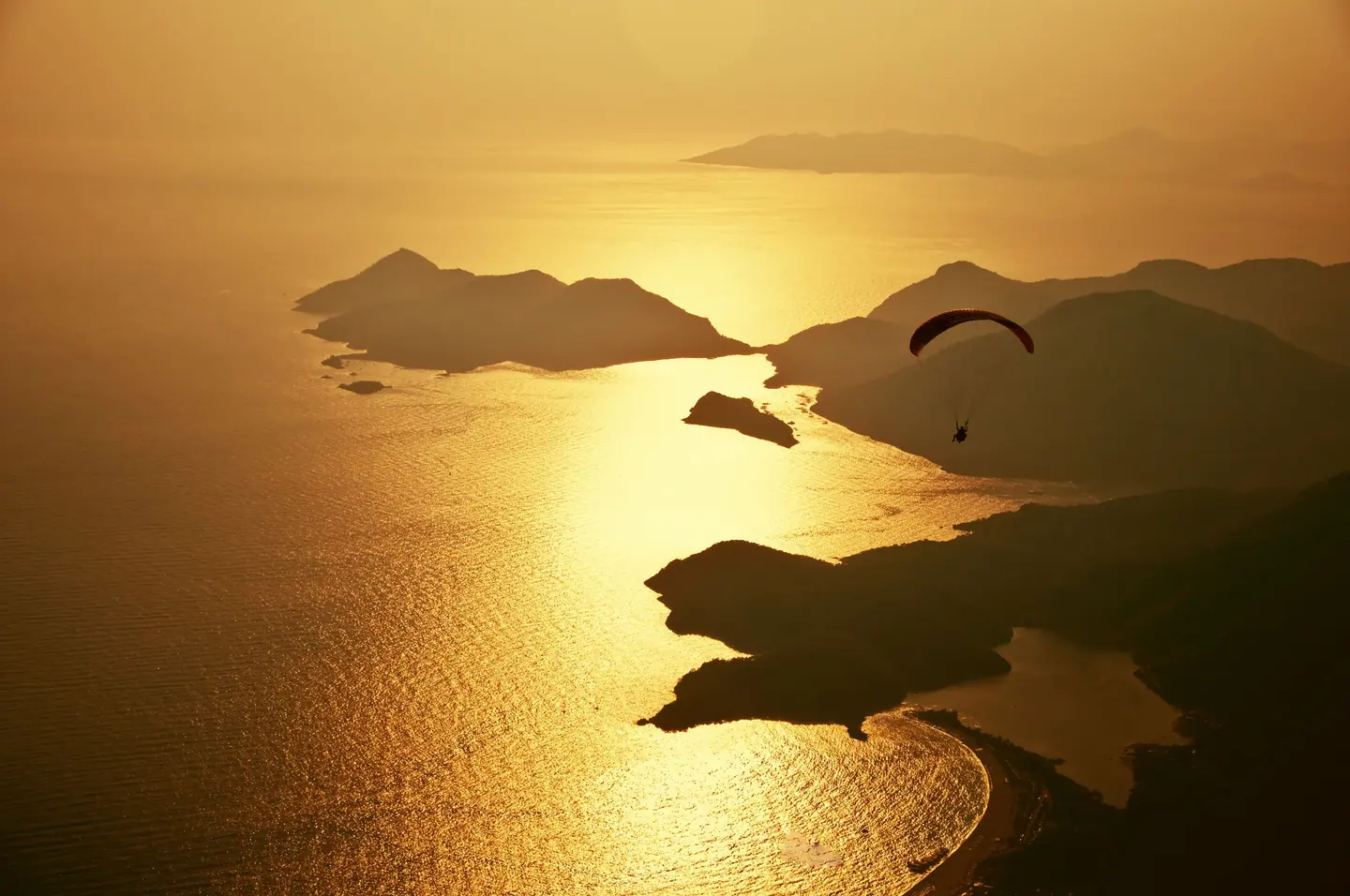
Ölüdeniz Blue Lagoon, Babadağ Summit & Butterfly Valley
Montana Pine Lycian Way Trail from Kayaköy to Ölüdeniz, Ölüdeniz Belcekız Beach, Kumburnu Blue Lagoon Spit, Babadağ Skywalk Cable Car (1,969m Summit Viewpoint), Faralya Cliff View over Butterfly Valley (Kelebekler Vadisi), Kabak Bay, and Alınca Coastal Ridge
Kayaköy Ghost Village
Originally known as Levissi, this settlement preserves hundreds of roofless stone houses built during the nineteenth century. The village was abandoned following the 1923 population exchange between Greece and Turkey. Visitors walking the stony lanes can examine dry-stone masonry, cisterns, and two large Greek Orthodox churches featuring faded frescoes.
Panagia Pyrgiotissa Lower Church
Also called the Lower Church, this nineteenth-century basilica served the lower district of Levissi before the 1923 evacuation. Its barrel-vaulted nave features remnants of religious plasterwork and classical chancel screens. Outside, the courtyard presents intricate black and white pebble mosaics laid in geometric coastal patterns typical of Ottoman-era Aegean architecture.
Taxiarchis Upper Church
Standing prominently over the central valley, this basilica was the principal cathedral of nineteenth-century Levissi. The building retains heavy defensive perimeter walls, vaulted side chapels, and decorative pink-hued interior plaster. A vaulted ossuary sits nearby, while the high terrace offers views over the surrounding pine slopes towards the Mediterranean Sea.
Lycian Way Kayaköy to Ölüdeniz Ridge Pass
This rugged mountain pass marks the classic hiking route between Kayaköy and the coast. The trail follows old mule paths cut into limestone rock and shaded by maritime pines. At the crest, travellers observe ancient clearing cairns alongside views sweeping downwards across the entire sweep of the Ölüdeniz lagoon.
Afkule Monastery
Carved directly into vertical coastal cliffs by the monk Eleftherios in the eleventh century, this two-level rock hermitage hangs far above the sea. The remaining masonry includes a tiny chapel, cisterns, and monastic cells cut into natural limestone grottos. Hikers reach the precipice via a steep forest path through Mediterranean pine woodland.
Ölüdeniz Belcekız Beach
This wide strip of coarse sand and white shingle faces the open Mediterranean at the base of Mount Babadağ. Long used by coastal traders, it now acts as the designated landing strip for tandem paragliders descending from mountain peaks. The beach promenade features local boat moorings and pathways leading towards the lagoon entrance.
Kumburnu Beach
Formed by wave refraction and coastal silt deposition, this curving spit separates the open sea from the inner marine reserve. Pine trees anchor the fragile sands, which enclose shallow waters sheltered from heavy Aegean swells. The protected nature park hosts shorebirds and preserves typical sand-dune flora along its timber walkways.
Babadağ Summit
Anciently known as Mount Cragus, this imposing limestone mountain dominates the coastline of south-western Lycia. Its slopes preserve endemic flora, including rare snowdrops and ancient cedar stands. The open rocky summit serves as one of the premier paragliding launch points in Europe, offering views encompassing Rhodes and the Taurus range.
Babadağ Teleferik Sub-Station
Constructed to link the coastal shelf directly to the high alpine zones, this modern aerial tramway network traverses dramatic vertical cliffs. The engineering project incorporates multiple passenger stages rising through cedar belts. From the cabins, passengers witness the rapid transition from sub-tropical coastal scrub to rugged alpine karst topography.
Butterfly Valley Cliff Edge
Perched on the cliff rim near the hamlet of Faralya, this natural rock ledge overlooks a dramatic breach in the coastal range. Sheer limestone walls drop several hundred metres to a gravel cove below. The viewpoint provides perspective on the fault lines that created this deep canyon and its sheltered microclimate.
Butterfly Valley
Accessible primarily by boat from Belcekız or by a hazardous rope path, this canyon preserves an isolated natural haven. During spring and early summer, colonies of Euplagia quadripunctaria shelter around a freshwater waterfall at the canyon head. Tall vertical rock faces have kept the valley free of major vehicular road infrastructure.
Faralya Village
Officially known as Uzunyurt, this rural settlement occupies coastal terraces above Butterfly Valley. The local architecture consists of dry-stone farmhouses, bee yards, and olive groves fed by mountain springs. It serves as an essential staging post for hikers following the waymarked Lycian Way between Ölüdeniz and the Seven Capes.
Aktas Beach Trail
Situated south of Faralya, this rugged headland is accessed by winding footpaths across maritime pine forest. The shore features flat limestone flagstones that meet clear deep water along an undeveloped stretch of coast. Small ruined dry-stone shelters here demonstrate how local pastoralists once made seasonal use of coastal pastures.
Kabak Valley
Kabak forms a dramatic amphitheatre of red pine and scrub falling towards a secluded coastal cove. The valley remained isolated until the late twentieth century, inhabited only by smallholder farmers who tended carob, figs, and olives. Today, simple wooden buildings blend into the steep valley walls alongside trails leading to remote waterfalls.
Kabak Beach
Located at the mouth of the Kabak gorge, this natural beach is exposed to coastal surf from the open Mediterranean. A freshwater stream crosses the gravel shore, having cut deep gorges through the surrounding slopes. The beach has retained a rustic atmosphere due to strict environmental zoning prohibiting concrete resort complexes.
Alınca Coastal Ridge
Alınca stands more than seven hundred metres above the sea, clinging to a sheer mountain ridge along the Lycian Way. The village contains stone barns and threshing floors that remain in active agricultural use. From this high viewpoint, travellers observe the rugged coastal topography extending towards the ancient maritime headlands of Yedi Burun.
Gey Village Mountain Terraces
Positioned further south along the high coastal route, the village of Gey, also known as Yediburunlar, preserves traditional rural Lycian life. Ancient stone cisterns collect rainwater from limestone outcrops across the terraces. Hikers can observe old architectural techniques in timber-framed agricultural outbuildings, olive presses, and stone boundary walls.
Bozyiğit Point
This wind-swept limestone promontory juts into the open Mediterranean along one of the most rugged portions of the Lycian Way. Ancient mariners feared this coast for its sheer cliffs and lack of natural harbours during storms. The trail along the headland passes scrub-covered karst pavement and traces of antique goat-tracks.
Sidyma Ancient City
Located inland from the coastal cliffs, the ruins of Sidyma are incorporated into the traditional village of Dodurga. Roman sarcophagi, decorated with reliefs of Medusa and wreaths, stand alongside modern livestock pens and village houses. The site preserves an ancient theatre, a small Roman temple tomb, and classical inscriptions built into field walls.
St Nicholas Island
Also known as Gemiler Island, this rocky islet just west of Ölüdeniz holds the ruins of an extensive fifth-century Christian pilgrimage sanctuary. Archaeologists have recorded five distinct Byzantine churches, burial chambers, and a vaulted stone corridor spanning hundreds of metres. Scholars associate the island with early religious devotions to Saint Nicholas of Myra.
Cadianda, Tlos, Yakapark & Saklıkent Gorge
Cadianda Mountain Forest Stadium & Theatre, Üzümlü Dastar Weaving Village, Pinara Pigeon-Hole Cliff Tombs, Tlos Acropolis & Tomb of Bellerophon, Yakapark Trout Springs, Saklıkent 18-Kilometre Limestone Canyon, and Gizlikent Waterfall
Cadianda Stadium
Set high in the hills above Üzümlü, the ancient stadium of Cadianda retains substantial stone running tracks and tiered seating. Inscribed pedestals near the arena record victorious Lycian athletes and civic patrons. We advise walking the pine needle tracks that lead directly into the surviving Roman baths complex.
Cadianda Roman Theatre
The theatre of Cadianda is carved into the south slope of the summit ridge, facing outwards toward the Mediterranean horizon. Although forest vegetation encroaches on the diazoma, multiple rows of seats and the stone foundations of the stage building remain distinct. It offers an evocative demonstration of provincial Lycian construction.
Cadianda Heroon and Necropolis
Scattered across the northern ridge of the settlement, the necropolis contains monumental tombs and temple fronted burial chambers. The heroon features classical friezes depicting warriors alongside bilingual Lycian and Greek inscriptions. The weathered stone sarcophagi are strewn through fragrant cedar and pine woods.
Üzümlü Dastar Weaving Workshops
The mountain village of Yeşilüzümlü maintains a centuries old cottage industry of weaving fine cotton fabric known as dastar. Local artisans use wooden shuttle looms mounted inside stone houses to produce textured table linens and garments. The village square displays historic stone architecture and vine covered courtyards.
Üzümlü Village Square and Old Stone Houses
This highland village retains traditional Ottoman era houses constructed from river boulders and timber beams. Shaded by ancient plane trees, the central square serves as an authentic meeting point for rural elders. Vineyards flank the periphery, recalling the Greek wine making tradition that gave the settlement its name.
Tlos Acropolis Hill
Rising abruptly above the Xanthos valley, the acropolis at Tlos preserves Lycian defensive walls overlaid by a fortress built for the Ottoman warlord Kanlı Ali Ağa. Excavated stone foundations indicate continuous human occupation since the Bronze Age. The summit gives wide vistas over the fertile plain below.
Tomb of Bellerophon at Tlos
Carved directly into the sheer northern rock face of the acropolis, this monumental tomb honours the mythical hero Bellerophon. A prominent interior relief illustrates the hero mounted atop the winged horse Pegasus attacking the fire breathing Chimera. The façade mimics a classical Lycian temple with column bases and carved lintels.
Tlos Roman Theatre
Across from the acropolis hill stands the imperial theatre of Tlos, celebrated for its well preserved two tier cavea and decorated scaenae frons. Dedicated inscriptions document patronage from notable citizens including Opramoas of Rhodiapolis. Many decorative relief panels have been preserved across the auditorium.
Tlos Roman Stadium
Positioned below the acropolis, the stadium consists of stone seating along its southern flank and an adjacent Byzantine basilica. An ornamental pool or water basin once occupied the central area of the athletic compound. Roman statuary recovered from this sector is now displayed in the regional Fethiye Museum.
Tlos Roman Baths complex
This large thermae complex contains two distinct bath structures, identified as the Great and Lesser Baths. The Great Baths feature arched doorways, underfloor hypocaust heating systems, and a towering observation room called the Seven Kiosks. The adjacent basilica was incorporated into the complex during the late Roman period.
Tlos Byzantine Basilica
Constructed over earlier Hellenistic and Roman foundations, the episcopal basilica at Tlos retains an elevated semi circular apse and fine stone pavements. It served as the central ecclesiastical seat of the diocese through the early Byzantine era. The surrounding masonry incorporates recycled architectural spolia from neighbouring civic structures.
Yakapark Trout Springs
Fed by melting snows from Mount Akdağ, Yakapark features natural freshwater springs emerging through mossy limestone ledges. Wooden walkways, terraced pools, and traditional water driven flour mills are situated beneath broad plane trees. It provides a peaceful setting long valued by regional travellers for cool respite.
Pinara Honeycomb Cliff Tombs
The western mountain crags of Pinara display a vertical cliff face drilled with several hundred rectangular burial recesses resembling a gigantic bee honeycomb. These simple pigeon hole tombs contrast with the more intricate temple tombs built lower on the ridge. The site conveys the sacred importance of Lycian funerary rituals.
Pinara Ancient Theatre
Erected in the Hellenistic period, the theatre of Pinara sits in a natural hillside bowl facing the main acropolis. It features twenty seven tiers of stone seats arranged without an elaborate stage structure, retaining an open vista over the mountain valley. Earthquakes have caused minimal damage to its central seating bank.
Pinara Royal Tomb
Located on the lower slopes among ancient olive trees, the Royal Tomb stands out for its detailed exterior and interior reliefs. Carved wall friezes depict individual Lycian cities complete with battlemented walls, watchtowers, and urban streets. This tomb offers valuable historical clues regarding ancient military and domestic architecture.
Saklıkent Canyon Entrance and Boardwalk
Carved by the Karaçay river over millennia, Saklıkent Gorge drops nearly three hundred metres between shear limestone precipices. The entrance is accessed via a cantilevered wooden boardwalk bolted directly into the rock face above rushing rapids. It leads visitors into the introductory cavern before wading begins.
Saklıkent Gorge Internal Narrows
Beyond the entrance boardwalk, the gorge narrows dramatically to widths of under two metres while vertical walls block direct sunlight. Adventurous visitors wade through cold, mineral rich water and scale smooth boulders within the river bed. The geology illustrates extreme hydro erosion carving deep through the mass of Mount Akdağ.
Saklıkent Cold Springs Basin
At the base of the canyon cliffs, sub surface streams boil up through gravel bars with remarkable pressure and freezing temperatures. These springs swell the Karaçay river before it flows onward to join the main Eşen river channel. Timber platforms set above the water offer safe resting stations.
Gizlikent Waterfall Trail
Situated just south of Saklıkent, this tranquil ravine requires a gentle river trek beneath a canopy of wild ferns and fig trees. The wooden steps lead down into a cool streambed where visitors wade through shallow clear water. The trail terminates at an enclosed amphitheatre featuring a tumbling natural waterfall.
Kemer Ottoman Bridge
This classic stone bridge spanning the Eşen river demonstrates regional engineering from late Ottoman times. Its sturdy masonry piers and segmental arches were constructed to resist heavy mountain torrents flowing down from the Taurus range. The historic river crossing anchored regional trade between Xanthos and the highlands.
Xanthos, Letoon, Patara Parliament & Kalkan Coast
Xanthos Harpy Tomb & Lycian Pillar Acropolis, Letoon Federal Sanctuary of Leto, Apollo and Artemis, Patara Bouleuterion (Lycian League Parliament), Patara Nero’s Lighthouse & 12-km Sand Dunes, Kaputaş Turquoise Gorge Beach, and Kaş Antiphellos Lion Sarcophagus
Xanthos Harpy Tomb
Raised on a tall rectangular pillar, this sixth-century BC monument once carried carved marble relief panels depicting winged female figures carrying small souls. The original reliefs reside in the British Museum, yet the imposing stone plinth still anchors the Lycian acropolis beside the theatre.
Xanthos Pillar Sarcophagus
Dating to the fourth century BC, this hybrid monument fuses the indigenous Lycian elevated pillar tradition with a crested ogival sarcophagus lid. Travellers can examine the weathered limestone joinery that allowed the dynasts of Xanthos to elevate their final resting chambers high above the city terrace.
Xanthos Theatre
Constructed in the Hellenistic era and modified under Roman rule, this semi-circular auditorium seated thousands against the hillside. Its surviving stone diazoma and vaulted vomitoria directly face the Harpy Tomb, illustrating the compact architectural dialogue between sacred burials and civic entertainment.
Xanthos Inscribed Pillar
Also called the Xanthian Obelisk, this broken stele carries the longest surviving inscription in the indigenous Lycian language alongside Greek and Milyan passages. It records the military exploits of Dynast Kheriga, making it a foundation stone for deciphering Anatolian epigraphy.
Xanthos Roman Agora
Positioned immediately northeast of the theatre, this broad commercial square served as the civic centre of Roman Lycia. Surviving flagstones, shop bases, and drainage channels demonstrate the thorough rebuilding of the provincial capital after catastrophic municipal fires and military sieges.
Xanthos Lycian Acropolis
Occupying the southernmost hill of the settlement, this plateau retains polygonal masonry walls raised during the Persian period and early indigenous kingdoms. Historians note it as the site of desperate collective suicides when citizens burned their families and treasures rather than surrender to invading forces.
Xanthos Byzantine Basilica
Built during the fifth century AD on the city's eastern plateau, this multi-aisled basilica retains expansive opus tessellatum floors. The geometric patterns and preserved atrium foundations show how late Roman civic space was adapted for Christian worship following the decline of pagan shrines.
Letoon Temple of Leto
Positioned as the westernmost temple of the federal sanctuary, this fourth-century BC building stood six columns wide by eleven deep. Its surviving platform and fluted column drums mark the supreme spiritual heart of the Lycian League, celebrated in antiquity for its sacred natural spring.
Letoon Temple of Apollo and Artemis
Separated by a central fourth-century shrine, these companion structures housed cult statues of Leto's divine offspring. The eastern Doric temple honored Apollo and preserved an historic Lycian-Greek-Aramaic trilingual tablet, while the central monument was sacred to Artemis and incorporated an earlier rock-cut altar.
Letoon Nymphaeum and Sacred Spring
This semi-circular stone basin gathered the natural spring waters around which the mythological sanctuary was founded. Due to a rising water table, the structure remains partially submerged today, harbouring freshwater turtles amongst submerged classical masonry blocks and votive pedestals.
Letoon Hellenistic Theatre
Constructed in the second century BC, this theatre accommodated assembly crowds during the federal festivals of the Lycian League. Its cavea remains remarkably intact, featuring thirty rows of limestone seats accessed via twin barrel-vaulted entrance passages decorated with carved theatre masks.
Patara Bouleuterion
Described by Montesquieu as the premier model of ancient confederate democracy, this semicircular council chamber hosted delegates from across the Lycian League. Excavations restored the stone tiered seating rows, central speaker platform, and enclosing ashlar masonry walls that supported a timber roof.
Patara Ancient Theatre
Carved directly into the northern slope of Kurşunlu Hill, this auditorium seated over five thousand spectators. A multi-storey skene facade retains elaborate architectural mouldings and dedication plaques, framed by views across the silted harbour basin towards the Mediterranean Sea.
Patara Triumphal Arch of Mettius Modestus
Erected around 100 AD, this monumental triple-arched gate honoured the Roman governor Mettius Modestus and local civic dignitaries. It also carried an aqueduct channel over its attic level, delivering freshwater directly into the city's extensive public bath complexes.
Patara Central Baths Complex
Situated along the colonnaded avenue, this civic bathhouse displays caldarium, tepidarium, and frigidarium suites dating from the second century AD. Visitors can inspect hypocaust pillar networks beneath the raised floors and thick mortared walls engineered to retain thermal efficiency.
Patara Colonnaded Street
Paved with heavy limestone flags, this principal boulevard ran southwards towards the commercial wharves of the ancient harbour. Rows of re-erected Ionic and Corinthian columns line the drainage margins, fronting stone-cut shop thresholds and inscribed honorary statue bases.
Patara Lighthouse of Nero
Erected in 64 AD by Sextus Marcius Priscus, this stone beacon collapsed in a medieval tsunami and was buried under drifting sand. Archaeologists used original stones found on site to reassemble its cylindrical stepped tower, restoring one of the oldest navigational monuments in the Mediterranean.
Patara Sand Dunes
Windblown sands along this maritime shelf form shifting ridges reaching heights of twenty metres. The dunes served historically to choke the ancient harbour of Patara, while today they protect a major nesting ground for loggerhead sea turtles (Caretta caretta).
Kaputaş Gorge
Formed where an alpine torrent cut through coastal cliffs between Kalkan and Kaş, this natural gorge terminates in a steep shingle beach. A modern bridge and long staircase provide access, framing natural rock faces shaped by geological faulting.
Kaş Antiphellos Lion Sarcophagus
Positioned at the upper end of market street, this two-level limestone sarcophagus features four carved lion heads protruding from its crested lid. The base retains an inscription in classical Lycian script, serving as the landmark monument of the ancient port city of Antiphellos.
Coastal Paths and Xanthos Valley Sites Around Fethiye
For neighbourhood accommodation notes, seasonal weather tables and airport transfer details, consult our Fethiye destination guide, or browse other city and regional walking routes across the atlas.