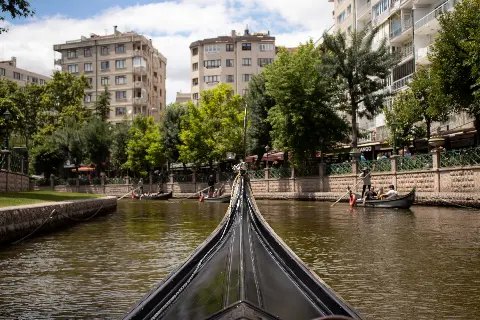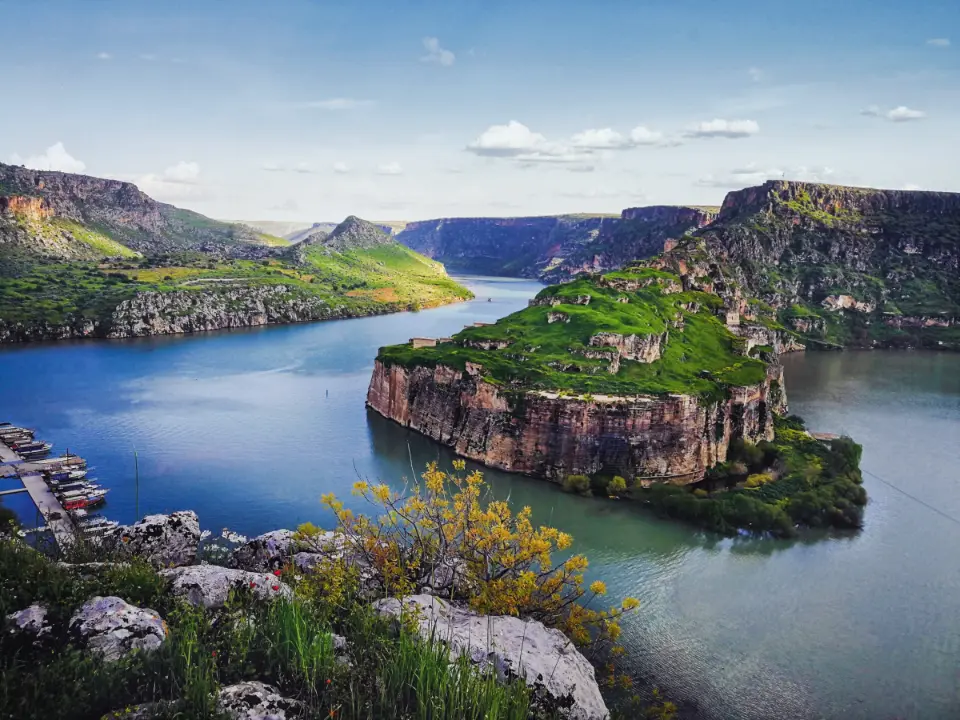
A detailed cultural, archaeological, and UNESCO gastronomy route across Gaziantep: Roman Euphrates villas at Zeugma, Mamluk and Ottoman hans, Bakırcılar Çarşısı, and Rumkale.
Euphrates Crossing at Zeugma and the Striped-Stone Bazaars of Ayıntab
Inhabited since the Paleolithic era at Dülük (ancient Doliche, centre of the cult of Jupiter Dolichenus) and Karkamış on the Euphrates, the Gaziantep plateau stood where the Silk Road met the Euphrates crossing of Zeugma, founded around 300 BC by Alexander the Great's general Seleucus I Nicator and later garrisoned by Rome's Legio IV Scythica, whose riverside villas yielded the world's finest Roman floor mosaics.
Known in medieval times as Ayıntab under Seljuk, Ayyubid, Mamluk, Dulkadirid, and Ottoman rule, the city built striped black-and-white stone (ablaq) mosques, spice bazaars, and subterranean water networks (livas and kastels), receiving the title Gazi in 1921 for its heroic defense during the Turkish War of Independence.
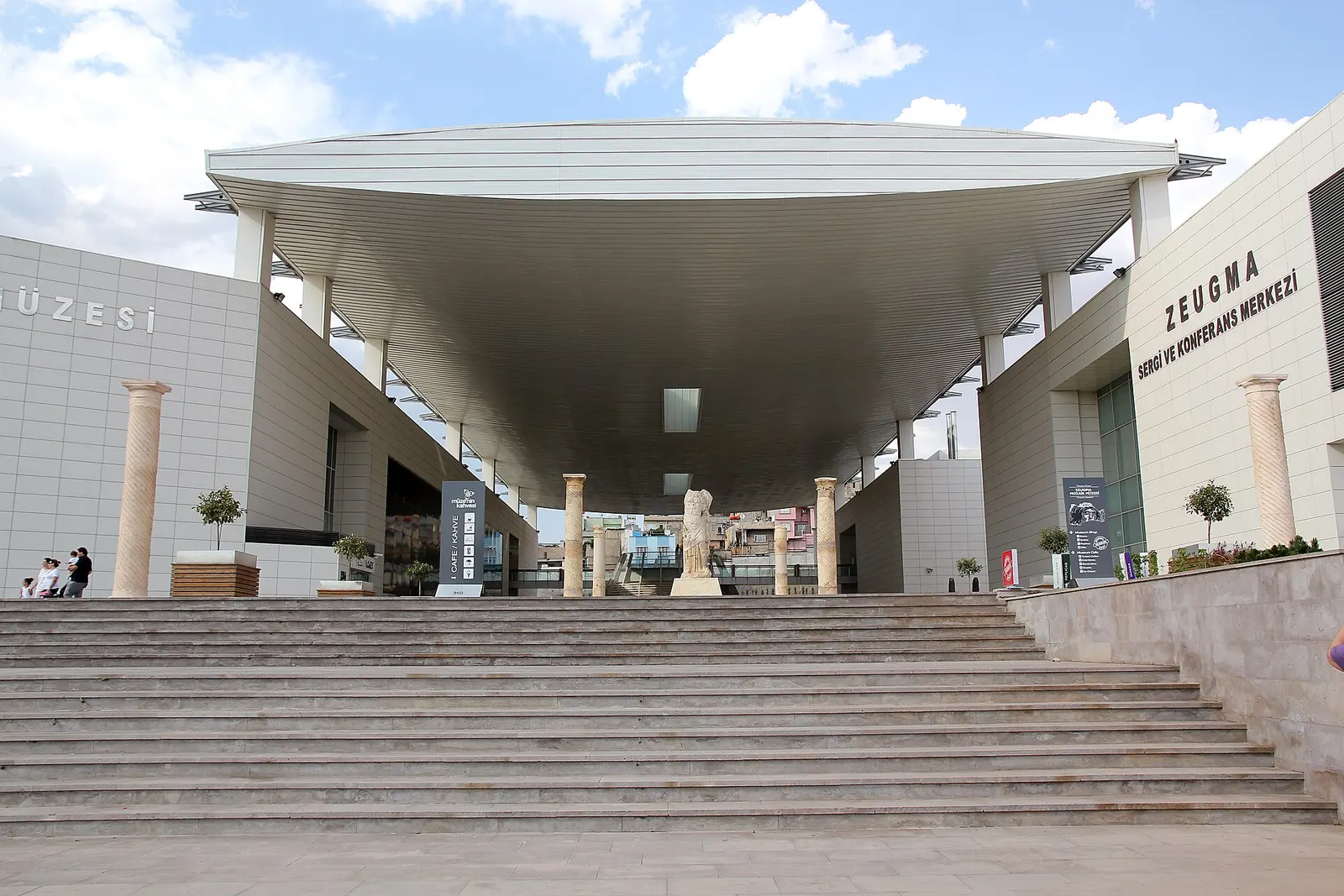
Zeugma Mosaic Museum & Archaeology Quarter
Zeugma Mosaic Museum, Gypsy Girl Mosaic (Maenad), Poseidon and Oceanus Villa Mosaics,Bronze Statue of Mars, Dionysus and Ariadne Wedding Mosaic, Euphrates Villa Frescoes, Gaziantep Archaeology Museum, and 100. Yıl Cultural Park
Zeugma Mosaic Museum
Opened in 2011 on the grounds of a former factory, this museum safeguards thousands of square metres of mosaics rescued from the ancient city of Zeugma. Visitors can wander multi-level platforms designed to replicate Roman residential layouts, examining limestone and glass tesserae that once adorned wealthy courtyards along the Euphrates.
Gypsy Girl Mosaic
Housed within an isolated, dimly lit chamber on the upper floor of the Zeugma Mosaic Museum, this second-century fragment depicts a figure often identified as a Maenad or Gaia. The artist used three-quarter perspective and expressive shading, creating gaze tracking that captures attention from any angle in the room.
Bronze Statue of Mars
Dating to roughly the second century AD, this nearly intact bronze figure represents the Roman god of war, standing on a limestone column overlooking the central museum atrium. The statue holds a spear and displays silver-inlaid eyes, retaining burn marks from the Sasanian sack of Zeugma in 253 AD.
Poseidon and Oceanus Villa Mosaics
These large floor compositions decorated the reception halls of Roman residences along the riverbank before modern dam construction flooded the original site. The detailed tesserae depict Oceanus, Tethys, and sea creatures swimming across aquatic scenes, framed by geometric borders engineered to resist water damage.
Dionysus and Ariadne Wedding Mosaic
Rescued from a Roman dining room triclinium, this panel portrays Dionysus and Ariadne seated together in a ceremonial chariot pulled by panthers. Surrounding borders contain intricate acanthus scrolls and attendant figures, illustrating the refined Hellenistic mythological tastes preferred by the Roman aristocracy in ancient Commagene.
Euphrates Villa Frescoes
Displayed adjacent to the mosaic pavements, these salvaged plaster sections demonstrate how wealthy Roman homeowners painted their domestic walls. Pigments derived from local minerals depict faux marble panels, garlands, and small deities, offering insight into provincial Roman interior decor before the mid-third-century destruction of the city.
Gaziantep Archaeology Museum
Located near the city centre, this institution displays artefacts ranging from Lower Palaeolithic flint tools to Neo-Hittite stone reliefs from Carchemish and Yesemek. The halls feature basalt orthostats carved with lions and deities, providing essential regional context for the later classical eras celebrated across Gaziantep.
Yıl Cultural Park
Stretching along the course of the Alleben Stream, this public green space connects the archaeological quarter with central civic districts. Shaded promenades, stone bridges, and recreational paths offer open-air transit between the Gaziantep Archaeology Museum and nearby cultural centres, serving as a social gathering place for residents.
Gaziantep Castle
Crowning a prominent mound in the city centre, this fortress was initially established as a Roman watchtower before expanding under Emperor Justinian in the sixth century. The limestone bastions and defensive walls enclose subterranean tunnels, having weathered numerous sieges through the Seljuk, Ottoman, and modern republican periods.
Şirvani Mosque
Situated just south of the castle mound, this mosque ranks among the oldest surviving Islamic places of worship in the city. Reconstructed during the seventeenth century, its exterior is notable for an unusual minaret possessing two separate balconies, constructed from alternating rows of dark basalt and pale limestone.
Alaybey Mosque
Erected in the early eighteenth century, this neighbourhood mosque exemplifies the classical Ottoman architectural style adapted to southeastern Anatolian stone traditions. The interior features a square prayer hall supported by thick masonry piers, while the courtyard contains an ornamental fountain used for ritual ablutions.
Zincirli Bedesten
Commissioned in 1781 by Huseyin Pasha, this single-storey covered bazaar is topped by brick vaults and barrel ceilings along a central corridor. Local craftsmen and tradesmen continue to sell copper goods, leather shoes, and regional spices, preserving the historic merchant heritage of the market quarter.
Bakırcılar Çarşısı
Centred in the old town below the citadel, this network of lanes preserves centuries of metalworking practice. The stone-built ateliers feature arched entryways where coppersmiths use wooden mallets to shape and engrave plates, trays, and coffee pots using decorative methods passed down through generations of artisans.
Tahtani Mosque
Constructed in the sixteenth century and repeatedly renovated, this mosque takes its name from the extensive timber joinery used within its sanctuary. Notable features include an intricately carved wooden minbar and painted ceiling beams, alongside alternating black and red stone masonry characteristic of regional Syrian-influenced architecture.
Kurtuluş Mosque
Constructed in 1892 as the Holy Mother of God Cathedral, this monumental building was designed by the Ottoman royal architect Sarkis Balyan. Its Gothic-inspired stone arches, tall rectangular towers, and striped basalt masonry were later converted into a mosque, creating a distinctive blend of Christian and Islamic structural elements.
Gaziantep War Museum
Set inside interconnected stone houses with sunken courtyards, this museum outlines the city's defence against French forces between 1920 and 1921. Underground cave networks beneath the floors display weapons, documents, and domestic items, illustrating how inhabitants sheltered and coordinated operations during the protracted siege.
Gaziantep City Museum
Occupying the restored Bayazhan building constructed in 1909 by a wealthy merchant, this museum explores local crafts, culinary traditions, and folklore. Dioramas, historic photography, and interactive craft exhibits provide context on Gaziantep's development from an agricultural trading hub into a major industrial city.
Pişirici Kasteli
Dating from the thirteenth-century Mamluk era, this underground water structure is one of several ancient castels built to exploit subterranean channels called livas. Stone stairs descend deep beneath street level into a vaulted limestone chamber, where natural spring water provided cooled bathing and drinking facilities year-round.
Kozluca Mosque
Erected by Melik Ozdemir during the Mamluk rule in 1373, this small mosque features thick ashlar walls and a fluted stone minaret. The interior sanctuary retains a restrained prayer hall with stone vaults, illustrating the architectural transition between early medieval Syrian builders and later Ottoman provincial governance.
Emine Göğüş Culinary Museum
Housed within an 1904 stone mansion near the citadel base, this museum details the UNESCO-recognised culinary practices of the region. Visitors can view copper cookware, traditional storage amphorae, and domestic kitchen setups that sustained Gaziantep families through centuries of seasonal food preparation.
Gaziantep Castle, Hamam Museum & Old Hans Quarter
Gaziantep Citadel & Defense Panorama, Naib Hamamı, Hamam Museum Pasha Bath, Şirvani Mosque Two-Pulpit Minbar, Kemikli Bedesten, Zincirli Bedesten, Millet Han, Bayazhan City Museum, and Gümrük Han Mosaic Coffee Stalls
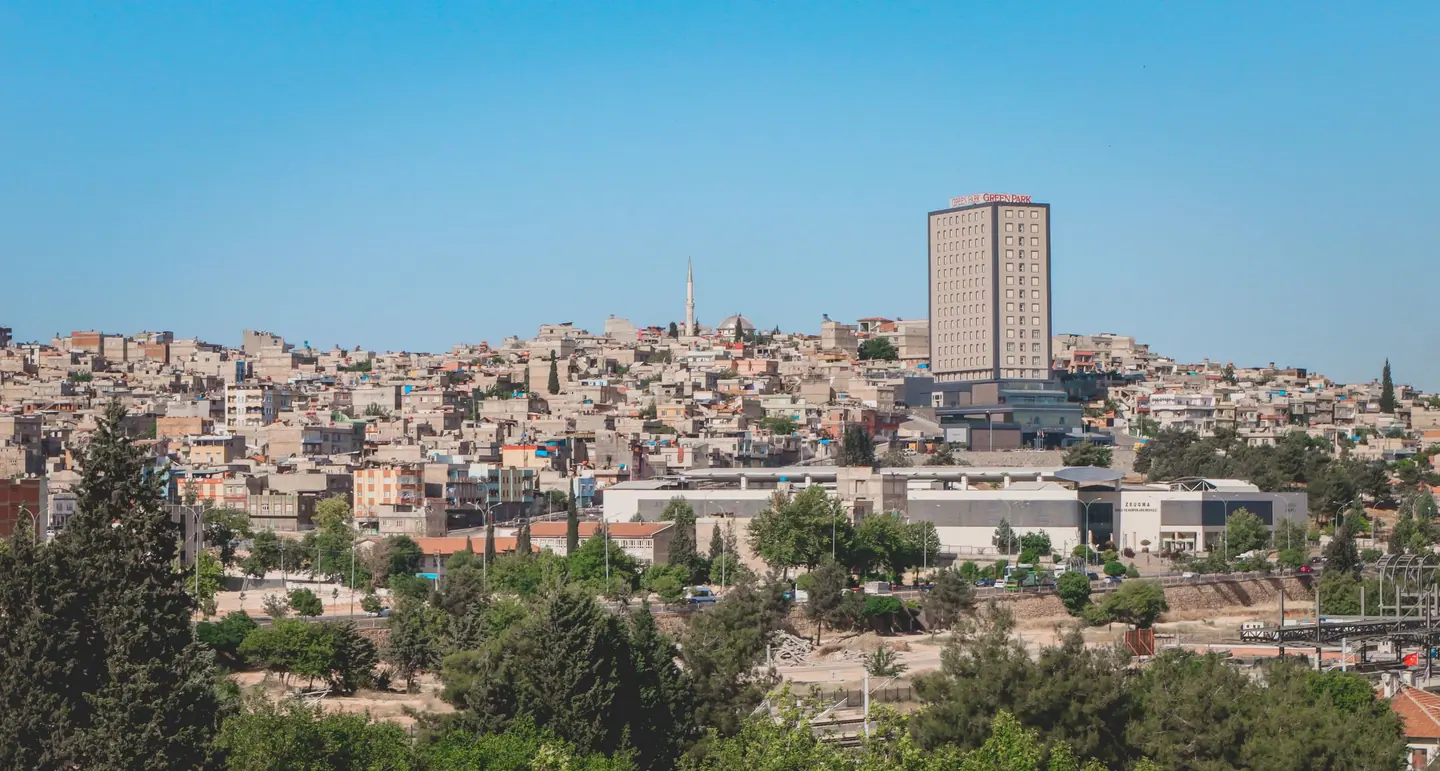
Gaziantep Castle
Originally constructed as a Roman watchtower, the fortress expanded into a formidable citadel under Emperor Justinian in the sixth century. Twelve stone towers and surrounding dry moats dominate the mound. Inside, galleries host exhibitions chronicling the city's defence during the Turkish War of Independence.
Gaziantep Defence and Heroism Panorama Museum
Set inside the vaulted subterranean galleries of Gaziantep Castle, this museum documents the 1920 to 1921 resistance against French forces. Dioramas, bronze reliefs and historical artefacts illustrate the ten-month siege. Visitors can examine original weaponry, period documents and life-sized sculptural displays depicting the civilian effort.
Naib Hamamı
Constructed in the 1640s, this classical Ottoman bathhouse served local residents for centuries directly below the citadel walls. Its architecture features traditional multi-domed chambers, stone hot rooms and marble massage platforms. We can admire the restoration that returned its authentic steam facilities and vaulted dressing areas to functional service.
Gaziantep Hamam Museum
Housed within the restored Lala Mustafa Pasha Bath from 1577, this cultural space displays the ceremonies of Ottoman cleansing rituals. Wax mannequins demonstrate traditional bath customs, bridal visits and massage techniques. Visitors inspect antique copper ewers, mother-of-pearl clogs and intricate stone heating channels installed beneath the floor.
Şirvani Mosque
Built during the seventeenth century, this structure ranks among the oldest mosques in the city. It is celebrated for its distinctive minaret that incorporates two separate balconies, alongside an uncommon sliding wooden minbar tucked beneath the pulpit. Alternating courses of black and white basalt accent its sturdy ashlar walls.
Kemikli Bedesten
Commissioned in 1865, this rectangular covered bazaar features ashlar limestone masonry and pointed arched ceilings. Historically dedicated to cloth merchants and bone carvers, it today houses artisans working in copper and leather. Two grand arched gates provide entry into its well-ventilated, daylight-lit stone central thoroughfare.
Zincirli Bedesten
Erected around 1781 by Huseyin Pasha, this single-storey covered bazaar is recognisable by its series of barrel vaults supported on solid stone piers. Dozens of traditional shops flank the central flagstone corridor. Travellers encounter metalworkers, spice traders and master craftsmen stitching traditional yemeni leather shoes.
Millet Han
Dating to 1868, this large two-storey caravanserai boasts an expansive open courtyard surrounded by stone-arched colonnades. Travellers once lodged upstairs while merchant caravans secured their camels and freight on the ground floor. Today, visitors can examine fine stone carvings and relax in tranquil craft studios.
Bayazhan Gaziantep City Museum
Constructed in 1909 by a wealthy tobacco merchant, this imposing complex reflects late Ottoman architecture with distinctive arched loggias and dressed limestone. The museum showcases municipal history, handicraft traditions and regional cuisine. Its large open-air courtyard serves as an atmospheric public gathering point framed by ornate balustrades.
Gümrük Han
Erected in 1878 as a customs house and inn for passing caravans, this two-storey stone monument centres on an irregular cobbled courtyard. Upper galleries host silversmiths and textile weavers demonstrating local heritage crafts. Downstairs, open-air cafes brew regional terebinth coffee over coals for resting visitors.
Tahtani Mosque
Dating to the sixteenth century, this historic mosque incorporates alternating bands of red and black volcanic stone. Its interior is noted for painted wooden ceilings and an intricate walnut minbar crafted without nails. A short, square-based minaret with a wooden roof crowns the modest prayer hall.
Alaybey Mosque
Built in 1720, this classic stone sanctuary features a central dome set upon heavy octagonal drums. The northern entrance is protected by a portico carried on cylindrical stone columns with carved capitals. Within the courtyard stands a finely proportioned stone fountain used for ritual ablutions.
Ali Nacar Mosque
Attributed to master carpenter Ali Nacar and expanded in 1816, this stone sanctuary displays some of the finest wood joinery in the province. The main hall is covered by wide barrel vaults anchored to stout masonry buttresses. Its minaret features elaborate geometric motifs carved directly into pale limestone blocks.
Kendirli Church
Erected in 1860 with assistance from French Capuchin missionaries, this Latin Catholic church exhibits strong Western architectural influences combined with regional stonecraft. Its facade presents neat ashlar courses, round arched windows and classical pediments. The interior hall has been repurposed for civic cultural lectures and historical retrospectives.
Kurtuluş Mosque
Constructed in 1892 as the Armenian Cathedral of the Holy Mother of God, this monumental building was designed by royal architect Sarkis Balyan. Converted into a mosque in the 1920s, it displays grand Gothic revival arches and heavy basalt cladding. Striking stone tiers and circular rose windows highlight its exterior walls.
Boyacı Mosque
Completed around 1357, this venerable site stands as one of the few surviving Mamluk structures in Gaziantep. It features an ingenious wooden minbar that moves along rails into an alcove, maximising floor space within the prayer hall. The heavy flat-roofed prayer hall relies on thick square columns and low vaults.
Pişirici Kasteli
Dating to the thirteenth century, this underground water fountain and ablution chamber belongs to the city's ancient water network. Cut deep into the limestone rock, it contains stone pools, prayer cells and channels fed by natural springs. The subterranean architecture protected water supplies from evaporation and hostile attack.
Kozluca Kasteli
Carved deep below street grade, this stone-vaulted cavern offered cold water and bathing rooms to medieval residents. Broad stone staircases descend to the subterranean halls where natural daylight filters through overhead shafts. We can inspect the ancient stone basins that regulated incoming stream volumes from underground aqueducts.
Eyüpoğlu Mosque
First raised in the late fourteenth century and substantially rebuilt during the nineteenth, this mosque anchors the Eyüpoğlu neighbourhood. Its prayer hall features arched cross vaults supported by heavy masonry pillars. Outside, an octagonal fountain basin sits in an intimate paved courtyard enclosed by stone walls.
Emine Göğüş Culinary Museum
Located in a restored stone residence dating from 1904, this museum honours the region's culinary heritage. Exhibits feature traditional copper pots, brass spice grinders, baking tools and earthenware storage jars. Information displays explain ancient preservation methods, seasonal ingredients and the intricate rituals surrounding banquet service.
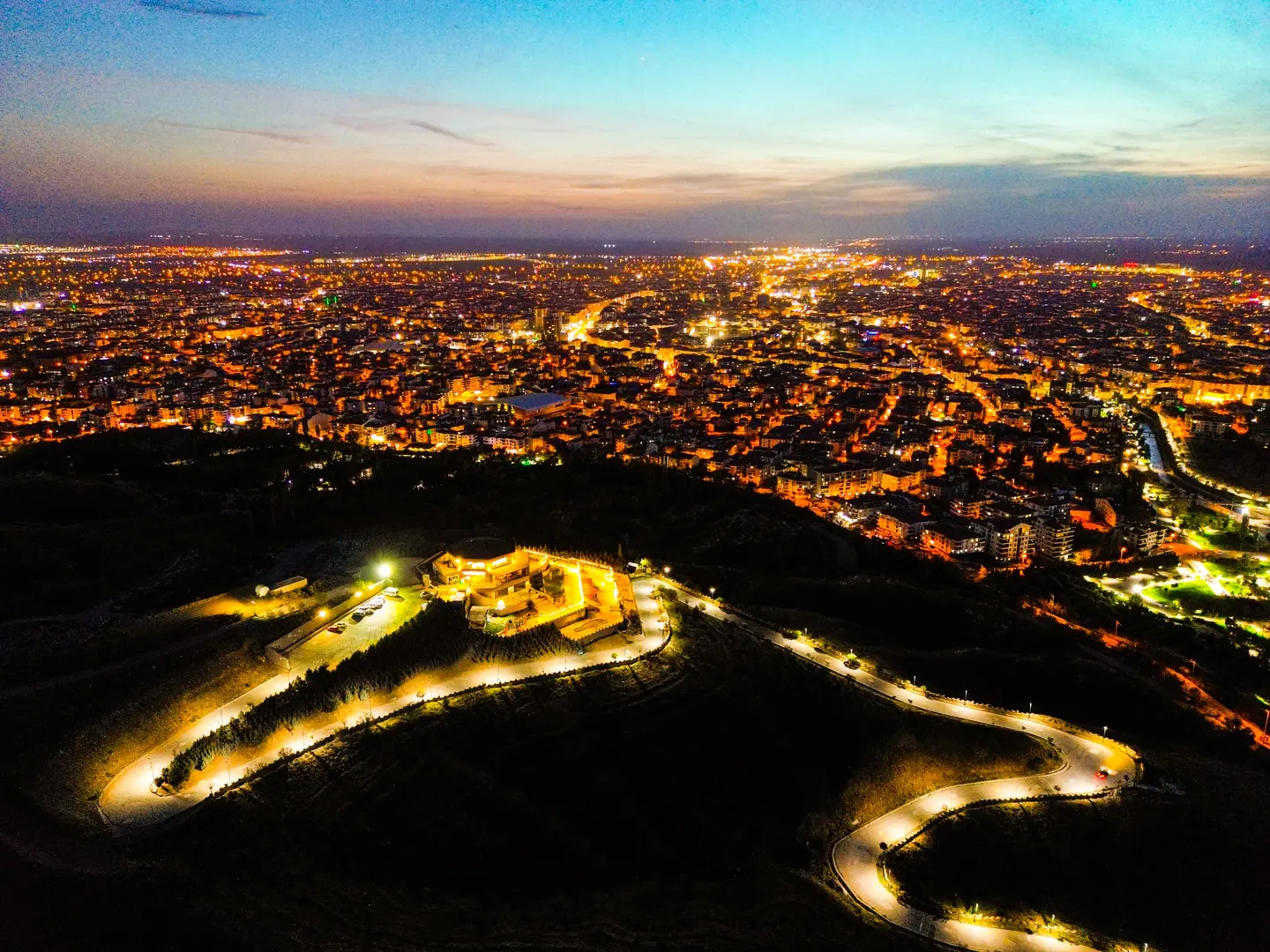
Bakırcılar Çarşısı, Elmacı Pazarı & Tahmis Kahvesi
Bakırcılar Çarşısı Coppersmiths Bazaar, Yemeniciler Arastası Leather Shoe Bazaar, Almacı (Elmacı) Pazarı Spice & Pistachio Market, Tahmis Kahvesi (1635 Menengiç Coffeehouse), İmam Çağdaş Historic Corner, Emine Göğüş Culinary Museum, and Mevlevihane Vakıf Museum
Bakırcılar Çarşısı
Operating continuously for centuries, this domed lane contains active artisan workshops crafting hand-hammered copper vessels. Visitors observe craftsmen engraving intricate floral patterns into trays, coffee pots, and cauldrons using chisels. The rhythmic hammering echoing off stone archways reflects the city's enduring metallurgical heritage.
Almacı Pazarı
Known historically as the apple market, this vaulted trading street serves as the principal depot for local dried foods and spices. Burlap sacks display emerald Antep pistachios, dried aubergines, sun-ripened peppers, and blocks of fruit molasses. Its compact alleys preserve the aromas and atmosphere of Ottoman provincial commerce.
Tahmis Kahvesi
Established in 1635 by Turkmen leader Mustafa Agha Bin Yusuf, this two-storey coffeehouse features stained-glass windows, dark timber galleries, and central iron stoves. Patrons gather to drink menengiç, a caffeine-free beverage prepared from roasted wild terebinth berries simmered in milk. It remains one of the oldest operating coffee establishments in Anatolia.
Yemeniciler Arastası
Situated adjacent to the copper bazaar, this narrow lane houses shoemakers handcrafting regional leather slippers called yemeni. Crafted from water buffalo, goat, and cow hides without synthetic adhesives, these shoes feature clay soles stitched with beeswaxed twine. The market gained international renown after supplying footwear to period cinema productions.
Emine Göğüş Culinary Museum
Housed within an 1904 Ottoman stone residence, this institution presents the history and equipment of Gaziantep cooking traditions. Dioramas and period kitchenware demonstrate regional culinary practices including copper cooking pots, grain mortars, and seasonal preservation methods. Informational displays trace local recipes recognised by international gastronomic cultural listings.
Gaziantep Mevlevihane
Constructed in 1638 under the patronage of Mustafa Agha, this extensive Sufi complex incorporates a semahane ceremonial hall, dervish cells, and tomb structures. Today, the complex showcases Ottoman manuscripts, historic prayer rugs, calligraphy panels, and Mevlevi ritual garments. Architectural details feature regional limestone masonry and vaulted courtyards.
Kürkçü Hanı
Dating from the eighteenth century, this two-storey urban caravanserai once accommodated furriers and textile traders journeying across Anatolia. Its central open courtyard is enclosed by stone arcades supporting upper rooms that now house craft workshops and antique dealers. The building exemplifies the practical stone vernacular of late Ottoman commercial inns.
Zincirli Bedesten
Built by Hüseyin Pasha of Darende around 1718, this monumental covered bazaar features parallel barrel-vaulted hallways lit by clerestory windows. The stone market was planned to protect valuable trade goods like silk and precious metals from fire and theft. Modern shops inside sell hand-woven kilims, filigree silver, and mother-of-pearl woodwork.
Tarihi Millet Hanı
Constructed in 1575, this large limestone han provided secure stables, lodging, and warehouse space for merchants on regional desert trade routes. The extensive open courtyard leads into cross-vaulted ground-floor rooms built from alternating dark and light basalt blocks. The upper floor now accommodates artisan galleries and cultural workshops.
Şıh Mosque
Built in 1563 by Şeyh Karaca Ahmed, this religious site is known for its carved stone mihrab and subterranean winter prayer hall. The complex includes an adjoining fountain and a stone minaret decorated with geometric bands. Natural thermal regulation provided by its partly underground rooms keeps the interior cool during summer months.
Kastel of Pişirici
Built during the Mamluk period around 1282, this underground structure forms part of the city's unique livas water-supply system. Carved directly into the bedrock beneath street level, it contains public ablution basins, toilets, and bathing alcoves cooled by subterranean springs. Skylights cut into vault ceilings provide illumination from the street overhead.
Boyacı Mosque
Commenced in 1211 and completed under Mamluk rule in 1357, this historic mosque displays thick stone piers and low cross vaults. The interior preserves a celebrated wooden minbar constructed using the intricate kündekari joinery method without nails or glue. The minbar rolls outward on wooden wheels along floor tracks when required for Friday sermons.
Tuz Hanı
Constructed during the eighteenth century, this compact stone caravanserai served merchants distributing regional salt supplies from Mediterranean pans and inland lakes. The rectangular courtyard exhibits fine masonry arches, recessed stables, and second-floor living quarters with wooden lintels. The restored complex now contains craftspeople demonstrating silver casting and leather tooling.
Naib Turkish Bath
Erected in 1640, this classic Ottoman bathhouse features high stone domes pierced with circular glass illumination lenses called elephant eyes. The layout incorporates a warm transition room, a central marble massage slab, and private washing corners beneath ornate squinches. It offers an authentic demonstration of classic Ottoman hydropathic architecture.
Alaüddevle Mosque
Dating to the turn of the sixteenth century, this mosque was erected by the ruler of the Dulkadir principality before Ottoman annexation. Reconstructed following a major nineteenth-century fire, the hall features dark basalt accents and an ornate wood-carved ceiling. Its octagonal stone minaret stands out prominently over the surrounding market roofs.
Ali Nacar Mosque
Attributed to an artisan named Ali Nacar, this community mosque features masonry techniques unique to the late Ottoman provincial period. The interior prayer hall rests upon heavy arches supporting broad cross vaults, ensuring cooler temperatures in warm seasons. The courtyard provides views of nearby historic guild workshops.
Büdeyri Hanı
Built in the late Ottoman period around 1890, this dual-entrance inn catered to agricultural traders from neighbouring villages. Sturdy limestone arches frame an open courtyard leading to subterranean vaults once used for livestock stabling and bulk goods storage. Today, ground-floor shops sell authentic mother-of-pearl chests and copper wares.
Kozluca Kasteli
This underground water depot and social room was engineered beneath street level to tap into the subterranean canal network. Built out of hewn limestone with barrel vaulting, the structure provided community bathing facilities protected from extreme summer heat. Descending steps reveal stone channels directing spring water through separate washing pools.
Tahtani Mosque
Dating to 1557, this mosque is known as the wooden mosque because of its ornate timber roof framework and painted ceiling beams. The minbar and mihrab showcase fine regional stone carving set against whitewashed limestone walls. Its octagonal stone minaret features red and white alternating masonry layers above the parapet.
İmam Çağdaş Historic Corner
Founded in 1887 by Hacı İmam, this landmark corner represents the culinary heart of the historic marketplace district. Master pastry chefs work on site, rolling paper-thin phyllo pastry dough over marble benches and baking it with clarified butter and Antep pistachios. The site remains a core pilgrimage point for Turkish gastronomic tradition.
Bey Mahallesi Stone Houses, Kurtuluş Mosque & Kastels
Bey Mahallesi Black Basalt and White Limestone Lanes, Kurtuluş Mosque (Former St Mary’s Church), Kendirli Church, Hasan Süzer Ethnography Museum, Ali İhsan Göğüş Museum, Oyun ve Oyuncak Toy Museum, Pişirici Kasteli Subterranean Water Mosque, and Şeyh Fethullah Mosque
Bey Mahallesi
This preserved residential neighbourhood displays distinctive Antep vernacular houses crafted from local keymıh limestone and dark basalt. Wandering the narrow flagged lanes, visitors can observe high courtyard walls, ornate wooden bay windows, and carved stone portals. Several domestic mansions now function as municipal cultural spaces and boutique cafes.
Kurtuluş Mosque
Constructed in 1892 as the Armenian Cathedral of the Holy Mother of God (Surp Asdvadzadzin), this grand stone edifice was designed by the imperial architect Sarkis Balyan. Following decades of alternative civic uses, it was rededicated as a mosque in the late twentieth century. Its soaring neoromanesque facade features striking bi-chrome masonry and twin bell towers that now serve as minarets.
Kendirli Church
Erected in 1898 through collaboration between local Armenian Catholics and French missionaries, Kendirli Church reflects classical European basilica plans executed in local stone. The building features an austere facade carved with religious medallions, complemented by a raised central nave. Today the restored interior serves the city as a cultural and conference hall.
Hasan Süzer Ethnography Museum
Housed within an authentic nineteenth-century mansion in Bey Mahallesi, this museum illustrates bourgeois life in Ottoman Gaziantep. Visitors step into a central courtyard leading to subterranean stone larders, winter reception parlours, and carved wooden chambers. The displays feature period costumes, copperware, and typical domestic furnishings arranged across several split levels.
Ali İhsan Göğüş Museum
Located in a renovated historic Bey Mahallesi residence, this museum commemorates Turkey's first Minister of Tourism and Information, Ali İhsan Göğüş. Exhibits trace his journalism career and political legacy through archival photographs, official documents, and family heirlooms. The building itself exhibits traditional vaulted stone basements and fine timber ceilings.
Gaziantep Toy Museum
Founded under the curation of writer Sunay Akın, this collection occupies an ancient Antep townhouse equipped with multi-level rock-cut cellars. The galleries showcase thousands of manufactured toys from the eighteenth century to the modern era, sourced globally. The contrast between ancient masonry cellars and colourful vintage toys creates a memorable educational walk.
Atatürk Memorial Museum
Mustafa Kemal Atatürk was officially registered into the civil population records of Bey Mahallesi following his historic 1933 visit to the city. This traditional stone house commemorates that civic link with period furniture, archival state documents, and personal artefacts. Visitors can inspect the leafy internal courtyard and the characteristic Antep stone masonry throughout.
Pişirici Kasteli
Built during the Seljuk or early Mamluk era around 1282, this subterranean complex is the oldest of the city's unique kastel water systems. Cut deep into the bedrock, it funnels cool subterranean channels into ablution pools, prayer niches, and bath chambers. The surviving rib vaulting and sunken gathering hall illustrate ingenious medieval hydraulic engineering.
Şeyh Fethullah Mosque
Constructed in 1563 by the mystic Şeyh Fethullah, this complex comprises a central dome prayer hall, medrese cells, and an adjacent underground water cistern. The prayer hall features alternating black and white stone voussoirs on its arched entrance and a carved wooden minbar. Below the courtyard, visitors can access the functional kastel fed by subterranean springs.
İmam Çağdaş Historic Quarter
Sitting on the perimeter between the fortress and trade markets, this district preserves venerable culinary foundations that have operated since the late nineteenth century. Stone facades and traditional shopfronts line the pedestrian walkways where regional baklava and copper craft traditions continue. It provides an immediate sense of the historic city's market vitality.
Kozluca Kasteli
This underground kastel provided neighbourhood residents with clean spring water channeled by subterranean livas (aqueducts). Descending stone stairs leads to rock-cut pools, stone seating ledges, and quiet prayer spaces maintained at stable subterranean temperatures. It demonstrates how community hygiene and spiritual ablution converged beneath the city streets.
Tahtani Mosque
Tahtani Mosque is one of the oldest Islamic sanctuaries in the city, tracing its initial foundation to the sixteenth century. Rebuilt with fine ashlar stonework, its quiet interior is supported by robust pillars under a flat timber ceiling. The mosque is notable for its painted timber embellishments and its slender stone minaret banded with black basalt.
Eski Saray Mosque
Originally established during the Mamluk dominion in the fourteenth century, the Eski Saray Mosque stands near the city's ancient government centre. The prayer hall features thick load-bearing masonry walls, pointed stone arches, and an austere minaret. It illustrates the enduring continuity of medieval congregational architecture across periodic regional earthquakes.
Ahmet Çelebi Mosque
Commissioned in 1672 by Hacı Ahmet Çelebi, this religious foundation reflects classical Ottoman provincial design. The main prayer hall features a substantial central dome resting on deep squinches, surrounded by a peaceful walled courtyard. Pay special attention to the fine stone carving of the minbar and the alternating light and dark voussoirs above the entrance.
Boyacı Mosque
Started in the Mamluk period and completed in the early fifteenth century, Boyacı Mosque is among the most revered historical sanctuaries in Gaziantep. The interior contains a remarkable mechanical wooden minbar that slides forward along concealed floor tracks on wheels. The exterior shows traditional striped masonry and a stout minaret decorated with geometric friezes.
Eyüpoğlu Mosque
Established in the fourteenth century by Eyüboğlu Ahmet, this mosque underwent significant rebuilding in the nineteenth century and again following the 1920 siege. The structure exhibits typical Antep stone workmanship with deep-set windows and a square courtyard surrounded by porticoes. It remains a tranquil community centre near the western edge of Bey Mahallesi.
Ömeriye Mosque
According to local tradition, this sanctuary dates back to the reign of Caliph Omar, though the current stone structure was extensively rebuilt in 1210. The entrance arch exhibits fine inscriptions and carved geometric patterns characteristic of medieval Islamic art. The courtyard remains an oasis of quiet, flanked by arched cloisters and historic grave markers.
İbrahim Tevfik Kutlar House
This expansive residential compound represents the apex of nineteenth-century domestic civil architecture in Gaziantep. Built around a high-walled courtyard called a hayat, the house features raised living quarters designed for cross-ventilation during hot summers. The facade is marked by finely chiselled stone reliefs, iron-grilled windows, and cantilevered timber balconies.
Kemikli Bedesten
Erected in the mid-nineteenth century by Müftü Hacı Fevzi Efendi, this vaulted covered market hall connects several bazaar alleys. The barrel-vaulted corridor features rhythmic stone arches built using alternating bands of red and white limestone. Artisans and traders continue to sell traditional clothing, regional spices, and leather goods within its cool interior.
Gaziantep Synagogue
Constructed in the late nineteenth century to serve the flourishing Jewish community of Gaziantep, this synagogue lay neglected for decades before a comprehensive restoration. The interior boasts a large central prayer space, classical columns, and an elevated women's gallery illuminated by high arched windows. It stands as an essential architectural monument to the city's cosmopolitan history.
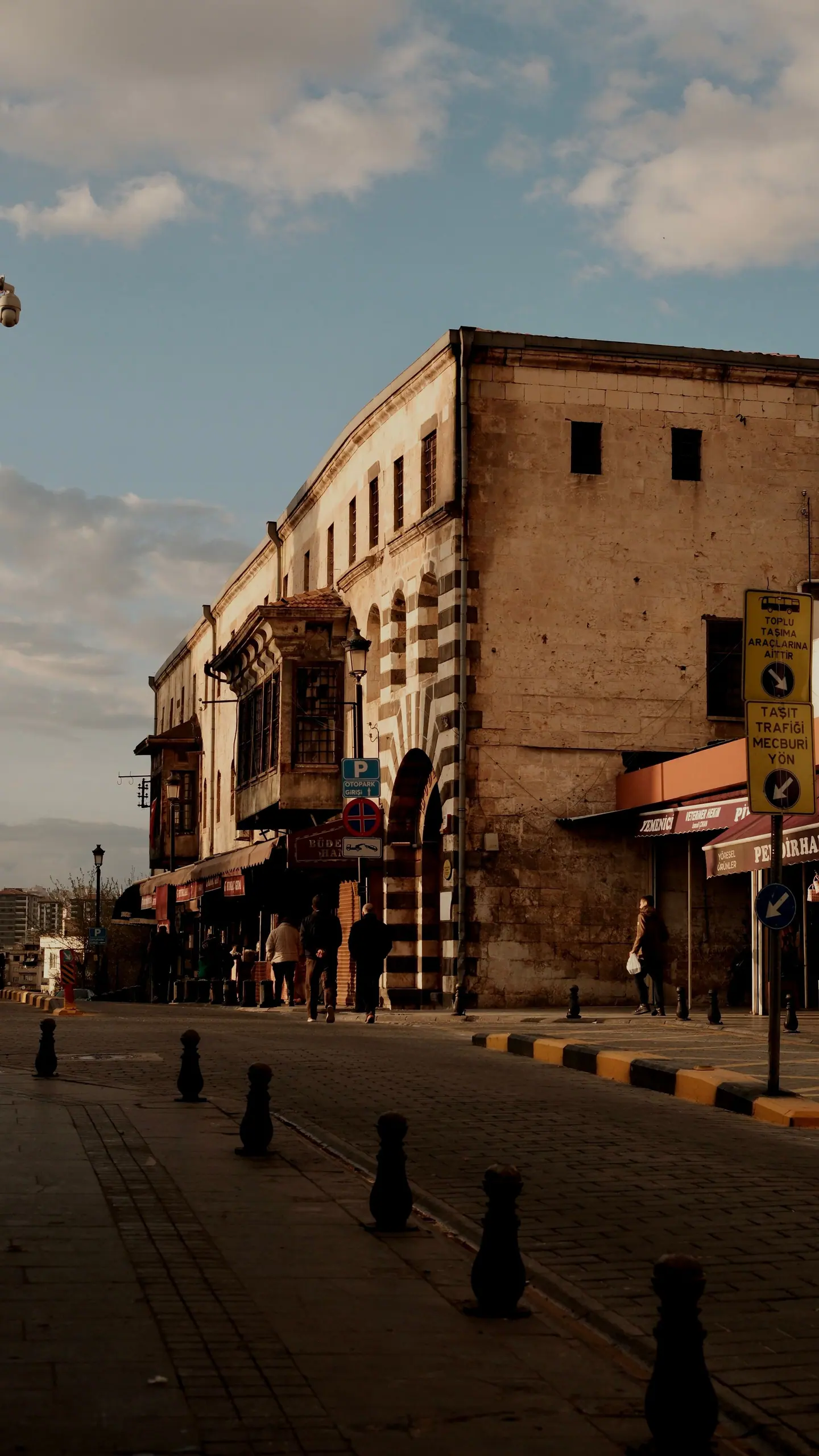
Rumkale on the Euphrates, Halfeti, Zeugma Belkıs & Yesemek
Zeugma Ancient City Overlook at Belkıs on the Euphrates, Rumkale Peninsula Fortress & St Nerses Church, Sunken Minaret Boat Route, Dülük Baba & Doliche Mithraeum Rock Sanctuary, Karkamış, and Yesemek Open-Air Hittite Sculpture Quarry
Zeugma Archaeological Site
Founded by Seleucus I Nicator, this classical settlement once guarded a crucial military crossing of the Euphrates river. Today protective canopies shelter surviving mosaic pavements, peristyle courtyards, and Roman drainage channels on the hillside above Belkıs village. Visitors can examine exposed domestic quarters and original stone walls excavated before reservoir waters rose.
Belkıs Tepe
This elevated limestone hill served as the high citadel and religious precinct for ancient Zeugma. Traces of defensive foundations and sacrificial altars remain scattered across the stony summit. From this high ground, visitors look directly down over the submerged lower terraces and the broad ribbon of the Birecik reservoir.
Zeugma Dionysus and Danae Villas
Constructed along terraced slopes overlooking the river, these Roman villas display exceptional domestic planning from the imperial era. Walking routes through the modern canopy structure lead visitors past colonnaded courtyards, private cisterns, and lime plaster walls. The layout demonstrates how wealthy river merchants lived along the Roman eastern frontier.
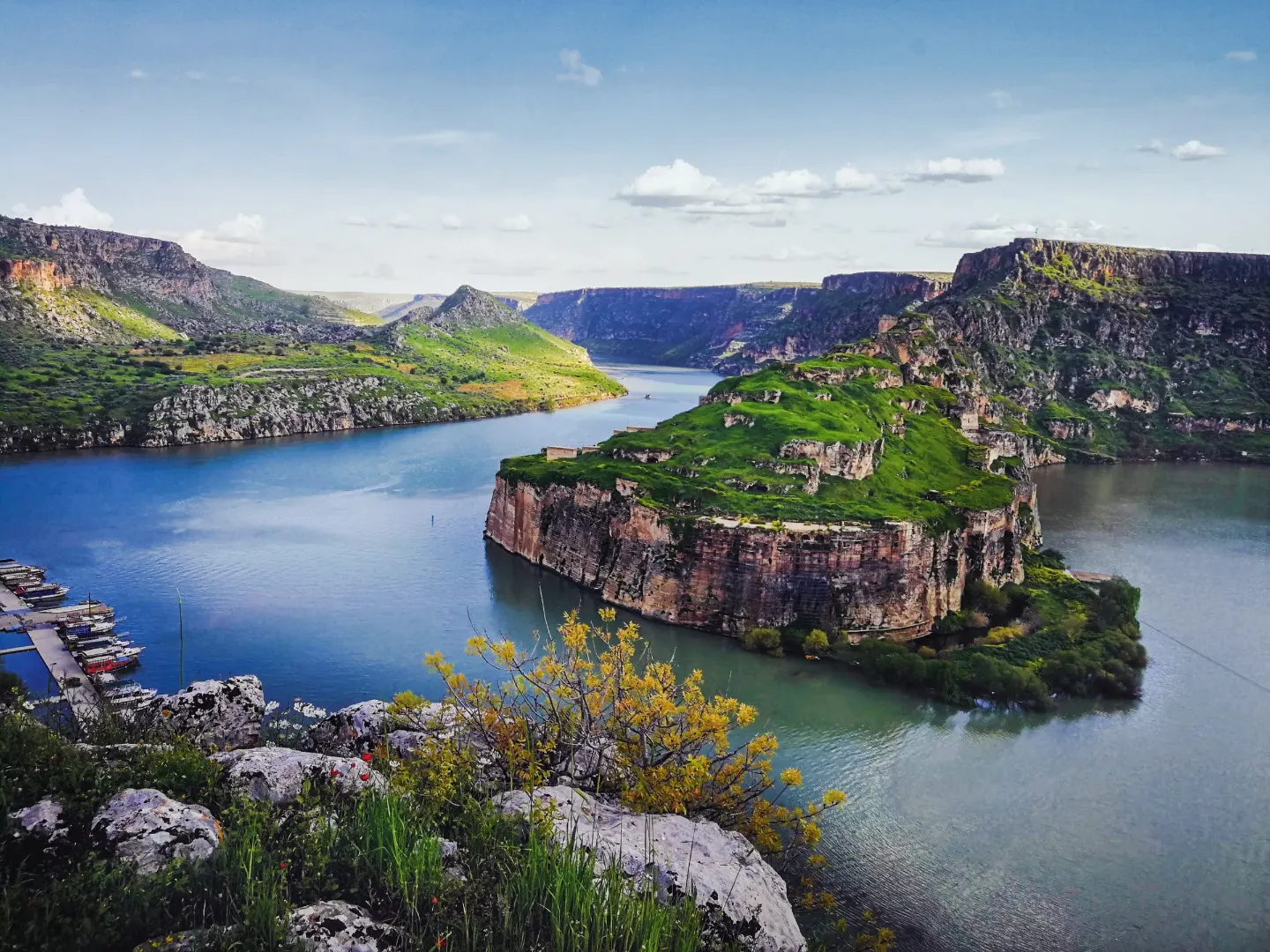
Rumkale Fortress
Carved directly into living limestone, this formidable citadel crowns a high peninsula formed by the meeting of two river valleys. It served as an ancient Roman outpost and later as the medieval seat of the Armenian Patriarchate. Massive rock-cut trenches, ruined battlements, and arched water gates still line the steep cliffs.
Church of Saint Nerses at Rumkale
Erected in the twelfth century by Catholicos Nerses IV Shnorhali, this ruined church demonstrates fine medieval masonry techniques. The stone structure preserves decorative relief carvings, pointed Gothic arch fragments, and barrel-vaulted ceiling sections. It reflects the era when Rumkale served as an important theological centre in the Armenian Kingdom of Cilicia.
Rumkale Rock Well
This engineering marvel descends through the solid rock core of the fortress to secure water directly from the riverbed below. Measuring eight metres in diameter, the shaft contains a rock-cut spiral ramp flanked by ventilation slits. Defenders relied on this protected well system to survive prolonged sieges across multiple centuries.
Barşavma Monastery
Commissioned by the Syriac Orthodox community, this monastic complex sits perched on the northern defensive terrace of Rumkale. Surviving masonry includes cross-inscribed stone lintels, barrel vaults, and fragmented residential cells. The complex documents the close coexistence of Christian denominations inside the river citadel during the Middle Ages.
Old Halfeti
Following the completion of the Birecik Dam, modern reservoir waters flooded the lower terraces of this historic town on the Euphrates. Two-storey limestone houses built in traditional Ottoman Urfa style rise directly from the water edge. Boats depart regularly from the modern quayside to tour the submerged alleyways and stone staircases.
Halfeti Sunken Minaret
Located in the abandoned village of Savaşan, this carved stone minaret projects directly out of the Euphrates reservoir. The accompanying prayer hall, courtyard, and surrounding village dwellings sit submerged beneath the surface. It provides a striking visual marker of the modern ecological transformation across the river valley.
Savaşan Village Terraces
These stone houses, constructed from pale local limestone, cling to steep cliff faces above the sunken mosque. Abandoned when river levels rose, the settlement retains carved door frames, roof terraces, and dry stone walls. Boat passengers observe the empty village preserved against the sheer river cliffs.
Doliche Ancient City
Located near modern Dülük, this historic site originated as an Iron Age sanctuary before expanding into a major Commagenian and Roman city. Excavations have brought to light monumental basilica foundations, defensive city walls, and paved Roman streets. The city was widely known across the ancient world as the cult centre of Jupiter Dolichenus.
Dülük Baba Tepesi
Rising above the northern plains of Gaziantep, this conical summit has hosted religious rituals since the early Iron Age. Archaeology has revealed extensive foundations of the sanctuary dedicated to Hadad, later identified by Romans as Jupiter Dolichenus. Today a historic Islamic dervish tomb sits among ancient stone blocks and olive groves.
Doliche Mithraeum I
Discovered within a subterranean rock quarry, this sanctuary served initiates of the Roman mystery cult of Mithras. The chamber features carved rock benches along the walls and a central niche for tauroctony cult reliefs. It represents one of the largest and most complete Mithraic shrines ever identified in the eastern provinces.
Doliche Mithraeum II
Positioned close to the primary Mithraic shrine, this second rock-cut hall displays distinct architectural adaptations for ritual dining. Carved stone basins, niche recesses for oil lamps, and chiseled wall inscriptions survive intact. The complex reveals the significant concentration of Roman soldiers and initiates stationed around ancient Doliche.
Dülük Rock Tombs
Dozens of family burial chambers line the exposed limestone terraces around the village of Dülük. Visitors can observe carved facade decorations, stone burial troughs, and arched arcosolia cut directly into the hillside rock. These tombs date from the Hellenistic and Roman periods when the regional elite constructed elaborate permanent resting places.
Karkamış Ancient City
This major fortified capital served as the regional seat of the Hittite Empire and later became an independent Neo-Hittite kingdom. Straddling the international border on the Euphrates, the site contains an acropolis mound, paved processional avenues, and monumental gateways. Joint archaeological teams have uncovered important orthostat reliefs and royal palace foundations here.
Carchemish Water Gate and Lower Palace
Guarding the river approach to the lower city, this massive stone portal demonstrates the advanced defensive architecture of the late Bronze Age. Basalt plinths and large limestone blocks define the original gate chambers and adjoining palace quarters. It offered direct control over trade caravans crossing the Euphrates into northern Mesopotamia.
Yesemek Open-Air Museum
Spanning hillside terraces in Islahiye district, this sprawling archaeological park served as an imperial Hittite sculpture workshop between the fourteenth and eighth centuries BC. Hundreds of partly carved basalt figures remain in situ across the slopes. The site provides an exceptional view of ancient stonecutting techniques, carving phases, and transport logistics.
Yesemek Sphinx Workshop
Among the most prominent sculptures in the Yesemek park are dozens of colossal portal sphinxes, preserved at various stages of completion. Stonemasons rough-hewed the lion bodies and human faces directly from basalt boulders before abandonment. Visitors can walk among these monolithic figures to see original chisel marks and outline grooves.
Yesemek Mountain God Reliefs
Clustered on the upper quarry slopes, these carved basalt blocks represent Hittite mountain gods with stylized conical caps and clasped hands. Intended for imperial temple facades and sacred gates across the region, they were never delivered to their destinations. They illustrate the sacred iconography that defined late Hittite state religion and royal art.
Pairing Old Gaziantep Bazaars with Halfeti and Rumkale
For neighbourhood accommodation notes, seasonal weather tables and airport transfer details, consult our Gaziantep destination guide, or browse other city and regional walking routes across the atlas.