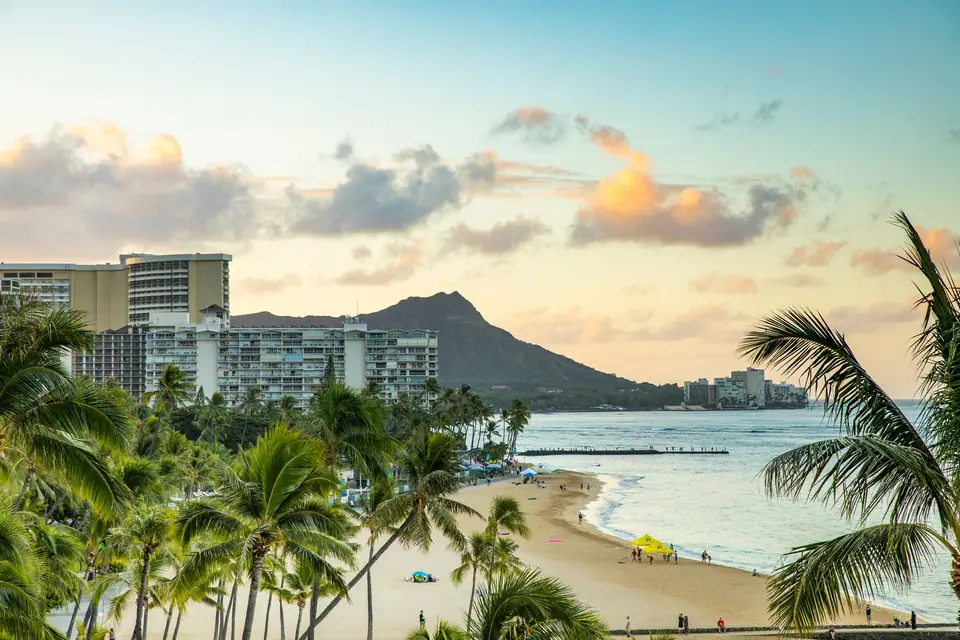
Trace the sovereign legacy of the Hawaiian Kingdom, historic maritime trade, and mid-century resort architecture across Oahu's storied southern coastline.
From Kou Harbour to Monarchy and Pacific Metropolis
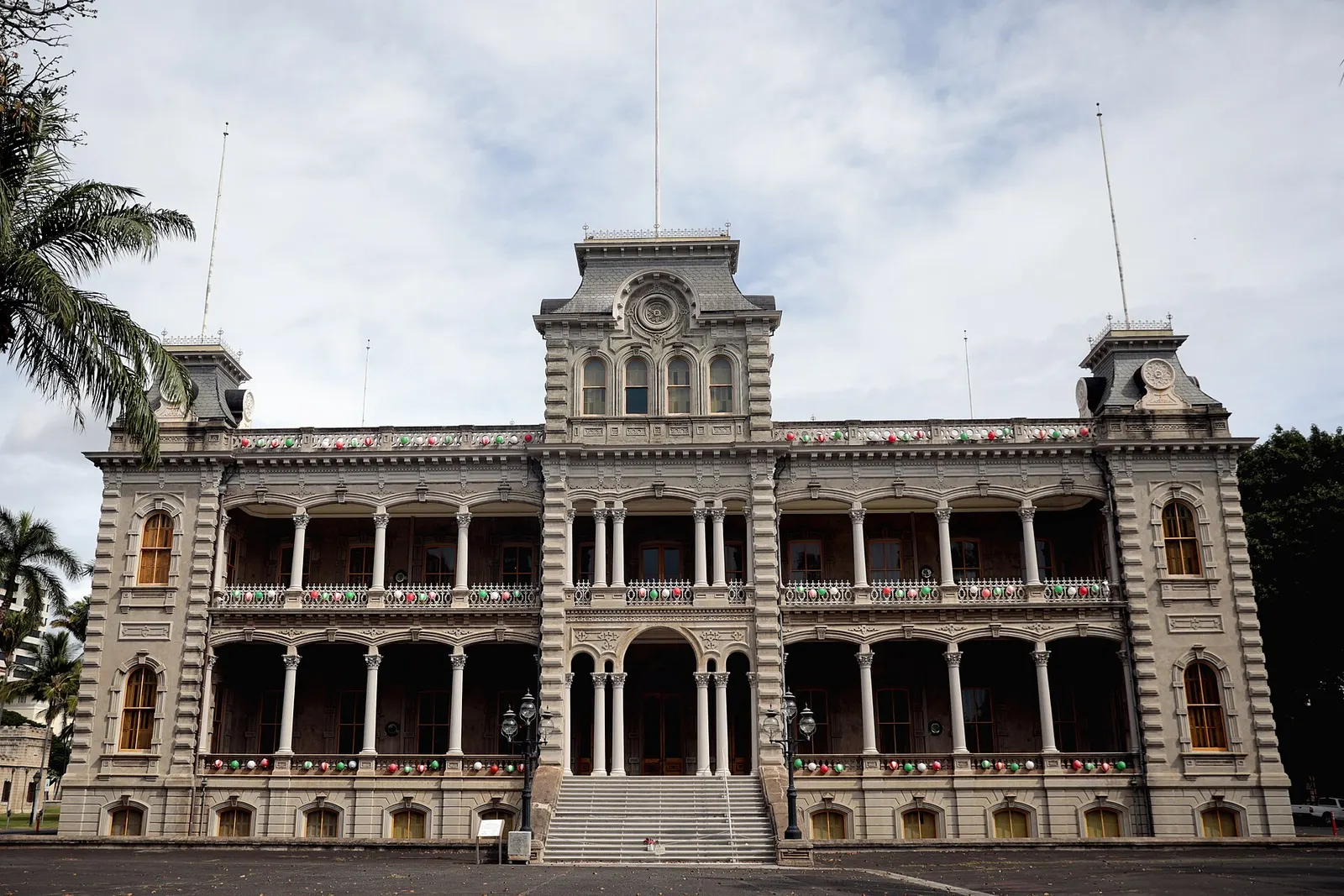
Long before foreign vessels anchored offshore, indigenous Hawaiians settled the coastal plain of Kou, drawn by fertile streams running down from Nuuanu Valley into a sheltered natural harbour. King Kamehameha I consolidated rule over Oahu in 1795, and by 1845 King Kamehameha III formally moved the royal capital from Lahaina to Honolulu. The nineteenth century witnessed an architectural golden age: coral-block sanctuaries like Kawaiahao Church rose beside European-influenced civic monuments, culminating in 1882 with Iolani Palace, an ornate Florentine-influenced seat of Polynesian sovereignty equipped with electricity and modern amenities well ahead of European courts.
The illegal overthrow of Queen Liliuokalani in 1893 and subsequent American annexation rapidly transformed the urban centre into a historic commercial crossroad of sugar syndicates and Pan-Asian merchant quarters. Following the Second World War and 1959 statehood, Honolulu embraced tropical modernist architecture, remaking beachfront Waikiki and the downtown financial district with sweeping concrete colonnades and breezy brise-soleil facades while safeguarding ancient cultural foundations.
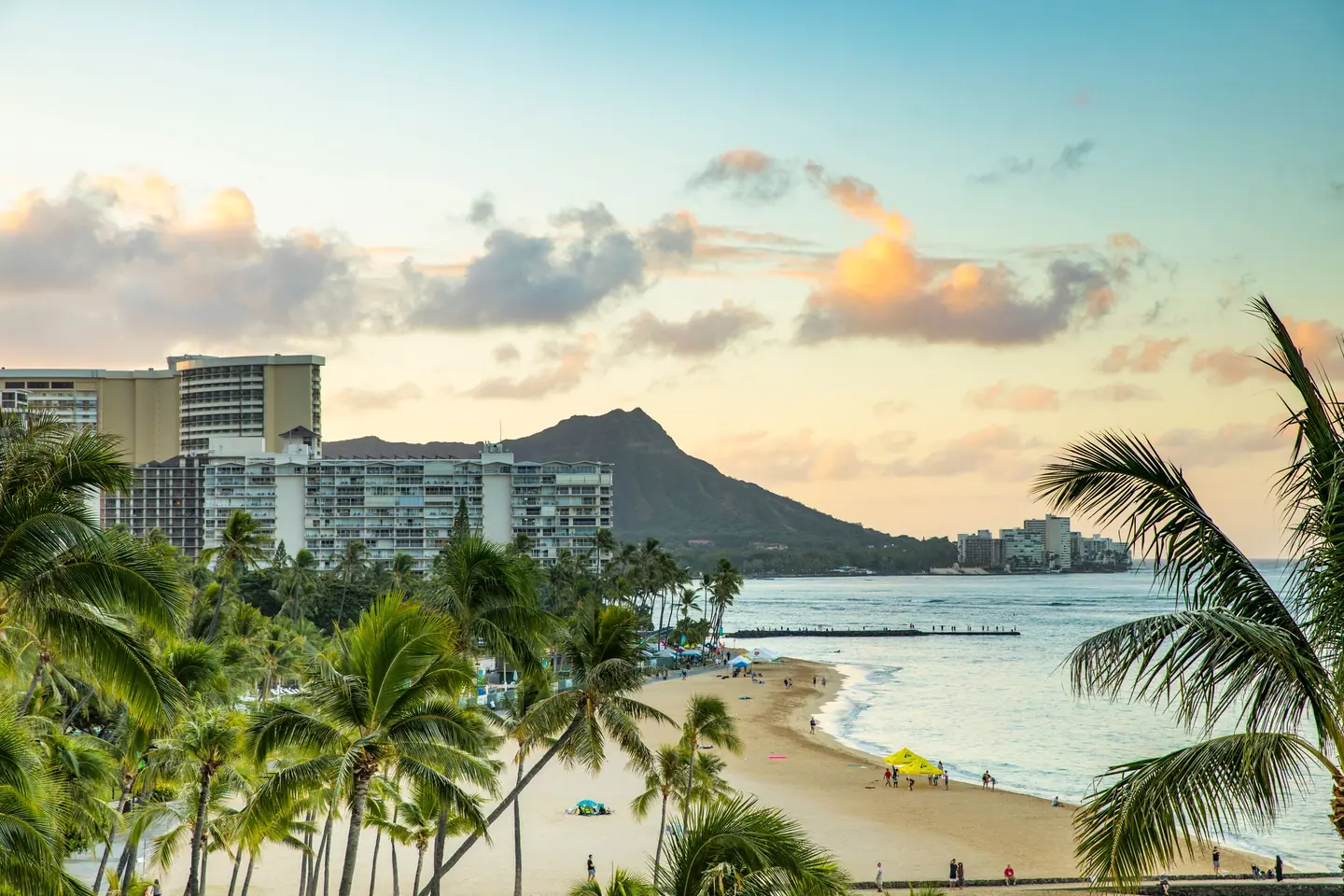
Capitol District and the Sovereign Royal Quarter
Stand amidst the political heart of Hawaii, where the neo-classical Iolani Palace, coral-built Kawaiahao Church, and the open-air State Capitol reflect shifting eras of governance.
Iolani Palace
Completed in 1882 under King Kalakaua, this palace showcases American Florentine architecture combining Italian Renaissance details with native koa wood interiors. Visitors can examine royal portraits, electric lighting systems installed before the White House had them, and the tragic upper room where Queen Liliuokalani remained imprisoned after the 1893 overthrow.
Hawaii State Capitol
Erected in 1969 to replace Iolani Palace as the seat of government, this distinctive structure reflects Hawaiian volcanic geology and oceanic heritage. Its open-air rotunda admits natural rainfall and sea breezes, whilst the curved legislative chambers mirror volcanic craters supported by tall columns that evoke native royal palm trees.
Aliiolani Hale
Designed by Australian architect Thomas Rowe and opened in 1874, this Renaissance revival building originally functioned as government offices before housing the Kingdom's courts. Today, the complex accommodates the Judiciary History Centre, preserving original court furnishings and displaying archival documents detailing the evolution of Hawaiian legal traditions.
King Kamehameha I Statue
Cast in Paris by sculptor Thomas Ridgeway Gould and unveiled in 1883, this gilded bronze figure commemorates the ruler who united the Hawaiian Islands. Positioned directly before Aliiolani Hale, the statue depicts the monarch wearing traditional feather regalia, holding a spear, and extending an open right palm in greeting.
Kawaiahao Church
Constructed between 1836 and 1842 using 14,000 coral slabs quarried from ocean reefs, this sanctuary served as the national church of the Hawaiian Kingdom. The interior features royal family pews lined with velvet, an imposing pipe organ, and commemorative portraits of aliʻi who worshipped here across successive generations.
Mission Houses Museum
This preserved historic enclave preserves the oldest surviving Western-style frame house in Hawaii, shipped as pre-cut timber around Cape Horn in 1820. Adjacent coral structures include an 1831 printing house where missionaries produced the first written Hawaiian texts, and a multi-storey coral stone home completed in 1841.
Washington Place
Constructed in 1847 by sea captain John Dominis, this Greek Revival mansion became the private home of Queen Liliuokalani until her death in 1917. Later converted into the official residence of Hawaii's governors, the estate retains heirloom koa furnishings, historic royal manuscripts, and a prized 1888 Steinway grand piano.
Iolani Barracks
Completed in 1871 under King Kamehameha V, this fortress-like structure features castellation, crenellated parapets, and coral-block walls designed by architect Theodore Heuck. Originally erected to lodge the royal household troops, it was carefully dismantled and moved stone by stone in 1965 to accommodate the adjacent State Capitol complex.
Cathedral Basilica of Our Lady of Peace
Dedicated in 1843, this coral-stone sanctuary stands as one of the oldest continuously operated Catholic cathedrals in the United States. It was the ordination site of Father Damien in 1864, who later ministered on Molokai, and houses a pipe organ installed by French builders alongside historic stained glass.
Cathedral Church of Saint Andrew
Founded by King Kamehameha IV and Queen Emma in 1862, this Episcopal cathedral features cut stone prefabricated in England and transported across the Atlantic. The western facade contains an immense Great Wall of stained glass depicting Christ, archangels, and historic church pioneers, towering directly above a tranquil reflecting pool outside.
Honolulu Hale
Built in 1928, the municipal city hall exhibits Spanish Colonial Revival styling, modelled loosely after the Bargello palace in Florence. The central interior courtyard presents ornate columns, broad staircases, and hand-painted ceiling tiles, creating an open Mediterranean atmosphere that serves as a venue for municipal administration and public exhibitions.
Queen Liliuokalani Statue
Erected in 1982 between the State Capitol and Iolani Palace, this bronze statue depicts the sovereign queen standing in dignified repose. Sculpted by Marianne Picher, the figure holds copies of the proposed 1893 Hawaiian constitution, the royal constitution of 1887, and her musical composition, the internationally renowned Aloha Oe.
Royal Mausoleum Mauna Ala
Constructed in 1865, this Gothic Revival chapel and surrounding cemetery serve as the resting place for members of both the Kamehameha and Kalakaua royal dynasties. Ceded sovereign status under federal law, the consecrated ground displays carved stone crypts, native plants, and a dedicated royal tomb keeper residence.
Hawaii State Library
Designed by architect Henry D. Whitfield and opened in 1913, this civic landmark features a Tuscan-columned colonnade, a central open-air courtyard, and red tile roofing. The facility houses extensive Hawaiiana and Pacific collections, serving as the central bibliographic repository and administrative base for the entire statewide public library network.
King Lunalilo Mausoleum
Erected in 1875 within the cemetery grounds of Kawaiahao Church, this Gothic Revival tomb was built according to the personal instructions of King Lunalilo. Chosen to rest amongst common citizens rather than at the Royal Mausoleum, the monarch lies behind iron gates framed by coral blocks bearing the royal Hawaiian coat of arms.
Father Damien Statue
Positioned directly before the State Capitol, this 1969 bronze sculpture by Venezuelan artist Marisol Escobar honours Saint Damien of Molokai. The stylised, block-like figure captures the priest's weathered face, spectacles, and walking stick, referencing his years providing humanitarian care to exiled Hansen's disease patients at Kalaupapa.
Hawaii State Art Museum
Situated in the 1928 No. 1 Capitol District Building, formerly an Armed Forces YMCA, this public gallery displays diverse works by local and resident artists. The architecture features Spanish-Mediterranean loggias, ornate arches, and an open pool courtyard that together complement rotating collections celebrating regional contemporary artistic expressions.
St. Peter and Paul Catholic Church
Established to accommodate growing mid-century urban congregations, this church features a prominent, soaring bell tower and clean concrete lines reflective of postwar modernist ecclesiastical architecture. The interior provides large stained glass windows, angled timber ceilings, and serves as an active community centre just east of the civic core.
Kamehameha V Post Office
Erected in 1871 under King Kamehameha V, this post office claims fame as the earliest public building in the United States constructed entirely of precast concrete blocks. Designed by J.G. Osborne, the Neoclassical structure handled overseas letters and dispatch packets during the island kingdom's period of expanding global commerce.
Royal Brewery
Constructed in 1899 by the Honolulu Brewing and Malting Company, this historic industrial facility features Honolulu's signature turn-of-the-century red brick and volcanic basalt architecture. Its prominent multi-storey tower and arched brick lintels highlight Hawaii's transition to industrial production, standing as an enduring manufacturing relic near the Capitol District border.
Chinatown Arts District and Merchant Alleys
Wander through low-rise brick merchant arcades, herbalist apothecaries, and historic produce markets established in the wake of the devastating 1900 waterfront fire.
Hawaii Theatre
Commissioned by the Consolidated Amusement Company, this grand venue opened in 1922 and earned acclaim as the Pride of the Pacific. Its exterior exhibits Beaux-Arts detailing, while the interior features gilded Corinthian columns, silk damask murals, and a Robert-Morton theatre organ. Restored in the 1990s, it now anchors the local performing arts community.
Oahu Market
Operating since 1904 at the corner of North King and Kekaulike Streets, this market remains the enduring commercial heartbeat of the merchant district. Vendors trade whole poultry, tropical produce, and fresh seafood alongside Chinese herbs and delicacies under wooden roof rafters. The hall offers an authentic glimpse into the daily provisions of early twentieth-century plantation immigrants.
Kuan Yin Temple
Situated alongside the Nuuanu Stream, this revered Taoist and Buddhist complex stands among the oldest of its kind on the island. Devotees light incense before the gilded statue of Guan Yin, surrounded by offerings of fresh citrus and blooming orchids. The architecture showcases green ceramic tile roofs, intricately carved red timber posts, and traditional dragon ridge ornaments.
Wo Fat Building
Rebuilt after the devastating 1886 and 1900 fires, this corner structure housed Hawaii's oldest Chinese restaurant for decades. The present building, constructed in the 1930s, displays an octagonal top-floor pagoda cupola that commands the intersection of Hotel and Maunakea Streets. Architectural observers can admire its smooth masonry facade, vintage typography, and classic mid-century neon signage.
Izumo Taishakyo Mission of Hawaii
Erected in 1922 without nails using traditional wooden joinery, this shrine serves the local Japanese immigrant community. Modeled after its ancient parent shrine in Shimane Prefecture, the structure features massive shimenawa ropes woven of rice straw and copper-clad gables. Visitors can observe traditional purification water basins and stone komainu guardian statues guarding the entrance.
Lum Sai Ho Tong Society Building
Constructed in 1928, this handsome two-storey fraternal hall served members of the Lum clan who arrived to work on Hawaiian sugar plantations. The building incorporates traditional Chinese decorative motifs alongside Western brick construction, featuring cast-iron balustrades and an ancestral altar upstairs. The upper shrine contains finely carved panels gilded in gold leaf honouring clan forebears.
C. S. Wo Building
Constructed during the rapid rebuilding campaign following the 1900 fire, this solid brick structure originally housed dry goods merchants and general retail. Its unadorned masonry, arched lintels, and ground-floor display windows exemplify the utilitarian architecture mandated by territorial safety codes. Today, the venue hosts independent art galleries, creative studios, and artisan boutiques.
Sun Yat-sen Statue at Chinatown Cultural Plaza
Standing prominently along the riverbank path, this bronze monument honours Dr Sun Yat-sen, who studied in Honolulu during his youth before leading the 1911 revolution. The statue depicts Sun in traditional scholar robes holding a manuscript detailing his political philosophy. The neighbouring open-air plaza houses traditional Chinese language schools, calligraphy shops, and community association halls.
Mendias Building
Representing the architectural transition to fireproof materials, this early 1900s building features decorative parapet cresting and recessed commercial bays. In the decades following the waterfront blaze, merchants used the ground floor for herbalist dispensaries and dry goods storage. It now functions as a celebrated studio and exhibition space in the arts quarter.
Armstrong Building
Designed by prominent island architects at the turn of the twentieth century, this low-rise block features rusticated masonry pilasters and balanced sash windows. Built to replace wooden shacks razed during the sanitation burnings, it provided secure quarters for maritime brokers and attorneys. Contemporary travellers find interior renovations that house indie coffee roasters and local design houses.
T. R. Foster Building
Constructed in 1891 and surviving the devastating fire due to its sturdy brick envelope, this building accommodated the offices of Thomas R. Foster's shipping ventures. The structure retains simple Italianate cornice work, cast-iron accents, and arched apertures. It stands as a rare pre-1900 architectural survivor in the lower Merchant Street warehouse quarter.
Kekaulike Market
Running along Kekaulike Street, this covered corridor represents one of the dense merchant passages designed during urban replanning after 1900. Stallholders offer local rambutan, longan, bitter melon, and regional fish species straight from early morning auctions. The sights and aromas provide an immediate connection to the multicultural plantation heritage of the Hawaiian islands.
Old Police Station
Erected in 1931 on Merchant Street, this civic building showcases Spanish Colonial Revival features such as red clay roof tiles, wrought-iron grilles, and arched loggias. It served as Honolulu's primary municipal police headquarters during the pivotal mid-century era, including the second world war. The site now serves civic agencies and borders the southern edge of the arts district.
Kamaee Walkway and Nuuanu Stream Bridge
Spanning the historic Nuuanu Stream, this footbridge provides tranquil passage between Chinatown's commercial street grid and suburban gardens. The stream once formed a natural firebreak and an essential source of fresh water for taro cultivation and merchant sampans. Today, walking along the riverbank path offers pleasant views of waterside banyan trees and residential roofscapes.
Yokohama Specie Bank Building
Designed by architect Henry Livingston in 1909, this Renaissance Revival building was constructed to handle the remittances of Japanese contract labourers. Built from cut bluestone and pressed brick, the facade presents an imposing classical pediment and rusticated basement. The structure underscores the significant role international banking institutions played in supporting Honolulu's merchant community.
Chun Hoon Market Building
Founded by merchant Chun Hoon, this establishment started as a modest fruit stand before expanding into a major trading hub for island growers. The building displays straightforward utilitarian brick masonry with expansive street-level entrances tailored for loading crates of island produce. It stands as an important monument to Chinese commercial ingenuity in early twentieth-century Oahu.
St. Louis College Site Monument
This urban location marks the early campus of Saint Louis School, where Sun Yat-sen received western education from Catholic Marianist brothers between 1882 and 1886. The knowledge acquired here directly shaped his modern constitutional concepts for China. Commemorative markers and plaques in the vicinity outline the institution's profound educational legacy in nineteenth-century Hawaii.
Chinese Chamber of Commerce of Hawaii
Established in 1911 to protect the rights and interests of Chinese merchants, this organisation played a key role during territorial reconstruction. The present headquarters inside the Cultural Plaza houses archival records, meeting rooms, and decorative banners presented by allied guild masters. The chamber continues to organise traditional lunar new year celebrations and cultural preservation programmes.
Royal Saloon Building
Constructed in 1890, this decorative brick corner pub catered to sailors, dockworkers, and foreign merchants calling at Honolulu Harbour. The exterior features pilasters, an ornate parapet, and corbelled brickwork characteristic of late nineteenth-century commercial architecture. Having survived fires and redevelopment, the tavern today serves as an atmospheric establishment on the historic waterfront fringe.
Foster Botanical Garden Gateway
Positioned at the upper limit of the merchant district, this garden traces its lineage back to 1853 when Queen Kalama sold the property to botanist William Hillebrand. The entrance leads into an expansive collection of prehistoric cycads, giant palms, and exceptional heritage trees. It provides a serene, shaded respite from the concrete avenues and brick alleyways nearby.
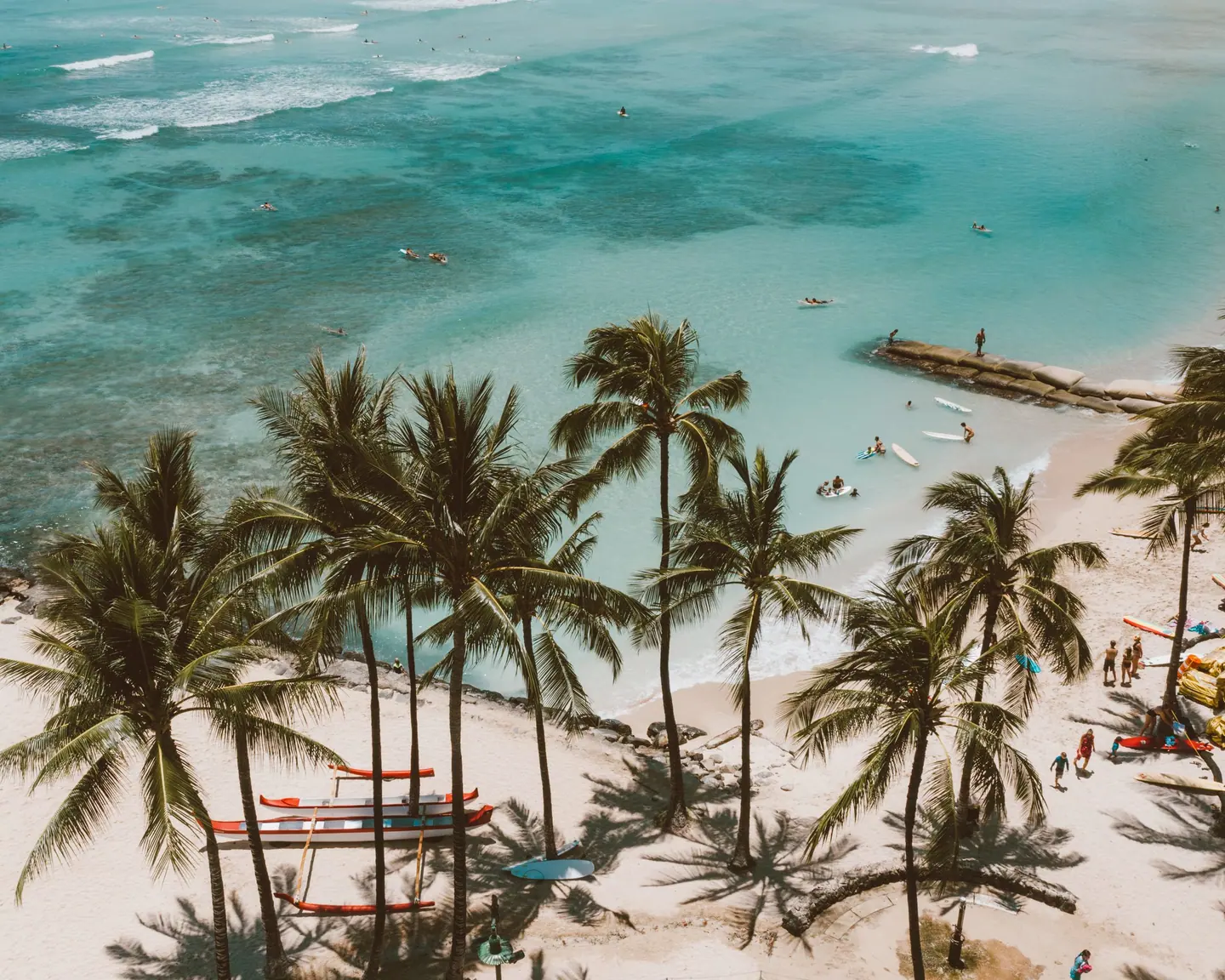
Kakaako Waterfront and Salt District
Traverse an industrial maritime quarter transformed into a canvas of large-scale street murals, independent microbreweries, and reconditioned warehouse community spaces.
SALT at Our Kakaako
Occupying a city block once dominated by maritime supply shops, this reconditioned warehouse enclave serves as the commercial anchor of the district. The architecture retains original corrugated metal facades, concrete ramps and open timber trusses. Travellers discover independent coffee roasters, local craft breweries and curated art installations set around central open-air courtyards.
Kakaako Waterfront Park
Constructed atop a municipal refuse site during the 1990s, this oceanfront green space features rolling knolls and paved promenade paths. Without a sandy beach, the shoreline consists of massive volcanic rock revetments meeting deep water. We observe panoramic views across the Pacific Ocean, offshore surf breaks and the entrance to Honolulu Harbour.
Ehime Maru Memorial
Erected on a landscaped rise within Kakaako Waterfront Park, this solemn memorial commemorates the nine crew members and students lost when the Japanese fisheries training ship sank in 2001. The design incorporates a bronze ship bell, black granite plinths and traditional Japanese plantings. Visitors pay tribute while inspecting the polished stone inscribed with historical details.
Children's Discovery Center
This public educational institution occupies the former Ala Moana Sewage Pump Station incinerator complex, constructed during the mid twentieth century. The structure showcases adaptive reuse of industrial brickwork and reinforced concrete frames. Inside, thematic galleries focus on civic infrastructure, multicultural immigration to Hawaii and natural ecosystems.
Kakaako Pow! Wow! Murals
Originated by a global art collective founded in 2010, the streets surrounding Cooke and Lana Lane function as a rotating canvas for international muralists. Industrial garage doors, warehouse walls and utility sheds display dynamic aerosol portraits and abstract works. Walking the grid reveals how urban art has revitalised the district's industrial streetscapes.
Kakaako Pump Station
Engineered in 1900 by public works architect Oliver G. Traphagen, this native volcanic stone building formed Honolulu's first modern municipal sanitation scheme. The Romanesque Revival masonry showcases rusticated blue basalt blocks, arched clerestory windows and ornamental green metal eaves. The site stands as a permanent landmark of turn-of-the-century civic infrastructure.
Mother Waldron Neighborhood Park
Named after schoolteacher Margaret Waldron, this public recreation space was designed by Harry Sims Bent under the federal Works Progress Administration. The concrete perimeter walls, low pavilions and entry pylons reflect clean Art Deco styling and Mediterranean accents. Preserved amid modern towers, it provides green recreation ground for the surrounding residential streets.
Honolulu Brewery and Malting Company Building
Located near the inland border of Kakaako on Queen Street, this multi-storey industrial edifice produced the island's popular Primo Beer for decades. Its red-brick load-bearing walls, segmental window arches and utilitarian cornices represent classic American industrial design. The complex survived industrial changes and remains one of Honolulu's oldest commercial brewery buildings.
Kakaako Makai Gateway Park
Positioned between Ilalo Street and the open shoreline, this open greensward was designated as part of the district's urban master plan. Sweeping lawns lined with native palms provide a continuous pedestrian axis toward the sea. The park incorporates rain-collection gardens and broad paved promenades designed for community gatherings.
John A. Burns School of Medicine
Completed in 2005, the medical campus of the University of Hawaii at Manoa occupies an expansive waterfront parcel. The contemporary buildings feature sea-green glass curtain walls, curved roofs reflecting ocean swells and shaded pedestrian arcades. The facility anchors the precinct's bioscience sector while maintaining manicured public gardens.
University of Hawaii Cancer Center
Dedicated in 2013, this five-storey research complex features angular geometric glass facades and solar-shading louvres designed to capture trade winds. The structure sits on coastal land reclaimed from former maritime operations. A central public courtyard displays indigenous tropical flora alongside commemorative inscriptions honouring Hawaiian benefactors.
Kewalo Basin Harbor
Dredged through coastal coral reefs during the 1920s, this historic harbour served Honolulu's commercial tuna fishing fleet throughout the twentieth century. The working basin now berths a mixture of deep-sea charter vessels, dive catamarans and pleasure craft. Wharf promenades offer close views of working docks and maritime repair facilities.
Kewalo Basin Park
Forming the southern protective spit of Kewalo Basin, this park features a narrow promenade directly adjacent to the shipping channel. Concrete benches and ironwood trees line the perimeter where local anglers cast lines into deep tidal currents. From the rocky point, visitors can watch vessels navigate the narrow passage against rolling south shore swells.
Kolowalu Park
Divided into two parcels across Queen Street, this manicured public square offers passive green lawns and shade under mature monkeypod trees. Paved walks, dog facilities and contemporary steel benches serve the growing resident population. The grounds present clear sightlines of the architectural transformation sweeping central Kakaako.
Neil S. Blaisdell Center
Opened in 1964 as the Honolulu International Center, this modernist municipal complex includes an arena covered by a scalloped concrete dome. Designed by architects Merrill, Simms & Roehrig, the campus surrounds a reflecting pool and tropical plantings. Sculptured open lanais and brise-soleil screens characterise the classic mid-century island civic design.
Honolulu Museum of Art
Established in 1927 by Anna Rice Cooke, this building was designed by New York architect Bertram Goodhue in a distinctive regional vernacular. Low, tiled roofs, stucco facades and shaded open courtyards blend traditional Asian and Western artistic principles. Galleries encircle tranquil gardens featuring Asian statuary and native island flora.
First Hawaiian Center
Designed by Kohn Pedersen Fox and completed in 1996, this commercial high-rise rises thirty storeys at the junction of downtown and industrial districts. The exterior features horizontal louvres, pale stone cladding and green reflective glass. The multi-storey ground lobby hosts rotating modern sculpture and painting exhibits open to passing pedestrians.
Mission Houses Museum
Situated on the inland fringe of Kakaako, this compound contains timber buildings shipped around Cape Horn from Boston and assembled in 1821. The site features coral-block printing offices and residential dwellings constructed from hand-hewn reef limestone. Visitors study preserved nineteenth-century printing presses that produced the initial written texts in the Hawaiian language.
Kawaiahao Church
Commissioned by royal chiefs and designed by missionary Hiram Bingham, this landmark sanctuary was built using fourteen thousand coral slabs cut from the ocean reef. The neo-classical structure includes a tall square clock tower and Gothic-arched windows. Inside, the second-floor gallery displays framed oil portraits depicting monarchs of the Kingdom of Hawaii.
Honolulu Fire Department Headquarters
Located near the historic civic core on Queen Street, this complex manages firefighting operations across the island of Oahu. A dedicated public educational space on the ground floor displays vintage equipment, hand-pulled hose carts and nineteenth-century gear. The facility chronicles the evolution of Honolulu's civil protection services since the monarchical period.
Waikiki Promenade and Mid-Century Oceanfront
Stroll the famed shoreline where royal surf grounds meet pioneering resort architecture, from the historic Moana Surfrider to breezeway-shaded modernist towers.
Moana Surfrider Hotel
Known as the First Lady of Waikiki, this stately wooden property introduced luxury tourism to the shoreline at the turn of the twentieth century. The central Banyan Wing retains classical columns and wide oceanfront verandas designed by architect Oliver G. Traphagen. We can wander through the beachfront courtyard dominated by a historic Indian banyan planted in 1904.
Duke Kahanamoku Statue
Cast by sculptor Jan Gordon Fisher in 1990, this nine-foot bronze monument stands with outstretched arms welcoming visitors to Kuhio Beach. It honours Duke Paoa Kahanamoku, the revered Olympic swimmer who popularised modern surfing across the globe. Fresh flower leis regularly adorn the statue, which stands beside Duke's bronze surfboard facing Kalakaua Avenue.
Kapaemahu Stones
Enclosed behind an iron railing on Kuhio Beach, these four large basalt stones honour Tahitian healers of dual male and female spirit, known as mahu. Tradition recounts that the healers transferred their spiritual powers, or mana, into the rocks before departing the island. Restored to public prominence in the late twentieth century, the site serves as a vital traditional Hawaiian sanctuary.
Royal Hawaiian Hotel
Constructed in 1927 by the Matson Navigation Company, this lavish resort occupies ground once favoured by Hawaiian royalty for coastal retreats. Architects Warren and Wetmore blended Spanish baroque cupolas with Moorish archways, coating the entire exterior in a signature coral pink. Guests still congregate in the breezy oceanfront open-air lounges overlooking the historic royal coconut grove.
Waikiki War Memorial Natatorium
Erected in 1927 to honour local residents who served in the First World War, this monument features an ornate travertine archway and an ocean-fed swimming basin. Architect Lewis Hobart designed the monumental entry facade with classical medallions, eagles, and urns. Although the tidal pool remains closed to swimmers, the grand triumphal gateway anchors the southeastern edge of Waikiki shoreline.
Diamond Head Lighthouse
Positioned on the steep coastal slopes below the volcanic crater, this fifty-five-foot beacon was erected in 1917 to replace an older steel skeleton structure. It guides vessels negotiating treacherous reefs along the southeastern approach to Honolulu Harbour. Travellers can view the stark white tower and adjacent keeper's quarters from the nearby Diamond Head Road lookout point.
Sans Souci Beach
Framed by the War Memorial Natatorium and high-rise apartments, this sheltered cove provided rest to author Robert Louis Stevenson during his 1889 island residence. Its calm offshore waters remain sheltered by a broad shallow reef that tempers oceanic swells. Modern strollers appreciate the beach for its shade trees, historic bathhouse legacy, and unobstructed sightlines towards central Waikiki.
Waikiki Shell
Completed in 1956, this distinctive acoustic band shell was designed to accommodate expansive outdoor musical performances beneath the backdrop of Diamond Head. The structure represents post-war modernist engineering, using vaulted concrete and tensile principles to amplify sound across the manicured lawns. It remains a focal venue for evening twilight gatherings and community celebrations.
Father Damien Statue at St. Augustine Church
St. Augustine by the Sea was completed in 1962, showcasing a towering, tent-like roof designed to withstand ocean winds while echoing Polynesian architecture. Outside the main sanctuary stands a dedicated bronze statue honouring Saint Damien of Molokai, who ministered to quarantined patients. The church interior features expansive stained-glass windows detailing the history of Catholic missionary efforts across Hawaii.
Kapiolani Park Bandstand
Dedicated in 1877 by King Kalakaua, Kapiolani Park is the oldest public park in Hawaii, conceived as an aristocratic recreational expanse and racetrack. The central bandstand has hosted the Royal Hawaiian Band for over a century, continuing a tradition of free Sunday civic brass concerts. Ancient banyan trees and broad grassy avenues flank the structure near the sea.
Prince Kuhio Statue
Positioned beside Kuhio Beach, this bronze figure portrays Prince Jonah Kuhio Kalanianaole, a delegate to the United States Congress who spearheaded the Hawaiian Homes Commission Act. Created by sculptor Sean Browne, the monument honours the prince whose former seaside residence, Pualeilani, once occupied this exact beachfront. It serves as a focal assembly area along Kalakaua Avenue.
Ala Wai Canal
Engineered under Walter F. Dillingham between 1921 and 1928, this two-mile canal drained coastal taro patches, rice fields, and fishponds, paving the way for modern Waikiki development. Today, its straight channel defines the inland border of the resort district while serving as a primary training course for outrigger canoe paddlers. Its paved promenade offers clear reflections of the Koolau Mountains.
Ilikai Hotel
Designed by architect John Graham Jr. and opened in 1964, this thirty-story complex pioneered the modern high-rise condominium hotel concept on Oahu. Its distinctive Y-shaped footprint, exposed external glass elevator, and bold geometric concrete balconies epitomise late-twentieth-century tropical modernism. The building famously featured in the title sequence of the classic television series Hawaii Five-O.
Hilton Hawaiian Village Rainbow Tower
Completed in 1968, the thirty-one-storey Rainbow Tower stands directly at the water's edge beside the Duke Kahanamoku Lagoon. Its narrow end walls feature monumental ceramic mosaic murals designed by artist Millard Sheets, containing over thirty thousand individually painted tiles. These public murals remain among the largest ceramic installations anywhere in the Pacific Basin.
Fort DeRussy Boardwalk
Established in 1904 as a coastal artillery station to defend Honolulu Harbour, Fort DeRussy now operates primarily as an armed forces recreational resort. The open landscape prevents high-rise development across an eighty-acre strip, providing rare green lawns and palm clusters alongside the oceanfront path. Travellers can observe battery earthworks preserved within the resort grounds.
Honolulu Museum of Art Spalding House (Historical Landmark Legacy)
While the primary museum resides inland, its educational footprint and historic preservation programmes heavily influence the conservation of Waikiki's resort architecture. The institution maintains archival materials documenting the artistic transformation of Waikiki from royal surf retreat into an international tourist playground. Works across coastal galleries feature landscape paintings of early twentieth-century Diamond Head.
Waikiki Aquarium
Founded in 1904, this is the third-oldest public aquarium in the United States, established to showcase indigenous marine life to early tramway passengers. The current mid-century facility, designed by Hart Wood and opened in 1955, houses research on living coral propagation and endangered Hawaiian monk seals. Outdoor pools directly border the shoreline, surrounded by salt-tolerant native seaside flora.
Diamond Head State Monument
Known natively as Leahi, this prominent crater formed during a post-erosional eruption of the Honolulu Volcanic Series hundreds of thousands of years ago. The United States military constructed observation posts and artillery bunkers inside the rim during the early twentieth century, including Fort Ruger. The summit trail provides panoramic vantage points over the entire Waikiki promenade and southern reef line.
Duke Kahanamoku Lagoon
Excavated in the 1950s by industrialist Henry J. Kaiser and developer Fritz Burns, this five-acre tidal lagoon was designed as a tranquil recreation pond for visitors. It formed an essential part of Kaiser's original Hawaiian Village development, which reshaped the western end of Waikiki. Today, a modern water circulation system maintains pristine ocean conditions for small watercraft and swimmers.
U.S. Army Museum of Hawaii
Constructed between 1909 and 1911 within Fort DeRussy, Battery Randolph was engineered with thick reinforced concrete walls to withstand direct naval bombardments. The bunker was saved from demolition in 1970 due to its impenetrable construction and repurposed as an educational facility. Exhibits detail traditional Hawaiian warrior culture alongside twentieth-century Pacific conflicts, flanked by preserved tank artillery outside.
Punchbowl Crater and Makiki Foothills
Ascend to Puowaina crater for solemn memorials, sweeping views of the Koolau ridge, and traditional green residential neighbourhoods set amongst lush tropical rainforest.
National Memorial Cemetery of the Pacific
Established in 1949 within the tuff cone of Puowaina Crater, this cemetery serves as the final resting place for thousands of American military personnel. Visitors encounter sweeping memorial courtyards, marble markers set into manicured lawns, and wide views across urban Honolulu towards Diamond Head.
Punchbowl Memorial Dedication Plaque and Court of the Missing
Flanking the central monumental stairway, stone pavilions record the names of military members missing in action across the Pacific theatre during the twentieth century. These white ashlar walls frame extensive mosaic battle maps detailing naval and amphibious campaigns during the Second World War and the Korean War.
Lady Columbia Memorial Statue
Designed by sculptor Bruce Moore, this grand figure of Lady Columbia stands atop a stone base overlooking the central stairs of Punchbowl Crater. The statue depicts a maternal personification of grief standing upon the bow of a ship, holding a laurel branch as a symbol of peace.
Punchbowl Crater Rim Lookout
Perched on the rim of the ancient volcanic tuff cone, this observation terrace provides expansive perspectives across the high-rise district, the harbour, and the Pacific Ocean. Interpretive displays orient travellers towards landmarks across the coastal plain, contrasting dense city neighbourhoods with distant ocean horizons.
Honolulu Museum of Art Spalding House
Constructed in 1925 as an artistic retreat for Anna Rice Cooke, this Makiki Heights residence showcases classic territorial architecture framed by volcanic stone walls. The terraced grounds encompass mature monkeypod trees and sweeping vistas, having long functioned as a gallery annex and sculpture park.
Manoa Heritage Center
Centred on the restored Kukaoo Heiau, this cultural sanctuary preserves one of the last remaining agricultural temples in the greater valley. The surrounding educational centre cultivates traditional native flora, offering guided insights into Polynesian ethnobotany and historic drystack volcanic masonry.
First Chinese Church of Christ in Hawaii
Established in 1879, this congregation played a central role in supporting Honolulu's burgeoning Chinese immigrant population. The present Makiki sanctuary features a striking pagoda-style bell tower and sweeping ceramic-tiled rooflines that blend traditional Chinese architectural motifs with mid-century ecclesiastical design.
Makiki Christian Church
Erected in 1932 under Reverend Takie Okumura, this remarkable structure replicates the architectural form of a traditional Japanese castle keep. The exterior incorporates multi-tiered flared eaves and decorative ridge tiles, purposefully conceived to make Japanese immigrants feel culturally welcome in their adopted island home.
Roosevelt High School
Opened in the 1930s on the lower slopes of Makiki, this public secondary school displays Spanish Colonial Revival architecture, complete with stucco facades and red tile roofs. The elevated campus affords broad prospects across the urban basin and retains handsome territorial-era administration halls.
Stevenson Middle School
Named after the Scottish author Robert Louis Stevenson, who spent notable periods in the Hawaiian Kingdom, this public campus opened in 1937. Its durable concrete pavilions represent the practical public works style that transformed Makiki's educational infrastructure before the Second World War.
Queen Emma Summer Palace
Known originally as Hanaiakamalama, this Greek Revival country home offered Queen Emma and King Kamehameha IV relief from Honolulu's coastal heat. Preserved by the Daughters of Hawaii, the interior displays koa wood furniture, royal regalia, and personal gifts from Queen Victoria.
Nuuanu Memorial Park
Founded in the late nineteenth century along the corridor climbing toward Nuuanu, this sprawling memorial ground features diverse family plots and memorials for prominent citizens. The cemetery's quiet pathways run beneath venerable flowering trees, framing views of the neighbouring ridgelines and cloud-draped peaks.
Royal Mausoleum State Monument
Known as Mauna Ala, this sacred ground contains the tombs of monarchs from both the Kamehameha and Kalakaua dynasties. The central Gothic Revival chapel was designed by architect Theodore Heuck, surrounded by wrought-iron fences displaying royal seals and manicured memorial gardens.
Puuhonua
Constructed in 1902 for former territorial governor George R. Carter, this residence stands as an outstanding example of large-scale early twentieth-century island architecture. Set against the Ko'olau rainforest, the house integrates local basalt and expansive verandahs designed to capture cooling mountain breezes.
Tantalus Lookout at Puu Ualakaa State Wayside
Situated on a cinder cone above the Makiki foothills, this state wayside offers elevated views stretching from Diamond Head to Pearl Harbor. The park features broad lawns, native trees, and interpretative signboards describing ancient Hawaiian sweet potato cultivation that once covered these fertile ridges.
Puu Ohia Trailhead
Ascending into the cloud forest above Makiki, this historic trail winds through groves of native koa, ohia lehua, and introduced bamboo. The path reflects the nineteenth-century trail network developed as Honolulu residents began exploring the cool, rainy elevations of Mount Tantalus.
Hawaii Nature Center
Located in a verdant valley basin, this educational institution operates within historic municipal watershed grounds. The site serves as the main gateway to extensive forest trails, highlighting watershed conservation, native tree restoration, and the historic brick reservoirs of Honolulu's original water system.
Makiki District Park
Functioning as the civic centre of the surrounding residential district, this open recreational ground features sports courts, native gardens, and community halls. The park provides an everyday gathering place where local residents assemble beneath majestic banyan trees and royal palms.
St. Clement's Episcopal Church
Founded in 1898, this parish church reflects the early ecclesiastical settlement of the Makiki plain. Built using local volcanic fieldstone paired with dark timber framing, the sanctuary offers stained-glass windows, a quiet courtyard, and shaded gardens typical of colonial Hawaiian churchyards.
Manoa Cemetery
Established in the mid-nineteenth century on the lower slopes leading toward Makiki and Manoa, this burial ground aligns strictly with feng shui principles. Terraced headstones look toward the sea, backed by protective mountains, serving as an enduring testament to Hawaii's pioneer Chinese community.
Navigating Oahu's Capital: Alii Legacies and Island Topography
You can combine these stops with the district-by-district where-to-stay notes and seasonal planning tables on our Honolulu destination page, or explore further regional and neighbourhood guides.