A detailed route through the Seljuk Sultanate of Rum capital and the heart of Rumi’s Mevlevi order, combined with 9,000-year-old Neolithic Çatalhöyük and Sille.
Neolithic Çatalhöyük, the Sultanate of Rum and Rumi’s Mevlevi Legacy
On the Konya Plain at Çatalhöyük around 7100 BC stood one of the world's earliest egalitarian proto-cities, where up to eight thousand residents entered mud-brick houses through rooftop ladders and painted leopard, bull, and volcanic-eruption murals on plastered walls. Known in Phrygian, Hellenistic, and Roman times as Iconium (visited three times by St Paul and St Barnabas), the city became from 1097 to 1308 the glittering capital of the Seljuk Sultanate of Rum under Sultan Alaeddin Keykubad I.
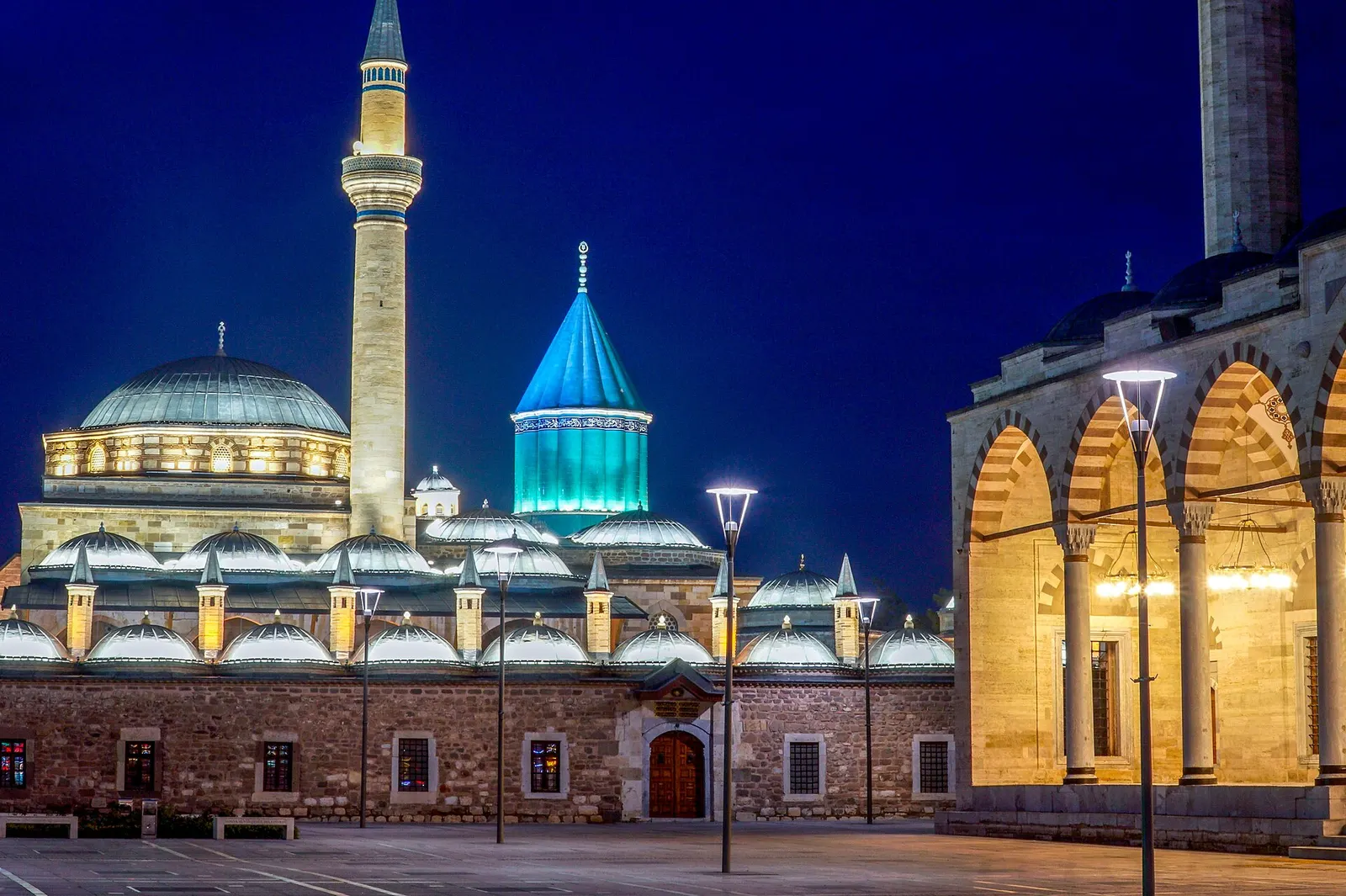
In 1228 the mystic poet Jalāl al-Dīn Muḥammad Rūmī (Mevlânâ) settled in Konya with his father Bahaeddin Veled; here his encounter with Shams of Tabriz inspired the Masnavi and the Mevlevi Whirling Dervish tradition beneath the fluted turquoise Kubbe-i Hadra.
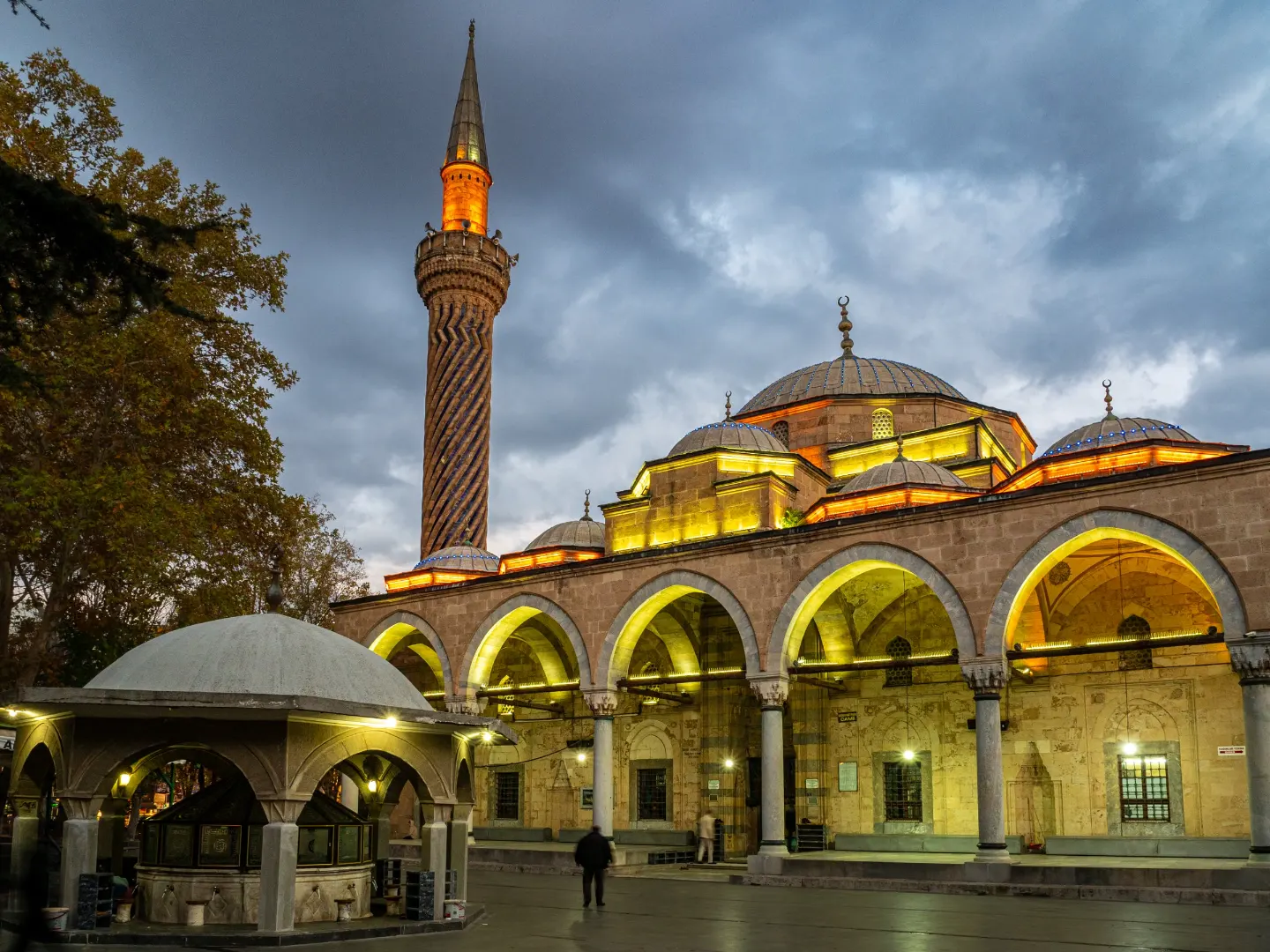
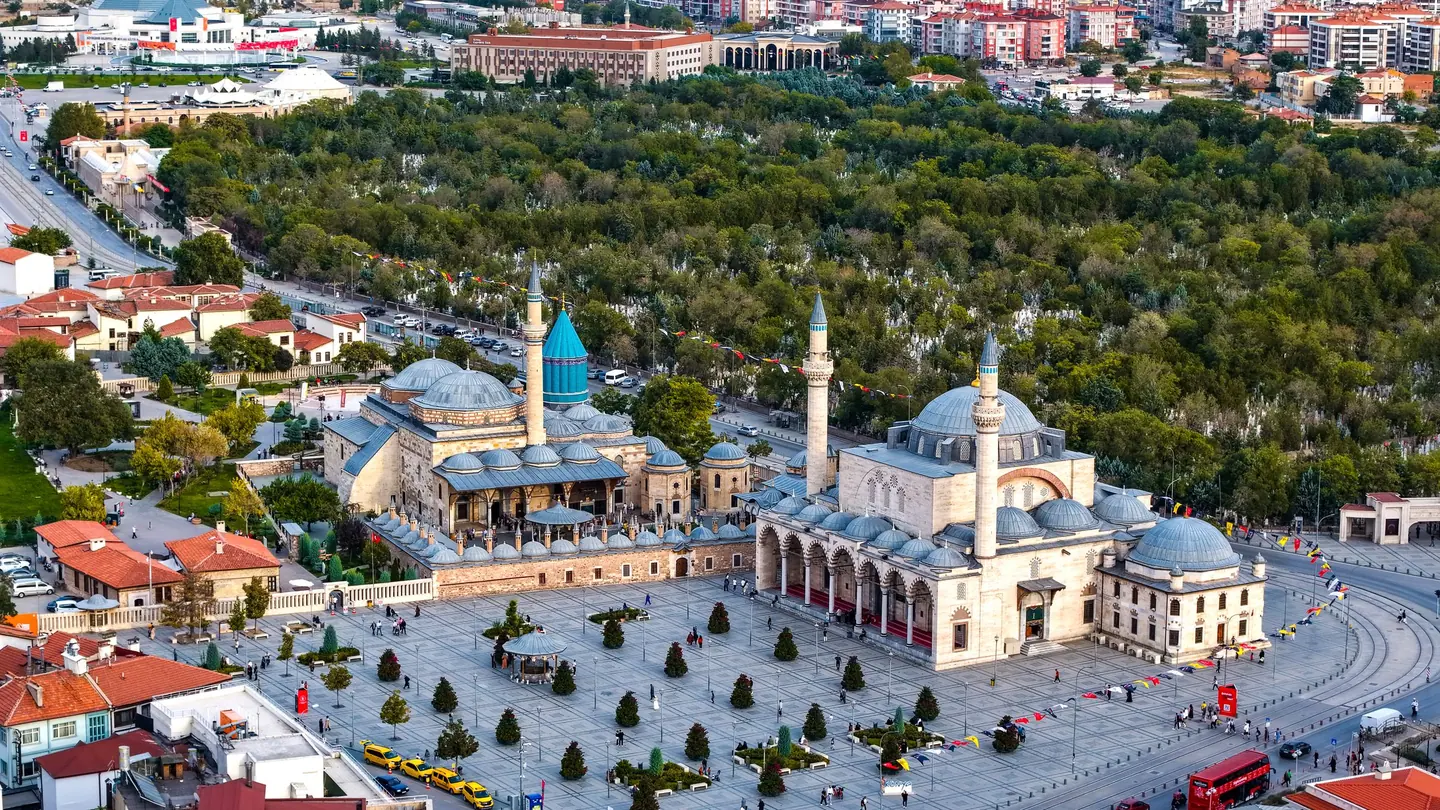
Mevlana Museum, Sultan Selim Mosque & Türbeönü Square
Mevlana Museum Dervişan Gate, Şeb-i Arus Pool & Matbah-ı Şerif Kitchen, Kubbe-i Hadra Turquoise Conical Dome, Sarcophagus of Mevlana Rumi, Tilavet Room, Dervish Cells, Sultan Selim Mosque, Yusuf Ağa Library, and Mevlana Cultural Center Semahane
Mevlana Museum Dervişan Gate
Built during the reign of Ottoman Sultan Murad III, this stone portal provided access for disciples entering the Mevlevi lodge. The entrance courtyard reveals an intricate marble water fountain alongside shaded porticos. Visitors can inspect classical Ottoman masonry and carved inscriptions greeting pilgrims as they step onto the sacred grounds.
Matbah-ı Şerif Kitchen
Situated in the southwest corner of the Mevlana complex courtyard, this former kitchen served as the training ground for novice Sufis. Candidates endured a rigorous thousand-day initiation here while preparing communal meals. Today, the brick-vaulted interior displays period culinary cauldrons, hearths, and lifelike mannequins dressed in traditional Mevlevi robes.
Şeb-i Arus Pool
Constructed under Ottoman governance, this central pool facilitated ritual washing before spiritual gatherings and sema rituals. The stone basin is crowned by an open canopy supported by slender columns. It remains a tranquil gathering spot where visitors admire the gentle movement of water reflected against neighbouring historic pavilions.
Kubbe-i Hadra Turquoise Conical Dome
Erected in 1274 by Seljuk architect Badr al-Din Tabrizi, this cylindrical drum supports a sixteen-sided conical roof clad in glazed turquoise tiles. Elaborate Quranic calligraphy rings the base of the tower. It serves as Konya's most famous architectural silhouette, visible from across the surrounding old town district.
Sarcophagus of Mevlana Rumi
Resting beneath the turquoise dome, this elevated cenotaph commemorates the thirteenth-century Sufi poet and philosopher Jalal al-Din Muhammad Rumi. The tomb is covered by heavy gold-embroidered brocade gifted by Sultan Abdul Hamid II. Look for the ornate wooden Seljuk sarcophagus standing behind, celebrated for its masterly relief woodcarvings.
Tilavet Room
Formerly used by resident cantors for continuous Quran chanting, this vaulted room now exhibits celebrated calligraphic manuscripts. The walls feature framed compositions executed in thuluth and nastaliq scripts by prominent imperial scribes. Visitors can examine historic gilded Qurans, inkwells, and pens that date from the Seljuk and early Ottoman eras.
Mevlana Museum Dervish Cells
Constructed in 1584 during the reign of Murad III, these seventeen domed chambers once housed resident Mevlevi disciples. Each small cell features an individual hearth, chimney, and recessed bookshelf. The spaces now hold thematic exhibitions presenting dervish musical instruments, prayer beads, handwoven rugs, and ceremonial attire.
Mevlana Museum Semahane
Built during the reign of Suleiman the Magnificent, this domed wooden-floored hall accommodated the ceremonial whirling ritual until the Mevlevi order was secularised. The room retains its elevated galleries for musicians and women spectators. Glass cases around the perimeter display valuable Seljuk carpets, antique ney flutes, and ritual clothing.
Tomb of Sultan Veled
Situated immediately beside Rumi's cenotaph, this tomb belongs to his eldest son, Sultan Veled, who formally structured the Mevlevi fraternity. The draped sarcophagus is adorned with a symbolic tall felt Mevlevi hat known as a sikke. Detailed Persian inscriptions along the wooden border recount his vital role in preserving his father's philosophical legacy.
Hürrem Pasha Tomb
Commissioned in 1527 for Hürrem Pasha, the Ottoman governor of Damascus, this freestanding stone türbe exhibits classic early imperial proportions. The structure features clean ashlar masonry, a leaded dome, and recessed arched windows. It stands among several historic family graves within the quiet museum gardens.
Sinan Pasha Tomb
Erected in the mid-sixteenth century, this elegant polygonal mausoleum honours Sinan Pasha, who served as the governor of Konya. Its architectural composition features finely dressed limestone and carved stone cresting along the eaves. It demonstrates the enduring prestige associated with burial near Rumi's primary sanctuary.
Sultan Selim Mosque
Initiated while Selim II was prince governor of Konya, this monumental mosque was completed around 1570 in the classical Ottoman style. The building features an expansive central dome supported by four semi-domes, alongside twin minarets with carved balconies. The spacious interior showcases an ornate marble minbar and finely proportioned prayer hall.
Yusuf Ağa Library
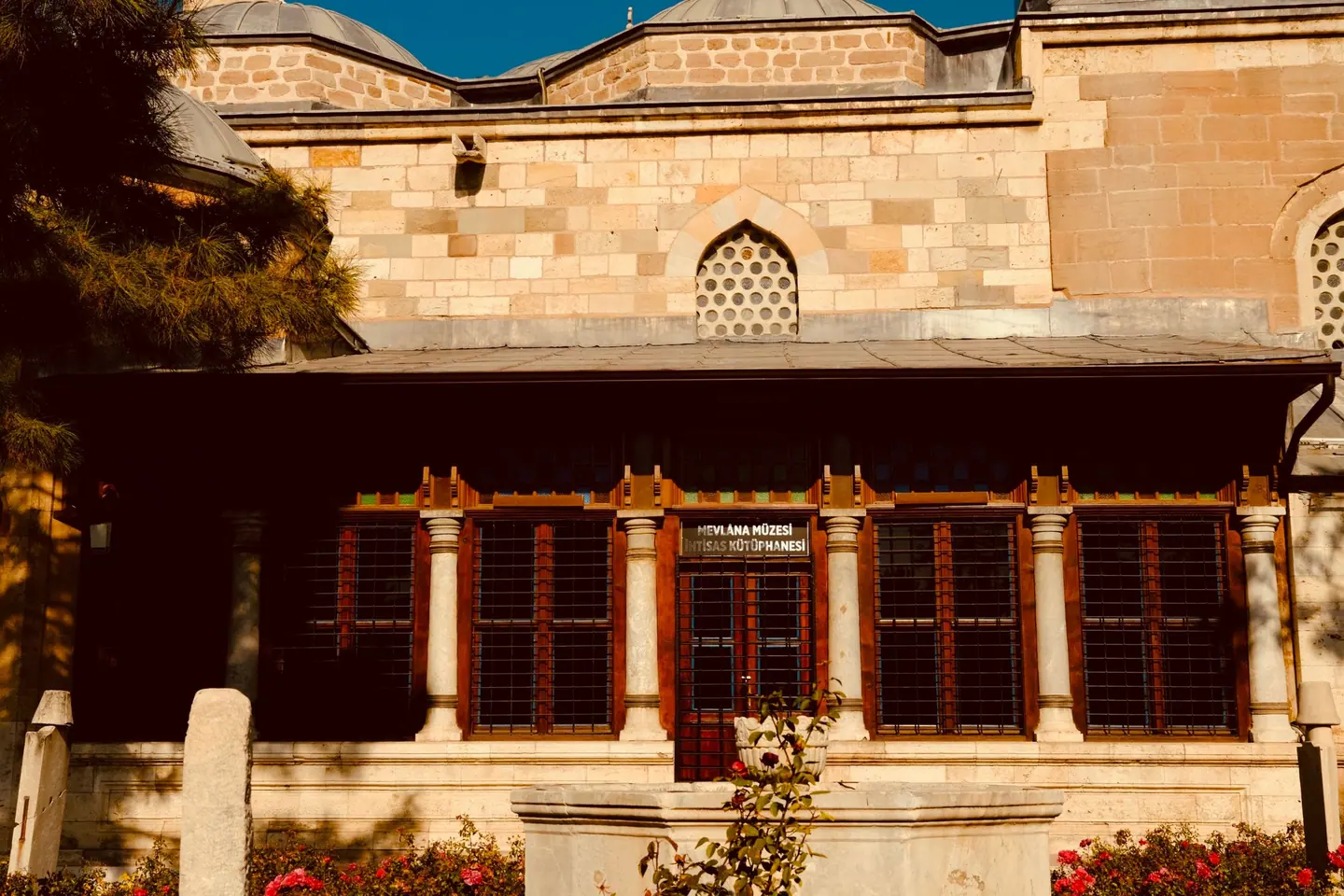
Founded in 1795 by Yusuf Ağa, an official to Sultan Selim III, this stone library sits adjacent to the Selimiye Mosque. The single-domed building was specifically designed to protect delicate volumes from damp and fire. Scholars study thousands of valuable hand-written manuscripts, illuminated codices, and rare Ottoman administrative treatises here.
Türbeönü Square
This expansive civic square serves as the primary assembly area connecting the museum, the Ottoman mosque, and surrounding historical quarters. Modern landscaping includes stone fountains, manicured flowerbeds, and ample benches for travellers. The wide plaza provides unobstructed views toward the Seljuk turquoise dome and Selimiye minarets.
Mevlana Cultural Centre Semahane
Constructed to host large gatherings, this vast hall features an expansive circular wooden stage modelled on traditional Mevlevi dance platforms. The venue accommodates thousands of observers during weekly sema ceremonies and the annual December memorial festival. The contemporary complex also hosts art galleries and Sufi educational centres.
Şems-i Tebrizi Mosque and Tomb
Set within a quiet park north of the centre, this mosque contains the burial shrine attributed to Shams-i Tabrizi. Enlarged in 1510 under Ottoman rule, the building features a conical wooden ceiling and pointed stone archways. Devotees visit the decorated wooden cenotaph to pay respects to the mystic who inspired Rumi's poetic awakening.
İplikçi Mosque
Constructed around 1201 by the yarn merchant community, this brick mosque is among the oldest standing religious edifices in Konya. Its low-vaulted hypostyle ceiling rests on robust stone pillars, creating exceptional natural acoustics. Historic records indicate that Rumi regularly delivered theological lectures to scholars and local townspeople within its walls.
Aziziye Mosque
Rebuilt in 1874 under Sultan Abdülaziz after fire destroyed its predecessor, this mosque presents a striking blend of Ottoman baroque and neoclassical architecture. Highlights include its elevated double minarets supported on rococo pillars and broad arched windows. Inside, ornate European-influenced plasterwork and a light-filled prayer space welcome visitors.
Konya Historical Bedesten Bazaar
Spreading west from the Aziziye Mosque, this vast covered market dates back to Roman foundations and sixteenth-century Ottoman expansion. The labyrinth of restored stone streets contains hundreds of traditional workshops, spice merchants, and textile stalls. We can observe local metalworkers hammering copperware alongside sellers of traditional Konya felt slippers and prayer rugs.
Koyunoğlu Museum
Bequeathed to the city by local historian İzzet Koyunoğlu, this municipal institution combines an ethnographic museum with a historic Konya mansion. Displays include antique carpets, Ottoman weaponry, coins, and ancient manuscripts documenting Central Anatolian daily life. The adjacent traditional courtyard house showcases preserved domestic interiors and traditional timber construction.
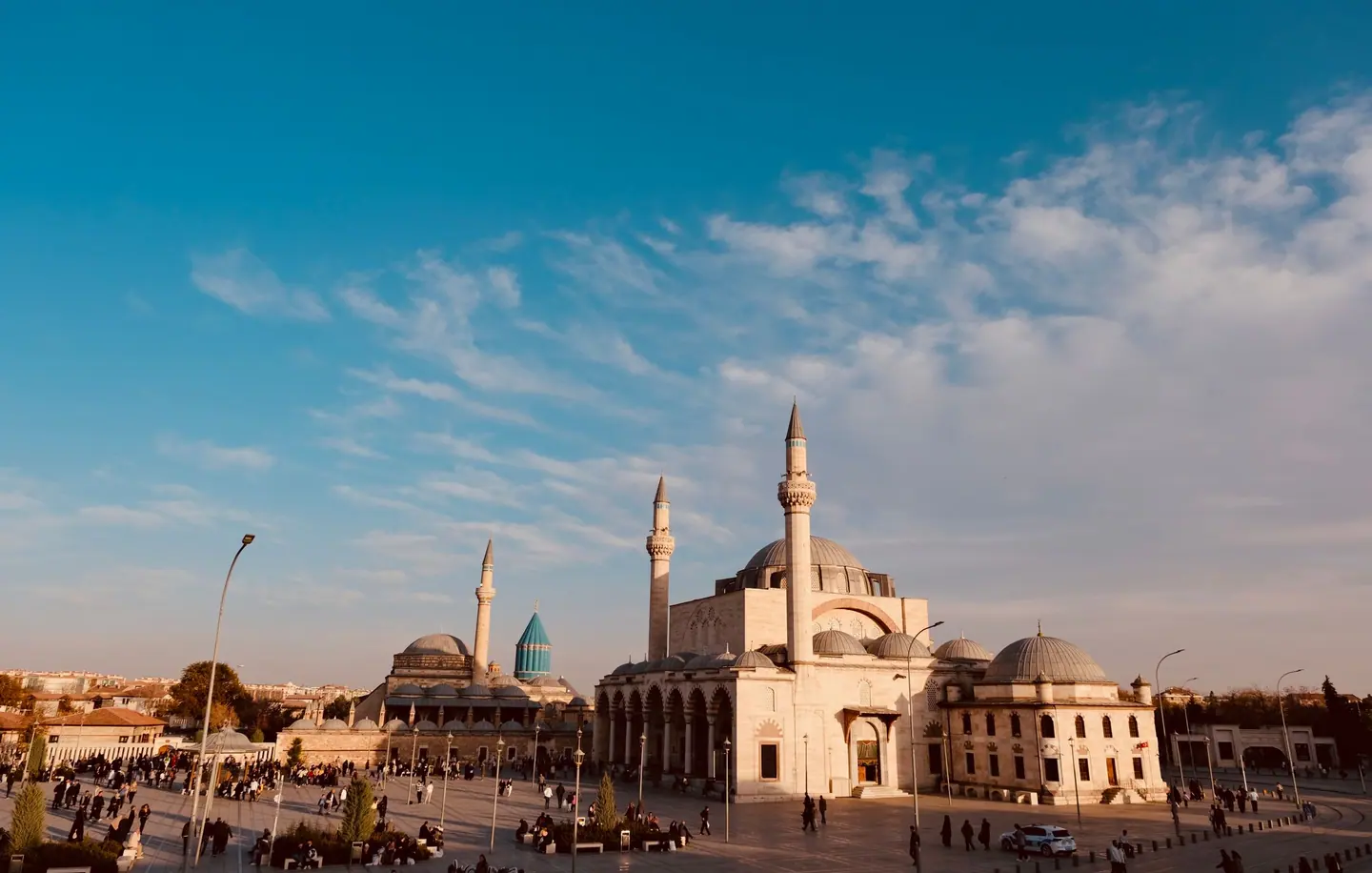
Alaeddin Hill & Great Seljuk Madrasas
Alaeddin Hill Park, Alaeddin Mosque Ebony Minbar (1155) & Royal Seljuk Tombs, Kılıçarslan II Kiosk Palace Remnant, Karatay Madrasa (1251) Turquoise Star Tile Dome Museum, and İnce Minareli Madrasa (1264) Stone-Carved Portal & Wood/Stone Museum
Alaeddin Hill Park
Occupying a central prehistoric tell dating from the Bronze Age, this rounded elevation preserves traces of ancient Iconium beneath pine groves. We walk along terraced pathways overlooking municipal boulevards that trace the path of historic city walls. The park serves as a green pedestal for Konya's principal Seljuk dynastic monuments.
Alaeddin Mosque
Commissioned by Sultan Mesud I and completed in 1220 under Alaeddin Keykubad I, this expansive sanctuary features forty-two ancient Roman and Byzantine marble columns supporting a vast flat roof. We observe rich turquoise and black glazed tilework encircling the central mihrab dome. The complex stands as the ceremonial core of the Anatolian Seljuk state.
Alaeddin Mosque Ebony Minbar
Constructed from solid ebony and walnut without nails or glue, this minbar was fashioned by craftsman Mengumperti of Ahlat in 1155. Interlocking geometric stars and floral arabesques display the refined early Anatolian kundekari joinery tradition. Incised Kufic inscriptions record the titles of Sultan Mesud I and his successor Kılıçarslan II.
Royal Seljuk Tombs at Alaeddin Mosque
Located in the northern courtyard of the mosque, this decagonal stone mausoleum features a conical roof covering ceramic sarcophagi. Eight Anatolian Seljuk rulers, including Kılıçarslan II and Alaeddin Keykubad I, lie buried beneath cobalt and turquoise tiles. A neighbouring unfinished tomb structure illustrates thirteenth-century brick construction techniques.
Kılıçarslan II Kiosk
This solitary brick and masonry tower represents the sole visible remnant of the Seljuk royal palace built against the northern citadel fortification. Initiated by Sultan Kılıçarslan II and restored by Alaeddin Keykubad I, the structure originally displayed figurative stucco reliefs and polychrome tiles. A modern concrete canopy shelters the fragile masonry fragment.
Karatay Madrasa
Erected in 1251 by vizier Celaleddin Karatay, this madrasa features a recessed marble entrance gate covered in entwined geometric bands and Quranic inscriptions. The building centres on an enclosed domed courtyard built for theological instruction and astronomical observation. The exterior demonstrates the peak of Seljuk stone carving in central Anatolia.
Karatay Tile Museum
Now operating as a specialised ceramics museum, the interior chamber displays an extraordinary central dome lined with turquoise, black, and cobalt glazed mosaic stars. Below, triangular pendentive zones present the names of prophets and caliphs in intricate calligraphic ribbons. The showcases contain wall tiles retrieved from Kubadabad Palace on Lake Beyşehir.
İnce Minareli Madrasa
Architect Kaluyan al-Qunawi designed this madrasa in 1264 for vizier Sahip Ata Fahreddin Ali. The monumental white limestone portal features cascading ribbons of Thuluth script weaving around vegetal palmettes and geometric knots. A brick minaret, originally double-balconied until struck by lightning in 1901, flanks the north-western corner.
Museum of Stone and Wood Works
Housed within the vaulted chambers of İnce Minareli Madrasa, this museum preserves architectural carvings from Konya's demolished medieval citadel. We observe relief carvings of double-headed heraldic eagles, winged angels, and mythological lions. The wooden exhibits include carved window shutters, cenotaphs, and decorative roof brackets from nearby thirteenth-century mosques.
Sırçalı Madrasa
Founded in 1242 by Bedreddin Muslih for legal studies, this two-storey open-court madrasa retains notable tile-mosaic decorations. The soaring main classroom iwan preserves extensive turquoise and cobalt glazed brickwork signed by craftsman Muhammad ibn Muhammad of Tus. Stone reliefs and geometric bands articulate the monumental street-facing entrance.
Konya Museum of Grave Monuments
Sırçalı Madrasa's open rectangular courtyard functions as an open-air lapidarium displaying funerary monuments from demolished Konya cemeteries. We inspect prismatic Seljuk headstones featuring delicate rosettes, intricate muqarnas crowns, and historical epitaphs written in flowing script. The display tracks stylistic shifts in regional sepulchral art over seven centuries.
Sahip Ata Mosque
Built between 1258 and 1277 by architect Kaluyan al-Qunawi, this congregational hall features a handsome timber ceiling supported by painted wooden columns. The entrance displays twin minarets decorated with glazed blue-brick chevrons above an ornate stone portal. The interior retains a remarkable turquoise mosaic tile mihrab niche.
Sahip Ata Türbe and Museum
Adjoining the mosque, this funerary chamber holds the ceramic-faced sarcophagus of vizier Sahip Ata and his descendants. The museum preserves religious artefacts from regional dervish lodges, including embroidered velvet fabrics, silver incense burners, and Seljuk carpets. Rich turquoise faience adorns the dome, walls, and decorative niches.
İplikçi Mosque
Initially erected in 1201 and associated with the city's thread merchants, this early brick mosque exemplifies simple Anatolian hypostyle layout. Rumi and his mentor Shams Tabrizi taught theology within its whitewashed, groin-vaulted bays supported by stout piers. An early acoustic resonance hole still exists in front of the marble prayer niche.
Şems-i Tebrizi Mosque and Tomb
Expanded in 1510 over fourteenth-century foundations, this pilgrimage shrine houses the symbolic tomb of the wandering mystic Shams Tabrizi. A tall wooden ceiling leads towards an elevated wooden cenotaph draped in calligraphic silks beneath a leaded conical roof. The site remains an active sanctuary for quiet contemplation and Sufi veneration.
Saint Paul Church Konya
Constructed in 1910 by French Assumptionist priests to serve railroad engineers and local Christian families, this Gothic-revival church stands in peaceful walled grounds. The interior features pointed nave arches, stained-glass panels, and a modest stone altar. The sanctuary honours the apostle Paul, who preached in Roman Iconium during his missionary travels.
Gazi High School
Architect Muzaffer Bey designed this monumental secondary school during the late Ottoman First National Architectural Movement. The facade presents pointed window arches, overhanging tiled eaves, and intricate faience tile medallions reminiscent of Seljuk motifs. It remains an active educational institution showcasing early twentieth-century regional civic design.
Konya Archaeological Museum
This repository preserves finds from nearby Çatalhöyük, Canhasan, and classical Pisidian cities. Elaborately carved Roman sarcophagi feature reliefs of the Labours of Hercules alongside marble funerary stelae from Lycaonia. We discover Bronze Age ceramics, Hellenistic coins, and architectural fragments that predate the Seljuk transformation of the Konya plain.
Konya Ethnography Museum
Situated south of Alaeddin Hill, this museum displays domestic and ceremonial objects from central Anatolian communities. Galleries exhibit hand-woven Konya carpets, silk bridal vestments, illuminated Qurans, and traditional metalcraft workshops. The permanent displays present insights into urban craft guilds and nomadic life during the late Ottoman era.
Tahir ile Zühre Kültür Merkezi
Constructed as the bathhouse of the Sahip Ata endowment, this stone building preserves twin brick domes punctured by glass illumination lenses. The caldarium and warm chambers now host regional art displays and cultural programmes. Surviving masonry arches and warm-water channels demonstrate thirteenth-century engineering and public sanitation practices.
Sahip Ata Complex, Shams of Tabriz & Bedesten Bazaar
Şems-i Tebrizi Mosque and Tomb, Şerafettin Mosque, Aziziye Mosque Twin Rococo Minaret Balconies, Kapu Mosque, Tarihi Konya Bedesteni Bazaar, Sahip Ata Complex & Hankah (1258, 1283), Konya Archaeological Museum Sidamara Sarcophagus, and Ethnography Museum
Sahip Ata Mosque
Constructed between 1258 and 1283 by architect Kaluk bin Abdullah, this mosque formed the nucleus of an extensive Seljuk charitable complex. A magnificent monumental portal showcases intricate brickwork alongside turquoise and cobalt tiles. Visitors should examine the surviving wooden columns and elaborately glazed ceramic mihrab inside the prayer hall.
Sahip Ata Museum and Hankah
Originally functioning as a Dervish hospice, the restored hankah forms the northern flank of the Sahip Ata foundation. The interior features geometric mosaic tiles, calligraphic bands and vaulted funerary chambers containing the sarcophagi of the founder and his family. The museum displays original Seljuk wooden doors, carpets and stone carvings.
Sahip Ata Turkish Bath
Designed to provide steady revenue for the neighbouring religious institutions, this bathhouse features separate mirrored sections for men and women. Built from rough ashlar and capped with brick domes punctured by glass oculi, it exemplifies Seljuk hydraulic engineering. The structure continues its traditional thermal role in the city centre.
Konya Archaeological Museum
Established in 1962, this museum safeguards prehistoric, Classical and Byzantine finds uncovered across the Lycaonian plain. The centrepiece is the towering third century Sidamara sarcophagus, famous for its high relief mythological figures carved from deep marble. Other galleries highlight Neolithic artefacts from nearby Çatalhöyük alongside Roman funerary stelae.
Konya Ethnography Museum
Situated south of the city centre, this museum displays traditional Central Anatolian clothing, weaponry, metalwork and domestic utensils. The extensive carpet gallery exhibits hand-knotted wool rugs from Ladik, Karapınar and Sille dating from the sixteenth century onwards. Recreated domestic settings illustrate Ottoman urban customs and local household crafts.
Mosque and Tomb of Shams-i Tabrizi
Rebuilt in 1510 over an earlier fourteenth century foundation, this sanctuary honours the Sufi wanderer who transformed Rumi into a mystical poet. The tomb adjoins the prayer hall beneath a distinct wooden conical ceiling supported by stone piers. Pilgrims gather beside the catafalque, which is draped in ornate embroidered textiles.
Şems Park
Encircling the Shams-i Tabrizi complex, this public square offers quiet paved paths beneath mature shade trees. Stone fountains, floral borders and marble benches provide rest for worshippers arriving from the central market. The park preserves the historical threshold between civic market streets and peaceful spiritual retreats.
Şerafettin Mosque
Begun during the Seljuk era and thoroughly rebuilt in 1636 by Mehmed Çavuşoğlu, this mosque reflects late classical Ottoman architecture. A colossal central dome resting on ten piers covers the prayer hall, complemented by delicate floral frescoes and carved stonework. The south facade showcases balanced ashlar masonry and arched gallery windows.
Aziziye Mosque
Commissioned in 1874 by Pertevniyal Sultan, this limestone mosque stands out through its unique blend of traditional Ottoman layout and European decorative flourishes. The exterior is famous for twin minarets featuring columned rococo balconies topped by onion cupolas. Broad windows illuminate an ornate interior decorated with gilded plasterwork and marble capitals.
Kapu Mosque
Erected in 1658 by Pir Hüseyin Çelebi near the historic city gate, this expansive stone mosque was reconstructed in 1868 following fire damage. It features a grand ten-domed roof structure supported by thick interior piers and a wide front portico. The building remains a focal point for merchant prayers in the bazaar.
Tarihi Konya Bedesteni Bazaar
Dating back to the Roman period and developed during Ottoman rule, this commercial grid contains over two thousand traditional shops. Restored vaulted stone lanes organise traders into traditional guilds dealing in textiles, copper vessels, spices and leather goods. It provides travellers with a direct link to Konya's deep merchant heritage.
İplikçi Mosque
Constructed around 1201 by the merchant Şemseddin Altunaba, this is one of the oldest surviving mosques in the city. The broad prayer hall features massive brick vaults, stone piers and a minimalist acoustic layout where Rumi delivered public sermons. An unusual water canal once ran through the basement to cool the congregation.
Amberreis Mosque
Built during the Karamanid period in 1472, this neighbourhood mosque displays solid cut stone masonry and a modest single-dome silhouette. The low porch gives access to a square prayer chamber with simple squinches and understated plaster inscriptions. It represents small community places of worship that once peppered residential market sectors.
Hacı Hasan Mosque
Positioned just east of the traditional bazaars, this late Ottoman structure features dressed yellow stone masonry and decorative roof mouldings. The timber-framed upper gallery showcases delicate local woodwork and painted floral medallions across its ceiling. It serves neighbouring residential communities alongside regional market vendors.
Buğday Pazarı Square
For centuries this open plaza operated as the principal trading centre for cereals harvested across the Anatolian plains. Today the square connects historic market lanes to surrounding commercial streets lined with agricultural merchants and dry goods purveyors. Low-rise Ottoman stone warehouses still stand along its northern perimeter.
Kadılar Fountain
Erected during the Ottoman period to serve urban travellers and bazaar merchants, this street fountain features carved marble panels and an arched stone niche. Its spouts draw from Konya's historic aqueduct system that serviced public bathhouses and mosques. The fountain stands as a testament to historical municipal charity.
Sırçalı Medrese
Constructed in 1242 by Bedreddin Muslih for the study of Islamic jurisprudence, this open-courtyard seminary exhibits remarkable architectural sophistication. The monumental vaulted iwan preserves remnants of cobalt blue, turquoise and black mosaic faience tiles. The site now functions as a tombstone museum exhibiting historic Seljuk and Ottoman funerary markers.
Gazi High School Historic Building
Completed in the 1920s by architect Muzaffer Bey, this stately educational institution exemplifies the First National Architectural Movement. Its facade combines classical symmetry with Ottoman revivalist details including pointed arches, tiled tile bands and wide eaves. The building marks the architectural transition from late imperial rule to modern Turkey.
Karatay Medrese Ceramic Museum
Built in 1251 by vizier Celaleddin Karatay, this covered medrese contains one of Anatolia's finest surviving tile ensembles. The central dome is lined with turquoise and aubergine glazed bricks forming geometric stars around a central lantern oculus. Galleries around the courtyard now exhibit Seljuk ceramics excavated from the Kubadabad Palace.
Ince Minaret Medrese
Commissioned in 1264 by vizier Sahip Ata, this monument is renowned for its high relief stone gateway featuring intertwined calligraphic script and vegetal patterns. The surviving portion of its minaret exhibits decorative glazed turquoise brickwork. Inside the domed hall, a dedicated stone and wood carving museum exhibits Seljuk heraldic reliefs.
Meram Vineyards, Sille 5,000-Year Valley & Butterfly Garden
Sırçalı Madrasa (1242), Sadreddin Konevi Mosque and Tomb, Tavusbaba Tomb at Meram, Meram Stone Bridge & Vineyards, Konya Tropical Butterfly Garden, Sille Village Aya Elenia (St Helena) AD 327 Church, Sille Rock Monasteries, and Devil’s Bridge
Sırçalı Madrasa
Commissioned in 1242 by the Seljuk vizier Bedreddin Muslih, this theological school takes its name from its glazed ceramic ornamentation. The open courtyard layout features a monumental portal and an elaborately tiled main vaulted hall. Visitors can study preserved turquoise and cobalt faience mosaics detailing geometric forms and fine calligraphy on the southern iwan.
Sadreddin Konevi Mosque and Tomb
Erected in 1274, this historic religious complex honours the prominent scholar Sadreddin Konevi, an intellectual contemporary and close companion of Rumi. The adjoining open-air mausoleum displays distinctive Seljuk stonework beneath an iron mesh dome supported by carved wooden columns. Inside the prayer hall, simple architectural lines foster quiet contemplation away from the city traffic.
Tavusbaba Tomb
Situated on a rise above the historic Meram gardens, this stone and brick tomb commemorates Tavus Mehmet Efendi, a revered Seljuk-era figure. Architectural records date the barrel-vaulted structure to the reign of Sultan Gıyaseddin Keyhüsrev II. Travellers climb the stepped approach to examine traditional Anatolian masonry and survey the surrounding valley orchards.
Meram Stone Bridge
Dating from the Seljuk period, this arched stone crossing has carried merchants and townsfolk across the stream for centuries. The bridge was crafted from robust cut stone and features a wide central arch flanked by a secondary waterway aperture. Shaded footpaths lead directly from the crossing into the historic riverbank recreation areas favoured since medieval times.
Meram Vineyards
Extolled in the verses of Rumi and the travelogues of Evliya Çelebi, this garden district supplied regional tables with grapes, walnuts and stone fruits. Walking trails run parallel to traditional stone water channels that have sustained the canopy of deciduous trees for generations. It remains a tranquil green refuge prized for crisp mountain air and historical summer pavilions.
Hasbey Darülhuffaz
Constructed in 1421 by Hacı Hasbeyoğlu Mehmed Bey, this small religious school preserves refined brickwork and fine tile decorations from the Karamanoğlu principality. The square building is topped by a single hemispherical dome supported on squinches. Visitors can observe the decorative glazed brick patterns that adorn the exterior entrance niche and internal prayer alcove.
Gedavet Park
This established civic garden serves as an urban promenade linking downtown squares with the routes heading out toward Meram. Paved walkways are shaded by mature linden and plane trees, offering respite to pedestrians travelling between historical monuments. The space accommodates seasonal floral displays, fountain features and traditional tea houses serving regional refreshments.
Ateşbaz-ı Veli Tomb
Erected in 1285, this classical octagonal tomb with a pyramidal conical roof marks the final resting place of Yusuf bin Izzeddin, the Mevlevi culinary master. The structure features finely dressed ashlar stone around its base and glazed geometric brickwork near the eaves. It is celebrated as one of the world's few historical monuments dedicated to a kitchen steward.
Hoca Hasan Mosque
This Karamanoğlu-era sanctuary illustrates the domestic scale of neighbourhood mosques built following the Seljuk period. The prayer chamber relies on a wooden ceiling supported by carved timber posts, with decorative plaster friezes running along the upper walls. Its compact courtyard and modest brick minaret provide insights into historic suburban life outside the defensive walls.
Konya Tropical Butterfly Garden
Covering more than seven thousand square metres beneath an insulated glass roof, this specialised conservatory simulates a tropical rainforest climate year-round. The enclosure hosts dozens of exotic butterfly species alongside hundreds of plant varieties from Southeast Asia and the Americas. Educational zones on site present the life cycles of insects and promote regional conservation programmes.
Sille Village
Inhabited continuously from early antiquity through the Byzantine and Ottoman eras, this narrow valley settlement retains stone dwellings, watermills and pottery workshops. Christian and Muslim communities lived alongside each other here for centuries, speaking Cappadocian Greek and regional Turkish. Well-marked heritage paths allow travellers to explore traditional crafts and historic stone bridges along the stream bed.
Aya Elenia Church
According to church tradition, Helena, mother of Emperor Constantine, funded the original chapel on this site in 327 during her pilgrimage to Jerusalem. The standing stone structure dates primarily from extensive nineteenth-century restorations, featuring a central dome over four substantial stone pillars. The interior displays an intricately carved timber iconostasis and gilded wall frescoes depicting biblical narratives.
Sille Rock Monasteries
Hewn into the steep volcanic tuff cliffs lining the Sille valley, these rock-cut complexes served early Christian monks as hermitages and defensive retreats. Visitors can inspect chamber interiors containing carved stone altars, cisterns, ventilation shafts and mortuary niches. Faint traces of ancient plaster and fresco work survive on some internal rock faces overlooking the gorge.
Devil's Bridge
Known locally as Şeytan Köprüsü, this daring single-span stone bridge connects opposite cliff faces across a precipitous mountain chasm. Built during the Ottoman era to provide access to isolated valley terraces and remote watermills, its slender walkway tests those wary of heights. The viewpoint rewards hikers with sheer canyon perspectives and traces of historical aqueduct channels.
Sille Dam Lake
Formed by damming the Sille Stream, this body of water serves as a key recreation hub framed by arid volcanic ridges. Timber boardwalks, bird observation platforms and lakeside pavilions border the calm surface, attracting walking clubs and regional birdwatchers. The perimeter trails provide sweeping viewpoints across the reservoir and back down toward the historic valley canyon.
Tepebağ Church
Perched on the southern ridge of the settlement, this modest stone chapel commands panoramic views over the valley roofs and rock-cut hermitages. The single-nave structure was constructed using ashlar limestone and local mortar, surviving centuries of exposure to harsh winters. Its elevated terrace offers photographers an exceptional vantage point across the historic trade route below.
Sille Subaşı Hammam
Constructed from local volcanic stone, this traditional Ottoman bathhouse met the hygiene and social needs of Sille's mixed population. The roofline is punctuated by multiple small masonry domes fitted with glass oculi that illuminate the warm and hot rooms. Following careful civic conservation, the building now functions as an interpretive venue documenting historic bathing customs.
Sille Museum of Culture
Housed within a restored nineteenth-century primary school, this compact cultural institution documents Sille's unique traditions, linguistic heritage and communal memory. Exhibitions display hand-thrown ceramic vessels, local carpets, weaving implements and monochrome photographs from before the 1923 population exchange. The rooms offer clear historical context on how craft traditions sustained the valley through antiquity.
Zaman Museum
Located within the restored Greek cemetery chapel atop a small hill, this specialised museum examines the history of human timekeeping. The collection gathers Ottoman sundials, mechanical clocks, astronomical charts and traditional calendars used across Anatolia. Visitors can study the building's rough-hewn stone barrel vault while learning about religious and civic approaches to recording hours.
Akmanlar Historic Watermill
This stone facility demonstrates the hydraulic engineering once common throughout the Sille gorge, where dozens of mills once ground grain for central Anatolia. Powered by water redirected through stone flumes, the internal mechanism preserves its heavy grinding stones and timber gear apparatus. Restored by regional heritage authorities, it offers a tangible look into pre-industrial cereal processing.
Neolithic Çatalhöyük, Zazadin Han & Beyşehir Eşrefoğlu Mosque
Çatalhöyük UNESCO Neolithic Site North & South Shelters, Çatalhöyük Replica Houses & Visitor Center, Boncuklu Höyük, Zazadin Han (1236 Seljuk Silk Road Caravanserai), Kilistra Rock-Cut Settlement, Eflatun Pınar Hittite Spring Sanctuary, and Beyşehir Eşrefoğlu Wooden Hypostyle Mosque (1299)
Çatalhöyük South Shelter
The South Shelter covers the deepest stratigraphic sequence of the Neolithic settlement, dating back over nine millennia. Visitors observe densely packed mudbrick houses built without external doors, where residents entered via rooftop ladders. Wall plaster layers and sub floor burial cavities reveal complex ancestral customs practiced across continuous generations of early farmers.
Çatalhöyük North Shelter
This expansive protective dome encloses Building 52 alongside several adjoining domestic structures from the later Neolithic phases. The site displays clay bucrania horns, hearths, and grinding stones left in their original spatial arrangements. Raised wooden walkways allow visitors to inspect intricate interior layouts without disturbing the delicate prehistoric soil layers below.
Çatalhöyük Replica Houses
Constructed beside the archaeological field station, these life sized replica houses demonstrate Neolithic construction techniques using timber, mudbrick, and reed thatch. Stepping inside reveals dim interiors with elevated sleeping platforms, corner ovens, and plastered wall paintings of bulls. The models provide tangible insight into prehistoric spatial dynamics and domestic heating solutions.
Çatalhöyük Visitor Centre
The modern museum complex contextualises decades of excavations directed by James Mellaart and Ian Hodder. Exhibits display diagnostic flint blades, obsidian cores, pottery fragments, and scale models of prehistoric village life. Informative panels detail the transition to settled farming communities on the fertile Konya Plain.
Boncuklu Höyük
Situated northeast of Çatalhöyük, Boncuklu Höyük preserves the remains of a village dating to roughly 8500 BC. The settlement features oval mudbrick dwellings with painted plaster floors that represent the antecedents of central Anatolian architecture. Excavations here have yielded early stone beads, shell ornaments, and evidence of nascent crop cultivation.
Zazadin Han
Commissioned in 1236 by the Seljuk vizier Sadeddin Köpek, this grand stone caravanserai provided secure lodging along the medieval Silk Road. The complex contains both an open summer courtyard and a vaulted winter hall flanked by animal stables. Ashlar stone masonry, carved geometric portals, and an elevated mescit prayer hall highlight its fortified design.
Kilistra Rock-Cut Settlement
Dating from the Hellenistic through early Christian periods, Kilistra features rock cut churches, subterranean cisterns, and hidden dwellings hollowed from soft rock. Saint Paul travelled along this trade corridor, leading to the establishment of secretive Christian retreats. The cruciform Sandıkkaya church and vaulted winemaking presses showcase ingenious adaptations to rugged topography.
Kilistra Sümbül Church
Carved directly into a rocky outcrop, the Sümbül Church presents an apsidal rock cut sanctuary engineered during late antiquity. The interior retains decorative cross reliefs, carved liturgical alcoves, and structural vaults cut entirely out of stone. Weathered openings illuminate ancient processing rooms and storage niches adjoining the ecclesiastical chamber.
Eflatun Pınar Hittite Spring Sanctuary
Built during the late Hittite Empire, this open air water shrine surrounds a natural spring pool on the edge of Lake Beyşehir. Massive andesite blocks form a monumental facade depicting winged sun discs, divine mountain spirits, and fertility gods. The engineering demonstrates how the Hittites integrated stone relief art with hydrological management.
Fasıllar Monument
Resting horizontally on an open hillside near Beyşehir, this monolithic basalt carving weighs upwards of seventy tonnes. The monument portrays the Luwian weather god standing between lions atop an anthropomorphic mountain deity. Scholars believe the carving was intended for an imperial sanctuary nearby before being abandoned in antiquity.
Beyşehir Eşrefoğlu Mosque
Constructed between 1296 and 1299 by the Eşrefoğlu Beylik, this UNESCO inscribed sanctuary represents the pinnacle of Anatolian wooden hypostyle architecture. Forty eight cedar pillars support an ornate timber ceiling decorated with geometric kündekari joinery. A central snow well historically supplied humidity to preserve the structural wood, while glazed turquoise tiles ornament the mihrab.
Eşrefoğlu Tomb
Attached to the eastern wall of the Eşrefoğlu Mosque, this domed tomb contains the burial place of Seyfeddin Süleyman Bey. The exterior displays fine ashlar masonry rising into a conical roof typical of the Beylik era. Inside, glazed mosaic tiles and carved stone details commemorate the regional ruler who sponsored the regional construction campaign.
Beyşehir Stone Bridge
Erected between 1908 and 1914 as part of the Konya Plain Irrigation Project, this historic stone structure serves as both a bridge and a water regulator. Fifteen cut stone arches span the outlet where Lake Beyşehir discharges into the canal. It stands as an important example of late imperial civil engineering combining transportation with regional water management.
Kubadabad Palace
Constructed around 1236 for Sultan Alaeddin Keykubad I, this royal complex is located on the southwestern shore of Lake Beyşehir. Surviving stone walls delineate a palace, royal boathouse, and residential pavilions surrounded by defensive ramparts. Excavations here unearthed star shaped lustre tiles illustrating figures from medieval court life, now preserved in regional museums.
Horozlu Han
Constructed around 1248, this stone caravanserai guarded the northern approach to the Seljuk capital. The structure features a large barrel vaulted winter hall built using dense ashlar masonry and supported by internal stone piers. Following thorough conservation, the building demonstrates medieval logistical architecture tailored to cold central Anatolian winters.
Kadı Mürsel Camii
Constructed during the fourteenth century, Kadı Mürsel Camii exhibits the compact spatial planning of provincial Anatolian beylik architecture. The building features thick limestone walls, timber support brackets, and a cut stone minaret with geometric brick detailing. Inside, the mihrab retains subtle plaster bands indicative of local pre Ottoman liturgical art.
Dokuzun Hanı
Erected in 1210 during the reign of Sultan Izzeddin Keykavus I, Dokuzun Hanı served trade convoys heading towards Akşehir. The sturdy ashlar building contains an enclosed hall flanked by service chambers and pack animal bays. The austere entrance portal features carved stone voussoirs that demonstrate defensive building approaches along inland commercial corridors.
Kuruçeşme Hanı
This ruined thirteenth century caravanserai marks the historic caravan track connecting Konya with Beyşehir and Mediterranean coastal ports. Surviving rubble stone foundations and arched entryways demonstrate the network of safe shelters established by Seljuk rulers. The location provides geographic insight into trade routes traversing the arid steppes toward western Anatolia.
Kızılören Hanı
Commissioned in 1206 by Emir Kutlugh bin Abdullah, this caravanserai stands among the earliest surviving Seljuk road complexes in the region. The building includes an open forecourt and a reinforced barrel vaulted hall designed to protect travellers from banditry. Mason marks and recycled classical spolia decorate the monumental ashlar entry gate.
Yunuslar Archaeological Site
Known in antiquity as Vasada, this extensive archaeological area west of Konya preserves remains of a fortified hilltop community. Surface surveys have revealed Roman ashlar cisterns, Byzantine church foundations, and decorated sarcophagi fragments scattered through the village fields. The site demonstrates cultural continuity between pre classical settlement and later regional Christian administrative centres.
Connecting Central Konya with Sille Valley and Çatalhöyük
You can combine these stops with the district-by-district where-to-stay notes and seasonal planning tables on our Konya destination page, or explore further regional and neighbourhood guides.