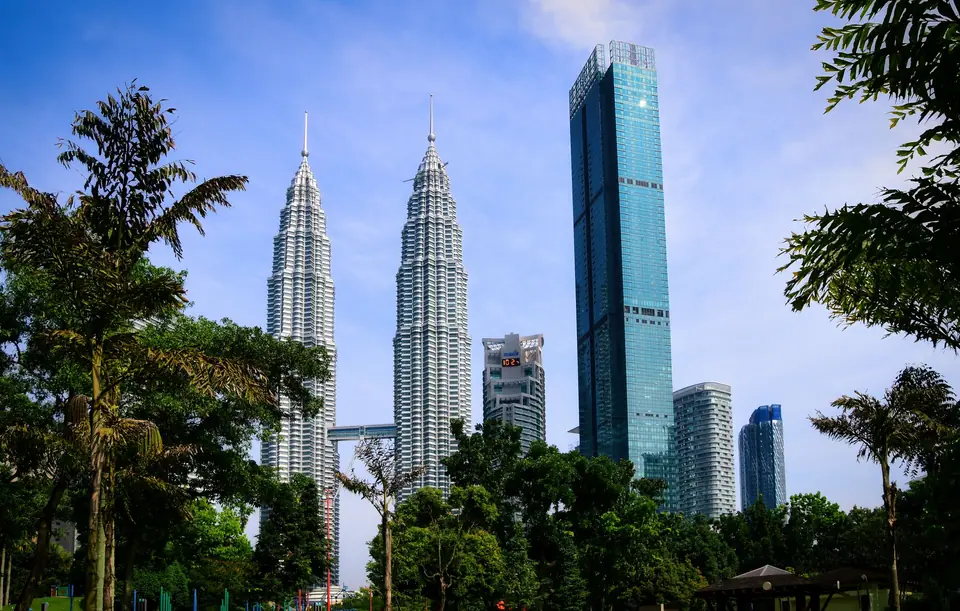
A detailed walking and monorail route from the muddy river confluence of Masjid Jamek and Indo-Saracenic Merdeka Square to Chinatown, Kampung Baru, KLCC, and Batu Caves.
Tin-Mining River Confluence, Yap Ah Loy’s Shophouses and Mogul-Revival Domes
Kuala Lumpur, literally Muddy Confluence, began in 1857 when Malay chief Raja Abdullah hired eighty-seven Chinese prospectors to open tin mines upstream in Ampang, establishing a trading post where the Gombak and Klang rivers meet beside today's Masjid Jamek. Under Kapitan Cina Yap Ah Loy and British Resident Frank Swettenham in the late nineteenth century, timber huts were replaced with brick shophouses and architect A.C. Norman's Indo-Saracenic civic buildings around the Padang (Merdeka Square).
Here at midnight on 31 August 1957 the Union Jack was lowered and Tunku Abdul Rahman proclaimed Malayan independence, launching the capital's rise to the 452-metre Petronas Twin Towers and the 678.9-metre Merdeka 118.
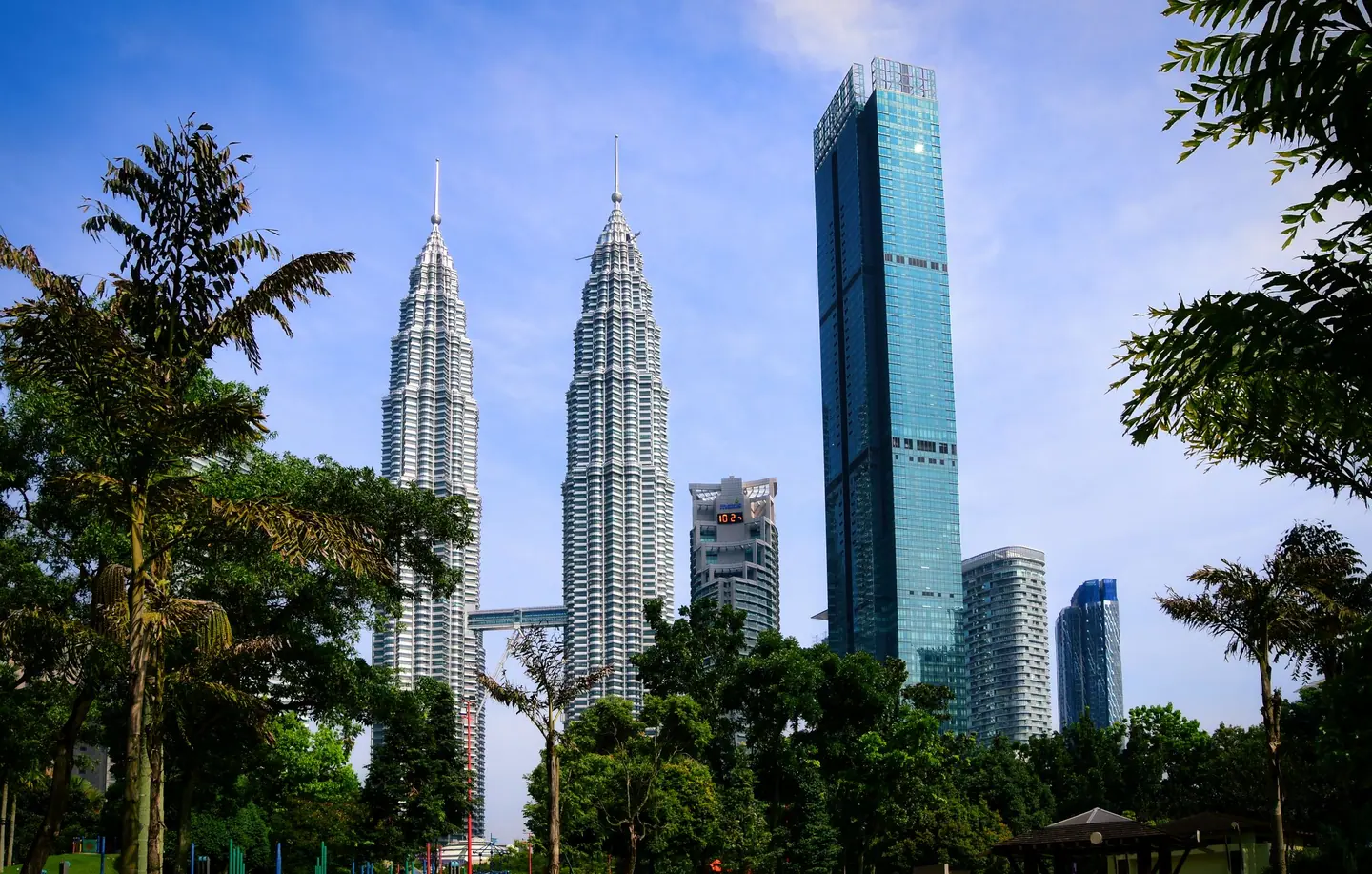
Merdeka Square, River of Life & Masjid Jamek
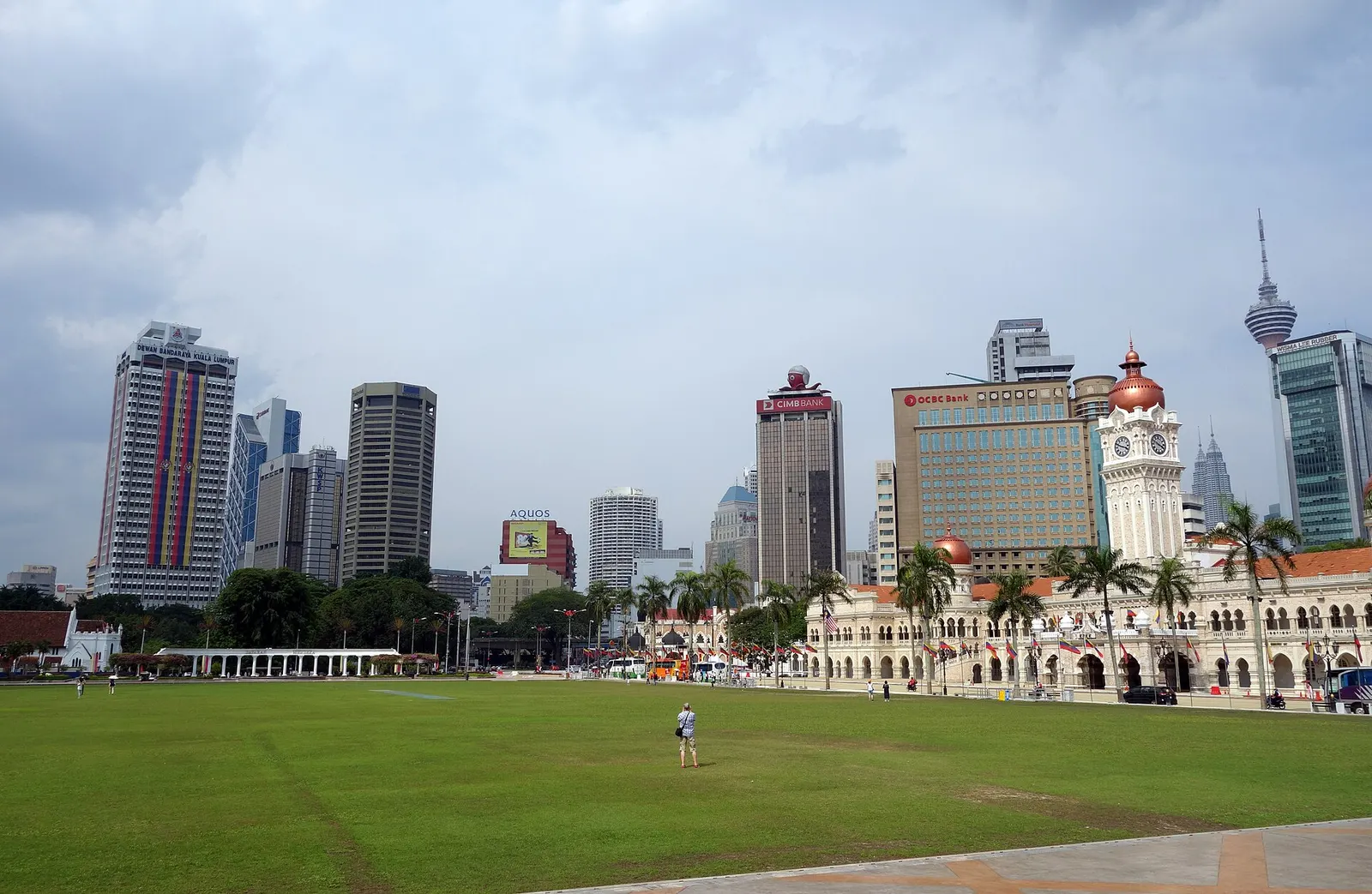
Merdeka Square Dataran Merdeka, Sultan Abdul Samad Building, Royal Selangor Club, KL City Gallery, St Mary’s Cathedral, Old High Court, Masjid Jamek at the River Confluence, and River of Life Blue Promenade
Merdeka Square
Formerly known as the Selangor Club Padang, this sprawling lawn witnessed the lowering of the Union Jack and the raising of the Malayan flag at midnight on 31 August 1957. A towering flagpole marks the southern edge, while the surrounding open space offers uninterrupted views of colonial civic landmarks. We recommend strolling across the perimeter to appreciate its central role in national ceremonies.
Sultan Abdul Samad Building
Designed by British architect A.C. Norman and completed in 1897, this palatial edifice once housed the British colonial administration of the Federated Malay States. Its striking red-brick facade features horse-shoe arches, shiny copper-clad domes, and a 41-metre-high central clock tower reminiscent of London's Big Ben. Notice the intricate symmetry and decorative brickwork that defined the colonial architectural style of the capital.
Masjid Jamek Sultan Abdul Samad
Opened in 1909, this is one of the oldest mosques in the federal capital, designed by public works architect Arthur Benison Hubback. Its design incorporates red-and-white banded brickwork, elegant cupolas, and three onion-shaped domes framed by coconut palms. Positioned where the Klang and Gombak rivers meet, it marks the exact geographic birthplace of modern Kuala Lumpur.
River of Life Confluence
This ambitious urban revitalisation project transformed the murky waterways around Masjid Jamek into an illuminated pedestrian promenade. Extensive water filtration systems, riverside viewing platforms, and cooling mist installations line the banks. In the evenings, integrated blue light projectors cast atmospheric reflections across the historic brick facades of the surrounding colonial core.
Royal Selangor Club
Established in 1884 as a social meeting ground for senior British colonial officials, this exclusive establishment was nicknamed 'The Spotted Dog' after early club mascots. Rebuilt in Mock-Tudor timber style following several fires and floods, it retains its signature black-and-white gables and covered viewing verandas. Cricket matches and official sports tournaments are still occasionally hosted on the lawn directly outside.
St Mary's Cathedral
Designed by government architect A.C. Norman, this venerable sanctuary serves as the mother church of the Anglican Diocese of West Malaysia. The exterior displays simple whitewashed buttresses and a tiled pitch roof, while the interior houses a historic pipe organ built by Henry Willis. Stained-glass windows behind the altar bathe the timber-lined nave in soft, colourful light.
Kuala Lumpur City Gallery
Housed within a Neo-Renaissance brick building completed in 1899 to produce official government gazettes, this centre presents the historical evolution of the city. A massive illuminated scale model showcases both contemporary towers and planned future developments across the metropolitan area. The building's original cast-iron columns, timber trusses, and decorative semi-circular fanlights remain intact.
Old High Court Building
Constructed in 1909 directly north of the central administrative offices, this structure served as the supreme judicial headquarters of the colonial government for decades. The architectural design closely mirrors the neighbouring Sultan Abdul Samad Building, utilizing red clay brickwork, horseshoe archways, and graceful minarets. It now houses chambers of the Ministry of Tourism, Arts and Culture.
National Textile Museum
Occupying an ornate 1905 heritage building designed by Arthur Benison Hubback, this institution originally served as the headquarters of the Federated Malay States Railways. Its alternating red brick and white plaster stripes give the facade an unmistakable appearance, topped with corner domes and arched verandas. Inside, four permanent galleries exhibit traditional songket, batik, pua kumbu, and intricate silver ceremonial accessories.
Old General Post Office
Completed in 1907 to handle expanding postal and telegraph communications, this sprawling complex sits contiguous with the Sultan Abdul Samad Building. Its architectural style combines Islamic Moorish features with functional Edwardian government offices, joined to neighbouring wings via covered elevated passageways. Observers can admire the ornate plaster relief work and repeated ground-level colonnades that shield pedestrians from tropical downpours.
Old Chartered Bank Building
Built in 1909 to accommodate the Standard Chartered Bank, this stately structure stands on the southern edge of Merdeka Square. Constructed of white masonry, the building features three-storey rusticated walls, arched porticos, and an asymmetrical corner tower with viewing bays. It played an essential role during the early tin-mining boom, later transitioning into a museum space.
Victoria Fountain
Erected in 1897 to commemorate the Diamond Jubilee of Queen Victoria, this ornate cast-iron monument was manufactured in England and assembled in Kuala Lumpur. Featuring floral motifs, winged cherubs, and animal reliefs, it provided fresh water to horses and early townspeople. It now stands as an authentic fragment of late-Victorian municipal ornament tucked into the square's south-west corner.
Leboh Pasar Besar Bridge
Spanning the Klang River just downstream from the confluence, this bridge links the colonial administration quarter with the commercial settlement around Old Market Square. Historically known as Market Street Bridge, it has carried pedestrians, rickshaws, and road traffic since the late nineteenth century. It provides clear views of the River of Life embankments and the surrounding riverside murals.
Medan Pasar
Established by early community leader Yap Ah Loy in the 1880s, this plaza originally functioned as the primary wet market of the tin-mining outpost. After the market relocated, wealthy merchants erected Straits Eclectic and Art Deco shophouses with ornate stucco pediments and shuttered timber windows. A 1937 clock tower, built to honour King George VI, still anchors the southern end.
Kuala Lumpur 100-Metre Flagpole
Rising 95 metres into the sky at the southern perimeter of Merdeka Square, this is among the tallest flagpoles in the world. A brass commemorative plaque set into the base indicates the exact point where Malaya broke from British rule in 1957. The surrounding terrace is paved in terraced marble, offering a popular perspective across the manicured field towards the city centre.
Masjid Jamek Pedestrian Bridge
This modern pedestrian span arches gracefully across the Gombak River, joining the western bank to the elevated island courtyard of Masjid Jamek. Constructed with glass balustrades and timber-plank decking, it allows visitors to cross safely away from congested arterial traffic. It represents one of the premier viewpoints for inspecting the point where the city's two defining waterways merge.
Kollams Bird Building
Originally built during the late colonial expansion to accommodate public works engineers and municipal administrators, this building mirrors the Moorish vernacular of the Padang. Deep verandas, overhanging eaves, and patterned brickwork regulate the tropical interior temperature without artificial air cooling. Today it remains an integral component of the protected heritage strip bordering the civic green.
Gombak River Esplanade
Running along the rear of colonial offices, this revitalised corridor features paved walkways, safety railings, and lush subtropical planting beds. The embankment walls are painted with murals illustrating Kuala Lumpur's development from a muddy swamp into a sprawling metropolis. The path provides a quiet alternative route between St Mary's Cathedral and the central confluence.
Sin Sze Si Ya Temple
Built under the direction of Kapitan Cina Yap Ah Loy, this historic Taoist temple is dedicated to the patron deities Sin Sze Ya and Si Sze Ya. The complex was deliberately constructed according to strict geomantic principles, placing its entrance at an angle to the surrounding street grid. Inside, hand-carved roof ridges, elaborate gilded shrines, and smoking coil incense reflect nineteenth-century artisan craftsmanship.
Kuala Lumpur Memorial Library
Situated next to the City Gallery, this elegant two-storey building features neoclassical pediments, classical columns, and broad arched windows. Originally serving municipal functions, it now houses public archives, photographic records, and literature documenting the foundation of the federal territory. It is a quiet study space offering clear sightlines over the open expanse of Merdeka Square.

Central Market, Petaling Street Chinatown & Kwai Chai Hong
Central Market Pasar Seni, Kasturi Walk, Medan Pasar Clock Tower, Sin Sze Si Ya Temple (1864), Sri Mahamariamman Temple, Guan Di Temple, Petaling Street Gate, Chan See Shu Yuen Clan House, Kwai Chai Hong, and Merdeka 118 Viewpoint
Central Market
Completed in 1937, this Art Deco landmark replaced an earlier nineteenth-century municipal wet market founded by Yap Ah Loy. The pale blue exterior houses a sprawling handicraft emporium dedicated to Malaysian culture. We can observe traditional batik workshops, wood carvings, and distinct zones organised by cultural heritage.
Kasturi Walk
Running along the eastern flank of Central Market, this covered pedestrian street was established to accommodate outdoor artisanal stalls. The entrance features a steel sculpture shaped like a traditional wau bulan kite. Visitors walk past kiosks offering regional snacks, pewter crafts, and woven textiles sheltered by a high tensile roof.
Medan Pasar Clock Tower
Erected in 1937 to commemorate the coronation of King George VI, this Art Deco obelisk stands at the northern end of Old Market Square. The surrounding plaza was once the centre of the tin-mining trade under Yap Ah Loy. Note the bas-relief plaster decorations and the surrounding three-storey Neoclassical shophouse facades.
Sin Sze Si Ya Temple
Founded in 1864 by Kapitan Yap Ah Loy, this Taoist complex honoured deities who guided loyalist forces during the Selangor Civil War. The layout respects strict feng shui principles, positioned at an unusual angle to the surrounding street grid. Inside, brass urns, intricate wooden gables, and historical plaques recount pioneer history.
Sri Mahamariamman Temple
Founded in 1873 by K. Thamboosamy Pillay, this is the oldest functioning Hindu temple in Kuala Lumpur. Its five-tier gopuram gate tower, constructed in 1968, features 228 colourful sculptures of South Indian deities. Inside, the main sanctum houses an ornate idol of Mariamman, draped in elaborate silks and precious metals.
Guan Di Temple
Built in 1888 by the Kwong Siew Association, this shrine honours Guan Yu, the general venerated for his bravery and righteousness. The facade features elaborate roof ridge carvings and guardian lion carvings. Within the temple hall, visitors can view a replica of the general's legendary bronze pole weapon, known as Guan Dao.
Petaling Street Gate
Marking the formal northern entrance to Chinatown, this grand green-roofed paifang archway was erected during modern pedestrianisation schemes. It showcases traditional southern Chinese architectural elements, including red pillars and carved calligraphic inscriptions. Passing beneath it, visitors enter the central corridor sheltered by a transparent green polycarbonate canopy nicknamed the Green Dragon.
Kwai Chai Hong
Tucked behind Lorong Panggung, this restored historical alleyway preserves ten pre-war shophouses alongside brick paving and an original red wooden bridge. Murals depict daily scenes from Chinatown during the 1960s, including street barbers, calligraphers, and children playing. Restored lampposts and architectural fragments provide tangible context for the area's mid-twentieth-century residential history.
Chan See Shu Yuen Clan House
Completed in 1906, this compound served as both an ancestral temple and clan headquarters for families sharing the Chan surname. The temple displays southern Chinese Shekwan ceramic friezes depicting warriors and mythological scenes along its roof ridges. Intricate wood carvings, stone pillars, and ancestral tablets fill the serene inner courtyards.
Merdeka 118 Viewpoint
Rising to 678.9 metres, this faceted crystalline skyscraper stands directly south of Petaling Street on the historical Merdeka heritage ridge. Its spire design echoes the silhouette of Tunku Abdul Rahman raising his hand during the 1957 independence declaration. The glass observation decks offer perspectives spanning Chinatown, the old river confluence, and Selangor hills.
Stadium Merdeka
Designed by architect Stanley Edward Jewkes, this historic outdoor stadium was built to host the ceremony of independence on 31 August 1957. It was an engineering feat of its era, featuring the largest prestressed concrete canopy in Southeast Asia. Painstaking conservation work has restored the ground, concrete terraces, and historic floodlights to original specifications.
Victoria Institution
Established in 1893 on Petaling Hill, this elite British school features a grand clock tower flanked by symmetrical brick wings. The building served as the headquarters of the Japanese administration during the Second World War. We observe stately colonnades, internal quadrangles, and an English memorial hall honouring students who fell in global conflicts.
Old High Court Building
Constructed in 1909 to designs by Arthur Benison Hubback, this government building showcases the distinctive Indo-Saracenic architectural style. Pointed horseshoe arches, red brick accents, and copper-clad domes run along the historic riverbank. It originally housed the Supreme Court and now functions as an integral component of the colonial administrative district.
Jamek Mosque
Positioned at the confluence of the Klang and Gombak rivers, this historic sanctuary was opened in 1909 by the Sultan of Selangor. Designed by Arthur Benison Hubback, it features pink and white striped brickwork, onion domes, and two 27-metre minarets. Surrounding colonnades open directly onto leafy riverside terraces at the birthplace of Kuala Lumpur.
Loke Yew Building
Standing opposite Medan Pasar, this handsome colonial edifice was constructed in the early twentieth century by the philanthropist and entrepreneur Loke Yew. The building displays classical pediments, arched sash windows, and rusticated stucco. It was among the earliest offices in the settlement equipped with modern electrical systems and elevators.
Old Post Office
Completed in 1907 by A.B. Hubback, this complex served as the headquarters for the Federated Malay States postal service. Its facade blends Moorish horse-shoe arches, deep loggias, and delicate plaster tracery designed for tropical ventilation. It forms a harmonious architectural ensemble with the Sultan Abdul Samad Building across the neighbouring square.
Zhongshan Building
Constructed in the 1950s as a block of residential flats and merchant warehouses, this interconnected modernist building sits just south of the Chinatown core. It housed the Selangor Zhongshan Association and numerous artisan families before its adaptive reuse. The structure retains authentic terrazzo flooring, spiral service staircases, and an open central air-well.
Kuala Lumpur Railway Station
Completed in 1910 under Arthur Benison Hubback, this grand station combined railway engineering with Anglo-Asian imperial aesthetics. The design incorporates elegant minarets, multi-foil arches, and domed corner pavilions around glass-canopied railway platforms. It served as the central rail hub of Peninsular Malaysia for nearly a century before operations moved to KL Sentral.
Malayan Railway Administration Building
Located directly across from the old railway station, this headquarters building was completed in 1917 to house the Malayan Railway administration. It reflects classic Edwardian Baroque planning filtered through Mughal architectural forms, including onion domes and deep verandas. A devastating fire in 1968 damaged portions of the roof, leading to sympathetic structural restorations.
National Mosque of Malaysia
Constructed in 1965 to celebrate the peaceful independence of Malaya, this modernist landmark accommodates fifteen thousand worshippers. Architect Howard Ashley incorporated contemporary reinforced concrete into a sixteen-pointed star roof evoking an open umbrella. Its 73-metre minaret resembles a closed parasol, rising above extensive reflecting pools and geometric marble verandas.
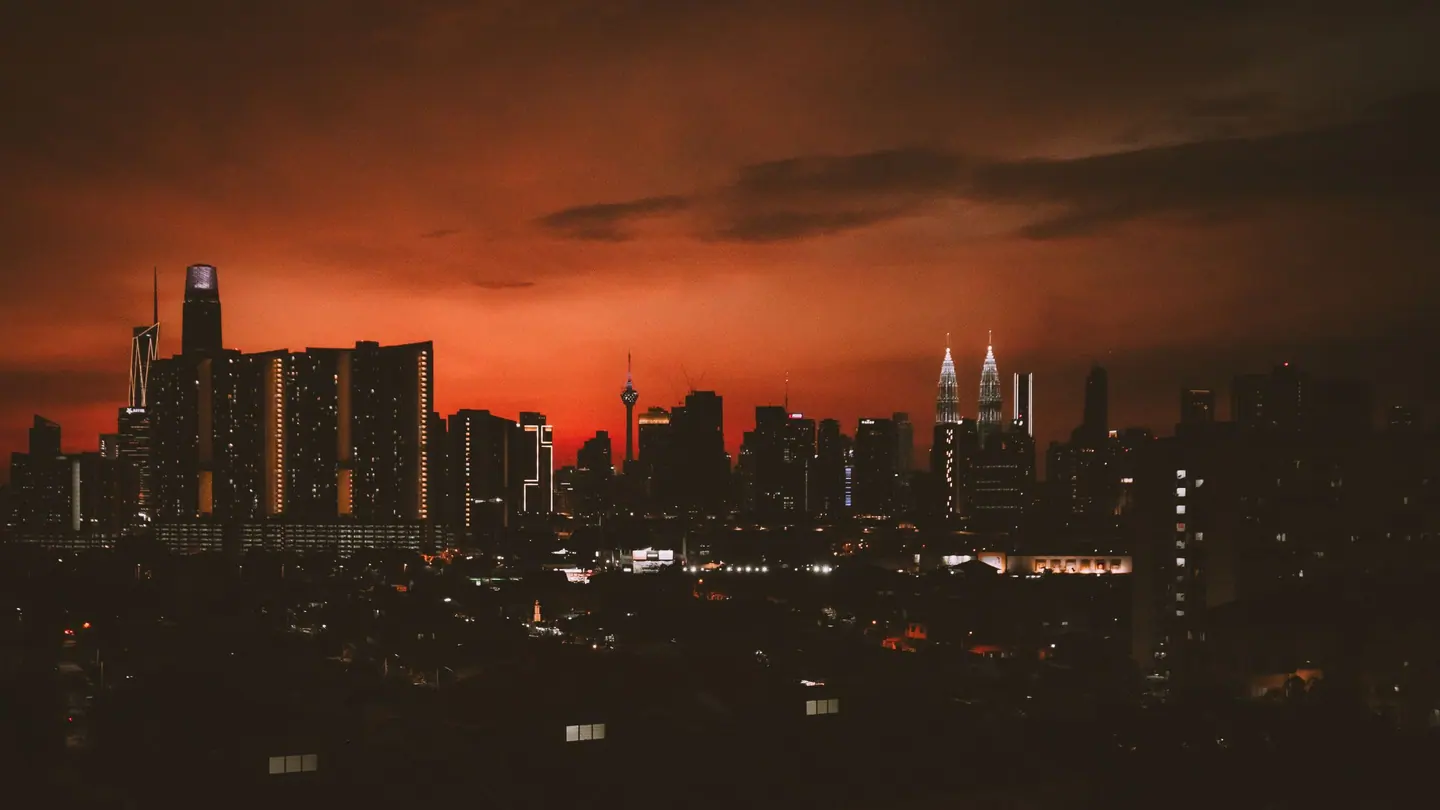
Old Railway Station, Islamic Arts Museum & Perdana Botanical Gardens
Kuala Lumpur Railway Station by A.B. Hubback, KTMB Administration Building, National Mosque of Malaysia Masjid Negara, Islamic Arts Museum Malaysia, National Museum Muzium Negara, Perdana Botanical Gardens, KL Bird Park, and Brickfields Little India
Kuala Lumpur Railway Station
Completed in 1910, this distinctive transport hub showcases Mughal-inspired arches, minarets, and cupolas tailored for tropical ventilation. Hubback synthesized British colonial engineering with regional motifs, producing an ornate stone facade. Travellers walking through the colonnaded halls can observe classical iron platform canopies alongside horseshoe arches that defined railway expansion during the Federated Malay States era.
Keretapi Tanah Melayu Building
Standing directly opposite the main station, this administrative headquarters was constructed between 1913 and 1917 under the direction of Arthur Benison Hubback. The structure displays an intricate Indo-Saracenic design, featuring heavy stone porticos, deep verandahs, and domed corner towers. A walk along the perimeter reveals deep arches crafted to shield interior offices from torrential monsoon downpours.
National Mosque of Malaysia
Inaugurated in 1965 to symbolise the aspirations of an independent nation, Masjid Negara departs sharply from traditional Islamic domes. Architects Howard Ashley, Ikmal Hisham Albakri, and Baharuddin Kassim designed the main prayer hall beneath an eighteen-pointed folded-plate roof resembling an open umbrella. Visitors can admire the towering 73-metre minaret and tranquil reflecting pools framed by crisp terrazzo colonnades.
Islamic Arts Museum Malaysia
Opened in 1998 on the edge of the Perdana Botanical Gardens, this museum houses more than ten thousand artefacts spanning calligraphy, textiles, jewellery, and armour. The modern building integrates five grand turquoise domes hand-painted by Uzbek craftsmen. Inside, spacious open-plan galleries present intricate Qur'anic manuscripts and miniature scale models of renowned historic mosques from around the globe.
Muzium Negara
Established in 1963 on the former site of the Selangor Museum, this central institution features a sweeping roof inspired by vernacular Malay royal architecture. Large exterior mosaic murals depict traditional crafts and key historic milestones across the facade. Inside, four permanent chronological galleries display prehistoric artefacts, classical sultanate regalia, colonial trade relics, and instruments of national independence.
Perdana Botanical Gardens
Originally landscaped in 1888 around an artificial lake, this central green lung spans more than ninety hectares of manicured terrain. The grounds feature shaded mahogany avenues, a sunken garden, bamboo groves, and a sprawling boardwalk network. Wandering across the park reveals the heritage of colonial civic planning, where temperate gardening conventions were adapted to indigenous tropical flora.
Kuala Lumpur Bird Park
Opened in 1991, this prominent aviary enclosure covers more than twenty acres across the undulating slopes of the botanical gardens. Enclosed by massive overhead netting, the park allows diverse tropical avian species to fly and breed in a naturalised canopy habitat. Visitors observe storks wading through artificial wetlands, hornbills nesting in mature trees, and free-roaming peafowl along the trails.
Kuala Lumpur Butterfly Park
Located adjacent to the botanical grounds, this enclosed garden reproduces a dense rainforest microclimate filled with flowering plants, fern gullies, and stone waterways. Thousands of live specimens, including the vivid green Rajah Brooke's birdwing, glide freely between feeding stations. An adjoining museum displays preserved insect collections, educating travellers about regional biodiversity and historical entomological expeditions across Peninsular Malaysia.
National Planetarium
Perched on a grassy crest between the national museum and the lake gardens, this facility opened in 1993 to promote astronomical sciences. The exterior is fashioned to resemble a futuristic Islamic observatory, crowned by a distinct turquoise dome and an exterior minaret tower. Exhibits explore ancient Asian astronomy, spaceflight history, and satellite telemetry alongside an overhead space theatre.
Makam Pahlawan
Situated adjacent to Masjid Negara, this tranquil memorial complex was completed in 1965 as the final resting place for national dignitaries. The central seven-pointed concrete umbrella roof shields marble cenotaphs of respected figures, including former Prime Ministers Tun Abdul Razak and Tun Hussein Onn. An outer colonnaded courtyard with ornamental pools provides an atmosphere of formal architectural dignity.
National Monument
Sculpted by Felix de Weldon and unveiled in 1966, this bronze figural group honours troops who defended Malaya during the Second World War and the Malayan Emergency. The central composition depicts seven soldiers supporting their comrades and raising the national standard atop a polished granite plinth. Surrounding water fountains, a domed pavilion, and inscribed cenotaph stones complete the formal commemorative plaza.
Cenotaph, Kuala Lumpur
Erected in 1921 near the central railway tracks and later relocated to the National Monument grounds, this granite obelisk commemorates allied service personnel. Inscriptions list the names of fallen soldiers from the Federated Malay States who perished in the Great War, with subsequent panels honouring Second World War casualties. The monument offers clear evidence of colonial Malaya's deep military ties with Britain.
Kuala Lumpur Hibiscus Garden
Set on a terraced slope within the botanical grounds, this horticultural zone is dedicated entirely to the Bunga Raya, or Hibiscus rosa-sinensis. Paved staircases wind through beds containing hundreds of varieties, ranging from heritage single-petal red blooms to modern cultivated hybrids. A colonial-style timber pavilion sits at the summit, offering a quiet vantage point over neighbouring tree canopies.
KL Orchid Garden
Established across an elevated expanse opposite the bird park, this landscaped site contains thousands of orchid specimens arranged across pergola-covered terraces. The garden features native Southeast Asian epiphytes alongside commercially developed hybrids trained over stone arches and timber trellises. Walking pathways allow horticulture enthusiasts to examine delicate dendrobium, vanda, and cattleya blooms cultivated under specialised shade mesh.
Royal Lake Club
Established in 1890 under British resident Frank Swettenham, the Lake Club served as the premier social sanctuary for senior colonial administrators and tin-mining dignitaries. Although modernised over decades, the facility retains expansive verandas and private sporting lawns facing the lake basin. Its position atop the undulating parkland reflects the structured social geography that defined late-Victorian British rule in Kuala Lumpur.
Sri Kandaswamy Kovil, Brickfields
Founded in 1902 by the Sri Lankan Tamil community who worked on the regional railway networks, this major Hindu sanctuary is dedicated to Lord Murugan. The temple exhibits authentic South Indian temple architecture, complete with a multi-tiered gopuram entrance tower embellished with intricately painted sculptures of deities. The interior pillared halls host sacred rituals, daily offerings, and colourful classical Carnatic music ceremonies.
Torana Gate
Unveiled in 2015 by the Prime Ministers of India and Malaysia, this monumental sandstone portal marks the entrance to the Brickfields Little India cultural quarter. Carved by artisans in Rajasthan, its intricate relief panels reproduce the ancient Buddhist and Hindu carvings of the Great Stupa at Sanchi. The torana stands as a modern marker of historical diaspora links connecting the subcontinent with Malaya.
Buddhist Maha Vihara, Brickfields
Founded in 1894 by Sinhalese immigrants, this prominent monastery remains a leading Theravada institution in Southeast Asia. The serene compound features a traditional bell-shaped stupa, an international Buddhist library, and a sacred Bodhi tree propagated from an ancient Sri Lankan cutting. During the annual Wesak festival, this complex acts as the focal starting point for the city-wide illuminated chariot procession.
Brickfields Little India
Originally developed as a clay extraction and brick-making settlement following the disastrous 1881 Kuala Lumpur fire, Brickfields later became home to thousands of railway employees. Today, the central streetscape of Jalan Tun Sambanthan features colourful broad pavements, decorative elephant pillars, and traditional spice bazaars. Shops line the avenue selling silk sarees, fresh jasmine garlands, brass lamps, and traditional banana-leaf meals.
Church of the Holy Rosary, Kuala Lumpur
Constructed in 1904 by French missionary Father Emile Terrien, this parish church served the early Chinese Catholic community who migrated to work in regional mines and plantations. The structure displays traditional neo-Gothic features including lancet stained-glass windows, exterior buttresses, and a delicate central bell spire. Inside, the quiet nave preserves historic timber pews and hand-carved stations of the cross beneath whitewashed plaster vaulting.
KLCC, Petronas Twin Towers, Kampung Baru & Bukit Bintang
Petronas Twin Towers & Skybridge, KLCC Park Lake Symphony, Suria KLCC Petronas Art Gallery, Saloma Link Bridge, Kampung Baru Traditional Malay Houses, KL Tower Menara KL Eco Park Canopy Walk, Jalan Alor, and Bukit Bintang
Petronas Twin Towers
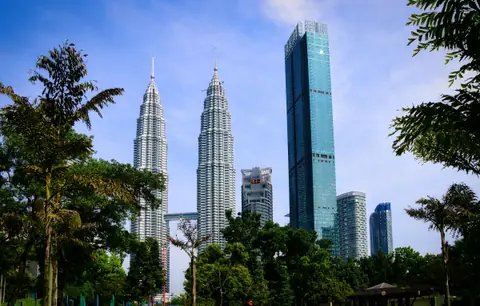
Designed by Argentine American architect Cesar Pelli and completed in 1996, these twin towers rank among the tallest structures in Southeast Asia. The cross-section reflects an eight-pointed Islamic star symbolising unity and harmony. Look closely at the stainless steel and glass facades, which echo traditional Malaysian weaving motifs in daylight.
Petronas Skybridge
Engineered to slide in and out of the towers to accommodate wind sway, this two-storey bridge connects floors 41 and 42. It sits 170 metres above street level, serving as an observation walkway and emergency exit route. Visitors standing here can view the urban grid of central Kuala Lumpur extending towards the Klang Valley.
KLCC Park
Opened in 1998, this 50-acre green lung was one of the final creations of famed landscape architect Roberto Burle Marx. The grounds feature indigenous trees, a two-acre artificial lake, and shaded pedestrian footpaths. A sprawling children's playground and ornamental water features provide respite from the surrounding glass and steel towers.
Lake Symphony
Situated on the edge of the KLCC Park directly behind the towers, this water feature comprises two musical fountains. Dozens of animated water jets shoot columns upwards to coordinated light sequences throughout the evening. The surrounding promenade offers unobstructed sightlines of the lower facade of the Petronas Towers reflecting in the water.
As Syakirin Mosque
Commissioned to serve the expanding city centre district, this mosque opened in 1998 before undergoing substantial expansion in 2009. The structure departs from traditional onion domes, instead incorporating sleek angled roofs, granite stonework, and fine plasterwork crafted by Uzbek artisans. Its prayer hall accommodates up to 12,000 worshippers during major assemblies.
Galeri Petronas
Established in 1993 and relocated to the base of the Petronas Towers in 1998, this non-profit space promoted contemporary Malaysian visual arts. The gallery hosted major retrospectives, photography showcases, and experimental works across a dedicated circular floor plan. While physical operations ceased recently, its historical legacy shaped national dialogue on modern Southeast Asian art.
Saloma Link
Spanning 370 metres across the Klang River and the Ampang-Kuala Lumpur Elevated Highway, this pedestrian bridge opened in 2020. The architectural shell draws inspiration from the sireh junjung, a traditional betel nut leaf arrangement used in Malay weddings. Thousands of computer-controlled LED panels illuminate its angular steel canopy after dusk.
Kampung Baru Jamek Mosque
Founded in the 1920s and repeatedly renovated, this religious centre stands as the spiritual heart of Kuala Lumpur's oldest Malay agricultural settlement. The mosque features modern Islamic arches, minarets, and an open courtyard shaded by mature trees. During the fasting month of Ramadan, the community gathers here to prepare and distribute traditional bubur lambuk porridge.
Rumah Degil
Constructed in 1926 by Sutan Mengatas Mandailing, this timber house earned its nickname meaning 'stubborn house' by resisting surrounding urban development for nine decades. Built in the Mandailing architectural tradition without nails, it was dismantled in 2018 to prevent demolition. The salvaged elements were meticulously preserved, offering insight into early twentieth-century wooden domestic construction.
Jalan Raja Muda Musa
Running through central Kampung Baru, this road preserves an urban residential fabric established under British colonial administration in 1900. Wooden stilt houses with zinc roofs and carved ventilation panels stand directly adjacent to traditional family-run food stalls. The contrast between rural architectural typologies and the towering skyline behind is especially visible along this street.
Kuala Lumpur Tower
Completed in 1995, this 421-metre communications spire is constructed on the crest of a primary rainforest reserve. Its architecture incorporates traditional Islamic design elements, including intricate Muqarnas vaulting supporting the base of the head structure. The observation platform and open sky deck present 360-degree views across the entire metropolitan valley.
KL Forest Eco Park
Originally designated as the Bukit Nanas Reserve in 1906, this 9-hectare jungle patch is one of Malaysia's oldest permanent forest reserves. It shelters native dipterocarp trees, birds, butterflies, and small troops of silvered leaf monkeys. A multi-tiered aerial canopy walk allows visitors to examine ancient forest crowns directly beneath the shadow of surrounding high-rises.
Bukit Bintang Monorail Station
Operating since 2003, this elevated railway station straddles the junction of Jalan Bukit Bintang and Jalan Sultan Ismail. It serves as a prime vantage point to observe street-level pedestrian movement and massive multimedia billboards wrapping neighbouring retail complexes. The station now integrates with underground MRT concourses, anchoring the modern transportation network.
Jalan Alor
Once known as a red-light quarter during the mid-twentieth century, this narrow street evolved into an epicentre of street dining. Flanked by multi-storey post-war shophouses, the thoroughfare comes to life in the evening with plastic tables, smoking woks, and hawker carts. The architectural details of the shophouses reflect typical Chinese diaspora merchant residences from the 1950s.
Lot 10 Shopping Centre
Opened in 1990 on the site of a former amusement park, this commercial centre helped transform Bukit Bintang into a premier shopping sector. The building is distinguished by its green marble and glass facade, complemented by an internal atrium layout. Its lower ground floor functions as a curated food heritage hall celebrating historic hawker recipes.
Starhill Gallery
Redesigned in 2011 by international architecture firm Spark, this retail frontage is celebrated for its origami-like crystalline facade of stone and glass. The structure dramatically reinvented an earlier 1990s shopping complex, integrating angular canopies that respond to daylight and nighttime illumination. The interior houses luxury watchmakers, jewellery maisons, and expansive culinary halls.
Pavilion Kuala Lumpur
Occupying the historic grounds of the former Bukit Bintang Girls' School, this multi-level retail centre opened in 2007. The main entrance is defined by a colossal flight of stone stairs and the multi-tiered Crystal Fountain, created by LIULI Crystal Art. The building remains a focal point for civic gatherings and seasonal public installations.
St. John's Cathedral, Kuala Lumpur
Consecrated in 1883 and rebuilt as a whitewashed brick structure in 1955, this cathedral sits on the western flank of Bukit Nanas. The exterior exhibits a blend of classical European ecclesiastical forms with tropical adaptations, featuring twin bell towers and high arched windows. The interior provides calm acoustics and displays historic stained glass portraits.
St. Andrew's Presbyterian Church
Founded in 1917, this timber-and-brick church was built to serve Scottish planters, miners, and British administrators residing in the Federated Malay States. Its simple gabled roof, wooden pews, and historic brass memorial plaques recall early twentieth-century parish architecture. It remains one of the few surviving colonial places of worship in the Golden Triangle.
Kompleks Kraf Kuala Lumpur
Located along Jalan Conlay, this sprawling craft village is designed in the style of a traditional Terengganu Malay palace. The complex features carved timber pediments, sloping tiled roofs, and lush courtyards that house artisan workshops. Visitors can observe master craftsmen demonstrating batik printing, songket weaving, ceramic throwing, and traditional woodcarving.
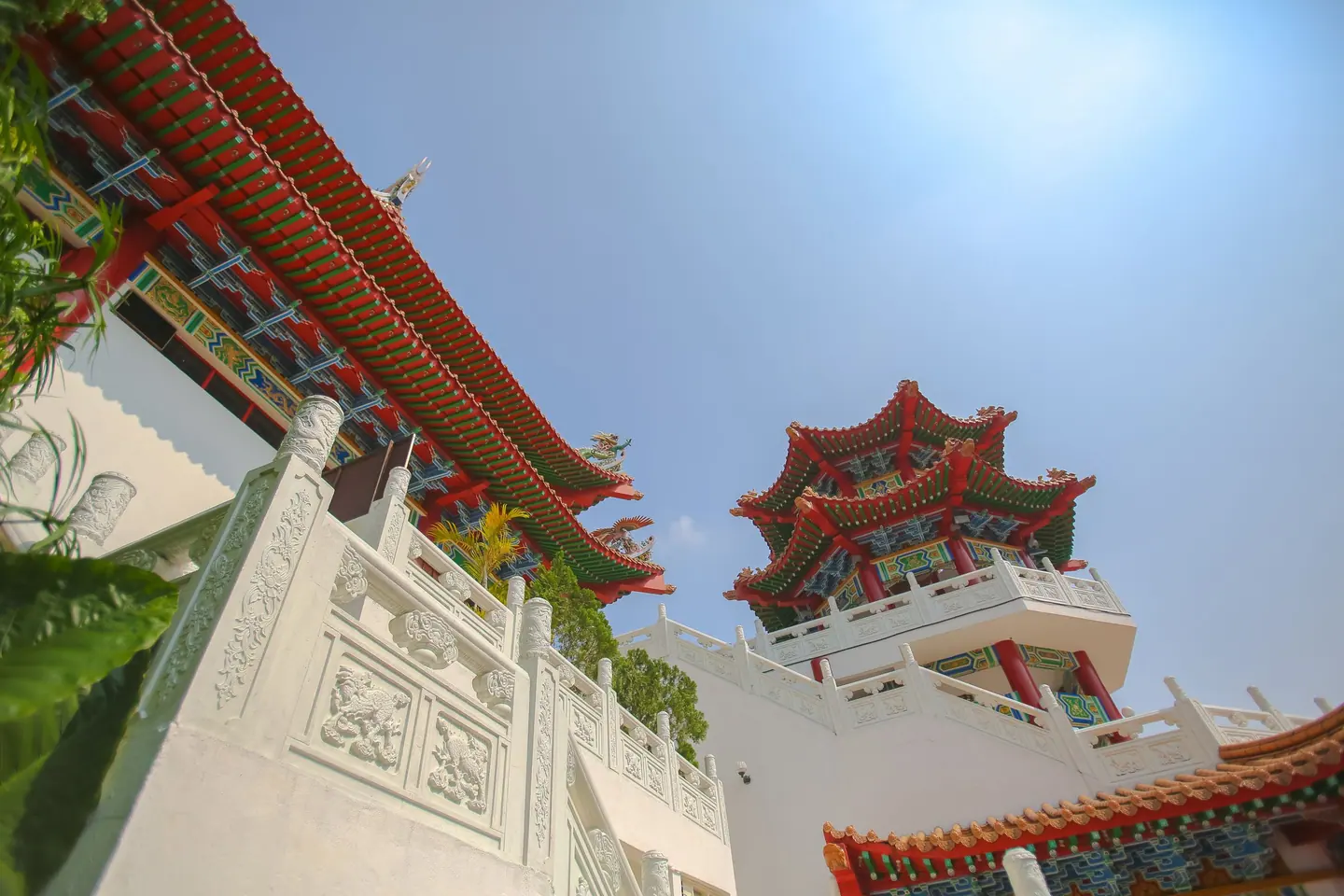
Thean Hou Temple, Royal Museum & Batu Caves Limestone Sanctuaries
Thean Hou Temple Robson Heights, Rumah Penghulu Abu Seman Badan Warisan, Ilham Gallery, National Visual Arts Gallery, Istana Negara Royal Museum, Royal Selangor Pewter Centre, and Batu Caves 272 Rainbow Steps & Temple Cave
Thean Hou Temple
Dedicated to the sea goddess Mazu, this multi-level complex combines contemporary architectural methods with traditional decorative elements. Red pillars, ornate dragon carvings, and detailed pagoda tiers characterize the upper levels. Travellers can admire sweeping vistas across the capital skyline from the main courtyard prayer terrace.
Rumah Penghulu Abu Seman
Relocated from Kedah to the grounds of Badan Warisan Malaysia, this timber structure ranks among the oldest surviving Malay headman houses. Built on stilts from chengal wood, it showcases delicate openwork carvings designed for natural air flow. The surrounding garden preserves traditional medicinal plants alongside domestic regional artefacts.
Ilham Gallery
Occupying dedicated levels within the Norman Foster designed Ilham Tower, this non-profit institution presents modern and contemporary Malaysian and regional art. The gallery rotates thought-provoking exhibitions covering painting, sculpture, and documentary photography. Visitors can explore well-documented cultural projects alongside engaging talks in the resource centre.
National Art Gallery
Established in 1958, this cultural complex displays an extensive collection of experimental paintings, indigenous crafts, and large sculptures. The distinct blue-tiled roof references regional Malay aesthetics while housing modern climate-controlled exhibition spaces. Walking through the stepped atrium reveals retrospective showcases honouring Malaysia's most influential pioneers of fine art.
Royal Museum
Originally constructed in 1928 as a double-storey private mansion, this grand residence subsequently functioned as the royal palace until 2011. Visitors wander through guarded ceremonial gates into formal reception halls, throne rooms, and royal sleeping suites. The interior decor reflects royal ceremonial protocol with preserved regal furniture and decorative wall panels.
Royal Selangor Visitor Centre
Tracing its beginnings back to a tinsmith shop founded in 1885, this modern factory complex exhibits historical casting methods and polished tin ware. Visitors view the monumental pewter tankard outside before touring the active foundry floor. Interactive workshops provide direct hands-on demonstrations of traditional metal hammering and polishing techniques.
Batu Caves Temple Cave
Guarded by a towering golden statue of Lord Murugan, this prehistoric limestone hill houses massive cavernous sanctuaries. Ascending the 272 colourful steps leads directly into the high vaulted Cathedral Cave, lit by shafts of natural sunlight. Elaborate statues depicting Hindu epics adorn natural rocky crevices throughout the cavernous interior.
Ramayana Cave
Situated to the left of the central staircase at the base of Batu Caves, this distinct cavern is marked by a green statue of Hanuman. The illuminated interior showcases colourful, life-size dioramas illustrating scenes from the Ramayana epic along irregular natural stalactites. Deep chambers offer cool strolls past decorative rock formations and carved tableaux.
Dark Cave Batu Caves
Branches off the main staircase at Batu Caves lead into this protected subterranean network notable for unique ecological diversity. Undisturbed limestone formations, ancient guano beds, and delicate stalagmites create habitats for the trapdoor spider and large colonies of fruit bats. Specialized educational tours emphasize cave preservation and subterranean geology.
Kuan Yin Temple
Constructed in 1880, this classical Chinese sanctuary represents one of the earliest Buddhist centres built along Jalan Maharajalela. Its courtyard features heavy incense burners and altars framed by carved timber beams and glazed ceramic ridge tiles. Devotees visit to make offerings before golden likenesses of Kuan Yin and associated bodhisattvas.
Sam Kow Tong Temple
Founded in 1916 by the local Hokkien community, this sanctuary unites Confucianism, Buddhism, and Taoism within a single prayer hall. Ornate relief carvings and glazed roof tiles detail mythical battles across the entrance gate. The quiet courtyard preserves ancestor plaques, ornate altars, and bronze bells cast in Southern China during the early republican era.
Sri Kandaswamy Kovil
Established in 1902 by Sri Lankan Tamil settlers, this elaborate complex stands out for its high pyramidal rajagopuram entrance tower. Intricate plaster statues representing Hindu deities are painted in brilliant colours across the exterior shrines. Within the quiet granite halls, classical Tamil rituals and daily pooja ceremonies honour the deity Murugan.
Maha Vihara Buddhist Temple
Originating in 1894, this serene enclave features an original colonial-era shrine hall, a sacred bodhi tree, and an ornate modern bell tower. The tranquil complex functions as a prominent focal point for annual Wesak processions and scripture education. Inside, detailed murals illustrate scenes from the historical Buddha's path to enlightenment.
Sultan Sulaiman Royal Mosque
Completed in 1932 by British architects, this impressive building synthesizes classical Western Art Deco geometry with traditional Islamic dome forms. Bas-reliefs, semi-circular cupolas, and slender minarets frame the perimeter of the royal prayer room. The adjacent royal mausoleum holds the remains of Sultan Sulaiman alongside members of the Selangor royal lineage.
Perdana Botanical Gardens Sunken Garden
Constructed in the central tier of Kuala Lumpur's oldest recreational park, this symmetrical sunken courtyard features clipped hedges and classical urns. Pathways lined with flowering annuals descend toward central water fountains surrounded by shaded colonial-style pergolas. The design references European formal garden estates modified to support diverse tropical flora.
Carcosa Seri Negara
Commissioned in 1896 as the official residence of Sir Frank Swettenham, these two grand mansions overlook the botanical gardens from shaded ridges. High ceilings, wide wrap-around verandas, and neo-Renaissance arched colonnades suit the humid tropical conditions. The buildings witnessed critical negotiations concerning the drafting of Malaya's independent federal constitution.
P. Ramlee Memorial
Housed inside the artist's former Setapak residence, this museum commemorates the prolific career of entertainer and film director P. Ramlee. The rooms hold original film scripts, musical instruments, awards, and personal vintage stage costumes. Visitors learn about the golden age of regional cinema through archival film clippings and original recordings.
Bank Negara Malaysia Museum and Art Gallery
Constructed around a glass-lined spiral staircase, this financial museum details the evolution of commerce, currency, and trade across Southeast Asia. Exhibits feature ancient tin money, regional barter ingots, and modern central banking displays. Upper galleries host permanent collections of modern Malaysian fine art acquired by the central bank since independence.
National Monument
Unveiled in 1966, this towering bronze figurative group honours the fallen soldiers of World War II and the Malayan Emergency. The composition depicts seven soldiers supporting each other while raising the Malaysian national flag above a reflective water basin. Pavilions adorned with golden mosaics surround the central plaza, providing panoramic views across the parklands.
Titiwangsa Lake Gardens
Engineered around large open water basins excavated during historical British tin mining operations, this parkland offers sweeping perspectives across the northern cityscape. Paved walking loops circumnavigate the water, passing canopy walks and tranquil aquatic plant habitats. We observe local rowers training across the open water with the city towers reflected clearly behind them.
Pedestrian Bridges and Rail Links Across Kuala Lumpur
You can combine these stops with the district-by-district where-to-stay notes and seasonal planning tables on our Kuala Lumpur destination page, or explore further regional and neighbourhood guides.