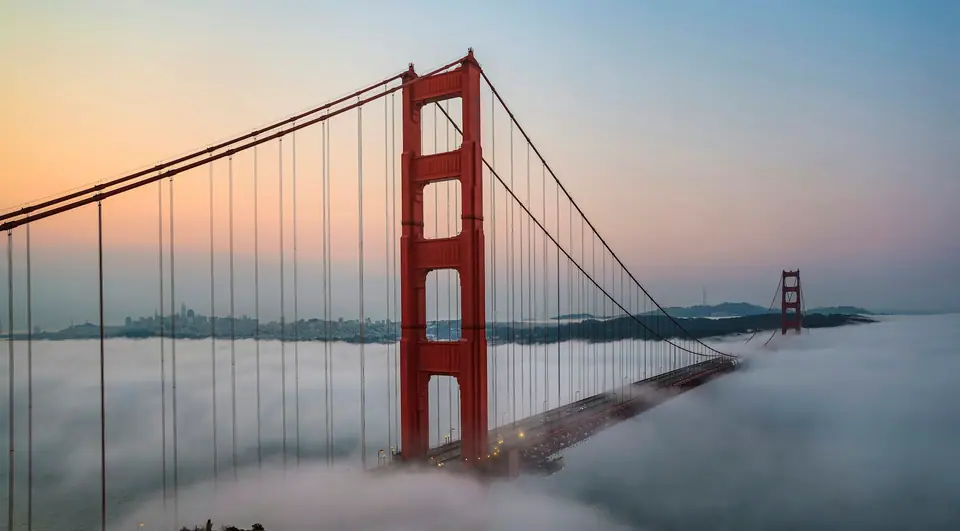
A 100-stop hillside and bayfront route across San Francisco, connecting the Golden Gate strait, historic cable car ridges, North Beach, Chinatown, and Victorian neighbourhoods.
Ohlone Shores, the 1849 Gold Rush and Cable Car Engineering
Inhabited for thousands of years by the Ramaytush Ohlone people along the shores of San Francisco Bay, the peninsula became the site of the Spanish Presidio military fort and Mission San Francisco de Asís (Mission Dolores) in 1776. Known as Yerba Buena until 1847, the quiet cove exploded overnight when gold was discovered in the Sierra Nevada foothills in 1848, drawing Forty-Niner prospectors, merchants, and sailors from across the Pacific and Atlantic.
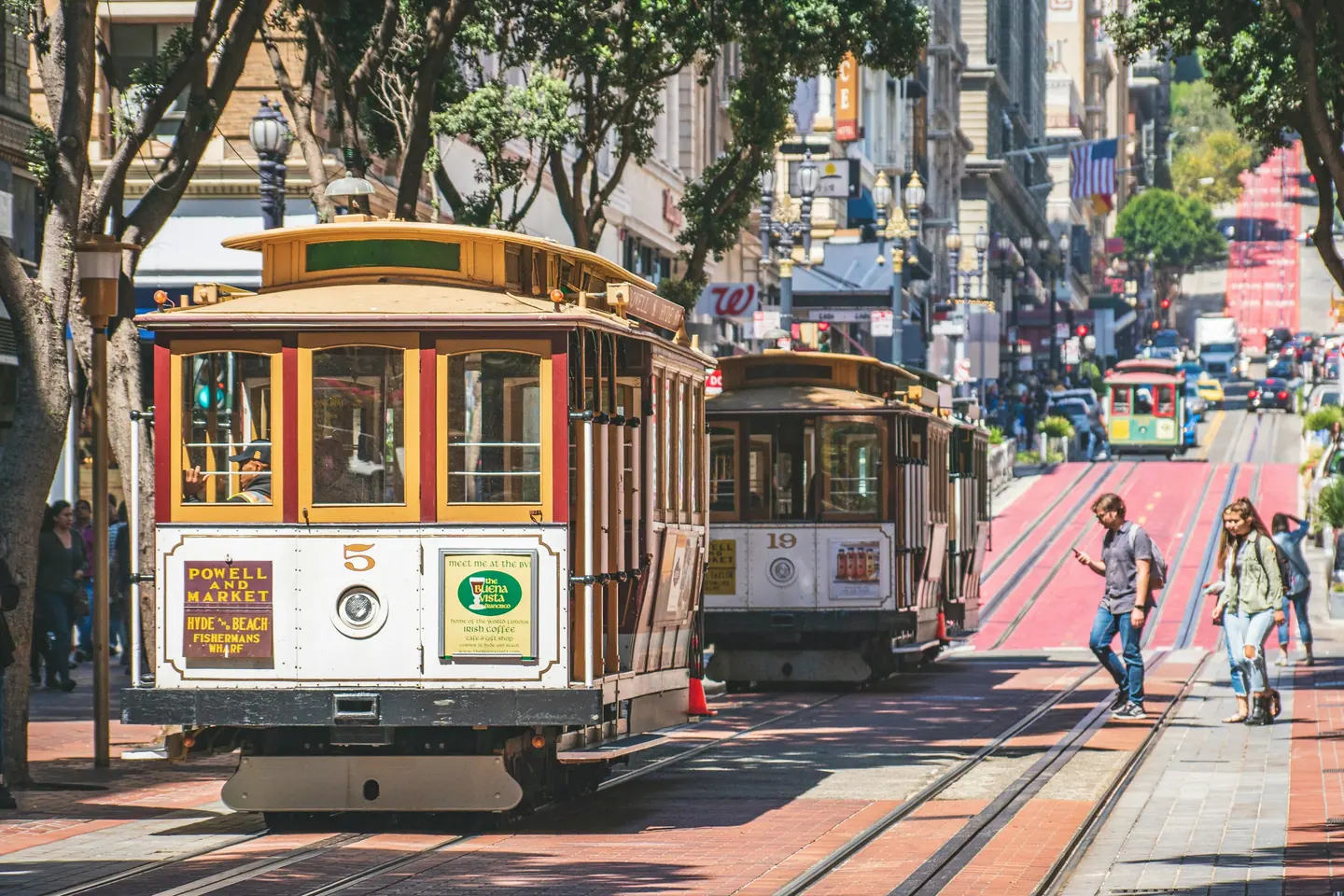
In 1873 Andrew Hallidie invented the grip cable car to conquer the city's steep hills, and after the devastating 1906 earthquake and fire, San Francisco rebuilt with Beaux-Arts civic monuments, Victorian and Edwardian timber rows, and the 1937 Golden Gate and Bay Bridges.
Embarcadero, Ferry Building, Chinatown & North Beach
Ferry Building Marketplace, Embarcadero Pier 7, Transamerica Pyramid, Dragon Gate Chinatown, Tin How Temple, Portsmouth Square, City Lights Bookstore, Saints Peter and Paul Church, and Coit Tower Telegraph Hill
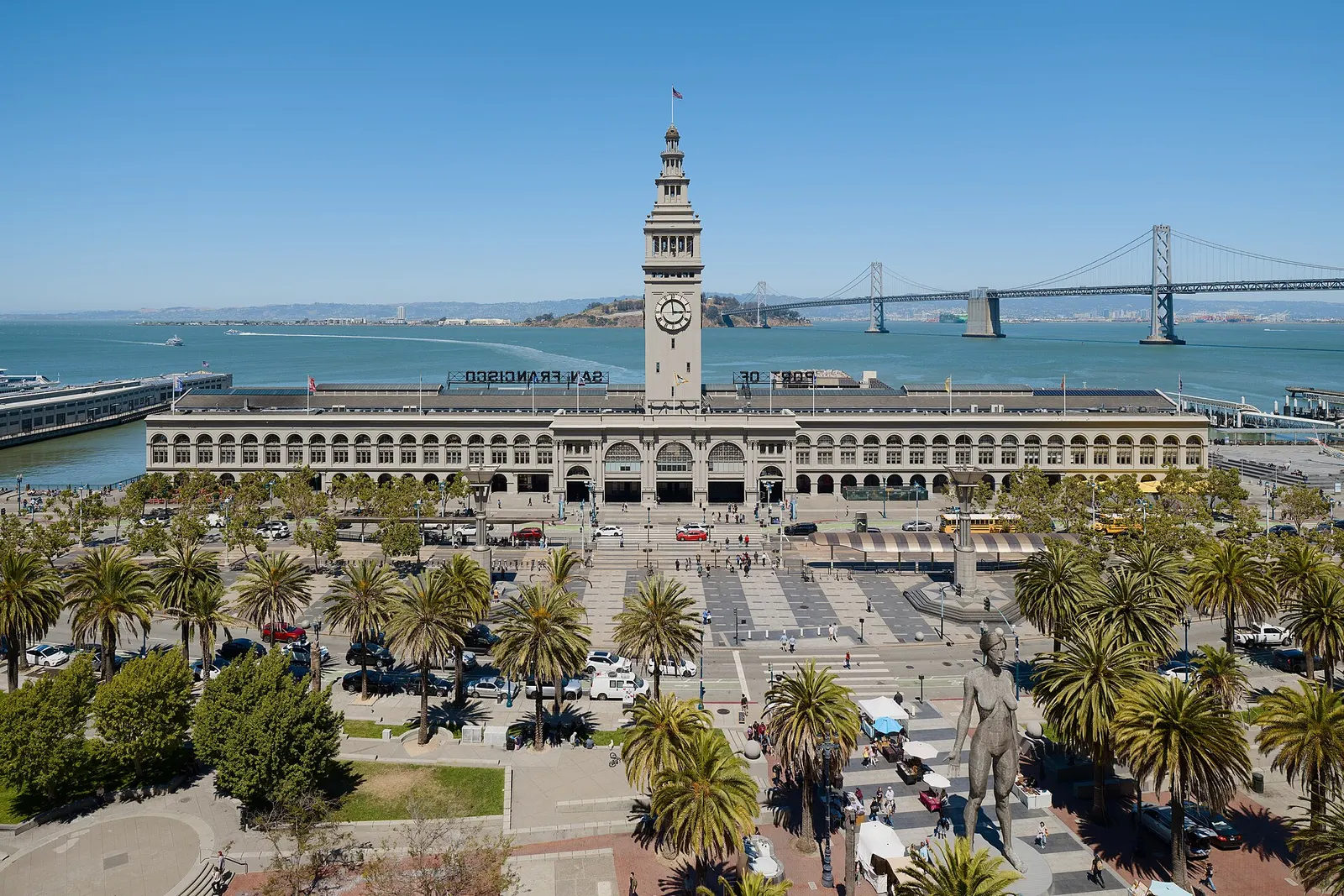
San Francisco Ferry Building
Opened in 1898, this Beaux-Arts terminal survived both the 1906 and 1989 earthquakes. Designed by A. Page Brown, its prominent clock tower took inspiration from the Giralda bell tower in Seville. Inside, the restored nave hosts regional food purveyors and merchants beneath skylit arches overlooking the bay.
Embarcadero Pier 7
Pier 7 extends more than two hundred metres into the bay, offering wide views of the financial skyline and the Bay Bridge. Rebuilt in 1990 as a pedestrian pier, it features ornamental iron handrails, timber planking, and traditional cast-iron lamps. Anglers and strollers share this peaceful vantage point throughout daylight hours.
Transamerica Pyramid
Designed by architect William Pereira, this striking 260-metre spire stands as a defining element of the northern waterfront skyline. The structural concrete quartz facade features two external wing shafts accommodating lifts and cooling towers. At ground level, visitors can wander through a peaceful redwood park shaded by mature coast trees.
Golden Gate Fortune Cookie Factory
Located in Ross Alley since 1962, this compact bakery demonstrates the hand-folding process behind traditional American-Chinese fortune cookies. Visitors can watch workers fold warm circular waffles around paper slips using metal moulds. The small production floor supplies local shops while preserving a culinary tradition born in northern California.
Dragon Gate
Erected in 1970 at Bush Street and Grant Avenue, this paifang was designed by architect Clayton Lee using traditional Chinese courtyard gate principles. Crafted from stone and green ceramic roof tiles, the structure was gifted by the Republic of China. Two stone guardian lions flank the entrance alongside decorative dragons.
Tin How Temple
Founded in 1852, this fourth-floor sanctuary on Waverly Place is one of the oldest operational Taoist temples in the United States. Dedicated to Mazu, the protector of seafarers, the interior features intricate gilded woodcarvings, lantern arrays, and bronze censers. Red incense coils hang from the ceiling, scenting the atmospheric prayer room.
Portsmouth Square
This public square served as the central plaza of nineteenth-century Yerba Buena before the settlement became San Francisco. Here, the American flag was raised in 1846 during the Mexican-American War, and gold was publicly declared in 1848. Today, local residents gather daily for games of Chinese chess, cards, and tai chi.
Chinese Historical Society of America Museum
Occupying a 1932 Julia Morgan building that formerly housed the Chinatown YWCA, this museum preserves historical artefacts and oral histories of Chinese immigrants. The brick structure blends traditional Chinese ceramic roof motifs with Western institutional design. Exhibitions chronicle early rail workers, restrictive immigration policies, and landmark civil rights struggles.
Bank of Canton Building
Built in 1909 following the great earthquake, this structure originally served as the Chinatown Telephone Exchange. Operators famously memorised thousands of subscribers by name and dialect without referring to written directories. The distinctive triple-tiered pagoda roof and carved dragon details represent an influential early example of Chinatown pagoda revival architecture.
Kong Chow Temple
Established by the Kong Chow Benevolent Association, this temple honors Guan Yu, the protector deity of brotherhood and righteousness. The present modernist concrete building dates to 1977, yet it preserves altars, tablets, and woodcarvings that were rescued from the original nineteenth-century site. A serene rooftop garden offers views over Chinatown.
Old Saint Mary's Cathedral
Constructed from granite quarried in China and brick manufactured in New England, Old Saint Mary's served as the city's first Roman Catholic cathedral. The Gothic Revival exterior survived the 1906 disaster despite its interior timber frame burning entirely. The clock tower bears an Old Testament admonition inscribed on its clock face.
City Lights Bookstore
Co-founded in 1953 by poet Lawrence Ferlinghetti, City Lights established itself as the first all-paperback bookstore in the United States. It gained international prominence after publishing Allen Ginsberg's controversial poem Howl, resulting in a seminal free-speech obscenity trial. The multi-level shop remains a dedicated literary hub for progressive politics and poetry.
Vesuvio Cafe
Operating since 1948 across Jack Kerouac Alley from City Lights Bookstore, this saloon served as the informal salon for Beat writers including Kerouac and Dylan Thomas. The walls display an eclectic collection of paintings, vintage posters, and historical photographs. Its mezzanine floor provides travellers with a quiet view down onto Columbus Avenue.
National Shrine of Saint Francis of Assisi
Dating to 1860, this parish church was designated an official national shrine in 1999. The Norman Gothic edifice features twinned bell towers and an interior decorated with hand-painted murals and stained-glass panels depicting the life of Saint Francis. The Porziuncola Nuova replica chapel stands adjacent, reproducing the founder's original Italian retreat.
Saints Peter and Paul Church
Dominating the northern edge of Washington Square, this Salesian parish was built in the 1920s to serve the expanding Italian community of North Beach. Twin 58-metre spires frame an ornate Romanesque facade decorated with mosaics and stone tracery. Marilyn Monroe and Joe DiMaggio famously posed on the church steps after their civil wedding.
Washington Square
Established in 1847, this grassy expanse functions as the social heart of North Beach. Ringed by Italian trattorias, bakeries, and historic residences, the lawn provides open space beneath the shadow of Saints Peter and Paul Church. A monument dedicated to volunteer firefighters stands near the centre among mature shade trees.
Beat Museum
Situated on Broadway, this cultural museum showcases original manuscripts, rare first editions, personal letters, and clothing from the Beat Generation. Exhibits illuminate the work of Jack Kerouac, Allen Ginsberg, and Neal Cassady during their pivotal time in northern California. The collection highlights the countercultural shift that influenced 1960s civil movements.
Club Fugazi
Built in 1913 as an Italian community hall with funds donated by banker John Fugazi, this venue served generations of immigrant social clubs. The hall later achieved theatrical fame by staging Beach Blanket Babylon for forty-five consecutive years. Today it hosts acrobatic and theatrical performances beneath a grand timber ceiling.
Coit Tower
Constructed in 1933 using funds bequeathed by Lillie Hitchcock Coit, this fluted concrete pillar rises 64 metres above the summit of Telegraph Hill. The ground floor displays fresco murals created in 1934 by twenty-five local artists under the Public Works of Art Project, portraying American labor during the Great Depression.
Filbert Street Steps
This wooden pedestrian staircase cuts down the steep eastern face of Telegraph Hill toward the docks below. Bordered by private cottage gardens, towering trees, and hidden wooden boardwalks, the route offers views across the bay toward Oakland. The surrounding gardens are also frequented by the famous flock of wild green parrots.
Nob Hill, Russian Hill, Lombard Street & Fisherman’s Wharf
Grace Cathedral, Cable Car Museum, Fairmont Hotel Nob Hill, Lombard Street Crookedest Block, Ghirardelli Square, Hyde Street Pier Maritime Park, Pier 39 Sea Lions, and Alcatraz Island
Grace Cathedral
Constructed over several decades following the 1906 earthquake, this Episcopal cathedral drew inspiration from Notre-Dame de Paris. Visitors can examine the bronze Ghiberti doors cast from Florence originals, walk two labyrinths, and admire brilliant faceted glass windows that portray historical figures alongside biblical narratives.
Cable Car Museum
Housed inside a historic red-brick car barn from 1887, this operational facility pulls the cables that propel the city transit network. The viewing gallery looks directly down upon massive spinning winding wheels, while antique passenger cars and mechanical exhibits recount the nineteenth-century invention of Andrew Smith Hallidie.
Fairmont Hotel Nob Hill
Completed shortly after surviving the catastrophic 1906 firestorm, this grand hotel showcases classical Beaux-Arts architecture designed by Reid & Reid and Julia Morgan. The building hosted world delegates during the 1945 drafting of the United Nations Charter, and its lavish lobby features towering marble pillars and gilded mouldings.
Pacific-Union Club
Erected in 1886 as a private residence for silver tycoon James Clair Flood, this brownstone structure was the only mansion on the hill to withstand the 1906 blaze. Willis Polk subsequently redesigned the interior for the exclusive gentlemen club, retaining the robust stonework and surrounding ornamental bronze railings.
Huntington Park
Occupying the former plot of railroad baron Collis P. Huntington mansion, this landscaped green space serves as the civic anchor of the summit. At its centre stands the Fountain of the Tortoises, a replica of Rome Fontana delle Tartarughe, surrounded by neat granite balustrades and formal pathways.
Ina Coolbrith Park
Perched on the steep eastern shoulder of Russian Hill, this pocket park honours poet Ina Coolbrith, who mentored local writers such as Jack London. Stepped pathways and landscaped gardens provide clear views across the downtown skyline, while quiet benches offer relief along the historic hillside.
San Francisco Art Institute (Original Campus)
Established at this Chestnut Street site in the nineteen-twenties, the former art academy features Spanish Colonial Revival quadrangles and concrete Brutalist additions. Inside the central gallery rests Diego Rivera celebrated 1931 fresco, The Making of a Fresco Showing the Building of a City, which depicts artisans at work.
Lombard Street Crookedest Block
Engineered in 1922 to reduce the natural twenty-seven percent grade of the hill, this single brick-paved block features eight distinct hairpin curves. Pedestrians ascend via flanked stairways, passing colourful hydrangeas, manicured hedges, and charming early twentieth-century townhouses overlooking the bay.
Macondray Lane
Tucked away on the northern slope of Russian Hill, this narrow pedestrian pathway inspired Armistead Maupin fictional Barbary Lane. A wooden footpath and gravel trail guide visitors beneath dense tree canopies, bordered by historic shingled cottages, small fountains, and ornamental greenery.
Alice Marble Tennis Courts and Viewpoint
Positioned atop the Lombard Street reservoir within George Sterling Park, these public tennis and basketball courts offer expansive northern panoramas. Visitors look out across the Golden Gate Strait and Marin Headlands, standing on grounds named in tribute to the multi-title Grand Slam champion Alice Marble.
Ghirardelli Square
Originally built as a woolen mill and later acquired by chocolatier Domenico Ghirardelli in 1893, this red-brick complex represents an early success in urban adaptive reuse. The distinctive illuminated roof sign, central fountain by Ruth Asawa, and original industrial clock tower remain prominent waterfront fixtures.
San Francisco Maritime Museum
Constructed in 1939 by the Works Progress Administration as an aquatic park bathhouse, this building exemplifies the maritime Streamline Moderne style. Inside, vivid aquatic murals by artist Hilaire Hiler frame model ships, historic navigational instruments, and exhibits outlining Pacific whaling and trade heritage.
Hyde Street Pier Maritime Park
Serving as an automobile ferry terminal before the Golden Gate Bridge opened, this historic pier now moors significant historic watercraft. Boarding vessels like the 1886 square-rigger Balclutha and the walking-beam steam ferry Eureka reveals maritime engineering from California past.
Aquatic Park Historic District
Designed during the New Deal era, this municipal recreation area features a curved breakwater known as Municipal Pier enclosing a calm lagoon. Generations of cold-water swimmers have utilized the beach, while visitors stroll the shoreline promenade taking in unobstructed views of Alcatraz Island.
Boudin Bakery Museum
Operating since the 1849 Gold Rush, this flagship bakery complex houses a catwalk museum overlooking active production lines. Travellers can observe bakers kneading wild-yeast sourdough according to nineteenth-century traditions, alongside educational panels charting culinary history in the city.
SS Jeremiah O'Brien
Launched in 1943, this vessel is one of only two remaining operational Liberty ships among thousands built for the war effort. Docked on Pier 45, the ship offers self-guided tours across its bridge, deck guns, cargo holds, and fully functioning triple-expansion steam engine.
USS Pampanito
This US Navy submarine completed six war patrols in the Pacific theatre between 1944 and 1945 before preservation as an educational museum. A walk along the claustrophobic corridors exposes preserved torpedo rooms, original periscopes, radio apparatus, and the compact living quarters shared by the eighty-man crew.
Musée Mécanique
Assembled over decades by collector Edward Galland Zelinsky, this lively waterfront venue houses hundreds of coin-operated amusements. Visitors can examine nineteenth-century musical automations, stereoscopic viewers, hand-cranked mutoscopes, and vintage fortune tellers, all maintained in functioning condition on Pier 45.
Pier 39 Sea Lions
Following the Loma Prieta earthquake of 1989, wild California sea lions began hauling out onto the wooden floats of this commercial marina. The Marine Mammal Center and park rangers provide educational resources regarding their behavioural ecology as crowds watch the pinnipeds bask and bark.
Alcatraz Island
Initially developed as a mid-nineteenth-century coastal fortification and military stockade, this sandstone island held notorious federal prisoners from 1934 to 1963. The cellhouse audio tour guides guests through cellblocks, exercise yards, and the warden quarters, alongside markers commemorating the 1969 American Indian occupation.
Palace of Fine Arts, Presidio, Golden Gate Bridge & Lands End
Palace of Fine Arts, Crissy Field, Fort Point National Historic Site, Golden Gate Bridge, Battery Spencer Viewpoint, Presidio Main Post, Baker Beach, Lands End Labyrinth, Sutro Baths, and Legion of Honor
Palace of Fine Arts
Architect Bernard Maybeck conceived this monumental Roman-style rotunda and colonnade as a fictional ruined Roman temple. Originally constructed for the 1915 Panama-Pacific International Exposition, the structure was completely rebuilt in durable concrete during the 1960s. Visitors can admire the weeping maiden statues atop the colonnades and watch resident swans gliding across the neighbouring freshwater lagoon.
Presidio Officers' Club
Standing as one of the oldest surviving colonial buildings in northern California, this site contains original Spanish adobe walls from the late eighteenth century. The complex served as the military and social heart of the post under Spanish, Mexican, and American governance. Inside, heritage exhibitions display archaeological artefacts alongside restored ballroom interiors that hosted generations of garrison personnel.
The Walt Disney Family Museum
Occupying a refurbished Montgomery Street barracks building, this biographical institution chronicles the creative life of animator Walt Disney. The galleries integrate early hand-drawn sketches, vintage cameras, and an intricate scale model of Disneyland. The historic red-brick exterior preserves the late nineteenth-century military architecture that defines the Main Post perimeter.
San Francisco National Cemetery
Covering nearly thirty acres on a sloping hillside above the bay, this historic burial ground serves as the final resting place for thousands of military service members. Established in the nineteenth century, the cemetery features orderly rows of white marble headstones shaded by mature Monterey cypresses. The grounds offer quiet pathways and vistas towards the Golden Gate Strait.
Crissy Field
Originally an active army airfield throughout the 1920s and 1930s, this shoreline promenade underwent a major environmental transformation into a protected tidal marsh and public park. Visitors walk along wide gravel tracks bordered by native coastal flora, salt marshes, and historic aircraft hangars. The shoreline provides open views across the water towards Alcatraz Island and the Marin Headlands.
Crissy Field Marsh
Engineers restored this saltwater wetland in 2000, reconnecting an abandoned asphalt runway with the tidal currents of San Francisco Bay. The resulting lagoon serves as a vital feeding stop for migratory seabirds, including egrets, herons, and sandpipers. Boardwalks and perimeter observation decks allow travellers to observe the dynamic coastal ecosystem without disturbing fragile salt marsh vegetation.
Fort Point National Historic Site
Completed by the United States Army Corps of Engineers in 1861, this four-tier brick fortress defended San Francisco Bay throughout the American Civil War. The structure features precision masonry, vaulted brick casemates, and spiral granite staircases. Standing directly beneath the southern arch of the Golden Gate Bridge, the fort showcases historic iron cannon displays and offers wind-swept views of the channel.
Golden Gate Bridge
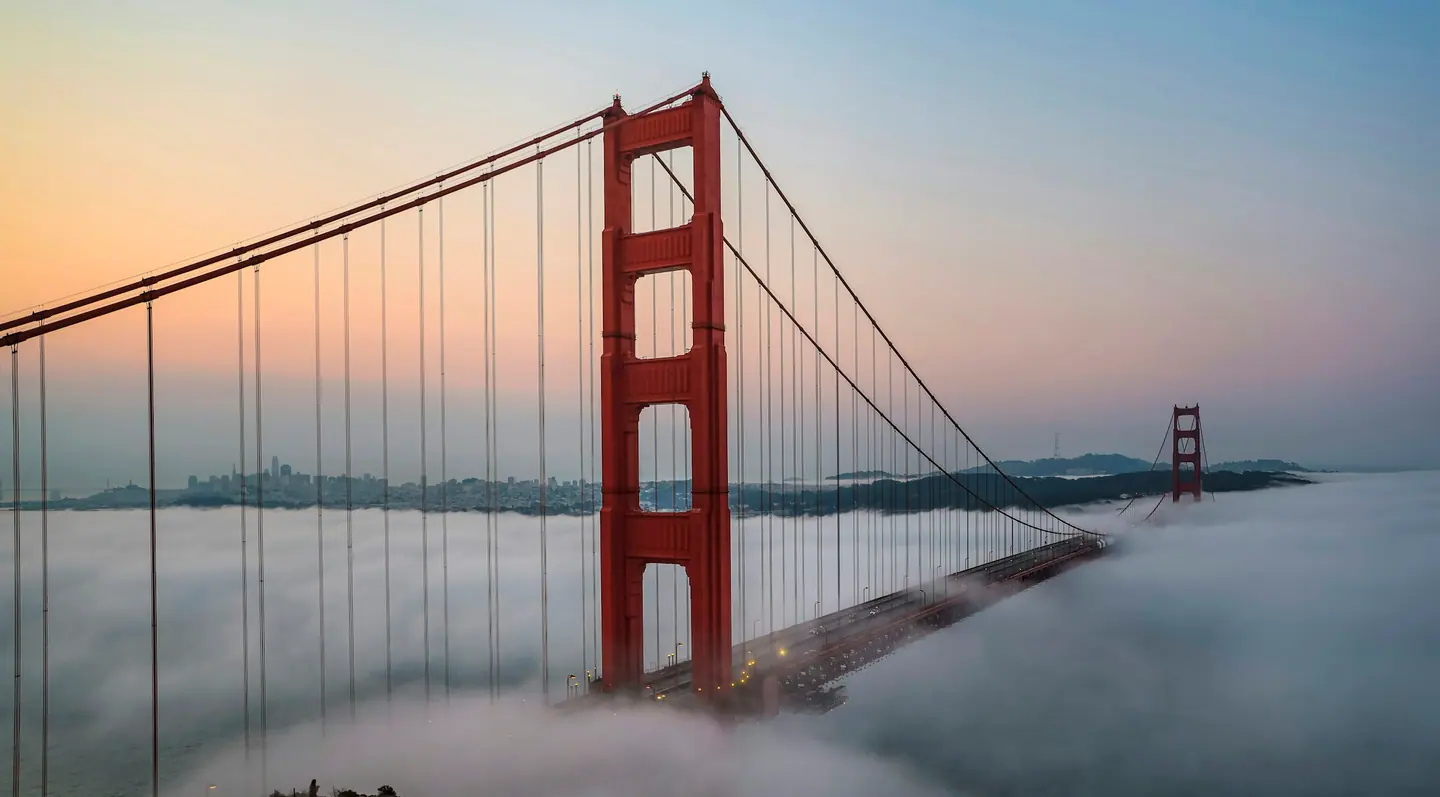
Chief engineer Joseph Strauss and architect Irving Morrow oversaw the design of this suspension span, which opened to traffic in 1937. Its massive 227-metre steel towers feature distinctive Art Deco chevron fluting and a historic International Orange protective coating. Pedestrian walkways along the eastern deck allow travellers to cross directly above the treacherous tidal currents of the strait.
Battery Spencer
Constructed in the late nineteenth century as part of the Endicott defence programme, this concrete artillery battery held heavy guns positioned to guard the bay entry. The fortification stands atop high coastal bluffs across the Marin side of the strait, exposing weathered gun emplacements and ammunition magazines. Its elevated position offers direct perspectives over the northern tower of the Golden Gate Bridge.
Hawk Hill
Rising high above the Pacific Ocean on the Marin Headlands, this windswept promontory serves as a key flight corridor for migrating raptors each autumn. The summit features the concrete remains of Battery Construction 129, a Second World War fortification with deep subterranean tunnels. From the crest, visitors gain panorama perspectives over the bay, the bridge, and the open ocean.
Point Bonita Lighthouse
Maintained by the United States Coast Guard, this remote navigational beacon has marked the treacherous entrance to the bay since 1855. A hand-carved rock tunnel and a narrow suspension bridge lead across sheer sea cliffs to the isolated lighthouse building. The site preserves an active Fresnel lens that continues to guide vessels through coastal fog.
Presidio Chapel
Constructed in 1931 by the military, this Mission Revival house of worship features whitewashed stucco walls, curved red roof tiles, and iron chandeliers. Inside, visitors find a historic fresco painted by artist Victor Arnautoff under the auspices of the Public Works of Art Project. Stained glass windows and timber ceiling trusses lend a serene atmosphere to the military sanctuary.
Immigrant Point Overlook
Situated along the western scenic corridor of the Presidio, this stone terrace honours the diverse peoples who arrived in the region by sea. The clearing provides wide vantages over the Pacific shoreline, Baker Beach, and the Marin headlands. Interpretive plaques outline historic sailing routes while surrounding Monterey cypresses frame the open coastal landscape.
Battery Chamberlin
Constructed into the coastal bluffs behind Baker Beach in 1904, this military installation was designed to protect underwater minefields from naval vessels. The site retains an authentic six-inch rifle mounted on a disappearing carriage, allowing the weapon to drop below blast walls after firing. Preserved subterranean bunkers, magazines, and earthen parapets demonstrate early twentieth-century American coastal defence strategies.
Baker Beach
Stretching for roughly half a mile below steep serpentine cliffs, this sandy ocean beach borders the turbulent mouth of the Golden Gate. High ocean swells and strong currents make the water hazardous for swimming, but the shore is favoured for shoreline strolls and sea bird watching. The northern end of the sands provides clear views across the bay entrance to the Marin cliffs.
China Beach
Tucked between rocky bluffs in the Sea Cliff residential district, this small, sheltered cove provided an anchorage for Chinese fishermen during the California Gold Rush. A historic monument near the bathhouse commemorates their role in establishing early maritime industries in the region. The cove features coarse sand, tide pools, and views across the water towards the headlands.
Lands End Labyrinth
Constructed along the bluffs of Lands End, this stone walking labyrinth was originally arranged by local artist Eduardo Aguilera in 2004. Overlooking the marine channel, the winding layout composed of native shoreline rocks provides a reflective space for visitors walking the coastal trail. The viewpoint offers uninterrupted perspectives across the rocky Pacific coastline and offshore shipwrecks.
Sutro Baths
Former San Francisco mayor Adolph Sutro opened this enormous, glass-domed public bathing facility in 1896, featuring six saltwater pools filled by incoming ocean tides. A devastating fire in 1966 destroyed the superstructure, leaving behind extensive concrete foundations, staircases, and canals. Visitors can explore the oceanfront ruins, enter a sea-level tunnel, and observe marine birds nesting on nearby Seal Rocks.
Cliff House
Several successive structures have stood on this oceanfront headland since the first establishment opened in 1863 to host coastal excursionists. The present building showcases neoclassical proportions constructed in 1909 following the loss of earlier Victorian-era buildings to fire. While the former dining rooms remain preserved, visitors gather outside on the terrace to watch the crashing Pacific surf.
Legion of Honor
Founded by Alma de Bretteville Spreckels, this fine arts museum occupies a neoclassical building completed in 1924 as a replica of Paris's Palais de la Legion d'Honneur. An original bronze cast of Auguste Rodin's The Thinker anchors the central colonnaded courtyard. The galleries house an extensive collection of ancient art, European paintings, and graphic works spanning several centuries.
Golden Gate Park, Alamo Square & Haight-Ashbury
Conservatory of Flowers, de Young Museum, California Academy of Sciences, Japanese Tea Garden, Stow Lake, Dutch Windmill, Alamo Square Painted Ladies, Haight-Ashbury, and Buena Vista Park
Conservatory of Flowers
Constructed from prefabricated wood and glass panels, this ornate Victorian greenhouse stands as one of the oldest municipal conservatories in North America. We admire the central dome rising above five distinct galleries housing rare tropical plants, water lilies and lowland jungle flora. The surrounding manicured lawns feature colourful floral displays that change according to the season.
de Young Museum
Originally founded following the 1894 Midwinter Fair, the current museum facility was designed by Swiss architects Herzog and de Meuron. The striking exterior features perforated copper panels that oxidise naturally to blend into the surrounding tree canopy. Inside, visitors find extensive holdings of American art from the seventeenth through twenty-first centuries, alongside a ninth-floor observation tower offering panoramic city views.
California Academy of Sciences
Rebuilt by Renzo Piano in 2008, this vast scientific institution incorporates an aquarium, a planetarium and a natural history museum under one expansive roof. The structure is celebrated for its undulating 2.5-acre living roof covered with native Californian plant species. Inside, a four-storey glass dome holds a lush rainforest habitat complete with free-flying birds, butterflies and tropical reptiles.
Japanese Tea Garden
Originally established as a temporary Japanese village for the California Midwinter International Exposition, this garden was expanded by landscape designer Makoto Hagiwara. The five-acre grounds feature a steep drum bridge, stone lanterns, koi ponds and sculpted dwarf trees. A classic open-air tea pavilion serves traditional sencha tea and Japanese confections near a peaceful central pond.
San Francisco Botanical Garden
Established in 1940 within Golden Gate Park, this sprawling botanical arboretum cultivates more than 8,000 distinct plant varieties from temperate and subtropical regions. The coastal fog creates an ideal microclimate for rare high-elevation cloud forest species from the Andes and Southeast Asia. The magnolia collection attracts major interest each winter when century-old trees bloom across the tranquil grounds.
Stow Lake
Dug in 1893, this twelve-acre artificial reservoir was planned by park designer William Hammond Hall as a pleasure lake and irrigation source. We observe stone rustic bridges that link the perimeter path to Strawberry Hill Island, where a cascading artificial waterfall tumbles down the slopes. Rowing boats and pedal boats regularly depart from the historic boathouse situated along the eastern bank.
Strawberry Hill
Rising to an elevation of 430 feet, this island hill sits in the centre of Stow Lake and offers pleasant views across western San Francisco. At its summit, the ruined stone pillars of Sweeney Observatory remain from the 1906 earthquake. Walking trails wind through thick stands of pine, eucalyptus and cypress, leading past the tumbling waters of Huntington Falls.
Golden Gate Park Rose Garden
Situated just north of Stow Lake, this dedicated all-American rose selection display features geometrically arranged beds enclosed by dense coastal trees. Established in the mid-twentieth century, the garden exhibits hundreds of rose varieties including floribundas, hybrid teas and climbing species. The peak flowering period between May and July brings an impressive array of colours to the quiet central lawns.
National AIDS Memorial Grove
Designated as a national memorial by the United States Congress in 1996, this tranquil ten-acre woodland valley provides a dedicated space for reflection. Volunteers revitalised the neglected dell into a peaceful landscape of redwood trees, native ferns and rhododendrons. The Circle of Friends bears thousands of engraved names of individuals touched by the disease, creating a deeply poignant communal sanctuary.
Music Concourse
Originally designed for the 1894 Midwinter Fair, this oval sunken plaza acts as the cultural core of Golden Gate Park between two major museums. Rows of pollarded plane trees shade the perimeter, creating a formal European-style public square centered around three historic fountains. The classical Spreckels Temple of Music bandshell anchors the western edge, hosting regular free civic musical performances.
Murphy Windmill
Constructed in 1905 with funding from banker Samuel G. Murphy, this massive structure was once the largest wooden windmill in the world. Engineered to pump hundreds of thousands of gallons of fresh groundwater daily to irrigate the western parklands, it ceased pumping by the 1930s. Following careful structural restoration, the windmill displays its original six-storey timber tower and massive cast-iron mechanism.
Dutch Windmill
Positioned near the Pacific shoreline, the North Windmill was constructed in 1902 to draw subterranean fresh water into park reservoirs. The imposing wooden structure stands seventy-five feet high and was fully restored after decades of ocean-spray corrosion. At its base lies the Queen Wilhelmina Tulip Garden, which displays a dense carpet of historic Dutch bulbs against the timber sails each spring.
Beach Chalet
Designed by celebrated architect Willis Polk in 1925, this two-storey colonnaded Spanish Revival building overlooks Ocean Beach at the park's western terminus. The ground floor displays notable Works Progress Administration frescoes painted in 1936 by artist Lucien Labaudt, depicting real San Franciscans during the Great Depression. Intricate wood carvings on the central staircase depict local maritime animals and sea life.
Golden Gate Park Bison Paddock
Bison have inhabited Golden Gate Park since 1891, when park superintendent John McLaren introduced them to establish a breeding herd for the dwindling species. The current herd grazes across a wide fenced meadow near Spreckels Lake in the western portion of the park. Managed by the San Francisco Zoo, the enclosure allows visitors to view these massive American mammals in a pastoral coastal setting.
Alamo Square
Perched on a ridge west of downtown, this four-block public park provides elevated perspectives across the city centre. Established as a public reserve in the nineteenth century, it features sloping lawns, cypress groves and a central plaza popular with local residents. The elevated eastern crest is widely known for framing historic residential architecture directly against the modern high-rises of the financial district.
Painted Ladies
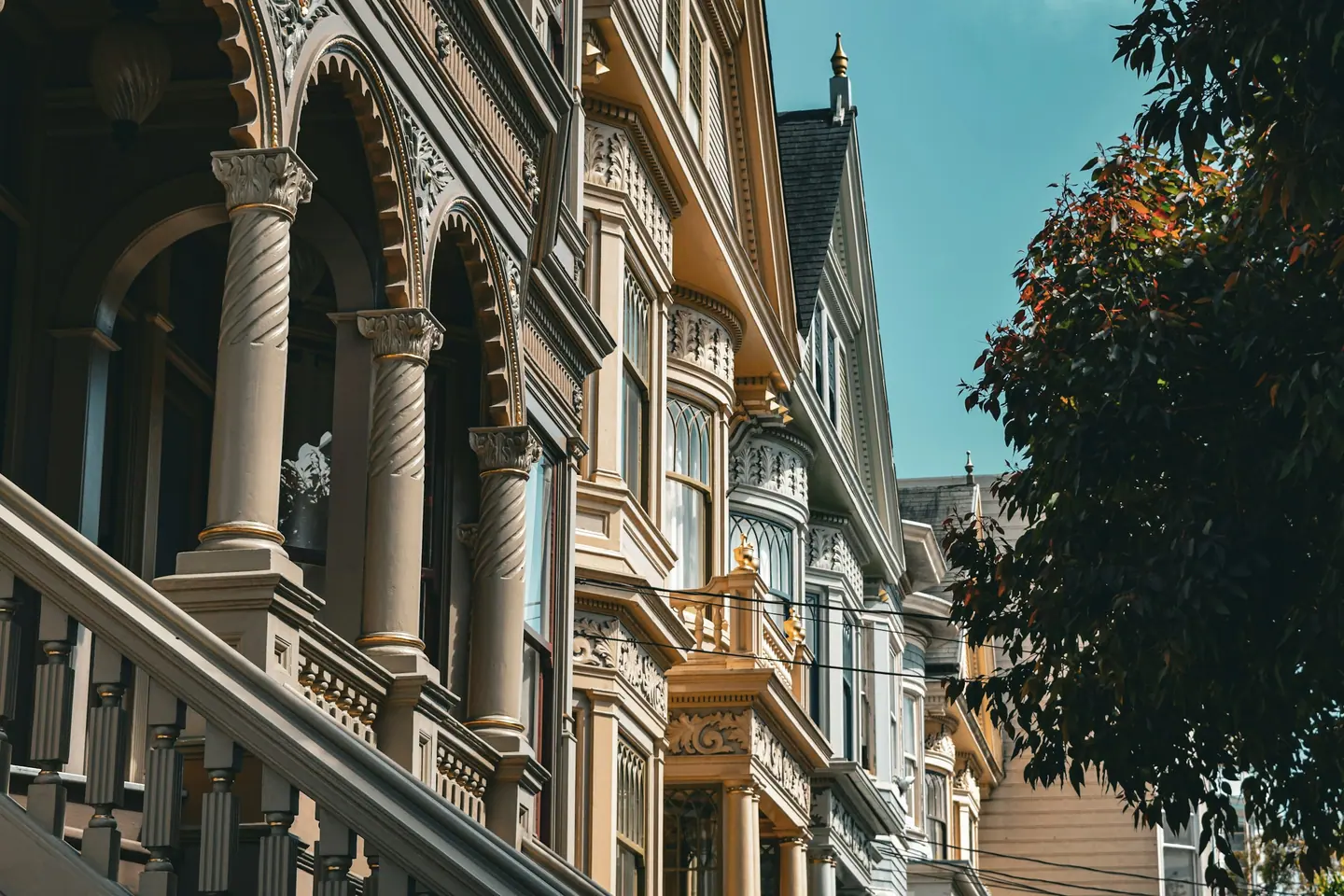
Built between 1892 and 1896 by contractor Matthew Kavanaugh, this row of seven Queen Anne homes sits directly opposite Alamo Square. The term was coined by architectural historians to describe Victorian and Edwardian houses repainted in three or more contrasting colours to embellish their ornate wooden details. Notice the decorative gables, bracketed cornices and bay windows that survived the 1906 earthquake intact.
Haight-Ashbury
This intersection of two major city streets served as the focal point of the 1967 Summer of Love counterculture movement. The surrounding commercial corridor features vintage clothing shops, independent bookshops, historic record stores and surviving bohemian venues. The surrounding streets are lined with some of San Francisco's best-preserved Victorian residences, constructed in the Queen Anne and Stick-Eastlake styles.
Red Victorian
Erected in 1904 following the expansion of streetcar lines into the Haight neighbourhood, this striking wooden building originally opened as the Jefferson Hotel. In the late twentieth century, artist Sami Sunchild purchased and painted the building crimson, transforming it into an intentional community hotel and peace gallery. The structure retains its multi-tiered wooden facade, classical bay windows and distinctive community gathering spaces.
The Haight Ashbury Free Clinic
Founded in 1967 by Dr David Smith, this facility was the first non-sectarian free medical clinic in the United States. Established during the Summer of Love to provide unconditional healthcare to disenfranchised youth, it developed pioneering treatment protocols for drug addiction and community health. The clinic played a notable role in American public health reform and continues its community medical work today.
Buena Vista Park
Established in 1867 as Hill Park, this 36-acre forested peak represents the oldest official municipal park in San Francisco. Steep, winding footpaths climb through dense stands of eucalyptus, live oak and Monterey pine to reach an elevation of 575 feet. Curiously, the retaining walls lining several hillside paths were constructed using fragments of marble gravestones salvaged when municipal cemeteries were relocated to Colma.
Civic Center, SFMOMA, Mission Dolores & Twin Peaks
San Francisco City Hall, War Memorial Opera House, Asian Art Museum, SFMOMA, Yerba Buena Gardens, Mission Dolores Old Mission, Clarion Alley Murals, Dolores Park, Castro Theatre, and Twin Peaks
San Francisco City Hall
Designed by Arthur Brown Jr. and completed in 1915, this grand civic palace replaced the municipal hall destroyed in the 1906 earthquake. Its soaring dome rises higher than the United States Capitol, featuring intricate gold-leaf detailing. Inside, the sweeping grand staircase and vast rotunda provide an impressive venue for civic ceremonies and historical exhibitions.
War Memorial Opera House
Opened in 1932 as part of the San Francisco War Memorial and Performing Arts Centre, this Beaux-Arts auditorium hosted the 1945 conference that drafted the United Nations Charter. The interior features classical colonnades, gilded plasterwork, and a magnificent sunburst chandelier. Today, it serves as the primary stage for both the San Francisco Ballet and the San Francisco Opera.
Asian Art Museum of San Francisco
Housed within the city's former main library building, this institution holds thousands of artworks spanning six millennia of Asian history. Architect Gae Aulenti converted the historic Beaux-Arts interior into modern gallery spaces in 2003, incorporating light-filled indoor bridges. Key exhibits include early Chinese ritual bronzes, ancient Khmer stone sculptures, and historic Japanese ceramics.
Louise M. Davies Symphony Hall
Completed in 1980 to give the city orchestra its own dedicated venue, Davies Symphony Hall features an austere curved glass facade designed by Skidmore, Owings and Merrill. Acoustic renovations in the 1990s added adjustable sound-reflecting canopies and fabric banners to refine the sound. Visitors should notice Henry Moore's bronze sculpture situated just outside the corner entrance.
Pioneer Monument
Dedicated in 1894, this multi-tiered granite and bronze sculpture was financed by eccentric financier James Lick and created by Frank Happersberger. The central column is crowned by a colossal bronze figure representing Minerva, the goddess on the state seal. Relief panels and surrounding statues depict early California settlers, Spanish mission history, and the gold rush era.
San Francisco Museum of Modern Art
Originally designed by Mario Botta with a striped brick exterior and truncated cylinder skylight, SFMOMA expanded significantly in 2016 through a rippling rear extension by Snøhetta. The museum houses an extensive collection of modern photography, painting, and design, including notable pieces by Jackson Pollock and Andy Warhol. A vast living green wall adorns the outdoor sculpture terrace.
Yerba Buena Gardens
Built on top of the Moscone Convention Centre, this public green space acts as a tranquil buffer in the downtown core. The central feature is a massive granite waterfall that forms a memorial to civil rights leader Dr Martin Luther King Jr., inscribed with his speeches. Surrounding buildings include art galleries, the Children's Creativity Museum, and a historic 1906 carousel.
Yerba Buena Center for the Arts
Opened in 1993, this multidisciplinary arts venue presents cutting-edge visual art, film screenings, and theatrical performances. Architect Fumihiko Maki designed the sleek, metal-clad Galleries building, while James Polshek designed the neighbouring theatre structure. The institution prioritises community-focused exhibits and experimental productions that explore pressing social and urban issues.
Contemporary Jewish Museum
This museum occupies the historic 1907 Jessie Street Substation, revitalised in 2008 through an angular blue-steel expansion by architect Daniel Libeskind. The design reflects the Hebrew letters 'chet' and 'yud', forming the word 'Chai', meaning life. Inside, changing exhibitions explore contemporary art, Jewish philosophy, literature, and social history without maintaining a permanent collection.
St. Patrick's Catholic Church
Founded in 1851 to serve Irish immigrants, the current Gothic Revival building preserves the exterior brick walls that survived the 1906 fire. The interior was completely redesigned with rich Connemara green marble and stained-glass windows representing Ireland's historic counties. It now stands as an ecclesiastical contrast surrounded by modern skyscrapers and cultural centres.
Mission San Francisco de Asís
Colloquially known as Mission Dolores, this adobe church was constructed between 1782 and 1791 by the Franciscan friars and indigenous Ohlone labourers. The interior features a hand-painted ceiling mimicking Ohlone basketry patterns and an ornate Baroque reredos imported from Mexico. The adjacent historic cemetery holds the resting places of prominent early Californian settlers and Native American converts.
Mission Dolores Basilica
Standing directly adjacent to the historic 1791 adobe chapel, this large basilica was completed in 1918 to accommodate a growing congregation. Built in the elaborate Churrigueresque style, the exterior displays sculpted stone towers and Spanish Colonial details. Its cavernous interior is adorned with stained-glass windows illustrating the twenty-one historic Franciscan missions of Alta California.
Clarion Alley
Running between Mission and Valencia Streets, this alleyway was transformed in 1992 by the Clarion Alley Mural Project, inspired by the nearby Balmy Alley. Artists continuously paint over surfaces with murals that address gentrification, civil liberties, environmental justice, and international politics. A stroll along this pavement reveals an evolving visual chronicle of local grassroots activism.
Mission Dolores Park
Formerly a Jewish cemetery and an earthquake refugee encampment in 1906, Dolores Park now serves as a lively open-air social hub. The park features lush lawns, palm trees, and tennis courts on a gentle incline looking towards downtown. At the southwestern edge stands a replica of the historic Hidalgo bell, a gift from the Mexican government.
Women's Building
Acquired in 1979 as the first woman-owned community centre in the United States, this former Sons of Hermann hall hosts non-profit organisations and educational workshops. In 1994, seven female artists painted the entire exterior with the 'MaestraPeace' mural, celebrating feminine wisdom, courage, and leadership across cultures. Detailed figures honour indigenous healers, activists like Rigoberta Menchú, and mythological deities.
Armory
Constructed in the Moorish Castle style with heavy brickwork and defensive corner turrets, this imposing complex originally served the National Guard. It enclosed a subterranean stream, Mission Creek, which still flows beneath the foundations in an accessible cavernous basement. After decades of military use, the landmark building found modern life as an event and community venue.
Castro Theatre
Designed by notable cinema architect Timothy Pflueger, this landmark movie palace opened in 1922 and remains the architectural anchor of the Castro neighbourhood. Its Spanish Colonial facade features a towering neon sign and an arched stained-glass window. Inside, the opulent auditorium exhibits a cast-plaster ceiling mimicking a Bedouin tent and houses a historic Mighty Wurlitzer pipe organ.
Twin Peaks
Rising to an elevation of roughly 282 metres, Eureka Peak and Noe Peak form the geographic centre of San Francisco. The grassy hills preserve native coastal scrub habitats, home to the endangered Mission blue butterfly. The viewing platform on Christmas Tree Point provides sweeping vistas extending from the Golden Gate Bridge across the downtown skyscrapers to the East Bay.
Sutro Tower
Erected in 1973 on a hill between Twin Peaks and Mount Sutro, this three-legged steel antenna structure stands 298 metres tall. Designed to broadcast television and radio signals across the region's hilly terrain, its tripod design has become an integral silhouette against the marine fog. Although closed to public ascent, its base provides striking perspectives along surrounding hiking trails.
Corona Heights Park
This natural open space is characterised by a dramatic, jagged hilltop of red radiolarian chert formed millions of years ago on the ocean floor. Steep trails lead up to a windswept plateau that overlooks the Castro, Mission, and downtown San Francisco. At the base of the hill, visitors will find the Randall Museum, dedicated to regional ecology and natural history.
Ridges, Stairway Walks and Bay Ferries in San Francisco
You can combine these stops with the district-by-district where-to-stay notes and seasonal planning tables on our San Francisco Golden Gate, Cable Car Hills & Waterfront destination page, or explore further regional and neighbourhood guides.