A detailed Pre-Pottery Neolithic and historical route through Taş Tepeler (Göbeklitepe and Karahantepe), the Sacred Pools of Abraham at Balıklıgöl, ancient Edessa, and Harran.
Twelfth-Millennium BC Taş Tepeler Enclosures to Ancient Edessa and Harran
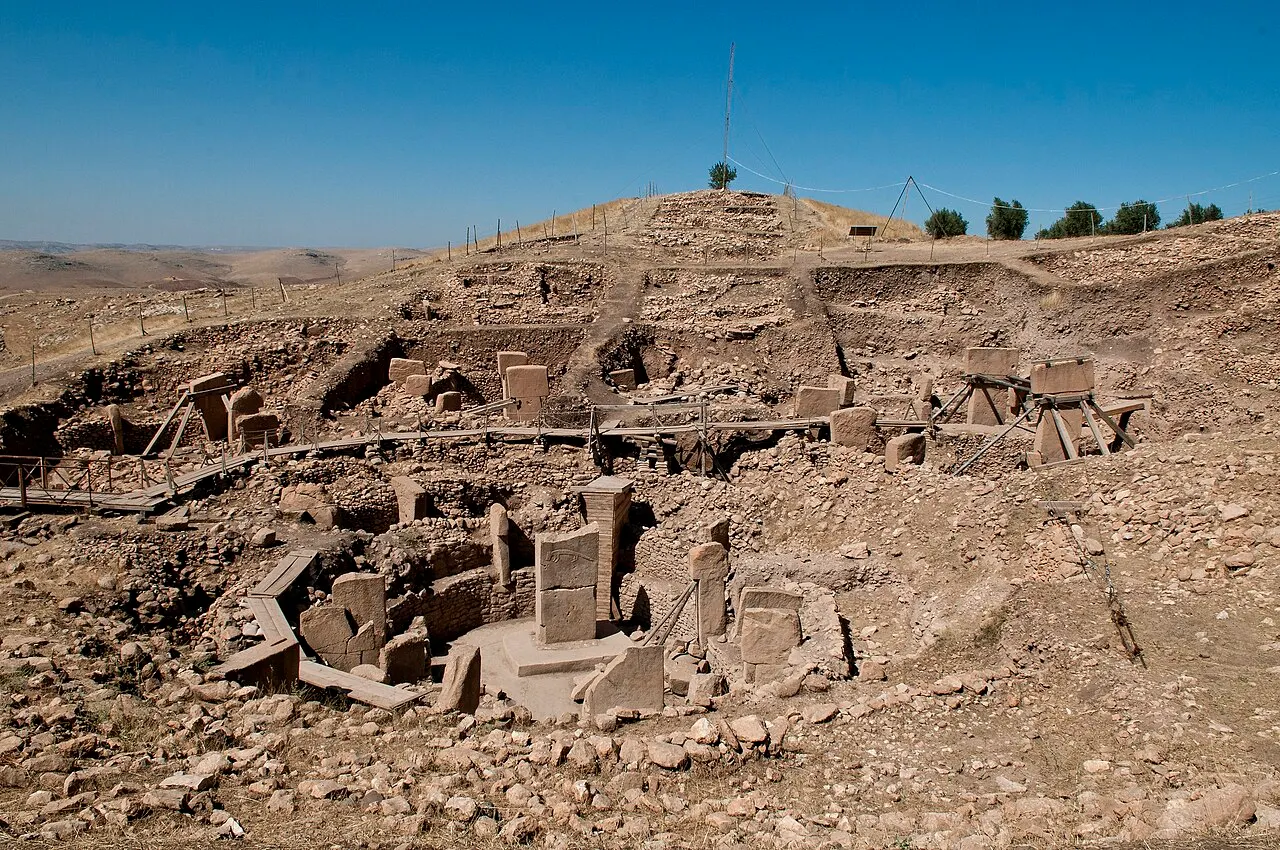
Twelve thousand years ago (c. 9600, 8200 BC), hunter-gatherers across the limestone hills around Şanlıurfa, known today as Taş Tepeler (Stone Hills), led by Göbeklitepe and Karahantepe, quarried and carved six-metre T-shaped monoliths decorated with foxes, vultures, boars, and human reliefs, creating the oldest known monumental ritual architecture in human history, more than six millennia before Stonehenge or the Pyramids of Giza.
Known in antiquity as Urhai and the Hellenistic-Roman capital of Osroene (Edessa) founded by Seleucus I Nicator around the sacred spring of Balıklıgöl, revered in Jewish, Christian, and Islamic tradition as the birthplace of the Prophet Abraham, and paired with ancient Carrhae (Harran) to the south, Şanlıurfa bridges the dawn of civilization with medieval Islamic stone bazaars.
Göbeklitepe & Karahantepe (Taş Tepeler Neolithic Sanctuaries)
Göbeklitepe Visitor Center, Enclosure D Central Twin Monoliths (Pillars 18 and 31), Enclosure C Boar & Predator Pillars, Enclosure B Fox Pillars, Enclosure A Serpent Reliefs, Wish Tree on Germuş Ridge, and Karahantepe Pillar Hall & Human-Carved Bedrock Chamber
Göbeklitepe Visitor Center
The facility provides archaeological context before visitors ascend the limestone plateau. Interactive exhibits display detailed chronological timelines, 3D reconstructions and tactile replicas of key megalithic pillars. We recommend examining the multimedia projections that explain the Pre-Pottery Neolithic transition and excavation history.
Enclosure D Central Twin Monoliths
Pillars 18 and 31 stand five metres tall inside the best-preserved oval structure on the site. Carved arms, hands, belts and loincloths cut into the stone clearly indicate stylised human forms. Foxes, bulls and birds adorn the peripheral stones, illustrating sophisticated hunter-gatherer symbolism dating to roughly 9500 BC.
Enclosure C Boar and Predator Pillars
Formed by several concentric rings of stone, this enclosure demonstrates extensive structural modifications made during the Neolithic period. The upright pillars feature prominent high-relief sculptures of wild boars alongside snarling predators. A carved stone path leads toward the central monoliths, which were intentionally damaged before ancient backfilling took place.
Enclosure B Fox Pillars
Measuring approximately nine metres across, this rounded enclosure reveals a terrazzo floor polished with burnt lime. The central monoliths highlight dynamic carvings of running foxes cut into their limestone faces. Archaeologists consider these recurring animal motifs vital clues regarding the clan identity and spiritual practices of the builders.
Enclosure A Serpent Reliefs
Also termed the Snake Enclosure, this space features pillars marked with climbing serpents, sheep and interwoven net designs. The architecture trends toward a sub-rectangular plan, representing a transitional construction phase. Look closely at Pillar 1 to see delicate low-relief reptiles crawling down the narrow limestone edge.
Wish Tree on Germuş Ridge
Standing atop the highest ridge of the mound, this lone mulberry tree has served as a pilgrimage point for local villagers for generations. Traditional fabric strips tied to its branches reflect lingering sacred associations with the hilltop. The viewpoint offers panoramic vistas across the surrounding Harran plains and distant mountain ranges.
Karahantepe Pillar Hall and Bedrock Chamber
Dating to the Pre-Pottery Neolithic B period, this monumental site features a special chamber hewn directly into native bedrock. Slender phallic pillars stand erect around a large human head carved out of the rock wall. The architectural design suggests ritual processions involving liquid libations and ancient ceremonial movement.
Şanlıurfa Museum
One of Turkey's largest archaeological complexes, the museum preserves original monoliths, totems and tools found across the region. A full-scale replica of Göbeklitepe's Enclosure D allows visitors to appreciate the scale of prehistoric stone circles. Displays trace regional human history from the Palaeolithic era through classical antiquities.
Urfa Man Gallery
Excavated near Balıklıgöl during roadworks in 1993, this limestone sculpture dates to approximately 9000 BC. The figure stands 1.8 metres tall with carved eyes inlaid with black obsidian. Displayed in a temperature-controlled gallery inside the Şanlıurfa Museum, it represents a milestone in prehistoric portraiture.
Haleplibahçe Mosaic Museum
Built directly over the remains of an ancient Roman villa, this circular museum preserves elaborate pavements in situ. Notable panels include the Warrior Amazon Queens hunting wild game, executed with remarkably fine stone tesserae. Architectural walkways suspended above the mosaics allow thorough observation without disturbing the fragile surfaces.
Balıklıgöl
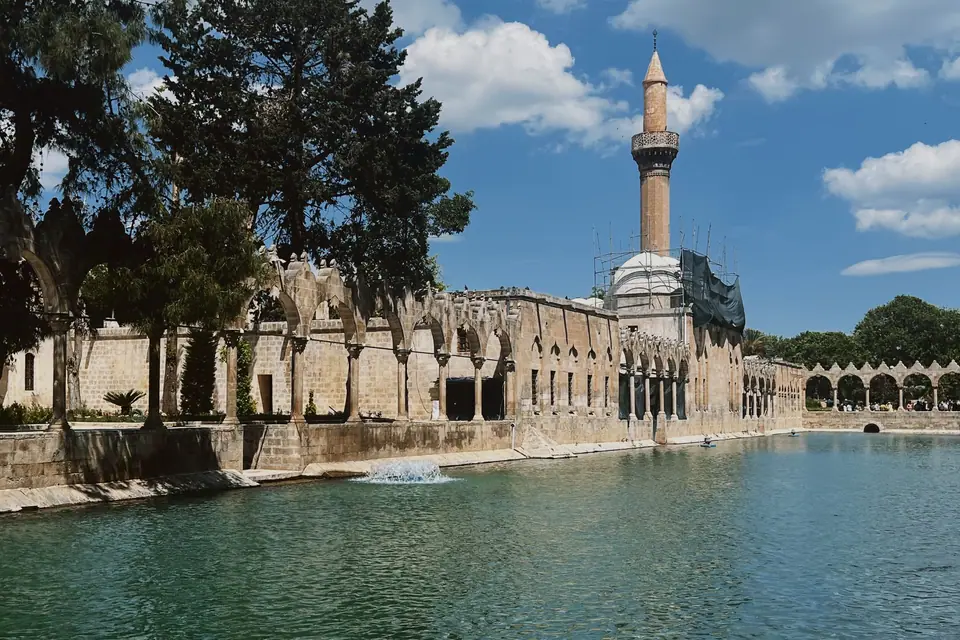
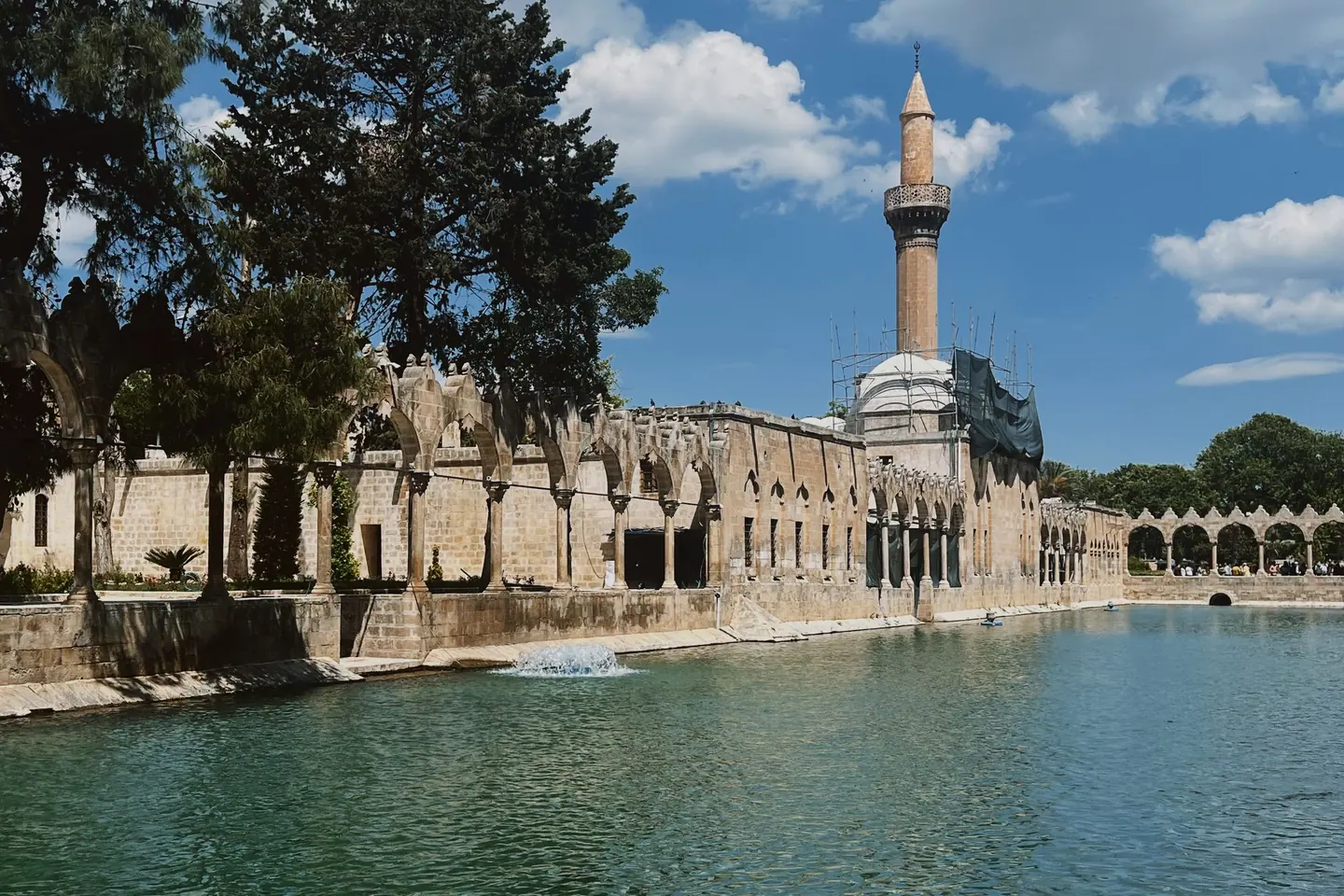
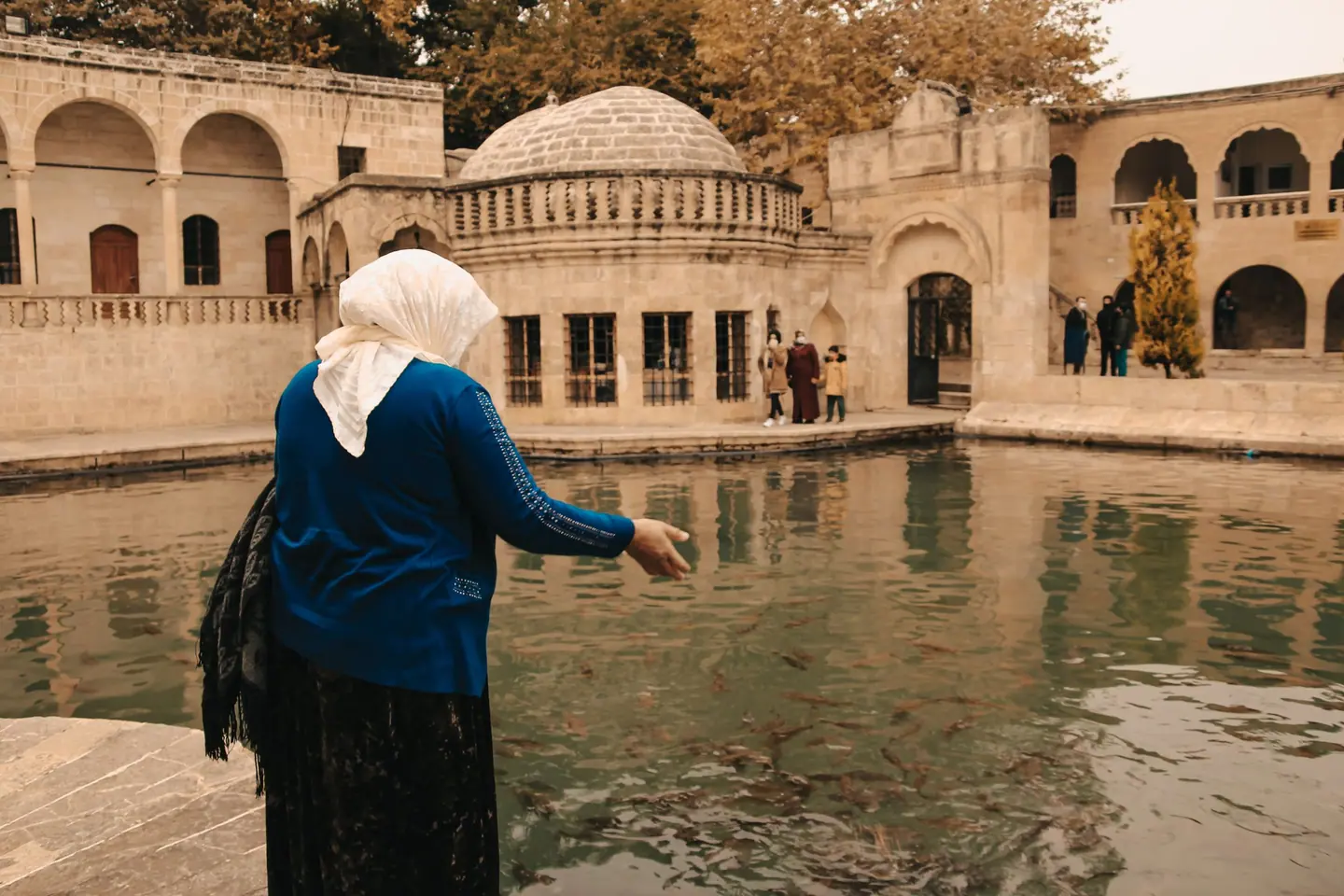
Tradition holds that King Nimrod cast Abraham into a funeral pyre here, which God transformed into cool water and embers into carp. Arched stone arcades, madrasas and weeping willows flank the perimeter of the pool. Feeding the resident fish remains a popular activity for visiting pilgrims and travellers alike.
Rızvaniye Mosque
Constructed in 1736 by the Ottoman governor of Raqqa, Rizvan Ahmet Pasha, this religious complex features a graceful portico and domed prayer hall. Intricate timber doors carved with floral and geometric motifs lead into the sanctuary. Its long arched arcade reflects across the tranquil waters of the sacred pool.
Halil-ür Rahman Mosque
Dating initially from an early Christian basilica dedicated to the Virgin Mary, the site was converted into a mosque during the Ayyubid era. A prominent square minaret adorned with relief rosettes overlooks the water. The surrounding courtyard offers shaded stone walkways frequented by spiritual visitors and local worshippers.
Ayn Zeliha Lake
Situated south of the main lake, legend attributes this quiet pool to the tears shed by Zeliha, King Nimrod's daughter, who believed Abraham. Leafy plane trees and tea gardens border the embankment, providing cool relief during warm afternoons. Visitors can hire small paddle boats to navigate the spring-fed waters.
Urfa Castle
Perched on Damlacık Hill above the city, this fortress incorporates defensive walls constructed during the Roman, Byzantine and Islamic periods. The twin Corinthian columns atop the citadel, known locally as Nimrod's Catapult, date to the Edessan kingdom of Osroene. From the ramparts, visitors enjoy wide views across the historical quarters.
Grand Mosque of Urfa
Erected by Nur ad-Din in 1175, this grand mosque incorporates building materials from the Byzantine Church of Saint Stephen. Its octagonal stone tower once functioned as an ecclesiastical bell tower before adaptation into a minaret. The sprawling shaded courtyard contains an ancient sundial used for calculating daily prayer schedules.
Gümrük Hanı
Commissioned in 1563 during the reign of Sultan Suleiman the Magnificent, this two-storey stone inn hosted travelling merchants on historic trade routes. The central courtyard features a running water channel, plane trees and historic open-air coffee stalls. Upper-floor vaulted rooms now house local artisans, tailors and traditional prayer-bead craftsmen.
Historic Urfa Covered Bazaar
Spreading around the historical hans, this extensive vaulted market retains distinct quarters for coppersmiths, spice dealers and felt-makers. The sound of artisans hammering metal echoes along stone corridors lined with local sheep wool and dried peppers. We advise wandering through the Sipahi Bazaar to admire handwoven Kurdish carpets and kilims.
Cave of Abraham
Located within the Mevlid-i Halil Mosque complex, this subterranean natural chamber is venerated as Abraham's birthplace and childhood sanctuary from King Nimrod. The cave is divided into separate prayer entrances for men and women. Natural spring water trickling within the cavern is believed by pilgrims to possess restorative properties.
Germuş Church
Constructed in 1881 by the local Armenian community, this stone church features a basilica plan with three naves and multiple decorative cupolas. Although partially ruined, the facade retains stone inscriptions, carved lintels and grand archways. Its location east of Urfa makes it an informative historical stop between the city and Göbeklitepe.
Şanlıurfa Archaeology Museum & Haleplibahçe Mosaic Museum
Şanlıurfa Archaeology Museum, Urfa Man (Balıklıgöl Statue, oldest life-size human sculpture c. 9000 BC), Full-Scale Göbeklitepe Enclosure D Reconstruction, Nevalı Çori Cult Sculptures, Harran Islamic Finds, and Haleplibahçe Mosaic Museum Hunting Amazons & Orpheus Mosaics
Şanlıurfa Museum Complex
Opened in 2015, this purpose-built cultural complex holds thousands of objects recovered from across the fertile plains of Upper Mesopotamia. We can trace millennia of human development through chronologically arranged galleries that bridge the gap between foraging and settled agrarian life.
Urfa Man Sculpture Gallery
Carved around 9000 BC, this limestone figure was unearthed near Balıklıgöl in the early 1990s. The statue features inlaid obsidian eyes, deep-set facial planes and hands clasped above the waist, providing an extraordinary look at early Pre-Pottery Neolithic artistic traditions.
Göbeklitepe Enclosure D Reconstruction
This immersive exhibition replicates the monumental pillar circle of Enclosure D from Göbeklitepe at true scale. Massive T-shaped pillars feature finely carved reliefs of foxes, boars, cranes and lions, allowing visitors to examine ancient masonry without disturbing the fragile original site.
Nevalı Çori Temple Enclosure
Before the waters of the Euphrates inundated Nevalı Çori, archaeologists systematically dismantled its Pre-Pottery Neolithic cult building for preservation. Reassembled inside the museum, the stone chamber exhibits original T-shaped monoliths, terrazzo flooring and expressive anthropomorphic totems dating to the ninth millennium BC.
Karahan Tepe Exhibition Hall
Showcasing findings from ongoing excavations in the Tektek Mountains, this gallery reveals Neolithic architecture contemporary with Göbeklitepe. The displays highlight three-dimensional human heads, serpent reliefs and substantial stone receptacles designed for communal rituals during the Pre-Pottery Neolithic B period.
Karahantepe Human Head Pillar
Recovered from bedrock excavations at Karahan Tepe, this monolith features an expressive human head sculpted directly out of living stone. We observe deep brow ridges, prominent noses and stylised facial anatomy that demonstrate how prehistoric sculptors mastered complex portraiture in the tenth millennium BC.
Akarçay Tepe Neolithic Displays
The Akarçay Tepe showcase contains critical evidence documenting the transition from Pre-Pottery to Pottery Neolithic societies along the Euphrates valley. Visitors can inspect bone implements, obsidian bladelets imported from central Anatolia and some of the earliest fired clay vessels produced in the region.
Haleplibahçe Mosaic Museum
Erected directly above the remains of a lavish fifth-century Roman villa, this circular structure protects intact mosaic floors where they were first unearthed. The walkways allow close study of intricate stone tesserae illustrating classical mythologies, decorative borders and geometrical compositions.
Hunting Amazons Mosaic
Unearthed in 2006, this pavement portrays the warrior queens Hippolyta, Antiope, Melanippe and Penthesilea engaged in combat. Using stones smaller than four millimetres, the artisans achieved delicate tonal gradations and lifelike movements in scenes of hunting leopards, lions and stags.
Orpheus Mosaic of Edessa
Dating to AD 194, this floor panel depicts Orpheus seated on a rock playing his lyre to enchant listening lions, birds and serpents. A clear Estrangelo Syriac inscription borders the image, proving the strong synthesis of Greco-Roman artistic motifs and regional Semitic literacy in classical Edessa.
Ktisis Mosaic Panel
This central medallion portrays the female figure of Ktisis, symbolising foundation, generosity and urban wealth in late antique civic culture. The figure holds a measuring rod while surrounded by detailed acanthus scrolls, showing the continuity of classical Roman artistic styles into the Byzantine era.
Achilles Life Cycle Mosaic
Spread across multiple contiguous panels, this mosaic illustrates crucial chapters from the life of the Greek hero Achilles. Scenes depict his mother Thetis dipping him into the River Styx alongside his education under the centaur Chiron, rendered in colourful natural stone and glass tesserae.
Harran Islamic Finds Gallery
Excavations at nearby Harran have yielded remarkable medieval material, notably lustreware ceramics, bronze astrolabes and architectural stonework. This museum hall highlights Harran's role under the Umayyads and early Abbasids as an intellectual centre where Greek philosophy and astronomy were translated into Arabic.
Assyrian and Neo-Hittite Bas-Reliefs
Drawn from ancient regional settlements such as Sultantepe and Carchemish, these carved basalt orthostats feature storm gods, lions and kings. Cuneiform inscriptions and Luwian hieroglyphs incised on the stone surfaces demonstrate the geopolitical shifts between Neo-Hittite principalities and the expanding Assyrian Empire.
Edessa Syriac Funerary Stelae Hall
This section contains rock-cut reliefs and engraved stelae recovered from Edessan necropolises surrounding ancient Urfa. Carved during the Abgarid kingdom, the portraits display local nobility in Parthian dress accompanied by funeral epitaphs written in the cursive Estrangelo Syriac script.
Kızılkoyun Rock Tombs
Situated immediately opposite the museum complex, these cliff-face chambers were revealed after modern housing was cleared away. Visitors can wander through multi-chambered catacombs with carved stone sarcophagi, relief portraits of Edessan families and decorative entrance arches dating to the third and fourth centuries.
Edessa City Wall Bastions
These defensive masonry towers once formed part of the southern circuit defending the city against besieging armies. Built using cut limestone blocks, the bastions show traces of Byzantine military engineering later reinforced by Ayyubid and Mamluk rulers during the Crusader period.
Millet Bridge
Constructed over the seasonal Karakoyun channel, this bridge linked the historic walled city with its western suburbs and orchards. The solid cut-stone piers and low-sprung arches were designed by Ottoman engineers to withstand flash floods flowing down from the surrounding limestone hills.
Justiniana Aqueduct Ruins
Commissioned by Emperor Justinian following a catastrophic flood in AD 525, this civil project diverted river channels around the city walls. Surviving masonry footings along the stream course illustrate the sophisticated water-control systems created to safeguard ancient Edessa from inundation.
Urfa Castle Viewpoint
Perched on the crest of Mount Damlacık, this fortress platform commands views over the museum gardens, sacred pools and urban landscape. The terrace features two Corinthian pillars from the Roman era known as the Throne of Nimrod, set above deep defensive ditches cut into the rock.
Balıklıgöl Sacred Pools, Mevlid-i Halil & Urfa Castle
Halil-ür Rahman Lake Balıklıgöl Sacred Carp Pool, Rizvaniye Mosque and Madrasa Arcade, Aynzeliha Lake, Mevlid-i Halil Mosque & Cave of Prophet Abraham’s Birth, Urfa Castle Abgar Citadel, Twin Corinthian Columns Throne of Nimrod, and Hasan Padişah Mosque
Balıklıgöl (Pool of Sacred Fish)
Tradition identifies this tranquil water basin with the miraculous transformation of King Nimrod's execution pyre into cooling water. Shaded by ancient plane trees, the pool preserves thousands of sacred carp that visitors feed alongside the paved flagstone perimeters. Elegant arcades of Ottoman stone surround the pool, offering clear vistas of Urfa Castle on the heights above.
Rızvaniye Mosque and Madrasa
Commissioned in 1736 by Rızvan Ahmet Pasha, this religious complex borders the northern terrace of Balıklıgöl. Its honey-coloured stone arcade and low domes reflect across the surface of the carp pool, creating an admired ensemble of classical Ottoman provincial masonry. The former madrasa cells around the peripheral courtyard now accommodate traditional calligraphers, bookbinders, and craft artisans.
Aynzeliha Lake
Situated immediately south of the primary fish basin, this secondary pool honours Zeliha, King Nimrod's daughter, who supposedly wept over Abraham's persecution before plunging into the flames. Shaded tea gardens frame the perimeter, where carp swim through fresh natural spring currents. Small rowing skiffs operate along the surface, offering tranquil viewpoints towards the adjacent citadel bluffs.
Halil-ür Rahman Mosque
Standing directly at the south-western edge of the sacred lake, this mosque incorporates portions of the Byzantine Church of the Virgin Mary, originally founded in 504. The current Islamic building dates substantially from the Ayyubid era under Sultan al-Adil in 1211. Its distinctive square minaret displays bands of carved relief inscriptions above the water surface.
Mevlid-i Halil Mosque
Successive shrines have occupied this venerated religious ground, including a pagan temple, a Byzantine Christian basilica, and an early mosque. The present Ottoman hall was constructed in 1523 by Mohammed Salih Pasha and expanded with an adjacent multi-domed modern sanctuary. Pilgrim pathways link the marble courtyard directly to the underground chambers below the southern hill.
Cave of Abraham's Birth
Local tradition records that Abraham's mother concealed herself in this natural limestone cave to evade King Nimrod's decree ordering the slaughter of newborn boys. Separated into men's and women's prayer portals, the cave contains a venerated natural water spring believed to possess healing properties. Devotees visit the subterranean rock-cut walls to offer quiet supplications.
Urfa Castle
Perched upon the northern bluffs of the Damlacık plateau, this fortress preserves Hellenistic, Roman, Byzantine, and Islamic fortification masonry. Excavations demonstrate occupation dating to the prehistoric era and the kingdom of Osroene. Deep defensive moats carved directly out of the living bedrock isolate the citadel perimeter from the precipitous mountain slopes to the south.
Twin Corinthian Columns of Nimrod
Dominating the interior platform of Urfa Castle, these two monumental limestone columns date from the third century AD. Folk legends identify the pillars as the catapult stanchions used by King Nimrod to propel Abraham into the furnace. One column retains a notable Syriac inscription commemorating Queen Shalmath, daughter of Ma'nu, carved into its midsection.
Hasan Padişah Mosque
Erected during the late fifteenth century under the patronage of the Aq Qoyunlu ruler Uzun Hasan, this mosque demonstrates distinctive eastern Anatolian stonecraft. An interior courtyard features delicate stone screens and carved water fountains. The prayer hall features heavy vaulted arches and quiet prayer niches that remain well preserved amidst the neighbouring bazaars.
Damlacık Hill Viewing Terrace
Climbing past the castle walls leads visitors to this rocky plateau overlooking the entire basin of ancient Edessa. The vantage point exposes the green tree canopies of Balıklıgöl, numerous Ottoman minarets, and the spreading plains towards Harran. Sunset illuminates the pale yellow limestone buildings, providing clear perspectives of the surrounding mountain topography.
Mevlevi Lodge of Urfa
Located near the eastern fringes of the Mevlid-i Halil gardens, this historical Mevlevi tekke hosted whirling dervish rituals during the Ottoman era. Built around a serene central fountain court, the masonry incorporates vaulted loggias and timbered study chambers. Today the restored complex serves as a centre for Sufi music performances and religious heritage study.
Old Urfa Bazaar
Spreading immediately north-east of the sacred pools, this covered stone market traces its layout to medieval trade routes. Vaulted passageways shelter copper smiths, silk merchants, saddle makers, and spice dealers selling deep-red Urfa isot peppers. The network provides an atmospheric transition between the religious sanctums and everyday commercial life in the city.
Gümrük Hanı
Constructed in 1563 during the reign of Suleiman the Magnificent, this grand two-storey inn historically accommodated travelling merchant caravans. Built of two-tone dressed ashlar, its interior courtyard surrounds a central stone prayer pavilion traversed by a brisk water canal. Locals gather beneath leafy plane trees to drink traditional Menengiç coffee within its stone cloisters.
Dergâh Park Gardens
This expansive municipal parkland forms a green belt linking the Mevlid-i Halil complex, Balıklıgöl, and the base of Mount Damlacık. Flowing channels, geometric stone footpaths, and blooming rose beds offer spaces for contemplation away from urban traffic. Water features recycle clean spring water flowing directly from the subterranean aquifers beneath the castle.
Sipahi Pazarı
Opening into the Gümrük Hanı complex, this narrow stone-vaulted arcade remains dedicated to the regional carpet and textile trade. Weavers from surrounding rural villages bring hand-knotted wool rugs, goat-hair kilims, and embroidered textiles for auction. Solid limestone walls keep the interior cool throughout the hot summer months.
Kızılkoyun Rock Tombs
Excavated into the bluffs north of Balıklıgöl, these ancient subterranean chambers date from the Edessa Kingdom and Roman period. The hillside features dozens of multi-room family tombs ornamented with stone-carved reliefs, relief sarcophagi, and geometric mosaic floors. Illuminated pathways allow visitors to inspect funerary niches carved directly into the bedrock.
Haleplibahçe Mosaic Complex
Discovered during urban infrastructure works beside Balıklıgöl, this modern domed exhibition hall protects the surviving mosaic floors of an expansive Roman villa. The displays feature the famous depiction of the warrior Amazons hunting lions and leopards, crafted with tesserae measuring only millimetres across. Elevated walkways allow observation without touching the fragile ancient pavement.
Şanlıurfa Archaeology Museum
Located a short walking distance north-west of the sacred lakes, this large modern museum contains world-renowned prehistoric artefacts. Its central galleries showcase the Urfa Man, an 11,000-year-old life-sized human statue, alongside reconstructed pillars from Göbeklitepe and Karahantepe. The chronologically arranged displays guide visitors through the development of sedentary civilization in Upper Mesopotamia.
Ulu Cami of Şanlıurfa
Built between 1170 and 1175 by the Zengid ruler Nur al-Din on the foundations of the fifth-century Church of Saint Stephen, this complex serves as Urfa's central Friday mosque. Its octagonal stone minaret originally functioned as a Christian bell tower and now houses the municipal clock mechanism. The forested courtyard contains multiple medieval sundials and ancient marble columns.
Reji Church (Saint Peter and Saint Paul Church)
Constructed in 1861 by the city's historical Syriac Orthodox community on the site of a sixth-century sanctuary, this basilica-plan church exhibits fine limestone relief carving. It acquired its popular name Reji during the late Ottoman period when converted into a state tobacco warehouse. Modern restoration has revived its lofty barrel-vaulted nave and original inscribed stone tablets.
Historic Bazaars, Gümrük Han, Ulu Cami & Old Edessa Streets
Gümrük Han (1563 Courtyard Caravanserai), Sipahi Pazarı Carpet Bazaar, Kazaz Pazarı Silk Bedesten, Bakırcılar & Isot Pepper Bazaar, Şanlıurfa Ulu Cami (Former Red Church Bell-Tower Minaret), Fırfırlı Mosque (Church of the Twelve Apostles), and Reji Church St Peter and Paul
Gümrük Hanı
Commissioned in 1563 by Behram Pasha, this Ottoman caravanserai functioned as the central trading post of ancient Edessa. A branch of the Balıklıgöl canal runs through its central courtyard, where traditional menela coffee is brewed today under plane trees. Travellers will notice fine stonework on the upper floor galleries that once accommodated visiting merchants.
Şanlıurfa Grand Mosque
Constructed in 1175 under the Zengid ruler Nur al-Din, the complex occupies the site of the Byzantine Red Church. The striking octagonal minaret in the courtyard originally served as the basilica bell tower, complete with an antique clock face added during later renovations. The prayer hall features salvage masonry columns, barrel vaults, and a historic marble sundial.
Fırfırlı Mosque
Constructed of dressed Urfa limestone in the nineteenth century, this imposing hall was converted into a mosque in 1956. The exterior walls feature distinctive wind-wheel stonework rosettes from which the building derived its local Turkish name. Inside, visitors can examine the preserved three-nave basilica plan, finely carved limestone capitals, and intact apsidal niches.
Saint Peter and Saint Paul Church
Erected in 1861 on the foundations of a sixth-century church, this landmark is known locally as the Reji Church because of its twentieth-century use as a state tobacco depot. The high-vaulted stone nave contains Syriac inscriptions, an ornate apse, and arched gallery arcades. The restored interior now hosts art exhibitions and scholarly lectures.
Kazaz Pazarı
Built in 1562 as part of the Gümrük Han charitable trust, this covered bazaar was traditionally reserved for the city's silk thread and textile merchants. A barrel-vaulted central street connects four iron gates that were locked every evening for security. Today the market traders specialise in local headscarves, fabrics, and haberdashery wares.
Sipahi Pazarı
Running directly south of Gümrük Hanı, this covered arcade once served as a market for military cavalry tack and saddle makers. The single-aisle masonry passageway remains roofed by pointed barrel vaults designed to keep temperatures cool in summer. Craftsmen and dealers here trade handmade Kurdish, Turkmen, and regional Anatolian flatweaves.
Bakırcılar Çarşısı
This narrow market passage preserves centuries of metalworking traditions inside vaulted limestone workshops. Coppersmiths shape and tin coffee pots, braziers, and large serving trays by hand, using charcoal furnaces and anvils. The distinctive sound of hammer strokes provides a glimpse into the craft guild systems that historically governed Urfa.
Kınacı Pazarı
This short stone-vaulted street within the old market quarter historically supplied materials for regional weddings and festive occasions. Small open-fronted stalls display ground henna, traditional cosmetics, soaps, and dry botanicals. The architectural layout retains the heavy stone arches typical of the late Ottoman expansion of the bazaar.
Pamukçu Pazarı
Situated on the northern edge of the historic commercial district, this market handled Urfa raw cotton trade throughout the early modern era. Rows of rectangular masonry rooms line a vaulted corridor constructed of warm-hued ashlar blocks. Traders continue to offer tailored garments, bedding, and rolls of locally sourced cloth.
Hüseyin Pasha Mosque
Constructed in 1729 by local governor Hüseyin Pasha, this neighbourhood mosque displays refined provincial Ottoman architecture. The prayer room is sheltered by a central stone dome resting on octagonal squinches. Visitors can observe the decorative stone carving across the entrance portal and the carved wooden minbar inside.
Millet Hanı
Built during the late Ottoman period, this multi-roomed caravansary housed travelling commercial merchants arriving from Aleppo and Mosul. The courtyard is framed by wide cross-vaulted arcades built of local limestone. The building has been restored to accommodate traditional craft workshops, cultural presentations, and communal assembly spaces.
Dabakhane Mosque
Located near the historic tanners quarter, this small mosque dates to the seventeenth century and stands beside a natural spring outflow. Its low stone barrel vaults and squat minaret reflect vernacular construction techniques tailored to the hot Mesopotamian climate. An attached fountain historically supplied fresh water to the neighbourhood craftsmen.
Karakoyun Aqueduct
Following catastrophic flooding in the sixth century, Emperor Justinian commissioned this aqueduct and diversion canal along the Karakoyun River. Massive ashlar limestone arches supported both water conduits and pedestrian transit into ancient Edessa. Several well-preserved stone spans remain visible, showcasing Roman hydraulic engineering applied to Mesopotamian terrain.
Ellisekiz Square
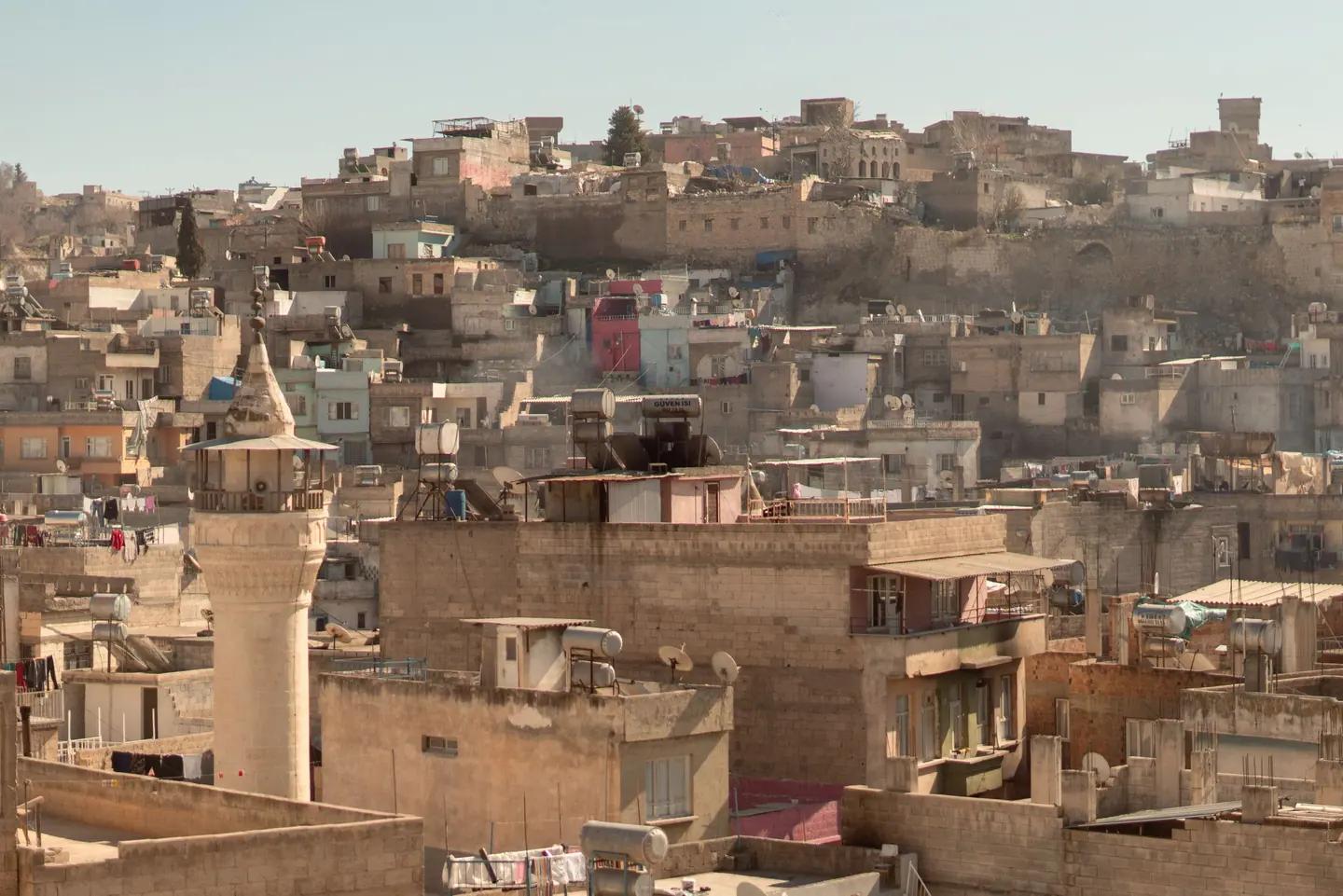
Ellisekiz Square acts as a central junction within the dense residential maze of old Urfa. The plaza is framed by high blind walls, decorated wooden doorways, and covered street vaults known locally as kabaltı. Narrow alleyways radiate outwards, presenting preserved examples of regional civil architecture dating from the eighteenth century.
Kabaltı of Nimetullah Square
This covered street vault illustrates the indigenous urban design developed to counter intense summer heat while allowing residential expansion over public roads. The limestone tunnel supports private rooms overhead while creating a wind corridor below. Pedestrians passing through can observe original timber lintels and relief carvings embedded in the walls.
Yusuf Pasha Mosque
Founded in 1703 by Yusuf Pasha, this sanctuary represents classical Ottoman balance integrated with Southeastern Anatolian stonemasonry. The façade features alternating courses of light and dark stone, known as ablaq masonry. Its single dome and delicate square-based minaret dominate the surrounding streetscape of the historic residential core.
Hasan Padişah Mosque
Originally erected in the late fifteenth century during the reign of Aq Qoyunlu ruler Uzun Hasan, the complex stands on monastic foundations. A channel from the sacred springs feeds through the courtyard ablution fountain before exiting into the municipal waterways. The prayer hall features heavy masonry piers and a collection of historic calligraphic panels.
Bıçakçı Square
Centred on the historic blade-grinding trade, this open space links the Grand Mosque with the northern residential quarters. The square is ringed by modest stone shops where local blacksmiths and toolmakers sharpen instruments on water-turned stones. Architectural elements include historic drinking fountains and carved limestone corbels supporting second-storey bays.
Şahap Hanı
Constructed in the seventeenth century, this secondary inn was designed to shelter pack animals and bulk agricultural goods entering from the Harran Plain. The lower ground features deeply recessed barrel vaults, while the upper level provided spartan lodgings for travelling caravan drivers. Restorations have stabilized the historic ashlar exterior and entry gateway.
Cevahir House
This sprawling nineteenth-century limestone residence exemplifies the regional haremlik and selamlık division of domestic space. An expansive central courtyard is paved in polished stone and anchored by a decorative fountain and shaded iwan alcoves. The high-ceilinged winter rooms feature fine timber panelling, painted floral murals, and intricately carved niches.
Harran Beehive Houses, Soğmatar & Halfeti Euphrates Canyon
Harran Mud-Brick Conical Beehive Houses, Harran Ulu Cami & First Islamic Astronomical University Ruins, Harran Inner Castle, Bazda Underground Stone Quarries, Han el-Ba’rur Caravanserai, Shuayb Ancient City, Soğmatar Moon-God Sin Sanctuary, and Halfeti Sunken Village on the Euphrates
Harran Beehive Houses Cultural Centre
Constructed from local clay, straw and stone without mortar timber, these conical beehive dwellings maintain cool interiors during intense summer heat. The restored cluster showcases rural domestic arrangements, cooking hearths and agricultural implements used for generations across the Harran plain. Visitors can examine the clever chimney vent systems that expel hot air upwards while preserving ambient indoor shade.
Harran Grand Mosque
Built by the Umayyad Caliph Marwan II in the eighth century, this ruined sanctuary represents one of Anatolia's earliest monumental mosques. Surviving architectural components include an austere square minaret that once served as an astronomical observation tower, alongside carved basalt capitals and portico arches. The complex housed major scholarly schools where Islamic and classical Hellenistic scientific manuscripts were translated and debated.
Harran Fortress
Commanding the southern perimeter of the settlement, this three-storey basalt fortress incorporates foundations thought to belong to a temple dedicated to the moon god Sin. Reconstructed under Fatimid, Ayyubid and Crusader occupations, the compound features polygonal defensive towers, vaulted subterranean halls and broad parapets. Walkways across the upper masonry afford wide panoramas across the Mesopotamian plain towards the Syrian border.
City Walls of Harran
Spanning four kilometres in circumference, the ancient city ramparts protected the urban settlement from classical antiquity through the mediaeval era. Although parts have eroded into earthen mounds, substantial stone sections, moats and masonry arches remain discernible, including the Aleppo Gate. The perimeter illustrates defensive techniques deployed by regional rulers against successive invading armies across the centuries.
Hayat al-Harrani Tomb and Mosque
Located just outside the ancient walls, this domed shrine commemorates Sheikh Hayat al-Harrani, a celebrated twelfth-century Islamic theologian and ascetic. The complex features a quiet prayer hall, vaulted stone chambers and an adjoining cemetery shaded by hardy trees. Pilgrims and cultural travellers visit the courtyard to inspect antique calligraphic inscriptions carved into the weathered limestone masonry.
Harran Archaeological Mound
Rising prominently at the centre of the historic perimeter, this multi-layered settlement mound contains thousands of years of human occupation. Archaeological excavations here have exposed Early Bronze Age mud brick structures, cuneiform tablet fragments and classical domestic foundations. Walking trails around the slopes allow visitors to view exposed strata containing ancient pottery sherds and masonry fragments.
Bazda Caves
These extensive underground quarries supplied the durable yellow limestone used to build historic Harran, nearby caravanserais and regional fortifications. Massive squared chambers, towering natural columns and chiselled tunnels extend deep into the rocky hillsides, revealing ancient extractive techniques. Inscriptions carved into rock surfaces document the quarrying activities of thirteenth-century master stonemasons under Ayyubid administration.
Han el-Ba'rur Caravanserai
Constructed in 1219 by an Ayyubid administrator named Husam ad-Din Ali ibn Isa, this square fortress-like caravanserai offered protection to merchant caravans. The structure preserves an ornate portal gate, an open central courtyard, stables and vaulted guest accommodations built from dressed limestone blocks. Its architectural plan exemplifies mediaeval security considerations along the arid highway connecting Harran with northern Iraq.
Shuayb Ancient City
Extending across a limestone plateau, this ancient city features hundreds of rock-cut tombs, domestic basements and carved subterranean water cisterns. Local tradition associates the site with Jethro, the father-in-law of Moses, centring reverence on an underground cave shrine. The surface preserves crumbling Roman-era ashlar walls, decorative pediments and rock-hewn steps that reward close architectural inspection.
Soğmatar Moon-God Sin Sanctuary
Functioning as a major religious hub for Sabian and Syriac planetary cults, Soğmatar features an open-air sacred hill named the Sacred Mount. Bas-relief carvings and Syriac inscriptions dating to the second century dedicate specific altars to the moon god Sin and neighbouring celestial bodies. Rock-cut tombs and subterranean grottos surround the natural mound, creating an intriguing archaeological landscape.
Pognon's Cave at Soğmatar
Discovered by the French epigrapher Henri Pognon in the early twentieth century, this rock-cut grotto served as an imperial cult chamber. The interior walls display carved relief figures of local rulers, astronomical symbols and formal Syriac texts dedicating monuments to astral gods. The sheltered environment has kept the fine details of the stone carvers visible to modern scholars.
Soğmatar Mound and Tower
At the northern edge of the cult complex, this artificial tell indicates prehistoric habitation that preceded the Roman-era planetary shrines. Crumbling defensive foundations and an ancient stone tower mark the crest of the mound, providing views over surrounding pastures. Archaeological surveys here have yielded ceramics and structural fragments dating from the Bronze Age through the Roman Empire.
Old Halfeti
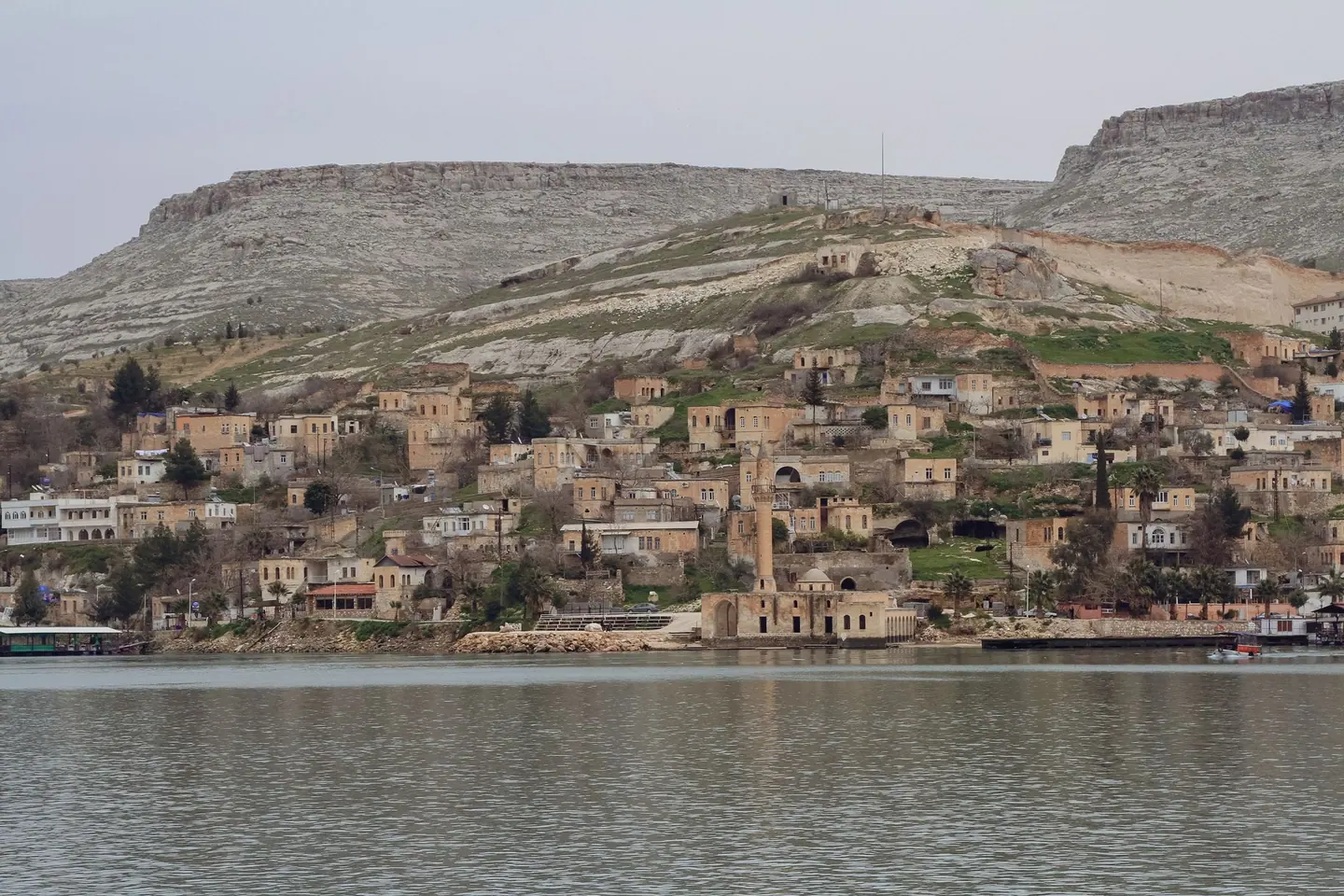
Situated within the rocky gorge of the Euphrates, Old Halfeti features tiers of traditional limestone mansions partially submerged beneath reservoir waters. The local architecture showcases elaborate masonry brackets, arched windows and riverside stone quays characteristic of southeastern Anatolian building traditions. It remains notable as the sole cultivation ground for the rare black rose variety, which thrives in local soil.
Savaşan Village
Often called the Sunken Village, Savaşan was abandoned when dam construction flooded the Euphrates Valley in 2000. Today, the slender stone minaret of the village mosque rises directly out of the deep green waters beside empty cliffside dwellings. Boat journeys along the river provide perspectives of abandoned terraced gardens, stone staircases and rock-cut dove cotes clinging to the slopes.
Rumkale
Occupying a high limestone promontory where the Merzimen Stream joins the Euphrates, Rumkale was a strategic stronghold for Byzantine, Armenian and Mamluk rulers. The citadel features fortified gates, rock-hewn defensive ditches, vaulted chambers and the ruins of the Church of Saint Nerses. From the water, the vertical fortress walls appear to merge seamlessly into the natural river cliff face.
Church of Saint Nerses
Constructed around 1175 under the patronage of the Armenian Catholicos Nerses IV the Gracious, this church served as an important spiritual and administrative centre. The surviving limestone masonry reveals Gothic-influenced pointed arches, carved stone crosses and decorative mouldings along the sanctuary walls. The building illustrates the cultural convergence of Armenian and Crusader ecclesiastical styles within the Euphrates corridor.
Barşavma Monastery
Built during the thirteenth century by the Syriac Jacobite patriarch Ignatius III David, this monastic site occupies the northern sector of Rumkale. The complex incorporates substantial rock-cut cells, vaulted refectories and masonry walls integrated directly into the cliff edge. Surviving architectural details offer insight into the monastic routines maintained by Christian communities residing within this isolated river fortress.
Old Halfeti Suspension Bridge
This steel suspension bridge carries foot passengers across an inlet of the reservoir, connecting the main village centre with western walking paths. The deck provides unobstructed sightlines across submerged stone houses, riverside restaurant pontoons and the towering canyon walls upstream. Crossing the span lets travellers photograph reflections of the honey-coloured stone architecture on the tranquil water surface.
Halfeti Grand Mosque
Erected in 1807 from cut limestone, this congregational mosque stands right on the current shoreline of the flooded Euphrates Valley. The building features an elegant square-based stone minaret, a central prayer dome and arched exterior porticos that survived the rising reservoir levels. It serves as an active place of worship while marking the boundary where the sunken town meets dry ground.
Halfeti Canyon Viewpoint
Perched on the rim of the limestone gorge above town, this natural overlook commands broad views of the serpentine reservoir and surrounding peaks. Visitors can trace the dramatic course of the Euphrates as it cuts through arid plateaus, passing submerged orchards and clifftop ruins. The site is particularly informative for understanding how the modern dam altered the historic landscape of the valley.
Combining Downtown Balıklıgöl with the Taş Tepeler Ridge
Pair this route with the practical neighbourhood breakdowns, climate charts and transport advice in our Şanlıurfa travel overview, alongside additional mapped city walks.