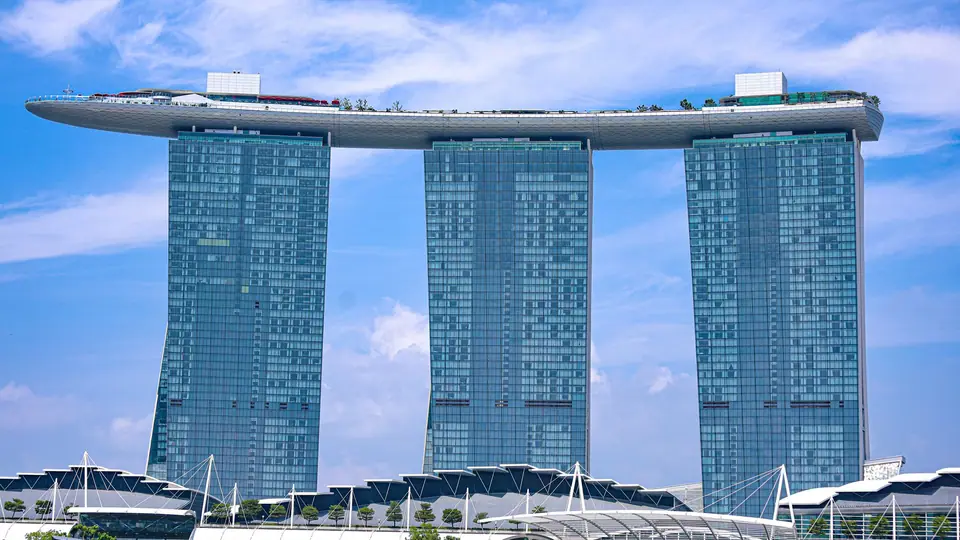
All 100 essential sights across Marina Bay, Gardens by the Bay, the Colonial Civic District, Chinatown, Little India, Kampong Glam and Sentosa mapped in walking order.
Temasek, the 1822 Jackson Plan and the Modern Garden City-State
Known in fourteenth-century Javanese and Chinese records as Temasek ("Sea Town") and Singapura ("Lion City"), a thriving trading settlement stood on Fort Canning Hill and the banks of the Singapore River long before Sir Stamford Raffles signed an 1819 treaty with Sultan Hussein Shah of Johor to establish a free-trade port along the Strait of Malacca. Under the 1822 Jackson Plan, the growing port was organised into distinct heritage quarters along the river and coastline: Chinatown south of the river, Kampong Glam around the Malay royal palace and Sultan Mosque, Little India along Serangoon Road and the neoclassical Civic District around the Padang.
Since achieving independence in 1965, Singapore has pursued a pioneering "City in Nature" vision, reclaiming Marina Bay to build the biodomes and Supertrees of Gardens by the Bay, UNESCO-listed Botanic Gardens and continuous waterfront promenades while preserving its historic shophouses, clan associations, Hindu and Buddhist temples and hawker centres.
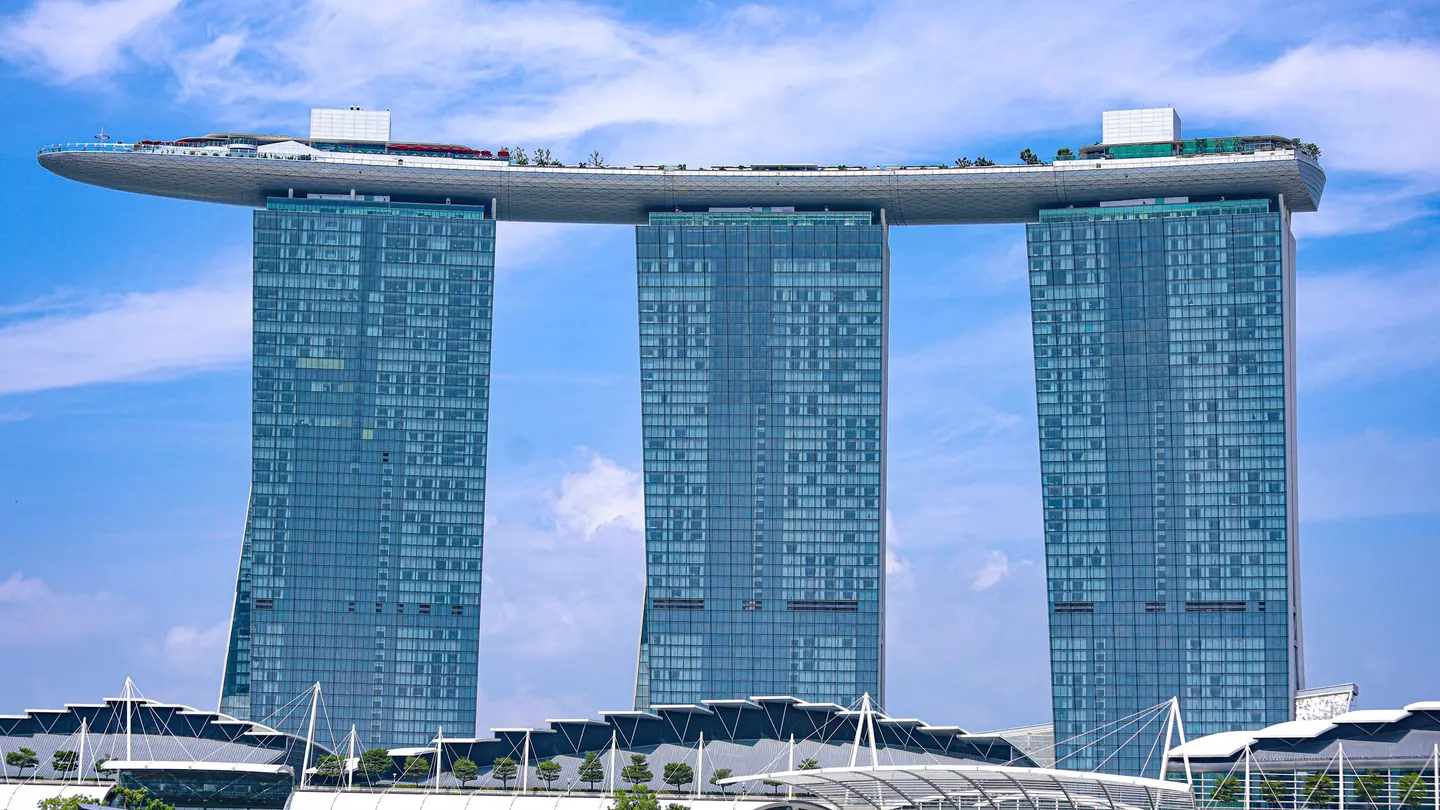
Marina Bay, Merlion Park, Gardens by the Bay & Esplanade Waterfront
Walk the complete Marina Bay loop from Merlion Park and the Helix Bridge to Marina Bay Sands, the Cloud Forest, Flower Dome and Supertree Grove at Gardens by the Bay.
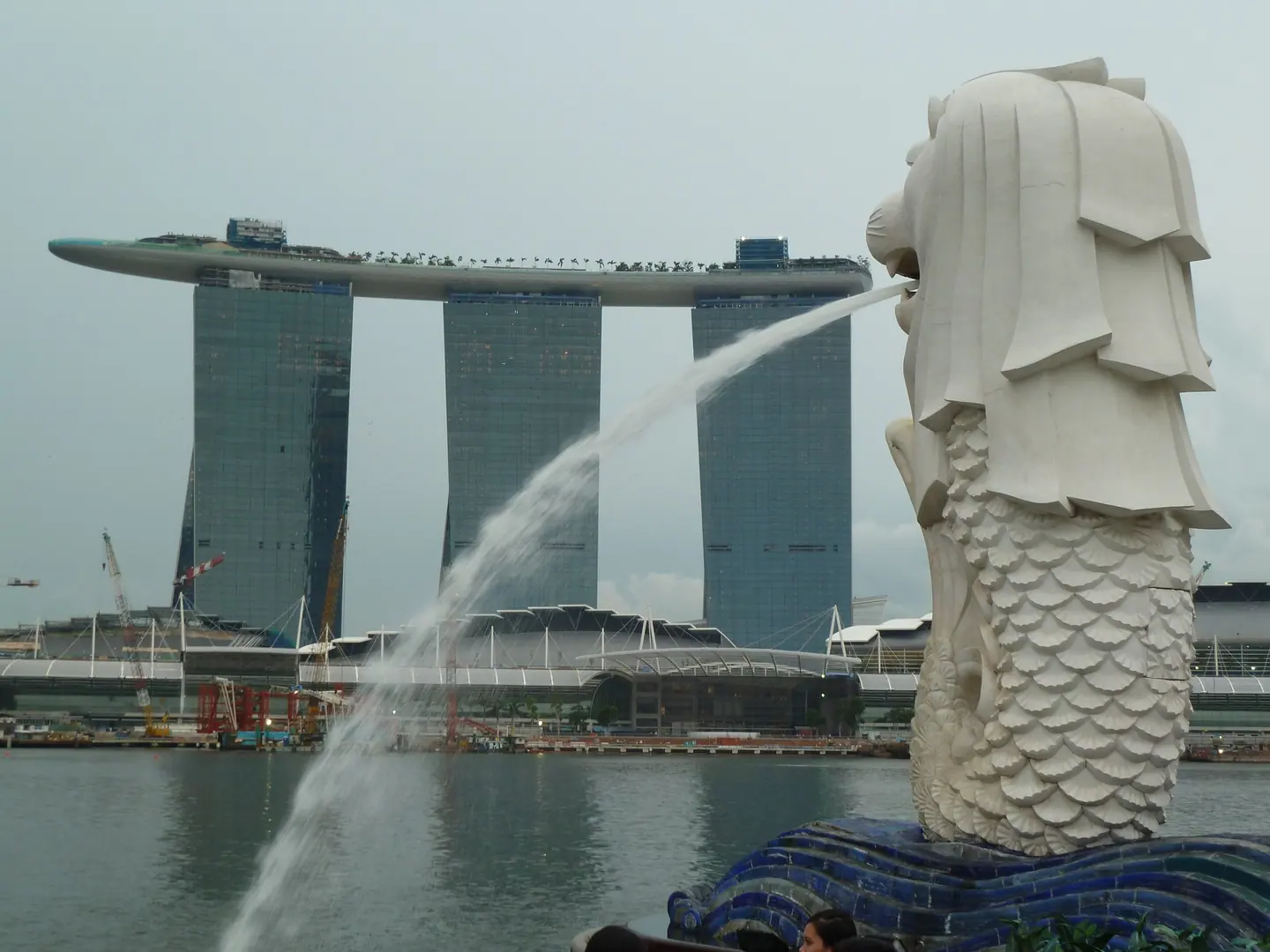
Merlion Park
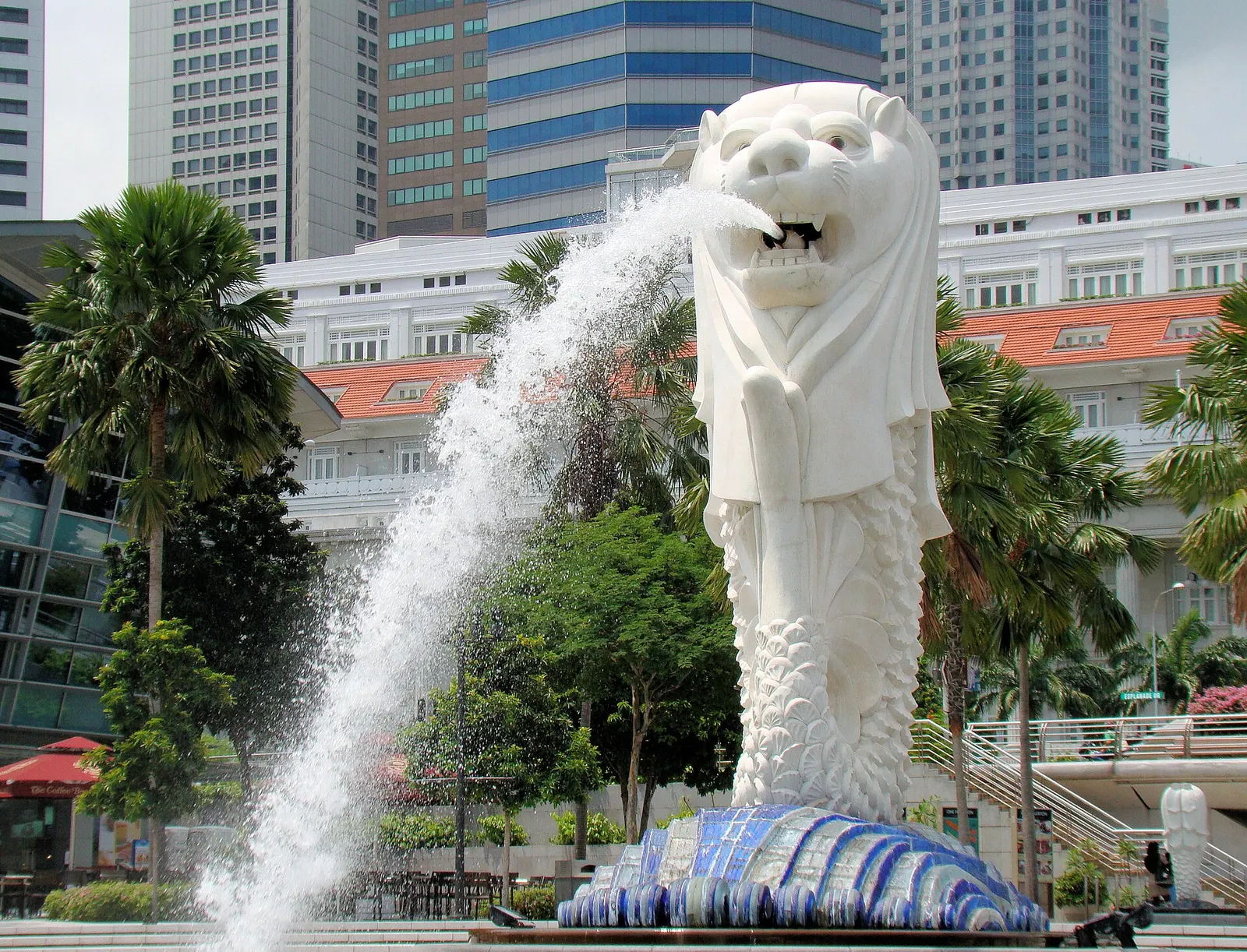
Standing at the mouth of the Singapore River, this public park hosts the original 8.6-metre spouting Merlion statue designed by Kwan Sai Kheong. The sculpture combines the body of a fish, reflecting Singapore's ancient origins as Temasek, with the head of a lion from its Malay name, Singapura. We can view the smaller Merlion cub positioned behind the main monument.
Jubilee Bridge
Opened in 2015 to mark Singapore's Golden Jubilee, this curved concrete footbridge connects Merlion Park with the Esplanade promenade. The bridge was conceived by late founding Prime Minister Lee Kuan Yew to offer barrier-free access and uninterrupted sightlines across the bay. Its sleek design features sweeping cantilevers and viewing decks elevated over the river mouth.
Esplanade, Theatres on the Bay
Inaugurated in 2002, this arts complex contains a 2,000-seat theatre and a 1,600-seat concert hall. British architectural firm Michael Wilford & Partners and DP Architects clad the twin glass domes with over 7,000 triangular aluminium sunshades. Locals frequently liken the striking structures to the tropical durian fruit, and the surrounding concourse regularly hosts free public recitals.
Esplanade Roof Terrace
Perched atop the arts centre, this manicured garden offers elevated vistas across the central business district and Marina Bay. Paved pathways meander through neat lawns, shaded arbours and decorative shrubbery. The vantage point allows visitors to inspect the geometric glass and aluminium sunshades up close while observing maritime traffic passing along the waterfront below.
Youth Olympic Park
Constructed to commemorate the world's first Youth Olympic Games, this landscaped park showcases installations created by young Singaporean artists. The centrepiece is 'The Lion', an interactive rock sculpture, alongside a labyrinth maze and a wall displaying children's drawings on porcelain tiles. Shaded promenades and native trees provide an entry point to the pedestrian bridges crossing the bay.
The Helix Bridge
Spanning 280 metres across the bay, this pedestrian crossing features a double-helix tubular stainless steel frame. Cox Architecture and Arup designed the structure to symbolise life, growth and renewal. Pairs of coloured letters representing the four DNA bases glow softly on the canopy, while four cantilevered viewing pods extend outward to provide clear sightlines of the waterfront.
ArtScience Museum
Designed by architect Moshe Safdie, this 21-gallery exhibition space resembles an unfurling lotus flower or ten welcoming fingers. Rainwater cascades through the centre of the curved roof, channelling into an interior reflecting pool that recycles water for building facilities. The museum hosts rotating international exhibitions and permanent digital art environments inside its cavernous, naturally lit petal-like galleries.
Marina Bay Sands SkyPark
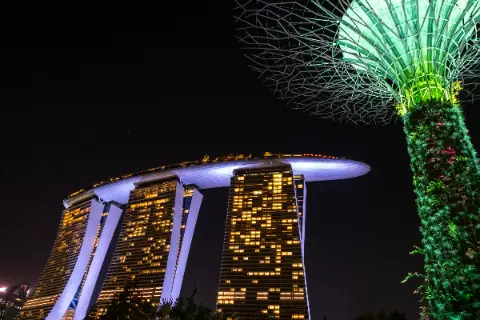
Spanning across the summits of three 55-storey hotel towers, this 340-metre-long structural platform terminates in one of the world's largest public cantilevers. The deck incorporates landscaped gardens, dining spaces and a celebrated vanishing-edge swimming pool. From the public observation area, we gain uninterrupted panoramic views extending across the Singapore Strait to the Indonesian Riau Islands.
Gardens by the Bay
Master-planned by Grant Associates and opened in 2012, this 101-hectare national garden forms part of Singapore's strategy to transform into a 'City in a Garden'. It integrates advanced environmental engineering with worldwide flora across multiple outdoor sectors. Waterways and conservation lakes filter surface runoff before discharging it into the bay, supporting birdlife and aquatic plants throughout the precinct.
Supertree Grove
These twelve towering steel structures measure between 25 and 50 metres in height and are planted with over 158,000 bromeliads, orchids and ferns. Beyond visual interest, several Supertrees harvest rainwater and incorporate photovoltaic cells, while others vent exhaust from the park's underground biomass energy centre. The central grove hosts night-time light and sound performances beneath the towering structures.
OCBC Skyway
Hovering 22 metres above the ground, this 128-metre-long aerial walkway spans between two central Supertrees. Suspended by high-tensile steel cables, the walkway offers panoramic views over the canopy of Gardens by the Bay and the adjacent Marina Bay Sands towers. Gentle breezes pass through the open-mesh platform, creating a dynamic vantage point for viewing the vertical plantings up close.
Supertree Observatory
Located at the canopy of the tallest 50-metre Supertree, this observatory features a ground-level elevator that whisks visitors to an enclosed circular hall and open-air rooftop. An interpretive zone outlines environmental sustainability themes, while the outdoor perimeter deck provides 360-degree vistas across the gardens and the open sea. Shaded seating areas let travellers observe the surrounding urban architecture.
Flower Dome
Engineered by WilkinsonEyre and Atelier Ten, this colossal glasshouse replicates the cool, dry climate of Mediterranean, South African and Western Australian regions. The free-spanning gridshell roof rests on external steel arches without interior support columns. Inside, winding paths lead past thousand-year-old olive trees, baobabs and succulent gardens arranged around a rotating floral field.
Cloud Forest
This climate-controlled dome encloses a 35-metre-tall man-made mountain cloaked in orchids, pitcher plants and mosses, fed by a cascading indoor waterfall. Visitors ascend by elevator and traverse elevated walkways that loop around the exterior peak and through misty ravines. The structure showcases high-altitude vegetation typical of Southeast Asian and Central American cloud forests between 1,000 and 3,000 metres.
Dragonfly and Kingfisher Lakes
These interconnected lakes act as a natural filtration system for runoff water collected throughout the surrounding gardens. Specially selected aquatic reeds and submerged plants absorb excess nitrogen and phosphorus, keeping the water clear and providing shelter for dragonflies and migratory birds. A timber boardwalk rings the perimeter, featuring educational panels explaining the site's sustainable hydrology.
Silver Garden
Set near the southern edge of the gardens, the Silver Garden features three Supertrees adorned primarily with silver, grey and white foliage plants. Tillandsias, silver dollar vines and grey-leafed bromeliads create a monochromatic visual theme along the trunks. Shaded lawns surrounding the trees offer a quieter setting away from the main grove to inspect the intricate vertical planting schemes.
Heritage Gardens
Comprising four distinct cultural plots, the Heritage Gardens highlight the connection between plants, commerce and society in Singapore. The Chinese, Malay, Indian and Colonial Gardens showcase species of economic and medicinal significance, including rubber trees, nutmeg, cloves and betel palms. Traditional architectural pavilions and interpretive signage illustrate how early immigrant communities utilised these botanicals.
The Promontory at Marina Bay
This expansive green lawn projects directly into the southwestern waters of the bay from the financial district. Built on reclaimed land, it serves as a central viewing platform during national celebrations, regattas and outdoor exhibitions. The wide timber steps and gravel terraces bordering the lawn provide an open space to observe the contrasting heritage and modern towers across the water.
Marina Bay City Gallery
Situated along the western shore, this information pavilion illustrates the decades-long transformation of Marina Bay from an open roadstead into a freshwater reservoir and urban district. Scale models, interactive digital maps and archive photographs reveal the engineering methods behind Singapore's land reclamation. It serves as an informative orientation hub detailing the future phases of downtown development.
Clifford Pier
Opened in 1933 and named after colonial governor Sir Hugh Clifford, this terminal once received thousands of sea passengers arriving in Singapore. Architect Frank Dorrington Ward employed concrete trusses shaped into repeated parabolic arches, giving the pier an airy Art Deco hall. Today conserved and integrated into The Fullerton Bay Hotel, the hall retains its historic cast-iron lamps and seaside landing steps.
Colonial Civic District, Singapore River Quays & Fort Canning Hill
Cross Cavenagh Bridge into the Civic District for the National Gallery Singapore, Victoria Theatre, Raffles Hotel, Boat Quay, Clarke Quay and Fort Canning Park.
Cavenagh Bridge
Opened in 1869, this elegant pedestrian crossing remains the oldest surviving suspension bridge in Singapore. Manufactured in Glasgow and assembled by Indian convict labourers, it retains its original Victorian street lamps and historical police notices prohibiting heavy cattle from crossing the deck.
The Fullerton Building
Completed in 1928, this imposing neoclassical structure originally served as the General Post Office and the headquarters of British colonial administration. Fluted Doric colonnades define its monumental riverside facade, while the public lobby displays period postal artefacts and the historic mile zero milestone of the island.
Asian Civilisations Museum
Occupying Empress Place Building, which dates to the mid-nineteenth century, this museum explores the historical connections across Asian maritime trade routes. Visitors can inspect the Tang Shipwreck cargo, rare ancestral court regalia, and fine porcelain exported across the Indian Ocean networks over several centuries.
Victoria Theatre and Concert Hall
Constructed between 1862 and 1905, this restored civic complex comprises two distinct halls linked by a prominent 54-metre clock tower. Originally built as the town hall and Victoria Memorial Hall, the site features Italianate balustrades, classical pediments, and a central bronze statue of Stamford Raffles outside the facade.
National Gallery Singapore
This expansive art museum integrates two monumental colonial edifices beneath a contemporary glass canopy. The former Supreme Court features classical Corinthian columns and a copper dome, while City Hall hosted the formal surrender of Japanese forces in 1945, now housing modern Southeast Asian paintings.
The Padang
Gazetted as a National Monument, this open green space has served as the recreational and ceremonial heart of the city since 1819. Bounded by colonial clubs and civic landmarks, it has hosted military parades, royal celebrations, and cricket matches, framed against the modern financial skyline.
St Andrew's Cathedral
Consecrated in 1862, this Anglican cathedral was designed by colonial engineer Ronald MacPherson in the English Neo-Gothic style. The exterior walls gleam with a durable plaster compound made of shell lime, egg whites, and sugar, while the interior features stained-glass windows commemorating key colonial administrators.
Civilian War Memorial
Unveiled in 1967 within War Memorial Park, this 67-metre structure commemorates the thousands of civilians killed during the Japanese occupation from 1942 to 1945. Four slender pillars symbolise the shared suffering of the Chinese, Malay, Indian, and Eurasian communities over a subterranean burial vault.
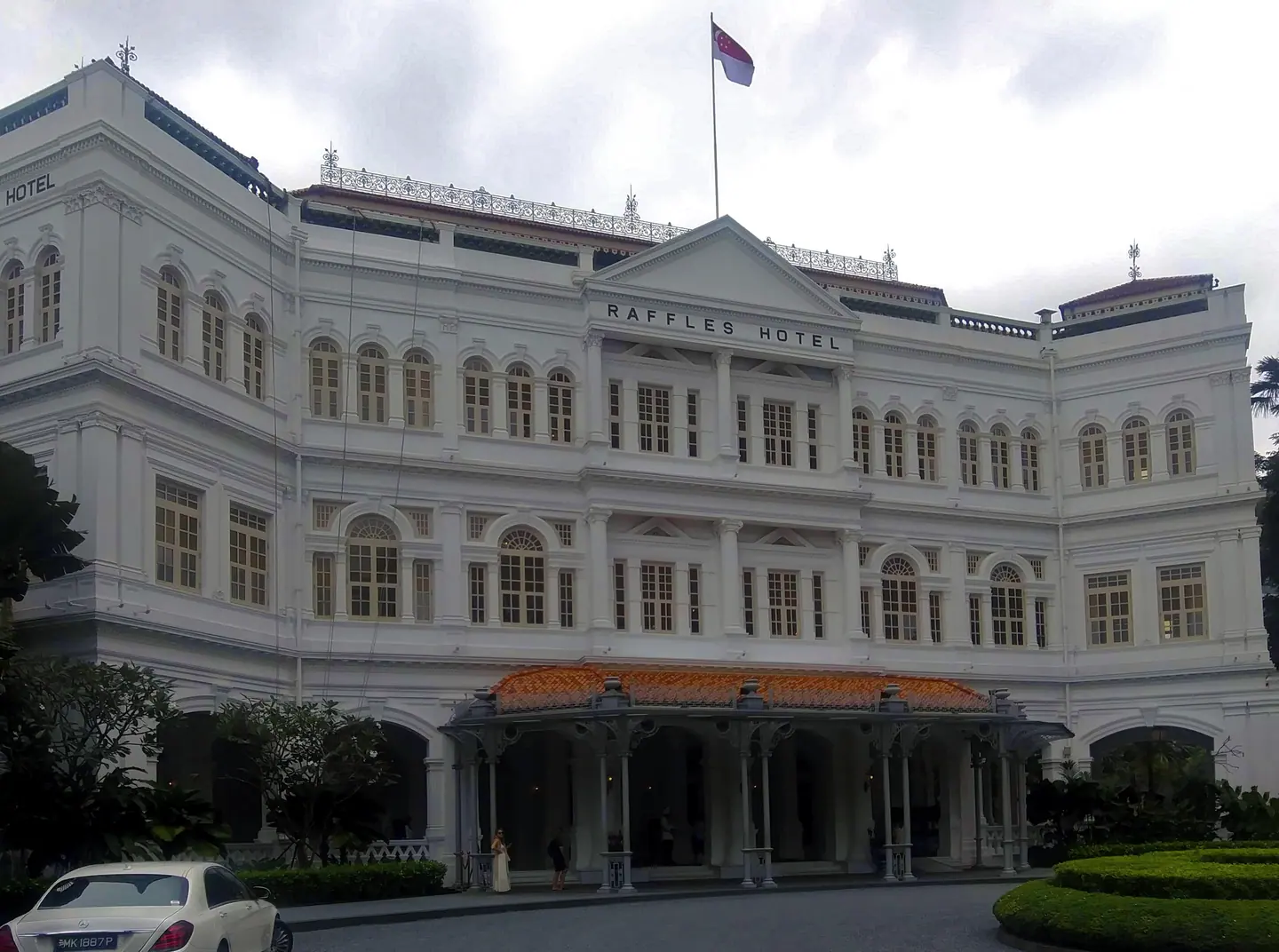
Raffles Hotel
Established in 1887 by the Sarkies brothers, this heritage hotel represents high Victorian colonial hospitality. The restored property displays wrought-iron porticos, cast-iron verandahs, and leafy courtyards, having hosted literary figures such as Rudyard Kipling, Joseph Conrad, and Somerset Maugham during their travels.
CHIJMES
Originally functioning as the Convent of the Holy Infant Jesus, this walled sanctuary features nineteenth-century cloisters and courtyards. The focal point is the Gothic Revival chapel, completed in 1904, complete with ribbed vaulted ceilings, Belgian stained glass, and finely carved plaster capitals representing tropical fauna.
Peranakan Museum
Housed in a 1912 Neoclassical school building on Armenian Street, this institution explores the hybrid heritage of Straits-born communities. Galleries showcase intricate beaded slippers, elaborate silver bridal jewellery, and nonya porcelain wares, illustrating centuries of cultural exchange between Chinese, Malay, and European traditions.
Armenian Church of Saint Gregory the Illuminator
Designed by Irish architect George Drumgoole Coleman and consecrated in 1835, this church serves as a testament to the prominent local Armenian merchant community. The building features Tuscan Doric porticos, a circular interior layout, and a memorial garden lined with ornate nineteenth-century tombstones.
Old Hill Street Police Station
Erected in 1934 to house police personnel and holding cells, this fortress-like Neo-Classical complex features 927 window shutters painted in rainbow hues. Visitors can enter the interior courtyards, which originally functioned as drill grounds and now host art galleries and government cultural offices.
Boat Quay
Once the busiest transhipment hub of colonial Singapore, this riverbank handled three-quarters of the island's shipping trade during the 1860s. Rows of conserved two- and three-storey shophouses, formerly commercial godowns and merchant offices, retain classical plaster detailing along the water's edge.
Clarke Quay
Named after Sir Andrew Clarke, this former commercial district preserves late Victorian warehouses where goods were transferred from traditional bumboats, known locally as twakows. Today, the pedestrianised streets feature restored pastel godowns, covered canopies, and moorings for wooden river taxis.
Read Bridge
Completed in 1889 to replace an earlier wooden structure, this simple iron truss bridge honours merchant William Henry Read. During the mid-twentieth century, the bridge was famous as an open-air gathering place where Teochew storytellers entertained coolies and boatmen resting after unloading river cargo.
Fort Canning Tree Tunnel
Located on the northern fringe of Fort Canning Park, this pedestrian underpass features an open spiral staircase leading out towards Bras Basah. Looking upward reveals yellow rain trees framing the sky above moss-covered stone walls, offering insight into the hill's layered twentieth-century pedestrian drainage network.
The Battlebox
Buried nine metres inside Fort Canning Hill, this bomb-proof British headquarters served as the nerve centre for the defence of Malaya. It was inside these steel-reinforced rooms that Lieutenant-General Arthur Percival made the decision to surrender Singapore to Japanese forces on 15 February 1942.
Keramat Iskandar Shah
Situated on the quiet eastern slope of the hill, this keramat, or sacred Muslim tomb, honours Iskandar Shah, the last king of ancient Singapura. Rebuilt as a sheltered shrine, the site reflects pre-colonial Malay royalty and remains a peaceful place of contemplation amidst ancient banyan trees.
Spice Garden at Fort Canning
Laid out on the slopes where Stamford Raffles established the island's first botanical garden in 1822, this replanted terrace contains nutmeg, cloves, cinnamon, and pepper vines. Instructive paths showcase the aromatic crops that drove colonial maritime ambitions across Southeast Asia in the nineteenth century.
Historic Chinatown, Buddha Tooth Relic Temple, Thian Hock Keng & Hawker Centres
Explore Telok Ayer Street, Thian Hock Keng Temple, Sri Mariamman Temple, the Buddha Tooth Relic Temple, Maxwell Food Centre and the shophouses of Tanjong Pagar.
Thian Hock Keng Temple
Constructed around 1839 on what was once the shoreline of Telok Ayer Basin, this historic complex honours Mazu, protector of seafarers. Early Chinese immigrants gathered here to offer gratitude for safe ocean crossings. The temple showcases traditional southern Chinese architectural styles, assembled without a single nail using interlocking timber brackets and granite pillars.
Nagore Dargah
Erected between 1828 and 1830 by Tamil Muslims from southern India, this distinctive shrine pays homage to the Sufi saint Shahul Hamid. Its unique design fuses classical European motifs, including Doric pilasters, with traditional Islamic minarets and arched niches. The landmark now serves as an Indian Muslim heritage gallery documenting early community contributions.
Al-Abrar Mosque
Originally established as a thatched hut in 1827, the current brick mosque was completed around 1855 by the Tamil Muslim community. Two tall minarets topped with crescent moon motifs frame the narrow entrance along the street front. Inside, the prayer hall features neoclassical columns and traditional louvered shutters that facilitate natural ventilation.
Telok Ayer Chinese Methodist Church
Founded in 1889 by Christian missionary Dr Benjamin West, the congregation erected this permanent sanctuary in 1924. Designed by French architect Denis Santry, the structure blends western Romanesque styling with a traditional Chinese curved tiled roof on its upper pavilion. During the Second World War, the church provided refuge to hundreds of civilian residents.
Fuk Tak Chi Museum
Built between 1820 and 1824 by Hakka and Cantonese settlers, this former temple honoured Tua Pek Kong, the god of prosperity. It was one of the earliest spiritual centres established by Chinese immigrants landing at Telok Ayer. Following extensive restoration in the late 1990s, the building now functions as an interpretive museum displaying miniature streetscapes and antiques.
Ying Fo Fui Kun
Established in 1822, this prominent clan house served as a communal sanctuary and welfare headquarters for Hakka immigrants arriving from Guangdong province. The current two-storey building on Telok Ayer Street dates to 1844 and exhibits austere southern Chinese lineage architecture. Visitors can observe ancestral altars alongside educational records chronicling early immigrant societies.
Buddha Tooth Relic Temple and Museum
Completed in 2007, this towering five-storey Buddhist complex draws heavy inspiration from the architectural traditions of the Tang dynasty. The main hall contains elaborate Buddhist art, towering statues and a solid gold stupa housing what is revered as a sacred tooth relic of the Buddha. The rooftop garden features an enormous Vairocana prayer wheel.
Sri Mariamman Temple
Dating to 1827, this Dravidian-style temple was founded by Naraina Pillai, a government clerk who travelled with Stamford Raffles. The site is recognised by its ornate, six-tiered gopuram tower adorned with detailed plaster sculptures of Hindu deities, mythological beasts and soldiers. The temple grounds host the annual fire-walking festival known as Theemithi.
Jamae Mosque
Constructed between 1830 and 1835 by Tamil Muslims from the Coromandel Coast, this mosque stands beside Sri Mariamman Temple on South Bridge Road. The entrance facade displays South Indian Islamic architecture, highlighted by two octagonal minarets topped with onion domes. Its open-plan prayer hall incorporates neoclassical European columns and original timber fanlights.
Maxwell Food Centre
Originally functioning as a wet market in the 1920s, this large civic hall was converted into a dedicated hawker centre in the 1980s. Located opposite the Buddha Tooth Relic Temple, it represents Singapore's celebrated communal dining tradition inscribed on the UNESCO heritage list. Over one hundred stalls offer local staples such as Hainanese chicken rice and tapioca fritters.
Chinatown Heritage Centre
Occupying three carefully restored shophouses on Pagoda Street, this institution recreates the living quarters and working conditions of early Chinese settlers. The interior features faithfully reconstructed cubicle rooms, tailor shops and trading offices from the early twentieth century. Displays trace the arduous journeys undertaken by coolies, samsui women and merchants seeking new livelihoods.
Chinatown Complex
Constructed in 1983 to house street vendors previously scattered across Trengganu and Sago Streets, this massive complex forms the retail heart of Chinatown. The ground floor contains sundries shops, while the basement hosts a historic traditional wet market. Upstairs, the cavernous hawker hall accommodates more than two hundred stalls serving traditional regional delicacies.
Far East Square
Opened in 1998, this heritage conservation project transformed a dense cluster of sixty-one early shophouses and narrow alleys into a covered pedestrian mall. The development incorporates Fuk Tak Chi temple at its street entrance and preserves varied architectural details from colonial trading houses. Carved wooden shutters, granite paving and ornate plaster friezes are visible throughout the quarter.
Ann Siang Hill Park
Named after wealthy sawmiller Chia Ann Siang, who acquired the land in the late nineteenth century, this gentle hill preserves fine late-style shophouses. A quiet walking trail weaves past mature tamarind, cinnamon and nutmeg trees, recalling the area's agricultural past as a spice plantation. Several historic Chinese clan associations still maintain their headquarters along the ridgeline.
Club Street
During the late nineteenth and early twentieth centuries, wealthy Chinese merchants established exclusive social and literary clubs along this curved street. Beautifully restored shophouses display intricate decorative tiles, shuttered French windows and ornate Corinthian-style pilasters. Today, the street houses contemporary dining rooms, design offices and boutique conservation hotels while retaining its distinctive historic scale.
Pinnacle@Duxton Skybridge
Standing on the historical site of some of Singapore's earliest public flats in Tanjong Pagar, this landmark development comprises seven fifty-storey residential towers. The complex is linked on the fiftieth floor by a continuous five-hundred-metre skybridge open to visitors. The platform offers unobstructed views over the red roofs of Chinatown, the commercial district and maritime shipping lanes.
Tanjong Pagar Plaza Market and Food Centre
Constructed in 1977 as part of urban renewal schemes in Tanjong Pagar, this complex replaced cramped post-war shophouses with modern residential and commercial amenities. The second-storey food centre serves traditional dishes such as nasi lemak and fishball noodles to neighbouring office workers. It offers a genuine look into everyday neighbourhood commerce and residential life.
Duxton Plain Park
Tracing the curved alignment of an early twentieth-century railway branch line, this narrow urban park provides a shaded pedestrian link through Tanjong Pagar. Mature angsana trees shelter the path, which passes beside the rear courtyards of preserved pre-war shophouses. The park also hosts a memorial tree commemorating founding Prime Minister Lee Kuan Yew, who represented this constituency.
Jinrikisha Station
Built in 1903 by the colonial Municipal Council, this two-storey neoclassical building served as the central administrative depot for Singapore's thousands of hand-pulled rickshaws. Designed by architect D.M. Craik, it features red exposed brick, white plaster trims, an octagonal corner cupola and curved pediments. The structure now houses private offices and restaurants at the junction of Tanjong Pagar Road.
Seng Wong Beo Temple
Founded in 1905 by a Taoist monk from Fujian province, this temple on Peck Seah Street is dedicated to the City God, Cheng Huang. The deity is revered as an otherworldly magistrate responsible for community protection and spiritual justice. The temple remains famous for administering traditional ceremonial customs, including post-mortem marriage rituals to placate wandering spirits.
Kampong Glam, Haji Lane, Bugis & Little India Heritage Walk
Discover the golden dome of Sultan Mosque and Arab Street in Kampong Glam, then walk through Bugis to Little India Tekka Centre and Sri Veeramakaliamman Temple.
Sultan Mosque
Originally commissioned by Sultan Hussein Shah in 1824, this premier mosque was rebuilt during the 1920s by architect Denis Santry in the Saracenic revival style. Notice the black ring circling the base of the massive golden dome, formed from glass bottles collected by impoverished devotees who wished to contribute. Its prayer hall accommodates several thousand worshippers beneath lofty pointed arches.
Malay Heritage Centre
Occupying Istana Kampong Glam, the palace was constructed in the 1840s for Sultan Ali Iskandar Shah using classical Palladian elements tailored to tropical conditions. The museum showcases historical artefacts, traditional fabrics, and maritime displays illustrating Bugis trading routes. Outside, the landscaped gardens retain ancestral graves and preserved native trees honouring the regional Malay diaspora.
Haji Lane
During the nineteenth century, this narrow corridor offered lodgings to Muslim pilgrims waiting to board steamships for the annual Hajj pilgrimage to Mecca. Today, the restored rows of traditional shophouses feature detailed plaster ornamentation, louvred timber shutters, and colourful exterior wall murals. Walking along the pavement provides an intimate look at Singapore's early commercial conservation architecture.
Arab Street
Allocated to Arab traders in Stamford Raffles' 1822 urban plan, this avenue became the commercial spine of the Malay and Muslim merchant communities. We can observe traditional storefronts specialising in imported silk, batik prints, Persian carpets, and hand-blended aromatic oils. The consistent low-rise scale preserves the visual corridor leading toward the monumental dome of the Sultan Mosque.
Bussorah Street
Running directly toward the main entrance of Sultan Mosque, Bussorah Street served as a residential quarter for Bugis and Javanese families throughout the colonial era. The thoroughfare is now paved and flanked by graceful palm trees that accentuate the historic streetscape. Its restored shophouses retain decorative clay roof tiles and wooden transoms typical of early twentieth-century architecture.
Hajjah Fatimah Mosque
Constructed in 1846 on land donated by the wealthy female merchant Hajjah Fatimah, this religious compound blends British colonial, Islamic, and Chinese architectural motifs. The minaret resembles the spire of the original Saint Andrew's Cathedral, while traditional timber carvings enrich the interior. A distinct lean can be detected in the minaret tower due to shifting sandy ground beneath its foundations.
Gedung Kuning
Known as the Yellow Mansion, this historic home was constructed around 1850 for Tengku Mahmud, a grandson of Sultan Hussein Shah of Johor. The yellow coloration reflects traditional royal status within Malay culture, contrasting with the classical timber louvres and plastered brickwork. Restored alongside the neighbouring palace, the building offers clear evidence of royal domestic life in Kampong Glam.
Malabar Mosque
Founded by immigrants from the Malabar coast of southwestern India, this place of worship was completed in 1963 and subsequently resurfaced with blue and white porcelain tiles. The structure features an octagonal prayer tower and a central gilded dome elevated above Victoria Street. It remains the sole religious monument in Singapore managed specifically by the Malabar Muslim community.
Parkview Square
Designed by American architect James Adams and completed in 2002, this office tower draws inspiration from 1920s Art Deco landmarks like New York's Chanin Building. The exterior is adorned with bronze statues of prominent historical figures, including Sun Yat-sen and Abraham Lincoln. Inside, the opulent ground-floor courtyard and grand lobby showcase polished marble, relief ceilings, and intricate metalwork.
Rochor Centre
Built during the late 1970s as part of Singapore's urban renewal programme, Rochor Centre comprised distinctive multi-coloured residential towers set above a commercial podium. Although the original towers were cleared to permit transport infrastructure construction, the surrounding area retains significant urban heritage value. It illustrates the rapid transition from informal tenements to planned, high-density civic architecture.
Church of Our Lady of Lourdes
Modelled loosely on the sanctuary at Lourdes in southwestern France, this church was completed in 1888 to minister primarily to Tamil-speaking Catholic converts. The exterior displays pointed arches, buttresses, and delicate plaster spires painted in crisp white and yellow. Inside, an ornate groined ceiling spans the nave toward an artificial stone grotto commemorating the Marian apparitions.
Bugis Street
Originally named after the seafaring Bugis traders who traded along the Rochor River, this quarter gained global notoriety in the mid-twentieth century for open-air evening spectacles. Modern redevelopment transformed the strip into a sheltered retail bazaar packed with vendors selling clothing, souvenirs, and regional street delicacies. The surrounding conservation shophouses recall the dense street grid that defined early twentieth-century Bugis.
Kwan Im Thong Hood Cho Temple
Established in 1884 and rebuilt in 1982, this temple is among the most heavily visited Chinese religious complexes in central Singapore. Devotees gather in the main hall before golden effigies of Guan Yin and Shakyamuni Buddha to cast fortune sticks. The architecture displays classical Southern Chinese elements, including sweeping roof ridges, ceramic dragons, and carved stone relief panels.
Sri Krishnan Temple
Founded in 1870 along Waterloo Street, this sanctuary is dedicated to Lord Krishna and his consort Rukmini. The tiered entrance tower, or gopuram, features numerous stucco carvings depicting various avatars and episodes from the epic Mahabharata. Located right next to the Kwan Im Temple, it demonstrates local religious syncretism, as many Buddhist worshippers also burn incense here.
Maghain Aboth Synagogue
Constructed in 1878 on Waterloo Street, this neo-classical synagogue served the prominent Baghdadi Jewish merchant community that settled in British Singapore. The austere white façade gives way to an airy two-storey interior arranged according to Sephardic traditions, with a central bimah and a raised women's gallery. Preserved timber joinery and stained glass windows reflect nineteenth-century craft techniques.
Tekka Centre
Originally named Kandang Kerbau Market after the nearby municipal cattle pens, this landmark complex was established on Buffalo Road in 1915 and rebuilt in 1982. The ground floor accommodates a historic wet market alongside hawker stalls serving biryani, rojak, and freshly pressed sugarcane juice. The upper level operates as a retail centre specialising in traditional Indian garments and tailoring.
Former House of Tan Teng Niah
Constructed around 1900 for Tan Teng Niah, a prominent Chinese businessman who operated confectionery factories in Little India, this residence is the last surviving Chinese villa in the quarter. The building integrates European swing shutters, classical pilasters, and traditional Chinese courtyard design into a single home. Its striking, multi-coloured exterior paintwork highlights detailed stucco panels and carved timber eaves.
Sri Veeramakaliamman Temple
Built by pioneer Indian migrant labourers in 1881, this shrine provided solace to early dockworkers and brickmakers working along Serangoon Road. The soaring gopuram features intricate, brightly painted figures of Hindu deities, while the sanctum houses a fierce black stone statue of Kali destroying ignorance. Elaborate brass bells affixed to the heavy wooden entrance doors are rung by visitors entering the hall.
Indian Heritage Centre
Opened in 2015, this cultural institution blends contemporary glass curtain walls with architectural motifs derived from traditional Indian stepwells. Five permanent galleries trace maritime trade, colonial-era indentured labour, religious traditions, and political participation among South Asians across Singapore and Southeast Asia. The centre's exterior reflects the surrounding historic shophouse streetscape while providing climate-controlled preservation for ancient bronzes and textiles.
Abdul Gafoor Mosque
Completed in 1907 to replace a timber prayer hall, this gazetted national monument displays a rare fusion of Saracenic, Victorian, and classical European architecture. Its outer parapet features dozens of miniature spires, while a large sundial mounted above the entrance identifies daily prayer times through Roman and Arabic numerals. The mosque historically served South Indian Muslim merchants residing around Dunlop Street.
UNESCO Botanic Gardens, Dempsey Hill, Southern Ridges, Sentosa & Jewel Changi
Visit the National Orchid Garden at the Singapore Botanic Gardens, the elevated canopy walk at Henderson Waves, Katong Peranakan shophouses and Jewel Changi Rain Vortex.
Singapore Botanic Gardens Bandstand
Erected in 1930 on an elevated knoll, this octagonal gazebo served as the performance venue for military bands. It stands surrounded by majestic yellow rain trees, preserving a quintessential colonial garden atmosphere within Singapore's UNESCO World Heritage site. Visitors often gather on the circular lawn to admire the white-painted timber framework and neat balustrades.
National Orchid Garden
Spanning three hectares across the botanical grounds, this specialised reserve opened in 1995 to display the state's orchid breeding programme. Landscaped slopes feature the VIP Orchid Garden, where hybrids are named after visiting dignitaries and monarchs. We can explore the cool house and mist garden, which replicate high-elevation tropical cloud forests.
Burkill Hall
Built in 1868 as the residence for the garden superintendents, Burkill Hall is considered the only surviving example of an Anglo-Malay plantation house in the region. Named after directors Isaac Henry Burkill and Humphrey Morrison Burkill, its timber balconies overlook orchid terraces. The structure illustrates early colonial adaptation to tropical humidity through high stilts and wide verandahs.
Swan Lake Gazebo
Constructed in 1866, Swan Lake is the oldest ornamental water feature in the botanical grounds. A Victorian cast-iron gazebo crowns the water's edge, offering views of gliding mute swans imported from Amsterdam. Visitors frequently pause here to observe aquatic plants and the bronze sculpture depicting flight, cast by English artist Sydney Harpley in 1982.
Tyersall Learning Forest
Opened in 2017, this six-hectare expansion integrates an old secondary forest with freshwater wetlands. Elevated boardwalks allow travellers to navigate the forest canopy without disturbing the fragile ground ecosystem below. The trails feature towering trees, wild fruit groves, and interpretation boards explaining the historic flora of the former Tyersall estate.
Dempsey Hill Tanglin Barracks
Established in the 1860s as the Tanglin Barracks, this hillside compound housed the British military and later the Singapore Armed Forces. The preserved whitewashed barracks feature deep verandahs, Roman arches, and high pitched roofs designed for air circulation. Today the colonial structures accommodate antique galleries, bakeries, and dining venues set amidst lush secondary jungle.
Henderson Waves
Soaring thirty-six metres above the roadway, this pedestrian bridge connects Mount Faber Park to Telok Blangah Hill Park. Unveiled in 2008, the structure consists of undulating steel ribs clad with dense Balau timber slats. The sculptural wave forms create sheltered alcoves where walkers rest while taking in panoramic views of the southern coastline.
Mount Faber Peak
Rising 105 metres above sea level, Mount Faber was originally known as Telok Blangah Hill before being renamed after engineer Charles Edward Faber in 1845. It served as a signal station to monitor incoming ships approaching Keppel Harbour. Today it forms the northern terminus of the cable car network and contains a miniature Merlion statue.
Faber Point
The highest accessible terrace on Mount Faber features copper-tooled mural panels that depict the comprehensive story of Singapore's maritime and political history. At the summit, a directional marker identifies distant islands across the Singapore Strait. The platform offers open vistas over the container ports, Sentosa, and the central financial district.
Marang Trail
Winding across a vertical ascent of seventy metres, the Marang Trail provides direct pedestrian passage from HarbourFront station into primary secondary forest. The footpath leads through dense stands of saga and rubber trees, showcasing relics of colonial plantation terrain. Birdwatchers frequent the route to spot native sunbirds, hornbills, and macaque troops in the foliage.
Fort Siloso
Constructed in the 1880s to defend the western entrance to Keppel Harbour, Fort Siloso stands as the nation's only preserved coastal artillery installation. The site includes original six-inch guns, underground ammunition magazines, observation posts, and wartime tunnels. Exhibits detail the fall of Singapore in 1942, complemented by an elevated skywalk above the tree canopy.
Capella Singapore Colonial Manors
These curved colonial heritage buildings were erected in the 1880s as officers mess facilities for the Royal Artillery stationed on Pulau Blakang Mati. Designed in classical style with sprawling colonnades and pitched roofs, they sheltered British military families. Now integrated into modern resort grounds, they hosted the historic 2018 North Korea-United States summit.
Sentosa Merlion Site
Situated at the heart of Sentosa island, this transport hub formerly featured the giant 37-metre Merlion tower constructed in 1995. The surrounding precinct has been redeveloped into the Sentosa Sensoryscape, a multi-tiered walkway linking northern attractions to southern beaches. The thoroughfare features tactile gardens, water features, and architectural pavilions designed for evening strolls.
Koon Seng Road Peranakan Houses
Constructed throughout the 1920s, these two-storey terraced shophouses on Koon Seng Road showcase Straits Chinese domestic architecture. Their facades display pastel plasterwork, glazed ceramic tiles imported from Europe, and carved timber window shutters with mythological animals. The row reflects the wealth of the Peranakan merchant class who relocated from the inner city to Katong.
Katong Antique House
This traditional two-storey pre-war shophouse serves as a private cultural repository run by Peranakan historian Peter Wee's family. The interior remains arranged according to customary conventions, filled with mother-of-pearl blackwood furniture, beaded slippers, and antique nonya porcelain. Visitors can observe family altars and traditional textiles that illustrate domestic life in twentieth-century Katong.
Sri Senpaga Vinayagar Temple
Founded in the 1850s by Ceylonese Tamil residents after a statue of Lord Ganesha was discovered near a chempaka tree, this temple is among the oldest in eastern Singapore. Following a fire in 2003, it was rebuilt with a towering 21-metre Rajagopuram entrance gate. Intricate granite columns, ceiling frescoes, and traditional musical performances characterise its interior sanctum.
Church of the Holy Family, Katong
Established in the 1930s to serve the expanding Eurasian and Peranakan Catholic populations in Katong, this parish underwent full reconstruction in 1999. The modern sanctuary features a massive sixteen-metre-tall stained-glass facade portraying the Holy Family. The parish community retains strong links to local Eurasian cultural traditions, celebrating masses that draw congregants from across the eastern coast.
Red House Bakery
Dating back to 1925, this bright red shophouse formerly accommodated the historic Katong Bakery and Confectionery. It served as a social gathering place for Eurasian, Chinese, and Malay residents who convened for traditional coffee and Swiss rolls. Restored under heritage conservation regulations, the exterior preserves its distinctive plaster mouldings and colonial arcaded walkway.
Jewel Changi Rain Vortex
Designed by architect Moshe Safdie and unveiled in 2019, this circular indoor waterfall drops forty metres from an oculus in the glass roof. It ranks as the tallest indoor cascade globally, recycling collected rainwater through a central funnel. The waterfall forms the focal point of the four-storey Shiseido Forest Valley terraced gardens.
Canopy Bridge at Jewel
Suspended twenty-three metres above the ground on the top tier of Jewel Changi, this fifty-metre pedestrian bridge provides vistas across the entire indoor nature complex. A glass panel section at the bridge's centre reveals the treetops and gardens below. Fog emitters along the edge simulate mountain clouds as visitors view the cascading central waterfall.
Moving Between Singapore’s Historic Enclaves
Our main Singapore guide covers airport arrivals, neighbourhood bases and multi-day pacing to complement this walk; see also our full collection of city route guides.