A detailed walking and MRT route across Taipei Basin, linking eighteenth-century Bangka temples, Dihua Street tea merchant shophouses, Japanese-era monuments, and Elephant Mountain.
River Port Towns of Bangka and Dadaocheng to Modern Basin Capital
Originally inhabited by the Ketagalan plains indigenous people along the Tamsui and Keelung rivers, the Taipei Basin was settled by Fujianese pioneers in the early eighteenth century around the port towns of Bangka (Wanhua) and Dadaocheng. As Taiwanese camphor and oolong tea exports boomed in the 1860s, Qing Dynasty Governor Liu Mingchuan walled Taipei (Taipeh-fu) in 1884 and introduced one of China's earliest railways and electric street-lighting systems.
During Japanese rule (1895, 1945), urban planners replaced the city walls with three-lane tree-lined boulevards and red-brick Tatsuno-style civic buildings around the Presidential Office, before Taipei became the seat of the Republic of China in 1949 and home to the imperial treasures of the National Palace Museum.
Bangka (Wanhua), Longshan Temple & Bopiliao Historic Block
Lungshan Temple of Manka, Bopiliao Historical Block, Qingshan Temple, Qingshui Temple, Herb Lane, Ximen Red House, Taipei North Gate Beimen, Futai Street Mansion, and National Taiwan Museum
Bangka Lungshan Temple
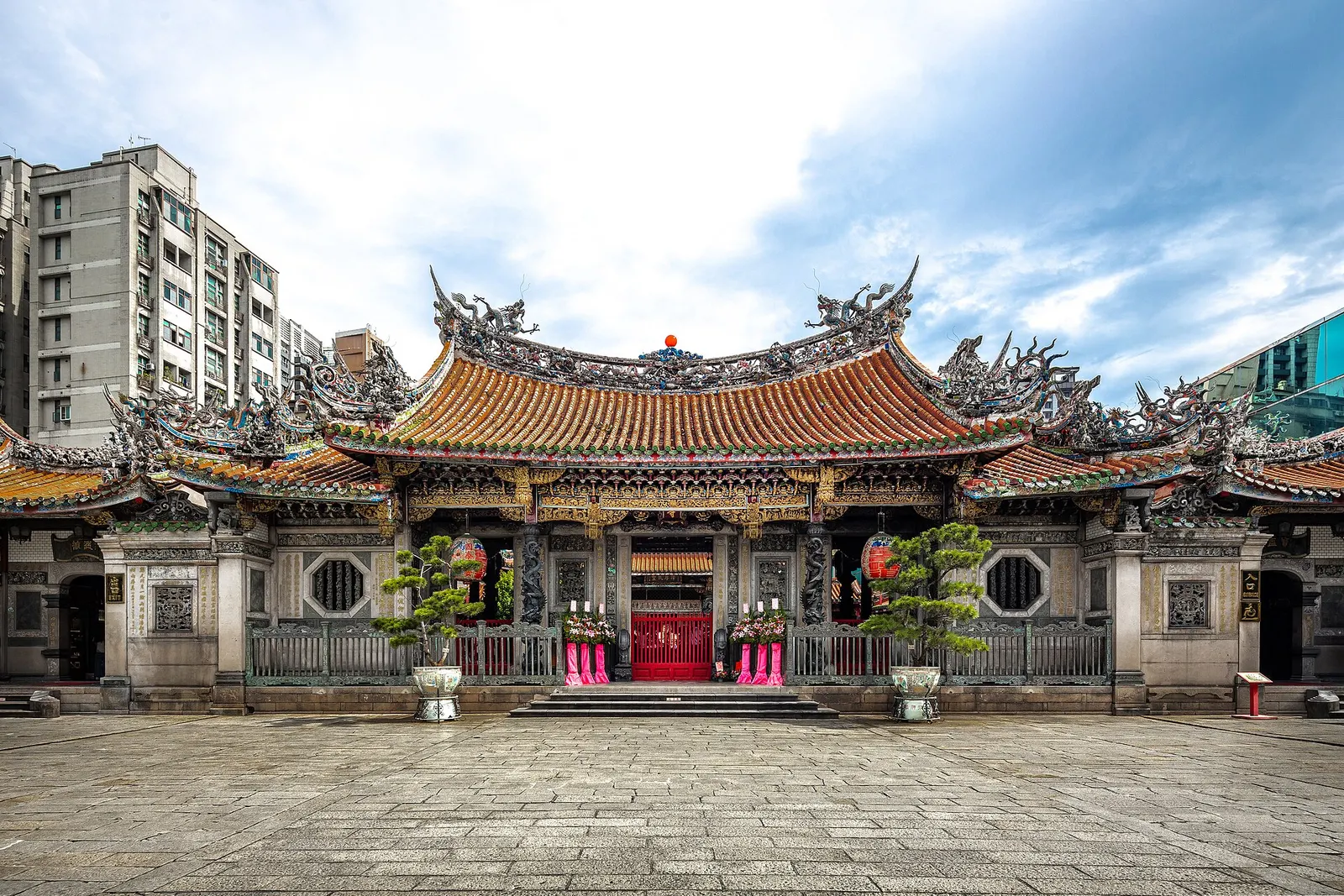
Constructed by settlers from Fujian in 1738, this venerable sanctuary survived wartime bombing and earthquakes to remain Bangka's spiritual heart. The compound displays ornate bronze dragon pillars, swept eaves adorned with porcelain carvings, and chambers honouring Buddhist, Taoist, and folk deities. We encourage visitors to observe the wood carvings.
Bopiliao Historic Block
This preserved laneway functioned as a major timber and trading corridor during the Qing Dynasty before undergoing urban restructuring under Japanese rule. Today, the continuous red-brick arcades, Western classical facades, and narrow alleys house cultural exhibitions. The district allows visitors to trace Taipei's development across distinct imperial regimes.
Bangka Qingshan Temple
Founded in 1856 to ward off an epidemic, this intimate temple remains dedicated to the King of Qingshan. The compact interior contains octagonal ceiling caissons, intricate stone reliefs, and solemn figures of judicial underlings. It serves as the centrepiece of an annual night patrol parade through the streets of Wanhua.
Bangka Qingshui Temple
Built in 1787 by Anxi migrants, this temple honours the monk Qingshui Zushi, credited with providing rain during droughts. The front hall features original stone columns, antique lintels, and timber joinery that survived local clan warfare. Its weathered wooden doors and muted courtyard evoke the atmosphere of late-eighteenth-century Bangka.
Herb Lane
Adjacent to Lungshan Temple, this covered alley developed around traditional medicine practices when devotees sought remedies prescribed by temple oracles. Today, dozens of family stalls stock fresh and dried medicinal plants, wild roots, and aromatic leaves. Visitors can sample cooling bitter herbal teas brewed according to generations-old family recipes.
Red House
Designed by Japanese architect Kondo Juro in 1908, this civic landmark features an octagonal main hall paired with a cruciform rear market. It operated as a fresh market, theatre, and cinema before becoming an arts venue and creative hub. The structure displays Dutch-influenced red brickwork and exposed steel roof trusses.
Taipei North Gate
Formally named Cheng'en Gate, this 1884 portal is the only Qing city gate in Taipei to retain its original defensive design. Its heavy stone base, red-painted timber blockhouse, and arched aperture shielded soldiers during potential sieges. It now stands as an open civic monument between Bangka and the railway station.
Futai Street Mansion
Erected in 1910 as the headquarters of a Japanese construction firm, this building is a rare European-style commercial residence surviving from the colonial period. It features a rusticated stone arcade on the ground level, timber-framed dormers, and a mansard roof. The interior functions as a local photography and heritage museum.
National Taiwan Museum
Established in 1908, this is the oldest natural history museum on the island, housed in a grand neoclassical edifice completed in 1915. The exterior features Doric porticos, while the central hall boasts Corinthian marble columns and an ornate stained-glass skylight. The galleries focus on indigenous anthropology, regional flora, and native fauna.
Huaxi Street Tourist Night Market
Recognised by its traditional Chinese arched gateway and red lanterns, this covered corridor was Taiwan's first tourist night market. The arcade has evolved from an eclectic medicinal district into a centre for heritage street foods, foot reflexology, and soup parlours. Long-established stalls prepare regional specialities including braised pork rice and herbal stews.
Dadaocheng Cisheng Temple
Dedicated to the sea goddess Mazu, this historic temple traces its origins to 1866 and serves as a vital community anchor. The forecourt is lined with traditional food carts whose patrons dine on plastic stools beneath broad banyan trees. Inside, visitors can examine fine stone carvings, historical plaques, and detailed roof pottery.
Taipei Confucius Temple
Built during the late 1920s to replace an earlier razed structure, this complex models classic Southern Fujianese temple architecture without excessive ornamentation. In line with Confucian modesty, the halls feature plain wooden surfaces, no carved deities, and memorial tablets instead of statues. The Dacheng Hall contains a balanced hip-and-gable roof structure.
Baoan Temple
Recognised by UNESCO for heritage preservation, this sanctuary honours the medical deity Baosheng Dadi and dates originally from 1804. Master craftsmen competed during past expansions, resulting in contrasting wood carvings, stone dragons, and murals across opposing wings. The temple grounds host folk arts performances during its annual cultural festival.
Didaojia (Dadaocheng Wharf)
This riverside embankment played a crucial role in northern Taiwan's nineteenth-century economy, serving as the port where camphor and tea departed for world markets. Now integrated into the riverside park system, it preserves commemorative anchors, dock structures, and public art. Travellers gather here at dusk to view river sunsets over the Sanchong district.
Dihua Street Historic District
Dating back to the 1850s, this thoroughfare preserves an extensive collection of historic shophouses displaying Baroque, classical, and Southern Fujian facades. The narrow, deep properties continue to trade dried marine goods, traditional Chinese herbs, and fine textiles. During Lunar New Year preparations, the corridor transforms into a historic seasonal provisions market.
Bangka Fude Temple
Dedicated to Tu Di Gong, this modest street-corner temple has anchored local merchant devotion for more than a century. The stone lintels, incense burners, and carved altar screens reflect traditional urban Taiwanese vernacular architecture. Local shopkeepers visit daily to make small offerings and pray for neighbourhood prosperity.
Taipei City Hall Former Building (MOCA Taipei)
Completed in 1921 as an elementary school for Japanese children, this symmetrical red-brick structure later served as the municipal government headquarters. It features classical bell towers, wooden colonnaded corridors, and sash windows. Today, it operates as the Museum of Contemporary Art, presenting rotating exhibitions within historic classrooms.
Beimen Post Office
Facing the North Gate, this structure was designed by Kuriyama Shunichi and finished in 1930 as the colony's primary postal hub. The facade combines classical proportions with functional modernist styling, featuring pale grooved tiles, simplified classical columns, and five-cornered arched windows. A postal museum within the lobby outlines the island's communication history.
Taipei Cinema Park
Occupying the site of the 1930s Taiwan Gas Corporation, this public park integrates industrial brick ruins with contemporary street art. The preserved chimney, brick storehouses, and concrete foundations now host outdoor film screenings and youth culture events. The grounds reflect Wanhua's evolution from heavy industry to leisure.
Ximending Mazu Temple
Originally constructed in 1746 in Bangka, this temple was relocated into a compact multistory footprint following municipal redevelopments. Its main hall contains gilded alters, elaborate carved beams, and venerable statuettes of the sea goddess Mazu. The entrance sits directly alongside modern retail outlets, forming a distinct urban contrast.
Dadaocheng, Dihua Street & Dalongdong Baoan Temple
Dihua Street Baroque Shophouses, Taipei Xia-Hai City God Temple, Dadaocheng Wharf, Lin Liu-Hsin Puppet Theatre Museum, Dalongdong Baoan Temple, Taipei Confucius Temple, and Taipei Fine Arts Museum
Dihua Street Baroque Shophouses
Developed during the late Qing Dynasty and expanded under Japanese rule, this merchant corridor retains multi-storey shophouses combining southern Fujianese brickwork with baroque pediments. Visitors can inspect classical pilasters, intricate stucco mouldings and deep interior courtyards originally engineered for drying herbs, spices and fabrics.
Taipei Xia-Hai City God Temple
Consecrated in 1859 by immigrants from Quanzhou, this compact sanctuary venerates the City God alongside Yue Lao, the deity of marriage and matchmaking. Despite its modest single-hall footprint, the interior features elaborate wooden beam carvings, historical incense burners and an extraordinarily dense concentration of statuary.
Dadaocheng Wharf
Operating as northern Taiwan's primary international tea and camphor port in the nineteenth century, this river landing opened local merchants directly to Western commerce. Today, riverside promenades and a full-scale replica of a traditional Chinese sailing junk commemorate the district's maritime mercantile heritage.
Tai Yuan Asian Puppet Theatre Museum
Housed within a restored multi-storey building near the river, this specialist repository displays thousands of carved wooden figures, shadow puppets and marionettes from Taiwan, China and Southeast Asia. The collection highlights the intricate needlework of miniature costumes and presents regular demonstrations of traditional hand-puppet opera.
Dalongdong Baoan Temple
Founded in 1742 and reconstructed in 1805, this religious complex honours Baosheng Dadi through monumental timber framing, stone dragon pillars and detailed roof ridges. Extensive conservation efforts earned the site a UNESCO Asia-Pacific Heritage Award, celebrating its historic wall murals painted by master artisan Pan Li-shui.
Taipei Confucius Temple
Modelled on the original temple complex in Qufu, this compound was completed in 1939 with southern Fujianese ceramic roof details. Unlike neighbouring folk temples, the halls deliberately omit deity statues, displaying instead simple ancestral tablets, antique musical instruments and unadorned architectural lines that reflect Confucian restraint.
Taipei Fine Arts Museum
Inaugurated in 1983 as Taiwan's first purpose-built public contemporary arts museum, the structure incorporates stacked cantilevered corridors inspired by traditional dougong timber brackets. The vast galleries present major retrospective exhibitions, permanent collections of modern Taiwanese painting and installations by leading international artists.
Cisheng Temple
Erected in 1866 and relocated to its present spot in 1910, this venerated Mazu temple forms one of the three principal religious anchors of Dadaocheng. In front of the ornate stone archway and temple courtyard, venerable banyan trees shade long rows of traditional breakfast and lunch vendors.
Chongxing Temple
Established during the late Qing Dynasty by local commercial guilds, this modest neighbourhood shrine reflects the domestic spiritual life of early port workers. The structure features fine granite masonry, hand-lettered wooden plaques donated by shipping merchants and delicate porcelain mosaic trims across the eaves.
Chen Tian-lai Residence
Built in the 1920s facing the river, this three-storey European-style villa served as the private estate of tea exporter Chen Tian-lai. The facade combines classical Greco-Roman columns, Corinthian capitals and open arcaded balconies, illustrating the immense wealth generated during Taiwan's international tea boom.
Li Chun Sheng Memorial Church
Constructed in 1937, this distinctive red-brick church honours Li Chun-sheng, an influential Christian entrepreneur and civic leader in Dadaocheng. The building exhibits a striking street-facing facade with rounded arched windows, geometric brickwork and an entrance deliberately designed to resemble human facial features.
Koo Hsien-jung Residence
This grand early twentieth-century mansion was established as the primary residence of business leader Koo Hsien-jung. Characterised by classical symmetry, arched verandas, decorative stone urns and refined Japanese-period joinery, the compound showcases the architectural fusion favoured by Taiwan's elite during the colonial period.
Taipei Story House
Constructed in 1914 by tea merchant Chen Chao-chun as a leisure retreat for hosting foreign guests, this timber-and-brick residence is unique across northern Taiwan. The building features mock-Tudor timber framing, curved rooflines, period English fireplaces and heritage gardens devoted to early twentieth-century lifestyle exhibitions.
Yuanshan Site
Discovered in 1897 by Japanese researchers, this prominent hill contains thousands of years of human habitation layers dating back to the Neolithic era. Excavations unearthed stone axes, carved bone implements and vast deposits of marine shells, offering crucial evidence about the early indigenous settlement of the Taipei Basin.
Lin An Tai Historical House and Museum
Dating to 1783 and meticulously reconstructed in Zhongshan District, this two-courtyard estate represents one of the finest surviving examples of Qing Dynasty domestic architecture in Taipei. The grounds incorporate curved swallowtail eaves, red floor tiles, ornamental moon gates and a serpentine pond flanked by scholars' pavilions.
Dalong Primary School
Founded in 1898 during the Japanese period, this venerable school stands adjacent to the Confucius Temple on historic educational grounds. Modern renovations have preserved its scholarly links through classical archways, heritage displays and architectural motifs reflecting the deep literati traditions of the Dalongdong settlement.
Sishilikan
Built in the early nineteenth century by the Tong Ji Guild, this street development originally consisted of forty-four linked shophouses surrounding Baoan Temple. While mostly modernised today, historical boundary markers and preserved residential details highlight the early planning of Dalongdong as a self-contained scholarly and merchant hub.
Wang Hsieh Fa Tea Company
As one of the earliest tea processors in Dadaocheng, this establishment preserves original timber roasting frames, sorting trays and balance scales. The elongated interior layout demonstrates the classic functional flow of nineteenth-century tea shophouses, moving from street-side trading desks to expansive roasting rooms at the rear.
Sin Hong Choon
Built in 1934, this landmark shophouse served simultaneously as a processing factory, counting house and family home for tea merchant Wang Lian-he. The restored complex features exposed red-brick walls, preserved charcoal roasting pits, drying machinery and archival exhibits documenting northern Taiwan's historical tea production.
AMA Museum
Established by the Taipei Women's Rescue Foundation, this museum occupies a converted historic building in Datong District. The space displays personal testimonies, documentary photography, art installations and historical archives, preserving the memories of Taiwanese comfort women while advocating for human rights and gender equality.
Zhongzheng Civic Core, Huashan 1914 & Yongkang Street
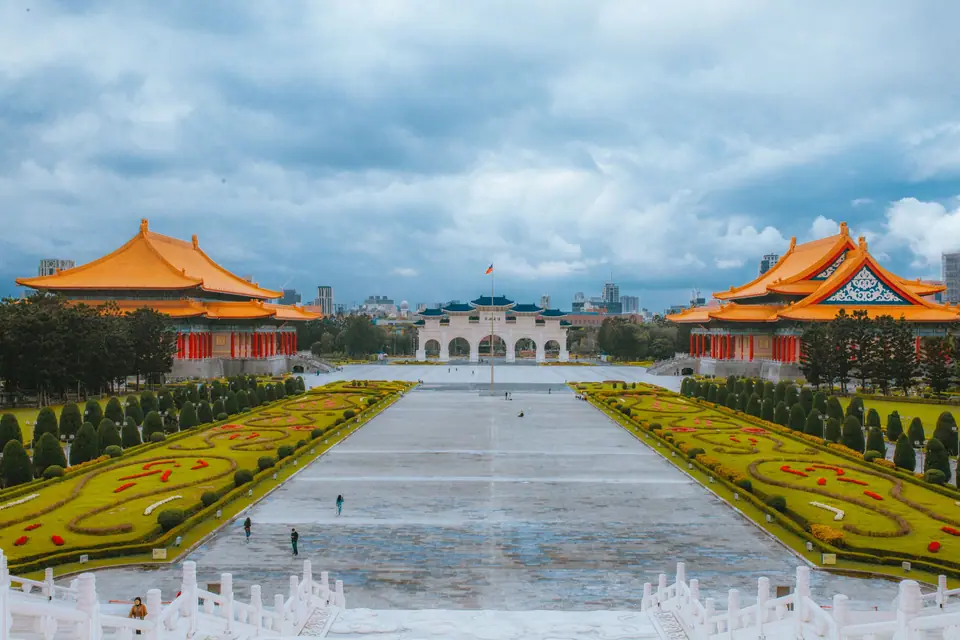
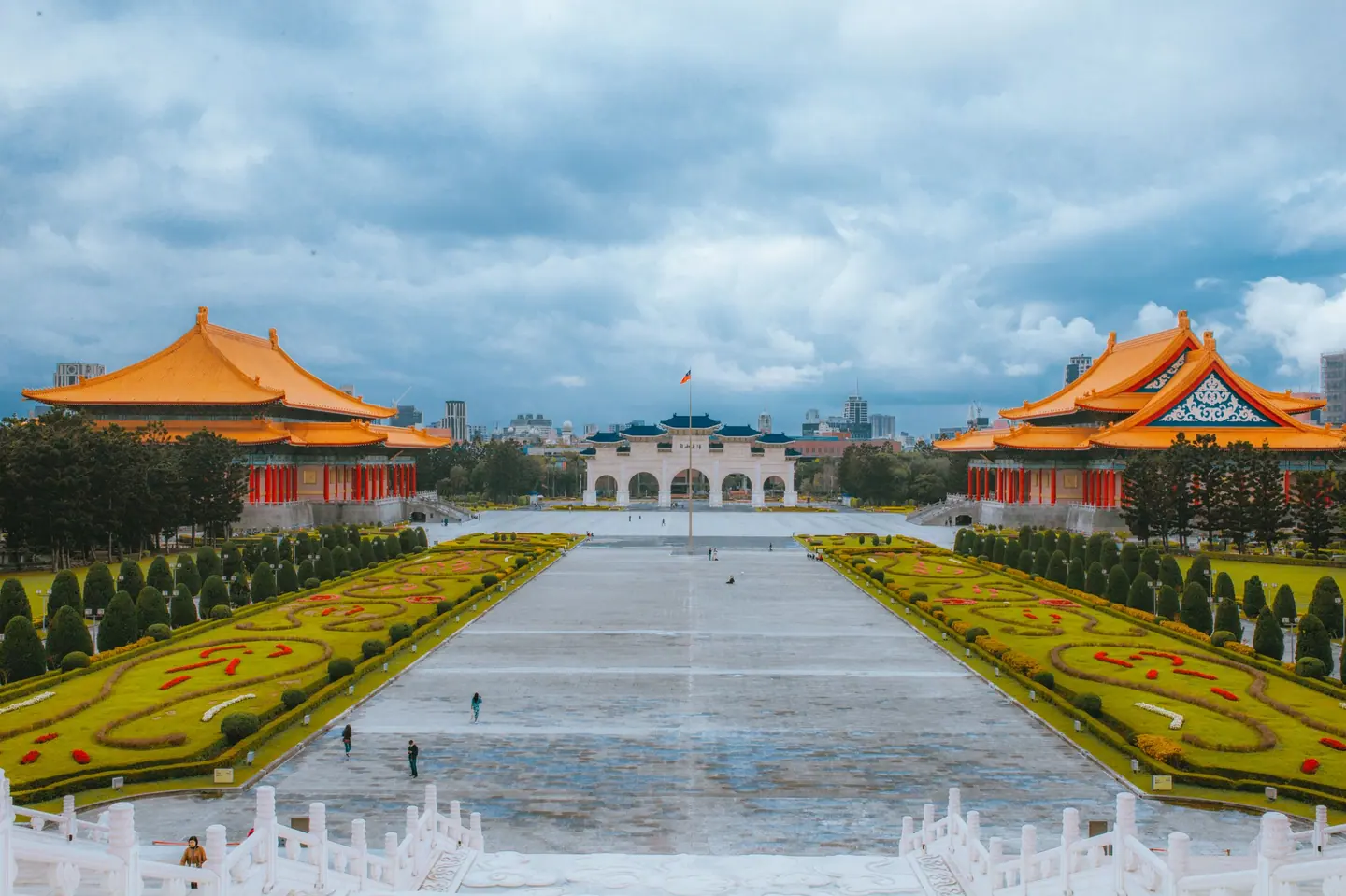
Presidential Office Building, 228 Peace Memorial Park, Chiang Kai-shek Memorial Hall, National Theater and Concert Hall, Huashan 1914 Creative Park, Yongkang Street, Daan Forest Park, and Jianguo Jade & Flower Market
Presidential Office Building
Completed in 1919 as the Office of the Governor-General of Taiwan, this imposing red-brick edifice displays Renaissance and Baroque revival elements. Designed by architect Uheiji Nagano, the structure features a central tower rising sixty metres above the civic district. We observe colonnaded loggias and classical pediments that reflect early twentieth-century Japanese imperial administrative architecture.
228 Peace Memorial Park
Originally laid out in 1900 as Taihoku New Park, this green expanse was renamed to honour victims of the 28 February incident. The grounds encompass traditional pavilions, Japanese ornamental ponds, and a modern tiered monument designed by Cheng Tzu-tsai. Visitors can explore peaceful footpaths alongside shaded groves that played an integral role in post-war civic history.
National Taiwan Museum
Founded in 1908, the central hall presents striking Greek Doric columns and a classical pediment topped by a high stained-glass cupola. The interior displays rich natural history collections, indigenous ethnographic artifacts, and geological specimens. It stands as an exceptional example of neoclassical civic architecture from the Japanese colonial period.
Chiang Kai-shek Memorial Hall
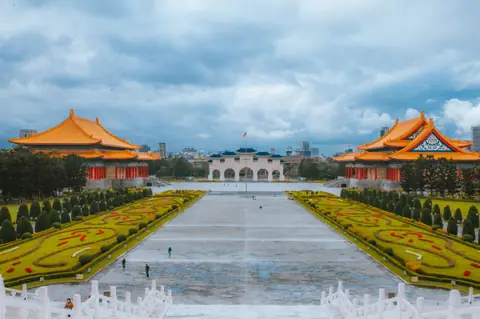
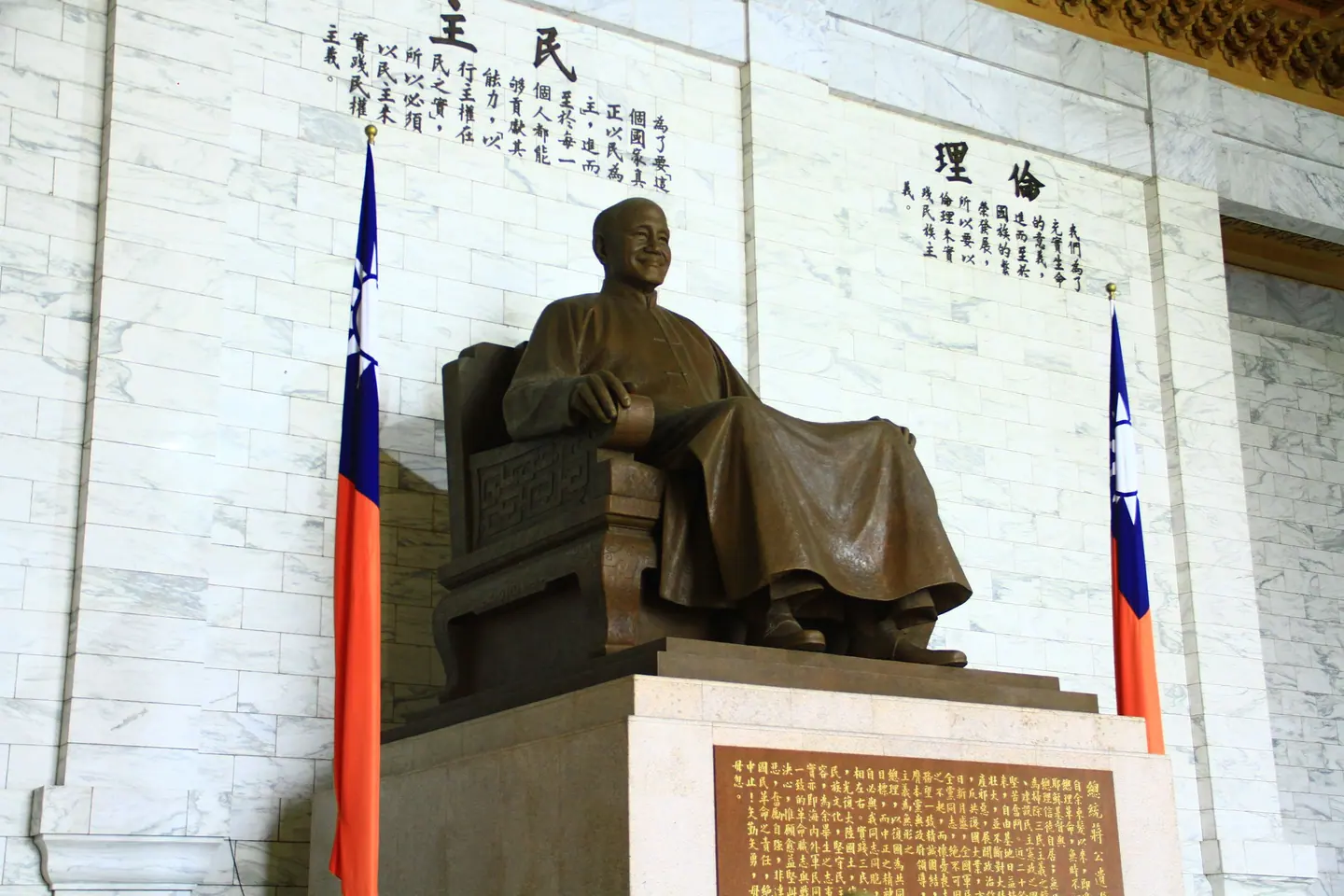
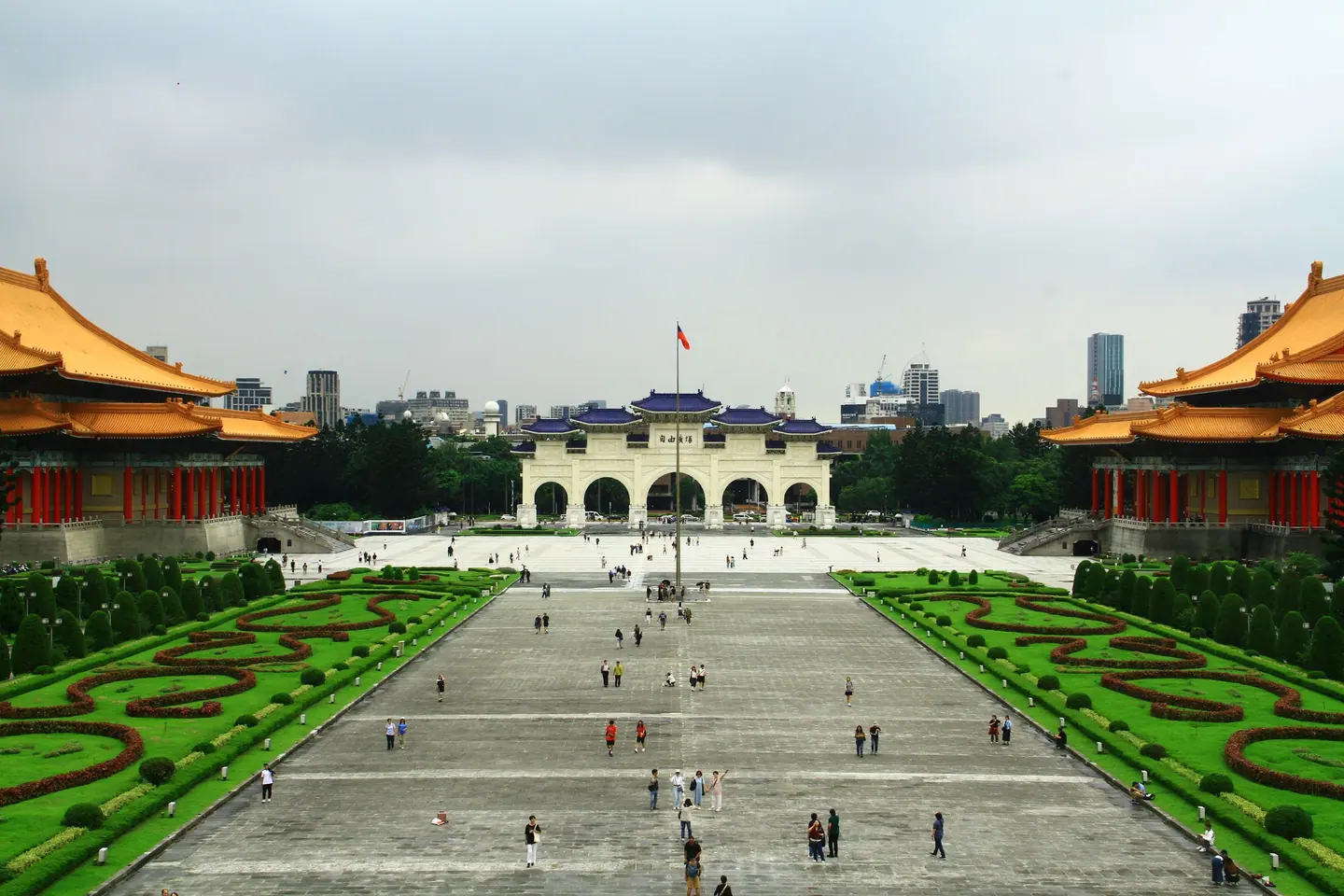
Erected in 1980, this vast national monument rises seventy-six metres above an open ceremonial plaza. Designed by architect Yang Cho-cheng, the octagonal roof draws inspiration from the Temple of Heaven in Beijing. The main chamber houses an imposing bronze statue flanked by guards, with exhibition halls positioned on the lower level.
National Theater
Standing opposite the Concert Hall on Liberty Square, this grand venue opened in 1987 with sweeping hip-and-gable roofs and glazed yellow tiles. The exterior echoes traditional Ming and Qing architectural forms, supported by crimson columns and ornamental bracket sets. It hosts classical opera, orchestral performances, and theatrical productions throughout the year.
National Concert Hall
Constructed alongside its twin theatre, the Concert Hall features a classical Chinese palace roof covered in glazed yellow tiles. Inside, acoustic planning surrounds a massive pipe organ crafted by the Dutch manufacturer Flentrop. The hall serves as the premier stage in the capital for symphonic music and chamber recitals.
Huashan 1914 Creative Park
Established in 1914 as a private sake brewery, this complex later became a state-owned fruit-wine factory before its industrial abandonment. The site was preserved in the late 1990s and transformed into an arts centre featuring performance spaces, design workshops, and galleries. Weathered concrete walls, red-brick chimneys, and sawtooth roofs provide distinctive industrial character.
Yongkang Street
Extending south from Xinyi Road, this thoroughfare developed from quiet residential quarters for university professors into a celebrated food district. The street gained international fame as the original birthplace of Din Tai Fung steamed dumplings and shaved mango ice. Shaded lanes branching off the main avenue reveal specialty tea shops, ceramic galleries, and antique stores.
Daan Forest Park
Spanning nearly twenty-six hectares, this municipal park opened in 1994 following extensive civic urban renewal. The grounds contain shaded walking paths, open grass lawns, an outdoor amphitheatre, and an ecological pond frequented by herons and egrets. The park functions as a major green corridor connecting surrounding residential and commercial neighbourhoods.
Jianguo Holiday Flower Market
Operating beneath the Jianguo Elevated Road on weekends, this covered marketplace stretches for several city blocks. Vendors gather to sell orchids, bonsai trees, exotic ferns, gardening equipment, and ceramic planters. The market provides a rare civic gathering space where local horticulturists display seasonal blooms and rare botanical varieties.
Jianguo Jade Market
Situated adjacent to the flower market, this long covered pavilion hosts hundreds of stalls dedicated to carved jade, semi-precious stones, and traditional curios. Collectors examine bangles, pendants, bead strings, and antique coins under specialised illumination. It represents one of the largest specialist gem trading centres in East Asia.
Taipei Guest House
Constructed in 1901 as the residence for Japanese governors, this opulent mansion displays French Renaissance architecture with mansard roofs, Corinthian pilasters, and Baroque ornamentation. The interior features carved fireplaces, crystal chandeliers, and gold leaf mouldings alongside an authentic Japanese garden at the rear. It remains in official use for state banquets and diplomatic receptions.
Jing-Si Books and Cafe
Affiliated with the Tzu Chi Buddhist Compassion Relief Foundation, this civic space near Huashan offers a quiet study environment and book collection. The interior uses minimalist bamboo furnishings, natural timber, and soft lighting to promote reflection. Visitors can browse philosophical volumes while enjoying organic herbal teas cultivated on local estates.
Taipei Prison Wall Remains
Erected in 1910 during the Japanese colonial era, these stone walls were constructed using salvaged blocks from the dismantled Taipei city wall. The prison held political dissidents during both colonial rule and the subsequent post-war period before its eventual demolition. Two long segments of masonry survive along Aiguo East Road as quiet historic monuments.
Judicial Yuan Building
Designed by architect Ide Kaoru and completed in 1934, this civic structure served as the High Court during Japanese rule. The exterior exhibits a light-green ceramic tile facade accented with classical cornices, arched windows, and an octagonal central dome influenced by Byzantine styles. Today it continues to serve as the headquarters of the constitutional judiciary.
Taipei City Hall Former Council Building
Situated close to the central railway axis, this historic site housed the early post-war municipal council and municipal offices. The area reflects the transition from colonial civic management to modern urban governance in the second half of the twentieth century. Surrounding avenues preserve administrative buildings that shaped the modern layout of the capital.
Qidong Street Japanese Houses
Built during the 1920s to 1940s, this collection of single-storey timber residences housed mid-level Japanese civil servants. The buildings feature traditional raised tatami rooms, sliding shoji screens, exterior clapboard siding, and black ceramic roof tiles. Carefully restored by heritage authorities, the complex now functions as Taiwan Literature Base with reading rooms and gardens.
Jinan Presbyterian Church
Designed by Ide Kaoru and dedicated in 1916, this Anglican-influenced Presbyterian sanctuary features exposed red brickwork, stone trimmings, and pointed-arch leaded windows. The high timber hammerbeam roof truss system provides remarkable structural interest inside the nave. The church remains an active place of Christian worship and a recognised municipal heritage site.
Museum of Medical Humanities
Completed in 1916 as the College of Medicine under architect Juro Kondo, this refined building features red-brick walls, Doric porticoes, and symmetrical twin pediments. The rooms now present historical medical instruments, anatomy exhibits, and records of tropical disease eradication in Taiwan. It documents the introduction of Western scientific education to the island.
South Gate of Taipei
Constructed in 1884 as Lizheng Gate, this southern entryway formed the most heavily fortified gate of the walled city of Taipei. The original Qing dynasty stone foundation was spared during colonial municipal expansions, though the upper pavilion was rebuilt in a northern Chinese palace style in 1966. It now stands as an island of history amidst a central traffic roundabout.
Xinyi District, Taipei 101, Songshan & Raohe
Sun Yat-sen Memorial Hall, Songshan Cultural and Creative Park, Taipei 101 Observatory, Four Four South Village, Xiangshan Elephant Mountain Trail, Songshan Ciyou Temple, and Raohe Street Night Market
Taipei 101 Observatory
Designed by C.Y. Lee, this landmark skyscraper evokes a stepped pagoda composed of eight structural segments. Visitors ascending to the high indoor viewing deck can observe the massive 660-tonne tuned mass damper suspended inside the tower core to counteract seismic tremors and typhoon winds.
National Sun Yat-sen Memorial Hall
Completed in 1972 by architect Wang Ta-hung, the memorial features a soaring golden-tiled roof inspired by traditional Tang dynasty palatial pavilions. The main lobby houses a massive bronze statue of Sun Yat-sen flanked by ceremonial guards, while the surrounding Zhongshan Park contains landscaped lotus ponds.
Songshan Cultural and Creative Park
Constructed in 1937 as the Matsuyama Tobacco Plant, this complex exemplifies industrial modernism with long functional corridors and courtyard gardens. Today the refurbished warehouses stage international art exhibitions and independent craft markets, while the Baroque garden retains original stone fountains and timber pavilions.
Four Four South Village
This former settlement housed workers from the 44th Arsenal and their families following the nationalist retreat in 1949. The low-rise concrete duplexes and sloped grass knolls now host the Xinyi Assembly Hall, preserving community photographs, vintage household implements, and simple mid-century domestic interiors.
Xiangshan Trail
Rising to an elevation of 183 metres, this forested sandstone ridge belongs to the Four Beasts Mountain range. The well-paved stone staircase leads past dense ferns and bamboo groves toward several lookout platforms, including the Six Giant Rocks, where hikers view the entire Xinyi basin.
Songshan Ciyou Temple
Founded in 1753 along the Keelung River, this six-level temple complex honours Mazu with elaborate southern Chinese architecture. The ornate roof ridge displays colourful porcelain mosaics depicting flying dragons and Taoist immortals, while the interior halls feature stone guardian lions and heavy incense cauldrons.
Raohe Street Night Market
Marked by an ornate pailou gateway beside Ciyou Temple, this linear pedestrian thoroughfare stretches 600 metres along an ancient river trading route. Food stalls prepare pepper pork buns baked against the walls of cylindrical clay ovens, herbal rib soups, and shaved ice desserts beneath illuminated red lanterns.
Rainbow Bridge
Opened in 2007, this steel footbridge links the Neihu and Songshan districts without river piers to ensure smooth water flow. Supported by four curved structural ribs and steel cables, the bright red deck provides access to waterfront cycling paths and is illuminated by colour-changing lights after dusk.
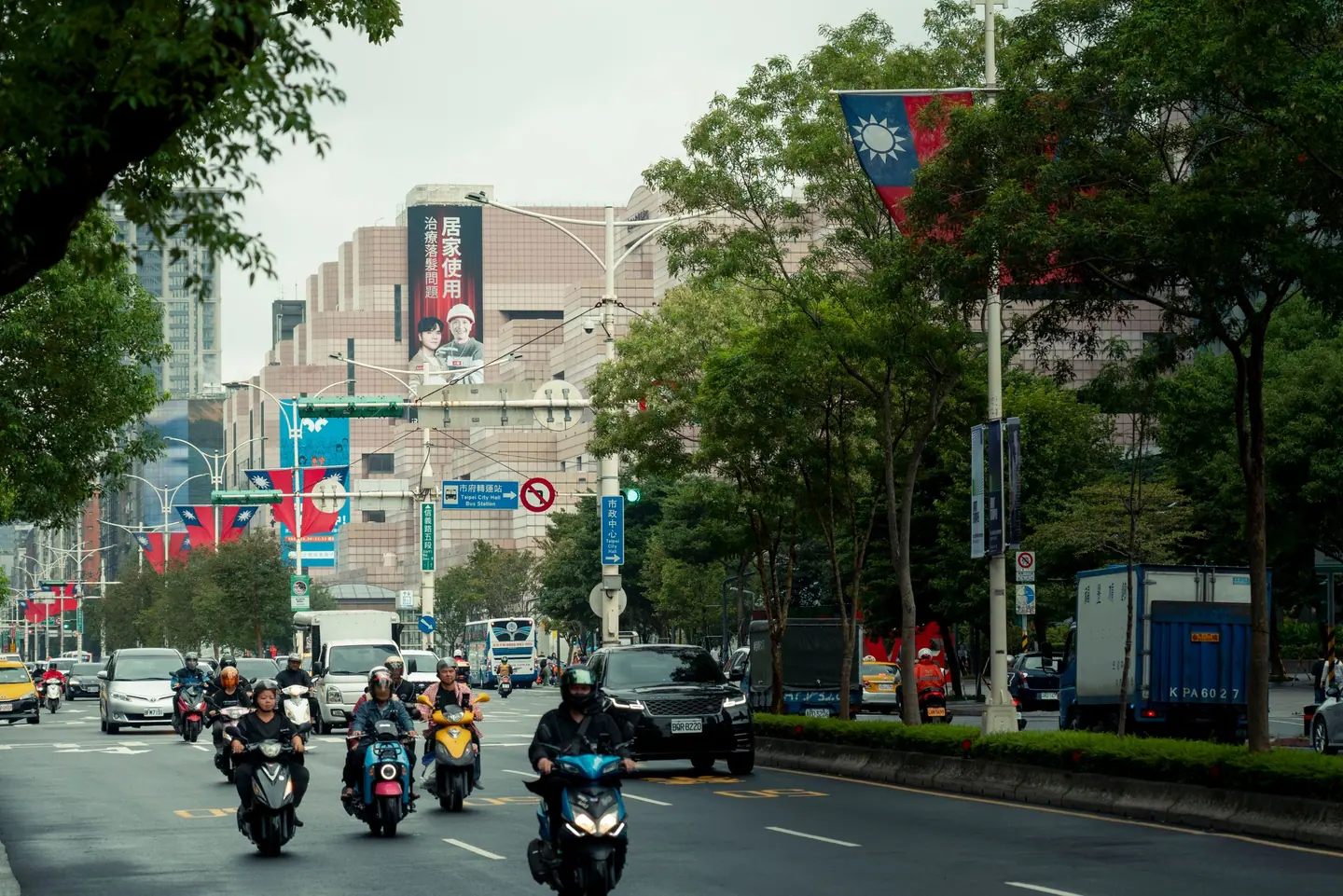
Taipei City Hall
Constructed in 1994, this low-rise complex serves as the civic centre of local government and features a massive cross-shaped layout. The open public atrium displays temporary civic exhibitions, while the vast paved square outside regularly hosts large outdoor events, cultural festivals, and community celebrations.
Discovery Center of Taipei
Located inside the Taipei City Hall complex, this municipal gallery documents the urban transformation of the Taipei basin from aboriginal wetlands to modern metropolis. Interactive exhibits include scale architectural models, historic riverboat replicas, and a circular theatre with a 360-degree rotating screen showing civic growth.
Taipei International Convention Center
Completed in 1989 as part of the Taipei World Trade Center complex, this sprawling granite structure hosts global summits and cultural performances. The venue features an expansive multi-tiered plenary hall, polished marble lobbies, and monumental calligraphic panels reflecting late twentieth-century Taiwanese commercial expansion.
Taipei World Trade Center
Established in 1986 to facilitate international commerce, the complex includes an enormous exhibition hall covered by a pink tile facade and pyramidal skylights. The cavernous ground floor accommodates heavy trade machinery, while elevated interior balconies overlook international product showcases and regional design competitions.
Taipei Dome
Engineered with a titanium-panelled roof, this contemporary indoor arena was built to host professional baseball matches and international concerts. The surrounding civic concourse integrates open pedestrian plazas, underground transit links, and landscaped paths that connect smoothly with neighbouring heritage tobacco warehouses.
Taiwan Design Museum
Established inside the preserved Songshan industrial district, the museum showcases contemporary Taiwanese graphic arts, industrial design, and packaging innovations. The galleries utilize natural light through classic sash windows and retain the original factory concrete floors, juxtaposing minimalist displays against historical Japanese architecture.
Songshan Presbyterian Church
Traced back to missionary efforts initiated by George Leslie Mackay in 1875, this community church stands near the Keelung riverbank. The modern multi-storey sanctuary features a tall belfry and simple stained-glass windows, serving generations of local residents while documenting Mackay's medical and evangelical work.
Songshan Station Public Art Square
Rebuilt during the underground railway project, this multimodal transport terminal serves rail and metro passengers beneath Raohe Street. The central underground concourse displays the river-stone sculpture titled Dome of Light, created with thousands of LED light strings suspended in organic, rippling patterns above.
Xinyi Plaza
Situated directly across from Taipei 101, this green open space provides shade amidst the steel skyscrapers of the central business district. Sculptural stone fountains, neat lawns, and pedestrian promenades make it a popular resting area for office workers and travellers studying local contemporary architecture.
Yongchunpi Wetland Park
Originally an ancient reservoir drained for military barracks, this four-hectare park was revived by the city into a sustainable wetland sanctuary. Wooden boardwalks traverse reclaimed marshland, sediment ponds, and native aquatic plantings that attract migratory waterfowl and local damselflies against the backdrop of the Four Beasts.
Fude Temple of Songshan
This neighbourhood shrine honours Tudigong, the local protector of prosperity and community security. Although small in comparison to the nearby Ciyou Temple, it exhibits finely carved stone dragon columns, decorative ceramic ridge sculptures, and active incense tables where residents offer fruit and daily prayers.
Hushan Nature Trail
Following the course of the Hushan Creek, this verdant nature trail climbs the slopes of Tiger Mountain on the eastern fringe of Xinyi. Paved paths meander past stone bridges, restored stream beds that host fireflies in spring, and tranquil viewpoints overlooking the Songshan rail corridor.
National Palace Museum, Beitou Hot Springs & Tamsui Port
National Palace Museum, Zhishan Garden, Grand Hotel Taipei Yuanshan, Shilin Official Residence, Beitou Thermal Valley, Beitou Hot Spring Museum, Beitou Public Library, Fort San Domingo Tamsui, and Fisherman’s Wharf Lover’s Bridge
National Palace Museum
Housing nearly seven hundred thousand ancient imperial treasures, this palatial museum safeguards centuries of dynastic craftsmanship relocated from Beijing. The traditional Chinese palace architecture features ornate glazed roof tiles and cavernous galleries displaying jade carvings, bronzes, and calligraphic scrolls. Visitors should seek out the delicate Qing dynasty jadeite cabbage and ancient ritual cauldrons.
Zhishan Garden
Spread across the grounds beside the National Palace Museum, this landscaped retreat evokes the aesthetic principles of master calligrapher Wang Xizhi. Winding covered walkways link traditional wooden pavilions, lotus ponds, and carp-filled waterways beneath weeping willows. The tranquil layout provides an instructive companion to the Chinese landscape paintings exhibited within the neighbouring museum.
Shilin Official Residence
This verdant estate served as the official home of President Chiang Kai-shek and his wife Soong Mei-ling from 1950 until his death. The complex combines a two-storey Western-style residence with manicured European rose beds and classical Chinese courtyard gardens. The interior displays period reception rooms that illustrate mid-century diplomatic hospitality in Taiwan.
Grand Hotel Taipei
Commissioned by Madame Chiang Kai-shek on the slopes of Yuanshan, this monumental red landmark ranks among the largest classical Chinese palatial structures built in modern times. Vermilion pillars, gilded ceilings, and tiled eaves emulate Beijing's imperial halls. Beneath the structure, secret escape tunnels built during the Cold War era extend through the mountain hillside.
Yuanshan Site
Recognised as an important prehistoric site in northern Taiwan, this archaeological zone preserves extensive shell middens dating back several thousand years. Excavations on the hill revealed Neolithic stone adzes, pottery shards, and burial remains from distinct cultural phases. Explanatory plaques and preserved outdoor strata highlight the early human habitation of the Taipei Basin.
Beitou Hot Spring Museum
Erected in 1913, this Victorian-style brick and timber bathhouse was once the largest public thermal bath in East Asia. The building features an elegant ground-floor Romanesque pool bordered by stained-glass windows, alongside second-storey tatami relaxation halls. Exhibits detail the development of local hot spring culture during the Japanese colonial era.
Taipei Public Library Beitou Branch
Constructed from sustainable wood inside Beitou Park, this green building resembles a large wooden vessel anchored amidst thermal waters. Sloping timber balconies collect rainwater and maximise natural ventilation while extensive rooftop solar arrays generate power. Inside, large reading tables overlook lush tree canopies and steam rising from the nearby stream.
Thermal Valley
Also known as Hell Valley, this natural depression emits dense clouds of sulphuric steam from boiling thermal springs that reach temperatures of ninety degrees Celsius. The green sulphur waters deposited the rare radioactive mineral hokutolite along the stream bed. Protected boardwalks permit visitors to observe the bubbling turquoise pool safely from designated viewpoints.
Puji Temple Beitou
Constructed in 1905 by railway workers, this well-preserved Japanese wooden temple represents the Shingon Buddhist tradition. The structure showcases classic Japanese hip-and-gable roofing, sliding shoji screens, and unpainted black timber walls. The hall enshrines the Hot Spring Guanyin, traditionally venerated by bathhouse operators and local bathers for protection.
Plum Garden
This 1930s residence served as the summer retreat of notable calligrapher and statesman Yu You-ren. Combining Japanese sukiya-zukuri timber construction with Western reinforced concrete basements, the villa overlooks Beitou Stream. Inside, well-preserved tatami rooms showcase examples of Yu's standard cursive script alongside historic architectural features.
Marshal Zen Garden
Built during the 1920s as a high-ranking Japanese officers club, this wooden complex later served as the place of house arrest for Chinese general Zhang Xueliang. The terraced wooden buildings sit high on the hillside, surrounded by bamboo groves and tranquil footbaths. Exhibits outline the general's political history and his decades spent living quietly in Beitou.
Fort San Domingo
Originally constructed by Spanish colonists in 1628 and rebuilt in stone by the Dutch East India Company, this red-walled fortress commands the mouth of the Tamsui River. The thick masonry walls house deep cellars and four corner bastions, fronted by vintage British iron cannon. The compound provides extensive views across the water to Mount Guanyin.
Former British Merchant Warehouse Tamsui
Constructed following the Treaty of Tientsin, this maritime complex served the nineteenth-century international tea and camphor trade. The site preserves a stone wharf wall, wooden mooring posts, and two brick storage warehouses alongside an old customs officer post. Visitors can walk along the waterfront quay where Western steamers once docked to unload cargo.
Fort Hobe
Erected by Qing governor Liu Mingchuan following the Sino-French War in 1886, this coastal artillery fort defended the strategic entrance to Taipei. Heavy earthen berms surround a central parade ground, concealing brick ammunition magazines and deep tunnel networks beneath grassy mounds. An engraved stone doorway bearing Liu's calligraphy marks the entrance to the interior courtyard.
Mackay Memorial Hospital Tamsui
Established in 1879 by Canadian Presbyterian missionary George Leslie Mackay, this brick building operated as northern Taiwan's pioneer Western medical institution. The structure blends southern Fujianese roof eaves with Western arched verandas and shuttered windows. Inside, displays preserve Mackay's early surgical and dental instruments alongside photographs of medical outreach campaigns.
Aletheia University
Founded in 1882 as Oxford College, this educational institution is one of Taiwan's oldest modern colleges. Mackay designed the primary hall with traditional Taiwanese red tiles and pagoda-shaped vent caps combined with Western symmetry and brickwork. The surrounding campus features mature camphor trees, manicured ponds, and nineteenth-century missionary residences.
Tamsui Longshan Temple
Founded in 1858 by immigrants from Quanzhou, this historic sanctuary stands recessed within the historic commercial lanes of Tamsui. The temple displays classic Minnan craftsmanship, including swallowtail roofs, detailed stone dragon columns, and polychrome wood carvings across the main hall. Surviving imperial plaques presented by Qing authorities commemorate historic military defenses of the port.
Tamsui Old Street
Tracing the original riverfront of the historic trading port, this pedestrian street contains century-old shophouses with traditional brick facades. Vendors sell regional food specialities such as iron eggs and fish crisps alongside tea shops. Walking toward the water allows travellers to experience the river breezes that have drawn visitors here for generations.
Lover's Bridge of Tamsui
Inaugurated in 2003 at the mouth of the Tamsui River, this graceful white pedestrian bridge mimics a ship's sail catching the wind. The structure spans 164 metres across the inner harbour basin, offering panoramic vantage points over bobbing fishing boats and the open Taiwan Strait. Illuminated at night, the walkway links seaside boardwalks and open-air seafood markets.
Tamsui Fisherman's Wharf
Originally an active fishing port on the northern bank of the river mouth, this harbour now integrates working marine facilities with broad public walkways. A wooden boardwalk stretching hundreds of metres allows travellers to view the setting sun over the ocean. Moorings house modern motorboats and small trawlers against a backdrop of coastal mountain peaks.
MRT Lines, Hot Spring Valleys and Night Markets in Taipei
You can combine these stops with the district-by-district where-to-stay notes and seasonal planning tables on our Taipei destination page, or explore further regional and neighbourhood guides.