A detailed Black Sea and Pontic Alps route through the Empire of Trebizond capital, cliff-clinging Sumela Monastery in Altındere Valley, Ortahisar, and Uzungöl.
Milesian Trapezus, the Empire of Trebizond and the Tabriz Silk Road Terminus
Founded around 756 BC as Trapezus by Milesian Greek colonists from Sinope on a table-shaped plateau (trapeza) between two deep ravines overlooking the southeastern Black Sea, the port is famously where Xenophon and the Ten Thousand Greek mercenaries shouted Thalatta! Thalatta! (The Sea! The Sea!) upon reaching the coast from Persia in 400 BC. From 1204 to 1461 Trabzon served as the imperial capital of the Komnenian Empire of Trebizond, leaving behind late-Byzantine frescoes at Trabzon's Hagia Sophia and the cliff-face monastery of Panagia Soumela.
Captured by Sultan Mehmed II in 1461 and later governed by Prince Selim (Yavuz Sultan Selim) and the birthplace of Suleiman the Magnificent in 1494, Trabzon remained the northern terminus of the Tabriz-Trebizond Silk Road.
Ortahisar Walled Citadel, Gülbahar Hatun & Meydan
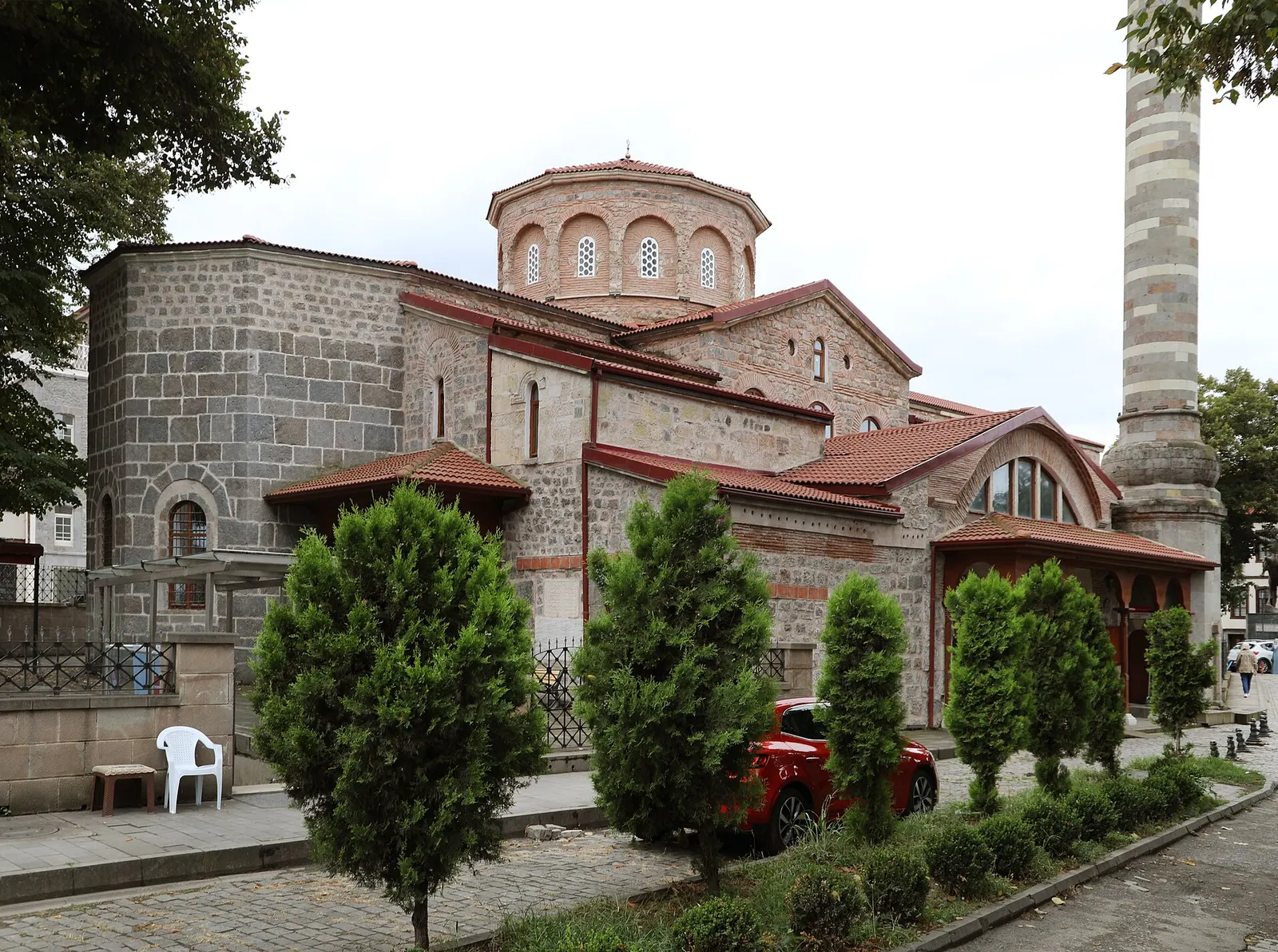
Trabzon Meydan Park (1950 Atatürk Monument by Hüseyin Anka Özkan), Ortahisar Fatih Mosque (Former Panagia Chrysokephalos Cathedral), Trabzon City Walls & Zağnos Valley Bridge, Trabzon Museum (Kostaki Mansion), Gülbahar Hatun Mosque and Tomb (1514), Tabakhane Bridge, and Kanuni House.
Ortahisar Fatih Mosque
Originally consecrated as the Panagia Chrysokephalos Church, this commanding stone structure served as the primary cathedral of the Empire of Trebizond. Mehmed II converted the building into a mosque following the Ottoman capture of the city in 1461. The interior retains basilican proportions, vaulted ceilings, and remnants of Byzantine marble flooring beneath modern carpets.
Trabzon City Walls
Extending from the Black Sea coast up to the inland bluffs, these imposing ramparts reflect Roman, Byzantine, and Komnenian construction phases. Deep ravines on either flank provided natural defences, which stone masons reinforced with squared ashlar bastions. Walking past the parapets reveals centuries of layered stonework, defensive gateways, and reclaimed Roman inscription stones built directly into the curtains.
Zağnos Bridge
Constructed over a Roman foundation, this single-span stone bridge was extensively rebuilt during the fifteenth century by Zağnos Pasha. It connects the walled Middle Citadel to the western quarter across the deep Zağnos Valley. The massive arches and heavy ashlar piers remain an impressive testament to late medieval engineering.
Tabakhane Bridge
Spanning the dramatic Kuzgun ravine along the eastern flank of Ortahisar, this multi-arched bridge dates from the Roman and Byzantine periods, with extensive Ottoman restorations. It historically accommodated transport from the civic centre into the tanners quarter below. The lofty perspective from the parapet provides a clear view of the deep natural trenches that protected medieval Trabzon.
Trabzon Museum
Housed within the Kostaki Mansion, this grand residence was built for a Greek banker in the early 1900s using imported Italian marble and Art Nouveau fixtures. The basement and lower levels display archaeological finds spanning Bronze Age axes to Classical amphorae. The upper residential salons showcase painted ceiling frescoes, gilded woodwork, and period ethnographic furnishings.
Gülbahar Hatun Mosque
Commissioned in 1514 by Sultan Selim I in memory of his mother Gülbahar Hatun, this complex represents early classical Ottoman architecture in the Black Sea region. The mosque features fine dark and light masonry courses, an airy five-bay portico, and a central leaded dome. The tranquil courtyard also contains the royal octagonal stone mausoleum.
Tomb of Gülbahar Hatun
Constructed immediately south of the mosque, this freestanding tomb houses the sarcophagus of Ayşe Gülbahar Hatun. The exterior displays alternating courses of grey stone and yellow limestone topped by a hemispherical dome. Inside, delicate calligraphic friezes and floral plaster reliefs decorate the window pediments and arched niches.
Kanuni Sultan Süleyman House
Set within the narrow lanes of the Middle Citadel, this restored Ottoman dwelling honours Suleiman the Magnificent, who was born in Trabzon in 1494. The building exhibits classic regional domestic design, including a cantilevered upper storey and timber-frame plaster infill. Exhibits inside illustrate royal childhood life, military campaigns, and traditional craft traditions of the era.
Trabzon Meydan Park
Officially known as Atatürk Square, this tree-shaded plaza anchors modern civic life in central Ortahisar with tea gardens and public transit hubs. At its centre stands the bronze statue of Mustafa Kemal Atatürk created by Republican sculptor Hüseyin Anka Özkan and erected in 1950 above stone relief panels depicting the National Struggle.
Kızlar Monastery
Founded in the fourteenth century under Alexios III of Trebizond, the Panagia Theoskepastos complex served as a secure nunnery tucked against the cliffs. The site incorporates a cave church painted with post-Byzantine frescoes, a defensive belfry, and multi-storey conventual cells. Recent conservation works have secured the dramatic stepped paths and terraced viewpoints overlooking the city below.
Trabzon Castle Upper Citadel
Perched at the highest point of the fortifications, the Yukarı Hisar served as the fortified seat of Trebizond rulers. Thick defensive walls and ruined towers mark where the imperial palace and treasury once stood above the ravines. Today, surviving stone lintels and defensive embrasures offer a clear understanding of medieval military defence.
Kunduracılar Caddesi
Connecting the lower bazaars with Meydan Park, this stone-paved pedestrian street remains the commercial spine of traditional metalworking in Trabzon. Shoppers can observe artisans crafting telkari, an intricate local silver-wire filigree, and woven kazaziye jewellery. Traditional merchant facades from the late Ottoman era still frame the busy lane.
İskender Pasha Mosque
Commissioned in 1529 by the Ottoman governor İskender Pasha, this stone sanctuary anchors the eastern edge of Meydan Park. The complex features a square prayer hall covered by a high dome and an elegant fluted minaret exhibiting alternating masonry bands. A historic cemetery with carved Ottoman headstones sits quietly within the rear grounds.
Çarşı Mosque
Erected in 1839 in the heart of the historic market district, this mosque is celebrated for its scale and late Ottoman classical styling. The entrance features stone steps ascending to a raised portico supported by monolithic columns. The interior boasts decorative wood carvings, colourful ceiling medallions, and a spacious gallery designed for local merchants.
Yeni Cuma Mosque
Originally built to honour Saint Eugenios, the patron saint of Trebizond, this cruciform sanctuary played a central role during Komnenian rule. Following the Ottoman takeover, it was converted into a Friday mosque, leading to the addition of an exterior stone minaret. Traces of Byzantine carving, arched apses, and high barrel vaulting remain visible inside.
Zağnos Valley Urban Park
Occupying the natural ravine that historically defended the citadel on the west, this green corridor features walking tracks, ponds, and open lawns. Visitors strolling along the manicured valley bed enjoy unobstructed views of the soaring medieval towers overhead. The park provides an exceptional perspective on how the terrain shaped the city defences.
Kudrettin Mosque
Originally founded around 1300 as the Church of Saint Philip, this small stone sanctuary later served as the city cathedral after the conversion of Panagia Chrysokephalos. The building was converted into a mosque in the seventeenth century under Ottoman rule. Its compact cross-in-square floor plan, weathered exterior stonework, and raised central dome preserve its medieval character.
Santa Maria Church
Constructed in 1869 with the authorization of Sultan Abdülmecid, this working Roman Catholic church served foreign merchants and diplomats living in Trabzon. The facade incorporates clean neoclassical lines, round-arched windows, and an unadorned bell tower. Inside, visitors encounter quiet whitewashed naves, carved wooden furnishings, and painted representations of biblical saints.
Kemeraltı Bazaars, Bedesten, St Anne & Boztepe Panorama
Trabzon Bedesteni (15th-century Ottoman covered market supported on four interior stone piers), Bakırcılar & Kemeraltı Bazaar, Alaca Han, Taşhan, St Anne Church Küçük Ayvasıl (AD 884), Kaymaklı Monastery, and Boztepe Tea Terraces.
Trabzon Bedesten
Built in the 15th century, this nearly square Ottoman covered market is classified among the rare simple single-volume bedestens in Anatolia. Four heavy square stone piers support its upper vaulting (reconstructed after 1633 damage and later fires), sheltering stalls of silver filigree, copperware and woven textiles inside the bazaar quarter.
Kemeraltı Bazaar
Threading north towards the Black Sea coast from the Bedesten, this pedestrianised market quarter has accommodated merchants since Byzantine antiquity. Arched stone doorways and timber storefronts retain the architectural rhythm of Ottoman trade networks. Visitors can observe tradesmen crafting copper cooking vessels, embroidering linens and selling regionally cultivated teas.
Bakırcılar Çarşısı
Rhythmic hammer strokes echo across this narrow lane where artisans continue the centuries-old regional craft of hand-hammering copper cookware. The shops specialise in broad pans, coffee pots and patterned serving vessels lined with tin. Shelves display polished metal wares alongside traditional workbenches where raw copper sheets are shaped using heirloom techniques.
Alaca Han
Built during the late eighteenth century, this two-storey stone inn provided secure shelter and stable facilities for travelling Silk Road merchants. The complex features a central paved courtyard surrounded by vaulted chambers supported by heavy masonry pillars. Restored stonework and arched upper arcades illustrate the functional organisation of Black Sea mercantile waystations.
Taşhan
Commissioned in 1647 by Trabzon governor İskender Pasha, this robust ashlar caravanserai served regional trade convoys arriving from the Anatolian interior. Vaulted chambers arranged around an open central court once housed stables, storage rooms and traders' lodgings. The preserved masonry walls now shelter artisan workshops, antique vendors and traditional tea parlours.
Saint Anne Church
Dedicated in AD 884 during the joint rule of Byzantine emperors Basil I and Leo VI, this small three-aisled basilica represents Trabzon's oldest intact church. A relief plaque over the south doorway documents its imperial renovation in the ninth century. The interior preserves fragments of faded Byzantine frescoes illustrating New Testament scenes.
Kaymaklı Monastery
Established in 1424 on the forested slopes of Boztepe, this Armenian monastic complex served as the regional Armenian diocese until the early twentieth century. The central Church of the Mother of God preserves rich seventeenth-century wall paintings depicting the Apocalypse and biblical scenes. Surviving structures include a stone bell tower, living quarters and an ancient dairy room.
Boztepe Viewpoint
Rising steeply south of the town centre, Boztepe offers panoramic vistas across Trabzon, the Black Sea and the harbour basin. Shaded pine groves and stepped outdoor tea terraces line the crest, where samovars brew local tea over charcoal. Information placards along the parapet identify maritime shipping routes and key architectural landmarks below.
Ahi Evren Dede Mosque
Located near the summit of Boztepe, this religious complex honours Ahi Evren, a revered thirteenth-century Muslim saint who organised Anatolian trade guilds. The current stone mosque, rebuilt in 1887 over earlier foundations, adjoins the saint's domed mausoleum. The hilltop grounds offer a reflective space overlooking steep valleys and coastal neighbourhoods.
Trabzon Hagia Sophia, Atatürk Pavilion & Sera Lake
Trabzon Hagia Sophia (1250s Komnenian Church, Bell Tower & Genesis Relief), Botanical Park Trabzon, Atatürk Köşkü (1890 Konstantin Kabayanidis Pine-Forested Villa), Ganita Seafront Cliffs, Akçaabat Orta Mahalle Ottoman Houses, and Sera Lake
Hagia Sophia, Trabzon
Constructed under Emperor Manuel I Komnenos between 1238 and 1263, this landmark blends late Byzantine church architecture with carved stone reliefs depicting Adam and Eve along the southern porch and vivid vault frescoes inside. Reopened for Muslim worship as an active mosque in 2013, visitors should dress modestly (women covering their hair), remove shoes at the carpet entrance and avoid prayer times when interior sightseeing pauses.
Hagia Sophia Bell Tower
Erected in 1427 separate from the main church, this tall four-storey stone campanile provided a defensive lookout and liturgical bell point during the late Empire of Trebizond. Scholars note historical use of its upper platforms for astronomical study, while its arched base displays weathered Byzantine religious frescoes.
Atatürk Pavilion
Commissioned in 1890 by wealthy Greek banker Konstantin Kabayanidis, this white four-storey villa combines Renaissance Revival and Black Sea art nouveau details. Mustafa Kemal Atatürk stayed here during his visits in 1924, 1930 and 1937, signing his personal will inside the wood-panelled ground-floor study.
Trabzon Botanical Garden
Established across the rolling Çamoba terraces, this botanical park preserves regional vegetation, medicinal herbs and hazelnut cultivars typical of the humid Pontic coast. Stone footpaths wind through thematic gardens, pond installations and wooden pergolas that grant clear outward views over the lower city and Black Sea shoreline.
Ganita Seafront Park
Set against steep coastal rock formations, Ganita has functioned as a central maritime leisure ground since late Ottoman times. Shaded stone terraces, pedestrian piers and seaside tearooms provide unobstructed views over passing cargo ships and traditional wooden fishing vessels navigating the harbour waters.
Sera Lake
Formed in 1950 after torrential rainfall triggered a massive hillside landslide that dammed the Sera River, this body of water stretches across steep valley slopes. Perimeter walking paths, pedal boats and wooden viewing platforms allow travellers to study the natural ecosystem and forested ridges of Akçaabat.
Akçaabat Orta Mahalle
Rising on cobblestone lanes west of Trabzon, Orta Mahalle features one of the most complete urban ensembles of nineteenth-century timber-framed vernacular architecture along the Pontic coast. The pastel-painted, dual-entry family residences showcase projecting cantilevered bays and stone basements engineered to withstand seismic tremors.
St Michael's Church, Akçaabat
Originating in the Comnenian period and rebuilt during the nineteenth century, this stone basilica served the substantial Pontic Greek maritime community of Akçaabat. Today transformed into a cultural centre, the hall preserves classical arched apses, cut-stone masonry work and fragments of late ecclesiastical wall paintings.
Altındere Valley, Sumela Monastery, Vazelon & Kuştul
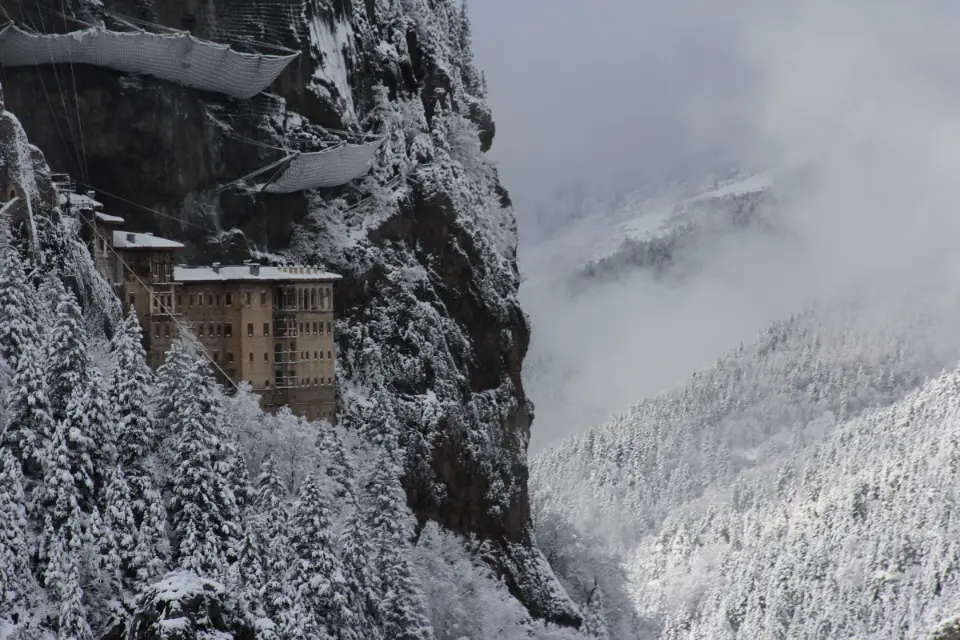
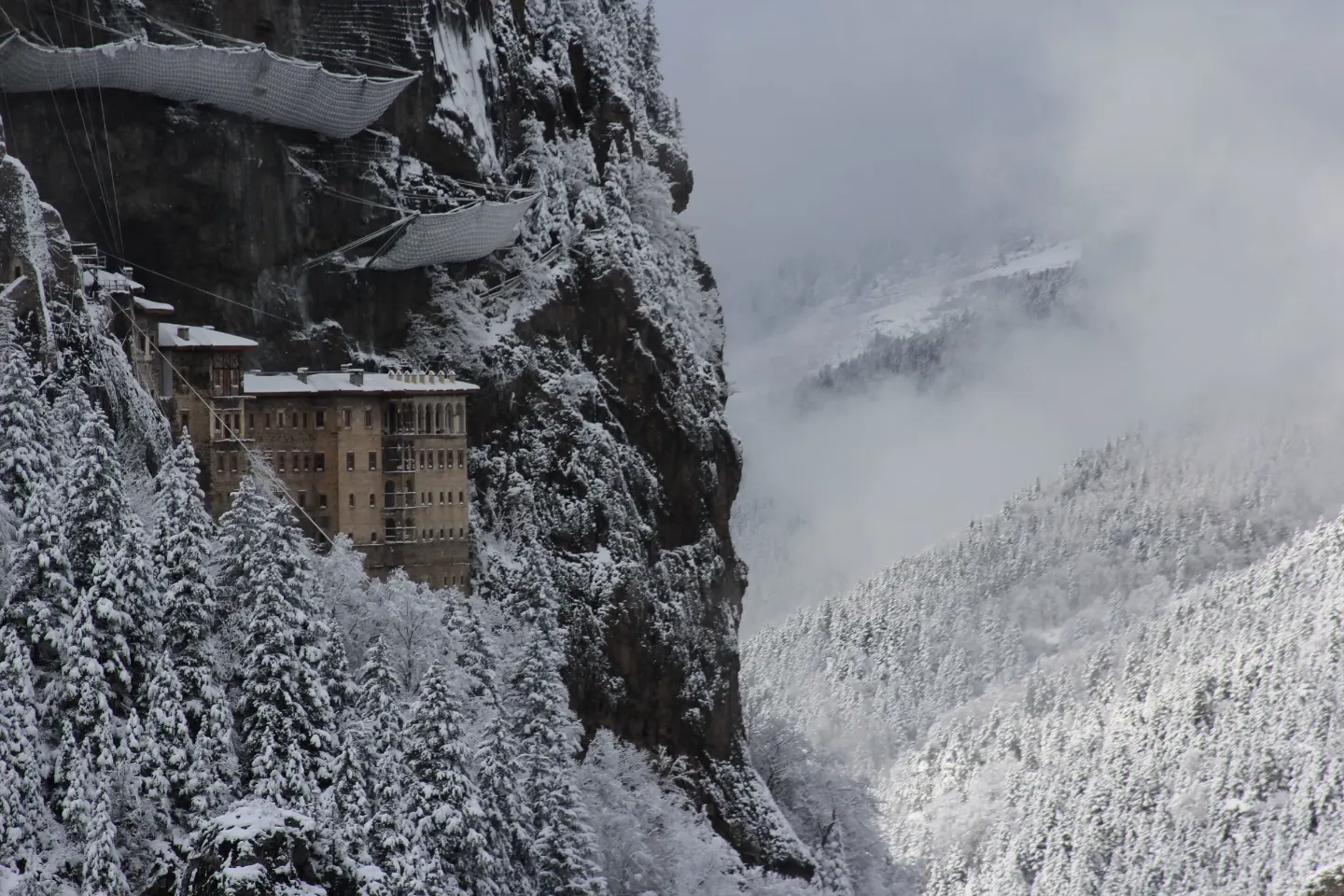
Maçka Confluence, Altındere National Park Spruce Gorge, St Barbara Chapel, Sumela Monastery Aqueduct & Cliff Staircase, Rock Church Covered Inside and Out with 18th-Century Biblical Frescoes, Sumela Library & Student Cells, Vazelon Monastery, Kuştul Monastery, and Zigana Pass
Maçka Confluence
Situated where the Degirmendere divides into Alpine feeder streams, this highland junction long served as the main staging post for pilgrims heading towards Mount Mela. Travellers can observe traditional stone houses flanking the steep river banks before ascending into the dense cloud forests. The settlement retains remnants of Ottoman post houses that supported transport across the Pontic Alps.
Altındere Valley National Park
Established to protect the diverse biome of the Altındere river basin, this reserve encompasses ancient stands of Oriental spruce, fir, and beech trees. Sheer rock walls rise hundreds of metres above the river gorge, creating microclimates that nurture rare mountain flora. The dense tree cover historically concealed monastic retreats from invading armies and imperial tax collectors.
St Barbara Chapel
Positioned beside the paved forest track leading towards Sumela Monastery, this tiny domed chapel served as an initial place of prayer for visiting pilgrims. Interior surfaces preserve faded Byzantine frescoes of Christ Pantocrator and various Eastern saints on raw stone walls. Its external terrace provides a complete cross valley view of the cliff hanging monastery opposite.
Sumela Monastery Aqueduct
Constructed along the vertical rock face, this multi arched masonry aqueduct provided a reliable fresh water supply to the monastic community. The arched stone piers anchor directly into dark volcanic basalt and andesite cliffs on Karadağ (Mount Mela) in the Eastern Pontide belt. Visitors arriving by car park at the lower Altındere Valley National Park lot, take the official park minibus shuttle up toward the woodland trailhead and should check muze.gov.tr in advance for seasonal or rockfall-stabilisation closures.
Sumela Cliff Staircase
The sole historical access into the monastery complex consists of a steep, narrow stone staircase that hugs the precipice. Monks originally fortified this corridor with heavy wooden gates and defensive drawbridges to control visitor access during times of regional siege. Walking these steps reveals panoramic vistas of the Altındere ravine below and ancient defensive arrow slits above.
Rock Church of Sumela
Carved into the natural mountain cavern, this ancient sanctuary forms the spiritual heart around which the entire monastery developed. Exterior and interior walls are covered with multi layered frescoes dating from the fourteenth to eighteenth centuries, depicting scenes from the Life of the Virgin and the Last Judgement. Conservation teams have stabilised the painted plasterwork against frost and seepage along the fractured volcanic basalt and andesite rock overhang.
Sumela Monastery Library
Positioned inside the upper monastic tier, this vaulted room housed an extensive collection of illuminated manuscripts, imperial chrysobulls, and early printed texts. The Komnenos emperors of Trebizond enriched this scriptorium through royal patronage, transforming the complex into a major intellectual centre. Although most codices were transferred to museums in Ankara and Istanbul, the stone shelving niches remain visible.
Sumela Student Cells and Dormitories
Dating primarily from the nineteenth-century renovation, these multi level stone living quarters housed resident monks, scholars, and visiting pilgrims. The structural masonry incorporates wooden cantilever beams extending over the sheer cliff, displaying traditional vernacular building methods of the Black Sea littoral. Each individual cell contains a modest stone hearth, narrow window embrasures, and integrated cupboards.
Sumela Holy Spring
Located within the inner courtyard beneath the cavern overhang, this natural spring was believed by pilgrims to possess miraculous curative properties. Continuous mountain meltwater drips into a deep marble basin, providing water that sustained monastic life through centuries of isolation. The surrounding rock surfaces feature engraved petitions and decorative crosses incised by generations of Christian travellers.
Sumela Monastery Guardhouse
Positioned along the single footpath below the monastery entrance, this stone guardhouse acted as an advance defensive checkpoint. Guards stationed here could survey the trail and communicate with monks inside the main compound before raising the perimeter bridge. Its thick walls feature arrow loops oriented downwards towards the valley trail, illustrating the defensive architecture of monastic sites.
Vazelon Monastery
Reputedly founded in the fourth century, this secluded monastery predates Sumela and long served as a vital cultural depository for the Pontic region. The multi storey stone structure sits enveloped by pine woods above the Kiremitli valley, featuring defensive outer walls and ruined residential wings. Its central chapel preserves partial frescoes detailing the Annunciation and the Resurrection of Lazarus.
Vazelon Cave Chapel of Saint Elias
Carved into the cliff face slightly above the main monastic compound, this small rock cut chapel preserves early Byzantine fresco layers. The interior iconography includes depictions of the Last Judgement, heaven, and fiery hell scenes rendered in vivid mineral pigments. Its secluded position within the forest provided monks with an isolated retreat for solitary contemplative prayer.
Kuştul Monastery
Perched on a rocky promontory near the village of Şimşirli, this monastery of Saint George of Peristera was founded in the eighth century. Repeatedly sacked and rebuilt across Byzantine and Ottoman times, the surviving stone ruins outline a large basilica, refectory, and extensive barrel vaulted cellars. Travellers can trace the layout of its fortified precinct against the surrounding highland scenery.
Kuştul Fortress Gatehouse
The northern entrance to Kuştul consists of a robust stone gateway that once contained heavy timber doors and iron bracing. Built directly into the ridge rock, it prevented direct assault while regulating the flow of pack animals carrying grain up from the river bed. Looking closely reveals dressed stone lintels and defensive machicolation slits overhead.
Hamsiköy Valley
Set across steep terraced slopes on the historic road towards Iran, this cluster of hamlets served as a primary rest station for Silk Road caravans. The area is renowned across Turkey for its traditional baked rice pudding, prepared using milk from highland cattle grazing on alpine grasses. Slate roofed stone farmhouses and wooden granaries line the winding lanes that ascend towards the Zigana Pass.
Zigana Pass
Rising to an altitude of over two thousand metres, this formidable mountain pass has channeled armies, traders, and explorers across the Pontic Alps since antiquity. Xenophon and his retreating Ten Thousand marched near here before finally sighting the Black Sea from the northern ridges. The pass marks an abrupt transition between damp maritime forest on the northern slopes and arid continental steppe to the south.
Zigana Caravanserai Ruins
Located near the summit approach, these stone ruins mark the location of a fortified roadside inn built to shelter merchant trains through brutal winters. Thick mortared masonry shielded travellers from heavy snowfalls and regional brigands while providing heated stables for pack horses. Visitors can trace the layout of the stables, main common room, and central fireplace structures.
Livera Village Stone Houses
Situated on the valley slopes north of Sumela, this historic settlement preserves distinct regional Black Sea residential architecture. Two storey structures combine dressed granite basements with upper timber frames filled with river stone and lime mortar. Many residences feature wide overhanging eaves designed to protect the façades from the frequent mountain rains characteristic of the Altındere valley.
Kayalar Village Old Stone Bridge
This elegant single arch stone bridge spans the tumbling mountain waters that feed into the Altındere valley network. Built using neatly cut ashlar masonry without modern reinforcement, it permitted pack horses and pedestrians to cross during violent spring torrents. The steep parabolic curvature and absence of side parapets represent typical Ottoman engineering across the Pontic mountain trails.
Zigana Old Pass Viewpoint
From the ridge crest above the historic carriage road, this viewpoint commands vast perspectives across both sides of the Pontic divide. Frequent thermal cloud layers roll in from the Black Sea, forming a sea of mist that breaks against the jagged granite ridges. The vantage point illustrates the geographic barrier that historically insulated Trabzon from central Anatolian empires.
Sürmene, Uzungöl Alpine Lake, Çaykara & Rize Fırtına Bridges
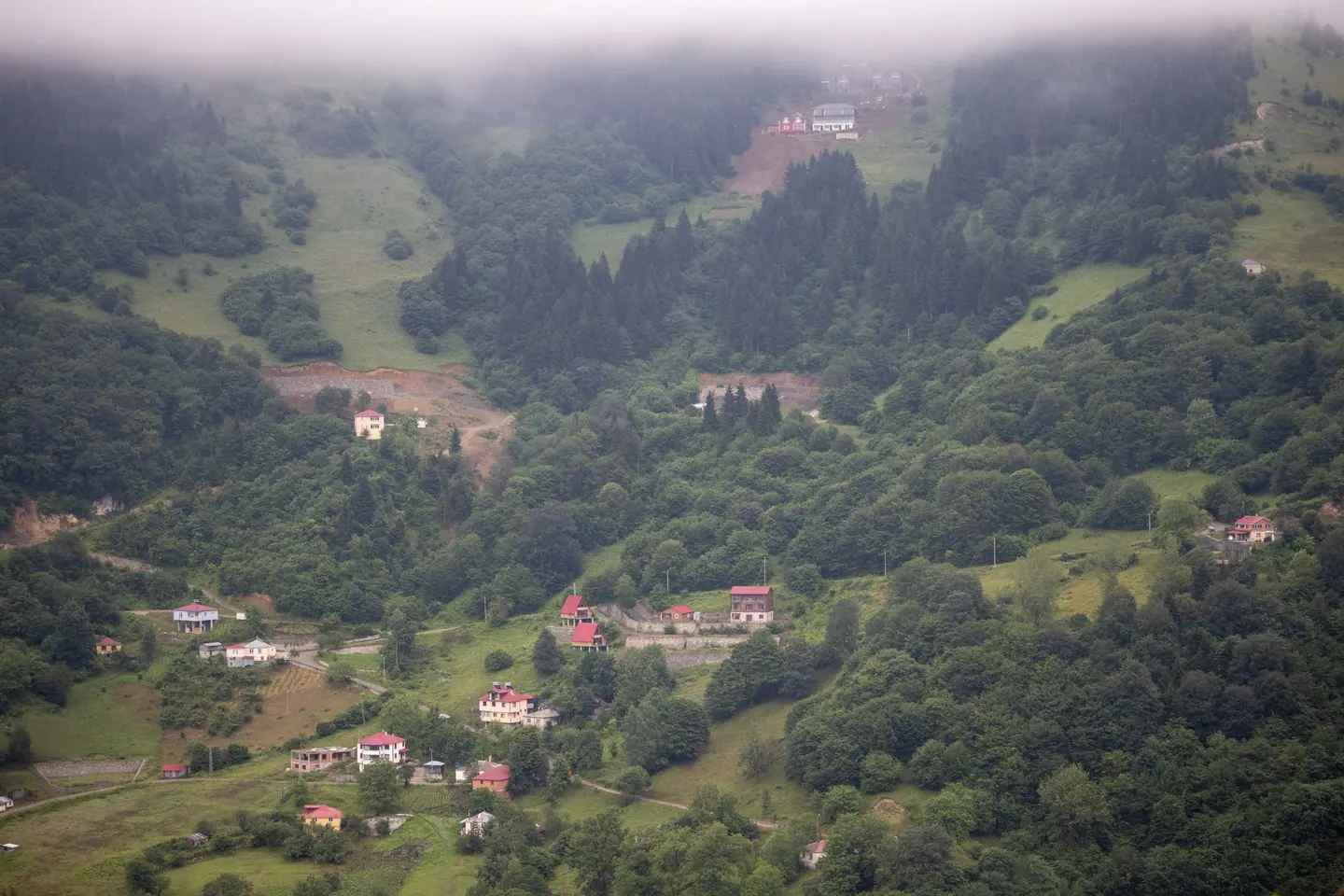
Sürmene Memiş Ağa Konağı, Sürmene Hand-Forged Knife Workshops, Hapsiyaş Timber Tile-Roof Bridge, Uzungöl Valley Lake & Garester Yaylası Viewpoint, Sultan Murat Plateau, Çalköy Cave, and Zilkale & Şenyuva Stone Arch Bridge in Fırtına Valley
Memiş Ağa Mansion
Constructed in 1856 by Memiş Ağa, head of the prominent local Sürmenoğlu family, this grand estate exemplifies Pontic vernacular architecture. The lower levels use cut volcanic stone, while the upper residential floor displays intricate wood carvings and decorative plasterwork. Visitors can tour the preserved reception rooms and fortified defensive watchtowers.
Sürmene Knife Workshops
Sürmene has produced forged steel blades since antiquity, using local iron-smelting techniques refined across generations. Artisan workshops in the town centre continue to fashion distinctive fish-tailed blades quenched in dolphin oil and fresh spring water. Observers can watch smiths hand-hammering carbon steel and carving indigenous boxwood handles beside glowing hearths.
Hapsiyaş Covered Bridge
Spanning the Solaklı River near Çaykara, this unusual crossing was constructed in 1935 to link neighbouring mountain hamlets safely during seasonal inundations. It features a masonry base supporting a timber superstructure shielded by a pitched shingle and tile roof. The structure stands as one of the few surviving covered timber bridges in the eastern Black Sea.
Uzungöl Lake
Formed in the sixteenth century when a landslide blocked the Haldizen stream, this highland lake sits at an altitude of over one thousand metres. A prominent multi-minaret mosque stands at the northern shoreline, reflecting across the clear water. Walking trails encircle the perimeter, tracing the valley floor beneath dense stands of native Caucasian fir.
Garester Plateau Viewpoint
Perched at an elevation of roughly 2,200 metres, Garester Yaylası serves as an alpine summer grazing settlement above Uzungöl. The vantage point provides sweeping perspectives across the glacial trough, surrounding cloud banks, and forested ridges below. Wooden highland cabins show the traditional pastoral lifestyle that continues across these seasonal Pontic meadows.
Sultan Murat Plateau
Named after Ottoman Sultan Murad IV, who rested his army here during the 1635 Persian campaign, this plateau features open grasslands and historical monuments. The site preserves an Ottoman military cemetery commemorating troops fallen during the Caucasus campaign of 1916. A stone memorial tower stands alongside traditional timber highland houses.
Çalköy Cave
Situated in the Düzköy district, this subterranean system ranks among the longest accessible caves in Turkey. An elevated timber walkway leads past underground waterfalls, clear pools, and towering stalagmites developed within Cretaceous limestone. Natural air circulation maintains a steady, cool temperature throughout the cavernous galleries.
Zilkale
Constructed atop a sheer rock precipice 750 metres above sea level, Zilkale guarded ancient transit routes linking the Pontic coast with the Anatolian interior. Built by the Empire of Trebizond and later modified by Ottoman garrisons, it features an outer wall, middle bailey, and intact multi-storey keep. The ramparts provide commanding perspectives over the deep Fırtına river valley.
Şenyuva Bridge
Dating to 1696 according to an older inscription, this single-span structure crosses the turbulent Fırtına river with a striking pointed profile. Built from dressed local fieldstone and lime mortar, the steep deck was designed to withstand powerful alpine floods. The crossing links historic stone cottages and tea plantations in the village of Çamlıhemşin.
Kastel Castle
Positioned eastward along the Sürmene shoreline, this ruined fortress watched over coastal shipping channels from the late Roman era through Byzantine control. The surviving perimeter masonry displays alternating layers of rough-hewn stone and brick bonding tiles typical of Pontic military works. Coastal erosion has exposed sections of the seaward foundations.
Haçka Plateau Mosque
Located in the upland pastures near Çalköy Cave, this site has functioned as a spiritual gathering point for pastoral communities for centuries. The present structure features local timber cladding over a stone foundation, designed to withstand deep winter snows. Summer festivals bring herders together across the adjoining commons for seasonal celebrations.
Çamlıhemşin Historic Mansions
The hills around Çamlıhemşin hold multi-storey stone mansions built by locals who earned wealth as master bakers in Tsarist Russia. The residences combine heavy granite masonry ground floors with fine timber panel interiors, tiled roofs, and European neoclassical touches. Several well-preserved examples stand surrounded by lush mountain tea terraces.
Mikron Bridge
Erected during the nineteenth century, this semi-circular stone arch bridge provided transport across the main river corridor south of Çamlıhemşin. The masonry employs rough-hewn river boulders held with durable lime mortar, topped by stone parapets. Its elegant single-span arch rises safely above torrential meltwater currents.
Kale-i Bâlâ
Constructed on a rugged mountain spur near the headwaters of the Fırtına, Kale-i Bâlâ served as the upper companion fortress to Zilkale. Its stone curtain walls and rectangular towers monitored the high mountain passes across the Kaçkar range. Visitors can survey defensive bastions that remain intact despite centuries of harsh winter freeze-thaw cycles.
Kavak Bridge
This classic stone crossing features a steep arch engineered to clear debris carried by seasonal mountain floods. Constructed by Ottoman-era masons using local river stones, the pathway retains cobblestone paving along its pedestrian deck. It remains an active footway for villagers accessing terraced agriculture on the western slopes.
Haldizen Valley
Extending south from Uzungöl toward the Soğanlı Mountains, the Haldizen Valley features dramatic glacial morphology and high-elevation kettle lakes. Melting snows feed clear torrents that flow over granite bedrock between traditional log cabins. Naturalists can study high-altitude flora and wetland ecosystems across the valley floor.
Çaykara District Centre
Set deep within the Solaklı river valley, Çaykara long served as a trading station between Trabzon and the Bayburt plateau. Terraced houses cling to steep valley walls alongside workshops producing hazelnut rakes and handmade wooden dairy vessels. The riverbanks retain stone embankments built to channel turbulent runoff.
Kadırga Plateau
Situated on the high boundary between Trabzon and Gümüşhane, this plateau hosts an extraordinary open-air mosque featuring two stone minarets and an earthen floor enclosed by waist-high stone walls. For centuries, shepherds and traders have gathered here for traditional Friday prayers under open skies during summer grazing periods.
Düzköy Historic Granaries
In the hamlets around Düzköy, rural farmsteads maintain traditional serender, raised wooden storehouses elevated on posts with mushroom-shaped rodent caps. Built from interlocking chestnut logs without metal nails, these ventilated structures protected dried maize and provisions from moisture and pests. They reflect ingenious regional adaptations to Black Sea humidity.
Timisvat Bridge
Located near the mouth of the Fırtına River in neighbouring Rize province, this historic stone arch spans thirty-five metres across the boulder-strewn bed. Restored masonry courses show smooth cut-stone voussoirs supporting a steep cobblestone carriageway. The site marks the entry point into the dramatic river canyon leading south toward the Kaçkars.
Altındere Gorge and Highland Plateaus Around Trabzon
Before setting out, check local transit connections, museum booking notes and monthly weather data in our Trabzon city guide, and compare other walking itineraries.