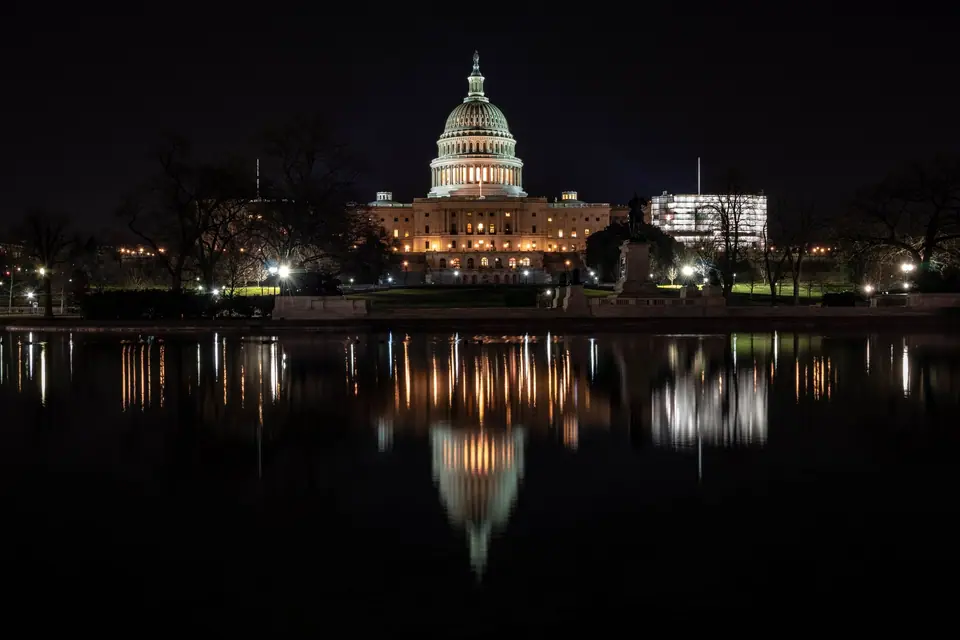
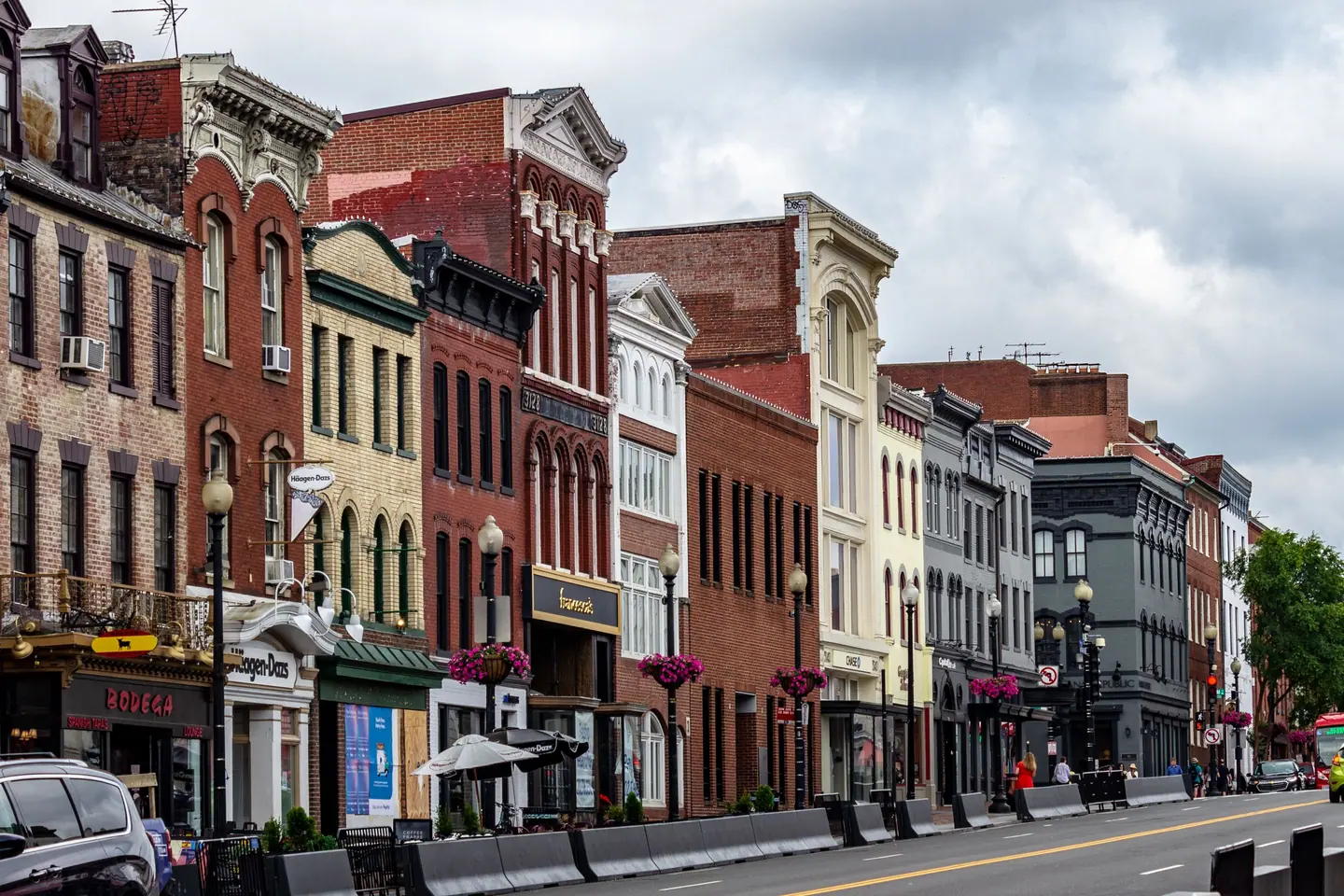
A 100-stop civic and architectural route along Pierre L’Enfant’s monumental axes, from Capitol Hill and the Smithsonian museums to the Tidal Basin, Embassy Row, and historic Georgetown.
Potomac Tobacco Wharves, the 1791 Radial Plan and the McMillan Commission
Established by the Residence Act of 1790 on a ten-mile square along the Potomac and Anacostia rivers ceded by Maryland and Virginia, the federal capital was laid out in 1791 by French-American engineer Pierre Charles L'Enfant with assistance from surveyor Andrew Ellicott and astronomer Benjamin Banneker. L'Enfant designed a grand Baroque radial grid connecting the Capitol on Jenkins Hill with the President's House along Pennsylvania Avenue and a broad open green expanse that became the National Mall.
In 1901 the McMillan Commission revived L'Enfant's vision, clearing railway tracks from the Mall to create the reflecting pools, neoclassical memorials, and world-renowned Smithsonian museums that frame the older colonial tobacco port of Georgetown (founded 1751) to the west.
Capitol Hill, Library of Congress & Supreme Court
United States Capitol, Capitol Rotunda, Library of Congress Thomas Jefferson Building, Supreme Court of the United States, Folger Shakespeare Library, United States Botanic Garden, and Union Station Washington
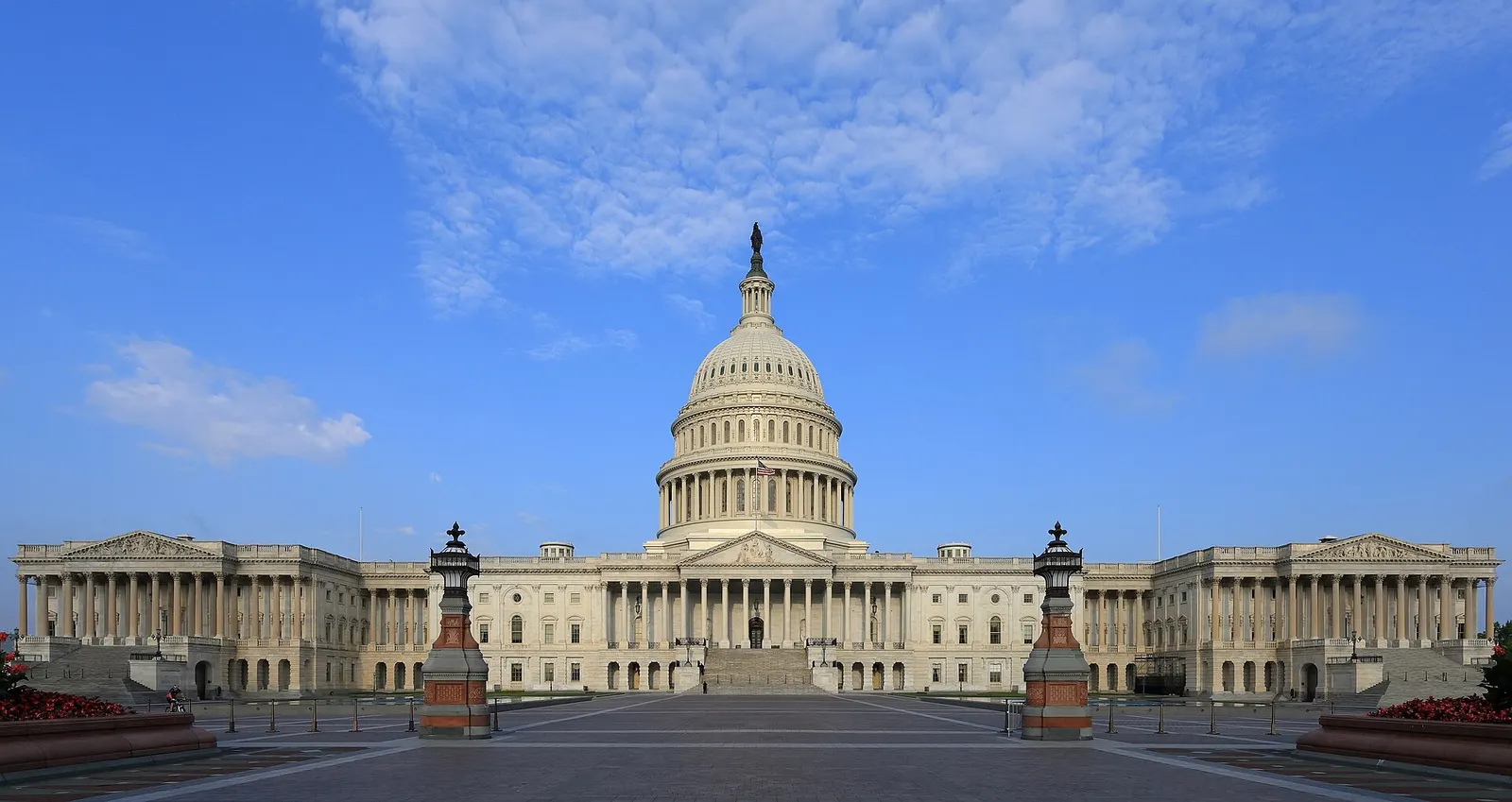
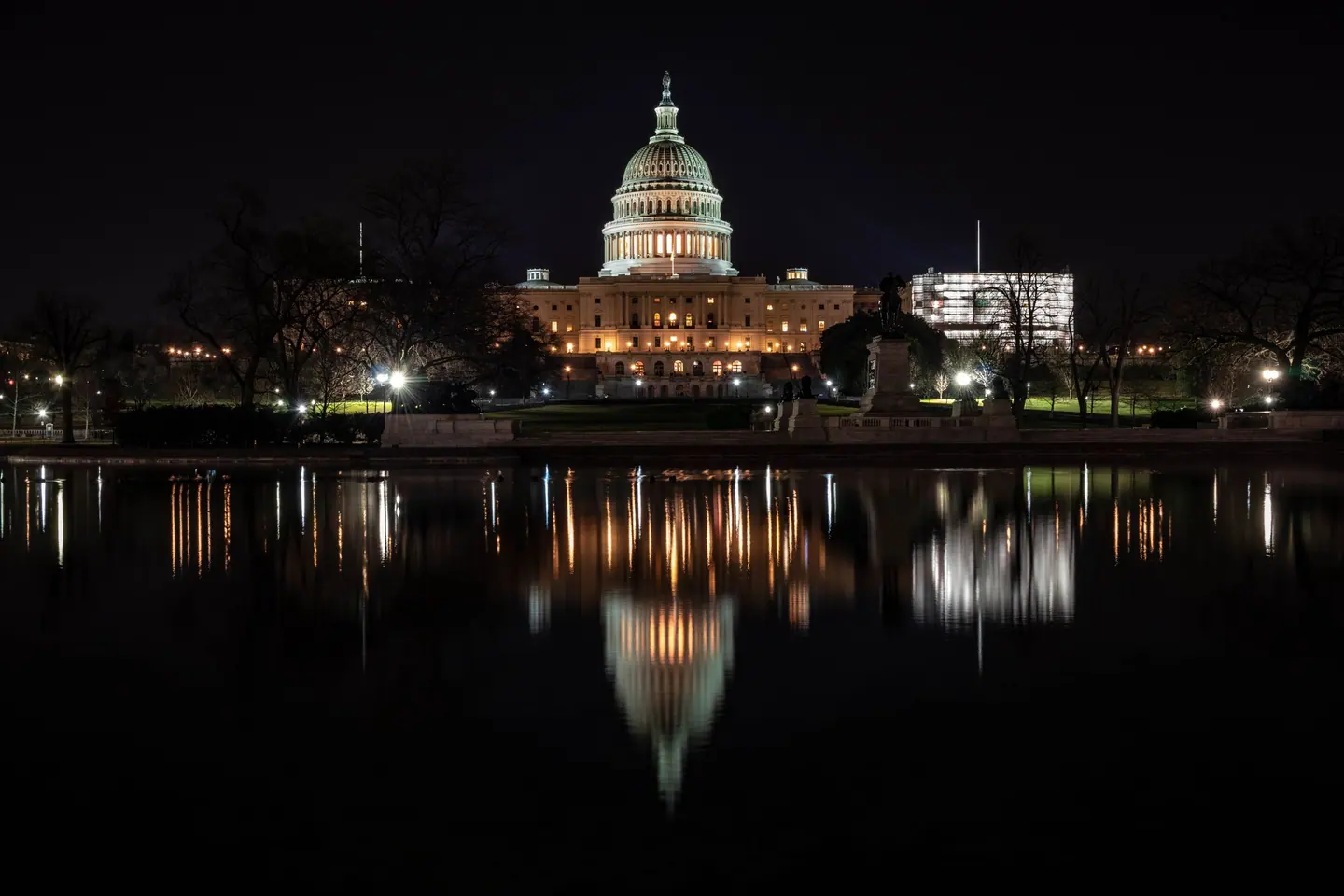
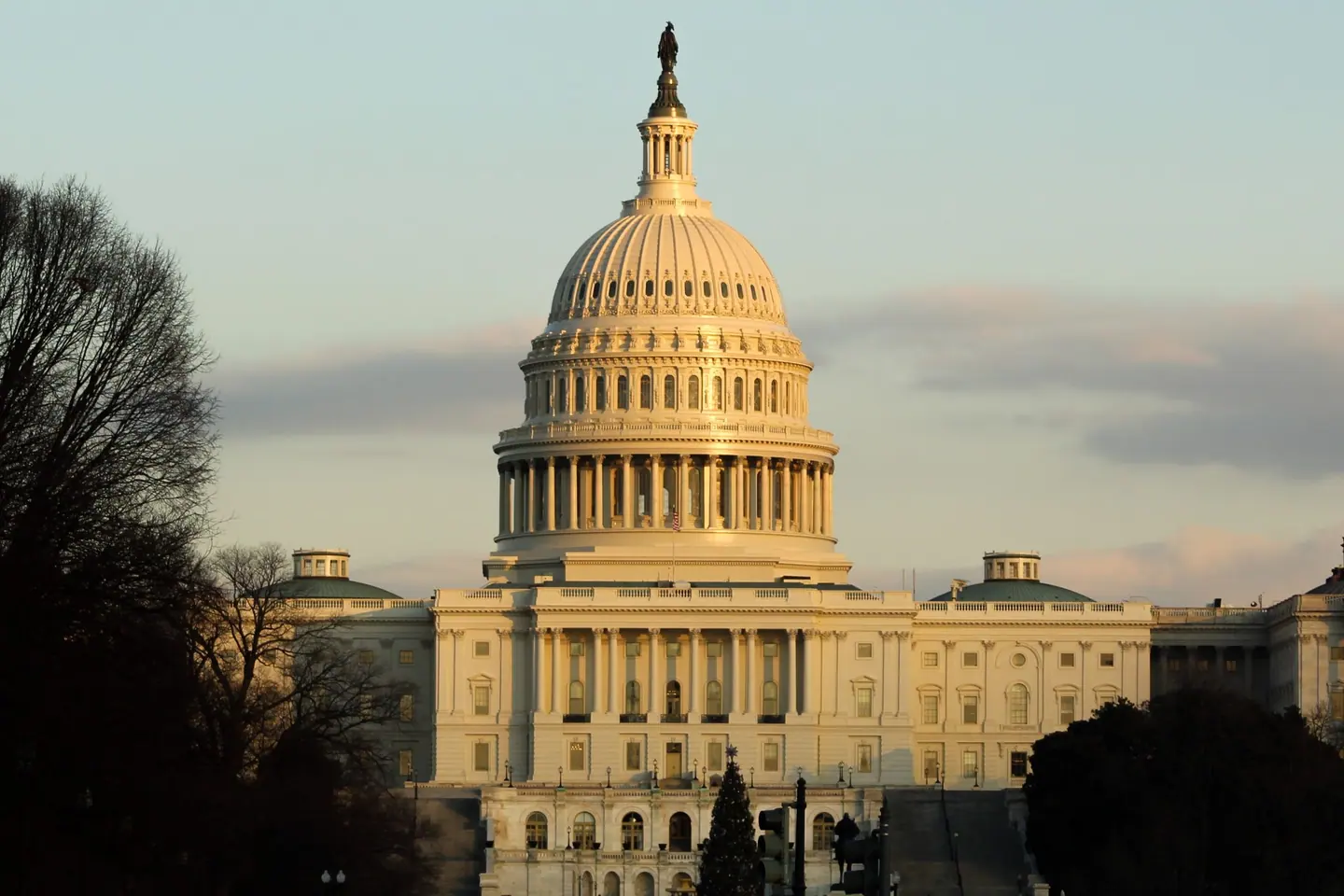
United States Capitol
Designed originally by William Thornton in 1793, this neoclassical monument accommodates the Senate and House of Representatives. Visitors can observe the vast cast-iron dome crowned by the Statue of Freedom, alongside ornate relief carvings illustrating pivotal events in early American history across its grand east portico.
United States Capitol Rotunda
Positioned directly beneath the great dome, this circular hall connects both legislative chambers. The interior displays Constantino Brumidi's fresco The Apotheosis of Washington across the canopy, flanked below by historic oil paintings depicting early colonial scenes and notable military surrenders during the American Revolutionary War.
National Statuary Hall
Formerly the meeting chamber for the House of Representatives until 1857, this semicircular hall was designed by Benjamin Henry Latrobe. Today it displays donated bronze and marble statues representing notable citizens from every American state, arranged along walls supported by polished Corinthian columns carved from local Breccia marble.
Capitol Crypt
Constructed beneath the Rotunda, this groined chamber features forty fluted Doric columns supporting the weight of the floor above. A white marble star embedded in the stone pavement marks the exact centre of Washington, originally intended as the final resting place for George Washington.
United States Capitol Visitor Center
Spanning three levels underground beneath the East Front plaza, this modern arrival complex serves as the official reception facility for Capitol tours. The main hall contains the original plaster cast of the Statue of Freedom alongside informative exhibits displaying legislative records, architectural models, and historic tools used during construction.
Library of Congress Thomas Jefferson Building
Opened in 1897, this Beaux-Arts structure represents the architectural summit of the Gilded Age. Visitors will admire the soaring Great Hall with its white Italian marble staircases, intricate ceiling mosaics, and the octagonal Main Reading Room topped by an elaborate stained-glass dome and allegorical plaster statues.
Library of Congress John Adams Building
Constructed in 1939 to alleviate overcrowding in the Jefferson Building, this annex exhibits clean Art Deco lines and classical proportions. Sculptured bronze entrance doors by Lee Lawrie celebrate the history of written language, leading to public reading rooms lined with decorative murals by Ezra Winter.
Supreme Court of the United States
Designed by architect Cass Gilbert and completed in 1935, this white marble temple features a monumental Corinthian portico inscribed with the words Equal Justice Under Law. Inside, the Great Hall leads to the courtroom itself, surrounded by massive marble pillars and detailed classical friezes depicting lawgivers through antiquity.
Folger Shakespeare Library
Established in 1932 by Henry Clay Folger, this institution houses the largest collection of William Shakespeare's First Folios. Architect Paul Philippe Cret created a Stripped Classical exterior decorated with relief panels of famous theatrical scenes, contrasting with an interior Elizabethan Great Hall and an intimate historicist playhouse.
Belmont-Paul Women's Equality National Monument
This red-brick Federal-period house served as the operational base for Alice Paul and the National Woman's Party from 1929 onward. Preserved as a museum, the interior features suffragist banners, period political cartoons, and photographs documenting the prolonged campaign for the constitutional passage of the Nineteenth Amendment.
United States Botanic Garden
Established by Congress in 1820, this institution operates a striking 1933 Lord & Burnham glasshouse conservatory. The complex features multiple biomes under iron and glass arches, sheltering tropical flora, rare desert cacti, and medicinal plants, alongside an adjacent outdoor park celebrating Mid-Atlantic regional ecology.
Bartholdi Fountain
Designed by Frédéric-Auguste Bartholdi for the 1876 Centennial Exposition in Philadelphia, this classical cast-iron fountain stands in a quiet botanical park. It features three sea caryatids supporting a large water basin, surrounded by bronze turtles and decorative gas lamps that were later converted to electric lighting.
Union Station Washington
Architect Daniel Burnham designed this monumental terminal, which opened in 1907 with a massive granite arcade modelled after the Arch of Constantine. The Main Hall features a vaulted coffered ceiling gilded with gold leaf and thirty-six Roman legionnaire statues guarding the upper perimeter gallery.
Columbus Fountain
Unveiled in 1912 within Columbus Circle outside Union Station, this monument was sculpted by Lorado Taft. A statue of Christopher Columbus stands upon a maritime plinth overlooking a semicircular basin, flanked by allegorical marble carvings portraying the Old World and the New World.
National Postal Museum
Housed within the neoclassical 1914 Washington City Post Office building designed by Burnham, this museum charts mail transit history. Displays include original stagecoaches, vintage airmail biplanes, and extensive philatelic galleries containing rare stamps and correspondence documenting American westward expansion.
Sewall-Belmont House and Museum
Standing close to Senate office buildings, this historic residence was rebuilt after sustaining damage during the War of 1812. The rooms retain original furnishings, printing equipment, and personal desks used by equal-rights activists who directed national civil rights lobbying programmes throughout the early twentieth century.
Eastern Market Washington
Opened in 1873 according to plans by architect Adolf Cluss, this red-brick market remains a centre for local community commerce. The indoor South Hall retains traditional iron stall frames where butchers and bakers trade, while the surrounding brick sidewalks accommodate weekend food sellers and regional craft artisans.
Christ Church Washington Parish
Constructed in 1807, this parish church represents an early American example of Gothic Revival architecture in brick. Originally attended by Thomas Jefferson and James Madison, the historic sanctuary features simple wooden pews, pointed-arch stained windows, and a crenellated bell tower added to the facade in 1849.
Robert A. Taft Memorial and Carillon
Erected in 1959 on the northern Capitol grounds, this memorial honors prominent Ohio Senator Robert A. Taft. The monument consists of a 30-metre tower of pink Tennessee marble containing twenty-seven matched bronze bells that chime automatically, fronted by a large bronze portrait statue sculpted by Wheeler Williams.
Ulysses S. Grant Memorial
Created by sculptor Henry Merwin Shrady and dedicated in 1922, this dramatic ensemble stands at the base of Capitol Hill. The central bronze statue depicts General Grant atop his horse, flanked on broad marble terraces by energetic sculptural groupings of Union artillery and cavalry plunging into battle.
Eastern National Mall & Smithsonian Museums
National Gallery of Art West and East Buildings, Sculpture Garden, National Air and Space Museum, Hirshhorn Museum, Smithsonian Castle, National Museum of Natural History, National Archives Rotunda, and American History Museum
National Gallery of Art West Building
Architect John Russell Pope designed this monumental pink Tennessee marble edifice, completed in 1941. Inside, we observe extensive collections spanning the Middle Ages to the nineteenth century, including the only Leonardo da Vinci painting on public view in the Americas, Ginevra de' Benci, set beneath a grand central rotunda.
National Gallery of Art East Building
Conceived by I. M. Pei and opened in 1978, this striking structure divides an awkward trapezoidal plot into two interlocking triangles. Visitors encounter sharp stone corners, skylit public atriums, monumental mobiles by Alexander Calder, and dedicated galleries presenting works by Mark Rothko, Pablo Picasso, and Henri Matisse.
National Gallery of Art Sculpture Garden
Opened in 1999 across six acres along the National Mall, this park surrounds a large circular reflecting basin that transforms into a skating rink during winter. The pathways lead past major three-dimensional installations by Roy Lichtenstein, Louise Bourgeois, Claes Oldenburg, and Hector Guimard's historic Paris Métro entrance archway.
National Air and Space Museum
Housed in a 1976 building by Gyo Obata, this institution maintains the premier collection of historic aircraft and spacecraft. The central halls display milestone technology such as the original 1903 Wright Flyer, Charles Lindbergh's Spirit of St. Louis, and the Apollo 11 command module Columbia.
Hirshhorn Museum and Sculpture Garden
Designed by Gordon Bunshaft and inaugurated in 1974, this bold concrete cylinder hovers above a central plaza on four massive piers. The building presents rotating modern exhibitions along curved interior corridors, while the adjacent sunken garden exhibits works by Auguste Rodin, Henry Moore, and Barbara Hepworth.
Arts and Industries Building
Completed in 1881 by architects Adolf Cluss and Paul Schulze, this High Victorian structure served as the original home of the National Museum. Its geometric brickwork, iron trusses, and soaring central rotunda now accommodate dynamic contemporary cultural events and innovative technological exhibitions.
Smithsonian Institution Building
Known widely as the Castle, this landmark was designed by James Renwick Jr. and completed in 1855 using Seneca red sandstone. It incorporates nine towers, delicate Romanesque arches, and houses the crypt of founding benefactor James Smithson alongside the central Smithsonian administrative offices and visitor centre.
Enid A. Haupt Garden
Established in 1987, this four-acre garden rests directly above the underground galleries of the Sackler and African Art museums. Landscaped grounds include a Victorian parterre, a Moorish garden inspired by the Alhambra, and a pink granite water pavilion reflecting traditional Chinese temple design.
National Museum of African Art
Entered through an elegant pavilion in the Haupt Garden, this underground museum opened at its Mall location in 1987. The institution preserves traditional wooden masks, cast bronzes from Benin, and modern African photography, illuminating centuries of artistic innovation across the continent.
Arthur M. Sackler Gallery
Part of the National Museum of Asian Art, this museum opened in 1987 below ground level beside the historic Castle. Its holdings include ancient Chinese bronzes and jades, Persian manuscripts, and Japanese ceramics, complemented by thematic exhibitions exploring diverse artistic traditions across Asia.
Freer Gallery of Art
Designed by Charles Adams Platt, this 1923 Italian Renaissance-style museum housed the foundational collection of railcar manufacturer Charles Lang Freer. The galleries connect Asian pottery, sculpture, and Buddhist art with American pieces, most notably James McNeill Whistler's ornate Peacock Room.
National Museum of Natural History
Opened in 1910 under architect Charles Follen McKim's neoclassical vision, this vast granite building anchors the north side of the Mall. The monumental central rotunda showcases Henry, a thirteen-ton African elephant specimen, leading toward the Hall of Fossils and the famed 45-carat Hope Diamond.
National Museum of American History
Opening in 1964 as the Museum of History and Technology, McKim, Mead & White designed this monumental block. Visitors discover pivotal national artifacts within, including the original 1814 Star-Spangled Banner garrison flag, Abraham Lincoln's top hat, and Thomas Edison's experimental incandescent light bulbs.
National Archives Rotunda
Architect John Russell Pope completed this monumental Corinthian temple in 1935 to secure vital state records. The central half-domed Rotunda for the Charters of Freedom permanently displays the original parchment sheets of the Declaration of Independence, the United States Constitution, and the Bill of Rights.
National Museum of the American Indian
Opened in 2004, this museum features an organic facade of Kasota limestone designed collaboratively by Native American architects, led by Douglas Cardinal. It is surrounded by wetlands and native plant gardens, housing ethnographic collections, oral histories, and historic crafts representing Indigenous communities throughout the Western Hemisphere.
Ulysses S. Grant Memorial
Sculptor Henry Merwin Shrady devoted two decades to completing this massive Beaux-Arts monument, unveiled in 1922. The central pedestal supports General Grant atop his horse, flanked by dramatically detailed bronze groupings depicting dynamic Union artillery charges and cavalry skirmishes along the western lawn of the Capitol.
Capitol Reflecting Pool
Engineered during the 1960s above an interstate tunnel, this six-acre rectangular water pool marks the eastern terminus of the open Mall lawns. It mirrors the western facade of the Capitol, providing an expansive viewpoint framed by limestone copings and adjacent rows of deciduous trees.
United States Botanic Garden
Established by Congress in 1820, this institution occupies a 1933 French Renaissance-style Lord & Burnham glass conservatory. Visitors explore distinct climatic zones containing tropical rainforest trees, desert succulents, and rare orchids, alongside the adjacent outdoor National Garden showcasing Mid-Atlantic flora and regional stone.
Bartholdi Park
Situated south of the main botanic conservatory, this garden was created to showcase domestic gardening techniques and sustainable horticulture. Its focal point is the Fountain of Light and Water, an intricate cast-iron masterpiece crafted by Frédéric-Auguste Bartholdi for Philadelphia's 1876 International Centennial Exposition.
Peace Monument
Erected in 1878 at the northern entrance to the Capitol grounds, sculptor Franklin Simmons carved this classical memorial from Carrara marble. The structure features allegorical statues representing History, Grief, and Peace, honouring officers, sailors, and marines of the United States Navy who fell during the American Civil War.
Washington Monument, Lincoln Memorial & Tidal Basin
National Museum of African American History and Culture, Washington Monument, WWII Memorial, Constitution Gardens, Vietnam Veterans Memorial, Lincoln Memorial, Korean War Memorial, Martin Luther King Jr. Memorial, and Jefferson Memorial
National Museum of African American History and Culture
Designed by architect David Adjaye, the building features a bronze-coloured cast aluminium lattice inspired by traditional Yoruba caryatids. Five levels of subterranean and elevated galleries display thousands of artefacts documenting the journey from the transatlantic slave trade to modern social movements. Visitors should examine the Corona facade, which filters natural light across the central atrium.
Washington Monument
Standing over 169 metres tall, this neoclassical obelisk was completed in 1884 to commemorate George Washington. A distinct change in the shading of the marble roughly a third of the way up marks a twenty-year halt in construction caused by funding shortages and the American Civil War. Fifty American flags encircle the landscaped knoll.
National World War II Memorial
Dedicated in 2004, this memorial features fifty-six granite pillars representing American states and territories, arranged in two semicircles around the Rainbow Pool. Triumphal arches anchor the north and south sides, symbolising the Atlantic and Pacific theatres. On the Freedom Wall, 4,048 sculpted gold stars pay solemn tribute to the fallen.
Constitution Gardens
Established during the 1976 United States Bicentennial, these fifty acres of rolling woodlands provide a quiet respite between major national memorials. A pedestrian footbridge crosses the central pool to a willow-fringed island dedicated to the signers of the Declaration of Independence. The paths offer open vistas across the reflective waters towards neighbouring monuments.
Signers of the Declaration of Independence Memorial
Situated on an island within Constitution Gardens lake, this understated memorial consists of fifty-six low granite blocks arranged in a semicircular garden. Each stone features the engraved facsimile signature, occupation, and home county of a signatory to the founding document. We find the shaded enclave remarkably contemplative, framed by weeping willows and resident waterfowl.
Lockkeeper's House
Erected around 1837, this small stone cottage once regulated canal traffic where the Chesapeake and Ohio Canal met the Washington City Canal. The building underwent extensive restoration and relocation in 2017 to protect it from traffic improvements along Constitution Avenue. Today, it houses interpretive exhibits documenting the early nineteenth-century maritime infrastructure of the capital.
Vietnam Veterans Memorial
Designed by architect Maya Lin, this sunken monument consists of two long black gabbro walls that cut into the rising lawn. The surface is inscribed chronologically with the names of over 58,000 military personnel who died or went missing during the conflict. The highly polished stone reflects the surrounding landscape and faces of observers.
The Three Soldiers
Sculpted by Frederick Hart and unveiled in 1984, this bronze grouping complements the abstract design of Maya Lin's granite wall. The figures represent European American, African American, and Hispanic American soldiers dressed in jungle fatigues, peering toward the memorial wall. The lifelike details include dog tags, water canteens, and period military equipment.
Vietnam Women's Memorial
Erected in 1993, this bronze composition by Glenna Goodacre depicts three uniformed women caring for a wounded soldier. Surrounded by yellowwood trees, the monument commemorates the roughly 265,000 women who served in the armed forces and volunteer humanitarian agencies during the war. It remains one of the few national monuments celebrating female wartime service.
Lincoln Memorial Reflecting Pool
Stretching more than six hundred metres between the World War II Memorial and the Lincoln Memorial, this shallow water basin was engineered by Henry Bacon. Shaded by double rows of elm trees, it creates reciprocal reflections of the Washington Monument and Abraham Lincoln's temple. The site served as the backdrop for landmark civil rights gatherings.
Lincoln Memorial
Constructed in the style of a Doric Greek temple, this monument contains thirty-six exterior fluted columns representing the Union states at Lincoln's death. Inside sits Daniel Chester French's colossal seated marble statue of the sixteenth president gazing east. Flanking walls feature engraved murals and the complete texts of the Gettysburg Address and Second Inaugural Address.
Korean War Veterans Memorial
Dedicated in 1995, this memorial centres on nineteen larger-than-life stainless steel figures depicted moving warily through juniper bushes and granite slabs. A polished black granite wall beside the patrol displays sandblasted photographic faces representing auxiliary and support personnel. The Pool of Remembrance is inscribed with the famous adage that freedom is not free.
Martin Luther King Jr. Memorial
Carved from pale granite by sculptor Lei Yixin, the memorial features the Stone of Hope emerging from a split Mountain of Despair. A relief of Dr King looks across the Tidal Basin towards the Jefferson Memorial, evoking themes from his speeches. An adjacent crescent-shaped granite wall carries fourteen engraved quotations detailing themes of justice, democracy, and love.
Franklin Delano Roosevelt Memorial
Covering more than seven acres along the Tidal Basin, this open-air red granite installation is partitioned into four distinct outdoor rooms. Waterfalls, engraved quotations, and bronze figures by George Segal and Neil Estern evoke the Great Depression and the Second World War. A statue of Eleanor Roosevelt honours her pioneering role at the United Nations.
George Mason Memorial
Located in West Potomac Park near the Tidal Basin outlet, this bronze statue by Wendy M. Ross depicts George Mason resting casually on a garden bench. A curving trellis, circular pool, and perennial flowerbeds frame the composition. Inscribed tablets display passages from the 1776 Virginia Declaration of Rights, which inspired the United States Bill of Rights.
Thomas Jefferson Memorial
Designed by John Russell Pope, this pantheon-style circular marble building features Ionic columns and a low dome reminiscent of Jefferson's Monticello estate. Beneath the dome stands a massive bronze statue of Jefferson sculpted by Rudolph Evans. The interior frieze and marble wall panels carry carved passages from the Declaration of Independence and his private correspondence.
Japanese Lantern
Presented to the city in 1954 to commemorate the centenary of the Perry expedition, this three-metre-tall granite lantern dates originally to 1651 in Tokyo. It stands near the north bank of the Tidal Basin, marking the location of the first planting of Japanese cherry trees in 1912. The lantern is illuminated annually during the National Cherry Blossom Festival.
John Paul Jones Memorial
Situated at the southern end of 17th Street, this memorial pays tribute to the naval officer renowned for his courage during the American Revolution. Sculptor Charles Henry Niehaus crafted the bronze statue standing before a granite pylon adorned with carved fountain basins. A relief on the reverse side portrays Jones raising the American flag aboard the ship Bonhomme Richard.
District of Columbia War Memorial
Commissioned in 1931 within the groves of West Potomac Park, this circular Doric temple stands as a memorial to local residents who served in the Great War. Built entirely from Vermont marble, the structure was purposefully designed with acoustic qualities allowing use as an outdoor bandstand. The cornerstone base bears the names of 499 Washingtonians who perished.
First Division Monument
Located in President's Park just south of the State Place axis, this memorial honours soldiers of the United States Army First Infantry Division. Designed by Cass Gilbert and Daniel Chester French, it features a twenty-four-metre granite column capped with a gilded bronze Winged Victory figure. Surrounding plazas and low walls list the names of division casualties from major twentieth-century conflicts.
White House, Penn Quarter, Lafayette Square & Dupont Circle
White House, Eisenhower Executive Office Building, Lafayette Square, St John’s Church, Renwick Gallery, Ford’s Theatre, National Portrait Gallery & American Art Museum, Phillips Collection, and Dupont Circle
The White House
Designed by Irish architect James Hoban in the Neoclassical style, this limestone mansion has served as the executive residence since John Adams took up residency in 1800. Rebuilt after British troops burned the structure in 1814, it features distinctive porticos and extensive executive offices. Visitors admiring the estate from Pennsylvania Avenue can view the famous North Portico columns.
Eisenhower Executive Office Building
Completed in 1888 to house the State, War, and Navy departments, this imposing granite structure represents French Second Empire architecture at its grandest scale. Designed by Alfred B. Mullett, it boasts nearly two miles of corridors, mansard roofs, and ornate cast-iron details. The building now accommodates majority staff belonging to the Executive Office of the President.
Lafayette Square
Named in honour of the Marquis de Lafayette, this public park served as an army encampment, racecourse, and political protest ground over centuries. The central bronze equestrian statue of Andrew Jackson, cast by Clark Mills, was the first bronze equestrian statue cast in America. Four corner statues celebrate European military leaders who aided the American Revolutionary cause.
St. John's Episcopal Church
Designed by Benjamin Henry Latrobe and consecrated in 1816, this yellow stucco church stands directly across from Lafayette Square. Its Greek cross plan and prominent cupola define the exterior, whilst Pew 54 has traditionally been reserved for visiting American heads of state. The adjacent parish house preserves historic Federal period residential scale.
Decatur House
Built in 1818 for naval hero Stephen Decatur, this brick townhouse is one of the oldest surviving residences in the capital. The property includes one of the few remaining physical examples of urban slave quarters in the American South. Preserved by the National Trust for Historic Preservation, the rooms display period furnishings and decorative arts.
Renwick Gallery
Conceived by architect James Renwick Jr. in 1859 for William Wilson Corcoran, this was America's first purpose-built art museum. The Second Empire facade features red brick, Belleville brownstone, and sculptured medallions of master painters and architects. Today, it showcases large-scale installations alongside contemporary craft objects under the stewardship of the Smithsonian American Art Museum.
Blair House
Constructed in 1824 for Surgeon General Joseph Lovell, this Federal-style residence was purchased by publisher Francis Preston Blair in 1836. Acquired by the federal government during the Second World War, the complex now merges four separate historic townhouses. Foreign leaders and royalty stay here when attending diplomatic summits with American officials.
Treasury Building
Robert Mills designed this grand Greek Revival structure, which took over thirty years to construct beginning in 1836. Its long eastern colonnade features thirty Ionic pillars sculpted from solid blocks of granite, creating an imposing neoclassical wall. The building houses gilded cash rooms and subterranean security vaults linked directly with national monetary history.
Ford's Theatre
John T. Ford converted this former Baptist church into a fashionable performance venue in 1863, where Abraham Lincoln was assassinated two years later. Restored to its 1865 appearance, the auditorium operates as both a working theatre and a national historic site. Visitors examine the presidential box alongside an underground museum recounting civil war events.
Petersen House
Located directly across Tenth Street from Ford's Theatre, this modest red-brick Federal rowhouse belonged to German tailor William Petersen. Troops carried the wounded Abraham Lincoln into a first-floor bedroom on the night of April 14, 1865. The preserved back bedroom still exhibits the solemn proportions and period decor from that fateful morning.
National Portrait Gallery
Sharing the monumental Old Patent Office Building with the American Art Museum, this institution displays portraits of influential statesmen, scientists, and artists. The building itself is a Greek Revival marvel modelled after the Parthenon, featuring Doric columns and light-filled galleries. Its presidential gallery holds the official portrait likenesses of every American commander-in-chief.
Smithsonian American Art Museum
Occupying the same neoclassical quadrangle as the Portrait Gallery, this collection spans colonial folk art, impressionism, and twentieth-century modernism. The central Kogod Courtyard unites the historic stone wings beneath an undulating glass canopy designed by Foster and Partners. Notable works include extensive holdings of landscape art and nineteenth-century American sculpture.
National Building Museum
General Montgomery C. Meigs engineered this red-brick Renaissance Revival edifice in 1887 to manage post-civil war pension claims. Inside, the soaring Great Hall contains eight massive Corinthian columns made of brick and painted to resemble sienna marble. Dedicated to architecture, engineering, and urban planning, the museum presents interactive exhibitions on civil construction.
National Museum of Women in the Arts
Housed within a former Masonic temple constructed in 1908, this institution champions artistic contributions by women from the Renaissance to the present day. The Renaissance Revival building features classical exterior balustrades, arched windows, and an elegant marble-lined interior lobby. Its permanent galleries display works by figures such as Mary Cassatt, Frida Kahlo, and Élisabeth Vigée Le Brun.
Chinatown Friendship Archway
Erected in 1986 through collaboration between the district and its sister city Beijing, this colourful paifang stands among the largest of its type worldwide. Designed by local architect Alfred Liu, the structure features seven roofs covered in thousands of glazed tiles and traditional dragon motifs. It serves as the symbolic entrance to the historic downtown Chinatown district.
Dupont Circle
This expansive public roundabout serves as the cultural hub for surrounding Gilded Age rowhouses, bookstores, and foreign embassies. At its centre stands a double-tiered marble fountain carved by Daniel Chester French, commemorating naval rear admiral Samuel Francis Du Pont. Shaded benches, grassy lawns, and chess tables draw residents and travellers throughout the afternoon.
The Phillips Collection
Established by collector Duncan Phillips in 1921, this intimate museum occupies his family's Georgian Revival mansion near Dupont Circle. Renowned for its domestic scale, the galleries display European and American masterworks in atmospheric rooms. Highlights include Pierre-Auguste Renoir's Luncheon of the Boating Party alongside dedicated rooms for Mark Rothko.
Anderson House
Completed in 1905 for diplomat Larz Anderson and his wife Isabel, this fifty-room Beaux-Arts mansion reflects the high style of Gilded Age Washington. The property showcases ornate Florentine wall murals, wood carvings, and an extensive collection of Asian and European antiques. It now functions as the national headquarters and research library for the Society of the Cincinnati.
Woodrow Wilson House
Following his second term, President Woodrow Wilson retired to this handsome Georgian Revival townhouse on S Street in 1921. Architect Henry Libbey designed the residence, which remains virtually unchanged with original family furnishings, books, and political memorabilia. Visitors can inspect the private library, garden terrace, and authentic domestic technology from the 1920s era.
Heurich House Museum
Constructed in 1894 for German-born brewer Christian Heurich, this Richardsonian Romanesque residence is known locally as the Brewmaster's Castle. Built entirely of poured concrete and brownstone to guard against fire, it retains intact interiors filled with carved oak panelling, painted ceilings, and brass chandeliers. The surrounding walled garden provides a quiet courtyard adjacent to the family home.
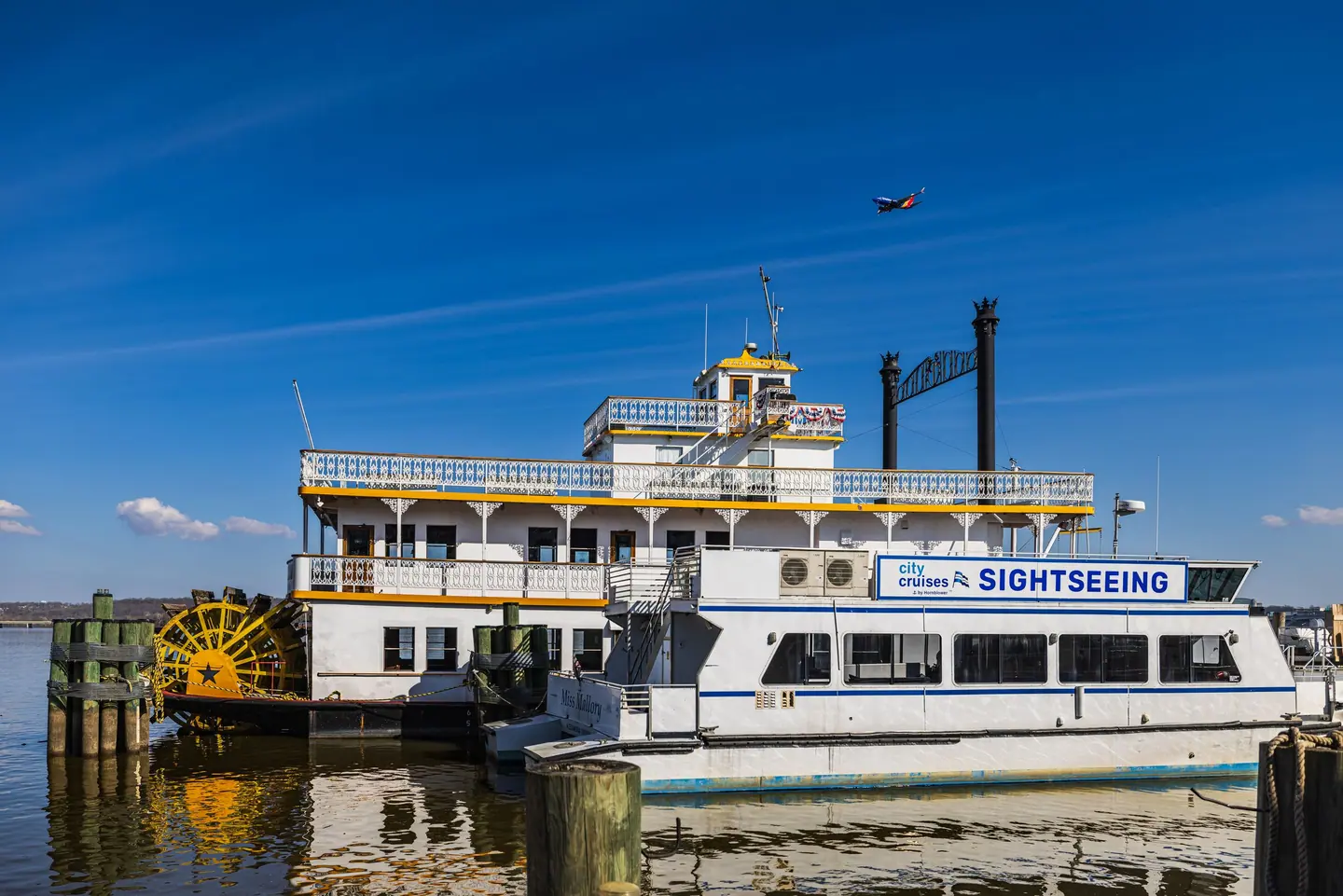
Georgetown Canal, National Cathedral & Arlington
C&O Canal Georgetown, Old Stone House, Dumbarton Oaks Gardens, Tudor Place, Georgetown University Healy Hall, Washington National Cathedral, Smithsonian National Zoo, and Arlington House & Kennedy Grave
C&O Canal National Historical Park Georgetown Visitor Center
Engineered throughout the nineteenth century to connect the capital with western coal basins, the canal retains its stone locks and towpaths in Georgetown. Visitors can examine the reconstructed wooden canal boats, water-lifting infrastructure, and restored brick warehouses along the industrial waterfront.
Old Stone House
Built in 1765 by cabinetmaker Christopher Layman, this vernacular stone cottage represents the oldest surviving residential structure in Washington. The modest interior features period furnishings, exposed fieldstone walls, and an intact English-style rear garden that reflects everyday pre-Revolutionary life.
Dumbarton Oaks
Renowned for hosting the 1944 international conference that led to the United Nations, this estate houses extensive collections of Byzantine and Pre-Columbian art. The tiered terraces, designed by landscape architect Beatrix Farrand, showcase classical brickwork, formal boxwood plantings, and ornate stone fountains.
Tudor Place
Commissioned by Thomas Peter and Martha Parke Custis Peter, granddaughter of Martha Washington, this 1816 estate remained in family hands for generations. The building displays a distinct circular temple portico, Federal-era decorative arts, and extensive historic gardens covering five leafy urban acres.
Georgetown University Healy Hall
Constructed between 1877 and 1879 under university president Patrick Francis Healy, this imposing structure displays Flemish Romanesque architecture. The monumental stone building features Gaston Hall, a grand auditorium decorated with heraldic murals and intricate wood carvings overlooking the campus quadrangle.
Francis Scott Key Memorial Bridge
Completed in 1923, this graceful multi-span concrete arch bridge spans the Potomac River between Georgetown and Rosslyn. Named after the author of the national anthem, the crossing offers open vistas of the riverbanks, Theodore Roosevelt Island, and traditional collegiate rowing sculls.
Exorcist Steps
Constructed in 1895 alongside the Capital Traction Company car barn, this narrow flight of seventy-five stone steps connects Prospect Street with M Street. The site achieved international recognition after appearing in the 1973 horror film and was designated an official cultural landmark.
Dumbarton House
Erected around 1799, this red-brick Georgian and Federal mansion served as a haven for First Lady Dolley Madison during the War of 1812. Today it functions as a museum displaying early American decorative furniture, delicate chinaware, and historically accurate period room interiors.
Washington National Cathedral
Built from Indiana limestone over eighty-three years, this sprawling episcopal cathedral is the second largest in the United States. Visitors can observe intricate flying buttresses, hand-carved stone grotesques including a depiction of Darth Vader, and the celebrated stained-glass Space Window with lunar rock.
Bishop's Garden
Situated on the south slope of the National Cathedral grounds, this enclosed garden incorporates medieval stone fragments, boxwood borders, and antique herb collections. The terraced paths lead past a fourteenth-century font, stone baptismal vessels, and quiet benches shaded by venerable cedar trees.
National Zoological Park
Founded by an act of Congress in 1889, this comprehensive park covers 163 acres in the wooded Rock Creek valley. The grounds accommodate historic stone animal houses, spacious habitats for giant pandas, and extensive scientific conservation research programmes dedicated to threatened species.
Rock Creek Park Nature Center and Planetarium
Operating inside one of the earliest designated federal parks, this facility provides educational exhibits explaining regional ecology, geology, and wildlife. The site contains the sole public planetarium in the national capital area alongside trailheads that connect directly to extensive forested hiking networks.
Oak Hill Cemetery Chapel
Designed in 1850 by James Renwick Jr., this intimate sandstone chapel sits atop the rolling wooded hills of an English-style cemetery. The building exhibits steeply pitched roofs, decorative bargeboards, and stained glass, while the surrounding grounds contain the graves of prominent diplomats and statesmen.
Francis Scott Key Park
Located near the riverbank where Francis Scott Key maintained his Georgetown residence, this small civic garden pays tribute to his legacy. A bronze bust of the patriot, informational displays detailing the War of 1812, and a replica fifteen-star Star-Spangled Banner stand on site.
Mount Zion Cemetery
This significant three-acre burial site was established in the early nineteenth century for enslaved and free Black residents. A brick burial vault near the slope is documented as a secret hiding point along the Underground Railroad, preserving memory of the local African American community.
Arlington House, The Robert E. Lee Memorial
Built between 1802 and 1818 by George Washington Parke Custis, this mansion served as Robert E. Lee's home before the American Civil War. The estate crowns a prominent ridge, featuring monumental Doric columns, preserved domestic slave quarters, and panoramic vistas of the Potomac and Mall.
John F. Kennedy Eternal Flame
Lit during President John F. Kennedy's state funeral in 1963, this continuously burning flame marks his resting place on the hillside below Arlington House. The site consists of Cape Cod fieldstones, granite terrace paving inscribed with quotations, and the graves of Jacqueline Kennedy Onassis and their children.
Tomb of the Unknown Soldier
Carved from Colorado Yule marble, this neoclassical monument enshrines unidentified American service members from major twentieth-century conflicts. The plaza features three sculptured Greek figures representing peace, victory, and valour, protected continuously by sentinels of the 3rd US Infantry Regiment through strict ceremonial drills.
Memorial Amphitheater
Dedicated in 1920, this massive amphitheatre constructed from Danby marble hosts official Memorial Day and Veterans Day ceremonies. Visitors can inspect the colonnaded elliptical concourse, delicate friezes honouring military battles, and the central stage crowned with an imperial reception hall.
Women in Military Service for America Memorial
Positioned at the ceremonial entrance to Arlington National Cemetery, this memorial incorporates McKim, Mead and White's historic 1932 granite hemicycle wall. The modern facility behind it features an underground gallery, glass roof panels etched with historical quotes, and an interactive register detailing women's military service.
Museums, Metro Stops and Canal Towpaths in Washington
Before setting out, check local transit connections, museum booking notes and monthly weather data in our Washington, D.C. National Mall, Smithsonian & Georgetown city guide, and compare other walking itineraries.