


























Quick Field Data
- UNESCO Inscription: 1993 (Natural, Criterion x; 17th session; embedded within the 1988 El Vizcaíno Biosphere Reserve).
- Scale & Footprint: 370,950-hectare serial coastal and marine sanctuary encompassing the coastal bays of Laguna San Ignacio and Laguna Ojo de Liebre along with their surrounding wetlands, marshes, dunes, halophytes, mangroves, and desert habitats inside the 24,930 km² (9,630 sq mi; infobox 55,555 km²) El Vizcaíno Biosphere Reserve.
- Access & Ticketing: Protected IUCN Category VI reserve in Mulegé Municipality in Latin America and the Caribbean; check the official site for regulated winter whale-watching boat permits in the two coastal lagoons.
- Arrival Logistics: Located at 27.4060°N, 113.6658°W (biosphere reserve coordinates 27°47′32″ north and 114°13′40″ west) within northern Baja California Sur's Mulegé Municipality, in the central Baja California Peninsula separating the Gulf of California from the Pacific Ocean.
Laguna San Ignacio, Laguna Ojo de Liebre, and the Baja California Peninsula
Positioned at 27.4060 degrees north and 113.6658 degrees west (with biosphere reserve coordinates at 27°47′32″ north and 114°13′40″ west) along the Pacific shoreline of central Baja California Peninsula in Mulegé Municipality, northern Baja California Sur, Mexico, the Whale Sanctuary of El Vizcaino forms a 370,950-hectare serial World Heritage site inscribed in 1993 at the 17th session under Natural Criterion x. The sanctuary comprises two sheltered coastal lagoons opening onto the Pacific Ocean, specifically Laguna San Ignacio and the northern bay of Laguna Ojo de Liebre, together with their surrounding mosaic of intertidal wetlands, salt marshes, halophyte flats, coastal sand dunes, desert scrublands, and transitional mangrove fringes. Both lagoon systems lie embedded within the much larger El Vizcaíno Biosphere Reserve (ANP 282), established in 1988 as an IUCN Category VI protected area covering more than 24,930 square kilometres (9,630 sq mi, with infobox listings of 55,555 km²) linking the Gulf of California and the Pacific Ocean. Recognised as the largest wildlife refuge and largest protected area in Mexico, the El Vizcaíno Biosphere Reserve is contiguous along its northern border with the Protected Area of Flora and Fauna of Valle de los Cirios, creating an unbroken conservation corridor stretching across the central peninsula between the Pacific Ocean on the west and the Gulf of California on the east.
Human presence across this arid peninsular landscape stretches back more than eleven thousand years. Archaeological evidence indicates that the earliest native groups to inhabit the central Baja California region arrived either as overland nomadic hunters moving south from the northern part of the American continent or as marine-oriented foraging communities using boats to follow the Pacific coastline and harvest the sheltered coastal bays. As the historic period dawned, their direct successors across the peninsula were the Cochimi people, seasonal foragers who systematically exploited the marine and terrestrial natural resources of the Pacific coast alongside the inland desert plains and the rugged mountain canyons of the Sierra de San Francisco, where travellers trekking into the mountainous interior can still view prehistoric cave art left on rock shelters by the indigenous inhabitants.
European contact began during the 16th century when Spanish maritime and overland expeditions charted the Baja California Peninsula. The navigator Juan Rodríguez Cabrillo became the first European explorer to navigate the outer coastlines of the peninsula, whereas in 1596 the Spanish explorer Sebastián Vizcaíno led an expedition inland across the central peninsular territory that now forms the biosphere reserve and bears his name, acting under orders from the Viceroy of New Spain, Gaspar de Zúñiga. Across the inland plains and desert basins of El Vizcaíno, terrestrial fauna evolved specialised physiological and behavioural adaptations to survive the extreme arid conditions and lack of surface water: nocturnal mammals such as coyotes, rodents, and hares avoid intense daytime heat by foraging after dusk, while several desert mammal and reptile species survive without drinking open freshwater by ingesting moisture solely from desert succulents. Until commercial whalers entered the calm Pacific bays in the modern era, the extreme remoteness and aridity of the central peninsula shielded both the inland desert plains and the coastal lagoons from large-scale human disturbance.
Recovery of the Eastern North Pacific Grey Whale and Lagoon Biodiversity
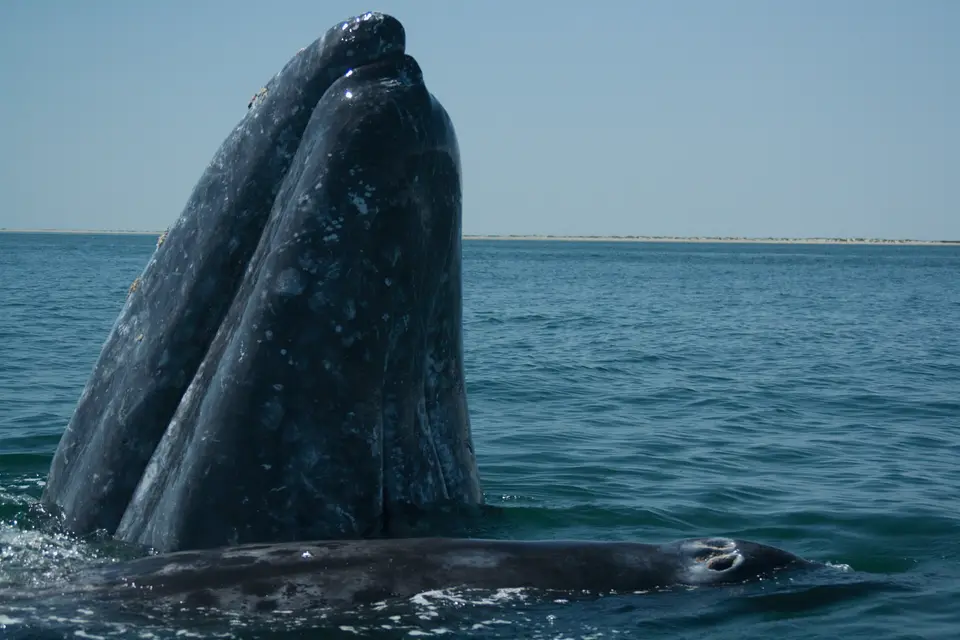
The Whale Sanctuary of El Vizcaino is recognised worldwide as the single most important marine habitat for the reproduction, calving, and wintering of the North Pacific grey whale's once endangered eastern subpopulation. Intensive commercial whaling conducted historically along the Pacific coast, including whaling operations carried out directly inside these very calving lagoons, drove the eastern North Pacific grey whale to the brink of near-extinction. Safeguarding these two winter breeding grounds proved paramount in enabling the sustained recovery of the eastern grey whale population after commercial hunting ended, demonstrating how strictly protecting critical reproductive and nursery habitats can rescue a migratory cetacean species from collapse. Every autumn and winter, the majority of the eastern subpopulation migrates thousands of kilometres southward between its cold summer feeding waters across the Northwestern Bering, Beaufort, and Chukchi Seas and the warm, sheltered waters of Laguna San Ignacio and Laguna Ojo de Liebre, where pregnant females give birth and nurse their newborn calves in the calm tidal channels before returning north along the Pacific coast in spring.
Alongside the wintering grey whales, the coastal lagoons, outer Pacific coastline, and offshore islets sustain a rich assemblage of marine mammals and pelagic cetaceans. Blue whales frequent the productive upwelling waters along the central Baja California peninsula, while resident and seasonal populations of harbour seals, California sea lions, northern elephant seals, and bottlenose dolphins haul out on the barrier sandbars and hunt through the tidal channels. The shallow lagoon waters, salt marshes, halophyte flats, and mangrove transition areas also function as a critical marine habitat and nursery ground for a vast number of fish, crustaceans, and marine invertebrates that replenish coastal fisheries across the Pacific coast of Baja California Sur, while sheltering four species of endangered marine turtles (sea turtles) that forage across the calm seagrass beds and shallow bays.
Conserving terrestrial and marine ecosystems together with their delicate coastal interface across 370,950 hectares, the sanctuary and surrounding biosphere reserve support countless breeding and migratory bird species travelling along the Pacific flyway. The lagoon wetlands and barrier islands sustain a major resident breeding population of ospreys alongside large colonies of pelicans, cormorants, herons, and gulls, while more than half of Mexico's entire wintering population of the brant goose depends directly upon the two coastal lagoons and their adjacent intertidal habitats. On the surrounding arid plains and mountain slopes of the El Vizcaíno Biosphere Reserve live mule deer, desert bighorn sheep, and the last surviving wild populations of the Baja California pronghorn, an endangered endemic subspecies of the pronghorn found nowhere else in the world.
Regulated Lagoon Excursions and Baja California Field Logistics
Throughout Mexico, the UNESCO World Heritage Atlas in 1993 under Criterion x, the Whale Sanctuary of El Vizcaino balances strict habitat protection with regulated community eco-tourism across Mulegé Municipality in northern Baja California Sur. During the winter breeding and calving season, authorised local boats take visitors into designated viewing areas of Laguna San Ignacio and Laguna Ojo de Liebre under strict conservation guidelines designed to protect nursing grey whale mothers and calves, hauling-out harbour seals, California sea lions, and northern elephant seals, and wintering flocks of brant geese. You can locate both Pacific lagoons between the Gulf of California and the Pacific Ocean on our interactive world map. Grey whale spouts rise across the calm bay.
- Joining a regulated winter whale-watching boat on Laguna Ojo de Liebre: Visit during the winter breeding season to board an authorised local boat in Laguna Ojo de Liebre, observing eastern North Pacific grey whale mothers and calves alongside harbour seals, California sea lions, northern elephant seals, and bottlenose dolphins in the shallow tidal channels.
- Exploring the mangroves and bird colonies of Laguna San Ignacio: Travel to the southern serial component at Laguna San Ignacio to watch wintering grey whales, resident ospreys, pelicans, cormorants, herons, gulls, and wintering flocks of brant geese across the wetlands, marshes, halophytes, dunes, and mangrove transition areas.
- Tracking desert wildlife and Cochimi cave art in the wider biosphere reserve: Cross the inland desert habitats of the 24,930-square-kilometre El Vizcaíno Biosphere Reserve in Mulegé Municipality, where conservation programmes protect the endemic Baja California pronghorn, desert bighorn sheep, and mule deer near the prehistoric Cochimi cave art of the Sierra de San Francisco.
