Best Time to Visit Asmara
Year-round spring-like days at 2,325 metres, dry sunny winters from October to March, May blossoms, and late-summer highland festivals.
Perched at 2,325 metres (7,628 feet) on the eastern rim of the Eritrean highlands, Asmara enjoys one of the most temperate, consistent year-round climates on the African continent. Residents affectionately call their capital the City Above the Clouds: while the Red Sea coastline only seventy kilometres east swelters in tropical humidity, the highland plateau remains in a perpetual mountain spring where afternoon highs sit comfortably between 21°C and 26°C in every month of the calendar. Because extreme cold and oppressive heat are both absent on the plateau, choosing your travel dates comes down to matching photography light, cultural celebrations and coastal day trips to the seasonal rhythm.
Why Altitude Creates Two Opposite Climate Zones in One Hour
Before locking in your flights, it helps to understand how Eritrea's dramatic topography splits the weather into two distinct regimes separated by a single two-hour mountain drive. Central Asmara sits at the edge of the Kebessa plateau, where the thin, dry high-altitude air warms pleasantly under the equatorial sun by midday and cools rapidly to between 6°C and 14°C as soon as the sun drops behind the western hills. Even in the warmest months of April and May, indoor air conditioning is unnecessary in Asmara, and every evening walk along Harnet Avenue calls for a woollen jumper or tailored jacket.
Immediately east of the city limits, the plateau plunges more than two thousand vertical metres down the Great Rift Valley escarpment through the cloud forests of Filfil and the railway towns of Nefasit and Ghinda to the Red Sea port of Massawa. Down at sea level, the seasons invert: the coastal winter from October to March brings mild, breezy 28°C days ideal for coral-reef boats, whereas the coastal summer from June to September turns intensely hot. If your Asmara itinerary includes descending the escarpment to the Red Sea, timing your trip for the cooler coastal months makes the entire journey comfortable.
October to February: Cloudless Winter Skies and Architecture Light
The five-month dry window running from October through February is the prime season to experience Eritrea as a whole. Across the highland plateau, rainfall is virtually zero and the sky turns a deep, saturated cobalt blue from morning until dusk. That crisp, dust-free winter sunlight casts sharp geometric shadows across the cantilevered concrete wings of the 1938 Fiat Tagliero service station, the vertical porthole facade of Cinema Impero and the ochre and terracotta villas featured in our UNESCO modernist architecture guide.
During these winter months, daytime temperatures in Asmara hover around a mild 22°C to 24°C, creating effortless conditions for walking between outdoor markets and sipping morning espresso on the sunny pavement terraces described in our macchiato cafés and railway guide. Keep in mind that December and January bring the chilliest nights of the year on the plateau, when clear starry skies allow temperatures before dawn to dip to 6°C or 8°C. Packing a warm fleece or light down layer for early mornings ensures you stay comfortable inside unheated heritage hotel dining rooms.
March to May: Blooming Jacarandas and Independence Day Celebrations
As winter transitions into the warm dry spring of March, April and May, daytime highs in Asmara edge up to their annual peak of 25°C to 26°C while nights moderate to a gentle 11°C to 14°C. April and early May occasionally bring the light, brief spring showers known locally as azmera, which wash the red plateau dust from the eucalyptus trees and spark a colourful burst of purple jacaranda, crimson hibiscus and scarlet bougainvillea across the diplomatic gardens of Tiravolo and Palace Hill, where many of the properties in our Asmara accommodation guide are located.
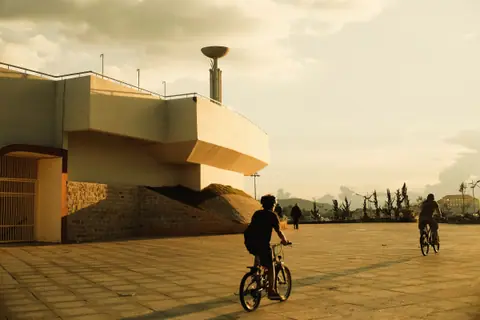
Late May is the most festive week of the year in the capital. On 24 May, the entire nation celebrates Eritrean Independence Day, commemorating the 1991 liberation of the city. For several days leading up to the date, string lights and banners drape the palm trees of Harnet Avenue, neighbourhood stages host live Tigrinya music and traditional dance, Sunday morning cycling races speed around the central ring boulevards, and thousands of families gather for evening carnivals and parades on Bahti Meskerem Square. If you wish to visit in late May, arrange your visa and hotel bookings well ahead of arrival, as diaspora families return from across the globe.
June to September: Summer Kremti Showers and the Meskel Bonfire
Unlike European capitals where summer means unbroken heat, July and August (bookended by transitional weeks in late June and early September) constitute the main highland rainy season, known as kremti. Even at the height of the August rains, Asmara rarely experiences grey, all-day drizzle. Instead, the daily pattern is remarkably predictable: mornings start crisp, clear and sunny, allowing four or five dry hours to walk the historic core or browse the metalworking stalls of Medeber Market; after midday, towering white cumulus clouds build along the escarpment rim and release a heavy, dramatic afternoon downpour for an hour or two before the sky clears again in time for the evening stroll.
Travelling immediately after the summer rains in September offers one of the most rewarding landscapes of the year. The surrounding plateau hills, which look dry and golden in mid-winter, turn a lush emerald green carpeted with wild yellow coreopsis daisies. Mid-to-late September also brings two major traditional celebrations: the Orthodox New Year (Geez New Year or Enkutatash on 11 September) and the feast of Meskel (the Finding of the True Cross, celebrated on 27 September), when priests in embroidered vestments and white turbans lead processions to a towering ceremonial bonfire (Demera) lit on Bahti Meskerem Square.
Matching Your Travel Window to Permits and Highland Packing
Regardless of the month you choose, remember that regional road conditions and administrative office hours follow the national calendar. When you submit your passport details for regional travel permits on your first morning, as explained in our Asmara before-you-go briefing and transport overview, avoid arriving on a major public or religious holiday when ministry desks close for the day. In the winter and spring dry seasons, the switchback mountain road down to Nefasit and the southern archaeological plateau toward Qohaito are dry and clear, whereas August cloudbursts can briefly cloak the upper escarpment viewpoints in mist. Because every single season in Asmara combines strong high-altitude UV sunshine at noon with cool mountain breezes after sunset, pair sunglasses and sun protection with versatile smart-casual layers as detailed in our Asmara clothing guide.
Traveller tips
Real advice from people who have been to Best Time to Visit Asmara. Every tip is read by our team before it goes live.
No tips yet. Been here? Yours could be the first.
Thank you! Your tip will appear here after a quick review.
More in Asmara
Continue exploring Asmara with related neighbourhood, food, and planning guides