Djibouti City: What to Know Before You Go
Currency pegged to the US dollar, strict photography rules around ports and military bases, and the daily rhythm.
Short answer: plan your visit during the cooler winter window between November and March, respect strict restrictions on photographing ports, bridges and military installations, carry crisp US dollars or Djiboutian francs for taxis and markets, and build your days around early morning starts.
The Djiboutian franc, US dollar peg and cards
Since 1949, the Djiboutian franc (DJF) has been tied at a fixed peg to the US dollar, making it one of the most stable currencies in Africa. Because international military missions, shipping agents and logistics firms operate throughout the capital, daily costs for hotels, 4x4 excursions and imported goods are closer to Western European or Gulf levels than to neighbouring East African countries. Visa cards and cash machines work at international banks around Place Ménélik and Place Lagarde as well as major seafront hotels, while small Yemeni fish ovens, fruit sellers and green city taxis take only cash. If bringing US dollars to exchange at banks, carry clean, post-2013 bills without tears or ink stamps.
Strict photography rules in a strategic port capital
Djibouti hosts naval and air facilities for several global powers alongside the main maritime gateway for landlocked Ethiopia. Never photograph military vehicles, uniformed personnel, airport aprons, port infrastructure, embassies, government ministries or the Presidential Palace near Plateau du Serpent. Even in historic streets around Place Mahmoud Harbi or Marché Central, always ask permission before raising a camera toward residents; many people prefer not to be photographed, whereas vendors are often happy to let you photograph spices or woven baskets once you ask politely in French, Somali or Arabic.
The daily rhythm: early mornings and late afternoons
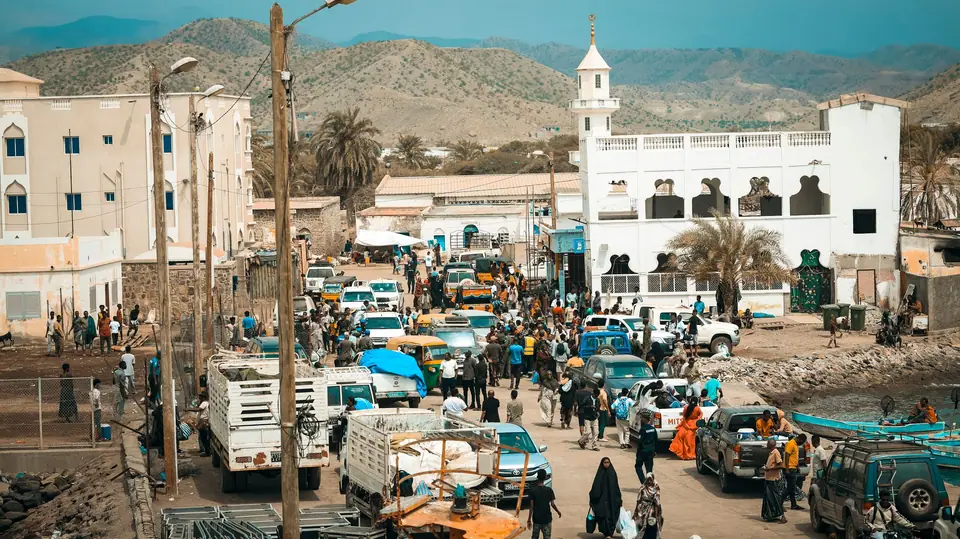
Even in the pleasant winter months, Djibouti City follows a Red Sea coastal rhythm. Bakeries, fish markets and government offices open early in the morning when the air is freshest. Between midday and mid-afternoon, many local shops shutter their doors while residents retreat indoors from the sun. Around late afternoon, life spills back onto the arcades of the European Quarter and the corniche walks of Plateau du Serpent and Héron, continuing well into the warm evening over grilled fish and spiced tea.
Traveller tips
Real advice from people who have been to Djibouti City: What to Know Before You Go. Every tip is read by our team before it goes live.
No tips yet. Been here? Yours could be the first.
Thank you! Your tip will appear here after a quick review.
More in Djibouti City
Continue exploring Djibouti City with related neighbourhood, food, and planning guides