Edinburgh
A volcanic rock crowned by a medieval castle, stone closes dropping off the Royal Mile, Georgian crescents in the New Town and windswept views from Arthur's Seat.
Quick decisions
How many days?
3 days: Edinburgh Castle, the Royal Mile and Victoria Street, Arthur's Seat and Holyrood, then Dean Village, Stockbridge and the New Town. 4 days: add Leith for the Royal Yacht Britannia or a day trip into the Highlands or St Andrews. Follow our three-day route.
Where should I stay?
Old Town and Grassmarket: atmospheric stone lanes right below the Castle. New Town: Georgian townhouses, quieter nights and easy tram/train access. Stockbridge or West End: leafy village feel twenty minutes' walk from Waverley. Compare areas in our neighbourhood guide.
Do I need a car?
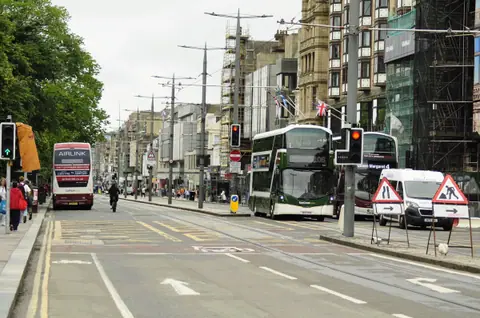
No. Edinburgh's Old and New Towns are built for walking (with steep stairs linking levels), and Edinburgh Trams and Lothian Buses cover the airport, Leith and the coast. Rent a car only when leaving the city for a multi-day Highlands road trip.
Best for
History and architecture: a medieval spine paired with an intact 18th-century Georgian grid. Walkers: climbing an extinct volcano inside the city limits. Pubs and whisky: wood-panelled Victorian bars and single malts.
Before you go
Book Edinburgh Castle online: walk-up tickets frequently sell out completely by mid-morning. August festivals: during the Fringe and Military Tattoo in August, book accommodation six to nine months ahead. Read our practical briefing.
Getting around
From Edinburgh Airport (EDI): the Airlink 100 express bus and the Edinburgh Tram both run straight to the West End, Princes Street and St Andrew Square in around 30 to 35 minutes. Details in arrival and transport.
Continue your trip
ScotRail trains reach Stirling Castle or Glasgow in under an hour, LNER and Lumo trains run down the East Coast Main Line to York and London King's Cross in just over four hours, and small-group tours head north to Loch Ness, Glencoe and the Isle of Skye.
Overview
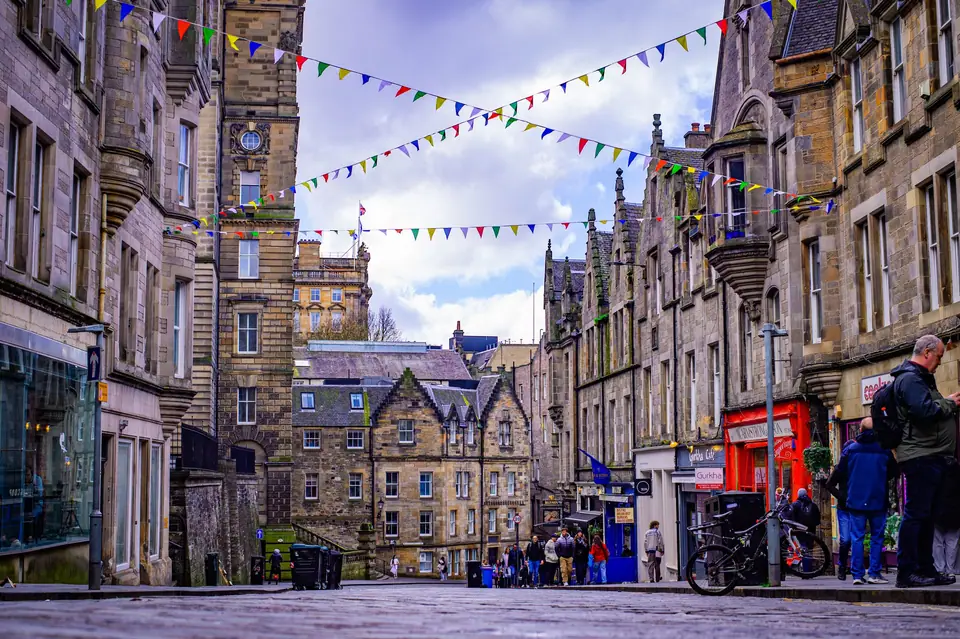
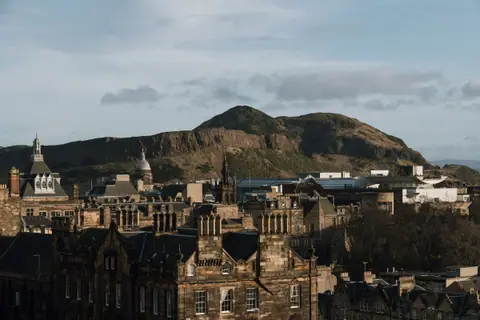
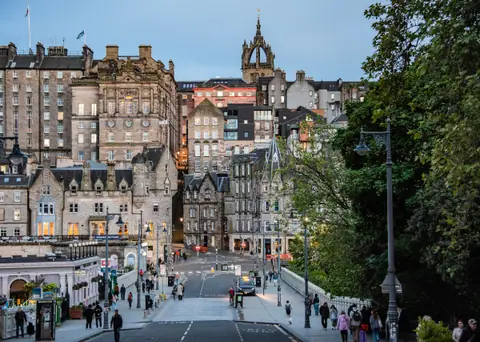
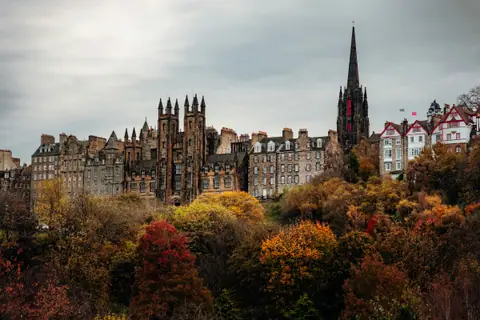
Edinburgh's drama comes from its geology. Carved by glaciers around plugs of dark volcanic basalt, the city splits cleanly across the green ravine of Princes Street Gardens. To the south rises the jagged spine of the Old Town, where multi-storey stone tenements ("lands") and narrow flagstone alleys ("closes" and "wynds") tumble downhill from Edinburgh Castle along the Royal Mile to the Palace of Holyroodhouse.
Across the valley to the north lies the symmetrical 18th-century Enlightenment grid of the Georgian New Town, Dean Village and Stockbridge, while at the eastern edge of the centre rises the 251-metre volcanic peak of Arthur's Seat. Start with our first-timer briefing before you book Castle tickets.
Getting there
Edinburgh Airport (EDI) lies 12 km west of the centre and is connected 24 hours a day by the blue Lothian Airlink 100 express bus to Waverley Bridge, as well as the Edinburgh Tram line running through the West End, Princes Street and St Andrew Square all the way down to the port of Leith and Newhaven. High-speed trains from London King's Cross pull right into Edinburgh Waverley in the valley between the Old and New Towns. See how to get to Edinburgh.
Where to stay
Sleeping in the Old Town or Grassmarket puts medieval stone closes outside your window, though you will carry luggage up steep gradients and stepped alleys. Choosing the New Town, West End or Stockbridge gives you flatter pavements, Georgian proportions and quieter nights. We compare six areas in where to stay in Edinburgh.
Things to do
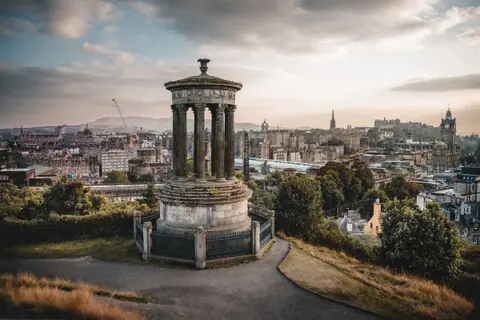
Tour Edinburgh Castle and duck into the hidden closes of the Royal Mile, hike up Arthur's Seat or watch sunset from Calton Hill, follow the Water of Leith walkway through Dean Village to Stockbridge, and spend an afternoon inside the free National Museum of Scotland. See the full list in things to do in Edinburgh.
Food and drink
Edinburgh eats far better than old British stereotypes suggest: traditional haggis, neeps and tatties or sticky cranachan in an Old Town tavern, fresh Scottish langoustines, mussels and smoked salmon in the dockside restaurants of Leith, and rare single malt whiskies poured in preserved 1890s tile-and-mahogany pubs. Read where to eat and drink in our viewpoints and food guide.
Culture
Capital of Scotland since the 15th century and powerhouse of the 18th-century Scottish Enlightenment (home to David Hume, Adam Smith, Walter Scott and Robert Louis Stevenson), Edinburgh became the world's first UNESCO City of Literature. Every August it hosts the Edinburgh International Festival and the Fringe, the largest performing arts gathering on earth.
Weather by month
Edinburgh is warmest in July, with average highs around 20°C, and coldest in January, when nights drop to about 2°C. October is the wettest month, with rain on about 12 days. For mild weather with fewer rainy days, aim for June.
| Month | Low | Range | High | Rain | Rainy days |
|---|---|---|---|---|---|
| Jan | 2°C | 7°C | 62 mm | 12 d | |
| Feb | 2°C | 8°C | 53 mm | 11 d | |
| Mar | 3°C | 10°C | 51 mm | 10 d | |
| Apr | 5°C | 12°C | 44 mm | 9 d | |
| May | 7°C | 15°C | 52 mm | 10 d | |
| Jun | 10°C | 18°C | 64 mm | 10 d | |
| Jul | 12°C | 20°C | 71 mm | 11 d | |
| Aug | 12°C | 19°C | 74 mm | 11 d | |
| Sep | 10°C | 17°C | 58 mm | 10 d | |
| Oct | 7°C | 13°C | 76 mm | 12 d | |
| Nov | 4°C | 9°C | 69 mm | 12 d | |
| Dec | 2°C | 7°C | 66 mm | 12 d |
Averages of daily values from 2015 to 2024. Rainy days are days with at least 1 mm of rain. Source: Open-Meteo · Compare destinations by month.
Edinburgh on the map
Every place we cover in Edinburgh. Tap a category or pin to explore.
In-depth Edinburgh guides
Browse the guides grouped by topic: sights, neighbourhoods, food, transport, day trips and trip planning.
Sights, Landmarks & Parks
Key monuments, viewpoints, museums and nature trails.
- Best Things to Do in EdinburghVolcanic viewpoints, medieval closes, free national museums, riverside villages and historic pubs.
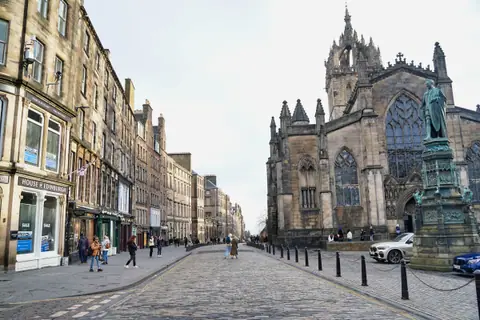
- Edinburgh Castle, the Royal Mile and the Old Town ClosesWalking the volcanic spine from Edinburgh Castle down through hidden closes to Holyroodhouse.
- Arthur's Seat, Calton Hill, Historic Pubs and What to EatRoutes up Arthur's Seat and Calton Hill, paired with Edinburgh's classic dishes and historic pubs.
Neighbourhoods & Where to Stay
Districts, historic quarters and the best bases for your stay.
- The Georgian New Town, Dean Village, Stockbridge and LeithEnlightenment crescents, the riverside hamlet of Dean Village, Stockbridge and dockside Leith.
- Where to Stay in Edinburgh: Old Town, New Town and StockbridgeSix Edinburgh neighbourhoods compared for historic character, hills, stairs and tram links.

Getting Around & Arrival
Airport transfers, public transit, passes and driving rules.

Trip Planning & Itineraries
When to visit, what to pack and day-by-day routes.
- Edinburgh: What to Know Before You GoUnderstanding Edinburgh's stacked streets, advance bookings, Scottish notes and local habits.
- Best Time to Visit EdinburghLong northern daylight in May and June, the August festival explosion and winter Hogmanay.
- What to Wear in EdinburghWhy a hooded windproof jacket beats an umbrella, plus footwear for cobbles and Arthur's Seat.
- 3 Days in Edinburgh: Castles, Volcanoes and Hidden VillagesThree days combining the medieval Old Town and Arthur's Seat with Dean Village and Leith.


Need your embassy or consulate in United Kingdom? See embassies and consulates in United Kingdom.
Reviews
Log in to write a review.
No reviews yet.