Photo: Demeester · CC BY-SA 3.0
Forty-Eight Hours in Ghent on Foot and Tram
We outline a balanced two-day walking route linking medieval quays, famous masterworks, and tram hops without unnecessary backtracking across town.
Day One: Medieval Towers, Canals, and Castle ramparts
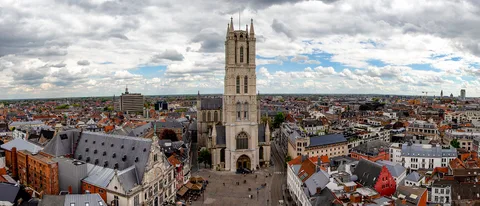
We begin the first morning at St Bavo's Cathedral for a reserved timed viewing of the 1432 Ghent Altarpiece. Visitors can choose between a 25-minute direct viewing slot or an immersive 60-minute augmented reality crypt tour. Keep in mind that Sunday mornings remain reserved for church worship, making Sunday afternoon visits essential. Because Phase 3 conservation runs until December 2026, seven upper panels in the cathedral are colour replicas. Their original wooden panels will return around spring 2027 once specialists finish conservation work.
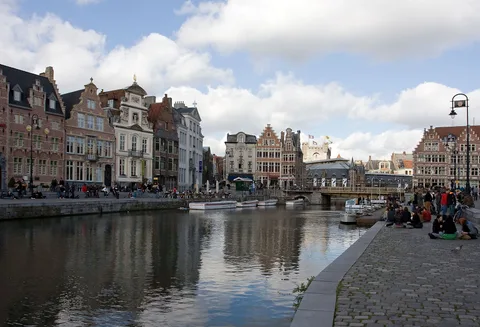
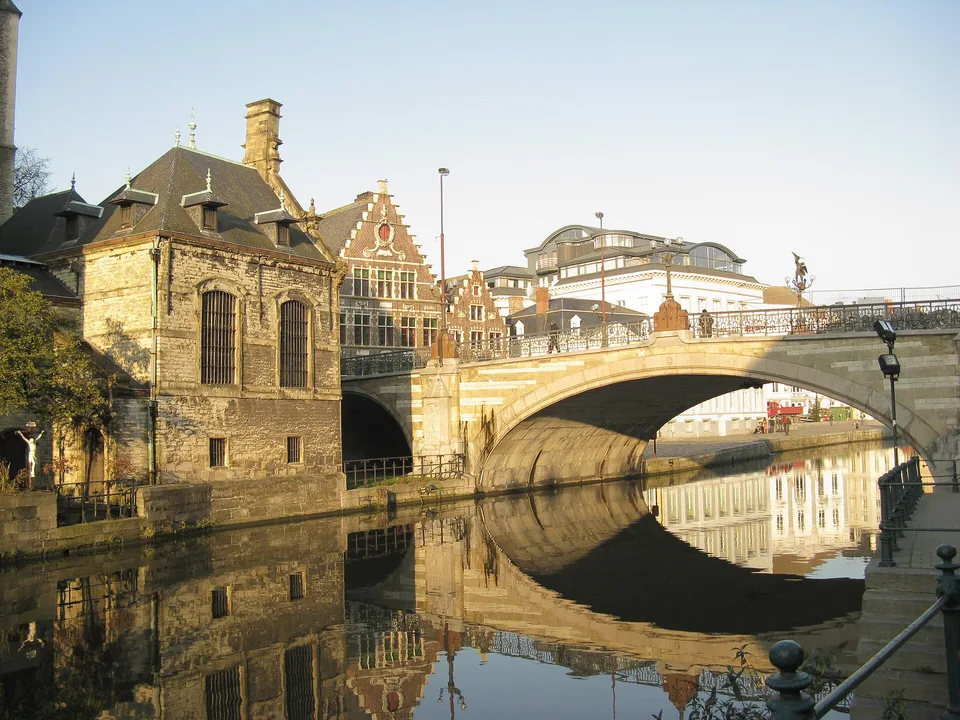
Next door stands the 91-metre Belfry of Ghent, inscribed as UNESCO Ref. 943 in 1999. We can climb 300 upper steps or ride the internal lift to watch the 54-bell carillon chime above the roofs. Stepping west across Sint-Niklaasstraat past Saint Nicholas' Church brings us to Saint Michael's Bridge. From the stone parapet, we take in the classic Three Towers panorama rising over the 11th-century Graslei and Korenlei quays.
We cross the River Leie toward Groentenmarkt, pausing for traditional pointed cuberdon sweets and fiery Tierenteyn mustard from outdoor market stalls. The historic Groot Vleeshuis meat hall nearby remains closed for roof repairs. Cross the water into the 1180 Gravensteen fortress. We budget 90 minutes to climb the stone ramparts with the comic audio guide before dinner in adjacent Patershol.
Day Two: Arts Quarter, Museum Collections, and Beguinage Strolls
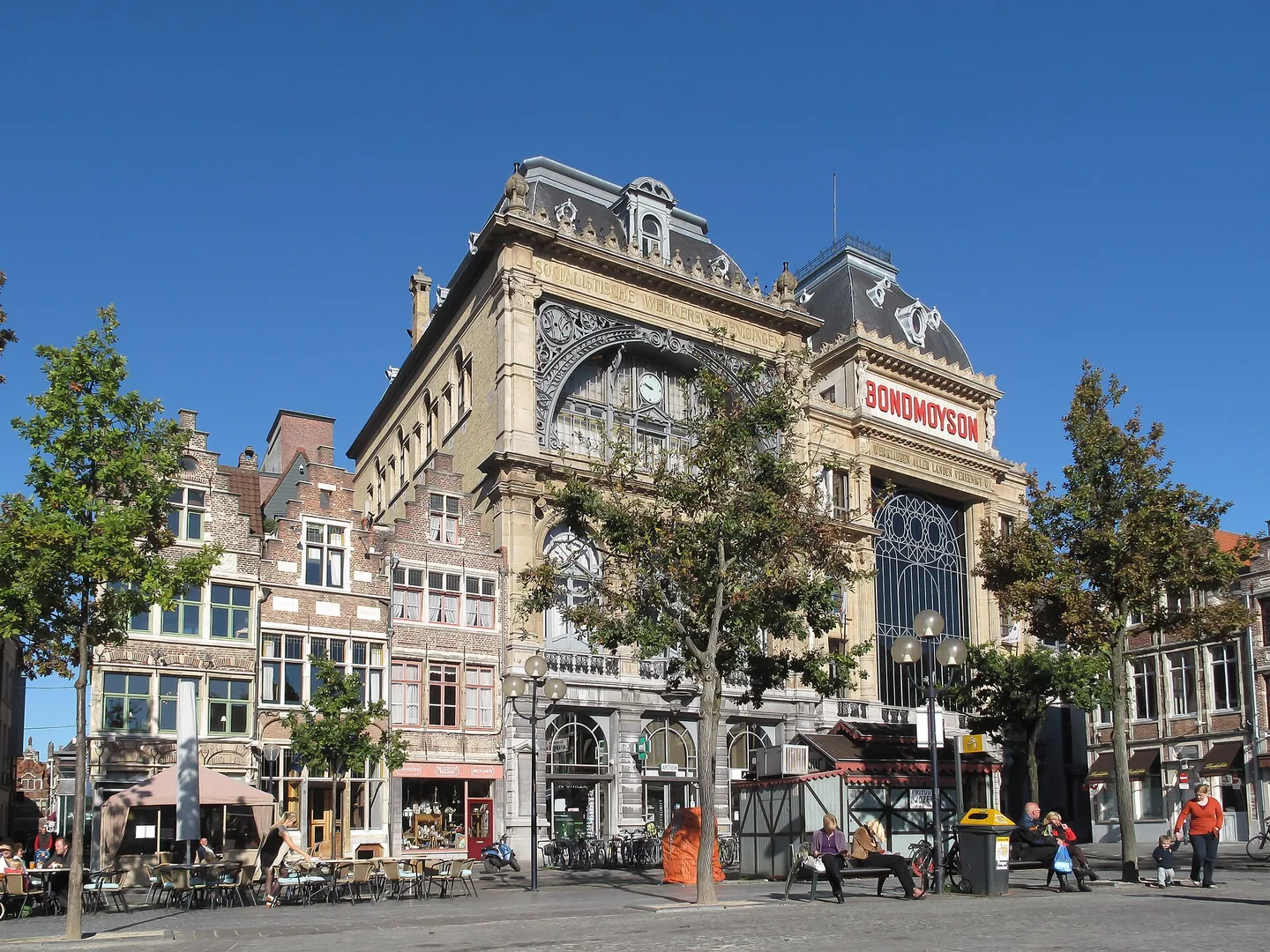
Our second day shifts south to Citadelpark and the Arts Quarter. We start early at MSK Gent to view Flemish old masters. From Tuesday to Friday, we can watch live conservation work on the real Altarpiece panels behind glass workshops. Contemporary art lovers can cross the avenue into S.M.A.K. Museum for rotating modern exhibitions.
From Citadelpark, we follow the canal northwest to the historic Bijloke medical campus. Here, STAM Ghent City Museum occupies medieval infirmary halls. Visitors can alternatively stroll the terraced orchard gardens of nearby Saint Peter's Abbey. Check our curated list of top city landmarks to plan extra hours around these historic quarters.
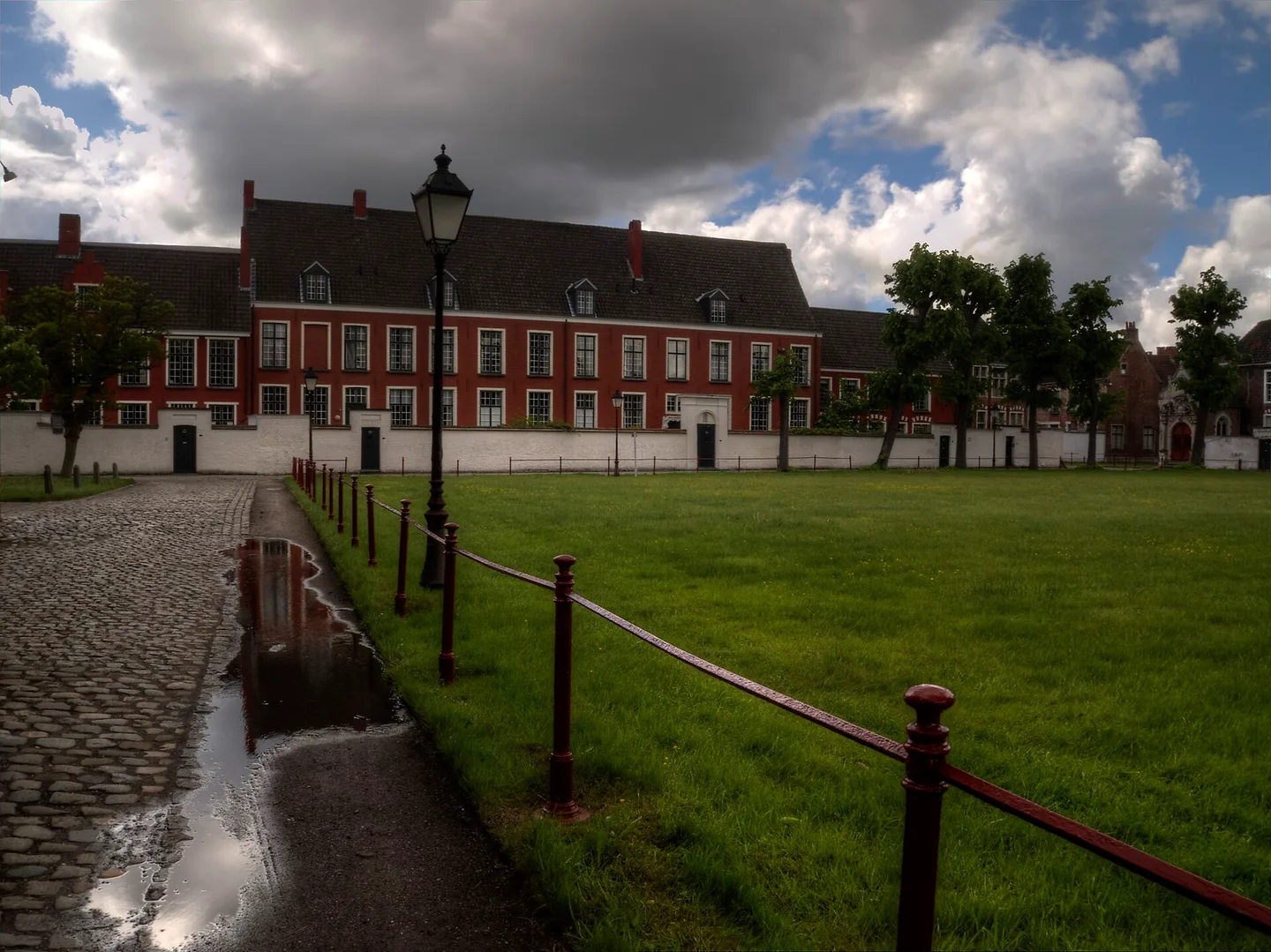
Heading back north along Jan Breydelstraat leads to Design Museum Gent, reopened on 3 October 2026 with a new 2,500-square-metre DING wing. We can alternatively visit the House of Alijn at Kraanlei 65 to see folklore displays. In the late afternoon, we walk across town to the Small Beguinage of Our Lady ter Hoyen, designated UNESCO Ref. 855 in 1998. Its walled courtyards offer total quiet before dinner around Vrijdagmarkt.
Flavours and Evening Dining Across Ghent
Exploring both districts on foot builds a hearty appetite for classic Flemish cooking. At lunchtime, taverns along the Leie quays serve steaming bowls of chicken or fish waterzooi cooked with tender vegetables and fresh cream. Bakers across the centre also press warm mastellen buns flavoured with sweet cinnamon.
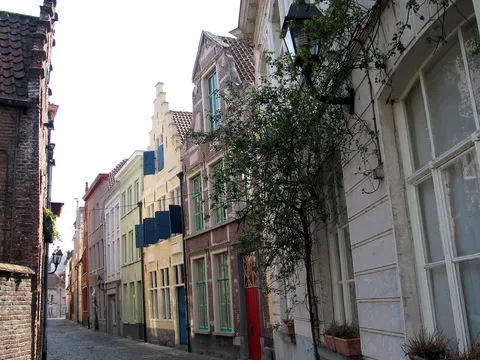
For dinner, the narrow cobblestone lanes of Patershol feature traditional bistros serving Ghent-style stoverij beef stew. Chefs simmer the meat slowly in dark regional beer and finish the rich sauce with mustard crusts. Charcuterie boards often highlight savoury Ganda ham, cured patiently for at least 10 months.
- Waterzooi: velvety chicken or river fish soup laden with julienned leeks, carrots, and egg-thickened cream broth.
- Stoverij: tender chunks of beef braised until melting in dark abbey ale alongside crusty farmhouse bread.
- Ganda ham: dry-salted cured pork charcuterie shaved razor-thin alongside pungent regional pickles.
- Mastellen: round spiced pastry buns indented in the centre, dusted with brown sugar, and iron-toasted crisp.
We can pair these hearty meals with local drinks while watching evening canal reflections along the quays. After dinner, a relaxed stroll through Vrijdagmarkt square offers open skies and quiet corners away from morning tram routes. Reserving central city accommodation makes late-night walks back to your room effortless.
Transit Routings, Museum Timing, and Route Logistics
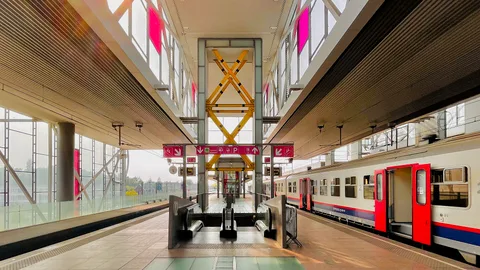
Navigating the urban core between Gent-Sint-Pieters railway station and central Kouter is straightforward on foot or public transport. Walking the station route takes 20 to 30 minutes, or you can ride the De Lijn network across the inner boulevards.
Picking up an all-inclusive visitor transit card simplifies admission logistics across forty-eight hours. The pass covers regional tram lines, fortress ramparts, panoramic belfry towers, municipal galleries, and includes a guided boat cruise along the canals.
Check opening schedules carefully before fixing your timetable to swap museum visits around weekly closure periods. Keep the major indoor museum complexes flexible as backup stops during rainy spells so you can enjoy outdoor quays under clear skies. Travellers extending their Flemish journey can catch direct express trains heading west to Bruges in half an hour.
Official prices and opening hours
- The Ghent Altarpiece + AR Crypt Tour (St Bavo's Cathedral)Official site ↗
- Gravensteen (Castle of the Counts)Official site ↗
- Belfry of GhentOfficial site ↗
- CityCard Gent (48-Hour Sightseeing & Transit Pass)Official site ↗
- Museum of Fine Arts (MSK Gent)Official site ↗
Where it is
- 1Ghent
- Brussels Airport (BRU) · about 56 km from Ghent in a straight line
- Directions in Google Maps
Stations and taxi ranks: OpenStreetMap. Airports: OurAirports. Distances are in a straight line.
Traveller tips
Real advice from people who have been to Ghent. Every tip is read by our team before it goes live.
No tips yet. Been here? Yours could be the first.
Thank you! Your tip will appear here after a quick review.
More in Ghent
Continue exploring Ghent with related neighbourhood, food, and planning guides