


























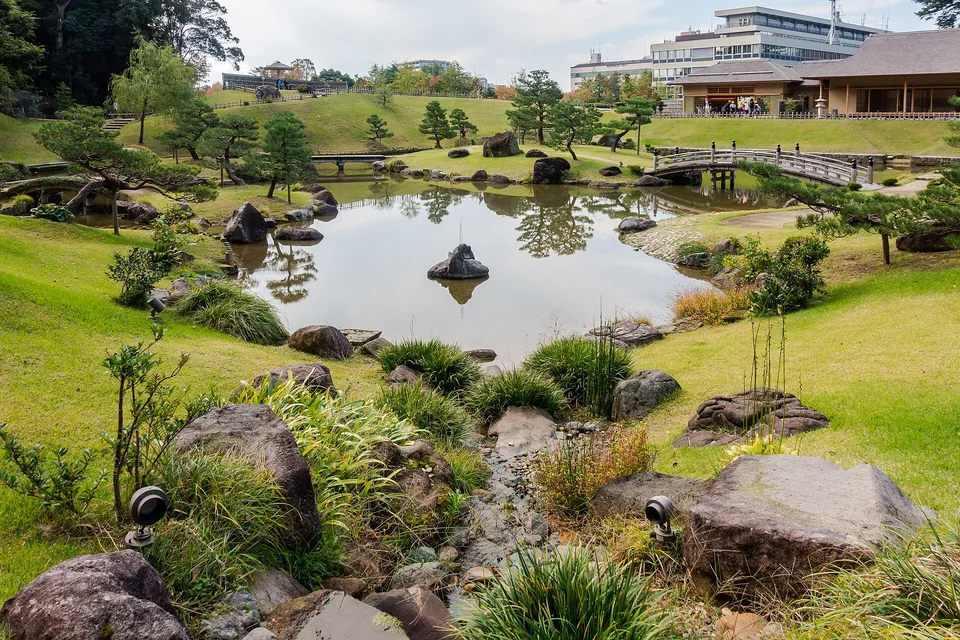
Photo: Benh LIEU SONG · CC BY-SA 2.0
Forty-Eight Hours Across Kanazawa's Gardens, Castle and River Quarters
We trace a balanced forty-eight-hour loop through historic castle grounds, Edo-period quarters, and modern art spaces set between two gentle riverbanks.
Day One Morning: Feudal Ramparts and Serene Strolls
We begin our first morning early inside Kenroku-en to enjoy quiet garden paths before daytime tour groups arrive. Entering through the Renchimon or Zuishinzaka gates allows us to admire Kasumigaike Pond and the two-legged Kotoji-toro lantern in peaceful solitude. From 1 November through the winter months, gardeners secure traditional yukitsuri rope cones across the branches to protect old pine trees from heavy snow. Morning visitors entering during the free admission hours must leave fifteen minutes prior to the paid opening. Alternatively, guests obtain a daytime ticket to remain on the grounds.
Leaving Kenroku-en, we cross the elevated pedestrian bridge straight through the 1788 Ishikawa-mon Gate into Kanazawa Castle Park. This direct approach opens onto wide lawns framed by the 2001 reconstructed Hishi Yagura turret and the long white walls of Gojikken Nagaya storehouse. We descend the stone paths toward the 2015 terraced Gyokusen'inmaru Garden, which offers resting benches beside pond waters reflecting steep ramparts. The entire historic zone occupies a compact 2 km corridor between the Asano and Sai rivers, allowing us to cover substantial ground entirely on foot. Many visitors pair this morning loop with details found in our practical overview of Kenroku-en and neighbouring geisha quarters.
Day One Afternoon: Contemporary Galleries and Twilight Teahouses
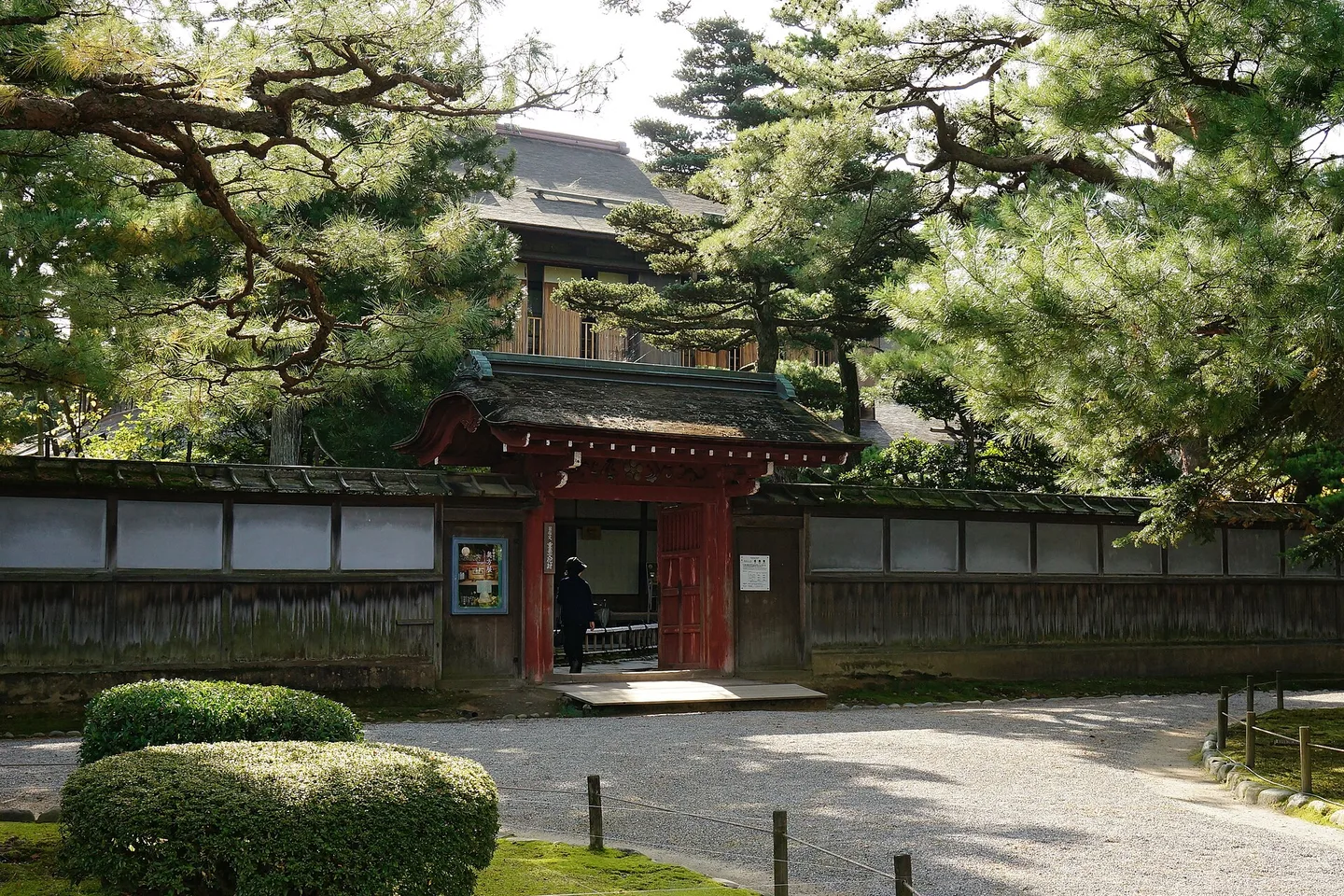
Leaving the castle gates behind, we walk 5 minutes south to reach the 21st Century Museum of Contemporary Art. Opened in 2004, the circular glass pavilion requires a morning same-day timed reservation to access Leandro Erlich's Swimming Pool installation. Travellers interested in contemplative art can walk along the path toward the D.T. Suzuki Museum, admiring the tranquil Water Mirror Garden. The neighbouring nineteenth-century Seisonkaku Villa sits nearby under shaded trees, though it observes scheduled closures on Wednesdays.
Both the 21st Century Museum and the 2020 National Crafts Museum close every Monday, alongside the D.T. Suzuki Museum. If your first day happens to fall on a Monday, simply swap these art institutions with the open attractions planned for Day Two. In the late afternoon, we board the Left Loop Bus at Kenroku-en for a single stop to Hashiba-cho, crossing the Asano River into Higashi Chaya. Established in 1820, this district features preserved wooden latticework fronts, gold-leaf artisan shops, and historic premises like Shima Teahouse and Kaikaro. As evening approaches, we cross over to Kazuemachi to watch lanterns illuminate quiet riverside flagstones.
Day Two Morning: Market Bites and Samurai Residences
We start our second morning at Omicho Market, a historic trading hub founded around 1721 that hosts roughly 170 lively stalls. Browsing early allows us to sample fresh seafood from the Sea of Japan and order generous kaisendon rice bowls before midday queues build. Keep in mind that many independent fishmongers take scheduled rest days on Wednesdays and Sundays. After tasting sweet crab and grilled skewers, we begin walking south toward Oyama Shrine.
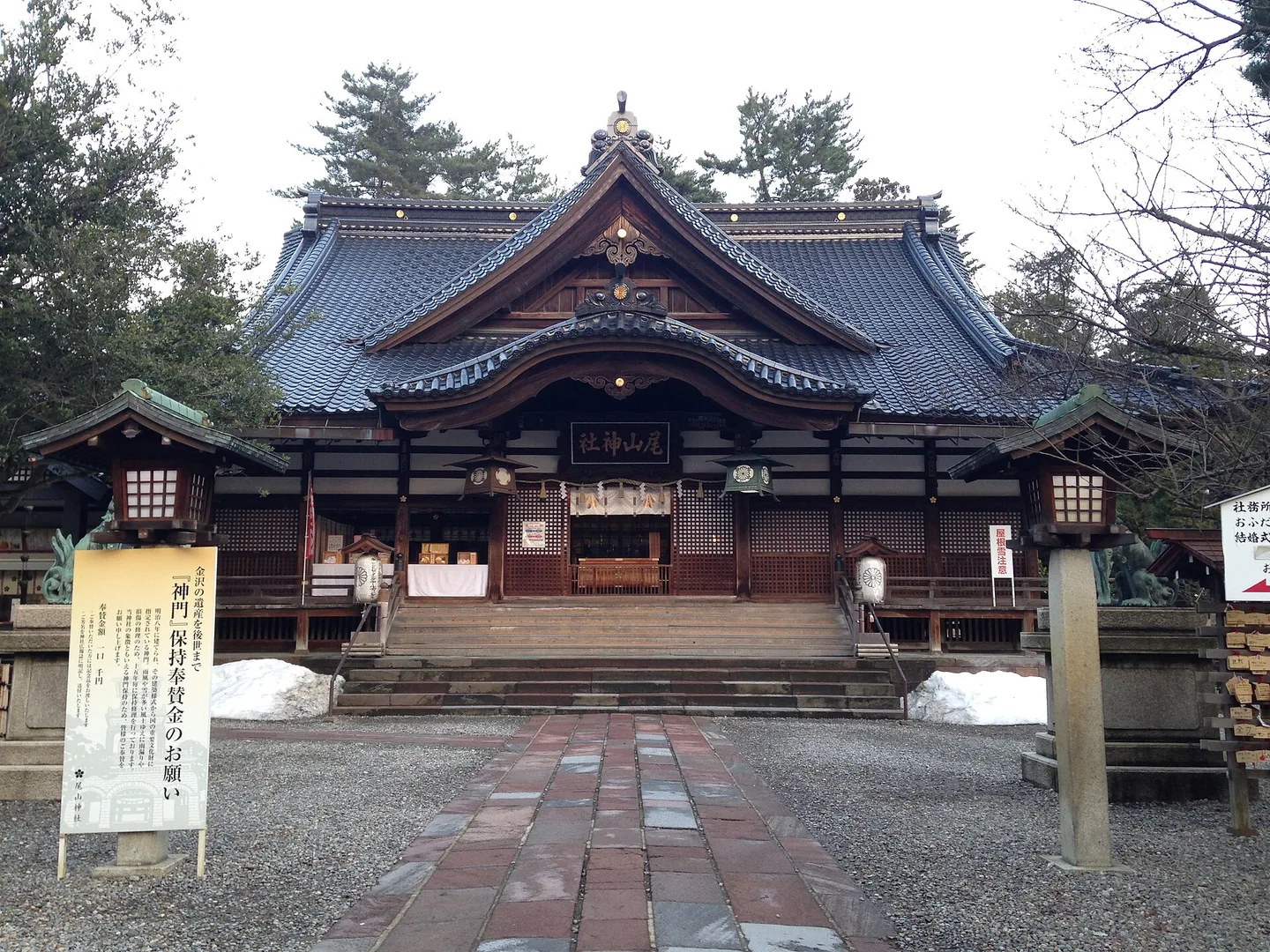
Oyama Shrine stands out thanks to its unique 1875 Shinmon Gate, which incorporates Dutch stained glass on its upper level. We cross from the shrine grounds over the 2020 wooden Nezumitamon Bridge, entering the peaceful alleys of the Nagamachi Samurai District. Straw mats line earthen mud walls, known locally as dobu-bei, protecting them from wet winter freezing. We step inside the preserved Nomura-ke residence to view genuine samurai armour, family scrolls, and a quiet courtyard garden fed by running stream waters. The district offers a remarkable contrast to the mercantile bustle experienced earlier in the morning.
Summary of Two-Day Route Leg Highlights
- Day One Morning: Kenroku-en ponds, Ishikawa-mon Gate, and Gyokusen'inmaru Garden ramparts
- Day One Afternoon: 21st Century Museum installations, Higashi Chaya teahouses, and Kazuemachi riverbank
- Day Two Morning: Omicho Market seafood stalls, Oyama Shrine's stained glass, and Nagamachi mud walls
- Day Two Afternoon: Myōryū-ji hidden passages, Nishi Chaya lanes, and Katamachi dining
Day Two Afternoon: Secret Passages and Evening Dining
After crossing the Sai River into the Teramachi district, we reach Myōryū-ji, an intriguing Edo-period temple also known as Ninja-dera. Because access requires a telephone reservation placed in advance, travellers should call +81-76-241-0888 up to one month ahead. Guided interior tours demonstrate hidden trapdoors, deceptive staircases, and secret escape tunnels originally engineered to guard against surprise invasions. The temple maintains strict visiting policies, accepting cash only at the reception counter and excluding children under six years of age.
Following our tour of Myōryū-ji, we enjoy an easy walk through the nearby Nishi Chaya teahouse quarter before heading toward Katamachi for dinner. Purchasing a 1-day Kanazawa city bus pass pays for itself after four short rides and offers reduced entry fees at 27 local cultural institutions. For our evening meal, we seek out regional Kaga jibuni, a thick stew featuring duck or fowl, seasonal mushrooms, and wheat gluten simmered in rich dashi broth. Those planning extra days in Ishikawa Prefecture will find helpful context in our broader collection of top cultural landmarks and traditional artisan quarters across Kanazawa.
Official prices and opening hours
- Kenroku-en GardenOfficial site ↗
- Shima Teahouse (Higashi Chaya)Official site ↗
- Nomura-ke Samurai ResidenceOfficial site ↗
- Myōryū-ji (Ninja-dera)Official site ↗
Where it is
- 1Kanazawa
- Komatsu Airport / JASDF Komatsu Air Base (KMQ) · about 29 km from Kanazawa in a straight line
- Directions in Google Maps
Stations and taxi ranks: OpenStreetMap. Airports: OurAirports. Distances are in a straight line.
Traveller tips
Real advice from people who have been to Kanazawa. Every tip is read by our team before it goes live.
No tips yet. Been here? Yours could be the first.
Thank you! Your tip will appear here after a quick review.
More in Kanazawa
Continue exploring Kanazawa with related neighbourhood, food, and planning guides
Kenroku-en Garden and the Higashi Chaya Teahouse Quarter
Kanazawa, Japan
Choosing a Base in Kanazawa: Station Convenience to Historic Teahouse Quarters
Kanazawa, Japan
Arriving by Shinkansen, Navigating Loop Buses, and Sea of Japan Weather in Kanazawa
Kanazawa, Japan
Museums, Samurai Lanes and Temple Craft in Kanazawa
Kanazawa, Japan
