


























Arriving by Shinkansen, Navigating Loop Buses, and Sea of Japan Weather in Kanazawa
Direct Hokuriku Shinkansen trains, cross-platform transfers, and coastal rain patterns shape how we plan every journey into Kanazawa.
Shinkansen Connections and Regional Rail Transfers
Reaching Kanazawa from the capital remains straightforward thanks to high-speed rail links running across central Honshu. Direct Hokuriku Shinkansen Kagayaki services speed from Tokyo to Kanazawa Station in roughly 2 hours 28 minutes. These fast trains require all-reserved seating before boarding, while the Hakutaka service takes around 3 hours. Both train types provide spacious luggage racks and quiet cabins that glide past the northern Japanese Alps.
Rail itineraries from western Japan changed substantially on 16 March 2024. A 125 km extension carried the Hokuriku Shinkansen tracks south to Tsuruga Station. Travellers coming from Kyoto or Osaka now ride the Limited Express Thunderbird to that terminus. At the interchange, passengers make a cross-platform transfer to the Hokuriku Shinkansen Tsurugi shuttle to complete their journey. Total travel time comes to about 2 hours from Kyoto and around 2 hours 15 minutes from Osaka.
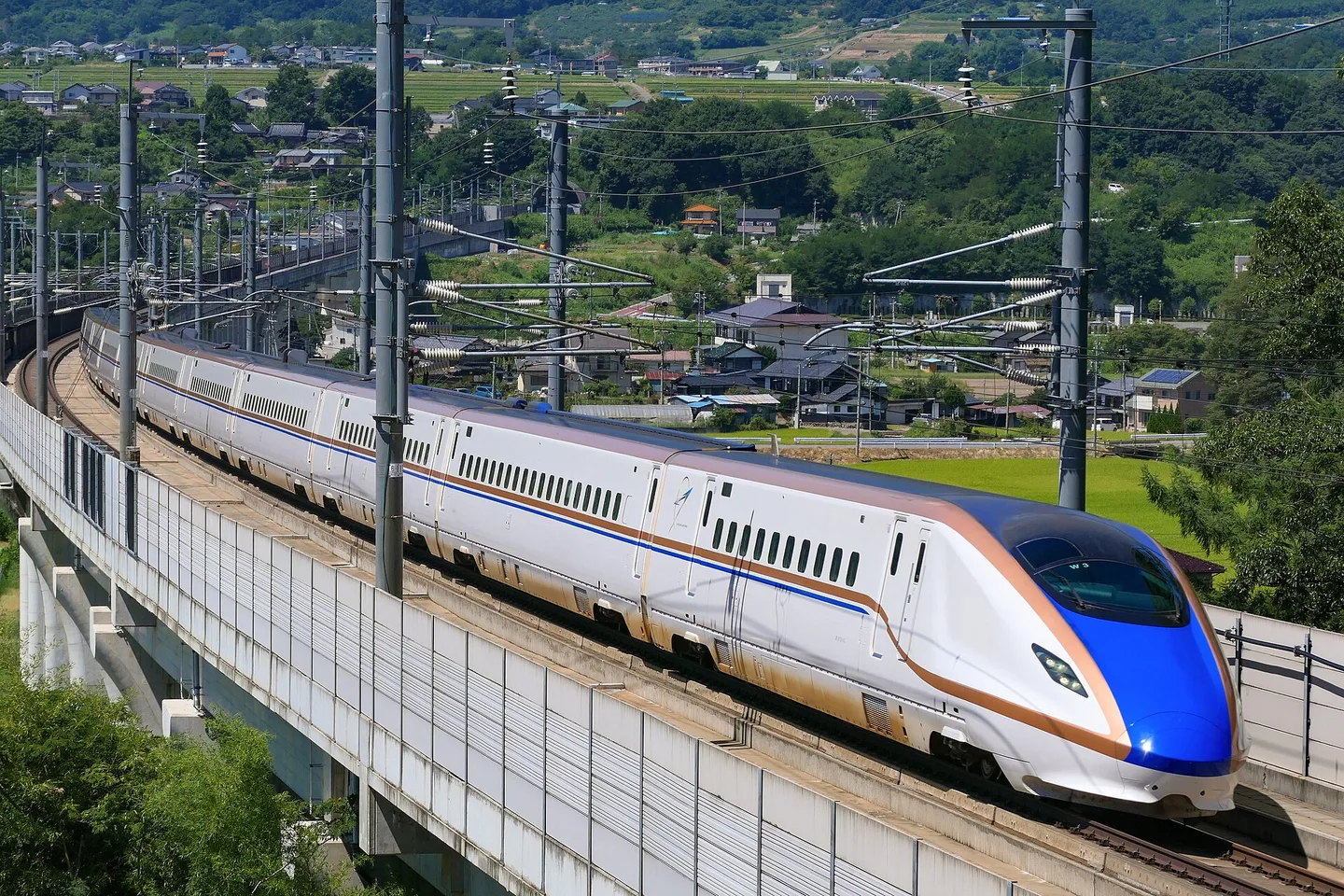
Transfer platforms at Tsuruga feature bright directional signs and wide escalators. These amenities help passengers move luggage smoothly between train sets. Booking your Thunderbird seat and your Tsurugi shinkansen seat on a single continuous ticket simplifies gate validation. This connection reliably links the historic Kansai region directly with the western Sea of Japan coast.
Airport Coaches, Highway Buses, and Local City Transit
Flying into the region brings travellers to Komatsu Airport, situated 32 km southwest of downtown Kanazawa. Hokutetsu limousine buses connect the terminal directly to the station and central districts. The coach reaches Kanazawa Station West Exit in 40 minutes, continuing onward to the Korinbo shopping area in just under an hour. Departures are timed 10 to 15 minutes after domestic flight arrivals, and advance seat reservations are not required.
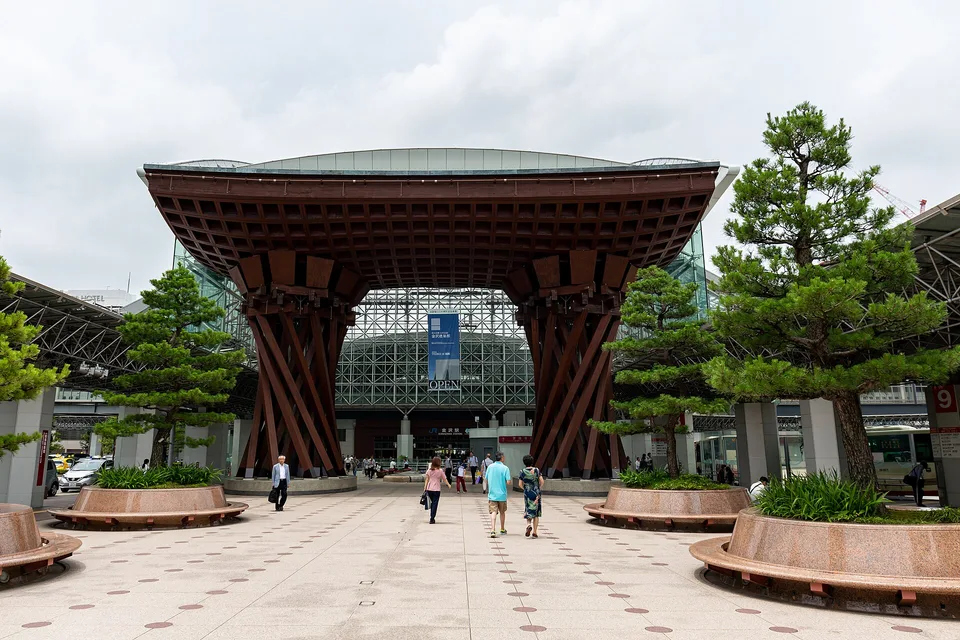
Arriving at Kanazawa Station places passengers beneath the expansive glass Motenashi Dome and the towering wooden Tsuzumi-mon Gate completed in 2005. East Gate bus platforms host the Castle Town Loop Buses. Clockwise Right Loop buses run every 15 minutes, while counter-clockwise Left Loop buses depart every 20 minutes. Both routes link the station directly to Omicho Market, Kenroku-en, and historic geisha districts.
Boarding city buses is easy with nationwide IC cards such as Suica, ICOCA, or PASMO, alongside contactless bank payment cards. Municipal Flat Buses also accept these payment methods. Travellers planning busy sightseeing days can buy the digital 1-day city bus pass on Norimasshi Kanazawa or at station ticket counters. The pass pays off after four rides and offers admission discounts at 27 local sights. You cannot purchase this pass on board the vehicle.
Key transport options across central Kanazawa include:
- Castle Town Loop Buses: Right Loop buses depart every 15 minutes, while Left Loop services run every 20 minutes from East Gate platforms.
- Regional Airport Coaches: Limousine buses link Komatsu Airport to Kanazawa Station in 40 minutes without advance booking.
- Mountain Highway Coaches: Nohi and Hokutetsu buses reach Shirakawa-go in 80 minutes from West Exit Stop 4 with mandatory seat reservations.
- City Footpaths: Central heritage districts sit within a flat 2 km walking radius, eliminating any genuine need for a rental car.
Renting a car inside central Kanazawa is completely unnecessary for visitors. Major cultural neighbourhoods sit within a compact 2 km walking radius from the castle park. Historic streets throughout the Nagamachi samurai district and Higashi Chaya are narrow, and car parking is scarce.
Sea of Japan Precipitation, Snow Ropes, and Seasonal Shifts
Kanazawa sits directly exposed to moisture travelling across the Sea of Japan, creating distinct wet weather throughout the colder months. Open-Meteo records show December averaging 24.2 wet days and 229 mm of precipitation, alongside daytime highs of 9.4°C and overnight lows of 2.7°C. January records 24.9 wet days and 196 mm of precipitation, with afternoon highs of 6.2°C and freezing lows of -0.1°C. February brings 18.9 wet days and 142 mm of moisture, with highs reaching 7.3°C and lows dipping to -0.1°C.
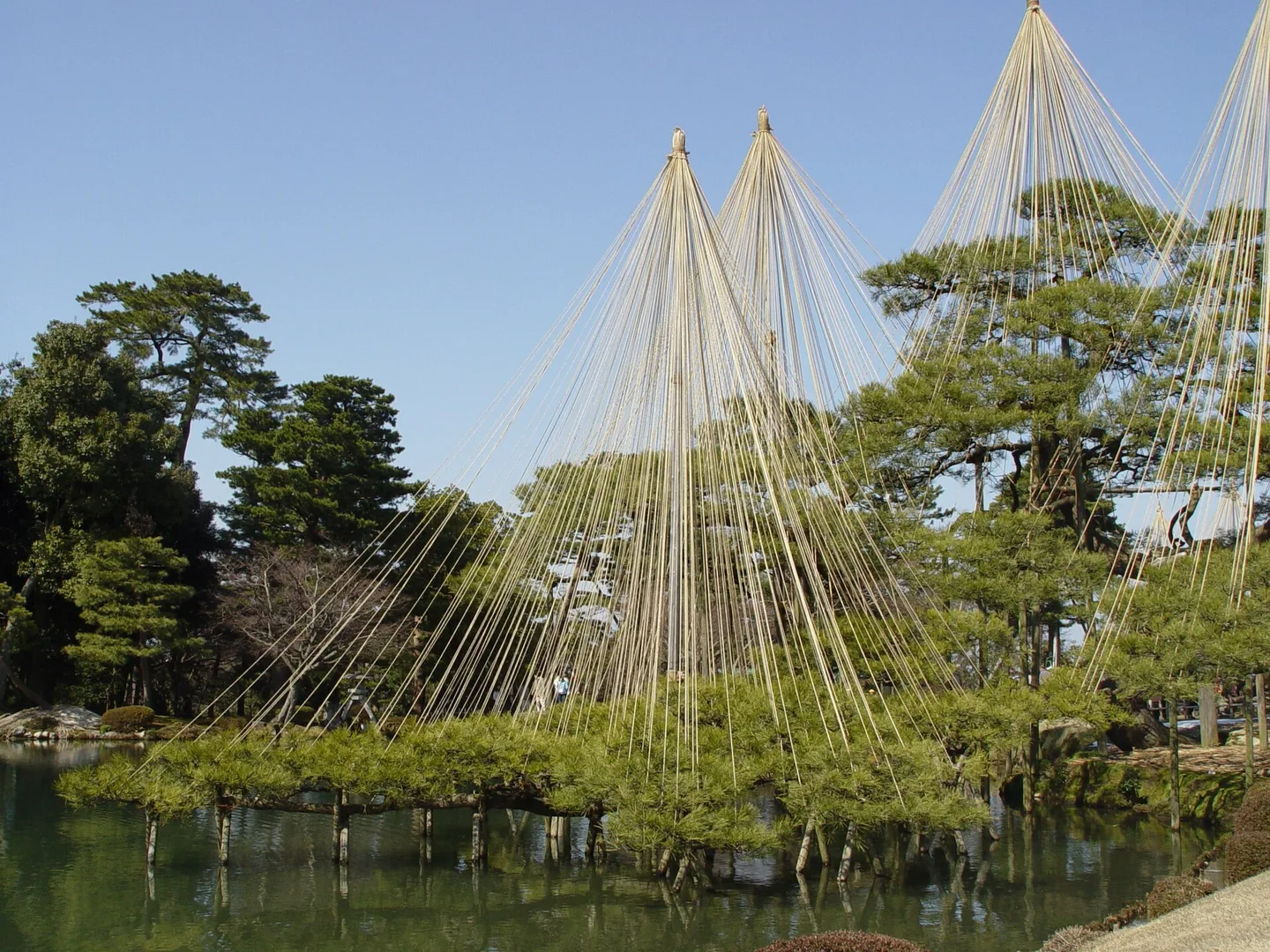
Local wisdom advises travellers to forget lunch rather than an umbrella when stepping outdoors. Roughly 20 municipal umbrella lending points across the centre let pedestrians borrow and return umbrellas freely during sudden downpours. In Kenroku-en garden, teams of skilled groundskeepers erect conical yukitsuri rope structures on pine branches starting on 1 November. These sturdy ropes protect the ancient trees from heavy, wet Sea of Japan snowfall.
Summer brings warmth alongside heavy downpours. Open-Meteo data identifies July as the wettest month of the year, averaging 271 mm of rainfall with daytime temperatures of 28.7°C and nighttime lows of 22.1°C. August is the hottest month, reaching 30.4°C during the day and 23.4°C overnight across 15.8 wet days with 210 mm of rain. May provides gentle walking conditions with 21.6°C highs, 12.4°C lows, 12.3 wet days, and 135 mm of precipitation. October offers pleasant weather with 20.4°C highs, 12.9°C lows, 14.4 wet days, and 172 mm of rain.
Spring cherry blossoms appear in April, when temperatures average highs of 16.4°C and lows of 7.2°C alongside 159 mm of rain. The famous Hyakumangoku Matsuri festival takes place during the first weekend of June, commemorating Lord Maeda Toshiie entering Kanazawa Castle in 1583. Autumn foliage peaks in November with 15.3°C highs and 174 mm of rain, followed by the winter snow-crab harvest.
Local Rules, Museum Calendars, and Onward Travel Routes
Municipal policies require hotels and ryokan to collect a local accommodation tax per guest per night at check-in. Kanazawa City introduced this tiered tax system in April 2019 and updated the payment framework in October 2024. The modest surcharge supports historical preservation and multilingual city facilities.
Planning cultural visits requires checking museum opening schedules before setting out. Detailed opening times and weekly closures appear in the visitor facts box below. Travellers wishing to tour the Ninja Temple, Myōryū-ji, must reserve their guided visit in advance over the telephone.
Kanazawa serves as a smooth stepping stone between eastern and western Honshu. Pairing a two-day stay here with time in Tokyo or Kyoto creates an easy circular rail route. The reliable shinkansen timetable helps travellers move punctually across Japan. Many visitors organise their city stay through our detailed Kanazawa route planner before continuing their journey across the Hokuriku coast.
Official prices and opening hours
- Komatsu Airport Limousine Bus (Hokutetsu)Official site ↗
- Kanazawa City One-Day Bus PassOfficial site ↗
- Kanazawa Municipal Accommodation Tax (City Hall)Official site ↗
- Kenroku-en GardenOfficial site ↗
Where it is
- 1Kanazawa
- Komatsu Airport / JASDF Komatsu Air Base (KMQ) · about 29 km from Kanazawa in a straight line
- Directions in Google Maps
Stations and taxi ranks: OpenStreetMap. Airports: OurAirports. Distances are in a straight line.
Traveller tips
Real advice from people who have been to Kanazawa. Every tip is read by our team before it goes live.
No tips yet. Been here? Yours could be the first.
Thank you! Your tip will appear here after a quick review.
More in Kanazawa
Continue exploring Kanazawa with related neighbourhood, food, and planning guides
Museums, Samurai Lanes and Temple Craft in Kanazawa
Kanazawa, Japan
Kenroku-en Garden and the Higashi Chaya Teahouse Quarter
Kanazawa, Japan
Choosing a Base in Kanazawa: Station Convenience to Historic Teahouse Quarters
Kanazawa, Japan
Forty-Eight Hours Across Kanazawa's Gardens, Castle and River Quarters
Kanazawa, Japan
