Marienplatz, the Residenz and Walking the Historic Altstadt
A walking route through Munich's medieval squares, royal Wittelsbach palaces and Baroque churches.
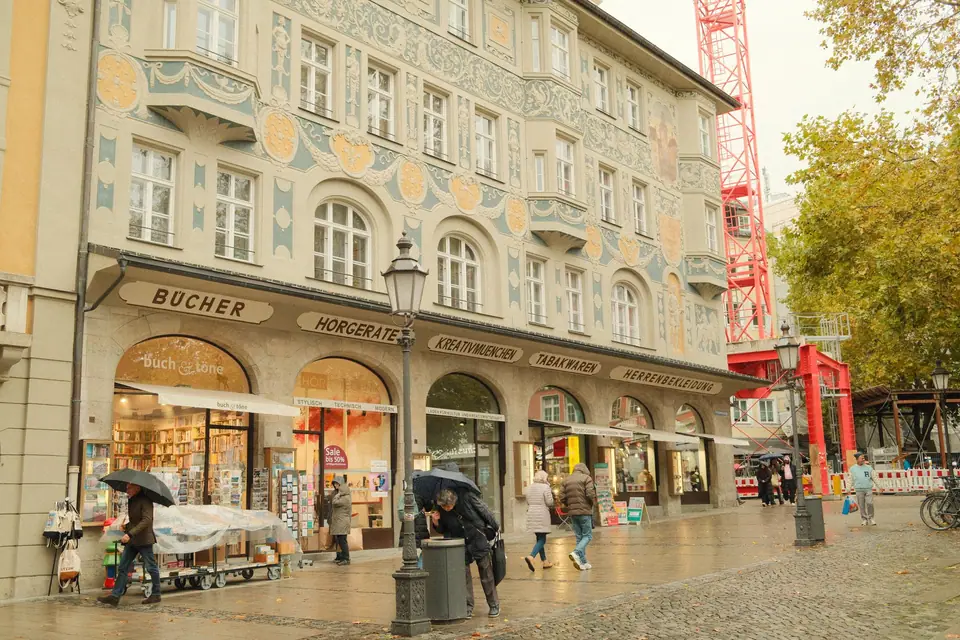
Founded in 1158 where the medieval salt road crossed the Isar River, Munich's historic core (the Altstadt) can be walked from gate to gate in twenty minutes. The best way to orient yourself on your first morning is to start at Marienplatz, climb a church tower to see the layout from above, and then work north toward the royal palace complex.
Marienplatz, Alter Peter and the Frauenkirche
- Neues Rathaus (New Town Hall) and Glockenspiel: filling the northern side of Marienplatz, the Neo-Gothic town hall facade holds a two-tiered mechanical Glockenspiel of 32 life-sized copper figures that re-enact the 1568 royal wedding joust of Duke Wilhelm V and the barrel-makers' dance (Schäfflertanz) each morning (and again at midday and late afternoon in summer).
- St Peter's Church (Alter Peter): right behind Marienplatz stands Munich's oldest parish church. Skip the lift in the Town Hall and climb the 299 wooden steps of Alter Peter's tower instead: from the narrow exterior gallery you look straight down onto the Town Hall courtyard, across to the twin domes of the Frauenkirche, and south on clear Föhn days to the jagged wall of the Bavarian Alps.
- The Frauenkirche (Cathedral of Our Dear Lady): built in red brick in just twenty years during the late 1400s and capped with two 99-metre green copper onion domes. Step inside the soaring whitewashed hall to see the mysterious "Devil's Footprint" (Teufelstritt) cast in the entrance floor tiles; by city planning law, no building in central Munich may be built taller than these towers.
- Asamkirche on Sendlinger Straße: ten minutes south-west toward Sendlinger Tor, squeezed into a plot barely eight metres wide between two townhouses, the brothers Cosmas Damian and Egid Quirin Asam built this late-Baroque jewel box in 1733 as their private chapel, packed with gilt stucco, twisted marble columns and dramatic hidden skylights.
Odeonsplatz and the Munich Residenz
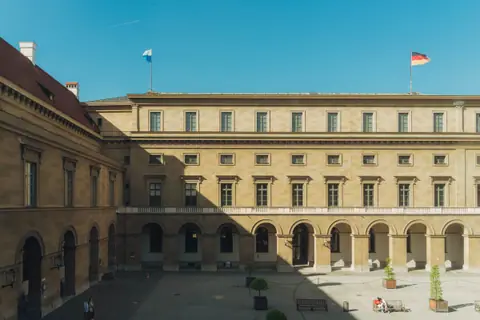
Walk north past the yellow-painted Baroque facade of the Theatinerkirche and the Italianate arches of the Feldherrnhalle on Odeonsplatz (peek into the tranquil Hofgarten arcade behind it) to enter the Munich Residenz, the seat of the Wittelsbach dukes, electors and kings from 1508 to 1918. The palace is vast, with over 130 rooms on display; buy the combination ticket covering both the Residenz Museum and the Treasury (Schatzkammer):
- The Antiquarium: built in 1568 to house the dukes' classical sculptures, its 66-metre barrel-vaulted ceiling painted with frescoes and views of 102 Bavarian towns makes it the largest Renaissance hall north of the Alps.
- The Ancestral Gallery and Ornate Rooms: gilded Rococo state apartments designed by François de Cuvilliés, followed by the Cuvilliés-Theater (separate entrance off Residenzstraße), whose carved four-tier red-and-gold boxes witnessed the 1781 premiere of Mozart's Idomeneo. Pair your morning here with lunch at the nearby Viktualienmarkt.
Traveller tips
Real advice from people who have been to Marienplatz, the Residenz and Walking the Historic Altstadt. Every tip is read by our team before it goes live.
No tips yet. Been here? Yours could be the first.
Thank you! Your tip will appear here after a quick review.
More in Munich
Continue exploring Munich with related neighbourhood, food, and planning guides