Munich
Bavaria's capital of onion-domed churches, royal palaces, museum quarters and chestnut-shaded beer gardens beside the Alpine-fed Isar River.
Quick decisions
How many days?
3 days: Marienplatz, the Residenz and Viktualienmarkt, the Kunstareal museums and English Garden, plus Nymphenburg Palace or BMW Welt. 4 to 5 days: add a day trip to Neuschwanstein Castle, Salzburg or the Dachau Memorial Site. Follow our three-day route.
Where should I stay?
Altstadt-Lehel: walk-everywhere historic core. Maxvorstadt: leafy streets beside the great art museums and university cafés. Glockenbachviertel or Haidhausen: neighbourhood dining and evening bars. Compare districts in our neighbourhood guide.
Do I need a car?
No. Central Munich is pedestrianised around Marienplatz, and MVV S-Bahn, U-Bahn and trams reach every palace and suburb. Regional trains using the Bayern-Ticket cover Alpine day trips.
Best for
Beer garden culture: shaded tables where you can bring your own picnic food. Art and engineering: Old Masters at the Alte Pinakothek, science at the Deutsches Museum and BMW Welt. Alpine access: lakes and castles within an hour or two by train.
Before you go
Sundays: all shops and supermarkets close on Sundays, while museums stay open (many with reduced Sunday admission). Carry some cash: smaller bakeries, beer garden food stalls and market kiosks still prefer notes and coins. Read our practical briefing.
Getting around
From Munich Airport (MUC): S-Bahn lines S1 and S8 run directly into the central tunnel (Marienplatz and Hauptbahnhof) in about 40 to 45 minutes. In the city: U-Bahn, S-Bahn and trams on a single MVV Day Ticket. Details in arrival and transport.
Overview
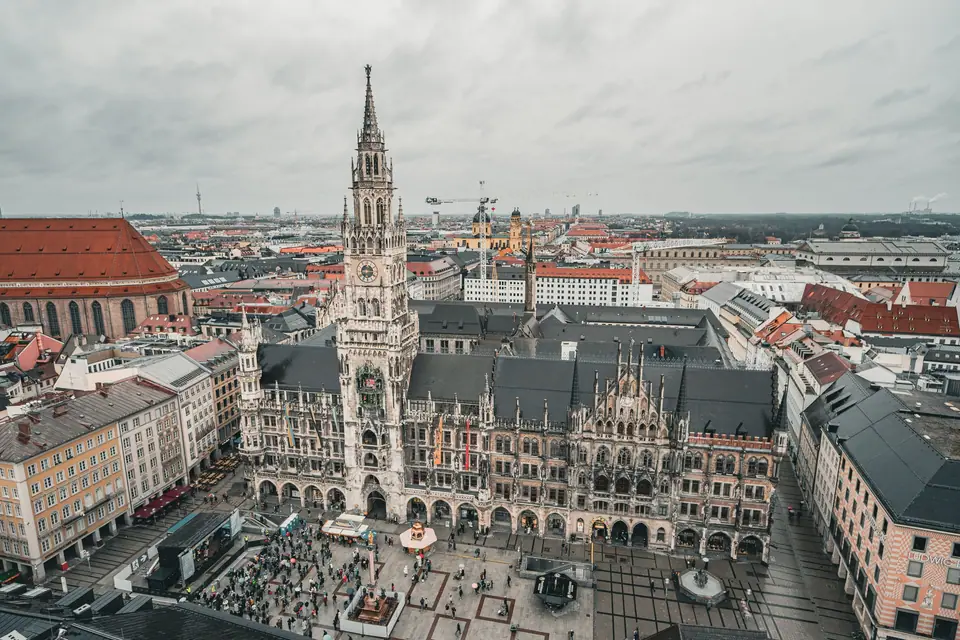
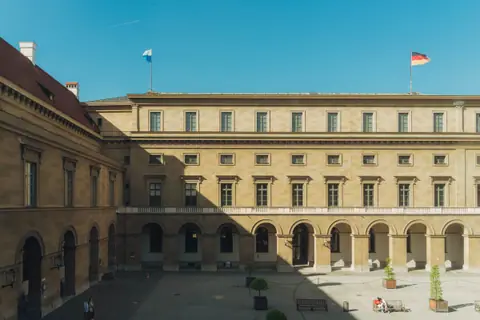
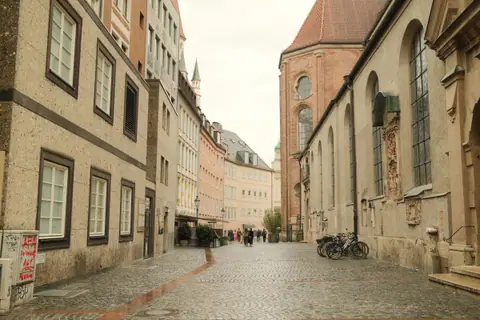
Munich combines the grandeur of a former royal capital with the relaxed outdoor pace of a town at the foot of the Alps. At its centre sits the Altstadt around Marienplatz, where the twin green onion domes of the Frauenkirche rise beside the Wittelsbach monarchs' sprawling Residenz palace and the open-air food stalls of the Viktualienmarkt.
Walk ten minutes north and you enter the Kunstareal museum district and the English Garden, one of the largest urban parks in the world, where surfers ride a standing wave on the Eisbach stream and thousands of locals gather under chestnut trees at beer garden tables. Whether you come for spring beer gardens, summer river swims along the Isar, autumn Oktoberfest tents or December Christmas markets, start with our first-timer guide.
Getting there
Munich Airport (Franz Josef Strauß, MUC) sits 35 km north-east of the city and is linked directly to Hauptbahnhof and Marienplatz by S-Bahn lines S1 and S8 every 10 minutes, as well as the Lufthansa Express Bus to Hauptbahnhof and Schwabing. Within the city and out to the Alpine lakes, a single MVV ticket covers U-Bahn, S-Bahn, trams and buses. Full details are in how to get to Munich.
Where to stay
Altstadt-Lehel puts you within a five-minute walk of Marienplatz and the opera, while Maxvorstadt, the Glockenbachviertel and Haidhausen (across the Isar around Wiener Platz) offer quieter nights, neighbourhood cafés and better value. Avoid the immediate south side of the Hauptbahnhof if you want a calm historic street. We compare all six areas in where to stay in Munich.
Things to do
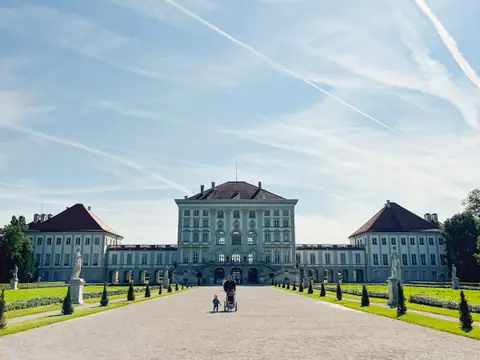
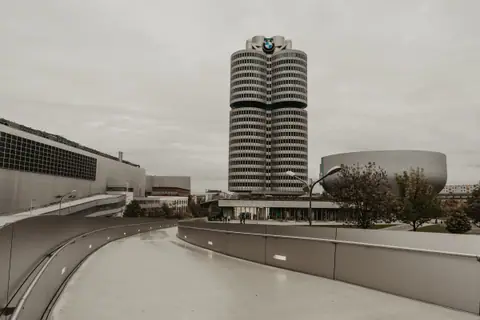
Tour the gilded rooms of the Munich Residenz and climb St Peter's tower, see Dürer and Rubens at the Alte Pinakothek before walking the English Garden, visit Nymphenburg Palace and BMW Welt, and spend an afternoon in a traditional Bavarian beer hall or beer garden. See all highlights in things to do in Munich.
Food and drink
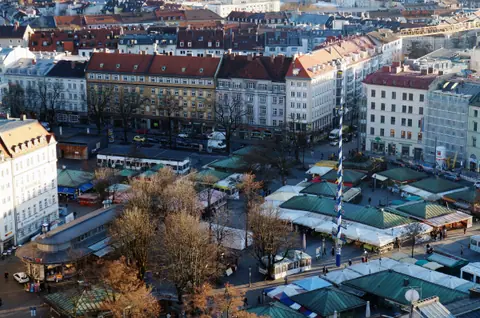
Bavarian food is built around fresh baking, slow-roasted meats and lager brewed under the 1516 Reinheitsgebot purity law: a morning pair of poached white veal sausages (Weißwürste) with sweet mustard and a warm pretzel before noon, crispy pork knuckle (Schweinshaxe) or cheese noodles (Käsespätzle) for dinner, and giant salted pretzels with Obatzda cheese dip under the trees. Read where to eat in our beer gardens and food guide.
Culture
Ruled for over seven centuries by the House of Wittelsbach, first as dukes and electors and from 1806 to 1918 as kings of Bavaria, Munich was reshaped in the 19th century into an "Athens on the Isar" of neoclassical avenues, art galleries and opera houses, while keeping its Catholic Baroque churches, Alpine folk traditions and six historic city breweries intact.
Weather by month
Munich is warmest in July, with average highs around 25°C, and coldest in January, when nights drop to about -2°C. June is the wettest month, with rain on about 12 days. For mild weather with fewer rainy days, aim for September.
| Month | Low | Range | High | Rain | Rainy days |
|---|---|---|---|---|---|
| Jan | -2°C | 4°C | 56 mm | 10 d | |
| Feb | -1°C | 6°C | 48 mm | 9 d | |
| Mar | 2°C | 11°C | 57 mm | 10 d | |
| Apr | 5°C | 15°C | 64 mm | 10 d | |
| May | 9°C | 20°C | 102 mm | 13 d | |
| Jun | 13°C | 24°C | 118 mm | 12 d | |
| Jul | 15°C | 25°C | 114 mm | 12 d | |
| Aug | 15°C | 25°C | 108 mm | 11 d | |
| Sep | 11°C | 20°C | 76 mm | 9 d | |
| Oct | 6°C | 15°C | 63 mm | 9 d | |
| Nov | 2°C | 8°C | 58 mm | 10 d | |
| Dec | -1°C | 5°C | 59 mm | 11 d |
Averages of daily values from 2015 to 2024. Rainy days are days with at least 1 mm of rain. Source: Open-Meteo · Compare destinations by month.
Munich on the map
Every place we cover in Munich. Tap a category or pin to explore.
In-depth Munich guides
Browse the guides grouped by topic: sights, neighbourhoods, food, transport, day trips and trip planning.
Sights, Landmarks & Parks
Key monuments, viewpoints, museums and nature trails.
- Best Things to Do in MunichRoyal palaces, world-class art galleries, river surfing, markets and chestnut beer gardens.
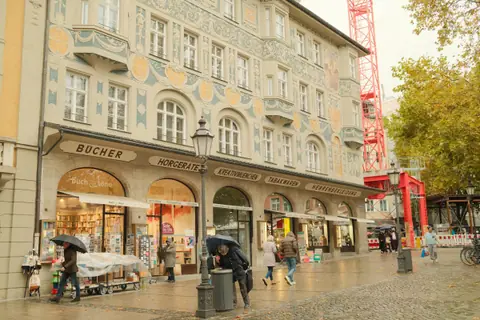
- Marienplatz, the Residenz and Walking the Historic AltstadtA walking route through Munich's medieval squares, royal Wittelsbach palaces and Baroque churches.
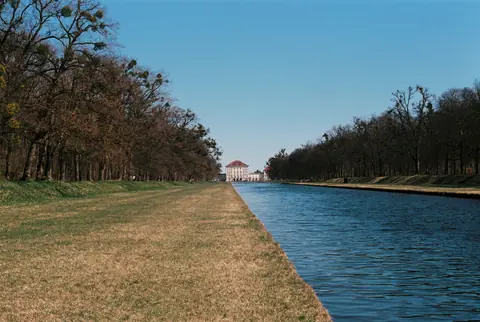
- The English Garden, Kunstareal Museums and Nymphenburg PalaceFrom the river surfers of the English Garden through the Kunstareal galleries to Nymphenburg Palace.
Neighbourhoods & Where to Stay
Districts, historic quarters and the best bases for your stay.
Food & Drink
Local dishes, markets, cafés and dining districts.

Getting Around & Arrival
Airport transfers, public transit, passes and driving rules.
Trip Planning & Itineraries
When to visit, what to pack and day-by-day routes.
- Munich: What to Know Before You GoBeer garden customs, Sunday museum bargains, payment habits and transport ticket validation.
- Best Time to Visit MunichSunny beer garden months, Oktoberfest planning in September and Advent markets in the snow.
- What to Wear in MunichDressing for Alpine weather shifts, smart-casual Munich style and Oktoberfest dress rules.
- 3 Days in Munich: Palaces, Beer Gardens and Alpine ViewsThree well-paced days pairing royal palaces and art galleries with shaded beer gardens.

Need your embassy or consulate in Germany? See embassies and consulates in Germany.
Reviews
Log in to write a review.
No reviews yet.