Quebec City
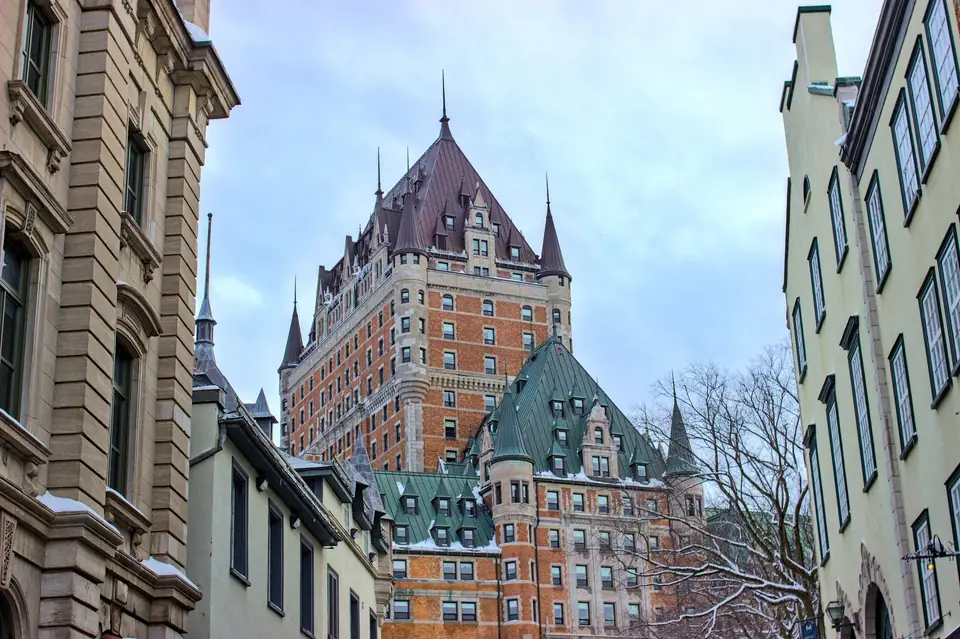
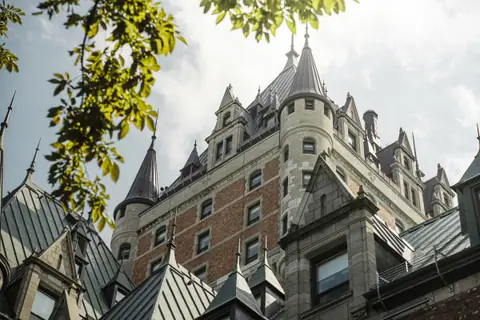
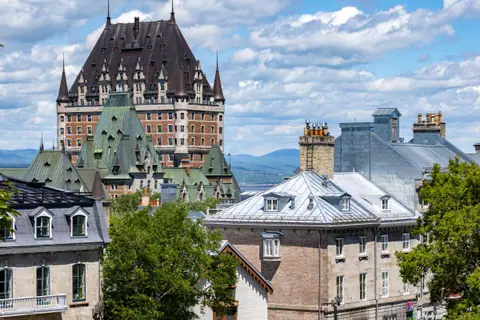
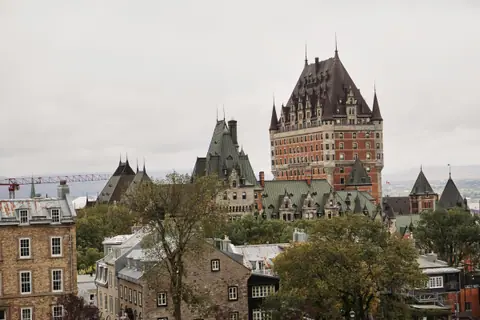
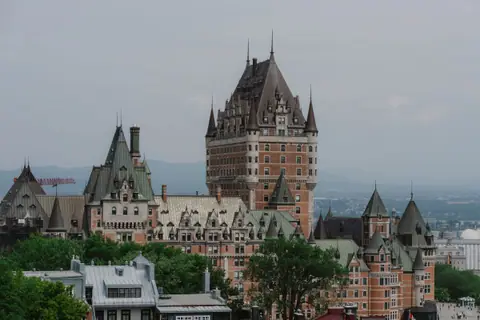
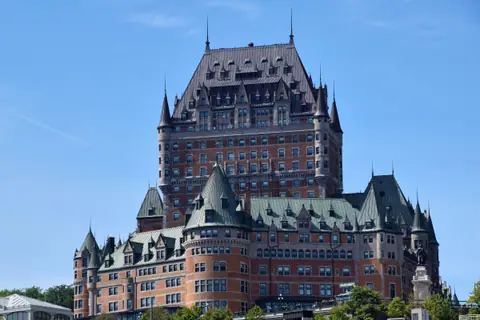
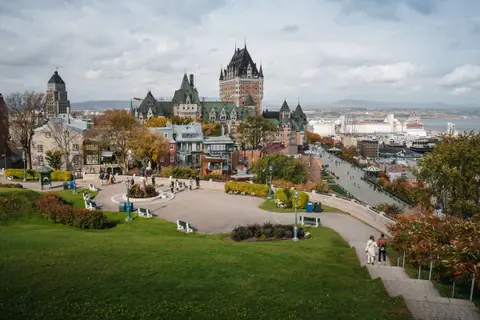
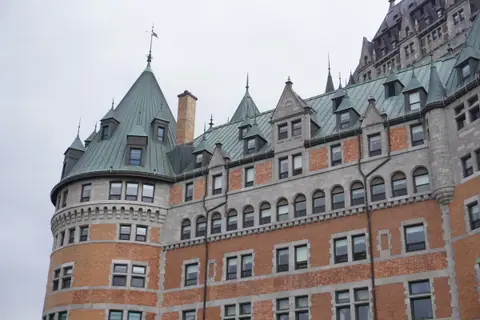
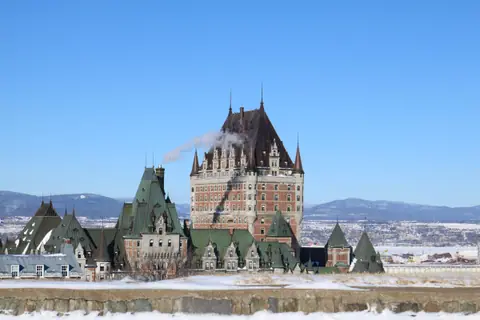
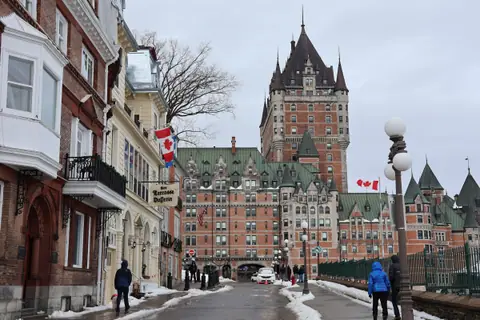
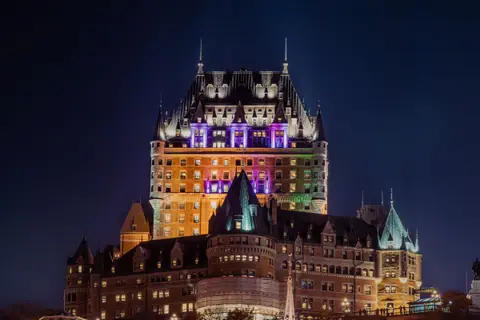
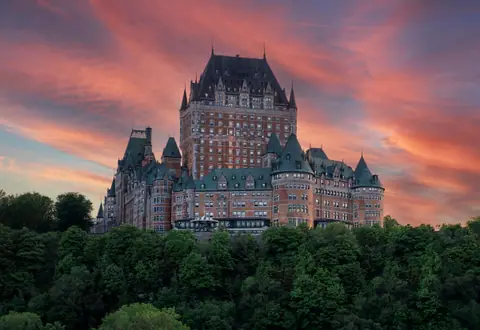
Cradle of French civilisation in North America and the only walled city north of Mexico (UNESCO), where the copper-roofed towers of Château Frontenac and the 4.6-kilometre ramparts of Old Quebec overlook cobblestone Petit-Champlain, the St. Lawrence River and 83-metre Montmorency Falls.
Quick decisions
How many days?
3 to 4 days: Upper Town (Château Frontenac, Dufferin Terrace, the Ramparts and La Citadelle) and Lower Town (Petit-Champlain, Place Royale and the Lévis Ferry) on days one and two, 83-metre Montmorency Falls and Île d'Orléans on day three, and Jacques-Cartier National Park or Wendake on day four. Follow our multi-day route.
Where should I stay?
Old Quebec Upper Town (Haute-Ville): sleep inside the 17th-century stone walls steps from Château Frontenac. Old Port & Petit-Champlain (Basse-Ville): romantic 18th-century riverfront stone warehouses. Parliament Hill or Saint-Roch: modern hotels and lively bistros at lower rates. Compare bases in our neighbourhood guide.
Do I need a car?
No for Old Quebec and Montmorency Falls; yes for Île d'Orléans and Jacques-Cartier Park. Old Quebec is best explored entirely on foot, RTC Metrobus 800 drops you directly at Montmorency Falls in 25 minutes, and hiring a car for 1 day unlocks the farm loop of Île d'Orléans.
Best for
17th-century European charm in North America: cobblestone lanes, stone ramparts and copper roofs. Four-season magic: summer café terraces, October red maple foliage and the famous February Winter Carnival. Québécois gastronomy: authentic cheese-curd poutine, tourtière, maple sugar shacks and French bistros.
Before you go
Greet locals with 'Bonjour' and understand Upper Town vs Lower Town: Old Quebec sits on two levels separated by a 60-metre cliff, linked by the 1879 Funicular (cash only) and Breakneck Stairs. Read our practical briefing.
Getting around
From Jean Lesage Airport (YQB) or Gare du Palais (VIA Rail): the train and bus terminal sits right in Lower Town Old Quebec, while YQB Airport is 20 minutes west (fixed-rate taxi or RTC Bus 76/80). Details in arrival and transport.
Continue your trip
Ride VIA Rail 3 hours south-west along the St. Lawrence to Montreal and Ottawa, or drive north-east along the whale-watching coast of Charlevoix and Tadoussac.
Overview
Perched atop the sheer rocky promontory of Cap Diamant where the mighty St. Lawrence River narrows to less than a kilometre across, giving the city its Algonquin name Kébec ('Where the River Narrows'), Quebec City feels like a 17th-century French port city transported to North America. Founded in 1608 by French explorer Samuel de Champlain, it is the cradle of Francophone culture on the continent and the only fortified city north of Mexico whose original defensive stone walls still stand.
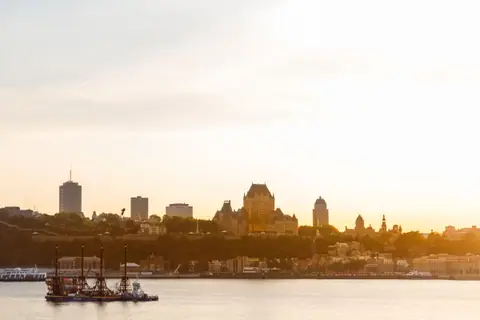
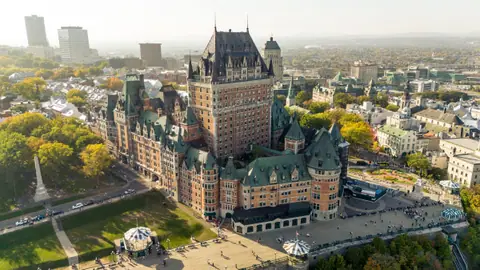
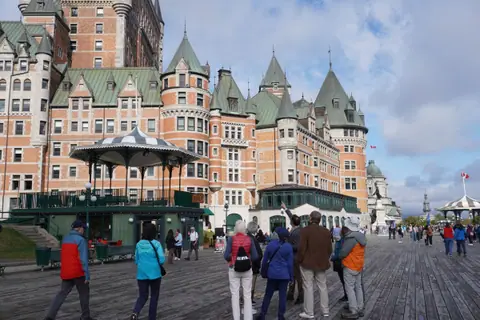
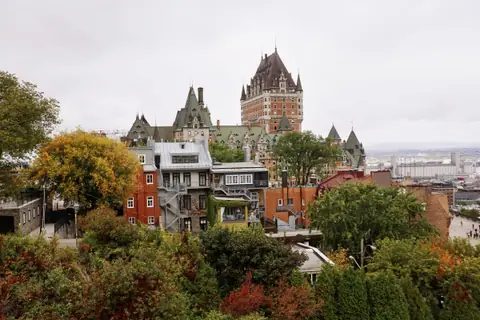
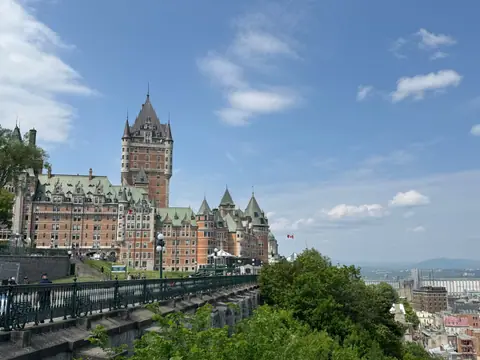
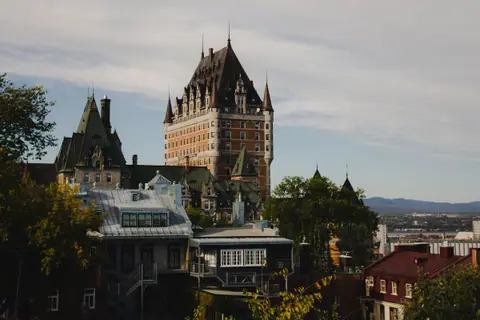
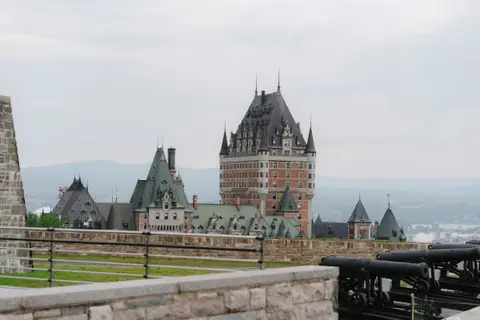
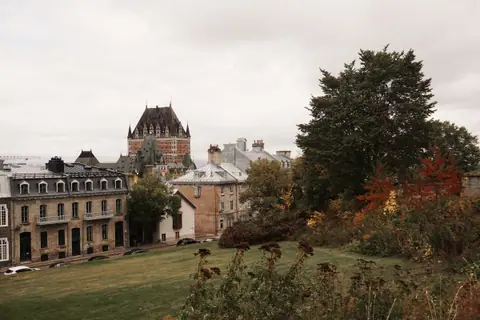
Inscribed as a UNESCO World Heritage Site in 1985, historic Old Quebec (Vieux-Québec) is dramatically split between two worlds: high atop the cliff in Upper Town (Haute-Ville) soar the green copper turrets of the Fairmont Le Château Frontenac and the wooden boardwalk of Dufferin Terrace, encircled by 4.6 kilometres of walkable stone ramparts, the star-shaped Citadelle and the Plains of Abraham. Sixty metres directly below along the riverbank in Lower Town (Basse-Ville) wind the fairy-tale flagstone lanes of Quartier Petit-Champlain and 1608 Place Royale, while 15 minutes east roars 83-metre Montmorency Falls beside pastoral Île d'Orléans. Start with our before-you-go briefing and top things to do in Quebec City.
Getting there
Arriving by VIA Rail train from Montreal (3 hours 15 minutes) or Ottawa drops you at Gare du Palais, a magnificent château-style station located right at the foot of the Old Quebec ramparts. Quebec City Jean Lesage International Airport (YQB) lies 16 kilometres west of the city centre, served by government-regulated fixed-rate taxis or budget RTC Bus 76 and Metrobus 800. Inside the city, Old Quebec is completely walkable, connected between Upper and Lower Town by the 1879 Funicular (cash only) and to Montmorency Falls by high-frequency RTC Metrobus 800. See getting to Quebec City and how the Funicular and buses work.
Where to stay
For a 3-to-4-day first visit, stay inside or immediately outside the UNESCO stone walls of Old Quebec: book in Upper Town (around Rue Saint-Louis, Rue Sainte-Anne or Château Frontenac) for classic stone guesthouses and instant access to Dufferin Terrace; book in Lower Town / Old Port (around Rue Saint-Paul and Place Royale) for upscale boutique hotels inside restored 18th-century stone maritime warehouses with flat streets; or look just outside St. John's Gate along Parliament Hill / Grande Allée and lively Saint-Roch for modern amenities and lower nightly rates. Compare all areas in where to stay in Quebec City.
Things to do
Stroll the cliff-edge boardwalk of Dufferin Terrace beneath Château Frontenac and ride the 1884 wooden Toboggan Slide, descend the Breakneck Stairs into Quartier Petit-Champlain, Place Royale and the giant Fresque des Québécois mural, walk the full 4.6-kilometre top of the Old Quebec Ramparts and tour the active 1820 Citadelle, cross the suspension bridge directly over the crest of 83-metre Montmorency Falls and drive around Île d'Orléans, take the Lévis Ferry at sunset for the ultimate skyline photo, and explore the Plains of Abraham. Full list in things to do in Quebec City.
Food and drink
Quebec City is the heartland of authentic Cuisine Québécoise and New Nordic-French bistronomy: hot hand-cut fries topped with fresh, squeaky local cheese curds and rich gravy (poutine, born in rural Quebec in the 1950s), spiced double-crust pork-and-veal meat pie (tourtière), slow-baked maple beans (fèves au lard), maple-syrup pie (tarte au sucre) and maple taffy rolled on snow (tire d'érable) at traditional Sugar Shacks (cabanes à sucre), plus Île d'Orléans ice cider (cidre de glace). Read more in our Quebec City food and maple guide.
Culture
Over 95 percent of Quebec City residents speak French as their first language, preserving a proud 400-year heritage visible in everything from the June 24th Fête Nationale (Saint-Jean-Baptiste) celebrations and February's Bonhomme Carnaval to the Huron-Wendat First Nation community of Wendake.
Weather by month
Quebec City is warmest in July, with average highs around 25°C, and coldest in January, when nights drop to about -17°C. July is the wettest month, with rain on about 12 days. For mild weather with fewer rainy days, aim for August and September.
| Month | Low | Range | High | Rain | Rainy days |
|---|---|---|---|---|---|
| Jan | -17°C | -7°C | 86 mm | 12 d | |
| Feb | -15°C | -6°C | 68 mm | 10 d | |
| Mar | -9°C | 0°C | 72 mm | 11 d | |
| Apr | -1°C | 9°C | 84 mm | 11 d | |
| May | 6°C | 17°C | 96 mm | 12 d | |
| Jun | 11°C | 23°C | 106 mm | 12 d | |
| Jul | 14°C | 25°C | 118 mm | 12 d | |
| Aug | 13°C | 24°C | 104 mm | 11 d | |
| Sep | 9°C | 20°C | 102 mm | 10 d | |
| Oct | 3°C | 12°C | 98 mm | 11 d | |
| Nov | -4°C | 4°C | 92 mm | 12 d | |
| Dec | -12°C | -4°C | 94 mm | 13 d |
Averages of daily values from 2015 to 2024. Rainy days are days with at least 1 mm of rain. Source: Open-Meteo · Compare destinations by month.
Quebec City on the map
Every place we cover in Quebec City. Tap a category or pin to explore.
In-depth Quebec City guides
Browse the guides grouped by topic: sights, neighbourhoods, food, transport, day trips and trip planning.
Sights, Landmarks & Parks
Key monuments, viewpoints, museums and nature trails.
- Best Things to Do in Quebec CityCastle boardwalks, 1608 cobblestone squares, walkable city ramparts, 83-metre waterfalls and scenic river crossings.
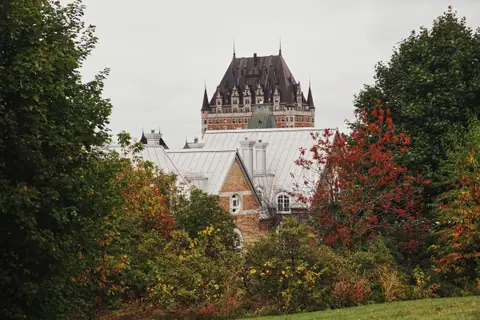
- Château Frontenac, Dufferin Terrace, the 1884 Toboggan Slide & Fort Saint-LouisExploring the world's most photographed hotel, walking the 430-metre cliff boardwalk of Dufferin Terrace and descending into 1620 Fort Saint-Louis.
- Walking the 4.6-Kilometre Ramparts of Old Quebec (UNESCO), the 4 Gates & La CitadelleWalking the top of North America's only intact city walls, past four fortified stone gates to the star-shaped Citadelle.
- The Plains of Abraham (Battlefields Park), Martello Towers and the Parliament BuildingJust outside the western gates of Old Quebec: the cliff-top parkland of the 1759 Plains of Abraham and the 1886 Parliament.
- Quebec City in Winter: Carnaval de Québec (Bonhomme), the Ice Hotel (Hôtel de Glace) & ChristmasWhy Quebec City doesn't hibernate in winter: it throws the world's largest Winter Carnival and carves a 30,000-ton Ice Hotel.
- Nature Day Trips: Parc National de la Jacques-Cartier (Les Loups Hike) & Baie-Saint-PaulForty minutes north of Old Quebec: hiking above a 550-metre glacial canyon in Jacques-Cartier Park or driving the Charlevoix coast.
- Quebec's Best Museums: Musée de la Civilisation, the Morrin Centre (1808 Jail) & MNBAQInside an 1808 British gaol turned Victorian library, Quebec's interactive waterfront history museum and the MNBAQ.
Neighbourhoods & Where to Stay
Districts, historic quarters and the best bases for your stay.
- Lower Town (Basse-Ville): Quartier Petit-Champlain, Place Royale & Breakneck StairsWalking the oldest commercial street in North America, from the Breakneck Stairs through Petit-Champlain to 1608 Place Royale.
- Beyond the Walls: Rue Saint-Jean, Saint-Roch, Limoilou & Le Grand MarchéStepping outside St. John's Gate to explore Quebec City's local foodie neighbourhoods, craft breweries and Grand Marché.
- Where to Stay in Quebec City: Upper Town vs Lower Town (Old Port), Parliament Hill & Saint-RochChoosing between sleeping inside the 17th-century walls of Upper Town, along the flat riverfront of the Old Port, or on Parliament Hill.
Food & Drink
Local dishes, markets, cafés and dining districts.
Getting Around & Arrival
Airport transfers, public transit, passes and driving rules.
- The Lévis Ferry (Best Skyline View), Old Port and St. Lawrence River CruisesHow a 12-minute commuter ferry ride across the St. Lawrence gives you the best skyline photo of Quebec City.
- Getting to Quebec City: Jean Lesage Airport (YQB), VIA Rail (Gare du Palais) & Montreal BusesStepping off the VIA Rail train at château-style Gare du Palais in Old Quebec or arriving in 20 minutes from YQB Airport.
- Getting Around Quebec City: The 1879 Funicular, RTC Metrobus 800 & Parking in Old QuebecMastering Old Quebec's 30 staircases, the cash-only Funicular, RTC Bus 800 to Montmorency Falls and underground parking.
Day Trips & Excursions
Easy half-day and full-day trips from the city.
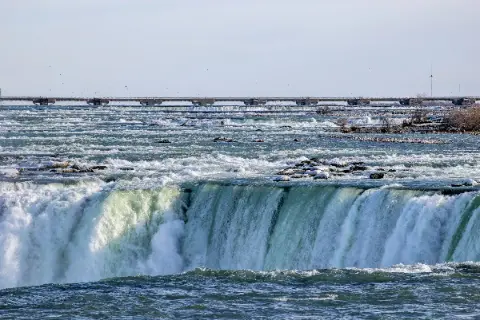
- Montmorency Falls (30m Higher Than Niagara) and Driving the Île d'Orléans Farm LoopFifteen minutes east of Old Quebec: standing on a suspension bridge over an 83-metre waterfall and circling 17th-century Île d'Orléans.
- Wendake (Huron-Wendat Indigenous Nation), Onhoüa Chetek8e, Kabir Kouba Waterfall & Sainte-Anne CanyonTwenty minutes north of Old Quebec: experiencing Huron-Wendat First Nation culture in Wendake and crossing 60m gorges at Canyon Sainte-Anne.
Trip Planning & Itineraries
When to visit, what to pack and day-by-day routes.
- Quebec City: What to Know Before You GoUnderstanding Old Quebec's two-level cliff layout, the cash-only Funicular, French etiquette and seasonal tips.
- Best Time to Visit Quebec City: Summer Terraces, October Fall Foliage & Atmospheric Winter SnowChoosing between Quebec City's three peak seasons: sunny summer café terraces, blazing October autumn maples or atmospheric winter snow.
- What to Wear in Quebec City: Cobblestone Shoes in Summer & -15°C Thermal Layers in WinterHow to pack for Old Quebec's steep 17th-century cobblestones in summer, and how to stay warm at -15°C in winter.
- 3 to 4 Days in Quebec City: Old Quebec, Ramparts, Montmorency Falls & Île d'OrléansA balanced 3-to-4-day itinerary covering Upper and Lower Old Quebec, the Lévis Ferry, Montmorency Falls and Île d'Orléans.
Need your embassy or consulate in Canada? See embassies and consulates in Canada.
Reviews
Log in to write a review.
No reviews yet.