Photo: Laurent Jerry · CC BY-SA 3.0
Strasbourg Cathedral, the Astronomical Clock, and Petite France
We trace pink sandstone spires, Renaissance engineering, and historic river channels across the medieval core of Alsace.
Cathédrale Notre-Dame de Strasbourg dominates the urban skyline in dark pink Vosges sandstone, constructed between 1015 and 1439. Its soaring north spire reaches 142 metres and held the record for Europe's tallest building for centuries. When we approach through the medieval square, intricate portals reveal detailed biblical figures sculpted directly into the weathered sandstone facade.
Entering the main Cathedral nave is completely free of charge, though bag security checks operate continuously at the external entrance doors. Touring the interior pauses around midday for religious services, and the doors admit sightseers on Sundays only during the afternoon. Consult the VisitorFactsBox below for exact opening schedules, closed days, and service pauses before setting out to admire the stained glass.
For elevated views over the terracotta roofs, we tackle the Cathedral Platform situated 66 metres above street level. The ascent requires climbing a narrow one-way spiral staircase of 330 to 332 steps without any lift. Tickets are sold exclusively on-site at Place du Château with no advance online booking. Last ascent takes place shortly before closing, as detailed in the VisitorFactsBox below.
The Renaissance Clock and Place du Château
Tucked within the south transept stands the famous Astronomical Clock, an engineering marvel built between 1838 and 1842 by Jean-Baptiste Schwilgué. Schwilgué replaced earlier mechanisms from 1352 to 1354 and 1574 to produce this reliable third version. Daily at solar noon, automated figures depicting Christ and the 12 Apostles glide past while a mechanical rooster crows.
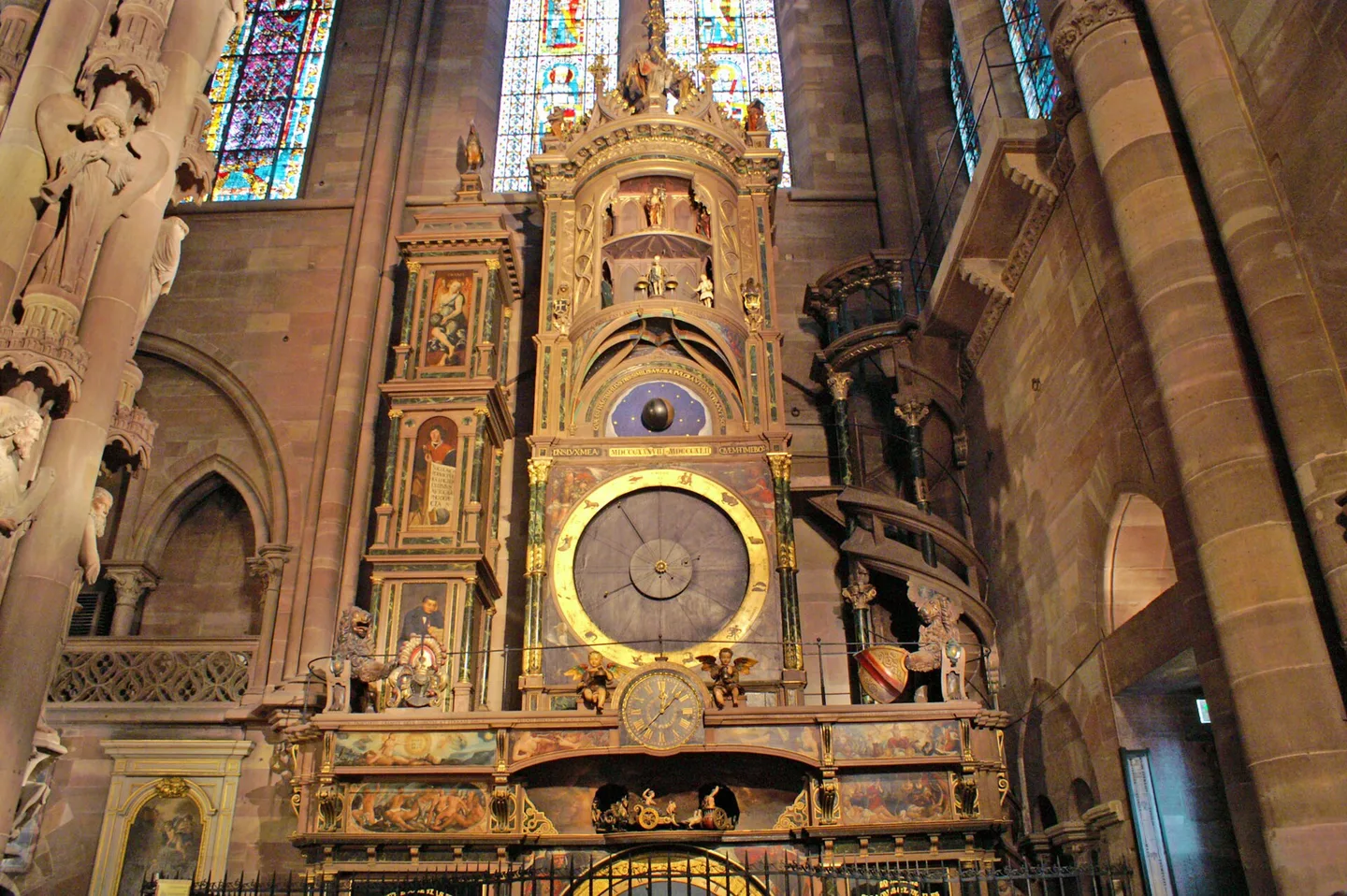
Weekday entry to the clock presentation includes an explanatory film screened directly before the midday procession. These tickets are purchased on-site on the day of your visit. Sunday viewings, public holiday gatherings, and dates during the busy Christmas market period omit the paid film show entirely. Full ticketing rules and screening timetables are outlined in the VisitorFactsBox below.
Stepping back into the square, we see Maison Kammerzell at 16 Place de la Cathédrale displaying elaborate decorative carvings. This historic landmark combines a stone ground floor built in 1427 with timber upper storeys added in 1589 for merchant Martin Braun. Travellers planning their schedule can connect this stop into an Alsatian urban walking circuit across two full days covering the central squares.
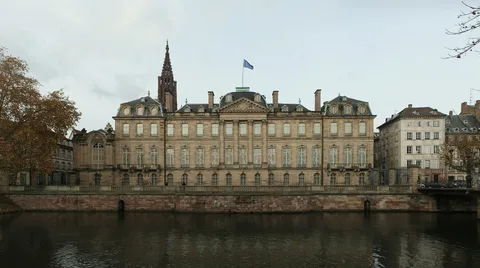
Across Place du Château to the south stand Palais Rohan and the quiet galleries of Musée de l'Œuvre Notre-Dame. The collection preserves authentic medieval cathedral sculptures and original stained glass panels away from outdoor weather. Please check the VisitorFactsBox below for weekly closing days and gallery hours.
Walking the Waterways of Petite France
To reach the western riverbanks, we take a level walk across the compact 1.25 km by 0.75 km footprint of the Grande-Île. The district earned UNESCO recognition in 1988, which later expanded to encompass the nearby Neustadt district in 2017. Our stroll passes the historic Ancienne Douane customs house and Saint-Thomas church before entering the channels of Petite France.
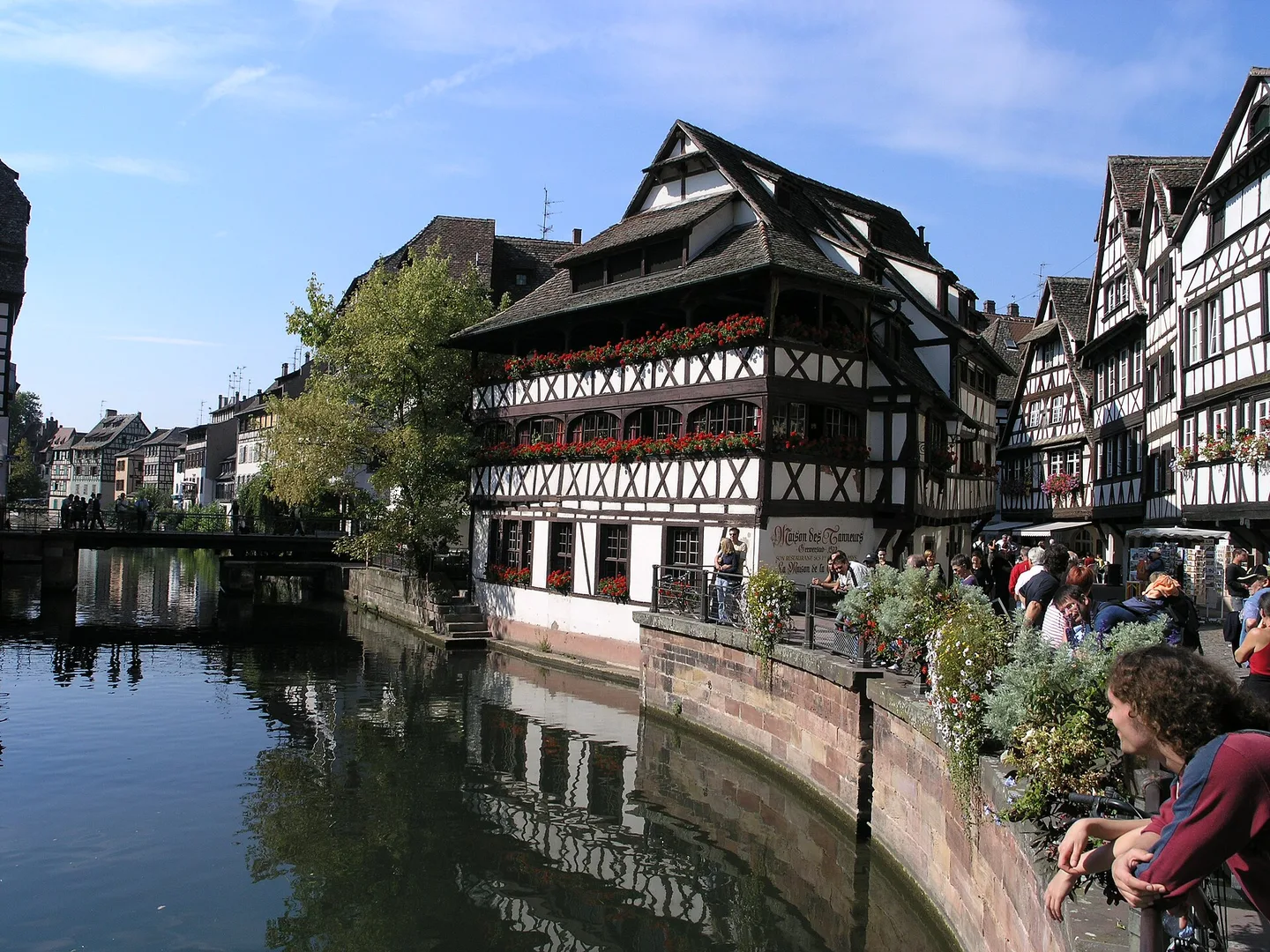
Petite France developed along four branching channels of the Ill River where tanners, millers, and fishermen worked for centuries. The water routes provided necessary power for grain mills and fresh currents for washing leather hides. Exploring these historic canals connects directly to our curated list of historic highlights and riverside walks across Strasbourg on foot.
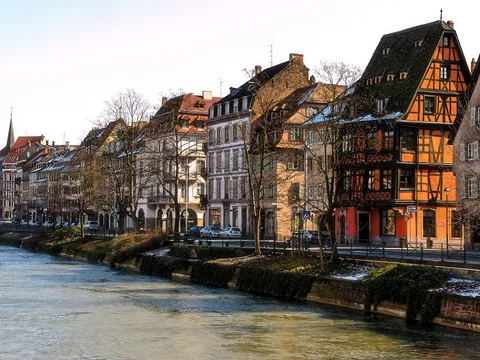
Half-timbered houses with open attics line the canals, built specifically so cured animal skins could dry in the river breezes. The most prominent timber residence is Maison des Tanneurs, which was erected in 1572 right along the water. We stop by the locks to watch boats navigate the narrow stone chambers.
Fortified Towers and the Vauban Panorama
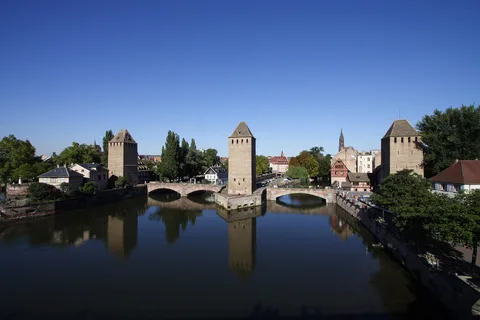
At the western edge of the quarter, the channels converge at the historic Ponts Couverts, constructed as defensive bridges in the 13th century. Four massive 14th-century stone bastions still guard the channels, though original protective wooden roofs were removed in 1784. These sturdy medieval ramparts once formed the primary fortified barrier against attacks arriving along the river.
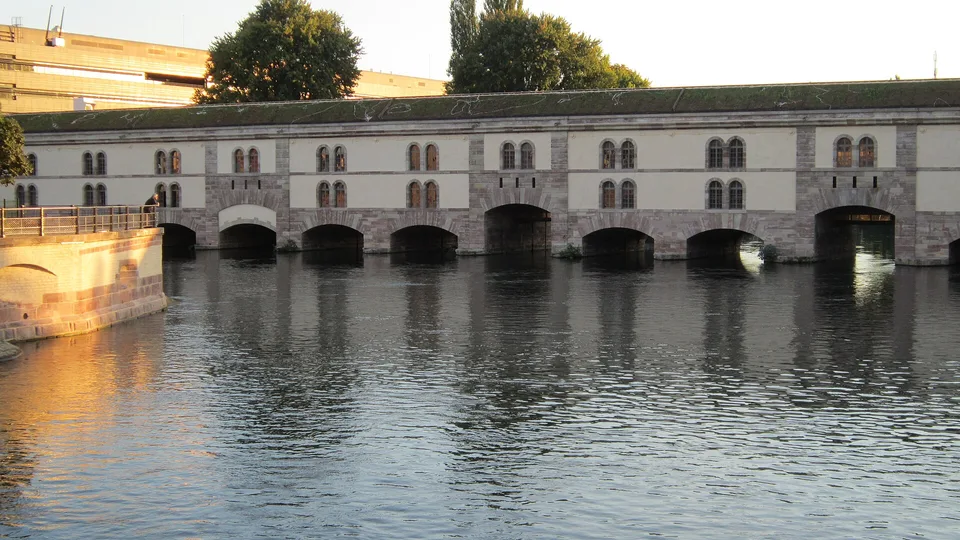
A short distance upstream sits Barrage Vauban, a substantial stone weir and covered bridge built between 1681 and 1688. Designed by Jacques Tarade using concepts by Sébastien Le Prestre de Vauban, construction finished in 1690 to flood southern approaches during sieges. The structure could raise river levels rapidly to trap hostile armies south of the medieval walls.
Today, visitors enter both the interior gallery and the elevated rooftop terrace without paying any admission fee. Access times vary through the year, with earlier closing during winter months as listed in the VisitorFactsBox below. From the roof, we enjoy an unobstructed view over the four medieval towers and the distant Gothic Cathedral spire.
Key Sights Along the Cathedral to Petite France Route
- Cathédrale Notre-Dame de Strasbourg: 142-metre spire, 66-metre viewing platform, and the 19th-century Schwilgué Astronomical Clock.
- Place du Château: Historic ensemble of Palais Rohan, medieval timbered Maison Kammerzell, and Musée de l'Œuvre Notre-Dame.
- Petite France: Four branching Ill River channels, flower-decked lock gates, and the 1572 timbered Maison des Tanneurs.
- Ponts Couverts and Barrage Vauban: 13th-century bridges, four 14th-century stone towers, and a free panoramic roof terrace.
Official prices and opening hours
- Strasbourg Cathedral NaveOfficial site ↗
- Strasbourg Cathedral Platform (330+ steps)Official site ↗
- Cathedral Astronomical Clock PresentationOfficial site ↗
- Barrage Vauban Panoramic TerraceOfficial site ↗
Where it is
- 1Strasbourg Cathedral, the Astronomical Clock, and Petite France
- Strasbourg Airport (SXB) · about 10 km from here in a straight line
- Stuttgart Airport (STR) · about 109 km from here in a straight line
- Directions in Google Maps
Stations and taxi ranks: OpenStreetMap. Airports: OurAirports. Distances are in a straight line.
Traveller tips
Real advice from people who have been to Strasbourg. Every tip is read by our team before it goes live.
No tips yet. Been here? Yours could be the first.
Thank you! Your tip will appear here after a quick review.
More in Strasbourg
Continue exploring Strasbourg with related neighbourhood, food, and planning guides