Photo: Esperanza Candel · CC BY-SA 3.0 es
Mudéjar Architecture, Historic Synagogues, and River Miradors in Toledo
Toledo holds two thousand years of Roman, Islamic, Jewish, and Christian heritage above the Tagus River, listed by UNESCO in 1986.
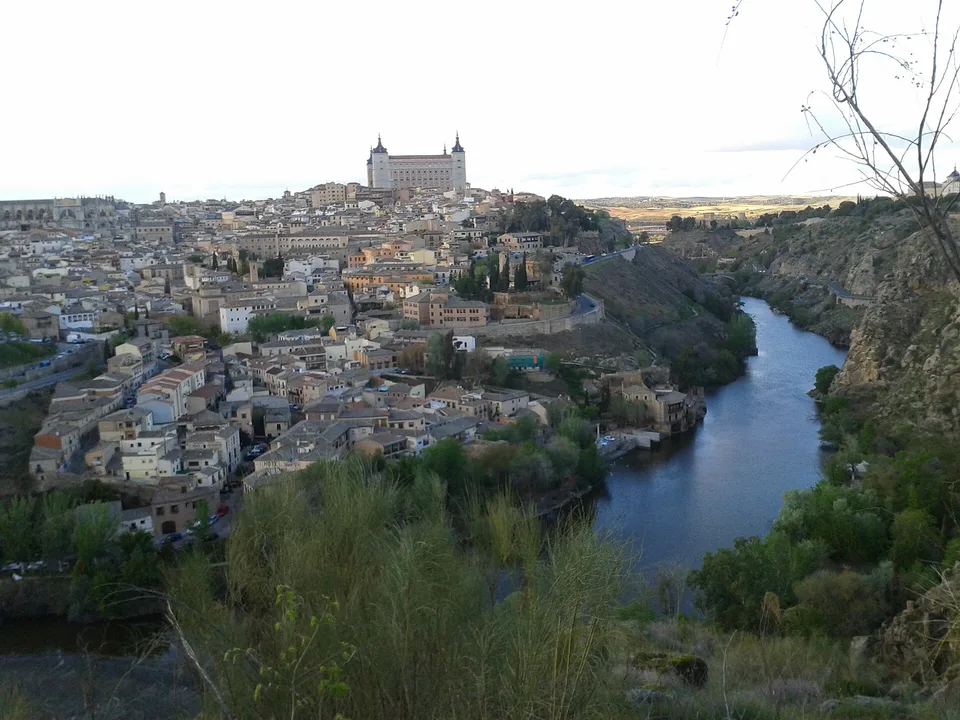
Toledo stands high on granite cliffs above a dramatic loop of the Tagus River. The ancient ramparts shelter two thousand years of Roman, Islamic, Jewish, and Christian architecture within walking reach. UNESCO inscribed this remarkable ensemble on the World Heritage list in 1986. Many day visitors rush solely between the main fortress and cathedral. In contrast, the surrounding medieval lanes preserve an exceptional concentration of early Islamic, Jewish, and Christian stonework. Planning your walking route around the neighbourhood layout lets you absorb these quieter spaces without facing sudden closing times.
Understanding the town's historical layers helps you navigate the steep alleys efficiently. Hill climbs, transport tips, and local customs appear in our guide to essential advice for navigating Toledo's steep lanes before you set out.
Navigating the Seven Monuments of the Pulsera Turística
The Pulsera Turística admits visitors to seven distinct religious buildings scattered through the central historic quarters. The pass remains valid across seven consecutive days. At the northern slope, Mezquita del Cristo de la Luz survives from 999 as the Bab al-Mardum Mosque near Puerta del Sol. Its compact square plan retains nine vaulted bays, Visigothic reused capitals, and horseshoe arches. Builders later expanded the structure with a Mudéjar apse.
Deeper in the old quarters, Santa María la Blanca presents a contrasting spatial rhythm within the Judería. Dating from the early 13th century, its prayer hall relies on rows of octagonal piers. These white pillars carry geometric plasterwork and horseshoe arcades beneath a timber ceiling. A short walk leads to Iglesia de Santo Tomé, where visitors view The Burial of the Count of Orgaz. El Greco completed this monumental canvas between 1586 and 1588. It hangs inside a dedicated chapel reached before the main nave.
Closer to the river bluffs, Monasterio de San Juan de los Reyes commands attention. Begun in 1477 for the Catholic Monarchs, it displays dramatic late-Gothic stonework. Chains of freed Christian captives hang along its outer walls, while a double-storeyed cloister encloses a quiet garden. To complete the circuit, climb the twin Baroque rooftop bell towers of the Jesuitas Church of San Ildefonso for the widest central rooftop panorama. The wristband also includes Iglesia del Salvador near Santo Tomé and Real Colegio de Doncellas Nobles, which showcase reused Visigothic reliefs and sixteenth-century stone architecture.
Comparing Key Architectural Landmarks
This overview summarizes Toledo's primary architectural treasures beyond the main cathedral quarter, highlighting their distinct design traditions and historical periods:
| Monument | Quarter | Notable Architectural Elements |
|---|---|---|
| Mezquita del Cristo de la Luz | Northern slope | Nine vaulted bays, reused Visigothic capitals, and brick Mudéjar apse |
| Santa María la Blanca | Judería | Early thirteenth-century white octagonal pillars, horseshoe arcades, and timber ceiling |
| Sinagoga del Tránsito | Judería | Fourteenth-century larch ceiling, Hebrew calligraphy, and Mudéjar plasterwork |
| San Juan de los Reyes | Western bluffs | Late-Gothic royal stonework, double-storeyed cloister, and exterior captive chains |
| Iglesia de San Ildefonso | Central ridge | Twin Baroque bell towers and panoramic rooftop walkways over the tile roofs |
| Puente de San Martín | Western river gorge | Five pointed ashlar arches, hexagonal defensive tower, and pentagonal gatehouse |
Jewish Heritage and Masterpieces in the Judería
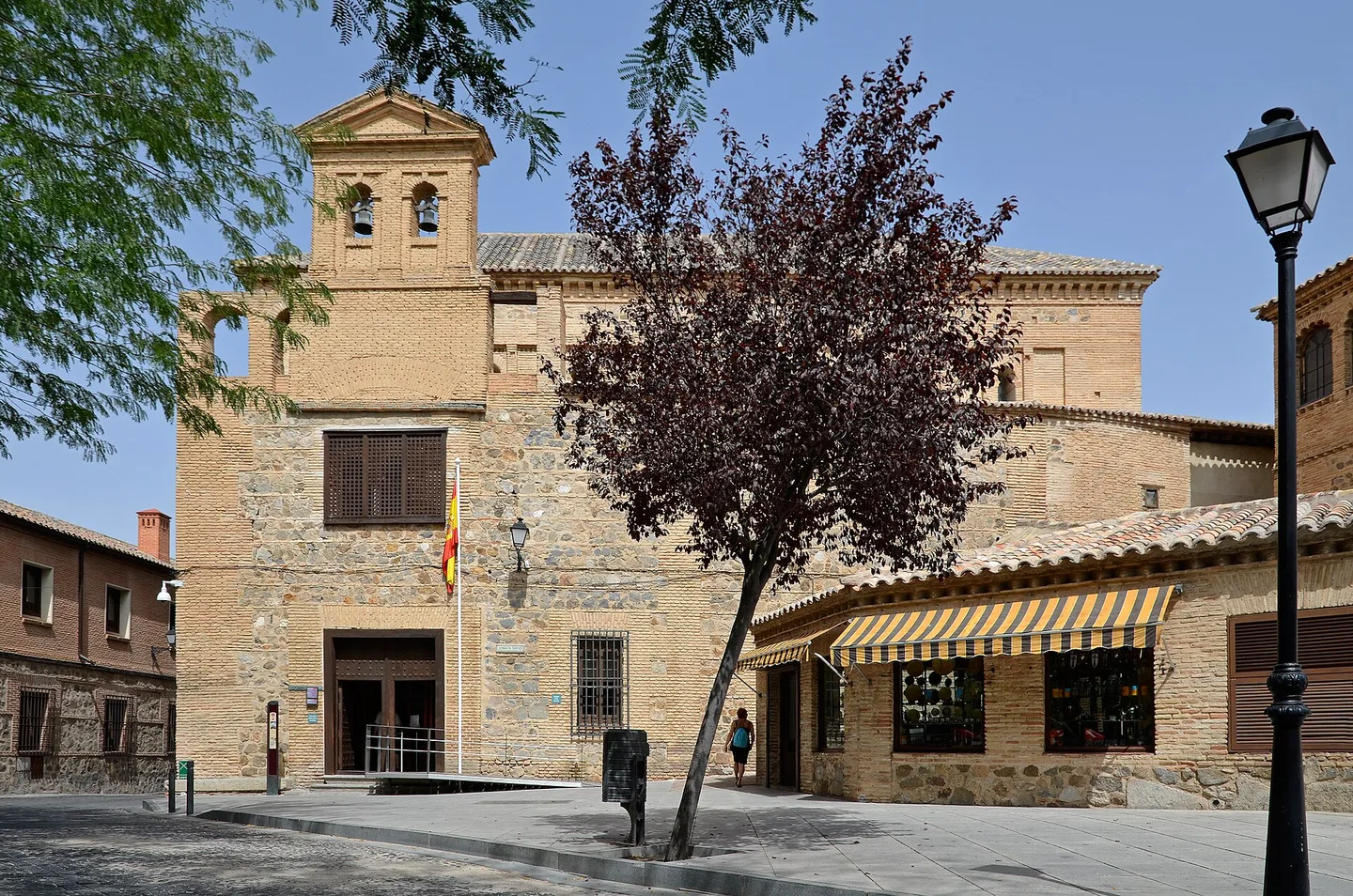
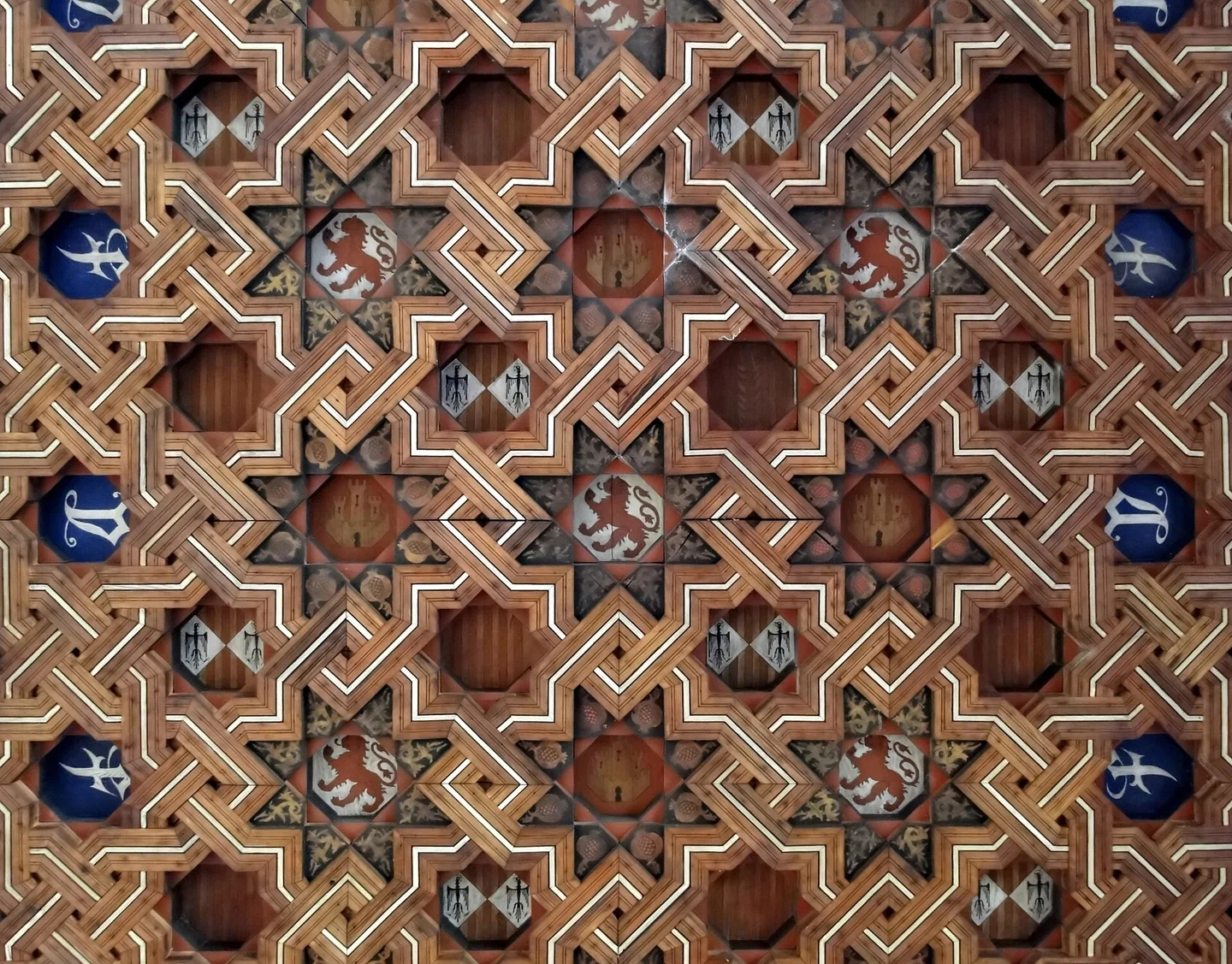
Separate from the diocesan wristband scheme, two exceptional national collections sit along the southern terraces overlooking the river canyon. Sinagoga del Tránsito houses the state-run Museo Sefardí. Royal treasurer Samuel ha-Leví commissioned the building between 1336 and 1357. The vast prayer hall displays an ornate larch ceiling, delicate Mudéjar plasterwork, and Hebrew calligraphy.
A short walk down the Judería slope leads to Museo del Greco, preserving artwork produced during the master painter's residence. Visitors can view his complete Apostolado series and the late panoramic canvas View and Plan of Toledo, painted circa 1610 to 1614. Both state museums close on Mondays, making Tuesday through Sunday preferable when organising an extended weekend exploring Toledo's museums.
Fortified Gates and Medieval River Crossings
Toledo's approaches preserve medieval defensive engineering, constructed to guard the single ridge connecting the citadel to the Castilian plateau. The northern perimeter is dominated by Puerta de Bisagra. Master architect Alonso de Covarrubias began rebuilding the grand portal starting in 1559. Its heavy stone courtyard connects twin cylindrical towers carrying Charles V's imperial double-headed eagle coat of arms.
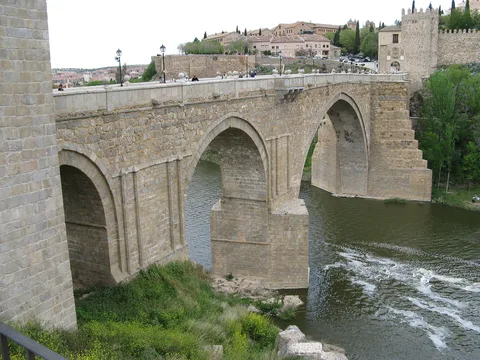
Two celebrated river crossings control passage over the Tagus gorge on opposite flanks of the promontory. On the eastern perimeter stands Puente de Alcántara. It rests on Roman foundations, with a 10th-century rebuild and a Baroque arch added in 1721. Across the western bend, the medieval Puente de San Martín carries pedestrians over five pointed ashlar arches. Documented from 1301 and restored in 1390, its western approach terminates in a stout hexagonal tower, balancing a pentagonal eastern gatehouse directly opposite.
Reaching Mirador del Valle and Planning Your Route
Catching the comprehensive profile of Toledo requires stepping beyond the defensive walls entirely. Mirador del Valle occupies an elevated shelf along the southern ring road across the Tagus River, directly facing the steep hillside. From this point, the monumental fortress and the cathedral spire align above the river gorge at sunrise or late afternoon.
Travellers reach Mirador del Valle along the scenic ring road by taxi, car, or sightseeing bus. Pairing this southern vantage point with the high towers of San Ildefonso gives travellers both exterior and interior perspectives of the rocky urban topography. Those combining these viewpoints with the central Gothic Toledo Cathedral and the cresting fortress of the Alcázar will discover a remarkably complete medieval perimeter. You can also review general transport links on our main Toledo travel guide.
Official prices and opening hours
- Pulsera Turística (7 Monuments)Official site ↗
- Museo Sefardí (Sinagoga del Tránsito)Official site ↗
- Museo del GrecoOfficial site ↗
Where it is
- 1Toledo
- Adolfo Suárez Madrid–Barajas Airport (MAD) · about 80 km from Toledo in a straight line
- Directions in Google Maps
Stations and taxi ranks: OpenStreetMap. Airports: OurAirports. Distances are in a straight line.
Traveller tips
Real advice from people who have been to Toledo. Every tip is read by our team before it goes live.
No tips yet. Been here? Yours could be the first.
Thank you! Your tip will appear here after a quick review.
More in Toledo
Continue exploring Toledo with related neighbourhood, food, and planning guides