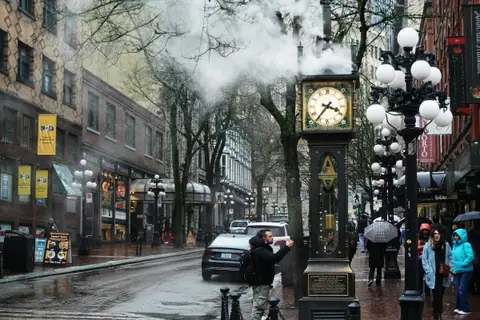
Photo by Luke Lawreszuk on Unsplash
Vancouver
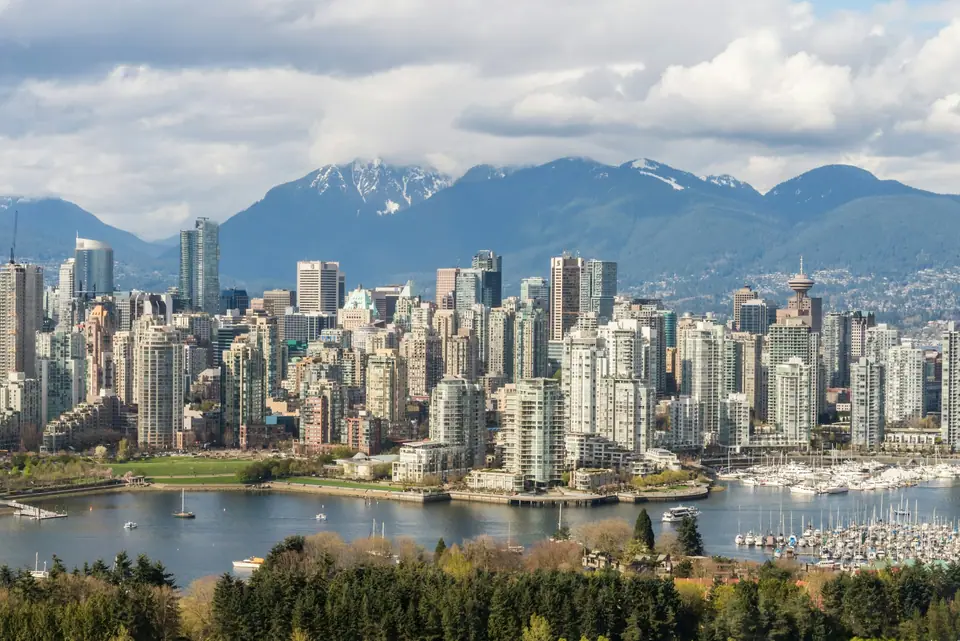
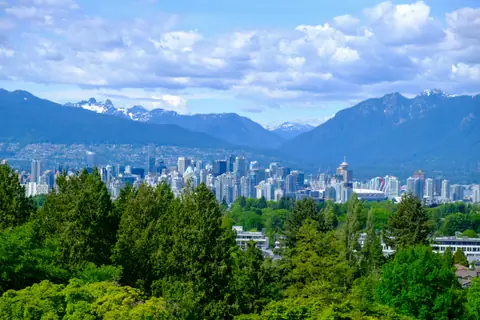
A city of glass towers between the sea and the Coast Mountains, with a rainforest park on its doorstep.
Quick decisions
How many days?
3 days: Stanley Park, Granville Island, Gastown and one trip across to the North Shore. 4 to 5 days: add Victoria or the Sea to Sky Highway. A week: add a couple of nights in Whistler or on Vancouver Island.
Where should I stay?
Downtown and Coal Harbour: central and close to the seawall. West End: leafy, residential, next to Stanley Park and English Bay. Yaletown: restaurants and quick access to the Canada Line. More in our where to stay guide.
Do I need a car?
Not in the city. SkyTrain, buses, the SeaBus and the little False Creek ferries cover almost everything, and parking downtown is expensive. A car makes sense for Whistler, Squamish or a road trip into the interior.
Best for
Outdoor people: you can kayak in the morning and hike a mountain in the afternoon. Food lovers: some of the best Japanese and Chinese food outside Asia. Families: yes, with beaches, the aquarium and easy bike paths. Nightlife seekers: it's a city that goes to bed fairly early.
Before you go
Entry: most visa-exempt visitors flying in need an eTA, bought on the official Government of Canada site. US citizens don't. Rain: from November to March, expect it most days. Tipping: 15 to 20 percent in restaurants is normal.
Getting around
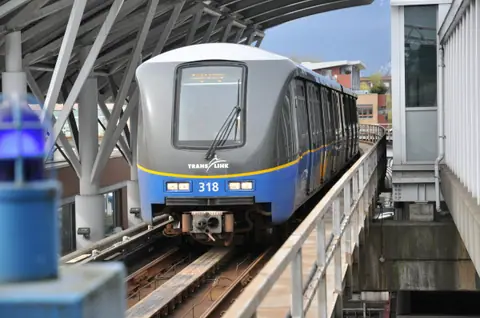
From the airport: the Canada Line SkyTrain reaches downtown in under half an hour. In the city: tap a contactless card at the fare gates, no ticket needed. Details in our getting there guide.
Continue your trip
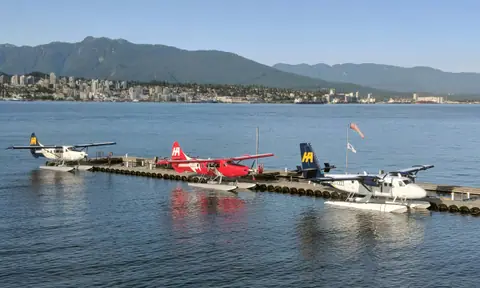
Victoria is a ferry or seaplane ride away, Whistler about two hours up the Sea to Sky Highway, and Seattle around four hours south by the Amtrak Cascades train. The Rocky Mountains are a long day's drive or a short flight east.
Overview
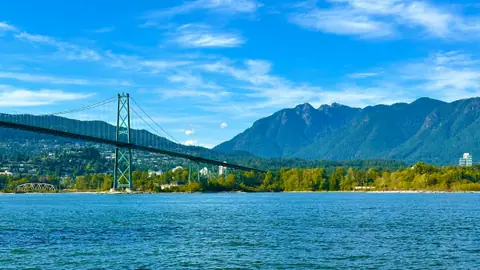
Vancouver sits on a peninsula between Burrard Inlet and the Fraser River, with the North Shore Mountains rising almost straight out of the water behind the downtown towers. It's a young city, incorporated in 1886, built on the traditional territories of the Musqueam, Squamish and Tsleil-Waututh Nations, and it grew fast on timber, the railway and the port. Today around half its people have roots outside Canada, which shows most clearly on the plate.
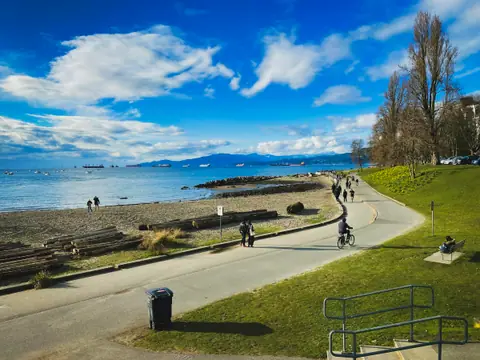
The city itself has fewer grand sights than you might expect. What it has instead is setting: a seawall you can walk or cycle for kilometres, a thousand-acre park of cedar and fir next to downtown, beaches in the middle of the city and ski runs twenty minutes away. Plan around the outdoors and the weather, and start with our Vancouver travel guide.
Getting there
Vancouver International Airport (YVR) is on Sea Island, south of the city, and the Canada Line SkyTrain runs from the terminal to downtown. Trains from Seattle and across Canada arrive at Pacific Central Station, and ferries and seaplanes connect with Victoria. Our getting there guide has every route.
Where to stay
Downtown, Coal Harbour and the West End put you within walking distance of Stanley Park and the seawall. Yaletown and Gastown are livelier for eating out, Kitsilano suits beach days, and North Vancouver works for hikers. We compare them in our where to stay guide.
Things to do
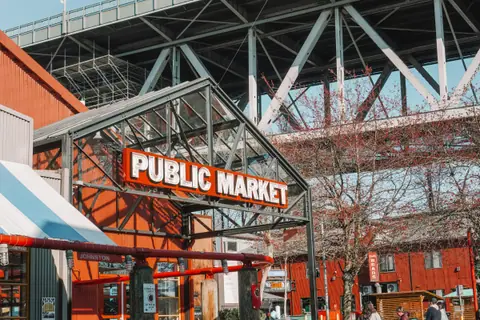
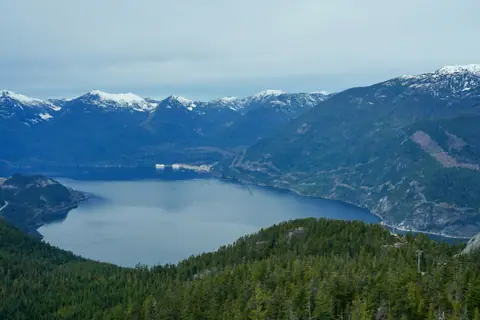
Start with a morning on the Stanley Park seawall and an afternoon at the Granville Island market. Then head for the mountains: Grouse, the suspension bridges and the Sea to Sky Highway are in our day trips guide, and the rest is in our things to do list.
Food and drink
Eat Pacific: wild salmon, halibut and, in late spring, BC spot prawns, small sweet shrimp caught locally for a few weeks each year. Sushi here is excellent and not expensive by North American standards. Go to Richmond for dim sum, and finish with a Nanaimo bar, a no-bake square of chocolate, custard buttercream and coconut crumb.
Culture
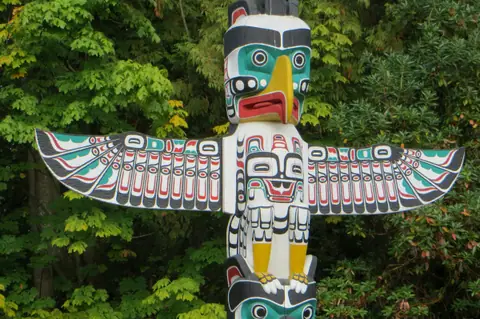
The totem poles at Brockton Point and the carved house posts and canoes at the Museum of Anthropology at UBC are the best introduction to the art of the Northwest Coast First Nations. The city's later layers show in Gastown's brick warehouses, in Chinatown, one of the largest in North America, and in the Japanese Canadian history of the Powell Street area.
Weather by month
Vancouver is warmest in August, with average highs around 23°C, and coldest in February, when nights drop to about 1°C. November is the wettest month, with rain on about 19 days. For mild weather with fewer rainy days, aim for June, July, August and September.
| Month | Low | Range | High | Rain | Rainy days |
|---|---|---|---|---|---|
| Jan | 2°C | 6°C | 260 mm | 19 d | |
| Feb | 1°C | 6°C | 148 mm | 16 d | |
| Mar | 3°C | 9°C | 171 mm | 16 d | |
| Apr | 5°C | 12°C | 126 mm | 15 d | |
| May | 10°C | 16°C | 66 mm | 9 d | |
| Jun | 12°C | 19°C | 68 mm | 10 d | |
| Jul | 15°C | 22°C | 32 mm | 5 d | |
| Aug | 15°C | 23°C | 51 mm | 6 d | |
| Sep | 12°C | 18°C | 129 mm | 12 d | |
| Oct | 8°C | 13°C | 225 mm | 15 d | |
| Nov | 4°C | 9°C | 315 mm | 19 d | |
| Dec | 2°C | 6°C | 275 mm | 20 d |
Averages of daily values from 2015 to 2024. Rainy days are days with at least 1 mm of rain. Source: Open-Meteo · Compare destinations by month.
Vancouver on the map
Every place we cover in Vancouver. Tap a category or pin to explore.
In-depth Vancouver guides
Browse the guides grouped by topic: sights, neighbourhoods, food, transport, day trips and trip planning.
Sights, Landmarks & Parks
Key monuments, viewpoints, museums and nature trails.
Neighbourhoods & Where to Stay
Districts, historic quarters and the best bases for your stay.
Getting Around & Arrival
Airport transfers, public transit, passes and driving rules.
Day Trips & Excursions
Easy half-day and full-day trips from the city.
Trip Planning & Itineraries
When to visit, what to pack and day-by-day routes.
- Vancouver: What to Know Before You GoHow Vancouver is laid out, and the practical things first-timers get wrong.
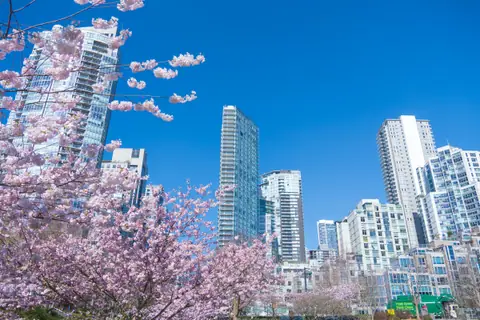
- Best Time to Visit VancouverWhen to go for dry weather, blossoms, skiing or quieter streets.
- What to Wear in VancouverA rain shell, layers and trail-ready shoes: dressing like a Vancouverite.
- Vancouver 3-Day ItineraryThree days of seawall, markets, museums and mountains.
Need your embassy or consulate in Canada? See embassies and consulates in Canada.
Reviews
Log in to write a review.
No reviews yet.