












Moroccan Cooking Class in Marrakech
Half a day at a Moroccan stove learning tagine, cooked salads, bread and the mint tea ritual, usually after a shopping trip through the souk.
Overview
Moroccan home cooking is slow, and it happens behind closed doors. The best food in Marrakech is made in family kitchens, not in the restaurants around the square, so a class is one of the few ways a visitor gets to see it being done. You chop, you pound, you learn why the onions go in first and the olives last, and at the end you sit down and eat what you made.
Most classes follow the same shape: a short shopping trip, a few hours at the stove, then lunch or dinner. The differences lie in the setting and the size of the group.
In a riad or out of town
Riad-based classes take place in a courtyard house in the medina, sometimes in the kitchen of a guesthouse, sometimes in a purpose-built teaching kitchen with a workstation for each guest. They are easy to reach on foot, fit neatly into a morning or late afternoon, and often start with a walk through the souk. The trade-off is that the bigger ones feel like a production line on busy days, with fifteen or more people and one cook moving between tables.
Farm and garden schools sit in the countryside outside the city, usually 20 to 40 minutes away by car, with pickup included. You pick herbs and vegetables in the garden, bake in a clay oven and eat under olive trees with the Atlas on the horizon on a clear day. They take longer, most of a day once you count the drive, and you miss the market. For a second or third visit to Marrakech, when the medina is familiar, we'd choose the farm.
Shopping with the cook
The market trip is often the highlight. You follow the cook to a spice stall, a vegetable seller and a baker, and learn what ras el hanout (the house spice blend, different at every stall) should smell like and how much preserved lemon a tagine needs. It is also a gentler introduction to the souks than wandering alone. Our medina guide covers the same lanes on your own.
What you cook
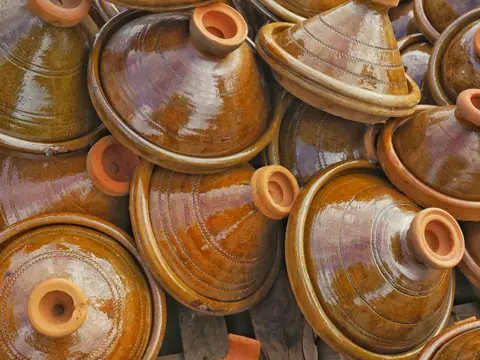
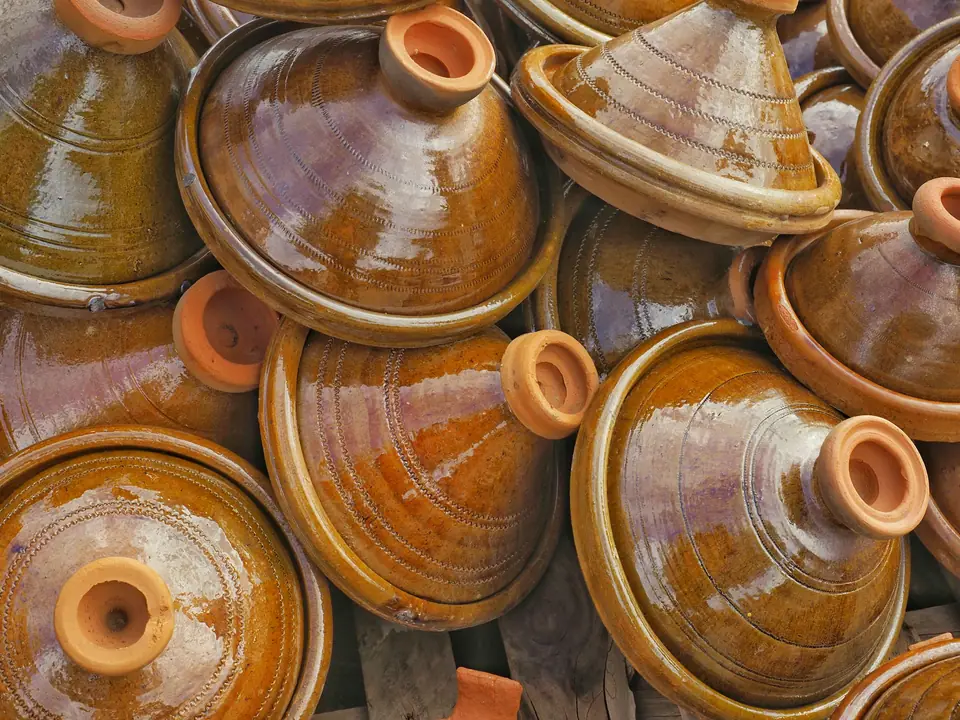
- A tagine, usually chicken with preserved lemon and olives, beef or lamb with prunes, or vegetables. You learn to layer it so nothing sticks.
- Cooked salads, such as zaalouk (smoky aubergine and tomato) and taktouka (peppers and tomato), eaten with bread.
- Bread, the round flat khobz, kneaded by hand and sent to the neighbourhood oven or baked on site.
- Mint tea, with its own ritual: gunpowder green tea rinsed first, fresh mint, plenty of sugar, then poured from a height to raise a foam.
Some classes add a dessert or a pastilla, the sweet and savoury pie. Couscous is a Friday dish in Moroccan homes and takes hours, so few short classes include it.
The dada tradition
In Moroccan households, a dada is the family cook, traditionally a woman who learned by watching and working rather than from written recipes, and who carried dishes from one generation to the next. Many schools in Marrakech are built around dadas, with a translator at their side. Expect measurements by the handful and the pinch, not the gram.
Who it suits
Anyone who likes food, couples, families with older children and solo travellers who want company for a morning. It suits people who have had enough of the souks, too. It is less rewarding for confident cooks who already make tagines at home, unless they choose a farm school or a longer programme.
How to Book
Decide first between a riad class in the medina and a farm school outside the city, then look at group size. Six to ten people at individual stations is a class; twenty around one table is a demonstration with some chopping.
When you compare, check:
- Whether the market visit is included, and if it is a real shopping trip or a quick look.
- If you cook your own dish at your own station or share tasks.
- Who teaches (a dada with an interpreter, or a chef) and in which languages.
- Pickup: medina classes usually meet at a landmark near the square, farm schools collect from your riad or hotel.
- Whether the recipes are printed or emailed afterwards.
Tell the school about dietary needs when you book. Vegetarian menus are easy because so much Moroccan cooking is vegetables, bread and pulses. Vegan works with notice (watch for butter and smen, the aged butter). Gluten-free is harder, since bread is part of every class. Classes are usually small, so booking a few days ahead is sensible, and a week ahead from October to April. Most allow free cancellation up to a day or two before; read the terms. During Ramadan, some schools change their schedule, so check the dates if your trip overlaps.
Tips
- Book it early in your stay. Once you know what zaalouk and a proper tagine taste like, you order better for the rest of the trip.
- Skip lunch before a morning class. You eat everything you cook, and the portions are generous.
- Buy spices on the market walk, not afterwards alone. The cook knows which stalls grind fresh, and the price you pay with them is closer to the local one.
- Take photos of each stage, not only the finished dish. Tagine is about the order of the layers.
- Bring a light scarf or long sleeves for the souk part (see our what to wear guide).
- With children, a riad class works from about age eight. Farm schools, with gardens and animals, suit younger ones better.
Pair it with an afternoon from our three-day itinerary, rather than a second heavy meal.
Reviews
Log in to write a review.
No reviews yet.