A 100-stop Mediterranean route through Antalya’s walled Kaleiçi harbour, Konyaaltı and Lara cliffs, and the great Pamphylian and Pisidian ancient cities of Perge, Aspendos, Termessos, and Side.
Attalos II’s Haven, Hadrian’s Marble Gate and Seljuk Shipyards
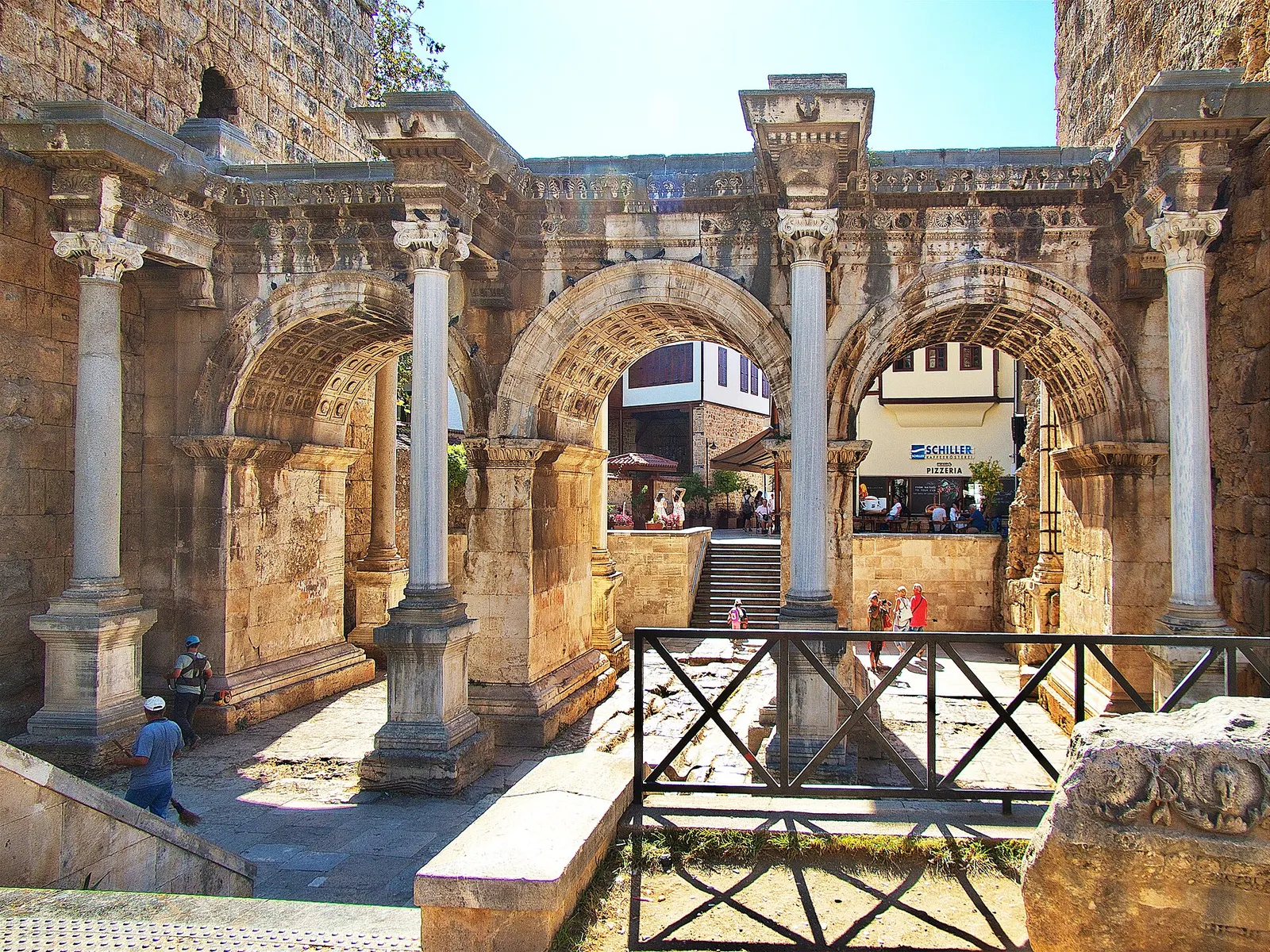
Around 150 BC, King Attalos II of Pergamon ordered his fleet to seek a coastal haven on the Pamphylian Gulf and founded Attaleia around the natural cliff-ringed harbour known today as Kaleiçi. Bequeathed to Rome in 133 BC, the city received its monumental triple-arched marble gate for Emperor Hadrian's visit in AD 130, while neighbouring Perge, Aspendos, Side, and mountain-top Termessos grew into some of the wealthiest cities in the Roman East.
Conquered by the Seljuk Sultan Kaykhusraw I in 1207, Antalya became the Mediterranean winter capital and naval shipyard of the Sultanate of Rum, gaining its iconic fluted brick Yivli Minare before passing into Ottoman rule in the late fourteenth century.
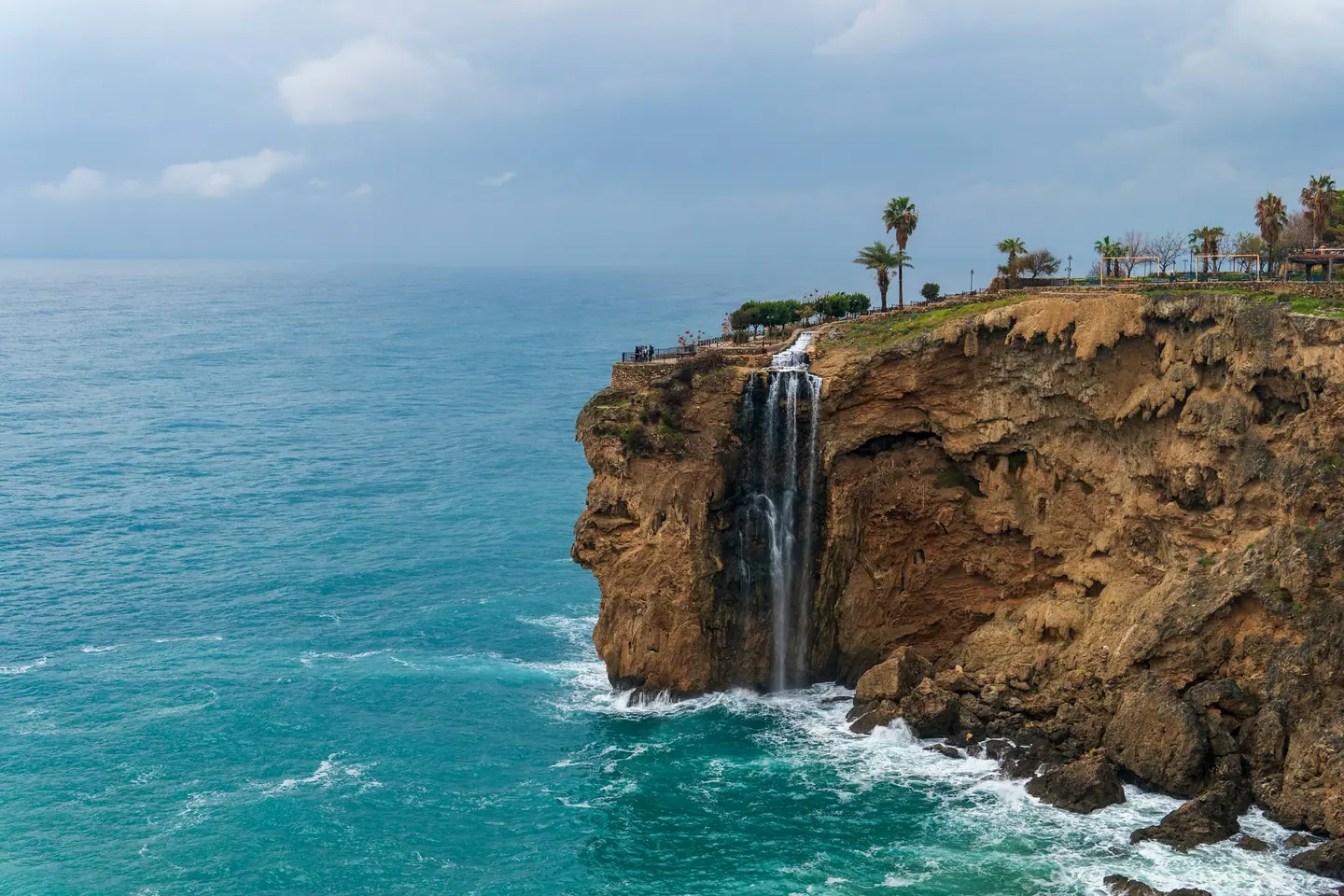
Kaleiçi Old Harbour, Hadrian’s Gate & Seljuk Core
Hadrian’s Gate, Yivli Minare Mosque, Saat Kulesi Clock Tower, Kesik Minare Broken Minaret, Hıdırlık Tower, Old Marina Mermerli Beach, Karaalioğlu Park, and Tekeli Mehmet Paşa Mosque
Hadrian's Gate
Constructed in 130 AD to celebrate the Roman emperor's arrival, this grand marble portal features three vaulted arches flanked by defensive stone towers. Deep grooves carved by chariot wheels mark the ancient paving preserved beneath the central bay. Intricate floral reliefs and classical coffered ceilings remain visible on the underside of the vaults.
Yivli Minare Mosque
Commissioned in the 1220s by the Seljuk Sultan Alaeddin Keykubad I, this brick landmark rises thirty-eight metres above the historic quarter. Its distinctive fluted shaft is adorned with dark blue and turquoise tile remnants. The adjacent multi-domed prayer hall now houses cultural exhibitions beneath thick stone arches.
Antalya Clock Tower
Erected in the early twentieth century during the reign of Sultan Abdul Hamid II, this square bastion marks the northern boundary of Kaleiçi. It was constructed directly onto Hellenistic and Byzantine defensive walls using rough-hewn ashlar blocks. The structure served both civic timekeeping and surveillance functions above the surrounding public squares.
Kesik Minare
Originally built as a Roman temple in the second century, this complex was converted into the Byzantine Church of the Virgin Mary before becoming a Seljuk mosque. A devastating nineteenth-century fire ruined its wooden cone, earning it the moniker of the broken minaret. Recent conservation restored the prayer hall and capped the stone shaft.
Hıdırlık Tower
Standing fourteen metres high where the city walls meet the cliffs, this cylindrical tower dates from the second century AD. Historians believe it served as a monumental tomb for a prominent civic leader before conversion into a coastal lighthouse and defensive battery. Faint Roman frescoes survive inside the square podium level.
Tekeli Mehmet Paşa Mosque
Constructed under the patronage of Grand Vizier Tekeli Mehmet Pasha, this sanctuary represents one of the principal Ottoman monuments within the old city walls. The central dome rests on arched squinches and is flanked by smaller cupolas. Beautiful glazed ceramic tiles inscribed with Quranic verses embellish the lunettes above the exterior windows.
Old Harbour of Antalya
Operating since the second century BC, this sheltered bay formed the commercial lifeblood of Pamphylia under Roman, Byzantine, Seljuk, and Ottoman rule. Stone breakwaters and ramparts enclose the basin, where trading vessels once unloaded Mediterranean cargo. Today wooden sailing boats moor along the quay beside preserved maritime warehouses and fortresses.
Mermerli Beach
Positioned directly beneath the clifftop walls of the old harbour, this compact coastal strip served as Antalya's first regulated public sea bath in the late Ottoman era. Stone steps descend steeply through the defensive masonry to a wooden sunbathing terrace. Clear waters lap against the limestone cliffs, offering views across the bay.
Karaalioğlu Park
Laid out during the mid-twentieth century on historic ramparts, this public park spans several terraces high above the Mediterranean Sea. Exotic palms, pine trees, and fountains frame paved promenades terminating at stone viewing platforms. Sculptures and historical stone fragments sit scattered across the lawns facing the distant Beydağları mountain ridge.
İskele Mosque
Constructed in the late nineteenth century from ashlar masonry, this diminutive place of worship rests on four low stone pillars beside the harbour water's edge. A freshwater spring issues from beneath the foundation piers into the sea. The single-room prayer chamber features simple wooden fittings and an elevated platform.
Suna & İnan Kıraç Kaleiçi Museum
Housed within a traditional nineteenth-century timber-framed townhouse, this private museum documents regional domestic life through life-sized dioramas and decorative folk art. Visitors walk across pebbled courtyard mosaics into upper reception rooms. The complex also incorporates the deconsecrated nineteenth-century Orthodox Church of Saint George, which showcases historic Çanakkale ceramics.
Zincir Kıran Mehmet Bey Madrasa
Founded in 1377 by Mehmet Bey, this madrasa stands within the Yivli Minare religious complex. The rectangular stone building features an open central courtyard flanked by six vaulted student cells and an arcade. Several historic Ottoman gravestones and architectural fragments from ancient Pamphylia are preserved within the interior chambers.
Ahi Yusuf Mosque
Dating to 1320, this small religious complex was dedicated to Ahi Yusuf, an influential leader of the Seljuk trade guild fraternity. Constructed from regular ashlar stone blocks, the square sanctuary incorporates ancient Roman spolia into its lower walls. The founder's tomb lies within the crypt beneath the wooden floor.
Karatay Madrasa
Erected in the mid-thirteenth century by the Seljuk vizier Celaleddin Karatay, this madrasa exhibits typical medieval Anatolian Islamic architecture. Its surviving portal boasts relief carvings, stalactite muqarnas vaults, and geometric kufic inscriptions. Much of the original domed central structure has fallen, but preserved walls illustrate Seljuk stone masonry.
Süleyman Subaşı Mosque
Constructed during the sixteenth century, this compact place of worship served the residents of the inner Kaleiçi quarter. Built with mixed timber framing and stone, the mosque features a simple hip roof rather than a stone dome. Its short cylindrical minaret rises from an octagonal stone base beside a small shaded courtyard.
Kaleiçi Panoramic Elevator
Connecting Cumhuriyet Square on the upper cliff to the historic port below, this modern engineering addition provides vertical transit along the sheer rock face. Passengers ascend in glazed glass cabins that reveal defensive seawalls and fishing boats. The upper deck affords views over the bay toward the Taurus Mountains.
Attalus II Monument
Standing opposite the clock tower on the northern boundary of the historic district, this modern bronze monument depicts King Attalus II of Pergamon. The monarch founded the settlement around 150 BC as an Aegean naval stronghold. Inscriptions trace the transition of Attalea into Roman, Byzantine, Seljuk, and modern Turkish Antalya.
Kaleiçi Ramparts
Stretching across the perimeter of the old district, these robust stone fortifications display layers of Hellenistic, Roman, Byzantine, and Seljuk military engineering. Massive rectangular bastions reinforce vulnerable landward stretches, often recycling ancient marble columns as horizontal bonding ties. Restored walkways along the upper curtain walls reveal strategic viewpoints overlooking neighbouring streets.
Cumhuriyet Square
Forming Antalya's principal public square, this clifftop plaza is centred on the National Rise Monument, a dynamic bronze sculpture by Hüseyin Gezer. The open stone terrace borders the northern gate of Kaleiçi, presenting an elevated view over the tiled rooftops and minarets. It remains the venue for official municipal celebrations.
Old City Marina Pier
Constructed along the curve of the natural bay, this stone pier has defended trading vessels against southern Mediterranean gales since antiquity. The breakwater incorporates massive blocks cut from local travertine, patched across centuries of Seljuk and Ottoman administration. A leisurely walk along its crest provides clear views back toward the cliffside fortifications.
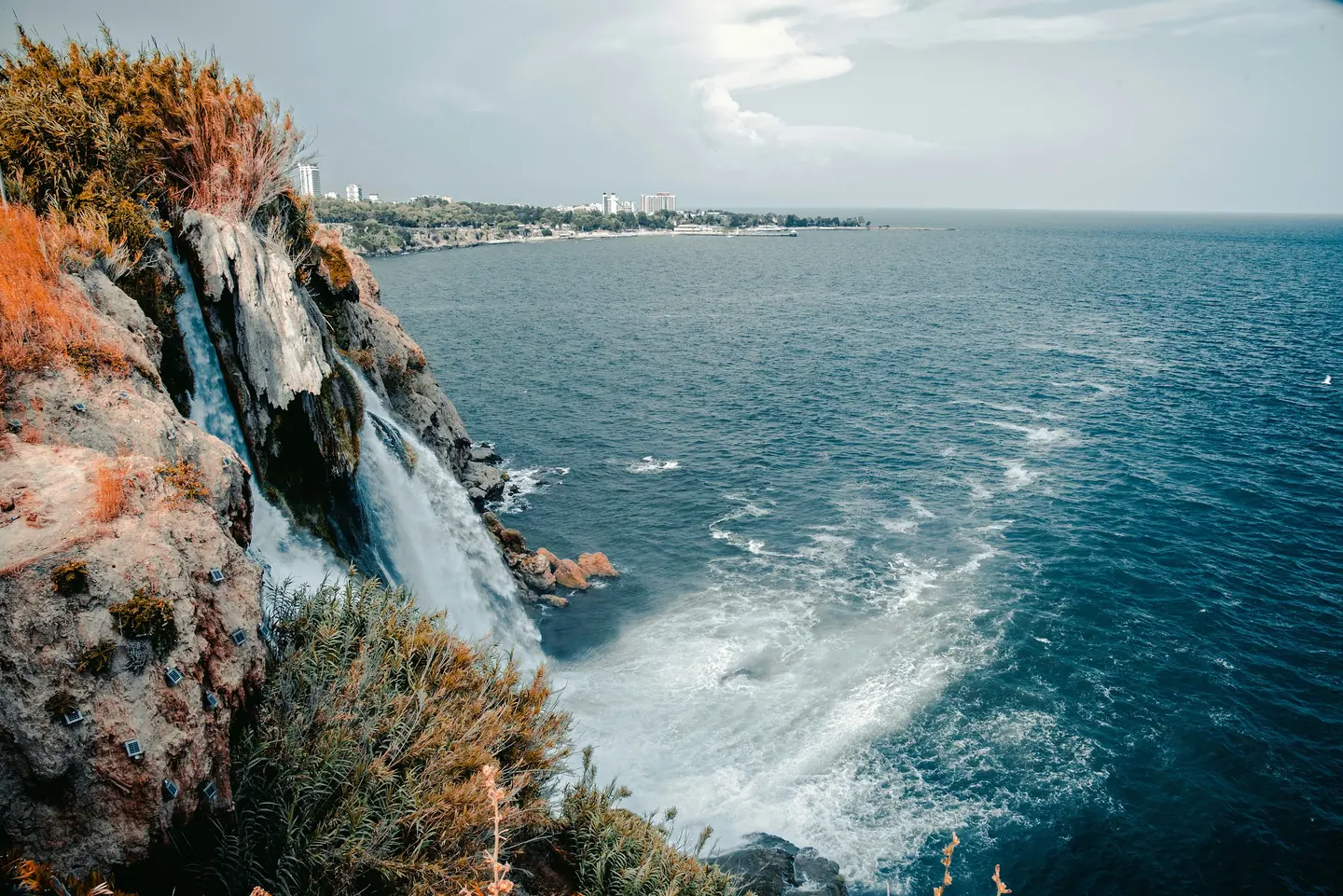
Antalya Archaeological Museum, Konyaaltı & Düden Waterfalls
Antalya Museum, Hall of Emperors, Hall of Sarcophagi, Konyaaltı Promenade, Tünektepe Viewpoint, Upper Düden Waterfall, and Lower Düden Karpuzkaldıran Waterfall
Antalya Archaeological Museum
Founded in 1922 to safeguard heritage artifacts from wartime looting, this comprehensive complex displays finds from ancient Lycia, Pamphylia and Pisidia. Visitors can examine prehistoric stone tools, classical statues and Byzantine ecclesiastical silver. We recommend viewing the reconstructed tombs and bronze statues recovered from local rescue excavations.
Hall of Emperors at Antalya Museum
This expansive interior hall houses exquisite marble sculptures recovered largely from the theatre and public baths of ancient Perga. The exhibits feature finely carved portraits of Roman emperors such as Hadrian, Septimius Severus and Antoninus Pius alongside statues of empress Faustina. Notice the precise drapery work and intricate facial expressions fashioned by master Aphrodisian artisans.
Hall of Sarcophagi at Antalya Museum
This gallery presents a striking collection of intricately carved marble sarcophagi dating from the second and third centuries AD. The highlights include the famed Twelve Labours of Herakles sarcophagus, repatriated from Switzerland, and garland-decked chests from Perga. Observe the detailed high-relief carving depicting mythological battles and funerary banquet rituals.
Hall of the Gods at Antalya Museum
Dedicated to divine marble figures, this hall features second-century Roman copies of lost classical Greek masterpieces discovered at Perga. The display includes statues of Athena, Apollo, Aphrodite, Hermes and Artemis in remarkably preserved condition. Observe the monumental statue of the Three Graces, notable for its delicate carving and dynamic anatomical composition.
Statue of the Weary Herakles
This celebrated second-century Roman marble statue represents Herakles resting upon his club draped in the Nemean lion pelt. Excavators found the lower half at Perga in 1980, while the looted upper half was eventually returned from Boston in 2011. The reunited masterwork exemplifies the classical Lysippan school of naturalistic muscular proportion.
Tomb of Saint Nicholas Display
Located in the museum's ecclesiastical section, this display exhibits bone fragments and sacred relics attributed to Saint Nicholas of Myra. The pieces were recovered during excavations at the saint's basilica in Demre along the southern coast. Accompanying displays present medieval Orthodox icons, liturgical chalices and bronze church furnishings.
Museum Open Air Garden Gallery
The shaded exterior courtyard of the museum acts as an open-air exhibition for monumental architectural fragments, inscribed pedestals and stone sarcophagi. Peacocks freely roam among Islamic gravestones, Roman olive-oil presses and decorative temple pediments. We suggest walking the colonnaded portico to examine large pithoi storage jars and carved friezes.
Atatürk Parki Viewpoint
Situated atop the high travertine limestone cliffs, this public park provides panoramic views across the sweeping bay towards the Beydağları Mountains. Paved walkways connect shaded seating terraces with historic observation points built above the sheer rock face. Visitors can pause at scenic overlooks that bridge the historic city centre with Konyaaltı beach.
Konyaaltı Beach Promenade
Stretching for roughly seven kilometres beneath the western mountains, this wide coastal path features dedicated cycle tracks, pedestrian promenades and palm-shaded gardens. The pebbled coastline has served as a central recreational district since classical antiquity when small fishing stations operated along the shore. Today it forms a modern seafront leisure zone.
Antalya Aqualand and Dolphinland
Established in the late twentieth century near Konyaaltı beach, this expansive recreational park represents one of the region's earliest dedicated water parks. The grounds contain complex slide installations, wave pools and botanical garden landscaping. It reflects the post-1980s expansion of modern tourism infrastructure along the Mediterranean coast.
Cam Piramit Sabancı Congress and Exhibition Centre
Erected in 1997 inside the Hasan Subaşı Cultural Park, this striking metal-and-glass pyramid structure serves as a key convention venue. The building features an exterior steel space frame clad in reflective glass panels surrounded by decorative pools and fountains. It regularly hosts national film festivals, civic forums and cultural trade fairs.
Antalya Open-Air Theatre
Constructed in the cultural zone near the Mediterranean cliffs, this modern open-air amphitheatre follows classical Greco-Roman design principles with tiered stone seating. The auditorium seats thousands of spectators for classical concerts, theatrical productions and folk dance shows. Surrounding pine groves buffer the venue from surrounding city avenues.
Arapsuyu Bridge
This historic single-arch stone bridge survives in the western Arapsuyu quarter, dating from the late Roman imperial era. The structure was constructed using ashlar limestone blocks, designed to facilitate travel along the coastal trade route between Attalea and Lycian settlements. It remains an understated example of Roman hydraulic and civil engineering.
Boğaçayı Bridge and Estuary
The Boğaçayı river discharges meltwater from the Western Taurus mountains directly into the Mediterranean at the western end of Konyaaltı. The modern highway bridge provides vantage points over newly re-engineered riverbanks that support native reeds and coastal waterbirds. It illustrates local civil engineering efforts to balance flood defence with parkland development.
Tünektepe Viewpoint and Hilltop
Rising 618 metres above sea level at the western terminus of the bay, this limestone peak affords sweeping views of the city, port and coastline. A rotating restaurant pavilion and teleferik cable car station sit atop the craggy summit. We advise visiting on clear mornings to view the limestone cliffs extending towards the Pamphylian plain.
Port of Antalya Lookout
Constructed beneath the slopes of Tünektepe to replace the shallow historic Roman harbour, this deepwater facility operates as the province's main commercial port. Lookout platforms along the coastal road reveal active container terminals, cruise ship piers and grain silos. The facility highlights modern maritime commerce connecting Turkey to Mediterranean shipping lanes.
Upper Düden Waterfall
Located about twelve kilometres north of the city centre, these scenic freshwater falls tumble over limestone terraces formed by the Düden River. The rushing waters emerge from subterranean mountain channels into a wooded gorge filled with hanging vines and mossy rocks. Walking trails lead down to historical watermills and cool picnic groves.
Upper Düden River Cave
Carved through travertine rock behind the main curtain of the Upper Düden Waterfall, this natural cavern permits visitors to view the cascade from within. Spiralling stone stairs descend into moist chambers lit by natural fissure windows opening towards the torrent. Geologists value the cave for its active karst formations, dripstone deposits and cool microclimate.
Lower Düden Waterfall
Also called Karpuzkaldıran, this spectacular natural feature sees the Düden River plunge forty metres off sheer travertine cliffs into the Mediterranean. The site provides a remarkable geological display of regional karst hydrology discharging freshwater into saltwater. We recommend viewing the torrent from the cliffside observation walkways within the surrounding public park.
Düden Park and Cliff Walk
This expansive urban green space borders the eastern coast of Antalya, surrounding the marine outflow of the Düden river. The grounds offer paved walking trails, manicured gardens, exercise grounds and cantilevered viewing platforms suspended near the cliff edge. Visitors frequently gather here to observe passing coastal boats and dramatic water spray.
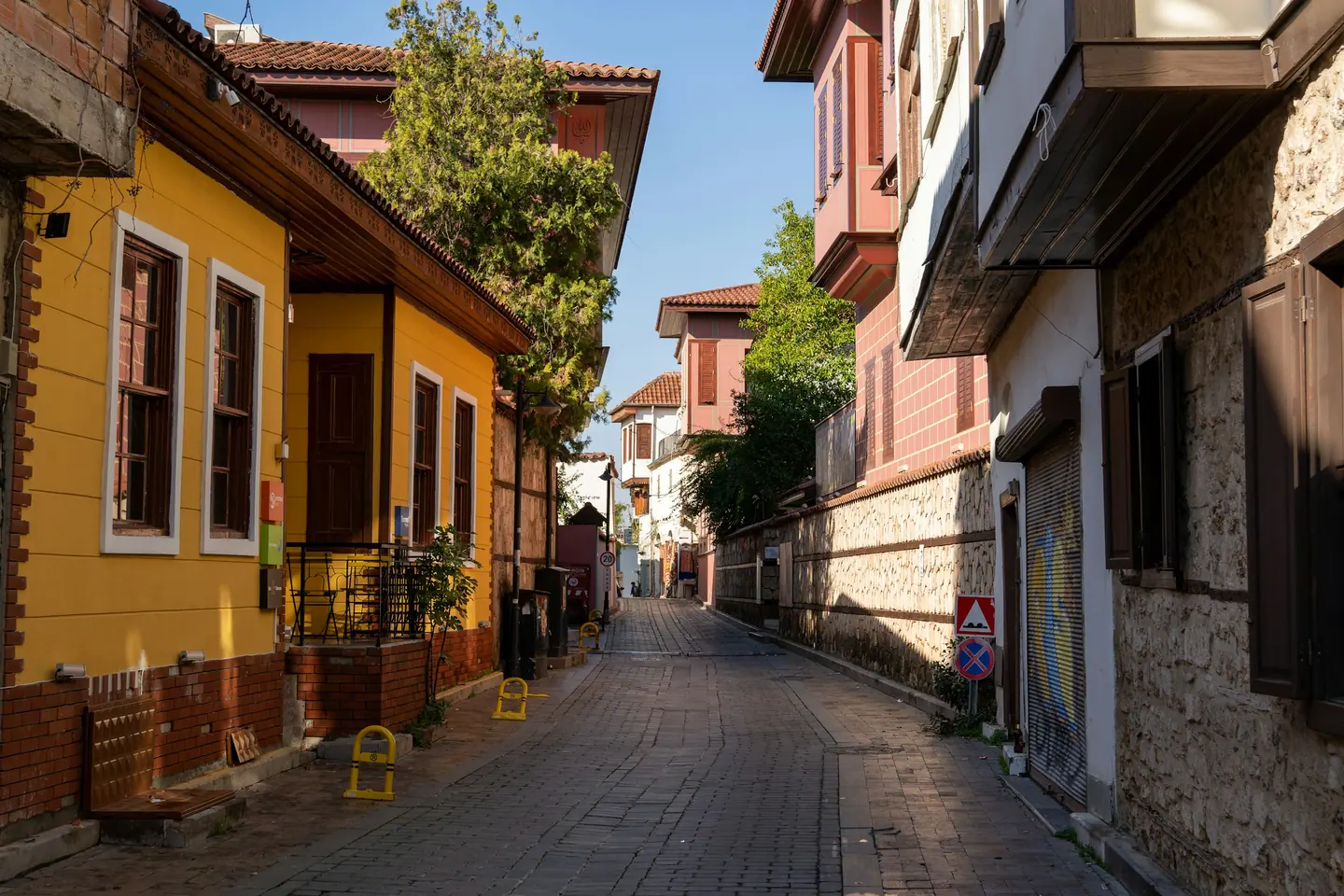
Ancient City of Perge & Kurşunlu Waterfall
Perge Hellenistic Towers, Roman Gate of Perge, Colonnaded Street of Perge, Perge Stadium, Perge Roman Baths, Agora of Perge, Acropolis of Perge, and Kurşunlu Waterfall
Perge Stadium
Constructed in the second century AD, this horseshoe-shaped stadium accommodated roughly twelve thousand spectators. Beneath the surviving stone tiers, arched barrel vaults once served as shops and storerooms. We can inspect carved inscriptions identifying various tradesmen who rented these spaces during major athletic festivals.
Roman Theatre of Perge
Holding up to fourteen thousand people, this grand theatre blends Greek hillside seating with Roman architectural planning. Elaborate marble friezes originally decorated the multi-storey stage building, depicting mythological scenes of Dionysus and imperial triumphs. Many of these detailed reliefs now reside in the nearby Antalya Museum.
Late Roman Gate of Perge
Constructed during the fourth century AD, this fortified gate formed part of a revised defensive perimeter erected to protect the city against regional incursions. It was built using repurposed limestone blocks and architectural fragments from earlier monuments. The portal leads travellers into a defensive courtyard immediately preceding older Hellenistic fortifications.
Perge Hellenistic Towers
Erected in the third century BC, these landmark round towers anchored the southern defensive network of classical Perge. Originally standing several storeys high, they guarded a semicircular courtyard where the wealthy benefactress Plancia Magna later installed statues of Roman deities and imperial rulers. Their fine ashlar masonry remains remarkably preserved.
Plancia Magna Courtyard
Dedicated in the second century AD, this courtyard transformed the Hellenistic gate area into an imperial display ground. Inscriptions reveal how Plancia Magna, high priestess of Artemis and civic benefactor, funded niches holding statues of Roman emperors and city founders. The surviving pedestals provide rich documentation of ancient civic patronage.
Roman Gate of Perge
Erected during the reign of Emperor Septimius Severus, this monument marked the official southern approach into the urban centre. The structure featured Corinthian columns, decorated pediments and niches honouring members of the imperial household. Today, its remaining foundations illustrate the ambitious scale of civic expansion in Roman Pamphylia.
Southern Roman Baths of Perge
Positioned just inside the main gate, this bathhouse is one of the largest ancient thermal complexes in Anatolia. Visitors can explore the sequence of rooms, including the frigidarium, tepidarium and caldarium, alongside exercise palaestra areas. Exposed hypocaust pillars show how heated air circulated beneath marble floor tiles.
Agora of Perge
This expansive open square functioned as the central commercial hub of ancient Perge from the fourth century AD. A circular monument or tholos stood at the centre of the paved plaza, surrounded by uniform rows of small shops. Surviving mosaic fragments along the porticoes illustrate the decorative finish of the market.
Colonnaded Street of Perge
Extending northward through the heart of the city, this paved avenue measures over twenty metres across and stretches several hundred metres. A wide central stone water channel allowed fresh water to cascade down from the acropolis toward the southern gate. Flanking rows of Corinthian columns sheltered shop entrances from rain and sun.
Perge Water Channel
Running down the exact spine of the colonnaded boulevard, this raised limestone canal functioned as an open-air aqueduct. Intermittent stone dams and pools cooled the surrounding street while generating relaxing sounds of running water across the civic centre. The design demonstrates advanced urban planning and Roman hydraulic engineering.
Palaestra of Perge
Located adjacent to the southern bathhouse, this spacious colonnaded court provided athletes with an open training area. Inscriptions indicate that civic leaders dedicated the complex to Emperor Claudius and the city of Perge. The surviving column bases and perimeter rooms reveal a structured environment intended for physical and intellectual instruction.
Perge Macellum
Situated near the agora, the macellum functioned as a regulated market for meat, fish and fresh produce. Its central round structure allowed merchants to trade under shade while inspectors checked standard weights and measures. Surviving drain networks and storage cellars highlight the hygienic practices of municipal commerce in antiquity.
Northern Nymphaeum of Perge
Positioned at the northern terminus of the colonnaded street, this grand two-storey fountain house channelled spring water from the acropolis hill. A colossal reclining statue representing the river god Kestros originally graced the central basin, directing water into the street channel. Carved limestone architraves and statues embellished the ornate facade.
Acropolis of Perge
Occupied continuously since the Early Bronze Age, this plateau served as the primary citadel before the city expanded into the plain below. Archaeological soundings have revealed defensive walls, storage silos and foundations from the Classical and Byzantine periods. The summit provides open vistas across the Pamphylian plain towards the Taurus Mountains.
Perge Necropolis
Stretching along the ancient roadway outside the city walls, this burial area holds hundreds of family tombs and sarcophagi. Wealthy citizens were buried in elaborately carved stone chests displaying garland motifs, mythological heroes and epitaphs warning against grave disturbances. Many recovered sarcophagi are displayed in regional collections.
Northern Baths of Perge
Constructed in the third century AD, these baths provided thermal facilities for residents living in the northern sectors of the city. While less excavated than the southern complex, substantial brick arches, wall heating flues and mosaic floors remain visible. The complex showcases Late Roman construction techniques utilising brick bands within stone walls.
Byzantine Basilica of Perge
Constructed when Perge served as an important bishopric, this substantial church occupied land once filled with pagan civic structures. The nave concludes in a semicircular apse flanked by side chambers for liturgical preparation. Visitors can observe column fragments, chancel screen foundations and geometric floor mosaics throughout the ruins.
Severan Nymphaeum of Perge
Erected near the southern baths during the reign of Septimius Severus, this public fountain featured a multi-tiered marble facade. Niches along the back wall held depictions of the emperor, Julia Domna and local civic deities. Water spilled continuously from carved spouts into a wide marble basin accessible to pedestrians.
Kurşunlu Waterfall
Located in a verdant nature reserve northeast of Antalya, this waterfall drops eighteen metres into a deep canyon pool. The cascade connects seven interconnected ponds surrounded by lush pine woods, plane trees and wild flora. Walking trails follow the limestone terraces, offering elevated viewpoints over the flowing water and natural travertine formations.
Historic Water Mill of Kurşunlu
Situated within the nature park grounds, this timber and stone water mill functioned for generations under the Ottoman Empire to grind grain for local villages. Restored to illustrate rural agricultural history, the building features an intact mill race and authentic grinding mechanisms. It offers insights into pre-industrial technology powered by the neighbouring river.
Aspendos, Side & Manavgat Ancient Coast
Aspendos Roman Theatre, Aspendos Aqueduct, Aspendos Basilica, Temple of Apollo Side, Ancient Theatre of Side, Side Agora, Vespasian Monument Side, and Side Museum
Aspendos Roman Theatre
Constructed during the reign of Emperor Marcus Aurelius by the architect Zenon, this monumental auditorium accommodated up to twelve thousand spectators. The imposing stage building stands intact to its original two-storey height, retaining classical pediments and friezes. Visitors can examine the arcade vaulting along the upper cavea and the acoustic engineering of the gallery.
Aspendos Aqueduct
Engineered in the third century, this hydraulic system carried spring water over nineteen kilometres to the acropolis of Aspendos. Two surviving pressure towers illustrate the inverted siphon method used to elevate water across the low-lying valley basin. Massive limestone arches still stand upright amid the agricultural fields north of the ancient city centre.
Aspendos Basilica
Located on the flat summit of the acropolis hill, this expansive hall served as the judicial and commercial centre of the settlement. The structure measured over one hundred metres in length, featuring a central nave flanked by aisles and a prominent semicircular apse. Heavy masonry fragments and collapsed pillar bases trace the layout of the Roman civil court.
Aspendos Agora
The acropolis agora functioned as the political focus of the city, framed by stoas, administrative chambers and public offices. Excavations reveal limestone paving stones, drainage channels and surviving foundations of market stalls that served regional traders. Walking across the plateau allows visitors to identify the architectural perimeter linking the hall to neighbouring public buildings.
Aspendos Nymphaeum
Dating to the third century, this ornate water pavilion stood opposite the agora, presenting a two-tiered facade of carved marble niches. Although its front columns have fallen, the surviving thirty-two-metre rear wall demonstrates the scale of civic fountain architecture. Travellers can observe decorative cornices and recessed chambers that once displayed statues of regional deities.
Aspendos Bouleuterion
Situated just north of the basilica, this covered hall housed meetings of the municipal senate and prominent citizens. The layout featured tiered semicircular seating focused on a central speaker podium, shielded from weather by timber roofing. Substantial perimeter walls remain intact, illustrating the institutional organisation of Pamphylian city administration.
Eurymedon Bridge
Spanning the ancient Eurymedon River, this arched bridge was rebuilt by the Seljuks of Rum in the thirteenth century upon collapsed fourth-century Roman piers. The structure exhibits an intentional dog-leg turn designed to align with the surviving stone bases while resisting river currents. Pointed arches and diverse stone blocks display architectural layers spanning several centuries.
Temple of Apollo Side
Dating to the second century, this seafront temple stood as a protective beacon for maritime vessels entering the harbour. Five Corinthian columns and portions of the ornate entablature were re-erected during twentieth-century restoration efforts, displaying Medusa head reliefs along the architrave. The site provides clear evidence of the city's maritime wealth and religious devotion.
Temple of Athena Side
Adjacent to the Temple of Apollo, this larger peripteral structure honoured Athena as the divine protector of Side. Built on a elevated podium, the temple featured six columns along its short sides and eleven along its length. Substantial architectural elements, including fluted column shafts and marble capital fragments, rest around the preserved stone base.
Ancient Theatre of Side
Unlike traditional Hellenistic theatres cut into natural slopes, this Roman arena rose across two tiers supported entirely by vaulted galleries. Constructed in the mid-second century, it accommodated fifteen thousand spectators and was later modified with heavy arena walls for gladiator contests. The massive skene wall displays relief fragments, decorative friezes and dedicatory inscriptions.
Side Agora
Enclosed by porticoes on all four sides, this square served as the central market and slave trading hub of Roman Pamphylia. In the centre stand the circular stone foundations of a temple dedicated to Tyche, the goddess of fortune. Surrounding the perimeter, travellers can explore vaulted latrines that accommodated up to twenty-four patrons simultaneously.
Vespasian Monument Side
Erected in honour of Emperor Vespasian during the first century, this decorative archway was later relocated and incorporated into late Roman city fortifications. The monument features a central portal flanked by Corinthian columns and niches that formerly held civic sculpture. A clear Latin dedicatory inscription remains visible carved into the upper marble architrave.
Side Museum
Housed inside a restored fifth-century bath complex, this museum displays artefacts recovered from local excavations across the peninsula. The halls preserve original hypocaust floor heating systems, caldarium vaults and cold pools beneath stone arches. Exhibits include Roman sarcophagi, detailed portrait busts, Hellenistic inscriptions and decorative relief panels from the adjacent theatre.
Monumental Fountain of Side
Positioned opposite the principal land gate, this grandiose fountain greeted visitors arriving from the interior road network. The facade once rose twenty metres high, containing twenty-one marble columns across three levels above a broad water basin. Carved mythological reliefs and decorative spouts illustrate the lavish civic patronage prevalent throughout the Antonine period.
State Agora of Side
Located southeast of the commercial marketplace, this formal enclosure was dedicated to imperial governance and elite civic functions. The complex featured three colonnaded wings surrounding a central courtyard, with a dedicated imperial chamber at the eastern end. Excavators discovered numerous classical statues here, which originally adorned the ornamental niches within the governing halls.
Side Great Gate
This fortified portal formed the primary access point through Side's formidable landward wall system during the Hellenistic period. Two semicircular stone towers protected a central courtyard designed to trap and repel invading forces. Substantial ashlar blocks and defensive embrasures remain visible, illustrating early military architecture prior to Roman expansion.
Side South Basilica
Constructed in the fifth century, this Christian complex incorporated stone components stripped from neighbouring classical temples near the harbour. The site includes an expansive three-aisled nave, an internal baptistery and an adjacent bishop's residence. Surviving column fragments and geometric floor pavements indicate its importance as an early Christian episcopal seat.
Side Colonnaded Street
Running from the Great Gate to the city centre, this wide avenue served as the spine of Roman urban life. Rows of re-erected Corinthian columns demarcate covered pedestrian walkways that originally fronted historic street-level shops. Deep ruts carved into the limestone flagstones reveal centuries of heavy cart traffic moving towards the harbour.
Manavgat Historical Watermills
Scattered along the waterways feeding the Manavgat River, these stone structures ground grain for regional agricultural communities. The buildings feature cut-limestone walls, intake channels and horizontal wooden wheel mechanisms powered by natural water currents. They reflect the pre-industrial agrarian heritage that sustained the fertile coastal plains south of the Taurus Mountains.
Side Aqueduct System
Supplying fresh water to Side from the Dumanlı spring thirty kilometres inland, this engineering system included tunnels, conduits and forty stone bridges. Significant arched sections survive along the modern road approaching the peninsula, showcasing dense limestone ashlar construction. These spans carried enclosed channels designed to prevent evaporation under the Mediterranean sun.
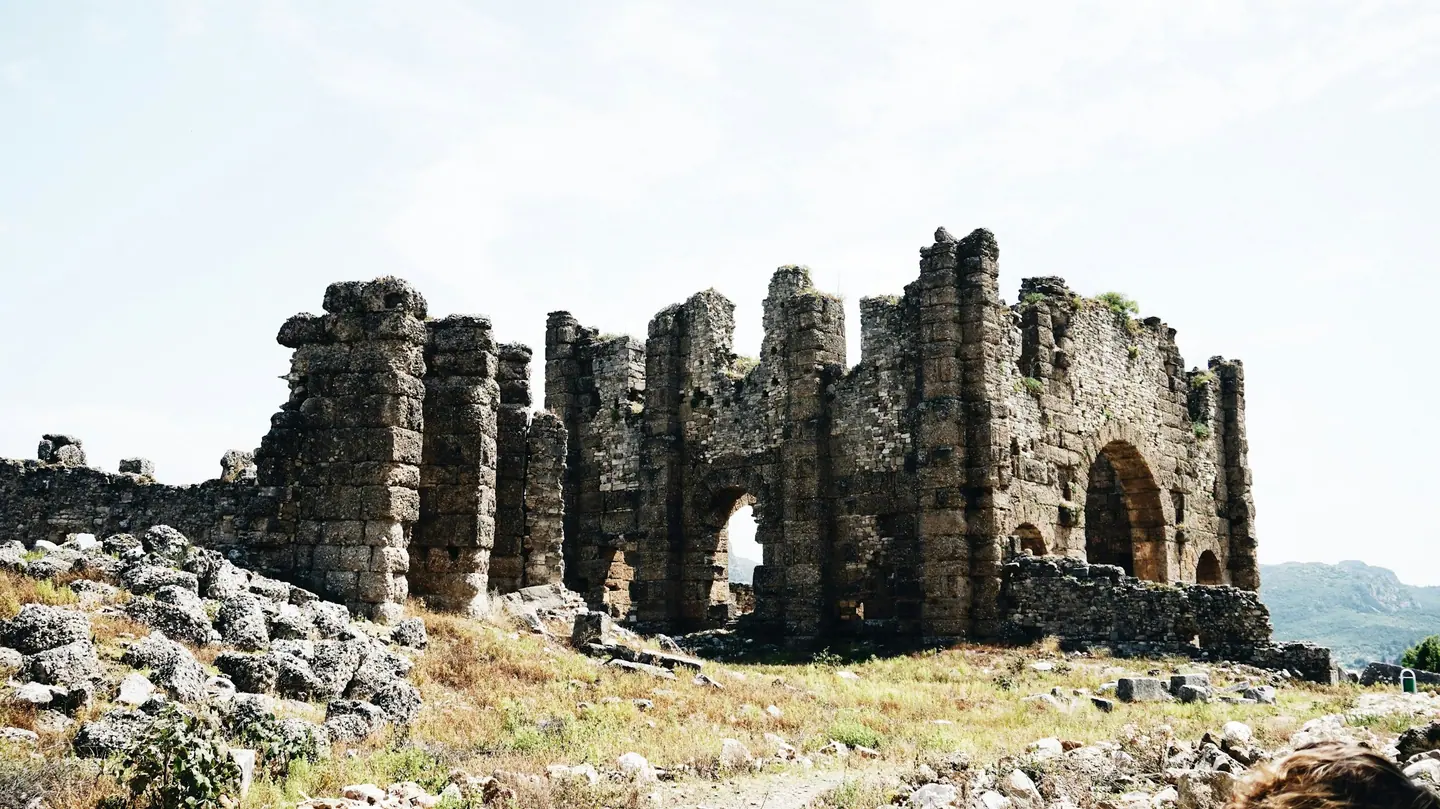
Termessos, Phaselis & Olympos Lycian Coast
Termessos Mountain Theatre, Tomb of Alcetas, King’s Road Termessos, Karain Cave, Phaselis Ancient Harbours, Phaselis Aqueduct, Olympos Ancient City, and Yanartaş Chimaera
Termessos Mountain Theatre
Perched high on Mount Solymos, this Hellenistic theatre seated roughly four thousand spectators above sheer precipices. We observe original seating tiers facing dramatic mountain vistas, alongside a ruined Roman stage building. Its remote setting preserved the masonry from stone robbing across centuries of abandonment.
Tomb of Alcetas
Cut directly into a cliff wall in the upper necropolis, this rock monument honours the Macedonian general Alcetas, who died here in 319 BC. The facade displays faint carved reliefs of a mounted warrior and weaponry, though elements suffered vandalism in antiquity. We study the site to understand Diadochi conflicts.
King's Road at Termessos
This monumental paved thoroughfare climbed through steep mountain slopes to provide secure passage into the city centre. Massive stone paving blocks and retaining walls still withstand alpine erosion, demonstrating Hellenistic civic engineering. Walking the path reveals defensive gatehouses that repelled Alexander the Great during his southern campaign.
Termessos Bouleuterion
Standing east of the agora, this council hall retains stone walls rising to nearly ten metres in height. Originally roofed with heavy timber spans, the building accommodated civic magistrates and public assemblies. Windows punctuate the upper stonework, illuminating an interior that later served as an odeon under Roman administration.
Colonnaded Street of Termessos
Running north from the main agora, this ancient thoroughfare once carried public traffic through commercial and religious quarters. Fallen Doric column drums, portico bases, and drainage channels litter the ground, shaded by dense pine scrub. We note inscriptions carved into stone plinths recording prominent local benefactors and athletic victories.
Termessos Great Cisterns
Lacking natural springs, Termessos depended on five massive subterranean cisterns linked by vaulted stone ceilings. These chambers captured seasonal rainfall and mountain runoff, supplying thousands of residents during long military sieges. Visitors can view their deep chambers, coated with water-resistant Roman plaster, beside the central agora platform.
Southwest Necropolis of Termessos
Hundreds of stone sarcophagi cover the rocky slopes, many cast aside by past earthquakes and ancient grave robbers. Elaborate relief carvings display shields, spears, and classical Medusa heads designed to ward off intruders. Inscriptions in the Pisidian-influenced Greek dialect detail severe civic fines imposed for desecrating family tombs.
Karain Cave
Situated on the slopes of Mount Saman, Karain Cave preserves archaeological deposits spanning over two hundred thousand years. Excavations uncovered Neanderthal remains, carved bone tools, and flint implements now displayed in regional museums. Inside the three vaulted limestone chambers, natural stalagmites frame ancient surfaces carved with Roman votive inscriptions.
Phaselis Central Harbour
One of three distinct harbours operated by ancient Phaselis, this sheltered inlet provided calm waters for merchant ships trading timber and rose oil. Submerged masonry and ruined quays remain visible just beneath the shallow water. It connects directly to the paved main street, linking nautical trade with urban life.
Phaselis Aqueduct
Constructed from porous golden limestone blocks, this Roman water channel transported spring water from northern hills across the low isthmus. Substantial arches remain intact along the main entrance route, demonstrating precise gradient engineering. The conduit fed multiple public baths and domestic fountains scattered across the historic commercial port.
Main Street of Phaselis
This wide avenue extends between the military and southern harbours, surfaced with smooth limestone flagstones concealing a central drainage canal. Elevated sidewalks, shop foundations, and portico plinths define the borders of the thoroughfare. Monumental inscriptions on pedestal bases honour visiting Roman emperors, notably Hadrian who toured the city in 131 AD.
Phaselis Theatre
Built into the acropolis hillside above the main street, this theatre provided seating for approximately fifteen hundred spectators. The stone cavea remains well preserved, though the two-storey stage building lies mostly in ruins. Visitors can climb to the top row for views sweeping across the harbour basins and Mount Tahtalı.
Hadrian Gate of Phaselis
Located near the southern harbour, this single-bay arch was erected by municipal authorities to commemorate Emperor Hadrian's arrival. Although partially collapsed, ornate marble architraves and dedicatory Greek inscriptions survive on surrounding grass verges. The gate marked the formal ceremonial entry point from the southern docks into the commercial centre.
Olympos Ancient City Riverbed
The Akçay stream bisects Olympos, flowing through a stone-lined canal that allowed ancient merchant vessels to moor inland. Crumbling quay walls, bridge abutments, and defensive towers line both banks among dense laurel trees. Exploring the riverbed reveals how Lycian architects channelled seasonal torrents to safeguard urban districts.
Olympos Roman Theatre
Positioned south of the river, the Roman theatre remains partially covered by forest roots and wild ivy. The cavea retains several rows of seats, alongside decorative fragments of floral friezes from the scaenae frons. We observe arched entrances that guided Lycian theatregoers into the auditorium during regional festivals.
Tomb of Captain Eudemos
Found near the river mouth, this rock-cut tomb belonged to Captain Eudemos, a local maritime merchant. A carved relief on the sarcophagus side depicts his sailing ship alongside poetic verses reflecting on sea voyages and mortality. The inscription provides rare personal insight into the maritime commerce of ancient Lycia.
Olympos Acropolis Fortress
Crowning the steep sea cliff north of Olympos beach, this acropolis incorporates layers of Classical, Roman, and medieval military architecture. Genoese and Venetian bastions overlook the turquoise bay, built to deter regional corsairs. Scrambling to the upper platform reveals foundations of early watchtowers and water storage tanks.
Yanartaş Chimaera Lower Flames
Perched above Çıralı village, these natural methane-fuelled vents have burned continuously for millennia. Ancient sailors used the flames as a nocturnal coastal beacon, inspiring the Greek myth of the fire-breathing Chimaera. Nearby ruins include the foundations of a Byzantine church dedicated to Saint George, who supplanted earlier pagan fire cults.
Yanartaş Chimaera Upper Flames
Located a steep climb above the main tourist vents, this upper terrace features several secluded gas fissures burning steadily in rock clefts. Far fewer travellers make the ascent, allowing an unhurried look at the thermal phenomenon. Ancient terrace walls and weathered ashlar blocks suggest small sanctuaries once clustered around these heights.
Olympos Coastal Necropolis
Positioned close to the beach approach, this extensive cemetery contains vaulted chamber tombs and classical sarcophagi resting on high podiums. Intricate Greek inscriptions record family lineages alongside strict civic curses against unauthorised burials. Dense vegetation winds through the stone masonry, creating a striking field of antiquity beside the sea.
Base Notes for Antalya and the Pamphylian Plain
Before setting out, check local transit connections, museum booking notes and monthly weather data in our Antalya Kaleiçi, Perge, Aspendos & Side city guide, and compare other walking itineraries.