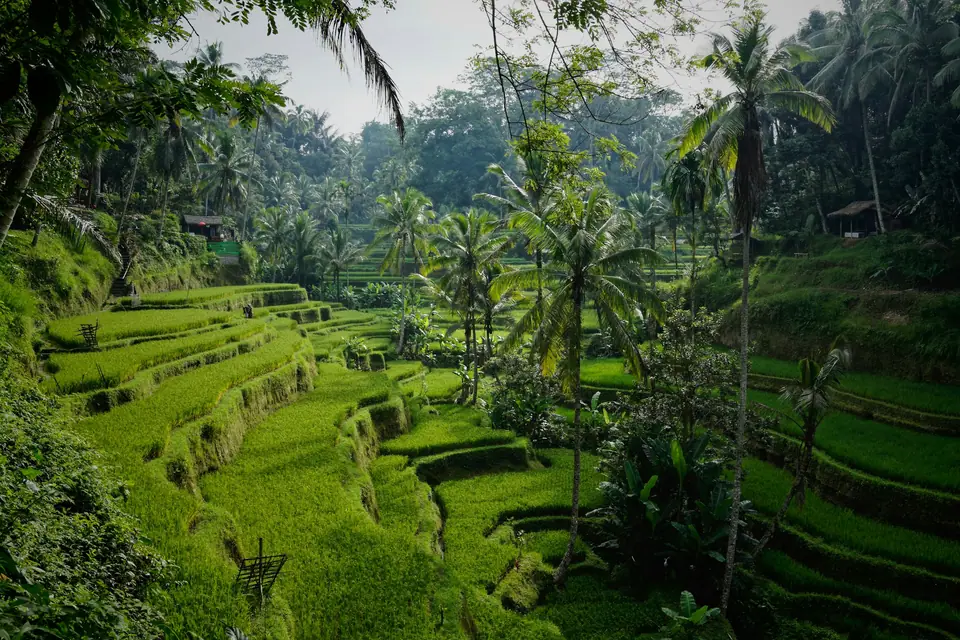
A detailed island route across Bali’s royal courts in Ubud, UNESCO Subak water temples and terraced valleys, volcanic crater lakes, and cliffside Indian Ocean temples.
Majapahit Court Traditions and the Cooperative Subak Water Networks
Settled by Austronesian navigators four thousand years ago and shaped from the eighth to fourteenth centuries by Hindu-Buddhist courts closely linked to Java, Bali became the sanctuary of classical Javanese court literature, gamelan music, shadow puppetry (wayang kulit), and temple architecture after the fall of the Majapahit Empire in the late fifteenth century. Across the island's volcanic slopes, farmers organized cooperative Subak irrigation associations governed by the eleventh-century philosophy of Tri Hita Karana (harmony among spirit, humanity, and nature).
Anchored by directional temples (Kahyangan Jagat) from mountain-top Pura Besakih on Mount Agung to sea-swept Pura Luhur Uluwatu and Tanah Lot, Bali's living ritual calendar permeates every village courtyard and carved split gate (candi bentar).
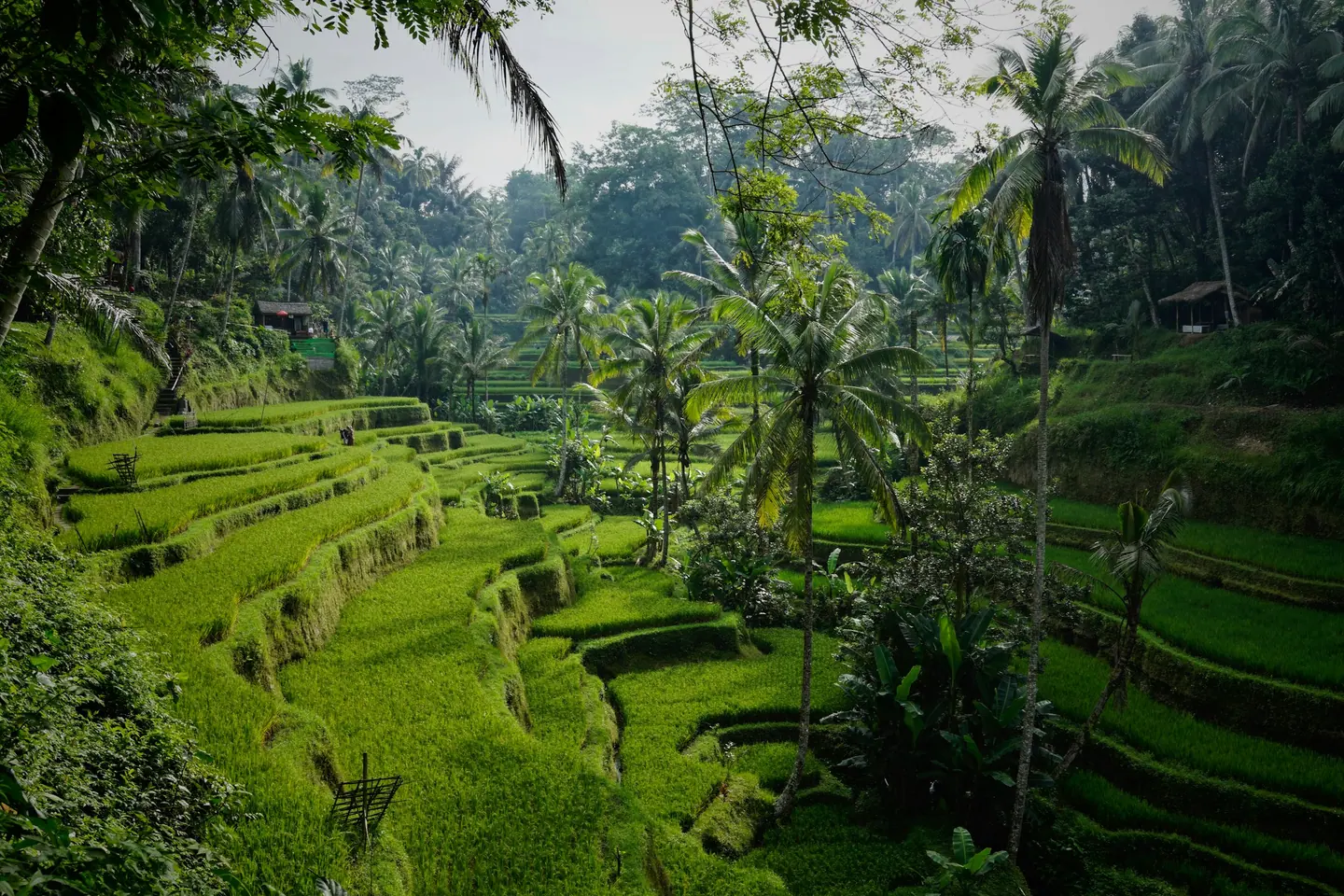
Ubud Royal Centre, Monkey Forest & Campuhan Ridge
Puri Saren Agung Ubud Royal Palace, Pura Taman Saraswati Water Lotus Temple, Puri Lukisan Museum, Campuhan Ridge Walk, Pura Gunung Lebah, Sacred Monkey Forest Sanctuary Padangtegal, Agung Rai Museum of Art ARMA, Neka Art Museum, and Blanco Renaissance Museum
Ubud Palace
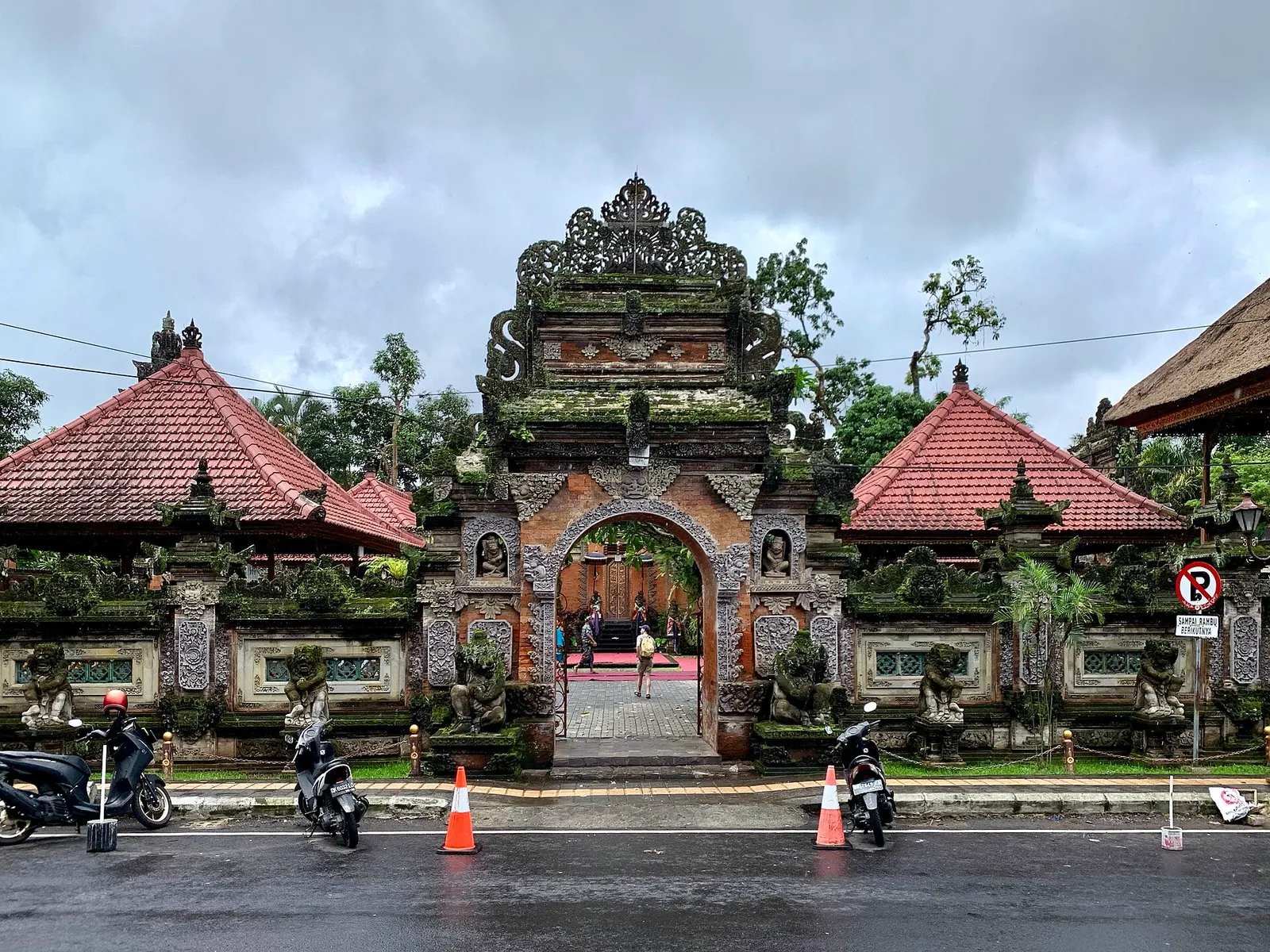
Also known as Puri Saren Agung, this royal complex was constructed in the early nineteenth century under Ida Tjokorda Putu Kandel. Visitors can examine intricate stone carvings, ornate gilded doorways and peaceful courtyards that still host traditional Balinese dance performances in the evenings.
Pura Taman Saraswati
Designed by master artist Gusti Nyoman Lempad in the 1950s, this temple features a spacious pond filled with pink lotus blossoms. The stone bridges and towering padmasana shrines honour Saraswati, the patron deity of arts, literature and wisdom.
Museum Puri Lukisan
Founded in 1956 by prince Tjokorda Gde Agung Sukawati and Dutch painter Rudolf Bonnet, this institution safeguards pre-war Balinese artwork. Four pavilions exhibit intricate Wayang style narratives, mid-century modern paintings and delicate woodcarvings set within shaded gardens.
Campuhan Ridge Walk
This paved footway traces a narrow spine above the lush valleys carved by the Wos and Cerik rivers. The route offers sweeping vistas over verdant slopes and tall grasses, linking the centre of Ubud with quiet rural hamlets to the north.
Pura Gunung Lebah
Positioned directly beneath the Campuhan bridge, this river valley sanctuary is said to have been founded by the Indian sage Rsi Markandeya. Its multi-tiered meru towers emerge from thick jungle foliage, marking the historical medicinal roots of the settlement.
Ubud Monkey Forest
Properly called the Padangtegal Sacred Monkey Forest Sanctuary, this conservation forest spans over twelve hectares of dense woodland. Three fourteenth-century Hindu temples reside beneath moss-draped banyan trees, maintaining harmony between humans, spirits and resident troops of primates.
Pura Dalem Agung Padangtegal
Constructed in the fourteenth century, this temple serves as the main sanctuary within the Padangtegal forest cemetery complex. The stone walls display dramatic reliefs depicting Rangda and other guardians associated with the underworld and ancestral spirits.
Agung Rai Museum of Art
Established in 1996 by local art collector Agung Rai, this sprawling museum showcases traditional Kamasan bark paintings alongside works by Walter Spies and Raden Saleh. The grounds also host cultural workshops, music rehearsals and botanical gardens.
Neka Art Museum
Opened in 1982 by teacher Suteja Neka, this museum houses an important chronological record of regional visual arts across several traditional pavilions. Key highlights include pieces by Affandi, Arie Smit and rare collections of antique Indonesian kris daggers.
The Blanco Renaissance Museum
Spanish artist Antonio Blanco built this opulent estate overlooking the Campuhan river in the 1950s. The site preserves his original studio, rococo-inspired picture frames and colourful lithographs portraying Balinese dancers and mythical subjects.
Ubud Art Market
Situated opposite the Royal Palace, Pasar Seni Ubud functions as a produce market at dawn before filling with artisan craft stalls. Shoppers can inspect woven rattan baskets, silk sarongs, painted wooden masks and silver jewellery made in surrounding craft villages.
Pura Desa Ubud
Serving as the civic village temple, this ceremonial complex stands along Raya Ubud street near the main crossroads. It features tall red-brick candi bentar split gates and elaborately carved timber bale pavilions used for community councils and religious gatherings.
Pura Marajan Agung
Standing directly east of the public palace courtyards, this enclosed sanctuary functions as the private house of worship for the royal lineage. Its elevated brick boundary walls protect ornate stone shrines decorated with gold leaf and ancestral effigies.
Setia Darma House of Masks and Puppets
Located just southeast of Ubud, this complex comprises antique Javanese teak houses that store thousands of theatre masks and shadow puppets. The exhibits cover sacred wayang kulit figures from across the Indonesian archipelago alongside rare ceremonial artefacts from Africa and Asia.
Padangtegal Kaja Bale Banjar
This expansive open-air pavilion along Jalan Monkey Forest serves as the civic headquarters for the local banjar hamlet. The elevated platform displays intricate relief carvings on stone pillars and hosts community meetings, gamelan rehearsals and festival preparations.
Pura Dalem Puri
Serving as a major pilgrimage location during regional funerary rites, this temple complex possesses ancient shrines dedicated to ancestral spirits. The surrounding brick courtyards and large banyan trees host annual gatherings where families make offerings for departed souls.
Peliatan Palace
Built during the eighteenth century, Puri Agung Peliatan has long championed the classical Legong dance and traditional gamelan orchestras. Visitors can observe classical Balinese palace architecture, traditional brick entryways and preserved stone courtyards.
Pura Taman Kemuda Saraswati
This section of the Saraswati temple precinct contains tranquil water features and carved stone depictions of Hindu deities. The stone masonry showcases the sculptural craft of Gusti Nyoman Lempad, framed by frangipani trees and terraced waterways.
Gusti Nyoman Lempad House
Located on Jalan Raya Ubud, this compound was the home of master builder and artist Gusti Nyoman Lempad until his death in 1978. The courtyards contain traditional family pavilions, original stone carvings and preserved charcoal drawings executed by the artist.
Pura Samuan Tiga
Dating from the reign of the Warmadewa dynasty, this complex of seven tiered courtyards marks the historical reconciliation of various Hindu and Buddhist sects into common village worship. The site features intricate split gates, antique stone statues and ornate ceremonial shrines.
Pakerisan Valley UNESCO Sites: Goa Gajah, Tirta Empul & Tegallalang
Goa Gajah Elephant Cave, Yeh Pulu Rock-Cut Reliefs, Pura Samuan Tiga Bedulu, Pura Penataran Sasih Pejeng Moon of Pejeng Drum, Gunung Kawi 11th-Century Rock-Cut Royal Shrines, Tirta Empul Holy Spring Temple, and Tegallalang Rice Terraces
Goa Gajah
Dating to the eleventh century, this rock-cut hermitage showcases an imposing stone face carved around its entrance to ward off malevolent spirits. Inside the T-shaped cave, visitors discover small meditation niches alongside lingam-yoni emblems and a Ganesha statue. The lower courtyard holds restored bathing pools fed by stone water-spouting figures.
Yeh Pulu
Extending across twenty-five metres of open cliff face, this fourteenth-century relief depicts lively scenes from ancient rural Bali. The frieze illustrates hunters wrestling wild boars, ascetics wandering through forests, and daily village interactions. An adjacent natural spring provides holy water that locals have used for ritual purifications across centuries.
Pura Samuan Tiga
Constructed during the reign of King Marakata, this vast temple compound served as the site of a historic tenth-century council that united disparate Balinese religious sects. The site features intricate tiered courtyards, ancient stone statues, and ornate gateways framed by traditional thatched shrines. Major annual ceremonies bring elaborate offerings and traditional masked performances.
Pura Penataran Sasih
This significant sanctuary once served as the state temple of the ancient Pejeng Kingdom. Suspended in a high pavilion stands the Moon of Pejeng, the largest single-piece cast bronze kettle drum known from the Southeast Asian Bronze Age. Surrounding stone courtyards preserve numerous weathered megalithic statues and shrines dating to the tenth century.
Gunung Kawi
Set along the banks of the Pakerisan River, this ancient complex features ten royal memorial shrines carved directly into high sandstone walls. Built to honour King Udayana and his immediate family, each seven-metre-tall relief resembles a traditional temple facade. Travellers cross stone footbridges and ancient monk cells cut straight into the river valley bedrock.
Tirta Empul Temple
Established in 962 AD during the Warmadewa dynasty, this celebrated temple centres on an underground freshwater spring that feeds rectangular purification pools. Worshippers step into the cool water to bathe under a row of carved stone spouts during purification rituals. Surrounding courtyards showcase classical Balinese brick gateways and decorated timber pavilions.
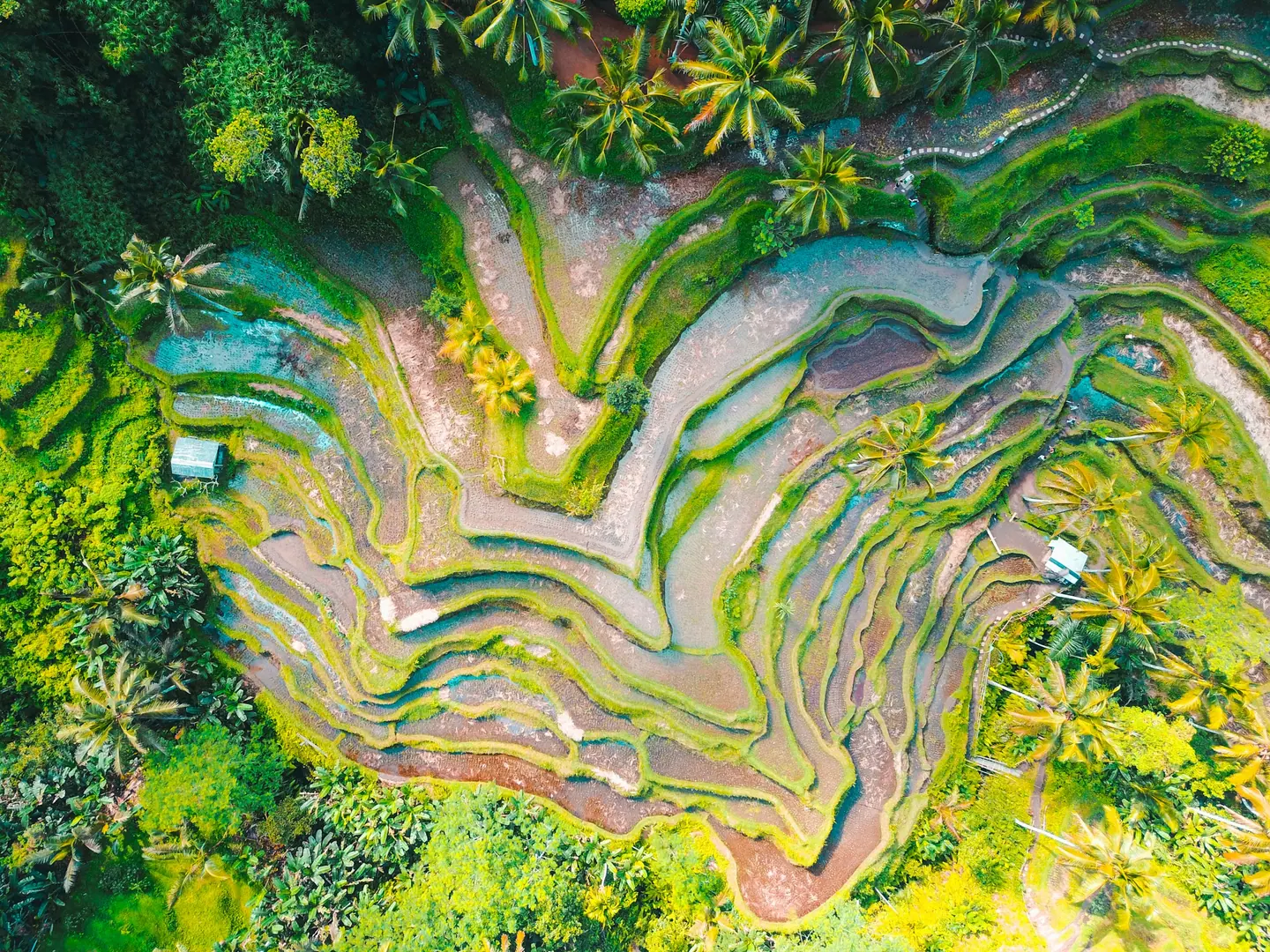
Tegallalang Rice Terraces
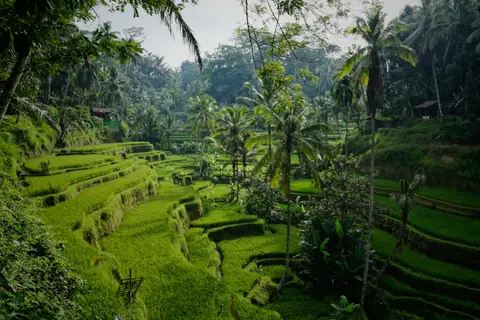
These steep valley terraces exemplify the subak, a communal water management system that has operated continuously in Bali since the ninth century. Pathways wind along the narrow mud dykes, offering clear views of layered green ridges framed by tall coconut palms. Local farmers still tend heritage rice varieties using traditional tools and communal water shares.
Pura Gunung Kawi Sebatu
Built to honour the water deity Vishnu, this temple features clear ponds filled with carp, stone bathing basins, and natural springs flowing through carved figures. Shaded courtyards house intricately carved wooden pavilions and moss-covered brick shrines built into the valley walls. The tranquil setting offers an alternative look at ancient Balinese water architecture.
Pura Pusering Jagat
Regarded as the ceremonial navel of the world by early kingdoms, this village sanctuary dates to the eleventh century. The central courtyard preserves an enormous stone water vessel known as the Pejeng Cauldron, adorned with detailed carvings of gods and sea creatures. Ancient lingam-yoni stones and guardian figures stand across the mossy inner terraces.
Pura Kebo Edan
Known as the Crazy Buffalo Temple, this historic site belongs to the Tantric Buddhist and Hindu traditions of the thirteenth-century Singhasari era. The central feature is a three-metre-tall stone statue of the giant Bima, shown trampling a supine figure during esoteric rituals. Weathered stone buffaloes and ancient relief stones rest under ancient banyan trees.
Museum Gedong Arca
Established in the twentieth century to safeguard the historical treasures of the Pakerisan Valley, this open-air museum houses hundreds of prehistoric artefacts. Stone sarcophagi with carved human and animal visages illustrate early burial practices across the Gianyar region. Interior pavilions exhibit Bronze Age drums, ancient pottery fragments, and weathered stone inscriptions from early Balinese dynasties.
Pura Mengening
Constructed around the same period as neighboring Gunung Kawi, this quiet temple complex centres on a freestanding rock-cut shrine erected in a ravine. Pristine natural springs flow directly into deep stone pools divided for separate male and female purification rituals. Thick tropical trees enclose the stone stairways and ancient tiered brick walls.
Candi Tebing Tegallinggah
Excavated from thick overgrowth in the 1950s, this cliff-face monument features monolithic niches and rock-cut shrines carved into opposite banks of a gorge. Archaeologists believe monks excavated these chambers in the twelfth century for silent meditation and ascetic practices. Worn stone stairs connect the monastic cells to a central monumental gateway carved from bedrock.
Pura Durga Kutri
Perched on a forested hillock in Buruan village, this temple preserves an ancient statue of the goddess Durga slaying the demon buffalo. Scholars associate this stone sculpture with the funerary monument of Queen Mahendradatta, mother of King Airlangga. Shaded stone stairs lead upward past broad courtyard pavilions to the inner sanctuary.
Candi Jukung
Located within the Pakerisan Valley archaeological zone, this small rock-cut retreat highlights the ascetic hermit lifestyle of early medieval Bali. The structure consists of an arched chamber carved directly into an exposed sandstone cliff face beside the river. Mosses and ferns frame the entrance, which displays faint geometric chisel marks from early stone masons.
Pura Bukit Kale
Situated on a gentle ridge above the ancient settlement of Pejeng, this temple marks a high spiritual outpost for local villagers. The inner grounds preserve stone altars that predate classical Hindu-Balinese architecture, demonstrating centuries of continuous ritual practice. Surrounding paths lead through spice groves and terraced rice paddies overlooking the Pakerisan watershed.
Pura Dalem Puri Pejeng
This temple complex serves as a centre for death rites and ancestor worship for the old royal families of the Pejeng valley. Its split gateways and decorative shrines exhibit intricate soft volcanic tuff carvings depicting mythological figures from Hindu epics. Towering banyan trees provide extensive shade over the stone courtyards.
Tirta Empul Presidential Palace
Commissioned in 1957 by Indonesia's first president, Sukarno, this palace compound stands on a hill overlooking the Tirta Empul spring complex. The architecture harmonises modern lines with Balinese decorative carvings and native stone materials. The elevated grounds offer direct views across the sacred temple grounds and the dense river forest.
Pura Manik Corong
This riverine temple compound functions as a purification sanctuary linked to the royal heritage of the Pakerisan River basin. Crystal-clear spring water feeds stone basins where worshippers perform private cleansing rites before prayer. Old stone walls carved with demon heads flank the water outlets to ward off negative influences.
Pura Tirta Bening
Serving the local agricultural cooperative, this small water temple acts as a vital ritual hub for coordinating irrigation schedules across the surrounding terraces. The sanctuary contains weathered stone shrines, clear water ponds, and dedicated altars to Dewi Sri, the goddess of rice. Shaded palm groves and cascading fields enclose the tranquil inner courtyards.
Central Mountains: Jatiluwih, Ulun Danu Beratan & Mount Batur
Sangeh Nutmeg Forest, Pura Taman Ayun Mengwi Royal Water Temple, Jatiluwih UNESCO Rice Terraces, Pura Luhur Batukaru, Pura Ulun Danu Beratan on Lake Beratan, Handara Gate, Banyumala Twin Waterfalls, and Kintamani Mount Batur Caldera & Pura Ulun Danu Batur
Sangeh Monkey Forest
Sangeh encompasses over ten hectares of dense nutmeg forest, home to hundreds of Balinese long-tailed macaques. At the centre of the grove stands Pura Bukit Sari, a seventeenth-century sanctuary constructed by the royal house of Mengwi. Moss-coated stone guardians and shrines carved with depictions of the Garuda bird reflect classical Mengwi dynastic architecture.
Pura Taman Ayun
Founded in 1634 by the Mengwi sovereign I Gusti Agung Putu, this complex sits enclosed within broad moats filled with blooming lotus plants. It features tiered wooden shrines known as meru, the tallest reaching eleven roofs to represent sacred volcanoes. Stone split gates and walled grassy courtyards trace traditional Balinese cosmological planning, designed to honour royal ancestral deities.
Jatiluwih Rice Terraces
Spanning over six hundred hectares on the slopes of Mount Batukaru, these verdant stepped fields preserve the traditional subak cooperative irrigation network dating back to the ninth century. Canals channel mountain spring water across tiers of native red rice paddies, maintained through shared civic democracy. The system reflects the Balinese philosophy of Tri Hita Karana, balancing spiritual, human, and environmental harmony.
Pura Luhur Batukaru
Dedicated to Mahadewa, the guardian god of Mount Batukaru, this ancient shrine ranks among Bali's nine directional temples. It originated in the eleventh century and was rebuilt in 1959 after historical destruction during seventeenth-century dynastic wars. The inner courtyard features a single seven-tiered meru surrounded by cloud forest, where quiet moss-covered stone shrines stand around a sacred lotus spring.
Pura Ulun Danu Beratan
Constructed in 1633, this prominent water temple sits on small islets at the edge of Lake Beratan to appease the lake goddess Dewi Danu. Its signature shrines include an eleven-tiered meru dedicated to Shiva and a smaller seven-tiered structure. The calm caldera waters create mirror reflections around the foundational masonry, which serves as a major ceremonial hub for the island's farmers.
Bali Botanic Garden
Established in 1959 on the lower slopes of Mount Pohen, this scientific reserve encompasses roughly 157 hectares of highland terrain. It protects extensive collections of wild orchids, carnivorous pitcher plants, and native ferns used in traditional Balinese medicine. Traditional wooden pavilions and research glasshouses dot the grounds alongside towering conifer groves, providing deep insight into Indonesian montane ecology.
Buyan Lake
Lake Buyan forms the western basin of the twin crater lakes created by an ancient volcanic collapse. Separated from neighbouring Lake Tamblingan by a narrow forest ridge, its shores retain a quiet character largely untouched by heavy developments. Traditional dugout canoes called pedahu rest along the shoreline, where local fishermen access clear waters bordered by clove plantations and vegetable farms.
Lake Tamblingan
Forming the most remote section of the central volcanic lakes, Tamblingan remains free of motorised boats to preserve its pristine water supply. Its forested perimeter conceals historic stone temples, including Pura Gubug, which often floods during the rainy season. Archaeological discoveries along the banks date settlements here to the tenth century, revealing early inscriptions documenting local village governance and sacred water rites.
Handara Gate
This imposing candi bentar marks the ceremonial entrance to a highland golf resort and cultural park near Pancasari. Constructed from dark volcanic stone, the towering split archway exemplifies classical Balinese architectural geometry, designed to balance terrestrial and spiritual realms. Dense tropical greenery climbs the surrounding crater walls, offering a stark backdrop that highlights the intricate carvings across both symmetrical pillars.
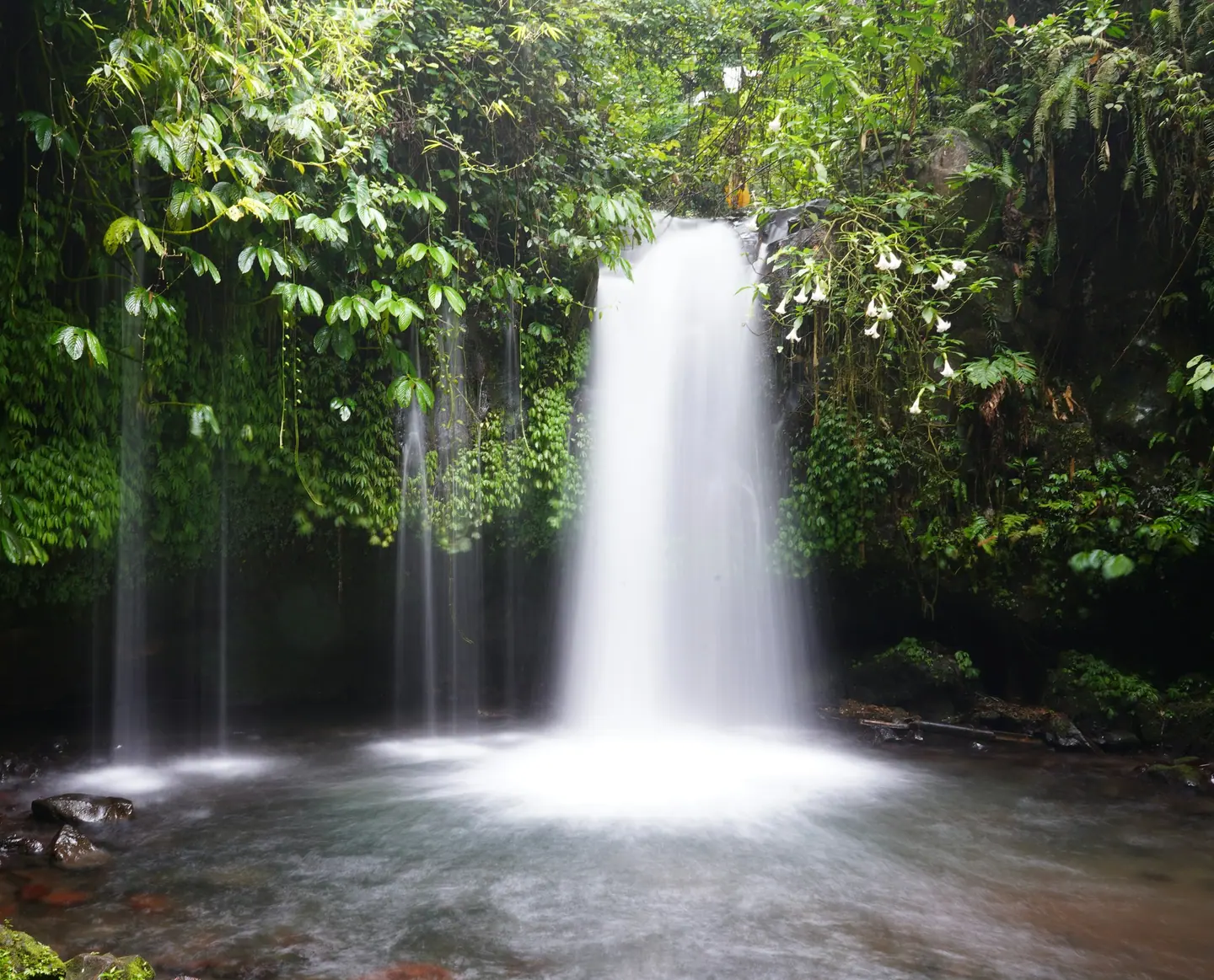
Banyumala Twin Waterfalls
Hidden along a steep volcanic ravine in Wanagiri, Banyumala features twin freshwater streams plunging over rock walls covered in wild ferns and mosses. Natural mountain springs feed the cascades, which collect into a broad natural pool before flowing down toward northern valleys. The surrounding trails pass through shade-grown coffee and hydrangea fields, reflecting the rural agricultural character of Sukasada.
Mount Batur
Rising to 1,717 metres above sea level, Mount Batur is an active volcano with multiple summit craters and expansive fields of hardened black basalt. Major historical eruptions in 1917 and 1926 reshaped the caldera floor, burying villages and ancient farmlands under basaltic flows. Fumaroles emitting steam vents remain active across the upper ridges, drawing hikers interested in vulcanology and dramatic terrain.
Lake Batur
Occupying the southeastern section of the massive Bangli caldera, this crescent-shaped crater lake covers sixteen square kilometres and serves as the island's primary reservoir. Thermal springs heat portions of the shoreline near Toya Bungkah, emerging directly from deep geothermal faults. Along the eastern rim, isolated volcanic slopes drop steeply into the blue waters, framing traditional villages that rely heavily on lakeside tilapia farming.
Pura Ulun Danu Batur
Originally situated inside the caldera until an eruption buried the settlement in 1926, this temple was reconstructed by villagers on the outer crater rim at Kalanganyar. As Bali's second most significant sanctuary after Besakih, it comprises nine distinct temples housing nearly three hundred shrines. The principal meru towers honour the goddess of Lake Batur, orchestrating religious control over regional subak irrigation societies across eastern Bali.
Penelokan Viewpoint
Penelokan, translating from Balinese as the place to look, perches directly on the southern lip of the outer Kintamani caldera. From this stone promenade, travellers observe the vast expanse of dried lava trails from the 1963 and 1974 eruptions contrast with Lake Batur's still waters. Crisp mountain breezes sweep across the ridge, where traditional roadside stalls display highland citrus and Arabica beans.
Batur Geopark Museum
Located in Kintamani, this modern exhibition centre unpacks the geological origins of the UNESCO Global Geopark through relief maps, volcanic rock specimens, and tectonic dioramas. Displays document the ancient collapse that formed the outer thirteen-kilometre caldera over twenty thousand years ago. Further galleries explore the integration of Balinese Hinduism with volcanic ecosystems, highlighting how mountain hazards shaped local culture and settlement patterns.
Trunyan Cemetery
historic against the sheer eastern cliff of Lake Batur, Trunyan is home to an indigenous Bali Aga community retaining customs pre-dating Javanese Majapahit influence. In place of cremation, the dead are laid out beneath bamboo cages under a sacred Taru Menyan tree, which absorbs the natural scent of decomposition. Weathered skulls and historic stone relics line the damp forest floor, reflecting ancient animist mortuary traditions.
Pura Tegeh Koripan
Perched on the summit of Mount Penulisan at over 1,740 metres, this is one of the highest temples in Bali. Its tiered construction mirrors pre-Hindu megalithic stepped pyramids, ascending via hundreds of stone steps through shifting mountain mist. The uppermost sanctum preserves weathered stone statues and inscriptions from the Warmadewa dynasty, dating between the eleventh and thirteenth centuries.
Pura Luhur Pucak Sangkur
Positioned on a quiet knoll slightly north of the busy Bedugul lakeside, this tranquil sanctuary remains an active retreat for meditation and forest rituals. Its courtyard features tall wooden pavilions and thatched shrines dedicated to mountain spirits, wrapped in yellow and white ceremonial fabrics. Giant fern trees and mossy stone staircases create an atmosphere of profound isolation from surrounding holiday settlements.
Pura Yeh Ketipat
Located along the historic mountain pass linking Buleleng to southern Bali, Pura Yeh Ketipat preserves the memory of historical royal journeys through the central highlands. Legend recounts that seventeenth-century King Ki Barak Panji Sakti rested here while marching across the ridge to claim territory. The shrine preserves an ancient holy water spring and intricate stone bas-reliefs surrounded by cloud forest flora.
Pura Bukit Mentik
Standing directly at the base of Mount Batur inside the caldera, this temple offers a striking visual study in survival against volcanic forces. During destructive twentieth-century eruptions, lava flows parted around the perimeter, leaving the central courtyard largely intact amidst desolate black fields. Today, stark volcanic slag surrounds its bright golden shrines and stone paras walls, presenting a dramatic testament to local spiritual resilience.
East Bali: Besakih Mother Temple, Tirta Gangga & Klungkung
Kertha Gosa Pavilion of Justice Klungkung, Goa Lawah Bat Cave Temple, Kusamba Traditional Salt Panning, Tenganan Pegringsingan Bali Aga Walled Village, Tirta Gangga Royal Water Palace, Taman Ujung Sukasada, Pura Lempuyang Luhur Gate of Heaven, and Pura Besakih Mother Temple on Mount Agung
Kertha Gosa Pavilion
Built in the eighteenth century by the Kingdom of Klungkung, this elevated open-air pavilion served as the supreme court of justice. The tiered ceiling exhibits intricate Wayang-style paintings depicting the karmic consequences of human actions in the afterlife. The neighbouring Bale Kambang floating hall sits surrounded by a moat containing blooming lotus flowers.
Museum Semarajaya
Housed in a former Dutch colonial school within the Klungkung Palace compound, this municipal museum preserves royal heirlooms and regional ethnographic treasures. Displays include ceremonial kris daggers, court regalia, historic photographs, and weaving implements. Visitors can also view personal artefacts and artwork by the Italian painter Emilio Ambron, who lived in Bali during the twentieth century.
Klungkung Puputan Monument
Erected in the heart of Semarapura town square, this stone monument commemorates the 1908 puputan ritual fight against colonising Dutch forces. The central tower rises alongside carved relief panels depicting the final battle fought by the Raja of Klungkung and his court. It remains an important civic monument honoured during national holidays and local historical commemorations.
Goa Lawah
Founded in the eleventh century by the revered Hindu sage Mpu Kuturan, Goa Lawah is one of Bali's nine directional sanctuaries. The shrine protects the mouth of a dark cave densely packed with thousands of resident fruit bats. Families regularly gather around the central meru towers to conduct post-mortuary purification ceremonies directed towards the sea.
Kusamba Beach Salt Panning
Along this volcanic black sand coastline, local families have produced natural sea salt using traditional solar evaporation methods for generations. Sea water is poured over raked sand beds, drained into bamboo troughs, and crystallised in the tropical sun. Travellers can observe artisans carrying twin wooden buckets and purchasing the coarse, unrefined mineral flakes directly from producers.
Pura Dasar Buana Gelgel
Located in the historic village of Gelgel, this sacred sanctuary dates back to the fourteenth-century Majapahit court migration to Bali. The temple complex features stone split gates, ancestral courtyards, and shrines dedicated to the founding ancestors of the prominent local lineages. It is respected as one of the fundamental religious centres underpinning modern Balinese court traditions.
Tenganan Pegringsingan
This ancient walled settlement preserves original Bali Aga social customs, communal architecture, and religious calendars that predate the Majapahit era. The central avenue features broad cobblestone plazas lined with raised pavilions and family longhouses. Tenganan is renowned as the sole centre in Indonesia producing double-ikat Geringsing cloth, woven with protective natural dyes.
Candi Dasa Beach
Forming a tranquil base on the Amuk Bay coastline, Candi Dasa is known for its quiet shores and proximity to coral dive reefs. A prominent freshwater lagoon filled with flowering pink water lilies lies directly opposite the historic temple dedicated to the goddess Hariti. The shore offers views across Lombok Strait towards the offshore islets of Gili Tepekong.
Pura Candidasa
Perched on a forested ridge overlooking the lotus lagoon and the ocean, this quiet shrine dates back to the twelfth century. The temple honours Hariti, a Buddhist figure absorbed into Balinese Hinduism as the protector of infants and fertility. A steep flight of stone stairs leads up to the upper courtyard, passing carved statues under tall banyan trees.
Tirta Gangga
Commissioned in 1946 by the final King of Karangasem, this water palace was constructed around a natural hillside spring. The tiered complex incorporates stone carvings, ornamental fountains, stepping stones over wide carp ponds, and public bathing pools fed by freshwater conduits. While severely damaged by the 1963 eruption of Mount Agung, it was subsequently restored to original royal designs.
Taman Ujung
Also known as Sukasada Park, this expansive seaside retreat was built between 1909 and 1921 by King I Gusti Bagus Jelantik. The layout blends Balinese, Dutch, and Chinese architectural motifs across large artificial lakes connected by brick bridges. From the ruined marble arches atop the western hill, visitors can gaze towards Mount Agung and the coastal waters of Lombok Strait.
Puri Agung Karangasem
Serving as the principal residence of the Karangasem dynasty, this palace complex combines traditional stone gateways with European verandas and Chinese ceramics. The central pavilion, known as the Maskerdam, features period furniture gifted by European dignitaries and royal family portraits. Descendants of the royal lineage still inhabit sections of the residential compounds today.
Pura Lempuyang Luhur
Climbing Mount Lempuyang, this complex consists of seven distinct shrines connected by wooded trails and stone staircases. The lower sanctuary, Pura Penataran Agung, is celebrated for its towering split candi bentar gate framing Mount Agung across the valley. The topmost temple requires an ascent through cool mountain forest inhabited by troupes of grey macaques.
Besakih Temple
Perched on the southwestern slopes of Mount Agung at an elevation of one thousand metres, Besakih is revered as the mother temple of Bali. It encompasses more than twenty individual complexes arranged over terraced stone platforms, centred on Pura Penataran Agung. The multi-tiered black palm thatch merus survived the catastrophic 1963 volcanic lava flow that skirted the temple boundary.
Pura Penataran Agung Besakih
Serving as the administrative and ceremonial focal point of Besakih, this sanctuary contains the triple lotus-throne Padmasana dedicated to the Hindu trinity of Shiva, Brahma, and Vishnu. A monumental stone staircase flanked by mythological statues leads up through grand tiered gateways. During major annual odalan festivals, thousands of devotees dressed in white arrive carrying elaborate fruit offerings.
Pura Batu Madeg
Positioned north of the central Besakih spine, this temple houses an ancient standing megalith embedded within a central shrine, reflecting pre-Hindu stone veneration. Dedicated to Lord Vishnu, the preserver, the courtyard features multi-tiered meru towers set against dense pine forests. Its stone layout demonstrates the layering of prehistoric animist shrines into classic Balinese temple design.
Bukit Cinta Viewpoint
Situated near the village of Ababi, this grassy roadside vantage point offers sweeping views of Mount Agung rising behind irrigated rice terraces. In the early morning hours, travellers gather along the ridge to observe morning mist drifting through the river ravines below. The setting provides an open perspective across the rural agricultural landscapes of eastern Bali.
Pura Silayukti
Constructed atop a coastal headland east of Padangbai, this quiet complex honours Mpu Bharadah, a major religious teacher from the eleventh century. The temple overlooks secluded bays and the busy sea lanes connecting Bali to Lombok. Its weathered coral-stone walls and calm courtyard offer an authentic setting away from modern transit terminals.
Amed Coastline
Stretching along dry rocky headlands beneath Mount Agung, Amed consists of a string of traditional fishing hamlets fronting calm coral bays. Hundreds of brightly painted jukung outrigger canoes line the pebbled beaches each morning after overnight fishing excursions. The offshore coral reefs and clear coastal waters make it an important regional destination for scuba diving and freediving.
Pura Pasar Agung
Perched at an altitude of approximately 1,500 metres on the southern flank of Mount Agung, this isolated sanctuary marks one of the higher human outposts on the volcano. Approached via hundreds of steps climbing above the cloud line, the complex serves as a principal pilgrimage site and climbing trail starting point. Courtyards provide sweeping panoramas over southern Bali and coastal bays.
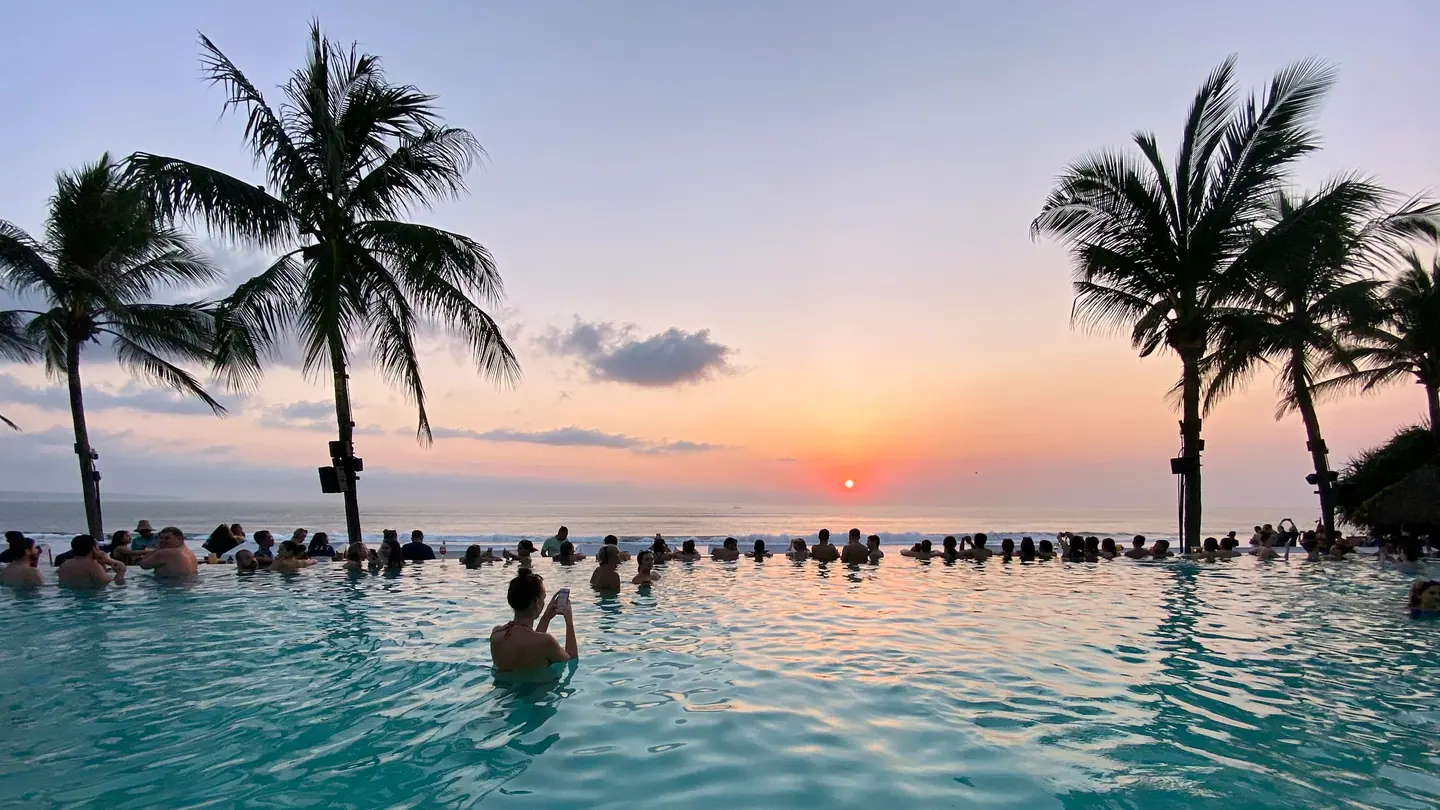
Sea Temples & Southern Cliffs: Tanah Lot, Uluwatu & Nusa Penida
Pura Tanah Lot Sea Temple, Batu Bolong Cliff Shrine, Bajra Sandhi Monument Renon, Sanur Le Mayeur Museum, Serangan Turtle Island, Garuda Wisnu Kencana Cultural Park, Padang Padang Beach, Pura Luhur Uluwatu Cliff Temple, and Kelingking Cliff Nusa Penida
Pura Tanah Lot
Perched upon an offshore rock carved by tide waters, this sea temple was established in the sixteenth century by the religious reformer Dang Hyang Nirartha. Visitors cross the tidal flats during low water to view the tier-roofed meru towers and coastal sea-snake caves guarded by temple priests.
Pura Batu Bolong
Standing west of Tanah Lot, this complementary coastal shrine rests atop an arched promontory hollowed out by crashing waves. The complex hosts local purification rituals known as Melasti. The setting provides clear vantage points across the coastal reef shelves and rocky northern headlands.
Kedungu Beach
Situated north of Tanah Lot, this dark volcanic beach displays sweeping wave-cut terraces backdropped by terraced rice fields. Travellers observe local anglers casting nets from exposed rocks during low tide. The coastal topography illustrates the collision of volcanic run-off with Indian Ocean surf.
Bajra Sandhi Monument
Located in the centre of Renon Square in Denpasar, this monumental structure was erected in 1987 to honour Balinese resilience. Designed in the form of a Bajra, a priest's ceremonial bell, the complex contains thirty-three dioramas illustrating historical epochs from the prehistoric era to post-colonial statehood.
Museum Le Mayeur
This beachside compound in Sanur displays the artwork and residential quarters of Belgian painter Adrien-Jean Le Mayeur de Merpres, who arrived in 1932. The traditional Balinese carved timber house features stone statues, woven mats, and galleries of oil paintings depicting his Balinese wife and muse, Ni Pollok.
Pura Sakenan
Built on the north-western shore of Serangan Island, this shrine was founded by the sage Mpu Kuturan in the tenth century. The temple complex features ancient coral-stone boundary walls, stepped meru spires, and ceremonial courtyards that draw worshippers during the bi-annual Kuningan religious festival.
Turtle Conservation and Education Centre
Established in 2006 to eradicate the illicit turtle meat trade, this scientific compound runs dedicated breeding and rescue programmes on Serangan Island. Visitors observe outdoor nursery pools sheltering injured green and olive ridley turtles before their release into coastal marine waters.
Garuda Wisnu Kencana Cultural Park
Set within a carved limestone quarry on the Bukit Peninsula, this vast complex is anchored by a colossal bronze and brass statue standing over one hundred and twenty metres tall. The site features open-air performance pavilions, monumental stone pillars, and exhibits detailing traditional Hindu mythology.
Padang Padang Beach
Known locally as Pantai Labuan Sait, this white-sand cove is approached via a narrow stone staircase cutting through a natural limestone hollow. Fringed by steep coastal bluffs and reef barriers, the beach is renowned among international surf communities for its shallow outer reef breaks.
Suluban Beach
Accessible by descending stepped paths beneath high limestone terraces, this cavernous coastal shelf opens into a natural sea cave. Shaded rock fissures provide entry points for professional surfers heading towards the reef breaks of Uluwatu, while tidal pools harbour diverse marine life at low water.
Pura Luhur Uluwatu
Standing atop sheer sea cliffs seventy metres above the ocean, this directional shrine protects Bali against south-westerly evil spirits. Founded by Mpu Kuturan and expanded by Dang Hyang Nirartha, the site incorporates black coral masonry, split candi bentar gateways, and an amphitheatre for evening Kecak dances.
Melasti Beach
Positioned at the southernmost rim of the Bukit Peninsula, this coastal expanse is reached via a highway sliced directly through towering white limestone bluffs. The foreshore serves as a primary ceremonial site for Hindu Melasti cleansing rituals before the Balinese Day of Silence.
Pandawa Beach
Framed by a deep rock-cut passage through the southern limestone ridges, this coastal area features deep alcoves holding five massive statues of the Pandava brothers from the Mahabharata epic. The broad shoreline below supports traditional seaweed farming plots behind protective offshore coral reefs.
Pura Masuka
Resting atop remote coastal bluffs near Ungasan, this wind-swept Hindu sanctuary serves as a regional place of worship for local coastal villages. The simple stone pavilions and moss-grown walls overlook sheer drops into deep ocean waters along Bali's rugged southern limestone perimeter.
Kelingking Beach
Located on the south-western coast of Nusa Penida island, this formation resembles a Tyrannosaurus Rex neck extending into turquoise ocean waters. A steep, bamboo-railed ridge path leads down sheer cliffs to an isolated crescent of sand hammered by powerful open-ocean swells.
Broken Beach
Known locally as Pasih Uug, this geological phenomenon features a circular cliff enclosure where the ceiling collapsed into the Indian Ocean. A natural stone archway permits seawater to surge continuously into the interior lagoon, creating an expansive natural basin observable from the peripheral clifftop trails.
Angel's Billabong
Positioned alongside Broken Beach on Nusa Penida, this rock basin forms a natural infinity pool at low tide. Patterned by jagged volcanic rock formations and emerald marine water, the pool drains swiftly into the open sea during periods of high surf.
Crystal Bay
Facing west towards the neighbouring island of Nusa Ceningan, this palm-lined bay is protected by an offshore rock islet carrying a small shrine. The transparent water offers shelter for diverse marine species, including the seasonal sunfish, drawing marine researchers across the Lombok Strait.
Pura Goa Giri Putri
Reached through a narrow rock crevice on north-eastern Nusa Penida, this cavernous limestone sanctuary accommodates hundreds of worshippers beneath natural dripstone vaults. Dedicated to Shiva and Buddhist deity Guanyin, the interior contains a series of atmospheric stone shrines concluding at a cliffside exit.
Peguyangan Waterfall
Accessed by descending several hundred blue steel steps bolted to near-vertical coastal cliffs, this natural spring flows through limestone cascades directly into the sea. The site incorporates a small holy water shrine where local Hindu pilgrims perform traditional purification baths against crashing waves.
Combining Highland Calderas with Bali’s Southern Headlands
Before setting out, check local transit connections, museum booking notes and monthly weather data in our Bali city guide, and compare other walking itineraries.