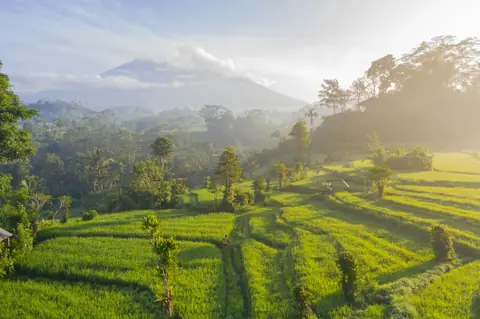
Photo by Niklas Weiss on Unsplash
Bali
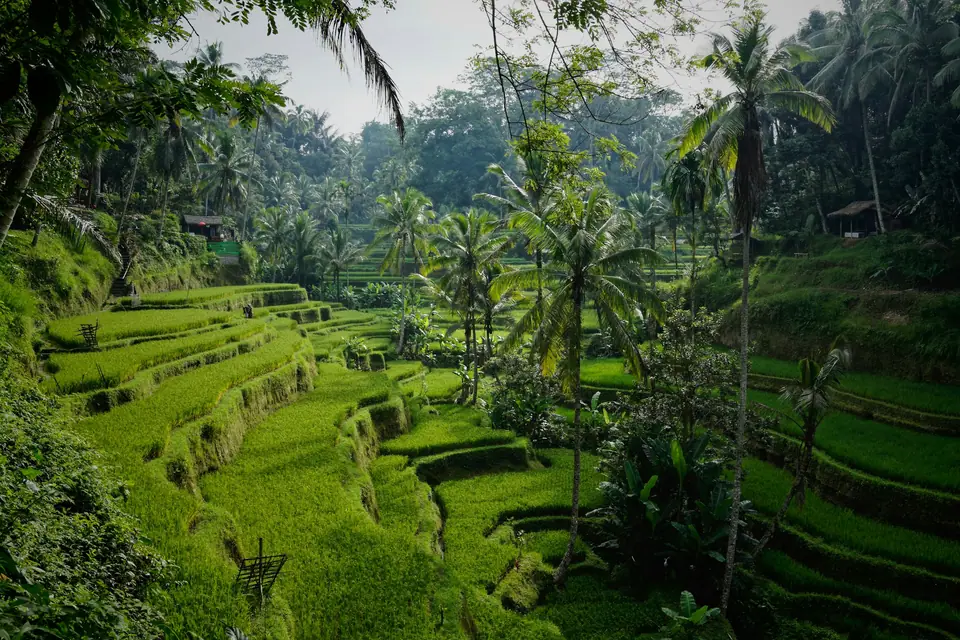
Hindu temples, terraced rice fields, surf beaches and an island where offerings appear on every doorstep each morning.
Quick decisions
How many days?
5 days: Ubud and one stretch of coast, without rushing. 7 to 10 days: add the east (Sidemen or Amed) or a night on Nusa Penida. 2 weeks: time for the north, the highlands and a few days where the plan is a sunbed.
Where should I stay?
Ubud: rice fields, temples and dance, but no sea. Uluwatu: cliffs, surf and sunsets. Sanur or Nusa Dua: calm water, easy with children. Seminyak or Canggu: restaurants, beach clubs and traffic. Two bases beat four. More in our where to stay guide.
Do I need a car?
Not one you drive yourself. Most visitors book a car with a driver by the day and use Grab or Gojek for short trips. Riding a scooter legally needs a motorcycle licence plus an International Driving Permit that covers motorcycles.
Best for
First trip to Asia: an easy start. Couples: very much so. Families: yes, in Sanur, Nusa Dua or Ubud. Surfers: some of the most famous breaks in the region. Anyone after an empty island: not the south.
Before you go
Paperwork: check whether your passport needs a visa on arrival, fill in the All Indonesia arrival card in the three days before landing, and pay the Bali tourist levy on the official Love Bali site. Nyepi: check the date, because the airport closes for 24 hours. Temples: pack something that covers your knees.
Getting around
From the airport: a pre-booked transfer, an official taxi, or Grab from its pickup lounge in arrivals. On the island: a driver for day trips, ride-hailing for short hops, your feet in Ubud and Sanur. Details in our getting there guide.
Continue your trip
Fast boats leave Sanur for Nusa Penida and Nusa Lembongan, and Padangbai and Amed for the Gili Islands and Lombok. Yogyakarta and Borobudur on Java are a short flight away, and Labuan Bajo (for Komodo) about an hour and a half.
Overview
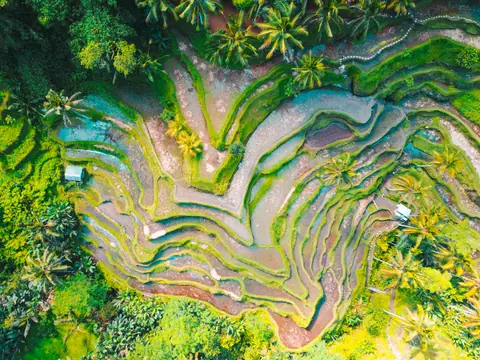
Bali arrives with a reputation, half of it from surf films and half from Instagram. The island underneath is more interesting than either. Every morning, small trays of palm leaf, flowers and rice are set on doorsteps, car dashboards and shop counters. Villages rehearse gamelan in open pavilions after dark. And ten minutes from the busiest road in Ubud, ducks are still working their way through a flooded rice field.
The catch is the south. It's built up, and the traffic between Canggu, Seminyak and Ubud can swallow half a day. Plan around that: choose two bases, give each a few nights, and hire a driver for the long days out. Our Bali travel guide covers the rest of the practical side.
Getting there
Nearly every visitor lands at I Gusti Ngurah Rai International Airport (DPS), on the narrow neck of land south of Kuta. There's no railway on the island, so everything after that happens by road or by boat. Transfers, entry paperwork and ferries are all in our getting there guide.
Where to stay
In Bali, your choice of base decides how much of the trip you spend in a car. Ubud suits culture and walks, Uluwatu cliffs and surf, Sanur and Nusa Dua calm swimming, Seminyak and Canggu food and nightlife. Our area-by-area guide weighs them up.
Things to do
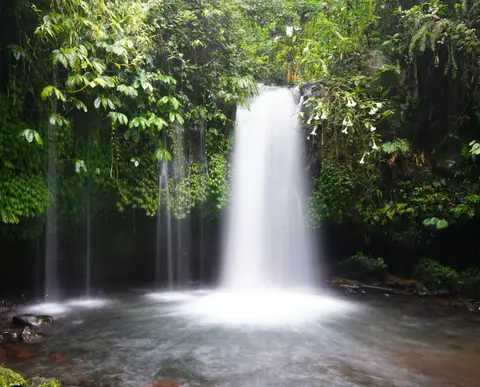
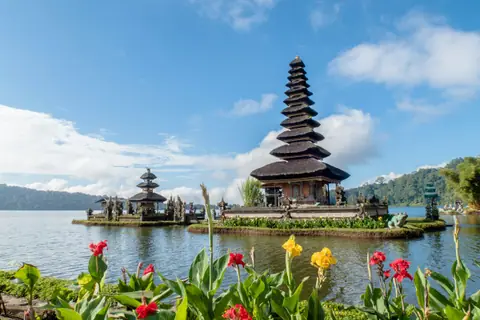
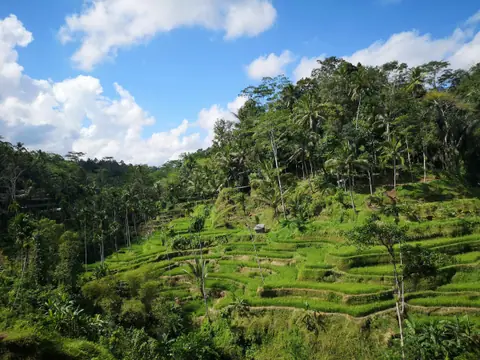
Sea temples, rice terraces, a volcano at sunrise and a long coastline. Start with our things to do list, then read our guides to Ubud, Bali's temples and the beaches before you plan your days.
Food and drink
The warung, a small family kitchen with dishes laid out behind glass, is where Bali eats. Order nasi campur, rice with a spoonful of several things, and point at what looks good. Babi guling (spit-roasted suckling pig) sells out by early afternoon, and bebek betutu is duck slow-cooked in spice paste inside banana leaves. Stick to filtered or bottled water.
Culture
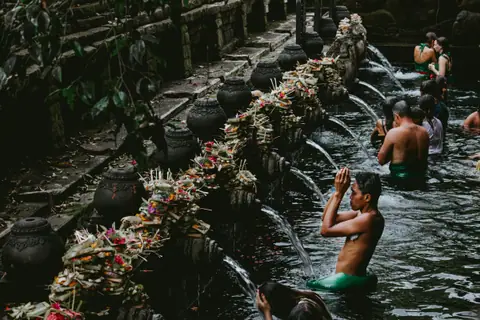
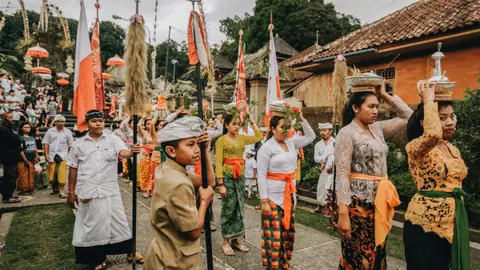
Bali is the only Hindu-majority province in Indonesia, and religion here is daily routine rather than a Sunday event. Every family compound has its own shrine, every village keeps several temples, and the calendar is full of ceremonies you'll see from the roadside: processions, women carrying towers of fruit on their heads, streets lined with bamboo poles. Walk around the offerings on the pavement, not over them.
Weather by month
Bali is warmest in November, with average highs around 29°C, and coldest in August, when nights drop to about 23°C. February is the wettest month by rainfall (339 mm), with rain on most days. For mild weather with fewer rainy days, aim for July.
| Month | Low | Range | High | Rain | Rainy days |
|---|---|---|---|---|---|
| Jan | 25°C | 29°C | 309 mm | 27 d | |
| Feb | 24°C | 29°C | 339 mm | 26 d | |
| Mar | 24°C | 29°C | 239 mm | 27 d | |
| Apr | 24°C | 29°C | 181 mm | 23 d | |
| May | 25°C | 29°C | 106 mm | 20 d | |
| Jun | 24°C | 28°C | 94 mm | 18 d | |
| Jul | 23°C | 27°C | 82 mm | 17 d | |
| Aug | 23°C | 27°C | 57 mm | 19 d | |
| Sep | 23°C | 28°C | 73 mm | 18 d | |
| Oct | 24°C | 29°C | 104 mm | 18 d | |
| Nov | 24°C | 29°C | 204 mm | 24 d | |
| Dec | 24°C | 29°C | 297 mm | 28 d |
Averages of daily values from 2015 to 2024. Rainy days are days with at least 1 mm of rain. Source: Open-Meteo · Compare destinations by month.
Bali on the map
Every place we cover in Bali. Tap a category or pin to explore.
In-depth Bali guides
Browse the guides grouped by topic: sights, neighbourhoods, food, transport, day trips and trip planning.
Sights, Landmarks & Parks
Key monuments, viewpoints, museums and nature trails.
- Best Things to Do in Bali: Temples, Volcano Treks and Coastal SanctuariesPlan the best things to do in Bali across cultural sea temples, volcanic ridges, UNESCO subak terraces, and marine sanctuaries with verified local logistics.
- Bali Temples Guide: Etiquette and Which Temples to VisitWhat to wear, how to behave, and which temples to choose.
- Bali Beaches Guide: Where to Swim, Surf and Watch the SunsetDiscover where to swim, surf, and watch sunsets in Bali. Compare west coast breaks, southern cliff coves, and sheltered eastern lagoons with practical safety advice.

Neighbourhoods & Where to Stay
Districts, historic quarters and the best bases for your stay.
- Ubud Guide: Rice Fields, Royal Palaces, and Forest SanctuariesExplore Ubud with verified walking routes across Campuhan Ridge, etiquette for the Sacred Monkey Forest, evening temple dances, and regional cultural excursions.
- Where to Stay in Bali: An Area-by-Area GuidePlan where to stay in Bali with verified area comparisons covering Seminyak, Kuta, Nusa Dua, Sanur, Ubud and the cliffside south for every style of trip.

Getting Around & Arrival
Airport transfers, public transit, passes and driving rules.

Trip Planning & Itineraries
When to visit, what to pack and day-by-day routes.
- Bali: What to Know Before You GoEntry paperwork, distances, money and the local rules visitors actually need.
- Best Time to Visit Bali: Seasons, Weather and Festival CalendarPlan your Bali journey across dry and wet seasons with verified Open-Meteo climate data, surf window advice, festival timelines, and essential Nyepi airport details.
- What to Wear in Bali: Temple Etiquette, Climate and Packing GuidePractical packing advice for Bali covering strict temple dress codes, high humidity, upland morning chills, scooter safety gear, and beach etiquette.
- Bali 5-Day Itinerary: Culture, Highlands and Coastal CliffsAn execution-ready five-day Bali itinerary balancing central cultural heritage in Ubud with southern coastal viewpoints and practical island transit strategies.
Need your embassy or consulate in Indonesia? See embassies and consulates in Indonesia.
Reviews
Log in to write a review.
No reviews yet.